Hodges' Model: Welcome to the QUAD: thinking

Hodges' model is a conceptual framework to support reflection and critical thinking. Situated, the model can help integrate all disciplines (academic and professional). Amid news items, are posts that illustrate the scope and application of the model. A bibliography and A4 template are provided in the sidebar. Welcome to the QUAD ...

Showing posts with label thinking. Show all posts

Saturday, June 13, 2026

Hodges' model: An antidote to "Cognitive Surrender"*

'The pope's counterpoint that humanity flourishes "not despite limitations but often through them" is one that many people are becoming more aware of in the case of "cognitive surrender": the realisation that making things easier through AI can diminish rather than enhance our abilities. It is in a similar vein that the FT commits to always keeping human judgement at the centre of our journalism.'

* - and burnout?

The FT View, The ethical dilemmas of artificial intelligence. FTWeekend, 6-7 June 2026, p.12.
https://www.ft.com/content/d2c90246-11d7-4169-ac35-988de7fdb2af?syn-25a6b1a6=1

See also: https://www.futureofbeinghuman.com/p/magnifica-humanitas-and-being-human

Previously: 'ai' : 'language'

Saturday, June 06, 2026

"step inside" TO "think outside"

  
individual
|
INTERPERSONAL
: SCIENCES             
humanistic ------------------------------- mechanistic
SOCIOLOGY : POLITICAL   
|
group


             c/o Somerset House, 6th June 2016.

Monday, March 09, 2026

Human-Technology Lecture Series – 25 March

Dear Colleagues,

The BCS Sociotechnical Specialist Group and the STEIN-UX Research Group at UWL are launching the online Human-Technology Lecture Series, connecting critical perspectives on digital technologies and design with insights about people, organisations and society.

Our first lecture is:

Thinking Language, Fast and Slow: Speed, Data, and Decolonial Inquiry

📅 25 March 2026
🕛 12:00–13:00 (UK time)
💻 Online
🎟 Free to attend

Speaker: Dr. Lindsey DeWitt Prat, whose work explores how language, culture and technology intersect in the development of AI systems.

Talk Synopsis:

As language increasingly becomes training data for AI, timing begins to shape power. Decisions about datasets are made quickly, while their consequences unfold over much longer horizons. What does it mean to design responsibly with — rather than after — underserved language communities?

Drawing on industry work with African languages and large language models, alongside research examining how AI data is produced globally, the talk reflects on why anthropological, participatory and human-centred approaches need to be integrated early in technological development.

Register here:
https://www.eventbrite.co.uk/e/thinking-language-fast-and-slow-speed-data-and-decolonial-inquiry-tickets-1983958108108?aff=oddtdtcreator

Best wishes,
José

Professor José Abdelnour Nocera
School of Computing and Engineering
Head of Sociotechnical Innovation and User Experience Research Group
University of West London
St Mary’s Road, Ealing – London W5 5RF
... and my source via the SOCIOTECH list.

Thursday, January 22, 2026

NANDA-I Newsletter - theme of clinical reasoning


'This month at NANDA-I, we have been exploring the theme of clinical reasoning.


Clinical reasoning is at the heart of nursing; it’s how nurses make sense of complex patient information and choose the best path forward. While many nurses think of diagnosis as the centerpiece, it’s really the thinking that leads up to it, gathering cues, interpreting what matters most, and then safely determining goals and actions, that makes all the difference in outcomes. Strong reasoning helps nurses notice subtle changes and act with confidence.


As healthcare grows more complex, understanding how nurses think, not just what tools they use, helps elevate care for every patient. We’ll be sharing insights throughout the year to help you stay connected to nursing knowledge and its impact on care delivery and education.'


Teaching Tip: Clinical Reasoning in Practice

Start With Assessment to Improve Reasoning

When nurses work with standardized languages and clinical judgment tools, it’s tempting to dive right into diagnosis. But the most accurate and useful nursing judgments always come from strong, systematic assessment first. Quality assessment supports better interpretation of patient needs and more precise identification of nursing responses.


Quick Tip: Use a flexible assessment framework, whether it’s a conceptual model or a tool like functional health patterns, to make sure you’re capturing the data that matters most first. When you build a solid foundation with assessment, everything that follows (including diagnostic thinking) becomes clearer and more grounded.  


My source: 'Friends of NANDA®-I Newsletter' subscription (with my emphasis).

See also:
https://nanda.org/2025/12/nanda-360-for-educators-and-researchers-strengthening-nursing-knowledge-through-diagnosis-centered-reasoning/

Assessment, plus planning, implementation - action, evaluation (plus, formulation).

Functional and cognitive [Health, Illness, Climate, Poverty, Political, Security, Prevention, Self-care, ...] patterns.

'... make sure you’re capturing the data that matters most first' - Situated, Context, Salience.

For a competent practitioner an assessment can also be 'therapeutic' for the patient.

Previously: 'classification' : 'diagnosis' : 'NANDA' : 'ICD'

Saturday, November 29, 2025

If "mechanism-based approach to theorizing offers an encompassing way ...

... to think about social and ecological phenomena":

What if there was a model that could encompass 
mechanism-based and humanistic-based theorising?

'A core challenge of studying ecosystems and societies as one system is integrating social and ecological theorizing. Although the social and the ecological intertwine in multiple ways, much traditional theory focuses on one or the other (Schlüter et al. 2022). Despite good intentions, attempts for integration are often only partially successful. One reason for this is the apparent incommensurability of methodological and theoretical approaches. However, the mechanism-based approach to theorizing offers an encompassing way to think about social and ecological phenomena by framing them in terms of entities and their interactions. Mechanism-based theorizing has been gaining popularity in science philosophy (Machamer et al. 2000, Craver 2007, Glennan and Illari 2017), including social sciences philosophy (Elster 1989, Hedström and Swedberg 1998, Hedström and Ylikoski 2010) and philosophy of ecology (Pâslaru 2017, González del Solar et al. 2019). It has helped to resolve many traditional problems related to scientific explanation and it is consistent with the way in which social and natural scientists talk about theorizing, causation, and explanation.'


Fig. 1. The social-ecological expansion of Coleman’s diagram.


Martínez-Peña, R., & Ylikoski, P. (2024). Coupling social and ecological mechanisms with the Coleman boat. Ecology and Society, 29(4). https://doi.org/10.5751/ES-15209-290406

See also: 'micro' : 'macro' : 'Bunge'

Saturday, April 26, 2025

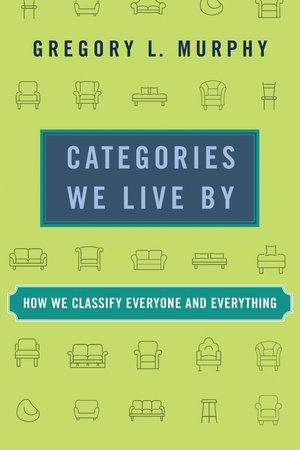
'Categories are destiny' Freud p.6. of 'Categories we live by'


Reading and enjoying for review:

Murphy, Gregory L. Categories we live by: how we classify everyone and everything. Cambridge, MA: The MIT Press, 2024.

Let's start at the beginning -
'Nowadays we are suspicious of categories, especially categories of people. Gender, ethnic, racial, and class categories are seen as a source of discrimination and inequity. If we saw each person as a unique individual, perhaps we wouldn't have all the problems caused by racism, sexism, and all the other -isms that afflict society.
In spite of these problems, I will argue that we cannot get rid of categories in general. They simplify and distract us from individual identities, which can be bad, yet if we didn't have them, we would find it impossible to navigate the world and deal with its incredible diversity.' p.7.


Reading what follows also from the book's introduction, I thought about public sector funded (socialist)  healthcare and the private provision:

'So, my sweater and my hair might both be brown, so we can say that they are both in the category of brown things. They are equivalent in the sense that I call both of them "brown." However, the category of brown things is not very interesting. When you know that something is in that category, you know exactly one thing about it-its color. There's nothing else to be known. Maybe the brown thing is alive or maybe it's inanimate; maybe its microscopic or maybe it's as big as a planet; maybe it moos or maybe it sings oI maybe it is silent. The category doesn't tell you any of those things These single-criterion categories are kind of degenerate. Yes, items that share the criterion (brownness, being three inches long, taking at least half an hour, or whatever) are equivalent, but only in the one property that defines the category. Indeed, you can define trivial categories that only have one ridiculous feature in common, like things that you have touched in the last forty-nine seconds, or objects that are exactly fifteen miles from Cincinnati. Those are not categories that people form, because they are not useful.' p.11.
There is much ongoing debate about parts of the UK's NHS being 'sold-off' - taken-over by private companies with consequences for the quality of care, e.g. cataract services:

https://www.theguardian.com/society/article/2024/jul/10/eye-doctors-say-private-cataract-operations-have-hurt-the-nhs?CMP=share_btn_url

Having worked for the NHS - now NHS Professionals since 1977, the current problems faced by the service and experienced by some patients, carers, friends and family members is upsetting.

Murphy's observation contrasting the utility of categories at the individual and collective level is a great opener. Especially for the basic structure of Hodges' model and the vertical axis.

I've written previously(?) how I think that it is true, throughout my career even as a ward manager (there were some exceptions!) and community MH nurse, I/we have been cocooned from having to be concerned about the budget. When you stop and think about it, how do the 'things' in the category of economics impinge on the biomedical, biopsychosocial model? The ward was a mechanism; it kind-of run itself, which for change agents (those who use the word transformation a lot) is an ongoing issue. The two categories that matter - even as they are global - are illness and prevention. The NHS puts supertankers to shame, in its inability to pivot - turn.

At the end of the day (and night - 24/7/365!) though healthcare must be paid for.

Murphy's explanation about degenerate categories is fascinating too (and this is just the intro!). It sees me (in danger of making a category mistake) as I think about singletons, and 'degenerate' as applies in mathematics, and the debate of finance. The tension of seeing the individual as a unique being, in order to be person-centred, but the service, the system would place them in all in the category of 'payer'.

Viewed across the funding divide, is the other inevitably viewed as degenerate? On page 80 now. More to follow. I'm still kicking all this around; while the government kicks the 'can' of social care down the road.

Many thanks to MIT Press for the review copy.

Friday, February 14, 2025

Curtains ...

'I'm not sure many rational designers would set out to emulate, or even to echo the interiors in David Lynch's films. These are rooms that haunt us: the chevron carpets, the red velvet curtains, the peeling wallpaper suggesting that our environment is somehow theatrical, temporary, a dream - an expression of our subconscious. ...

"I don't know where it came from, but I love curtains," Lynch - famously reluctant to explain his work - said in 2014. "There is something so incredibly cosmically magical about curtains opening and revealing a new world. It resonates on a deep level with people."'


INDIVIDUAL
|
      INTERPERSONAL    :     SCIENCES               
HUMANISTIC  --------------------------------------  MECHANISTIC      
 SOCIOLOGY  :    POLITICAL 
|
GROUP

IMAGINE a curtain:
What colour is it?
Imagine opening the curtain -

<<== CURTAIN
                      [a room: LxDxH]
- is the wallpaper peeling? ...


Edwin Heathcote, Head spaces, Interiors, House&Home, FTWeekend, 1-2 February 2025. p.4.

Previously:

Monday, December 09, 2024

Baseball: One of the games people play ... Fisher (2001) ii

Returning to Fisher's excellent book I mentioned an analogy from basket ball in discussion about Richard Paul's definition of critical thinking and 'thinking about your thinking'.
'Critical thinking is that mode of thinking - about any subject, content or problem - in which the thinker improves the quality of his or her thinking by skilfully taking charge of the structures inherent in thinking and imposing intellectual standards upon them. (Paul, Fisher and Nosich,1993, p. 4).' pp.4-5.
Fisher's daughter aged eleven wanted to learn how to play basket ball and attended coaching sessions. At the first the raw recruits were divided into two teams and with simplified rules set to play. Initially, getting the ball and in a position to score: shoot.

After the chaos, the coach had them practice shooting after he demonstrated how they had been playing. He explained and pointed out the basics of technique and 'drew attention to how he held the ball, where he looked, how he stood and so on.' p.5. Acknowledging their efforts, they subsequently moved on to passing, then guarding, or marking - practising each skill. 

This is a great analogy and can be applied to health, social care, medicine, nursing and other novices. Hodges' model is the basket ball, tennis, squash court, football, hockey pitch. You might move to a position to obtain an advantageous point of view. In reflective, critical thinking terms, additional data to support or negate a line of thought.

The axes of Hodges' model, serve as a scaffold to help structure our 'game player', and possibly better co-ordinate a group or team's efforts. The domains of Hodges' model cover the knowledge or subject bases that will relate to any context. Hodges' model is situated. If there is need to consider spiritual matters - experiences, then a conceptual journey ... at least, as befits an individual's or group's beliefs and purpose can be made. So forms if intelligence (emotional, cultural, spiritual ...) can also be factored in, as necessary.
 
Are there relational, logical, even mathematical standards that can be applied (formally, in theory) to our thinking? Does 'subject, content or problem' equate with 'situated'? Another book to pass on.

Fisher, A. (2001) Critical Thinking: An Introduction. Cambridge University Press, Cambridge, England. PB. 


Post: ... 'anyone for tennis'.

Sunday, December 08, 2024

Critical thinking: several definitions

Critical Thinking 
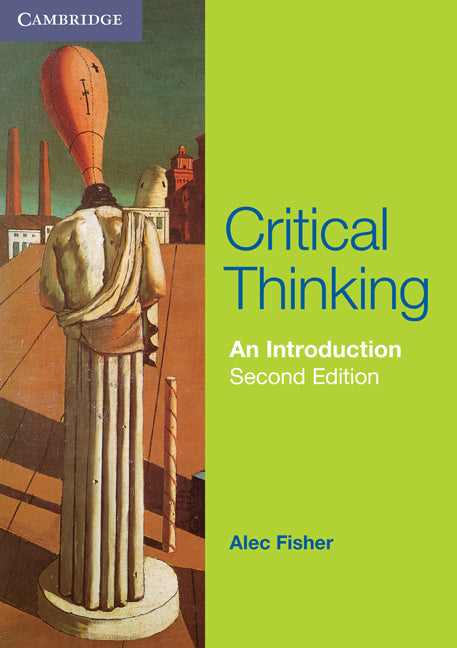
2nd Ed. Cover


An original purpose of Hodges' model was to facilitate reflection, and so help to develop practitioners who were also competent reflective practitioners, and critical thinkers.

Continuing to clear books, I've arrived at:

Fisher, A. (2001) Critical Thinking: An Introduction. Cambridge University Press, Cambridge, England. PB. 

Now in a 2nd edition (2011), my copy has several definitions of 'critical thinking' quoted below, with my emphasis.

There is a pdf of this 1st edition online which may be useful. The reward of the book, however, is in the discussion about each definition and how more recent work has built upon Dewey's legacy.  There is also a baseball analogy, which I will return to soon, or append here. I have omitted a definition by Richard Paul, which is nonetheless important to me, as it draws on meta-cognitive qualities:
"1.1.1 John Dewey and 'reflective thinking' ...

In fact, people have been thinking about critical thinking and have been researching how to teach it for about a hundred years In a way, Socrates began this approach to learning over 2,000 years ago, but John Dewey, the American philosopher, psychologist and educator, is widely regarded as the 'father' of the modern critical thinking tradition. He called it 'reflective thinking' and defined it as: 
"Active, persistent, and careful consideration of a belief or supposed form of knowledge in the light of the grounds which support it and the further conclusions to which it tends. (Dewey, 1909, p. 9)."' p.2.
 'Glaser defined critical thinking as:
(1) an attitude of being disposed to consider in a thoughtful way problems and subjects that come within range of one's experience; (2) knowledge of the methods of logical enquiry and reasoning; and (3) some skill in applying those methods. Critical thinking calls for a persistent effort to examine any belief or supposed form of knowledge in the light of the evidence that supports it and the further conclusions to which it tends. (Glaser, 1941, p.5).' p.3.
1.1.3 Robert Ennis - a widely used definition ...
'Critical thinking is reasonable, reflective thinking that is focused on deciding what to believe or do. (Cf. Norris and Ennis, 1989).' p.4.
Notice the emphasis on being 'reasonable' and 'reflective', which picks up on earlier definitions, but notice also that Ennis speaks of 'deciding what to do', which was not explicitly mentioned earlier; so decision making is part of critical thinking in Ennis's conception. Unlike Dewey's definition, this definition needs no further explanation

A final definition of critical thinking 
One last definition is worth reviewing. Michael Scriven has recently argued that critical thinking is 'an academic competency akin to defines it thus: reading and writing' and is of similarly fundamental importance. He defines it thus:
'Critical thinking is skilled and active interpretation and evaluation of observations and communications, information and argumentation. (Fisher and Scriven, 1997, p. 21).' p.10."

Sunday, December 01, 2024

ii Comparison and Contrasting the Meikirch Model and Hodges' model

Meikirch Model

Quite some time has passed since June 1st and part 1. I don't think this post can wait 18 years like that preceding! It is good to see '(Biologically given) potential' emphasized in the Meikirch Model; and the arrows which refer to:


'Whenever the five components and the ten complex interactions (double arrows) cooperate in a purposeful way, health may result. More specifically, a person is healthy, if by the two potentials she or he is in a position to respond satisfactorily to the demands of life.'


The interactions are explained in more detail. Mental health (illness) is there in 'personally acquired potential', but I wonder if it needs to be more explicit? Although, is this a welcome 'break' from the mind-BODY Cartesian divide and its legacy? A shift that enables a more constructive (less stigmatizing) formulation?

Given the climate crisis and experience of COVID, we can hopefully retain a sense of our individual proximity to the environment and green spaces. The importance of access to 'green spaces' seems to be sustained, even if action on air quality (and plastics in the environment) is still playing catch up with WHO air quality recommendations. The interdependence of nations and geography crystallizes more each month. The need for international cooperation apparent in cities, such as Lahore (1). Pollution and smog in Pakistan depends on what happens in India. Water flows, the how, when and whether is noted as a potential trigger for future conflicts.

Both models, the Meikirch, and Hodges' are of course idealizations. As such there are inevitable limitations, assumptions, pros and cons. Like many concepts, environment is a compound or expansive term. Simultaneously, from a primary meaning, we can proceed from the physical environment, to the social, political and the mental environment that these invoke or foster. 

In the SCIENCES domain of Hodges' model we are in 'a' - the environment. Physical reality presents itself in raw and fundamental terms. Across the world climate change is threatening many homes and places a stress the importance of 'shelter' and the homeless. Natural disasters, and acute local weather events which are now repetitive disrupt life and population. Conflicts continue to displace people, climate refugees will follow: (https://www.unhcr.org/refugee-statistics). Contrast this with the ideals of housing design that is sustainable and also enables occupants and communities to feel the environment. 

'Ecosystem' is being applied in ways beyond its original articulation. This past N. summer-autumn reading and reviewing -

Capra and Luisi's (2014) The Systems View of Life - A Unifying Vision.
(i) https://hodges-model.blogspot.com/2024/09/i-systems-view-life.html

- there was much emphasis on complexity, ecosystems, emergence, education, and obviously systems.

In their model, Bircher and Hahn incorporate Complex Adaptive Systems (CAS).
https://meikirch-modell.ch/wp-content/uploads/2017/12/Health-and-diease-as-CAS.pdf

This is helpful as the ecosystem is transformed, before our eyes. Clearly, there isn't one ecosystem, but several and they are all dynami: even if, outdoor clothing and car manufacturers want us to believe that we can create our own private ecosystem that is trans-portable. Systems are like the whirls in moving water, they come and go. Ironically there are now more opportunities to study them - if we so choose. Now weather events reveal the risks of people trying to sustain these mindsets when a local catastrophe strikes. The website for the Meikirch Model includes the table below. 

Theories Concerning
Health and Disease
Type of thinking Epistemology Means for comprehension
Prescientific Personal experience Intuition
Scientific: Meikirch-Model
Scientific argumentation Rational mind

This is constructive as models should encompass what can be presented as 'knowledge' and from there: data, information, facts, myth, wisdom and folk theory. Intuition is listed as a prescientific 'means for comprehension'. Intuition is highly subjective, in contrast to the (supposed) objectivity of the sciences. Intuition is nonetheless significant in mental health care - psychotherapy, and in truth more generally (interpersonal skills); even if it remains 'unscientific' and an enigmatic phenomena. 

On twi/X and here on W2tQ, I've suggested that the bio-medical, and the biopsychosocial models are inadequate as conceptualisations for healthcare and education. We need to fully encompass the subjective and humanistic dimensions of health care and lived experience, giving more attention, if not credence to 'personal experience'. In England and Wales these past months and to follow our parliament has been debating assisted dying for people with terminal illness. Both sides acknowledge the sorry state of palliative care. Policy and ethics - hence the politics of health needs to be explicit in a model of/for healthcare.

Working in mental health you quickly understand how critical it is being able to relate to others, and  develop therapeutic relationships. Get this wrong, and problems may follow. If interpersonal - communication are essential to a health professional's knowledge then awareness and competence in relational skills are also key. In the past two years or so, I've realised the importance of this for Hodges' model and trying to develop a theory to underpin Hodges' model. I believe that this is a strength of Hodges' model. So we need to extend the table above. 

Individual
   |
      INTERPERSONAL    :     SCIENCES               
HUMANISTIC  --------------------------------------  MECHANISTIC      
 SOCIOLOGY  :   POLITICAL 
|
Group

choice - life style

reasoning - rationality

my literacy - responsibility

mental illness - fear of stigma

intuition / subjectivity


geography - environment

air pollution - smog & plastics

traffic regulation - metrics

Planetary health

'truth' objectivity

community - relationships

culture

social systems

family

social (all) determinants

international cooperation

transparency / accountability

policies - funding

determinants of health

reporting - citizen science


As part 1 started, I will finish with the title of the paper that prompted these reflections:

Bircher J. und Hahn E. G., (2017). Will the Meikirch Model, a New Framework for Health, Induce a Paradigm Shift in Healthcare? Cureus 9(3): e1081. DOI 10.7759/cureus.1081 

The Meikrich model is not alone in seeking to facilitate and deliver a paradigm shift in healthcare; and, at individual, collective, planetary levels, across social care and education and the disciplines - old and new.
 
(1) https://www.independent.co.uk/climate-change/news/pakistan-lahore-air-pollution-schools-shut-aqi-b2640783.html

Sunday, August 04, 2024

"No argument, we should teach critical thinking" by Julian Richer

Spring and summer reading includes Our Housing Disaster. Julian Richer's weekly column in the Sunday Times is very interesting; business yes, but socially oriented and positive in the values conveyed.

I'm 100 pages into The Systems View of Life, posts to follow, but before getting to OHD, I noticed another of Richer's columns:

#36 "No argument, we should teach critical thinking"

Sunday 14th July 2024

"... all the successful bosses I’ve ever worked with encourage an open flow of communications in all directions (internally — up, down, across — and with the outside world, too) with no taboos. They try to surround themselves with good people who can see the world independently, draw their own conclusions and have the confidence to express their ideas."

"It’s very difficult to craft a culture of critical thinking and open debate in a business unless it’s been taught at school, as our parents tend to be more stuck in their ways. Unfortunately, schools spend so much time on teaching and testing reading, and particularly writing, that they don’t have enough time to teach thinking and speaking. These require practice, too. And they are also very important life and business skills."
 

The discussion on Parallel Histories reminds me of philosophical talk, virtue-seeking is not enough. It needs to applied practically, if it is to make a difference.


"An added benefit is that kids who have learnt calm and reasoned debate will use this knowledge to help them in their adult life. Certainly, those going on to join the business world will be very pleased to have received these negotiating and people skills, both essential."

Hodges' model provides a structure for reflection, reflective practice, and critical thinking and inevitably light-weight can be carried as lifelong learning resource and tool.

Friday, July 19, 2024

Axiology, concept, horizon

"The hypothesis that thinking is founded in valuation requires for its development what philosophers call "axiology," the philosophic study of values. Of course, values are not phenomena that float into view, stimulating a "philosophy of values" to study them. Rather, it will be argued that values should be conceived of as the universal character of everything. Axiology, therefore, is the study of things with regard to their value dimension. An axiology of thinking is a study of the various roles of value in thinking." p.12.

individual
|
INTERPERSONAL : SCIENCES
humanistic ------------------------------- mechanistic
SOCIOLOGY : POLITICAL
|
group

"An image is the horizon in terms of which our definitions of its contents makes sense.  It is like a mental picture of the rough outlines of the world: it handles information by giving each datum a position relative to the rough outlines." p.36.


"A concept is a way of mentally grouping various components whose combination is valuable because of a normative measure. The "real" identity of things comes from the normative measure of which their de facto harmony is an approximation." p.84.


Neville, R.C. (1981) Reconstruction of Thinking, New York: SUNY.


Wednesday, April 10, 2024

"David Lynch: A Thinking Room"


Where is the Thinking Room?


Individual
|
      INTERPERSONAL    :     SCIENCES               
HUMANISTIC  --------------------------------------  MECHANISTIC      
 SOCIOLOGY  :    POLITICAL 
|
Group

Ah! Surely this one?

It's deep!


Is it here?
This is deep too!

Please take a chair.


I trust you are comfortable, so
what about this place?


Yes, you can think here -
but you must check first
before you do: Think. 
If you must ...

N.B. Please rate your experience too.


Soraya Roberts. A Room Of His Own, FT Magazine, 30-31 March, 2024, 1067: pp.38-41.

https://www.ft.com/content/bf6a6eaa-30d1-4704-9aea-4ff2d117f407

David Lynch’s dreamlike rooms at the Salone del Mobile.Milano 2024:
https://www.salonemilano.it/en/articles/david-lynchs-dreamlike-rooms-salone-del-mobilemilano-2024

Sunday, October 15, 2023

Constructivism in Hodges' model: Situated, cognitive, pragmatic

INDIVIDUAL
|

 INTERPERSONAL    :     SCIENCES               
HUMANISTIC --------------------------------------  MECHANISTIC      
SOCIOLOGY  :   POLITICAL 
|
GROUP

"From the constructivist perspective, every field has its unique ways of knowing and the overarching goal is to move the learner into thinking within the knowledge domain as an expert of that domain might think. In geography, for example, the goal would not be to teach geography facts or principles but to teach learners to use the domain of geographic information as a cartographer, geographer or navigator might do. Just as the cartographer or geographer must bring new perspectives to bear and construct a particular understanding or interpretation of a situation, so too must the learner. And just as different geographers identify different relevant information and come to different conclusions, we must also leave identification of relevant information and 'correct' solutions open in the teaching situation. The process of constructing a perspective or understanding and developing reflexive awareness of that process are essential to the constructive view of learning." pp.96-97.


Zwozdiak-Myers, Paula. (2012). The Teacher's Reflective Practice Handbook: Becoming an Extended Professional through Capturing Evidence-Informed Practice. Abingdon, Oxon: Routledge. 


https://www.routledge.com/The-Teachers-Reflective-Practice-Handbook-Becoming-an-Extended/Zwozdiak-Myers/p/book/9780415597586

See also: 


Cognitive apprenticeship . . .

Wednesday, October 11, 2023

'System 1 and 2 Modes of Thinking' in Hodges' model

 System 1 - 

"operates automatically and quickly,
with little or no effort and no sense of voluntary control. 

 System 2 - 

allocates attention to the effortful mental activities that demand it, including complex computations. The operations of System 2 are often associated with the subjective experience of agency, choice, and concentration." pp. 20-21.

"When we think of ourselves, we identify with System 2, the conscious, reasoning self that has beliefs, makes choices, and decides what to think about and what to do. Although System 2 believes itself to be where the action is, the automatic System 1 is the hero of the book. I describe System 1 as effortlessly originating impressions and feelings that are the main sources of the explicit beliefs and deliberate choices of System 2. The automatic operations of System 1 generate surprisingly complex patterns of ideas, but only the slower System 2 can construct thoughts in an orderly series of steps. I also describe circumstances in which System 2 takes over, overruling the freewheeling impulses and associations of System 1. You will be invited to think of the two systems as agents with their individual abilities, limitations and functions." p.21.


INDIVIDUAL
|
     INTERPERSONAL    :     SCIENCES               
HUMANISTIC --------------------------------------  MECHANISTIC      
SOCIOLOGY  :   POLITICAL 
|
GROUP

System 2:
  • Brace for the starter gun in a race.
  • Focus attention on the clowns in the circus.
  • Focus on the voice of a particular person in a crowded and noisy room.
  • Look for a woman with white hair.
  • Search memory to identify a surprising sound.
  • Maintain a faster walking speed than is natural for you.
  • Monitor the appropriateness of your behavior in a social situation.
  • Count the occurrences of the letter a in a page of text.
  • Tell someone your phone number.
  • Park in a narrow space (for most people except garage attendants).
  • Compare two washing machines for overall value.
  • Fill out a tax form.
  • Check the validity of a complex logical argument. p.22.

System 1:
  • Detect that one object is more distant than another.
  • Orientate to the source of a sudden sound.
  • Complete the phrase "bread and . . .".
  • Make a "disgust face" when shown a horrible picture.
  • Detect hostility in a voice.
  • Answer to 2 + 2 = ?
  • Read words on large billboards.
  • Drive a car on an empty road.
  • Find a strong move in chess (if you are a chess master).
  • Understand simple sentences.
  • Recognize that a "meek and tidy soul with a passion for detail" resembles an occupational stereotype. p.21.


Kahneman, D. (2011). Thinking, fast and slow. London: Penguin Books.

See also:
https://thedecisionlab.com/reference-guide/philosophy/system-1-and-system-2-thinking

Friday, May 05, 2023

"There are no tools stored in this van overnight"

. . . but there is a tool
with great potential
available here 24/7/365 . . .


INDIVIDUAL
|

 INTERPERSONAL    :     SCIENCES               
HUMANISTIC --------------------------------------  MECHANISTIC      
SOCIOLOGY  :   POLITICAL 
|
GROUP
Identity morphism


Images: 
 
https://krossovochkin.com/posts/2020_04_26_category_theory/
 
https://cdn.shopify.com/s/files/1/0044/4701/0919/products/no-tools-stored-in-this-vehicle-overnight-sign-646188.png?v=1680276776

Tuesday, July 05, 2022

PsychoPathology: Space, Social Perception, and Mental Disorders ...

In the Philos-L "The Liverpool List" I noticed this (online) issue of Psychopathology and was drawn to its themes, especially that of space.

TABLE OF CONTENTS

129. Space, Social Perception, and Mental Disorders: Phenomenological and Empirical Approaches
Bader, O.; Bizzari, V.; Fuchs, T.
https://www.karger.com/Article/FullText/524754 (Open Access)

132. Scale for Space and Time Experience in Psychosis: Converging Phenomenological and Psychopathological Perspectives
Arantes-Gonalves, F.; Wolman, A.; Bastos-Leite, A.J.; Northoff, G.
https://www.karger.com/Article/FullText/519500

143. Alterations in the Experience of Time, Space, and Intersubjectivity and the Interaction with Pre-Existent Psychopathology during the COVID-19 Pandemic
Lau, I.; et al.
https://www.karger.com/Article/FullText/522345

156.  Reopening Selves: Phenomenological Considerations on Psychiatric Spaces and the Therapeutic Stance
Thoma, S.; Schwnzl, I.; Galbusera, L.
https://www.karger.com/Article/FullText/517888

168. Borderline We-Space? The Phenomenology of the Background of Safety in Borderline Personality Disorder
Van Duppen, Z.; Schmidt, P.; Lowyck,B.
https://www.karger.com/Article/FullText/520860

179. Borderline Personality Disorder, Lived Space, and the Stimmung
Lo Monte, F.; Englebert, J.
https://www.karger.com/Article/FullText/521182

190. Background Feelings of Belonging and Psychological Trauma
Wilde, L.
https://www.karger.com/Article/FullText/518327

201. Interpersonal and Intersubjective Alienation in Social Stigmatization and Depression
Paskaleva-Yankova, A.
https://www.karger.com/Article/FullText/519253 (Open Access)

211. Gestalt Perception and the Experience of the Social Space in Autism: A Case Study
Bader, O.; Fuchs, T.
https://www.karger.com/Article/FullText/524562 (Open Access)

Edited - removed active links, affiliations, spurious text codes/line breaks, added one et al.


INDIVIDUAL
|
 INTERPERSONAL    :     SCIENCES               
HUMANISTIC --------------------------------------  MECHANISTIC      
SOCIOLOGY  :   POLITICAL 
|
GROUP

psycho-

space

Intra- Interpersonal
Intersubjective


-pathology

space


empirical


social perception

'We-space'?

space

'We-space'?

Wednesday, August 04, 2021

Myers-Briggs 'in' Hodges' model (Discuss?)

individual
|
INTERPERSONAL : SCIENCES
humanistic ----------------------------------------------- mechanistic
SOCIOLOGY : POLITICAL
|
group - population
INTUITION

THINKING
 

INTROVERSION

JUDGING


While thinking and thought span the intra- interpersonal and sciences domains, the bias is towards objectivity not subjectivity.

While individual's exercise judgement and the outcome of many decisions may be inconsequential, when situations are misjudged, the consequences can be very political, i.e. professional and legal. The overlaps here are many (as per the function of the MBTI) - in judgements that are adverse socially, for example, shame and embarrassment may also result.

Intuition is usually experienced in a person's 'gut' and yet despite this somatic reference it is a very subjective and humanistic quality. In clinical contexts it is interesting when a colleague or a team try to make sense of this in terms of action to take.

This interplay between subjectivity-objectivity, personal-other, quality-quantity and other dichotomies are inherent in Hodges' model.

My source:
Ahuja, A. (2018) The eternal appeal of Jung (Review of: What's Your Type? The Strange History of Myers-Briggs and the Birth of Personality Testing, Merve Emre, William Collins. Life&Arts, FTWeekend, 15-16 September. p.9.