Hodges' Model: Welcome to the QUAD: interaction

Hodges' model is a conceptual framework to support reflection and critical thinking. Situated, the model can help integrate all disciplines (academic and professional). Amid news items, are posts that illustrate the scope and application of the model. A bibliography and A4 template are provided in the sidebar. Welcome to the QUAD ...

Showing posts with label interaction. Show all posts

Tuesday, February 17, 2026

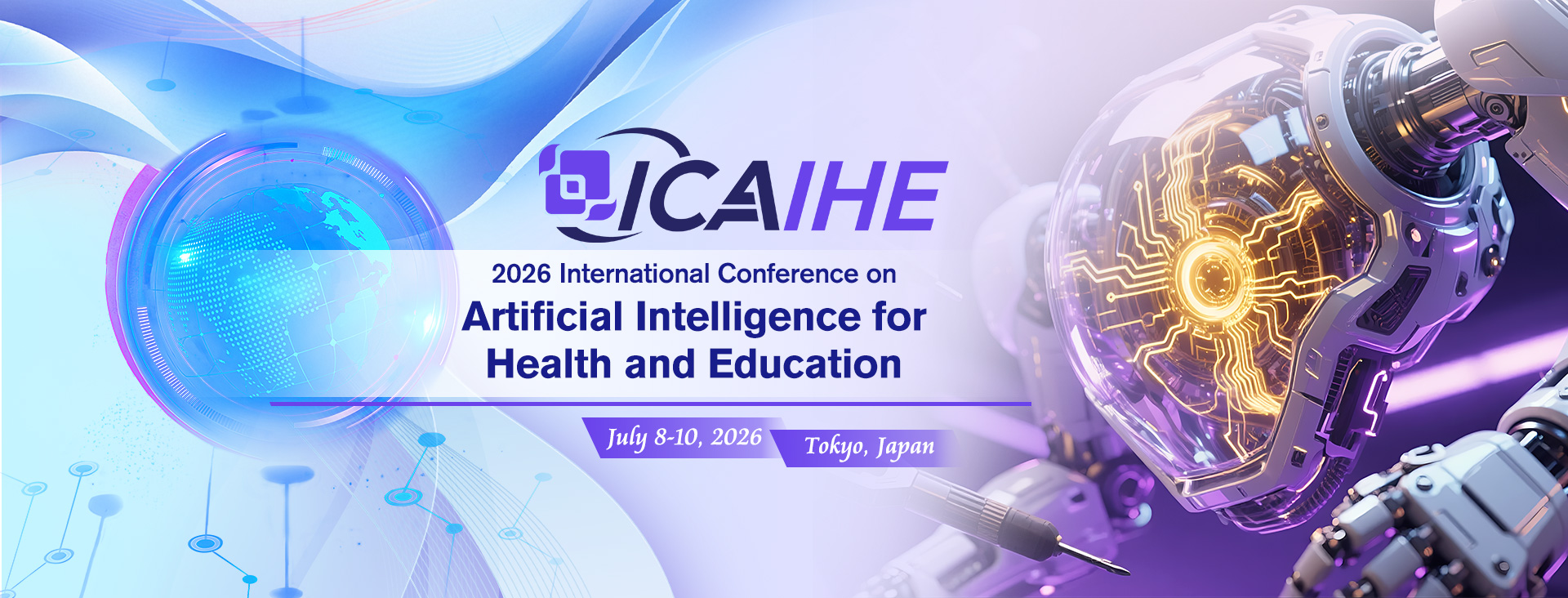
CFP - 2026 International Conference on Artificial Intelligence for Health and Education (ICAIHE2026)

July 8-10, 2026, Tokyo, Japan
Dear Colleagues,

We are writing to invite you to submit your papers for publication and presentation at 2026 International Conference on Artificial Intelligence for Health and Education (ICAIHE 2026) scheduled on July 8-10, 2026 in Tokyo, Japan.

https://icaihe.org

Also, we invite you to submit a workshop/special session proposal to participate in ICAIHE 2026.

The workshop/special session proposal submission deadline has been extended to: February 28, 2026.
The regular paper submission deadline is: March 1, 2026.

----------------------------------------

INTRODUCTION
---------------
With the spread of digital technology in healthcare and education, there is a growing interest in using artificial intelligence (AI) to promote human well-being in the extensive areas of health and learning. As more data becomes available from IoT, wearable devices, sensors, social media and many other online platforms, new possibilities emerge for understanding and revolutionizing digital health and learning.

ICAIHE 2026 focuses on AI-enhanced and data-driven approaches to health and education. It aims to leverage advanced AI technology to provide new opportunities in the healthcare and education sectors. This conference is committed to bringing together researchers to explore how these cutting-edge AI technologies can optimize personal health and learning environments, and to demonstrate how these emerging technologies can drive transformative practices that promote human well-being.

IMPORTANT DATES
---------------
Workshop/SS Proposal Due: February 28, 2026 (Extended)
Regular Paper Due: March 1, 2026

Workshop/SS Paper Due: March 8, 2026
Author Notification: May 1, 2026
Paper Registration Due: May 15, 2026
Camera-ready Submission Due: May 22, 2026

SCOPE AND TRACKS
---------------
Prospective authors are invited to submit papers on topics including, but not limited to:
Track 1: Emerging AI Technologies for Health and Education
  • Generative AI and LLM
  • Agentic AI and AI Agents
  • Explainable AI
  • Multimodal AI Models
  • Small Smart AI Models
  • Knowledge Graphs
  • Privacy Protection, Security, and Ethics in Emerging AI Applications
Track 2: AI-Enhanced Healthcare and Medical Services
  • AI-Enhanced Big Data Analytics in Healthcare and Medical Services
  • Multimodal Data Fusion in Digital Health
  • AI-Enhanced Biometric Analysis in Digital Health
  • Machine Learning and Deep Learning for Healthcare and Medical Services
  • AI-Enhanced Precision Healthcare
  • Metaverse and Digital Twin for Healthcare and Medical Services
  • Human-AI Interaction in Digital Health and Well-being Promotion
Track 3: AI-Enhanced Education and Learning
  • LLM-Enhanced Educational Content Generation
  • LLM-Enhanced Personalized Learning
  • LLM-Enhanced Automated Learning Feedback and Assessment
  • AI-Enhanced Collaborative Learning
  • AI-Enhanced Learning Analytics
  • AI-Enhanced VR/AR/Metaverse for Immersive Learning
  • AI Agents for Learning Management Systems
ICAIHE 2026 CALLS
---------------
Prospective authors are invited to submit original papers. Formats for the submissions are either
- Full Paper: 12-15 pages
- Short Paper: 6-11 pages
- Work-in-Progress Paper: 6-7 pages
SUBMISSIONS AND PUBLICATIONS
---------------
All accepted papers will be published in Springer CCIS series. Selected high quality papers will be recommended for possible publications on journal special issues.

For further details, please refer to https://icaihe.org/sub.html

Submission Link: https://cmt3.research.microsoft.com/ICAIHE2026
 
-------------
Hosted by
Waseda University, Japan 
 
My source: AI-SGES list - https://www.bcs-sgai.org/?section=server

Friday, October 24, 2025

Come on Healthcare: catch up will you!

Within philosophy it is recognised that Immanuel Kant provided a means by which the rationalists and empricists can be reconciled. Some background:

In philosophy, rationalism is the epistemological view that "regards reason as the chief source and test of knowledge"[1] or "the position that reason has precedence over other ways of acquiring knowledge",[2] often in contrast to other possible sources of knowledge such as faith, tradition, or sensory experience. More formally, rationalism is defined as a methodology or a theory "in which the criterion of truth is not sensory but intellectual and deductive".[3]  https://en.wikipedia.org/wiki/Rationalism
In philosophy, empiricism is an epistemological view which holds that true knowledge or justification comes only or primarily from sensory experience and empirical evidence.[1] It is one of several competing views within epistemology, along with rationalism and skepticism. Empiricists argue that empiricism is a more reliable method of finding the truth than purely using logical reasoning, because humans have cognitive biases and limitations which lead to errors of judgement.[2] Empiricism emphasizes the central role of empirical evidence in the formation of ideas, rather than innate ideas or traditions.[3] Empiricists may argue that traditions (or customs) arise due to relations of previous sensory experiences.[4]

Historically, empiricism was associated with the "blank slate" concept (tabula rasa), according to which the human mind is "blank" at birth and develops its thoughts only through later experience.[5] https://en.wikipedia.org/wiki/Empiricism

If health and social care, must be evidence-based, then as far as Hodges' model is concerned we are then duty-bound to use the most readily available 'evidence' to us, including (while taking liberties?):

  • The structure of national health and social care organisations (NHS, DHSS ...)
  • Physical infrastructure
  • Human Resources Organisation
  • Unions and Labour relations
  • Texbooks, journal papers, conferences
  • Organisational structures from the regional to the local
  • Professional bodies and governance of licensing/registration
  • Curricula that students follow^
  • Models, frameworks, teaching and learning tools and methods
  • Data, statistics, information and reporting (national, international)
  • Research projects ongoing (whatever scale, methods, methodology)
  • Accounts from lived experience of patients, carers and public (^and students)
  • Policy
  • Funding
  • Law relating to Health and Social Care
  • Public (Mental) Health? Discuss
  • Media (Social) Control, Advertising
  • . . .

Hodges' model: Structure and Content


Using this evidence, we still see the Cartesian divide, the mind-body distinction writ large in health and social care. The continuing impact is evident in theory, practice, (hence) lived experience, policy and managment. Since its creation in the 1980s, Hodges' model mirrors (literally) this philosophical, epistemological and ontological legacy, thereby acknowledging the ancient history of medicine, and 'modern' development of healthcare and nursing. Through this device, Hodges' model can facilitate debate, critique, reflection, and critical thinking; to encourage progress in our thought, motivations, action and subsequent evaluation.


This explains the structure of Hodges' model and predicts the range (contextual signature) of content when the model is applied.

Evidence permitting of course!

See also: BBC The Great Philosophers:

Series 1: 4. Descartes

Series 1: 5. Spinoza and Leibniz

Series 1: 8. Kant

n.b. I video taped this marvellous series when first screened. When studying for my BA(Hons), audio taped, they also provided a great learning resource in the car. The programmes are on BBC 4 (UK) once again, but are readily accessible.

Wednesday, July 02, 2025

Did 'to a T' find its inspiration in Rio de Janeiro?

... or somewhere else?

to a T

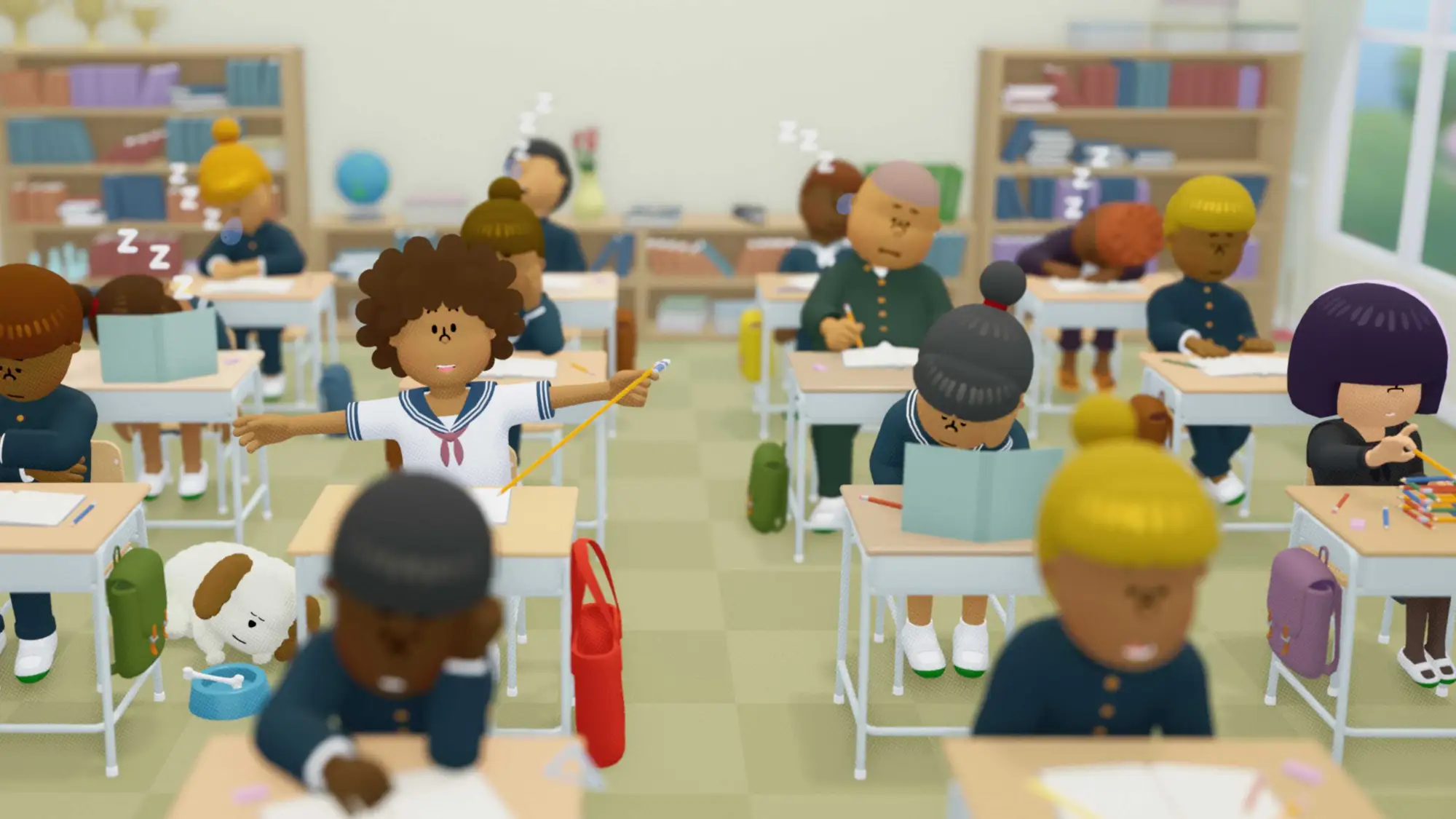
A new game from Keita Takahashi
"'to a T' is an episodic 3D adventure game developed by Keita Takahashi and the uvula team, with a strong focus on character, interaction, story and exploration. Play as a teenager (Teen), with a unique posture just trying to live a normal life in a small coastal town. Explore the town along with the help of Teen’s loyal dog and loving mother. While going to school and contending with bullies, Teen discovers a new ability granted to them by their extraordinary posture, and they start to uncover more about their mysterious lineage."
'to a T' - image https://annapurnainteractive.com/en/games/to-a-t

Developer - https://uvula.jp/

I have never been as far south as Rio de Janeiro. It would be marvellous to visit Tijuca National Park - Alto da Boa Vista, Rio de Janeiro - RJ.

But then ... 🌍🌎🌏🌐

My source: Tom Faber, In praise of gaming's auteurs. Financial Times, 11 June, 2025, p.18.

Tuesday, November 12, 2024

Call for Papers “THE CULTURAL EXPLOSION OF AI: ...

Navigating the Intersection of Artificial Intelligence, Society, and Culture”


Artificial intelligence has burst into the cultural space with the speed of an explosion. As with any powerful explosion, its initial impact is a spectacular blinding flash, followed by a shock wave with real effects. Perhaps we are still at the very beginning, but often the intensity of the blinding flash is proportional to the real effect that follows, both in terms of sweeping away existing forms and as long-term cultural “radiation”.

According to Lotman, a cultural explosion is a period of transformation when rapid and large-scale changes occur in cultural systems, leading to a significant increase in the creation of new information. It is estimated that artificial intelligence produces as much cultural text in one year as humanity has produced throughout its millennia-long history until the advent of the digital age. More interestingly, this new textual production is entering its most productive phase with the invention of Transformer architecture, which is almost a literal algorithmic realization of Lotman's concept of translation — the main mechanism of semiotic metabolism in the Semiosphere.

Training Large Language Models (LLMs), which is the foundation of AI, suspiciously resembles the way Umberto Eco models culture in the structure of a rhizome, which computer scientists call a "neural network." His encyclopedic model is based precisely on what LLMs extract from huge arrays of existing text—the statistic constancy of sign usage. In a polemic with textual immanentists, Eco postulates as part of the reader's encyclopedic competence the ability to inferentially reproduce the possible contexts of sign usage that make up the text. For many, the “magic” of artificial intelligence in its current form lies in its understanding of our questions to it, achieved with the Attention Mechanism, which, as a principle of cooperation between author and reader, is quite literally described in "The Role of the Reader" (1994).

The hardest to find were a fruitful correspondences between generative semiotics and generative media like Chat GPT, as paradoxical as that may sound, but surely there are such correspondences, and they are likely to be discovered in the future. In any case, as a theory of meaning generation on the one hand and an endless machine for creating meaningful texts on the other, the cultural explosion of AI will not leave this breed of semioticians unemployed.
We welcome contributions on the following key topics, but not limited to them:

- Semiotic models of AI generated cultural content
- Semiotic analysis of AI texts generation
- Semiotic theory of generative media
- Socio-cultural consequences of AI's advent
- Transdisciplinary collaboration between semiotics and informatics
- AI in creative practices in the arts
- AI in creative practices in marketing and advertising
- AI in research and education
- Cultural-economic implications of AI
- AI in pop culture
- AI in videogames and XR

Send here your proposal for papers (200-300 words): DigitASC AT nbu.bg

Deadline for the abstracts : 31 January 2025;

Deadline for full papers: 15 June 2025;

Deadline for the final revised papers: 31 August 2025;

Publication: December 2025

Digital Age in Semiotics & Communication, a journal from the Southeast European Center for Semiotic Studies at the New Bulgarian University and founded by Prof. Kristian Bankov, explores the new forms of knowledge, social and linguistic interaction, and cultural phenomena generated by the advent of the Internet and information technologies.

A topic is chosen for each issue by the editorial board, but the topics will be always related to the issues of the digital environment. The working language of the journal is English. It uses double-blind review, meaning that both the reviewer’s and the author’s identities are concealed from each other throughout the review process.

Link to the archive of the first six issues: https://ojs.nbu.bg/index.php/DASC/issue/archive

For more information and submission of papers: DigitASC AT nbu.bg

My source:
--


Departamento de Filosofia, Comunicação e Informação
Faculdade de Letras da Universidade de Coimbra
3004-530 Coimbra, Portugal

E-mail: iestudosfilosoficos AT gmail.com
Sítio Web: http://www.uc.pt/fluc/ief
YouTube: https://youtube.com/@uidief
Academia: https://coimbra.academia.edu/ief

Friday, October 11, 2024

Spontaneity - have we lost something?

. . . asking for a friend … of course . . . 

Creative therapy
'Moreno states that in the evolution of man, spontaneıty  appeared 'before libido, memory and intelligence .. .. In effect it is generally discouraged and thwarted by our cultural  mechanisms. Many of the problems of the psyche and social difficulties suffered by humanity are attributable to an insufficient development of spontaneity. For this reason the art of teaching people to use their spontaneity is the most beneficial thing to be learned in any of our educational institutions.' He also pointed out that anxiety indicates a loss of spontaneity.
A 'cultural conserve' (Moreno) is the end product of a cultural endeavour, the fixed conserve or preserve of culture  the contents of all the libraries, the teaching in all the schools, the knowledge acquired by a child in the home or at school, what is given by radio, television, the theatre, the  cinema, books, lectures - all the 'conserves' of the past creativity of others offered to the intellect.' p.142.


Jennings, S. (1983) Creative therapy. Banbury: Kemble Press edition. (Image: c/o Amazon)

#ChildDevelopment #Attention #Cognition #Play #Adolescence #Curiosity #Innovation #Life #Serendipity #Literacy #Media #DigitalTechnology

Wednesday, October 11, 2023

'System 1 and 2 Modes of Thinking' in Hodges' model

 System 1 - 

"operates automatically and quickly,
with little or no effort and no sense of voluntary control. 

 System 2 - 

allocates attention to the effortful mental activities that demand it, including complex computations. The operations of System 2 are often associated with the subjective experience of agency, choice, and concentration." pp. 20-21.

"When we think of ourselves, we identify with System 2, the conscious, reasoning self that has beliefs, makes choices, and decides what to think about and what to do. Although System 2 believes itself to be where the action is, the automatic System 1 is the hero of the book. I describe System 1 as effortlessly originating impressions and feelings that are the main sources of the explicit beliefs and deliberate choices of System 2. The automatic operations of System 1 generate surprisingly complex patterns of ideas, but only the slower System 2 can construct thoughts in an orderly series of steps. I also describe circumstances in which System 2 takes over, overruling the freewheeling impulses and associations of System 1. You will be invited to think of the two systems as agents with their individual abilities, limitations and functions." p.21.


INDIVIDUAL
|
     INTERPERSONAL    :     SCIENCES               
HUMANISTIC --------------------------------------  MECHANISTIC      
SOCIOLOGY  :   POLITICAL 
|
GROUP

System 2:
  • Brace for the starter gun in a race.
  • Focus attention on the clowns in the circus.
  • Focus on the voice of a particular person in a crowded and noisy room.
  • Look for a woman with white hair.
  • Search memory to identify a surprising sound.
  • Maintain a faster walking speed than is natural for you.
  • Monitor the appropriateness of your behavior in a social situation.
  • Count the occurrences of the letter a in a page of text.
  • Tell someone your phone number.
  • Park in a narrow space (for most people except garage attendants).
  • Compare two washing machines for overall value.
  • Fill out a tax form.
  • Check the validity of a complex logical argument. p.22.

System 1:
  • Detect that one object is more distant than another.
  • Orientate to the source of a sudden sound.
  • Complete the phrase "bread and . . .".
  • Make a "disgust face" when shown a horrible picture.
  • Detect hostility in a voice.
  • Answer to 2 + 2 = ?
  • Read words on large billboards.
  • Drive a car on an empty road.
  • Find a strong move in chess (if you are a chess master).
  • Understand simple sentences.
  • Recognize that a "meek and tidy soul with a passion for detail" resembles an occupational stereotype. p.21.


Kahneman, D. (2011). Thinking, fast and slow. London: Penguin Books.

See also:
https://thedecisionlab.com/reference-guide/philosophy/system-1-and-system-2-thinking

Thursday, January 12, 2023

ERCIM News No. 132 Special theme: "Cognitive AI and Cobots"

Dear ERCIM News reader,

ERCIM News No. 132 has just been published. This issue features a special theme "Cognitive AI and Cobots" showcasing remarkable achievements from research teams in Europe.  

This special theme was coordinated by our guest editors Theodore Patkos (ICS-FORTH) and Zsolt Viharos (SZTAKI).

Thank you for your interest in ERCIM News. Please forward this message to anyone who might be interested. We also appreciate you following and talking about us on Twitter @ercim_news and other social media.

[ Includes:

Cognitive Mimetics and Human Digital Twins – Towards Holistic AI Design
by Antero Karvonen (VTT) and Pertti Saariluoma (Jyväskylä University). p.17.

"Industry is just one example. AI will gradually change the way
people live and work and how society operates. Therefore, it
makes sense to develop AI design as a holistic process in
which social and technical aspects of intelligent technologies
can be simultaneously considered. Such new design practice
can be called holistic AI design. Cognitive mimetics and HDTs
provide key elements in such AI design." p.18.*
Cognitive Machine Argumentation
by Antonis Kakas (University of Cyprus). p.21.

Personalisation of Humanoid Robots: Serious Games for Older Adults Based on Biographical
Memories
by Benedetta Catricalà, Marco Manca, Fabio Paternò, Carmen Santoro and Eleonora Zedda (ISTI-CNR). p.28.

Food Waste Reduction in Healthcare – Challenges in Integrating Usage Data with Scorings
by Johann Steszgal (Steszgal Informationstechnologie GmbH), Peter Kieseberg (St. Pölten UAS) and, Andreas Holzinger (University of Natural Resources and Life Sciences Vienna). p.37.
Additional note PJ ]

Next issue:
No. 133,  April 2023
Special Theme: "Data infrastructures and management". Submissions are welcome!


About ERCIM

ERCIM - the European Research Consortium for Informatics and Mathematics - aims to foster collaborative work within the European research community and to increase co-operation with European industry. Leading European research institutes are members of ERCIM. ERCIM is the European host of W3C.

Subscribe to the ERCIM News quarterly alert

Peter Kunz                      	
ERCIM Office
2004, Route des Lucioles
BP93
F-06902 Sophia Antipolis Cedex

https://www.ercim.eu
https://ercim-news.ercim.eu 
--------------------------------
@ercim_news
http://twitter.com/ercim_news

join the ERCIM Linkedin Group
https://www.linkedin.com/groups/81390/

*Hodges' model is ideal for initial scoping, planning, and holistic assurance throughout research, study processes and (case) formulation. The model provides ready-to-mind access to conceptual inter- multi- transdisciplinary bridges (even as we struggle to define the latter), e.g. socio-technical. 

Immediately preceding the above quotation, Karvonen and Saariluoma write:

"Arriving at this point via the cognitive mimetic route yields a deep and rich picture of human-technology co-agency in industrial processes." p.17.

A 'rich picture' (Checkland) is a feasible output of Hodges' model (extending Karvonen and Saariluoma's context). Clinically, this might comprise a 'comprehensive' assessment, or case formulation. It is bounded, guided by being situated, while the clinician's experience and patient's is built up across several encounters (appointments/home visits...). Unpopulated, initially (please see the template in the sidebar) the model serves as an aide-mémoire, an inner critical friend, helping to sustain values, and person-centredness. At a one-to-one(-group) level  integrated care, that is, parity of esteem across physical and mental health, a professional attitude and disposition to practise through unconditional positive regard remain key competencies. Each contact can act as its own 'reset', another blank sheet/slate: what can we learn together on this occasion? In some contexts this 'pause' can assist in risk management and safety - ensuring that the rich picture, and the knowledge gained thus far, does not mean things are taken for granted.

Friday, November 11, 2022

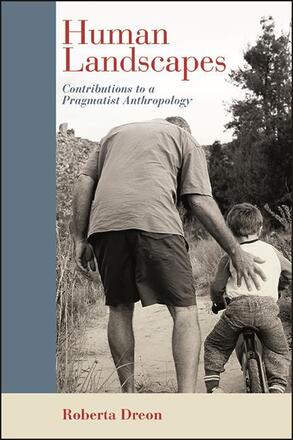
Book review iv "Human Landscapes: Contributions to a pragmatist anthropology"

Human landscapes

I am rueing the day (whichever it was) I lost my hard copy. Despite best intentions, I'm taking it slowly with the pdf, also much appreciated c/o the author Prof. Roberta Dreon.

The cover resonates at present as it was my mother's funeral on Wednesday. This provoked memories of my father too - happy times. Whatever emotional intelligence I can lay claim to I realise it is a gift from mum: a pragmatist anthropology indeed, as grief flies around.

 I can't help 'read' this as I apply a pragmatic tool:

"By following or even radicalizing Mead, it could be argued that it is at least partly through the use of verbal communication that the sense of one’s own self has been made possible—where self-reflection is considered to be a primarily affectively based form of awareness. While avoiding any hypostatization of interiority as a primary condition—which would give rise to the well known philosophical problems of the internal/external, private/public dichotomies—we should consider why humans are often capable of having a rich interior experience." p.68.

Dreon's (necessary) focus upon sensibility, habits and the insights obtained are rewarding:

In Chapter 3 Pragmatist Contributions to a Theory of Emotions -

"In spite of the abundance of theories, I think that developing a pragmatist approach can still be fruitful, because it helps to get rid of many of the noxious dichotomies that have shaped the philosophical as well as psychological conception of emotions—mind-body dualisms, nature-culture gaps, and private-public oppositions.." p.71.
The book isn't dizzying but the traversals from the sciences to the affective sciences, as an understanding of the emotions is sought highlights the elephant that follows us on the journey across Cartesian and other divides. Salience is here - in qualitative form, epigenetic threads are highlighted (p.73). As noted key to the project is dealing with a pragmatist theory of emotion. The legacy of issue in health and other disciplines is evident here, even if not explicitly stated. Conjoining experience, the environment and emotion is to grapple with parity of esteem - even if apolitically.

Clearly not a nursing or psychotherapy text - there are many connections: emotional intelligence, introspection (and its limits?).

"Emotions often arise out of a break in habitual behavior and provide the organism with a kind of affective proto-evaluation of environmental conditions that can later become an object of reflection and judgment." p.74.

I've reading to follow on enactivism, embodiment ever since at least: 

Paley J. Clinical cognition and embodiment. Int J Nurs Stud. 2004 Jan;41(1):1-13. doi: 10.1016/s0020-7489(03)00081-6. PMID: 14670389.

Plus some books (yes two in :: two out mum...).

When aged 16-17 I read and wrote about Wundt's recognition of the limits of introspection:

".. from the perspective of the methodological hypothesis that introspective analysis should be avoided because it is scientifically unreliable." p.76.
(If I find that notebook I'll do another post. Reading about the history of psychology, I was drawn to mental health/illness.)

Anyone familiar with h2cm and posts here will appreciate the trigger of association produced by:

"... 'interactive' is different from 'intentional'..." AND ".. a mechanical process; on the contrary, by emphasizing its plasticity." p.76.

We can even link book reviews!

"... recent ideas that the brain is at least partially configured after birth ..." p.77
(Brainscapes)

Clearly in the slow lane with this - but enjoying the learning and a further post - when I'll point to the review as a series.

Dreon R. (2022) Human landscapes. Contributions to a pragmatist anthropology. Suny Press, Albany.


Tuesday, September 06, 2022

Book review iii "Human Landscapes: Contributions to a pragmatist anthropology"

 
Human Landscapes

As per previous 'reviews', this reader can get lost in the Introduction.

Discussing - "interactions, and loop effects within the organic-environmental system" - there is emergentism, causality, teleology, and supervenience with argument about definitions and word-use through the historical development of pragmatism and understanding of human behaviour individually, collectively and as a culture.

 A close reading can help, is called for here ...


What is of interest to me at present is the non-surprising mention of logic, Dreon points to the many problems that Dewey and pragmatic and other philosophers encountered from the introduction of subjective-objective dichotomies. 

For a mental health nurse the intra- interpersonal is your 'bread and butter' so to speak. Dreon has you reflecting on your professional field, by raising the dichotomy of feelings and cognition, the psychical and the physical aspects of emotions, language and experience. (Interesting, does a pragmatic approach foster identification of dichotomy or continuity?)

For a moment on page 66 I thought we were still on the introduction: 

"The final chapter of this volume will be devoted to the development of a qualitatively richer conception of human linguistic experience conceived as continuous, rather than as opposed to sensibility."
But this is fine and is a statement of Dreon's argument, its depth in dealing with the thought of Dewey, James and others (e.g. Mead). This is dense, and yet detailed, when it is not your field, but you can - begin, at least - to see how the historical development of pragmatism (schools of philosophy), psychology and sociology create so many dilemmas and debates:

"In my opinion, some of the Classical Pragmatists’ insights should
be brought to a coherent conclusion by basically working on two sides,
in order to avoid a foundational conception of language, while at the
same time gaining a more rounded view on sensibility, as it unfolds in
our ordinary lives. As already hinted at in response to Dreyfus, I endorse
a more complex conception of language as primarily consisting in fully
embodied and socially shared linguistic practices that have a variety
of different ends in view and are largely regulated by an affectively or
qualitatively oriented mutual sensibility." p.66.

The book is also 'developmental' too:

"Those practices—from so-called motherese to lullabies, nursery rhymes, and storytelling—are often specifically directed at eliciting responses from the baby and catching attention. The baby’s behaviors—shaking the arms, keeping the eyes wide open,
squealing—are strongly embodied, even when they are vocal; but they are also affectively based and oriented responses to cultural-linguistic stimulations on the part of its caregivers." p.67.
All this shouted emergence to me (and as above), and Dreon rewards this reading. 

Thinking about the 'logic' (if any) in Hodges' model, this stood out:

"The point is to change our approach and to adopt the point of view of the
shared social context in which an individual’s first perceptions occur,
rather than the still monological perspective of an isolated individual
as the primary starting point of experience." p.67.
With more to follow ... I know now why I saved this:

embodied nature

an interactive installation to nurture
our sensibility to the living world


Dreon R. (2022) Human landscapes. Contributions to a pragmatist anthropology. Suny Press, Albany.

https://sunypress.edu/Books/H/Human-Landscapes

Video: Roux, Caroline, Design Miami: Tangled up in the natural world. FT Weekend, Collecting, 27-28 November 2021, p.3.

https://mischertraxler.com/projects/embodied-nature/

Saturday, May 14, 2022

New book: "Talking with a Map"

- A Cognitive Analytic Approach
to Everyday Conversational Awareness

 INDIVIDUAL
|

   INTERPERSONAL    :     SCIENCES               
HUMANISTIC --------------------------------------  MECHANISTIC      
SOCIOLOGY  :   POLITICAL 
|
GROUP

MENTAL MAPS

PSYCHO-THERAPIES


MAPS

PHYSICAL-THERAPIES


META-COGNITION


Fingers-crossed please! 

I've contacted Pavilion Publishing and Media Ltd with a review copy request of this new book - available for pre-order:

"Talking with a Map takes cutting-edge techniques for structuring and navigating conversations out of the therapy room and into everyday life, describing a versatile method that anyone can use to develop better skills, interactions and relationships."

Working with two co-authors three papers will hopefully (yes - cross them again) be complete soon. Then I can resurrect the piece on case formulation, diagrams and Hodges' model. 

If anyone is interested please get in touch:

peter.jones AT h2cm.info

Previously on W2tQ:

map :: therapy

Friday, February 11, 2022

c/o GPonline: "Social prescribing patients curate art exhibition at leading Cornish gallery"

"The ‘What Lies Behind’ exhibition, a recent display in Newlyn Art Gallery, saw 10 patients from Morrab Surgery in Penzance select works of art from Arts Council national collection of more than 8,000 pieces.

The group were asked to choose pieces that reflected their personal response to the pandemic. The works on display included textiles, sculpture, prints and paintings by artists including Pablo Picasso, Henry Moore and Chila Burman.

The project came about during lockdown after Morrab Surgery’s social prescribing link worker Ellie Moseley realised that many of the patients in the practice that she was working with had an interest in the arts." [ On GPonline ].


  Self - Individual - Person
|

 INTERPERSONAL    :     SCIENCES               
HUMANITIES - ARTS ----------------------------------  SCIENCES
SOCIOLOGY  :   POLITICAL 
|
Community - Group - Population
Personal expectations (care, medicine...)

Emotional wellbeing

Person-centred care

Social prescribing as a care intervention
'What lies behind' exhibition, Newlyn Art Gallery
Social prescribing
as a care policy needs
community resources
(to match).

Amid health policy calls
for innovation and
 sustainable healthcare systems and services; the community remains the sustainable resource (if not neglected).

Funding -
... ££ $$ €€ ¥¥ ฿฿ ₫₫
₴₴ ₪₪ ₽₽ ₹₹ ₩₩ ...
local :: global health.


My source: @ActivateEurope

https://twitter.com/ActivateEurope/status/1491751271539351562?s=20&t=ZQHyHs2a9--xJpmJDzrdHQ

@GPonlinenews

Friday, December 10, 2021

Register for ‘Vulnerabilised Individuals and Opaque Institutions’ Feb 10 2022

Professor Havi Carel


Join us for the Second Annual Joint Center for Knowledge,
Technology and Society Center for Nursing Philosophy lecture,
“Vulnerabilised Individuals and Opaque Institutions”
with University of Bristol Professor Havi Carel.


About the lecture

“In this talk I develop the concept of vulnerabilisation to pick out a large and diverse group of people who suffer vulnerabilities caused or exacerbated by their situations. I outline how individuals can be made vulnerable by interpersonal encounters and interactions with social structures. I then discuss vulnerabilisation in relation to what I call ‘institutional opacity.’

An opaque institution is especially problematic for individuals and groups already rendered vulnerable during their interactions with that institution, and a prime example are ill persons in the context of healthcare institutions, which I discuss. I articulate the features of an encounter between a vulnerabilised individual and an opaque institution and end by tracing two ameliorative strategies that could help repair this interaction.” — Havi Carel

About Havi Carel

Havi Carel is professor of philosophy at the University of Bristol, England. She recently completed a Wellcome Trust Senior Investigator Award, the Life of Breath. She was awarded the Health Humanities’ Inspiration Award 2018 for this work.

Her third monograph, Phenomenology of Illness, was published by Oxford University Press in 2016. She was selected as a Best of Bristol lecturer in 2016.

Havi is the author of Illness (2008, 2013, 2018), shortlisted for the Wellcome Trust Book Prize, and of Life and Death in Freud and Heidegger (2006). She is the co-editor of Health, Illness and Disease (2012), New Takes in Film-Philosophy (2010), and of What Philosophy Is (2004).

Event details

Date and time: Feb. 10, 2022 | 10 a.m. Pacific; 1 p.m. Eastern; 5 p.m. UK
Event location: Zoom

Registration

You will receive a link to join the event upon registration.

My source: 

University of California, Irvine Sue & Bill Gross School of Nursing | 252 Berk Hall, Irvine, CA 92697

Previously on W2tQ:

https://hodges-model.blogspot.com/search?q=illness

Links in original source rationalised to reduce any algorithmic penalties.

Thursday, March 11, 2021

PhD position on "Analyzing the Interactions Between Spaces of Argumentation in Different Contexts"

We are seeking applicants for a PhD position on «Analyzing the Interactions Between Spaces of Argumentation in Different Contexts» at LAMSADE (University Paris-Dauphine).

The Covid19 crisis shows us that arguments can circulate between different social worlds, as they have done between scientific and academic worlds, media, and social media, in different directions. However, the way people discuss in these different environments is very different and rely on different standards to recognize proofs.

How can different groups advance in a debate when sharing information, evidence on a complex issue, refer to different notions of arguments and proof standards?

For example, in recent months we could observe some ideal-typic description of the shape of the argumentation:

  1. in the mediatic world: repeat, follow, approve/disprove, exaggerate, attack ad hominem;
  2. in the scientific world: decide paradigm, decide hypothesis, test, revise, purify, consolidate, invalidate, give examples, give counter-example.

The literature on argumentation theory has elaborated several defeasible argumentation schemes, which are abstract argument forms that do not necessarily fall into the classical deductive or inductive argument structures, and that capture also what traditionally is classified as a fallacy.

For a detailed description see:

https://www.lamsade.dauphine.fr/fileadmin/mediatheque/lamsade/documents/propositions_theses_2020/pigozzi.pdf

*Required Profile*

- Master degree in Computer Science (or equivalent) with good GPA
- Knowledge in Computer Science, Mathematics, Economics and Logic
- Minimal programming skills
- Strong interest for multidisciplinary research
- Autonomy and ability to work in a team
- Good writing skills in English

*Application procedure and deadline*

Interested candidates should send the following PDF documents to Juliette Rouchier (juliette.rouchier AT dauphine.fr) and Gabriella Pigozzi (gabriella.pigozzi AT dauphine.fr) before 11 April 2021:

- CV
- Scan of transcripts of marks with their ranking
- A letter of motivation
- One letter or recommendation

A first selection will be performed amongst eligible applications, and selected candidates will be interviewed.

PS: Please forward this email to potential candidates.

My source: 

Philos-L "The Liverpool List" is run by the Department of Philosophy, University of Liverpool https://www.liverpool.ac.uk/philosophy/philos-l/

Wednesday, April 01, 2020

Contextual and other forms of Collapse ...

individual
|
INTERPERSONAL : SCIENCES
humanistic ----------------------------------------------- mechanistic
SOCIOLOGY : POLITICAL
|
group - population

"I will get through this."

what is invisible


"Nowadays, digital technology is transforming our lives at an accelerating pace. This sometimes feels wildly liberating. But it is often terrifying too, because cyberspace is so disorientating. More specifically, in the cyberworld there is a constant problem of what anthropologists call "context collapse": it is hard to discern the contours of social interactions because the factors that used to frame our cultural lives are only half-present".


"We will get through this together."
my emphasis


At times such as this - the COVID19 pandemic - we are all trying to maintain the semblance of  "I will get through this." and "We will get through this together"; trying to self-care and in-so-doing care for friends, family, community and the population.

At times when our cultural and personal lives are not even 'half-present', there is an increased need for sense-making, for balance and orientation. While the tool we seek is a vaccine and preparedness for the next one, there are tools to reduce the impact of the several forms of collapse we are presently  experiencing.


Please see also initial post:

https://hodges-model.blogspot.com/2019/10/liminality-in-how-ancient-rituals-help.html

- sourced from and acknowledged Gillian Tett:

Tett, Gillian. 2019, How ancient rituals help us adapt to the digital age. FT Weekend, Magazine, June 29-30, p.46.

Saturday, January 12, 2019

Book: Making of Byrne’s Euclid

individual
|
INTERPERSONAL : SCIENCES
humanistic ----------------------------------------------- mechanistic
SOCIOLOGY : POLITICAL
|
group

My source: Twitter @dr_tj @defilippovale @rougeux

https://twitter.com/defilippovale/status/1074436950663278592

Thursday, December 06, 2018

Patient Education: Stable - Unstable Plaques c/o twitter ...

individual
|
INTERPERSONAL : SCIENCES
humanistic ----------------------------------------------- mechanistic
SOCIOLOGY : POLITICAL
|
group - population
'The patient'
Insight, Awareness, Understanding
Attention, Engagement, Recall

Health Literacy

Stable-Unstable Plaques
Statins
Post Myocardial Infarction
Evidence-Based Care


Policy
Post MI Intervention
or
Pre MI?
Clinics ('Real time'?)

Public Health Funding

Wednesday, November 07, 2018

Articulating the Socio-Technical and much more c/o @Atul_Gawande

individual
|
INTERPERSONAL : SCIENCES
HUMANISTIC ----------------------------------------------- MECHANISTIC
SOCIOLOGY : POLITICAL
|
group


John ---- Atul

"The story of modern medicine is the story of our human struggle with complexity. Technology will, without question, continually increase our ability to make diagnoses, to peer more deeply inside the body and the brain, to offer more treatments. It will help us document it all—but not necessarily to make sense of it all. Technology inevitably produces more noise and new uncertainties.

Perhaps a computer could have alerted me to the possibility of a genetic disorder in John Cameron, based on his history of skin lesions and the finding of high calcium. But our systems are forever generating alerts about possible connections—to the point of signal fatigue. Just ordering medications and lab tests triggers dozens of alerts each day, most of them irrelevant, and all in need of human reviewing and sorting. There are more surprises, not fewer. The volume of knowledge and capability increases faster than any individual can manage—and faster than our technologies can make manageable for us. We ultimately need systems that make the right care simpler for both patients and professionals, not more complicated. And they must do so in ways that strengthen our human connections, instead of weakening them."
Cameron ---- Gawande

"I had more time for his questions now, and I let him ask them. When we were done and I was about to get off the phone, I paused. I asked him if he’d noticed, during our office visit, how much time I’d spent on the computer.

“Yes, absolutely,” he said. He added, “I’ve been in your situation. I knew you were just trying to find the information you needed. I was actually trying not to talk too much, because I knew you were in a hurry, but I needed you to look the information up. I wanted you to be able to do that. I didn’t want to push you too far.”

It was painful to hear. Forced to choose between having the right technical answer and a more human interaction, Cameron picked having the right technical answer."


Atul Gawande, Why Doctors Hate Their Computers. Annals of Medicine, November 12, 2018 Issue


Wednesday, April 11, 2018

Borders & Boundaries 2018: Debating the limits and possibilities of Education

The Department of Educational Research invite international speakers every summer, and this year we are opening the event up to invite critical interdisciplinary scholars to engage in a range of events which bring together our three research centres: Higher Education Research and Evaluation; Technology Enhanced Learning; and Social Justice and Wellbeing in Education.

This year’s theme is Borders and Boundaries, which will be unpacked by our internationally renowned speakers and a programme of conference presentations on 3rd and 4th of July in the historic city of Lancaster.

Borders and Boundaries: Debating the limits and possibilities of Education

Borders and boundaries is an important theme in educational research and practice, having multiple meanings and interpretations. At one level, this notion reflects critical conceptualisations of place, territories and educational (im)mobilities which have come to the surface in recent years as a response to political and policy changes that seek to limit the movement of people and ideas. Alternatively, borders and boundaries may be taken to refer to theoretical demarcations and interactions, and the increasing emphasis on interdisciplinarity within research, and the associated instability of categories such as academic, practitioner, researcher and educator in the context of efficiency and structural changes within schools, universities and other institutions. This theme also has analytical value for framing debates about the perceived fluidity of formal and informal educational space in the digital age, simultaneously democratising knowledge and blurring the boundaries between professional and personal identities for many educators and academics. Finally, we envisage the theme of borders and boundaries as providing a way into discussions about social distinctions and emotional separations, which shape educational experiences, transitions, and outcomes in a broad range of ways.

Read more...

I have placed the conference themes within Hodges' model:


individual
|
INTERPERSONAL : SCIENCES
humanistic ------------------ Borders & Boundaries ------------------ mechanistic
SOCIOLOGY : POLITICAL
|
group
This theme also has analytical value for framing debates about the perceived fluidity of formal and informal educational space in the digital age, simultaneously democratising knowledge and blurring the boundaries between professional and personal identities for many educators and academics.
... critical conceptualisations of place,
 territories ...

... borders and boundaries may be taken to refer to theoretical demarcations and interactions, and the increasing emphasis on interdisciplinarity within research, and -

Borders and boundaries is an important theme in educational research and practice, having multiple meanings and interpretations.

Finally, we envisage the theme of borders and boundaries as providing a way into discussions about social distinctions and emotional separations, which shape educational experiences, transitions, and outcomes in a broad range of ways.
- the associated instability of categories such as academic, practitioner, researcher and educator in the context of efficiency and structural changes within schools, universities and other institutions.  


factor immobility
occupational immobility
academic / educational (im)mobilities


My source: Jill Anderson, Lancaster University.

Thursday, October 19, 2017

Paper: Wang and Nickerson (2017). A literature review on individual creativity support systems

Hodges' model can lay claim to being a creativity support system [CSS]. While I do not have evidence, the model presents a diversity of stimuli in its structure and the care - knowledge - domains. It follows then that from the outset it is a motivational primer on both affective and achievement counts. Immediately, there is the motivation provided by the blank space, viewed as one or four conceptual spaces to find an initial starting concept. Affective as users gravitate towards their chosen reflective and creative journey, and achievement priming as having a goal that is prompted by professional, interpersonal and educational goals. If there is a case of 'creativity block' then perhaps a group approach can be adopted? Hodges' model then becomes a collaborative creativity support system. With Hodges' model and no doubt the proposed CSSs the collaborative agents add their own affective and achievement priming, whether student-student; patient-student (supervised); or mentor-student.

With the important caveat that the studies identified do not include healthcare but many papers are general. The authors provoke many questions: "Creativity support systems, like other information systems, are most effective when they instantiate underlying theories..." (p.140). I have already posed this question - which is (as ever) compound. As per the review's general domain papers, is there an underlying theory for all of Hodges' model; or is there a need for a theory per care domain?

"The literature on individual creativity support systems has drawn from theories about design, human computer interaction, information systems, and creativity.. " (p.140). 
If 'design' can be complex, what of 'care design'? That is what we are about. This in turn impacts upon the other sources of theory above.

There is much to draw upon in Wang and Nickerson (2017) but finally on page 145:
"the authors did a survey to verify the notion that creative self-efficacy, individual knowledge and IT support affect individual creativity through mediating variables: individual absorptive capacity, exploration and exploitation." 
Creativity must contribute to literacy, Wang and Nickerson allude to a relationship, referring to self-efficacy above. This is what we are seeking in health literacy and self-care. An ability to explore and exploit available resources being a sign of autonomy and efficacy.

Table 3
A framework for designing individual creativity support systems.


Aspects Components Features to Support the Component
Motivation
Motivational
priming
Affective priming
Achievement priming
Creative Process
Process
completeness
Process control 
Modules to support each step in a complete
creative process
Allowing iteration and selection of steps
Divergent
thinking

Stimuli

Long term
memory

Working
memory

Creativity
techniques
Providing different levels of stimuli,
Providing stimuli dynamically
External long term memory, such as knowledge
base and case library;
Facilitating search
Supporting association,
Visualization,
Random combination
Facilitating the use of creativity techniques;
Computational creativity techniques
Convergent
thinking 
Comprehension
Decision 
 Labeling, classification, simulation
Criteria based comparison, Decision support


Table 4
The steps in a complete creative process.

Process Stage The Divergent Step The Convergent Step
Problem finding
Formulating problem presentations in various ways
Selecting the best ways to present the problem
Information finding
Collecting potentially relevant information
Selecting the most relevant information
Idea finding
Generating many ideas
Selecting the best ideas
Solution finding
Improving the selected ideas
Selecting the improved ideas and integrating them into a solution


Reference:
Wang, K., & Nickerson, J. (2017). A literature review on individual creativity support systems. Computers In Human Behavior, 74, 139-151. (tables p.145).
http://dx.doi.org/10.1016/j.chb.2017.04.035