Hodges' Model: Welcome to the QUAD: sensibility

Hodges' model is a conceptual framework to support reflection and critical thinking. Situated, the model can help integrate all disciplines (academic and professional). Amid news items, are posts that illustrate the scope and application of the model. A bibliography and A4 template are provided in the sidebar. Welcome to the QUAD ...

Showing posts with label sensibility. Show all posts

Friday, November 11, 2022

Book review iv "Human Landscapes: Contributions to a pragmatist anthropology"
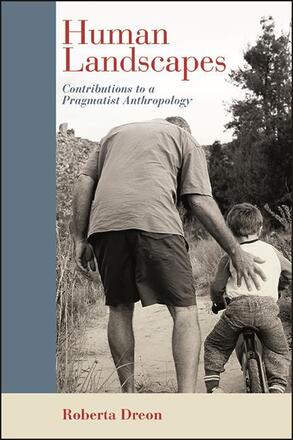
Human landscapes

I am rueing the day (whichever it was) I lost my hard copy. Despite best intentions, I'm taking it slowly with the pdf, also much appreciated c/o the author Prof. Roberta Dreon.

The cover resonates at present as it was my mother's funeral on Wednesday. This provoked memories of my father too - happy times. Whatever emotional intelligence I can lay claim to I realise it is a gift from mum: a pragmatist anthropology indeed, as grief flies around.

 I can't help 'read' this as I apply a pragmatic tool:

"By following or even radicalizing Mead, it could be argued that it is at least partly through the use of verbal communication that the sense of one’s own self has been made possible—where self-reflection is considered to be a primarily affectively based form of awareness. While avoiding any hypostatization of interiority as a primary condition—which would give rise to the well known philosophical problems of the internal/external, private/public dichotomies—we should consider why humans are often capable of having a rich interior experience." p.68.

Dreon's (necessary) focus upon sensibility, habits and the insights obtained are rewarding:

In Chapter 3 Pragmatist Contributions to a Theory of Emotions -

"In spite of the abundance of theories, I think that developing a pragmatist approach can still be fruitful, because it helps to get rid of many of the noxious dichotomies that have shaped the philosophical as well as psychological conception of emotions—mind-body dualisms, nature-culture gaps, and private-public oppositions.." p.71.
The book isn't dizzying but the traversals from the sciences to the affective sciences, as an understanding of the emotions is sought highlights the elephant that follows us on the journey across Cartesian and other divides. Salience is here - in qualitative form, epigenetic threads are highlighted (p.73). As noted key to the project is dealing with a pragmatist theory of emotion. The legacy of issue in health and other disciplines is evident here, even if not explicitly stated. Conjoining experience, the environment and emotion is to grapple with parity of esteem - even if apolitically.

Clearly not a nursing or psychotherapy text - there are many connections: emotional intelligence, introspection (and its limits?).

"Emotions often arise out of a break in habitual behavior and provide the organism with a kind of affective proto-evaluation of environmental conditions that can later become an object of reflection and judgment." p.74.

I've reading to follow on enactivism, embodiment ever since at least: 

Paley J. Clinical cognition and embodiment. Int J Nurs Stud. 2004 Jan;41(1):1-13. doi: 10.1016/s0020-7489(03)00081-6. PMID: 14670389.

Plus some books (yes two in :: two out mum...).

When aged 16-17 I read and wrote about Wundt's recognition of the limits of introspection:

".. from the perspective of the methodological hypothesis that introspective analysis should be avoided because it is scientifically unreliable." p.76.
(If I find that notebook I'll do another post. Reading about the history of psychology, I was drawn to mental health/illness.)

Anyone familiar with h2cm and posts here will appreciate the trigger of association produced by:

"... 'interactive' is different from 'intentional'..." AND ".. a mechanical process; on the contrary, by emphasizing its plasticity." p.76.

We can even link book reviews!

"... recent ideas that the brain is at least partially configured after birth ..." p.77
(Brainscapes)

Clearly in the slow lane with this - but enjoying the learning and a further post - when I'll point to the review as a series.

Dreon R. (2022) Human landscapes. Contributions to a pragmatist anthropology. Suny Press, Albany.


Tuesday, September 06, 2022

Book review iii "Human Landscapes: Contributions to a pragmatist anthropology"

 
Human Landscapes

As per previous 'reviews', this reader can get lost in the Introduction.

Discussing - "interactions, and loop effects within the organic-environmental system" - there is emergentism, causality, teleology, and supervenience with argument about definitions and word-use through the historical development of pragmatism and understanding of human behaviour individually, collectively and as a culture.

 A close reading can help, is called for here ...


What is of interest to me at present is the non-surprising mention of logic, Dreon points to the many problems that Dewey and pragmatic and other philosophers encountered from the introduction of subjective-objective dichotomies. 

For a mental health nurse the intra- interpersonal is your 'bread and butter' so to speak. Dreon has you reflecting on your professional field, by raising the dichotomy of feelings and cognition, the psychical and the physical aspects of emotions, language and experience. (Interesting, does a pragmatic approach foster identification of dichotomy or continuity?)

For a moment on page 66 I thought we were still on the introduction: 

"The final chapter of this volume will be devoted to the development of a qualitatively richer conception of human linguistic experience conceived as continuous, rather than as opposed to sensibility."
But this is fine and is a statement of Dreon's argument, its depth in dealing with the thought of Dewey, James and others (e.g. Mead). This is dense, and yet detailed, when it is not your field, but you can - begin, at least - to see how the historical development of pragmatism (schools of philosophy), psychology and sociology create so many dilemmas and debates:

"In my opinion, some of the Classical Pragmatists’ insights should
be brought to a coherent conclusion by basically working on two sides,
in order to avoid a foundational conception of language, while at the
same time gaining a more rounded view on sensibility, as it unfolds in
our ordinary lives. As already hinted at in response to Dreyfus, I endorse
a more complex conception of language as primarily consisting in fully
embodied and socially shared linguistic practices that have a variety
of different ends in view and are largely regulated by an affectively or
qualitatively oriented mutual sensibility." p.66.

The book is also 'developmental' too:

"Those practices—from so-called motherese to lullabies, nursery rhymes, and storytelling—are often specifically directed at eliciting responses from the baby and catching attention. The baby’s behaviors—shaking the arms, keeping the eyes wide open,
squealing—are strongly embodied, even when they are vocal; but they are also affectively based and oriented responses to cultural-linguistic stimulations on the part of its caregivers." p.67.
All this shouted emergence to me (and as above), and Dreon rewards this reading. 

Thinking about the 'logic' (if any) in Hodges' model, this stood out:

"The point is to change our approach and to adopt the point of view of the
shared social context in which an individual’s first perceptions occur,
rather than the still monological perspective of an isolated individual
as the primary starting point of experience." p.67.
With more to follow ... I know now why I saved this:

embodied nature

an interactive installation to nurture
our sensibility to the living world


Dreon R. (2022) Human landscapes. Contributions to a pragmatist anthropology. Suny Press, Albany.

https://sunypress.edu/Books/H/Human-Landscapes

Video: Roux, Caroline, Design Miami: Tangled up in the natural world. FT Weekend, Collecting, 27-28 November 2021, p.3.

https://mischertraxler.com/projects/embodied-nature/

Sunday, August 28, 2022

Book review ii "Human Landscapes: Contributions to a pragmatist anthropology"

When I have a book to review I need a hard copy - too much screen already - and while I hope the review is worth the author's and publisher's kind engagement my purpose includes gathering insights and evidence to support the project here.

Back in July I lost this book (OK I fessed up). I've searched ... and must have left it somewhere! This is a great loss.*

Human Landscapes

Thankfully, Roberta forwarded an early pdf, and I'm enjoying an informed and challenging read:

The author's task:

"... only a few scholars have sought to outline a philosophical anthropology through a pragmatist lens." p.8.

Distracted, as ever, I'm making progress and can see an author who is:

- embodied, embedded, enacted, and extended (p.7) - in this subject matter.

I'm going backwards from post i, but I commented on this:

"Even if Michael Quante’s proposal is not grounded in Pragmatism, I agree with his claim that, in order to be pragmatistic, a philosophical anthropology should assume that each concept or theory requires questions like: “How is this related to human action? What place does it have in the context of our
actions? (2018, 22)." p.15.

In the context here, this is precisely the role of Hodges' model, at the conceptual level - placement in the care domains, and in theory, care approach (context), philosophy. I like Dreon's focus on evaluation too, and the fact that an example is the impact of COVID on education and the resort and reliance of online learning.

Dreon concentrates on the organism and the environment (a key debate) from across the literature, and discusses concepts that are notoriously problematic, terms like, sensibility, and human nature.

"The situation is particularly complex because, evidently, this is not a merely
theoretical issue; rather, it has serious existential implications, both moral
and political." p.17.

Reading, I instantly thought of the social determinants of health [SDoH], moving away from reductive explanations. But the SDoH are precarious in the extent to which they will affect policy, and give rise to specific metrics - similarly to the sustainable development goals [SDGs]. These have a pragmatic and clearly anthropocentric quality about them. As Dreon notes the oppositions and dichotomies (very quickly as per post i) these policies 'light up' the humanistic domains. As health professionals and educators we can shout, warm, warmer, colder ... to the policy makers (and currently the 'purse' holders).

A 'good' book reassures you about what you've read - Whorf, time, Hopi; but also points to what you might like to read:

"In his entry for the Encyclopaedia, Dewey claims that isolating
the allegedly native and original constitution of human nature is possible
only through the assumption of a static point of view on it, for example,
by privileging features at birth over traits characterizing the intrauterine
past or the organism’s future development and adulthood." p.19.

Bubbles: Spheres I by Peter Sloterdijk, Wieland Hoban (Translator) - my emphasis above.

My .pdf copy is littered with comments where I (inevitably) read evidence in support of h2cm. I don't want to dilute Dreon's purpose, which is comprehensive (for me) in referencing and critical analysis of the latest thought. But if Roberta and Suny Press will (please) forgive me for losing the hard-copy hopefully they can see why I draw attention to the following:

"Grene was very careful to avoid reducing the relationship between biological factors and culture to causal dependence: she preferred to speak of a widespread dependence of sociocultural life on biophysical reality and to consider the relation as an “anthropological circle” (Peterson 2010)." p.24.

 INDIVIDUAL
|
 INTERPERSONAL    :     SCIENCES               
HUMANISTIC --------------------------------------  MECHANISTIC      
SOCIOLOGY  :   POLITICAL 
|
GROUP

sustainable mindset
(volunteered - incentivised)


"biophysical reality"

"sociocultural life"

circular economy


There are many circles, not just at work, but circles that need to work.

More to follow - as I pick up speed ...

Dreon R. (2022) Human landscapes. Contributions to a pragmatist anthropology. Suny Press, Albany.

https://sunypress.edu/Books/H/Human-Landscapes

*Looking at the photo, the table looks like a Booths cafe? I have phoned them and elsewhere - no joy. :-(

Monday, July 11, 2022

Book review - "Human Landscapes: Contributions to a pragmatist anthropology"

'After Ethnos', a previous book review was an enjoyable challenge. As a nurse, you are, to a certain extent several disciplines all rolled into one, sociologist, psychologist, diplomat, anthropologist ... but After Ethnos and now Dreon's 'Human Landscapes' bring their own demands.

If it was experiment that attracted me to Tobias Rees's book, Dreon's title works on two levels.

Hodges' model anticipates different 'landscapes'. The model also provides a lesson in pragmatism (another post) with pragmatism identified as a method to research Hodges' model.

On health care education programmes, how often do we write of human nature, cognition, or cognitive processes, qualitative and quantitative, subjective and objective? How quickly do we present ourselves, and the readers of assignments with dichotomies, dualities, and polarities?

Just 40 pages in they are here in expected and welcome abundance. I clearly have some reading to do [ that's why it's a review! :-) ] and from reading, much to critique in my differentiation between phenomena and as concepts presented here on W2tQ.

"... the conceptual framework for my approach to human nature is represented by cultural naturalism— that is, a nonreductive form of naturalism that assumes culture to be continuous with nature, rooted in the very organic and environmental conditions of human life, and yet irreducible to the mere association of preexisting resources." p.23

Human landscapes

"Nonetheless, even if we wish to focus on a theoretical analysis of the concept, the idea of human nature seems to display a tangle of problems, punctuated by distinctions that could be useful when treated as functional and connected to specific contexts, but which are actually turned into dogmatic oppositions. One first form of dualism concerns the opposition between the innate and the acquired, between the allegedly innate equipment existing on the genetic or neural level and the properties and ways of behaving this is assumed to give rise to. To give but one example, based on Chomsky’s influential hypothesis, the idea of a neural program for producing grammar encoded in our genes has been assumed to be an efficient (and sometimes sufficient) cause for specific linguistic practices. From this point of view, nurture, culture, and institutions seem to be something completely different from nature, since they supervene on an already fixed material substratum as an adjunct." pp.17-18.

"Taking this or that snapshot of a human could be a useful intellectual expedient in specific circumstances, but “[b]iologically all growth is modification and all organs have to be treated and understood as developments out of something else and as pointing forward to still something else” (Dewey 1985b, 32–33)." pp.19-20.

"I believe that the conceptual opposition between subjective and objective qualities is like a net with too wide a mesh, unable to catch the complexity of our interactions with the world. The problem, I would argue, is that this opposition often involves the idea that qualitative experience is a private, purely first-person experience, consequently posing problems of public access." pp.33-34.

"The section 2 will focus on the Pragmatists’ conception of experience as something broader and richer than cognition—because, in turn, cognition is understood as a specific phase within experience, responding to the needs and problems emerging from qualitative experience and ultimately returning to it. In this approach, perception through the senses and pure sense data are reframed within the context of inquiry, as features that are pointed out, discriminated, and isolated from a more holistic field of experience according to an
idea, namely, the anticipation of the possible consequences of an action or a certain assumption." pp.37-38.

Not sure why, but at one point, reading prompted consideration of: 'lived experience' and the role of peer support workers?

Starting the book, Dreon is (naturally) laying out the scope and structure of the book. Not just a preface but first chapter, and it looks like - the second. As I get more accustomed to Dreon's style (I'm a nurse remember) there are valuable lessons in laying out arguments, with more reward to follow I trust. I have a sense of a wall, not an impenetrable one, but one that is well argued - the blocks shifting into place - even if I cannot grasp their true significance to specialists in this field.

More to follow.

Dreon R. (2022) Human landscapes. Contributions to a pragmatist anthropology. Suny Press, Albany.

Many thanks to Roberta and Suny Press for my copy (confession to follow).
