Hodges' Model: Welcome to the QUAD: library

Hodges' model is a conceptual framework to support reflection and critical thinking. Situated, the model can help integrate all disciplines (academic and professional). Amid news items, are posts that illustrate the scope and application of the model. A bibliography and A4 template are provided in the sidebar. Welcome to the QUAD ...

Showing posts with label library. Show all posts

Friday, June 05, 2026

'Moved to Care' amid the Boxes - RCN

A Balikbayan Box for Nursing: artists and writers in residence

'Our new Arts Council National Lottery funded project takes the Filipino custom of the Balikbayan Box as its central theme, inspired by Romalyn Ante's poem Notes Inside a Balikbayan Box. The Balikbayan Box is a long-standing Filipino cultural practice through which we are exploring the spirit of nursing across borders and boundaries. 

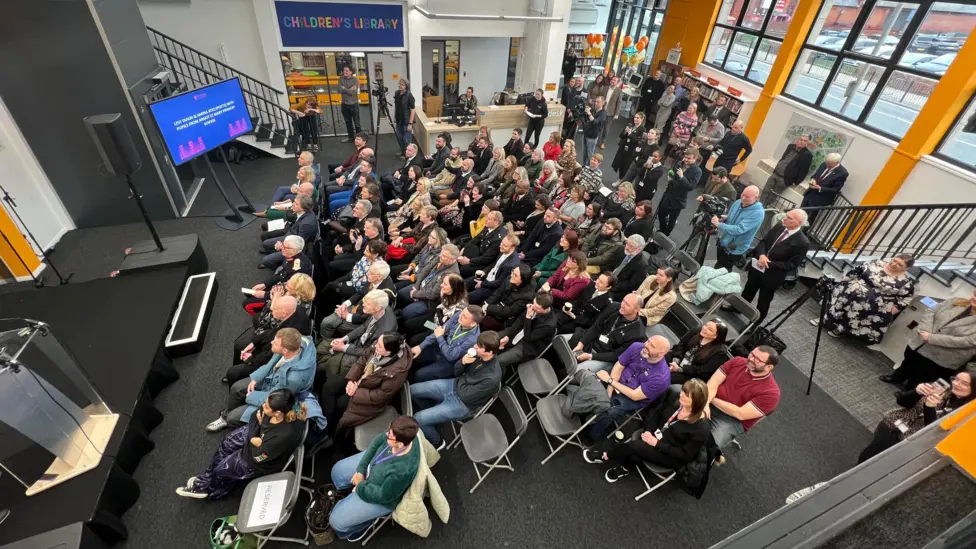
Visit our exhibition to explore the installation ‘Inside Home’ by Haleema Aziz and meet our writers in residence – Romalyn Ante, Jennifer Wong and Christie Watson – to explore the art of nursing with a difference.

Our writers will each be running a writing workshop for a different audience to help them engage with the exhibition themes, and develop their own writing skills: refugees, schoolchildren and young adults.

Writing residencies run in the RCN Library and Museum (20 Cavendish Square) from April – June 2026. Find our what our writers have been working on at this public celebration of art and migration panel event in July.

Our writers will be based in the Moved to Care exhibition space in the England Library from 11am-4pm during their residency week. Anybody can drop in and chat to them between 3-4pm, or if you're a member you can book a free half-hour 121 slot. Discuss your own writing, ask questions about publication or the role of art and creativity in nursing with our writers in residence.'

Previously: 'box' : 'creativity' 

My source RCN Congress 2026

Wednesday, April 15, 2026

Book: 'Logic on the Track of Social Change'

When I walked into Lancaster Univ. library in February, I had no idea I was being followed.

From the maths shelves, the lights switching on as you progress, I decided to walk across to the more familiar realm of sociology. Looking for something, it was nice to see the parity in lighting, even as my struggle for mathematical enlightenment continues.

Logic on the Track of Social Change    

I do use the e-library, and other e-resources, but sometimes real shelves and varying levels of mustiness (remember the 'new acquisitions' - fewer these days?) invite a bit of serendipity. Suddenly, over my shoulders, the stranger,  pointed (with four arms of course). Was it my shadow? Or, was it my unconscious that 'read': LOGIC and TRACK and SOCIAL CHANGE, on the spine of -

David Braybrooke, Bryson Brown & Peter K. Schotch (eds.), Logic on the Track of Social Change, Oxford University Press. 1995?

In the early decades of health informatics, there was much talk - and still is(?) - of  'languages for health', even languages for nursing. Coding and classification systems were constantly developing, as posted here, but while physical diagnoses were the driver, the psychosocial dimensions of person - patienthood proved more nebulous. DSM is still subject much debate.

 Chapter 8 in Braybrook et al. is brilliant: A Rules-Analysis, Following Foucault, of the Birth of Clinical Medicine.

I've been in situations when surgery is suggested for an older person, and family, friends wonder is this really necessary? This chapter literally brings the history home, and not only that, but the emergence of the hospital system, versus care at home, in the community. The social determinants of health have been ever-present. This is essential reading for students, with the history of ICD, and the history of medicine. There are insights too into public attitudes and expectations to health services and provision here in the UK and in France.

For me, and Hodges' model, the significance of Braybrook, Brown, Schotch and Byrne is that it precedes:

Sallach, D.L. Categorical Social Science: Theory, Methodology and Design. September 2012
Conference: Fourth World Congress on Social Simulation. Taipei, Taiwan.
https://www2.econ.iastate.edu/tesfatsi/Sallach2012CategoricalSoSci4.WCSS-SS.pdf

And so, I do need my own secondhand copy of  Logic on the Track of Social Change. More to follow (indeed)! ... and help still welcome and needed.
 

Thursday, June 12, 2025

Rain, Library, and a Poem on a Neon Line

'It is raining in the library,
and leaking between theory and practice.'

Rain by Faroese poet and novelist Carl Jóhan Jensen


My source: BBC Radio 4 The Verb. Poetry and performance with Ian McMillan.

8th June 2025. 1710-1750. https://www.bbc.co.uk/sounds/play/m002d88g

Previously: 'theory' : 'practice' : 'library' : 'poetry'

Thursday, December 19, 2024

Just one library ... A world of difference

Born in Walton.

 'good prose is like a windowpane'

George Orwell, WHY I WRITE

<>

Walton, Liverpool, UK 12th December 2024
'Spellow Library, in Walton, Liverpool, was forced to close when it was set alight on 3 August amid unrest which swept across the country after the stabbings in Southport.

The city was determined to not let hatred win, with £250,000 raised and books being donated from the Queen and a host of celebrities.

An official ceremony marked the re-opening, including readings from Liverpool poet Levi Tafari while a letter from Queen Camilla was also read aloud.' ..


Claire Hamilton/BBC: An official ceremony marked the re-opening on Thursday morning


Break the Windows on Learning and
New Ones Will be Found to Look Out on the World.


INDIVIDUAL
|
INTERPERSONAL : SCIENCES              
humanistic ------------------------------- mechanistic
SOCIOLOGY : POLITICAL   
|
GROUP

My Learning
My Literacies


'The World(s) of Learning'

Society - Community
Social Justice

Justice
Social/Public Services


Previously:

Related post: 'forms of Hygiene'

literature : window

Sunday, March 27, 2022

Call for Chapters - Book on Digital Literacy

 Dear "HIFAers",

I hope my message finds you well and safe!

A new IFLA book on Digital Literacy will be published by DeGruyter-Saur in the IFLA Publication Series. Some of you might be interested in the following call for chapters (deadline for proposals: March 31):

https://www.ifla.org/news/call-for-chapters-book-on-digital-literacy/

Call for Chapters - Book on Digital Literacy 

Title: Libraries Empowering Society through Digital Literacy 

Editors: Dr Prudence Dalrymple, Ms Heather Todd, Dr Luisa Marquardt, Mr ...

www.ifla.org
Best regards.
Luisa Marquardt
---
Dr. Luisa Marquardt
Cattedra di Bibliografia e Biblioteconomia
*Dipartimento di Scienze della Formazione (via Principe Amedeo, 182/a)*
*Dipartimento di Studi Umanistici (via Ostiense, 234/236)*
Università degli Studi "Roma Tre"
sito web

HIFA profile (and my source): Luisa Marquardt teaches Library and Information Science. She is interested in literacy of different types (e.g., Media and Information, Health, Visual etc.) and the educational role of libraries in equipping their patrons with the multiple literacies needed in our challenging (and challenged), ever-changing and high-demanding societies. luisa.marquardt AT uniroma3.it

Wednesday, November 17, 2021

c/o WHO: Opportunity for recent graduates for LDCs

Appealing to the librarian network to share this great WHO opportunity for recent graduates for LDCs

Dear Colleagues,

This may seem like an odd request but I am counting on you as the global health community who sometimes are the world’s best knowledge connectors. As many of you work with recent graduates who come from varied backgrounds, I would like to make you aware of the WHO’s young professionals (YPs) programme for young professionals (YPs) from Least Developed Countries (LDCs) https://www.un.org/development/desa/dpad/wp-content/uploads/sites/45/publication/ldc_list.pdf which aims to engage them in WHO’s work and build their capacity in key public health areas of particular relevance for their countries.

The vacancies of the first cohort are currently open for application until 6 December 2021. The vacancies can be found here:

https://careers.who.int/careersection/ex/jobsearch.ftl (please type “YPP” in the key word search to take you directly to the vacancies)

If you know someone who is 35 years old or younger and comes from a Least Developed Country, please ask them to check out WHO’s Young Professionals Programme! During your career, you may have come across some exceptional students from LDC locations who you feel worthy of an opportunity to make a big impact in the global health arena. If you know of anyone, please share this opportunity with them.

I have done this in the past and my colleagues in WHO HR saw star candidates results from the public health networking that got this message out to ideal candidates and they would like to see that success again. For some of you I know this will be a golden opportunity.

If you have any concerns about this posting, please let me know. For potential candidates, please direct them to visit the WHO website above.

Many Many Thanks to you all.

Tomas ALLEN
Professional email allent AT who.int
WHO Library
https://www.who.int/library

WHO COVID Database
https://search.bvsalud.org/global-literature-on-novel-coronavirus-2019-ncov/

HIFA profile: Tomas Allen is a librarian for the World Health Organization. 

Professional interests: Public Health. tomas.allen.who AT gmail.com

My source: HIFA

Sunday, August 22, 2021

Why the posts about books?

Since I started this blog in April 2006 book tagged posts are numerous; almost 300 in fact.

https://hodges-model.blogspot.com/search?q=book

As with the previous post "Spare Parts" many are not even a review of the book in question. Use of about here is a misnomer. Currently, there are 51 posts tagged 'review', probably not all text book.

So, why bother? These posts are intended to suggest and possibly show the scope of Hodges' model. The placement of the book within a particular care (knowledge) domain is no accident.

Even though there is often overlap between the domains there is often a primary placement. 

This is were you the reader (learner, teacher, policy maker ...) come in, as the model invites you to interrogate the book's title and often, its very informative (for commercial reasons) subtitle.


Saturday, May 23, 2020

iFixit Medical Device Repair Database

Please forward this to anyone you think might be interested.


The iFixit Medical Device database, a new resource for Biomedical Technicians and Equipment Maintenance workers to access user manuals and repair documentation for the medical equipment in hospital and healthcare facilities has just been released.

https://www.ifixit.com/Device/Medical_Device

Please help distribute this announcement to Biomedical Technicians, Equipment Maintenance workers or anyone you think would be interested.


More information can be found at https://www.ifixit.com/News/41440/introducing-the-worlds-largest-medical-repair-database-free-for-everyone
and
https://www.theverge.com/2020/5/19/21263762/ifixit-medical-device-repair-database-launch


HIFA profile: Arlene G Cohen is a retired Associate Professor of Library Science, based in the USA, having worked at the University of Guam Library for 18 years. She has a particular interest in the information needs of medical and allied health professionals in the Pacific region. She runs the "Pacific Islands Regional Medical Distribution List," a current awareness service open to anyone in the world. arlenegcohen AT gmail.com

My source:

HIFA: Healthcare Information For All: www.hifa.org


individual
|
INTERPERSONAL : SCIENCES
humanistic ----------------------------------------------- mechanistic
SOCIOLOGY : POLITICAL
|
group - population

Repairs Database
Devices - Maintenance
Sustainability

imaging
clinical equipment 
laboratory
surgery
medical support
imaging
medical furniture ...


Sunday, March 22, 2020

Exhibition: "Library of Exile"

individual
|
INTERPERSONAL : SCIENCES
humanistic ----------------------------------------------- mechanistic
SOCIOLOGY : POLITICAL
|
group - population


"A roofless pavilion about the size of a shipping container, it is lined with shelves holding some 2,000 books ...

"The scope of "exile" is certainly wide.
The World Health Organisation estimates that 1bn people - almost one in eight of the global population - are living as migrants, of whom 68m have been forcibly displaced." p.8.

by exiled writers. ... The library represents a kind of communal autobiography of the displaced person through history, from Cicero to Dante to the European émigrés of the 20th century and present-day author-exiles such as Elif Shafak and Aleksander Hemon.
The installation is itself migratory, having arrived in London following sojourns in Venice and Dresden. From here it will travel to Mosul, Iran, where it will remain." p.8


My sources:
Atkins, W. (2020) You can't go home again, Life&Arts, FT Weekend. 14-15 March, p.8
and British Museum.

Tuesday, January 28, 2020

c/o RCN: Nursing Emotions, Art and History

individual
|
INTERPERSONAL : SCIENCES
humanistic ----------------------------------------------- mechanistic
SOCIOLOGY : POLITICAL
|
group - population

https://www.rcn.org.uk/news-and-events/news/uk-history-of-emotions-in-nursing-new-exhibition-launch-220120

https://www.rcn.org.uk/news-and-events/news/uk-history-of-emotions-in-nursing-new-exhibition-launch-220120
https://www.rcn.org.uk/news-and-events/news/uk-history-of-emotions-in-nursing-new-exhibition-launch-220120https://www.rcn.org.uk/news-and-events/news/uk-history-of-emotions-in-nursing-new-exhibition-launch-220120

My source: RCN as per main link.

Image original (please do see the original - which I have quartered here):
https://www.rcn.org.uk/news-and-events/blogs/emotions-and-the-art-of-nursing-stained-glass

I remember an article in an issue of 'Computer Arts' many years ago on creating stained glass images, the example included fish I think?

Monday, December 30, 2019

Beautiful thought & Houses - Ruskin

individual
|
INTERPERSONAL : SCIENCES
humanistic ----------------------------------------------- mechanistic
SOCIOLOGY : POLITICAL
|
group - population


"There are two ways of getting it, if you do want it. The first is wholly in your own power; to make yourselves nests of pleasant thoughts. Those are nests on the sea indeed, but safe beyond all others; only they need much art in the building. None of us yet know, for none of us have yet been taught, what fairy palaces we may build of beautiful thought – proof against all adversity. Bright fancies, satisfied memories, noble histories, faithful sayings, treasure-houses of precious and restful thoughts, which care cannot disturb, nor pain make gloomy, nor poverty take away from us – houses,- built without hands, for our souls to live in" - Ruskin.


THE WORKS OF JOHN RUSKIN, 
HONORARY STUDENT OF CHRISTCHURCH, OXFORD. 
VOLUME IV. 
THE EAGLES NEST. IX. — THE STORY OF THE HALCYON. I99.
LONDON : PRINTED FOR THE AUTHOR BY SMITH, ELDER & CO., 15, WATERLOO PLACE; 
AND SOLD BY MR. G. ALLEN, HEATHFIELD COTTAGE, KESTON, KENT. 
1872.

My source:
The Ruskin Library, Lancaster University.

Wednesday, May 27, 2015

Six Threshold Concepts Anchoring the New Framework for Information Literacy (2014) ACRL

Amid several ongoing challenges I have been reading and writing on threshold concepts, Hodges model and Technology Enhanced Learning with 1800 words thus far. At the residential in April we had a talk on publishing so that is the aim.

The following reference -

Knapp, M., Brower, S., 2014. The ACRL Framework for Information Literacy in Higher Education: Implications for Health Sciences Librarianship. Medical Reference Services Quarterly 33, 460–468. doi:10.1080/02763869.2014.957098

- includes an interesting table, doubly so since the framework concerns information literacy. In the table below I have reversed the columns. The full framework documentation also provides more comprehensive references.

Five Information Literacy Competency
Standards for Higher Education (2000)

Six Threshold Concepts Anchoring the New
Framework for Information Literacy (2014)

The 2000 standards outlined five abilities an information literate student will possess.

The information literate student...1

1. Determines the nature and extent of the information needed,
2. Accesses needed information effectively and efficiently,
3. Evaluates information and its sources critically and incorporates selected information into his or her knowledge base and value system,
4. Uses information effectively to accomplish a specific purpose, individually or as a member of a group, and
5. Understands many of the economic, legal, and social issues surrounding the use of information and accesses and uses information ethically and legally

Threshold concepts are defined as ‘‘those ideas in any discipline that are passageways or portals to enlarged understanding or ways of thinking
and practicing within that discipline.’’3

1. Scholarship is a conversation,
2. Research as inquiry,
3. Authority is contextual and constructed,
4. Format as a process,
5. Searching as exploration, and
6. Information has value
Adapted from: TABLE 1 Information Literacy: Then and Now, p.462.

1. Association of College and Research Libraries. ‘‘Information Literacy Competency Standards for Higher Education.’’ January 18, 2000.
http://www.ala.org/acrl/standards/informationliteracycompetency

3. ACRL Information Literacy Competency Standards for Higher Education Task Force. ‘‘Framework for Information Literacy for Higher Education. Draft 2. June 2014.’’ 2014.
http://acrl.ala.org/ilstandards/wp-content/uploads/2014/02/Framework-for-IL-for-HE-Draft-2.pdf

Wednesday, September 17, 2014

The Lyon Declaration on Access to Information and Development

Dear all,

The Lyon Declaration on Access to Information and Development 
http://www.lyondeclaration.org/ was successfully launched at the World Library and Information Congress 2014 in Lyon. Since then, over 280 organisations from across the library and development community have signed the document and called upon United Nations Member States to incorporate access to information in the new post-2015 development framework. The Declaration has now been translated into 13 languages.

Following the release of the Open Working Group Outcome Document in July, IFLA is now waiting to see what UN Secretary General Ban Ki-Moon will present to the UN General Assembly later this year in New York. The Secretary General is currently overseeing preparation of a ‘synthesis report’ that will bring together the outputs of various processes on the post-2015 development agenda and help UN Member States find a way forward in negotiations over the next twelve months. The synthesis report is expected to be released at the end of October/early November.

What are the next steps?

Once the synthesis report is issued it is crucial that policymakers in the capitals of UN Member States get to hear what libraries want to see in the new framework. As outlined in the Lyon Declaration, IFLA wants the United Nations to acknowledge that access to information, and the skills to use it effectively, are required for sustainable development, and to make sure that the framework’s goals, targets and means of implementation reflects this.

Your voice will be needed for us to achieve this goal.

IFLA is currently preparing an advocacy toolkit which will help library representatives to approach decision-makers in order to talk to them about the importance of access to information in development. IFLA wants to help its members and partners to take the opportunity to position themselves inside development debates in their home countries, so that their governments recognise the value libraries bring to development. Ultimately, libraries can benefit from being included in the national plans that will implement the new development agenda from January 1st, 2016.

The advocacy toolkit will be available in early October 2014.

What can you do to help?

  • You can sign the Lyon Declaration and add your voice to the call at the United Nations.
  • You can translate the Lyon Declaration into your language and share it with colleagues in your own country.
  • You can encourage others in the library and development sectors to sign the Lyon Declaration.
  • You can organise meetings with policy makers in your country and use the toolkit provided by IFLA in order to make the library voice heard on a national level.
  • You can promote the principles of the Lyon Declaration throughout your network and ensure that the message gets spread as widely as possible.
The Lyon Declaration is available at http://www.lyondeclaration.org/

...

Background

The Lyon Declaration on Access to Information and Development calls upon United Nations Member States to make an international commitment through the post-2015 development agenda to ensure that everyone has access to, and is able to understand, use and share the information that is necessary to promote sustainable development and democratic societies. It was prepared by IFLA and a number of strategic partners in the library and development communities.

Please also see the webversion.

Julia Brungs
Policy and Projects Officer
International Federation of Library Associations and Institutions (IFLA)
P.O. Box 95312
2509 CH The Hague
Netherlands

My source: HIFA2015

Monday, January 20, 2014

ERCIM News No. 96 Special theme: "Linked Open Data"

Dear ERCIM News Reader,

ERCIM News No. 96 has just been published at
http://ercim-news.ercim.eu/en96

Special Theme: "Linked Open Data"
http://ercim-news.ercim.eu/en96/special/
Guest editors
: Irini Fundulaki (Institute of Computer Science, FORTH) and Sören Auer (University of Bonn and Fraunhofer IAIS)

http://ercim-news.ercim.eu/en96
Keynote: "Linked Data: The Quiet Revolution" by Wendy Hall

This issue for download
pdf
: http://ercim-news.ercim.eu/images/stories/EN96/EN96-web.pdf
epub: http://ercim-news.ercim.eu/images/stories/EN96/EN96.epub

Next issue: No. 97, April 2014 - Special Theme: "Cyber-Physical Systems"
(see the call at http://ercim-news.ercim.eu/call)

Thank you for your interest in ERCIM News.
Feel free to forward this message to others who might be interested.

Best regards,
Peter Kunz
ERCIM News central editor

--------------------------------------------------
An initiative for the ERCIM members: Call for Participation - identifying the emerging grand challenges in ICST http://kwz.me/74

Sunday, December 19, 2010

Call for Maps: Mapping Science Exhibit, 7th Iteration on "Science Maps as Visual Interfaces to Digital Libraries" (2011)

Background and Goals

The Places & Spaces: Mapping Science exhibit was created to inspire cross-disciplinary discussion on how to best track and communicate human activity and scientific progress on a global scale. It has two components: (1) physical exhibits enable the close inspection of high quality reproductions of maps for display at conferences and education centers and (2) the online counterpart (http://scimaps.org) provides links to a selected series of maps and their makers along with detailed explanations of how these maps work.

Places & Spaces is a 10-year effort. Each year, 10 new maps are added, which will result in 100 maps total in 2014. Each iteration of the exhibit attempts to learn from the best examples of visualization design. To accomplish this goal, each iteration compares and contrasts four existing maps with six new maps of science. Themes for the different iterations/years are:

  * 1st Iteration (2005): The Power of Maps
  * 2nd Iteration (2006): The Power of Reference Systems
  * 3rd Iteration (2007): The Power of Forecasts
  * 4th Iteration (2008): Science Maps for Economic Decision Makers
  * 5th Iteration (2009): Science Maps for Science Policy Makers
  * 6th Iteration (2010): Science Maps for Scholars
  * 7th Iteration (2011): Science Maps as Visual Interfaces to Digital Libraries
  * 8th Iteration (2012): Science Maps for Kids
  * 9th Iteration (2013): Science Maps for Daily Science Forecasts
  * 10th Iteration (2014): Telling Lies With Science Maps

Places & Spaces was first shown at the Annual Meeting of the Association of American Geographers in April 2005. Since then, the physical exhibit has been displayed at more than 175 venues in over 15 countries, including eleven in Europe, plus Japan, China, Brazil, Canada, and the United States. A schedule of all display locations can be found at http://scimaps.org/exhibitions

Submission Details

The 7th iteration of the Mapping Science exhibit is devoted to science maps that serve as visual interfaces to digital libraries. These maps might communicate the

  * quality and coverage of data sets,
  * the structure (ontology, taxonomy, classification hierarchy) of data sets,
  * (semantic) linkages between data sets,
  * the evolution of a data set, or
  * access and usage patterns of data sets.

They are intended to support the navigation, management, and utilization of mankind’s scholarly knowledge and to make it more readily available to researchers, educators, industry, policy makers and/or the general public.

We invite maps that show a visual rendering of a dataset together with a legend, textual description, and acknowledgements as required to interpret the map. Science map dimensions can be abstract, geographical, or feature-based, but are typically richer than simple x, y plots. Scientific knowledge can be used to generate a reference system over which other data, e.g., funding opportunities or job openings, are overlaid or be projected onto another reference system, e.g., a map of the world, but must be prominently featured.


Each initial entry must be submitted by Jan 30th, 2011 and needs to include:

  * Low resolution version of map
  * Title of work
  * Author(s) name, email address, affiliation, mailing address
  * Copyright holder (if different from authors)
  * Description of work: Scholarly needs addressed, data used, data analysis, visualization techniques applied, and main insights gained (100-300 words)
  * References to publications in which the map appeared
  * Links to related projects/works

Entries should be submitted via email to the curators of the exhibit: Katy Börne (katy at indiana.edu) and the exhibit designer Michael J. Stamper (mstamper at indiana.edu) using the email subject header “Mapping Science Entry”.

Please feel free to send any questions you might have regarding the judging process to Katy Börner (katy at indiana.edu). Please keep subject header (as used here).

This call - with additional details -  is also available at http://scimaps.org/call

Wednesday, January 27, 2010

ERCIM News No. 80 Special Theme: "Digital Preservation"

Dear ERCIM News Reader,
ERCIM News No. 80 has just been published at http://ercim-news.ercim.eu/
Special Theme: "Digital Preservation"
- coordinated by Ingeborg Solvberg, Norwegian University of Science and Technology; and Andreas Rauber, Vienna Technical University
- featuring a keynote by Pat Manson, Head of Unit "Cultural Heritage & Technology Enhanced Learning"; European Commission Information Society and Media Directorate-General
Next issue: April 2010 - Special Theme:
"Computational Science/ Scientific Computing: Modelling and Simulation for Research and Industry"
(see call for articles)
Thank you for your interest in ERCIM News.
Feel free to forward this message to others who might be interested.

Best regards,
Peter Kunz

This issue includes:

  • The CARA Approach for Long-Term Preservation and Exploitation of Medical Images and Reports by Hanan Bouzid, et al..
  • Designing a Trusted Distributed Long-Term Archive for Health Records by Frej Drejhammar
  • Providing Web Accessibility for the Visually Impaired by Barbara Leporini, et al..
  • ICASE Project: New Challenges in Computer-Based Assessment by Thibaud Latour and Sandrine Sarre.


ERCIM News

is published quarterly by ERCIM, the European Research Consortium for Informatics and Mathematics.
The printed edition will reach about 10,000 readers.
This email alert reaches over 5,000 subscribers.


Advertising in ERCIM News
By advertising in the ERCIM News printed edition, your company or institution will be able to speak to a highly qualified audience: You can reach over 10,000 researchers, scientists and decision makers in the field of information and communication technologies.
For rates and conditions, see http://ercim-news.ercim.eu/advertise


About ERCIM
ERCIM - the European Research Consortium for Informatics and Mathematics - aims to foster collaborative work within the European research community and to increase co-operation with European industry. Leading research institutes from twenty European countries are members of ERCIM. ERCIM is the European host of W3C.
http://www.ercim.eu/

Saturday, November 29, 2008

BarCamp Sheffield and Digitize This Book!

BarcaI'm in Sheffield for BarCamp, a 1st for me. Looking forward to various sessions including using a web browser to run a business, usability, 3rd sector, open source, sustainability and creating communities. ...

https://www.upress.umn.edu/book-division/books/digitize-this-book

Yesterday - and interesting company on the train today - another book arrived for review:

Digitize This Book!: The Politics of New Media, or Why We Need Open Access Now (Electronic Mediations) (Paperback) by Gary Hall.

I'm also editing Shreves Drupal 6 Themes book review and will post it soon.

Saturday, May 17, 2008

Slide presentation P.F. Anderson - 'Online Visualization and Organization Tools'

Through twitter I learned of Patricia F. Anderson's interest and teaching in health informatics which includes dental informatics and visualization with reference to an engaging and informative presentation:

Now see ...

https://etechlib.wordpress.com/2008/05/06/online-visualization-and-organization-tools/

This is a great (e)-reference source. There are many other related slide presentations too. Thanks Patricia, wish I could listen in!

Saturday, March 08, 2008

Hodges' domains and the 'audience'

In Tuesday's post on the NHS health library services four key purposes cited in the report were listed:

1. Clinical decision making by patients, their carers as appropriate, and health professional
2. Commissioning decision and health policy making
3. Research
4. Lifelong learning by health professionals.


It is encouraging to see that my assumptions about the scope of Hodges' model can be identified elsewhere. This is clearly the case with the four key purposes above and the four introductory pages  to Hodges' model - listed as follows:

library purpose -|- h2cm audience -|- h2cm knowledge (care) DOMAIN

patients, carers (person-centred) -|- Individuals -|- INTRAPERSONAL
commissioning ... policy making -|- Policy makers, Managers -|- POLITICAL
research -|- Students, Researchers, Lifelong learners -|- SCIENCES
health profs as lifelong learners -|- Society, Public, Learning culture# -|- SOCIOLOGY

# The SOCIO- in socio-technical