Hodges' Model: Welcome to the QUAD: database

Hodges' model is a conceptual framework to support reflection and critical thinking. Situated, the model can help integrate all disciplines (academic and professional). Amid news items, are posts that illustrate the scope and application of the model. A bibliography and A4 template are provided in the sidebar. Welcome to the QUAD ...

Showing posts with label database. Show all posts

Thursday, April 30, 2026

ii WCCS26: World Conference on Complex Systems 20-22nd April

Day 1

Plenary Talk: Reda Benkirane - Lost in Complexity: Welcome to the Real World

A first slide considered Abraham Maslow's book The Psychology of Science and his thought on the "law of the instrument". Maslow's hierarchy of needs is a key primer for new students to many disciplines, including nursing, and psychology. The purpose of Benikrane's focus on instruments concerns the emergence of civilisation and roles of agriculture, and war in the rise of community at several scales from village, to cities, states and nations. In terms of flow the slides highlighted the next speaker Peter Turchin's END TIMES, and two books by Johann Chapoutot, LES IRRESPONSABLES, and FREE TO OBEY.

In response to the slide with Einstein's -

"We cannot solve our problems with the same thinking we used when we created them":

- may I please class 'health - care' as a world? The thought that the medical, bio-medical, and bio-psycho-social encourages, sees enacted, and sustained a : is this fit for the problems of the 21st century. I like the slide's heading 'Beyond Complexity'. Such is the pace of change, which is labelled 'progress' that each one of us wakes up momentarily stupified and lost in complexity.

Keynote Speaker: Peter Turchin - The Great Holocene
Transformation: What Complexity Science Tells Us About The Evolution of Complex Societies

Turchin's keynote reminded me of Jared Diamond's book Guns, Germs and Steel. Reading GGS I realised there is more to 'axes' than I thought, especially from the individual to collective scales. It appears that whichever label - academia, research or education - you would like to apply, they all need a conceptual framework. Just as, individually, we all need a model of self, others and the world. This was a marvellous journey, through millennia of humanities' evolution, social, and political development, all realised through complexity. While attractors are to the fore, architecture and archaeology are regular distractors for me. Reading Holocene then had me hooked. 

A fellow delegate and speaker I dined with a few times encouraged me to read 'END TIMES'. I will seek it out later this year, (the next Hay-on-Wye visit?). Turchin is seeking to account for how human societies have reached their current state of organisation. The role of self-protection, seeking food, shelter, co-operation are all factors, with the emergence of religions, and agriculture. Several theories to date were covered [including, cultural multilevel selection, see Wilson et al. (2023)], plus a major project on cultural evolution: The Seshat: Global History Databank. For all the current loss and misery, conflict has paid a major role in cultural and political development. The prefix 'macro' features here. There was a social scale (people): FROM 10s - in foraging bands through TO 100,000,000s large nation-states. Mention of levels of scale, took me back to the work of Mario Bunge. The application of the Hertzsprung-Russell 'main sequence' (H-R) diagram is a great idea. I think Olaf Stapleton, author of Star Maker would have approved. 

This itself, for me, is reason enough to read Turchin. There is evolutionary biochemistry too, which is required in terms of a systems account. Is there a reflection of a main sequence construct between the SOCIOLOGICAL and SCIENCES domain of Hodges' model? 

 It is incredible the way new findings are regularly pushing even further the dates of human milestones stepping-stones. Perhaps we should always view progress in this way, and enjoy the 'moment'. There is still the puzzle of ultrasociality, and how to explain it? Turchin is seeking a mathematical history, with a journal Cliodynamics. There is another SF reference here, in Asimov's psychohistory in the Foundation books, but with less emphasis upon maths. This is encouraging for Hodges' model, and the inevitable transdisciplinary approach these questions demand.

More to follow ...

D.S. Wilson, G. Madhavan, M.J. Gelfand, S.C. Hayes, P.W.B. Atkins, & R.R. Colwell, Multilevel cultural evolution: From new theory to practical applications, Proc. Natl. Acad. Sci. U.S.A. 120 (16) e2218222120, https://doi.org/10.1073/pnas.2218222120 (2023).
Tuesday, February 04, 2025

Do you ..."Fit the Description" ?


'4. RACIST VALUES EMBEDDED IN "AI" 
Racial prejudices have been found embedded in "AI" and algorithmic systems, including carceral systems which use surveillance techniques, facial recognition, and predictive metric to determine policing tactics, sentencing, and punishments. In 2018, demonstration of a Amazon`s Rekognition facial imaging system made false identification matches to 28 different congresspersons, linking their images to pictures found in mugshot databases (Snow 2018). This outcome is entirely explicable. First, digital cameras and imaging systems see Black and brown faces - and particularly the faces of Black and brown women - less well (Buolamwini and Gebru, 2018). Next, most existing facial recognition systems are trained on mugshot databases. Third, as Black people are over-policed, with many young Black men being spuriously said to have "Fit the Description," the mugshots of Black people are entered into police databases at a disproportionate rate. Then, those databases are used to train algorithmic surveillance systems on how to search for "predictors of criminality." We have even taught these systems to search for particular skin tones (Joseph and Lipp, 2018).' p.248.
INDIVIDUAL
|
      INTERPERSONAL    :     SCIENCES               
HUMANISTIC  --------------------------------------  MECHANISTIC      
 SOCIOLOGY  :    POLITICAL 
|
GROUP

FIT the DESCRIPTION?

FIT the DESCRIPTION?

FIT the DESCRIPTION?

FIT the DESCRIPTION?


Damien Patrick Williams (2024) Disabling AI: Biases and Values Embedded in Artificial Intelligence, (Chap. 17) 246-261. In. Handbook on the Ethics of Artificial Intelligence. David J. Gunkel (Ed.). Cheltenham, UK: Edward Elgar Publishing Ltd. ISBN: 978 1 80392 671 1245
https://www.e-elgar.com/shop/gbp/handbook-on-the-ethics-of-artificial-intelligence-9781803926711.html

Posts with review to follow.

Saturday, June 20, 2020

30 Years of Progress: Nursing informatics and Nursing theory

Going through some papers I found some notes written in the 90s:

Allan Curtis a clinical services manager described the experience of setting up a 24 hour information service to a hospital paediatric hospital service.

Creating a system using Sensible Solution (a database package), Curtis noted how:
"The intricacies of programming were more difficult than I imagined."
Problems occurred when the school of nursing changed its adopted model of nursing, some information was then either redundant or incompatible.
"Although it would be nice to redesign the program to take account of such changes, it would take too much time - and money."
  <>

I do not have the article and a search failed to locate the full reference. I am assuming the link above is the 1980s-90s database package in question. When able to visit a university library I will update accordingly. It would be interesting to see if the model of nursing and the change was noted and any reasons. I'm sure they were? The point for me are the divides in skills, academic - service settings, finance and the status of 'models of nursing' (care). There is also the extent of change in programming and information systems. What is now referred to as 'the development stack' is far more powerful and yet more complex and complicated.

Curtis, A. (1990) Nursing Times, February 28, 86, 9, pp.69-70.

Saturday, May 23, 2020

iFixit Medical Device Repair Database

Please forward this to anyone you think might be interested.


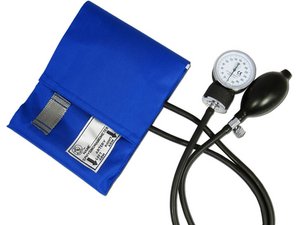
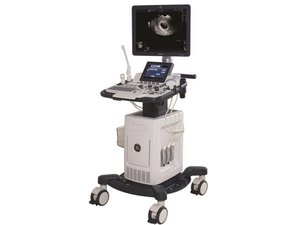
The iFixit Medical Device database, a new resource for Biomedical Technicians and Equipment Maintenance workers to access user manuals and repair documentation for the medical equipment in hospital and healthcare facilities has just been released.

https://www.ifixit.com/Device/Medical_Device

Please help distribute this announcement to Biomedical Technicians, Equipment Maintenance workers or anyone you think would be interested.


More information can be found at https://www.ifixit.com/News/41440/introducing-the-worlds-largest-medical-repair-database-free-for-everyone
and
https://www.theverge.com/2020/5/19/21263762/ifixit-medical-device-repair-database-launch


HIFA profile: Arlene G Cohen is a retired Associate Professor of Library Science, based in the USA, having worked at the University of Guam Library for 18 years. She has a particular interest in the information needs of medical and allied health professionals in the Pacific region. She runs the "Pacific Islands Regional Medical Distribution List," a current awareness service open to anyone in the world. arlenegcohen AT gmail.com

My source:

HIFA: Healthcare Information For All: www.hifa.org


individual
|
INTERPERSONAL : SCIENCES
humanistic ----------------------------------------------- mechanistic
SOCIOLOGY : POLITICAL
|
group - population

Repairs Database
Devices - Maintenance
Sustainability

imaging
clinical equipment 
laboratory
surgery
medical support
imaging
medical furniture ...
