Hodges' Model: Welcome to the QUAD: war

Hodges' model is a conceptual framework to support reflection and critical thinking. Situated, the model can help integrate all disciplines (academic and professional). Amid news items, are posts that illustrate the scope and application of the model. A bibliography and A4 template are provided in the sidebar. Welcome to the QUAD ...

Showing posts with label war. Show all posts

Thursday, April 30, 2026

ii WCCS26: World Conference on Complex Systems 20-22nd April

Day 1

Plenary Talk: Reda Benkirane - Lost in Complexity: Welcome to the Real World

A first slide considered Abraham Maslow's book The Psychology of Science and his thought on the "law of the instrument". Maslow's hierarchy of needs is a key primer for new students to many disciplines, including nursing, and psychology. The purpose of Benikrane's focus on instruments concerns the emergence of civilisation and roles of agriculture, and war in the rise of community at several scales from village, to cities, states and nations. In terms of flow the slides highlighted the next speaker Peter Turchin's END TIMES, and two books by Johann Chapoutot, LES IRRESPONSABLES, and FREE TO OBEY.

In response to the slide with Einstein's -

"We cannot solve our problems with the same thinking we used when we created them":

- may I please class 'health - care' as a world? The thought that the medical, bio-medical, and bio-psycho-social encourages, sees enacted, and sustained a : is this fit for the problems of the 21st century. I like the slide's heading 'Beyond Complexity'. Such is the pace of change, which is labelled 'progress' that each one of us wakes up momentarily stupified and lost in complexity.

Keynote Speaker: Peter Turchin - The Great Holocene
Transformation: What Complexity Science Tells Us About The Evolution of Complex Societies

Turchin's keynote reminded me of Jared Diamond's book Guns, Germs and Steel. Reading GGS I realised there is more to 'axes' than I thought, especially from the individual to collective scales. It appears that whichever label - academia, research or education - you would like to apply, they all need a conceptual framework. Just as, individually, we all need a model of self, others and the world. This was a marvellous journey, through millennia of humanities' evolution, social, and political development, all realised through complexity. While attractors are to the fore, architecture and archaeology are regular distractors for me. Reading Holocene then had me hooked. 

A fellow delegate and speaker I dined with a few times encouraged me to read 'END TIMES'. I will seek it out later this year, (the next Hay-on-Wye visit?). Turchin is seeking to account for how human societies have reached their current state of organisation. The role of self-protection, seeking food, shelter, co-operation are all factors, with the emergence of religions, and agriculture. Several theories to date were covered [including, cultural multilevel selection, see Wilson et al. (2023)], plus a major project on cultural evolution: The Seshat: Global History Databank. For all the current loss and misery, conflict has paid a major role in cultural and political development. The prefix 'macro' features here. There was a social scale (people): FROM 10s - in foraging bands through TO 100,000,000s large nation-states. Mention of levels of scale, took me back to the work of Mario Bunge. The application of the Hertzsprung-Russell 'main sequence' (H-R) diagram is a great idea. I think Olaf Stapleton, author of Star Maker would have approved. 

This itself, for me, is reason enough to read Turchin. There is evolutionary biochemistry too, which is required in terms of a systems account. Is there a reflection of a main sequence construct between the SOCIOLOGICAL and SCIENCES domain of Hodges' model? 

 It is incredible the way new findings are regularly pushing even further the dates of human milestones stepping-stones. Perhaps we should always view progress in this way, and enjoy the 'moment'. There is still the puzzle of ultrasociality, and how to explain it? Turchin is seeking a mathematical history, with a journal Cliodynamics. There is another SF reference here, in Asimov's psychohistory in the Foundation books, but with less emphasis upon maths. This is encouraging for Hodges' model, and the inevitable transdisciplinary approach these questions demand.

More to follow ...

D.S. Wilson, G. Madhavan, M.J. Gelfand, S.C. Hayes, P.W.B. Atkins, & R.R. Colwell, Multilevel cultural evolution: From new theory to practical applications, Proc. Natl. Acad. Sci. U.S.A. 120 (16) e2218222120, https://doi.org/10.1073/pnas.2218222120 (2023).

Wednesday, April 08, 2026

Raising the alarm on authoritarian rule c/o Life&Arts FT

INDIVIDUAL
|
     INTERPERSONAL    :     SCIENCES               
HUMANISTIC --------------------------------------  MECHANISTIC      
SOCIOLOGY  :   POLITICAL 
|
GROUP
I can think for myself!
 Yes.
  But, are you allowed to think?
EVERYBODY
        TO KENMURE
STREET^          

My Undesirable Friends:
Part 1


^It's a bit more 'local' - I think!
 
My source: Nicolas Rapold, Raising the alarm on authoritarian rule. Life&Arts, FTWeekend, 28-29 March 2026, p.12.

Previously: 'power' : 'politics' : 'authoritarian'

Tuesday, April 07, 2026

Theatres of War and Healing

INDIVIDUAL
|
     INTERPERSONAL    :     SCIENCES               
HUMANISTIC --------------------------------------  MECHANISTIC      
SOCIOLOGY  :   POLITICAL 
|
GROUP


Theater of War Productions presents community-specific, theater-based projects that address pressing public health and social issues.


c/o Reuters

Previously: 'theatre' : 'war' : 'public (mental) health' 

Thursday, March 19, 2026

'Loud' noises and silences - Martin Luther King

INDIVIDUAL
|
    INTERPERSONAL    :     SCIENCES               
HUMANISTIC --------------------------------------  MECHANISTIC      
SOCIOLOGY  :   POLITICAL 
|
GROUP


... We are confronted with the fierce urgency of now. In this unfolding conundrum of life and history, there is such a thing as being too late. Procrastination is still the thief of time. Life often leaves us standing bare, naked, and dejected with a lost opportunity. ... We may cry out desperately for time to pause in her passage, but time is adamant to every plea and rushes on. Over the bleached bones and jumbled residues of numerous civilizations are written the words, "Too late." There is an invisible book of life that faithfully records our vigilance or our neglect. Omar Khayyam is right: "The moving finger writes, and having writ moves on."
    -DR. MARTIN LUTHER KING, J.,
    Beyond Vietnam - A Time to Break Silence


Tuesday, March 17, 2026

Be careful - the laws you wish for ...

INDIVIDUAL
|
    INTERPERSONAL    :     SCIENCES               
HUMANISTIC --------------------------------------  MECHANISTIC      
SOCIOLOGY  :   POLITICAL 
|
GROUP


LETHAL AUTONOMOUS 
WEAPON SYSTEMS


laws


Reminder: The FT View, Iran and the rising perils of AI in warfare, FTWeekend, 14-15 March, 2026, p.10.

Thursday, March 12, 2026

John Gerrard's "Western Flag" 2017

INDIVIDUAL
|
    INTERPERSONAL    :     SCIENCES               
HUMANISTIC --------------------------------------  MECHANISTIC      
SOCIOLOGY  :   POLITICAL 
|
GROUP


http://westernflag.johngerrard.net

John Gerrard - Western Flag (Spindletop, Texas), 2017

My source: Twitter

Saturday, March 07, 2026

A definition of the 'Psycho-Political'

Clearing books, magazines and journals (to make space for a few new acquisitions) on a trip to Hay-on-Wye, I bought a secondhand copy of:

Weizsacker, Carl Friedrich von. (1980). The Unity of Nature.

I noticed chapters on the definition of health and illness, and information.

Models of Health and Illness, Good and Evil, Truth and Falseness

Chapter  Jun 2014 
https://doi.org/10.1007/978-3-319-03671-7
In book: Carl Friedrich von Weizsäcker: Major Texts in Philosophy (pp.74-89)

Abstract

This essay is the core of our reflections on cybernetics. It is the only essay in this Part that tries to describe concretely what cybernetics can achieve. Written in the fall of 1967 but unpublished until now, it was inspired by a lecture on “Peacelessness as Mental Illness” delivered in Bethel in 1967 (published in Der ungesicherte Friede; Göttingen: Vandenhoeck & Ruprecht, 1969). On that occasion the question arose whether it is medically justifiable, or merely metaphoric, to call the inability to maintain peace an illness. As far as I can see, contemporary medicine lacks a sufficiently clear concept of illness to decide this question. Since I had no desire to merely skirt the issue, I was faced with the task of outlining a scientifically justifiable definition of illness. The result is presented in Sect. 6.2 of this essay; its social application is very briefly sketched in Sect. 6.4.

(My emphasis)
Unfortunately, I cannot find a copy of the lecture. In my softback copy the title is "Lack of Peace as Psychic Illness".

We don't tend to think of mental illness in the collective, but history provides many examples within and extended across communities - 'mass psychogenic illness'. More recently there is a literature on the mental health, competency of global leaders, also known as 'hubris syndrome' previously. Even the history of Carl Friedrich von Weizsäcker is controversial, his World War II record and knowledge of nuclear physics.

We have a veritable storm across all the domains of Hodges' model (including the spiritual) that point to the model's ongoing  relevance, consider:

  • climate crisis;
  • pollution (air, water ...)
  • geopolitics;
  • disruption of the international rules-based order;
  • the status and reputation of global organisations (were they ever 'international'?);
  • the record of current global political leadership;
  • the need to protect Political titles (not just Professional titles, Dr, Nurse, ...)?;
  • the rise of artificial intelligence.


Link: 
https://www.researchgate.net/publication/300477492_Models_of_Health_and_Illness_Good_and_Evil_Truth_and_Falseness?

Tuesday, February 24, 2026

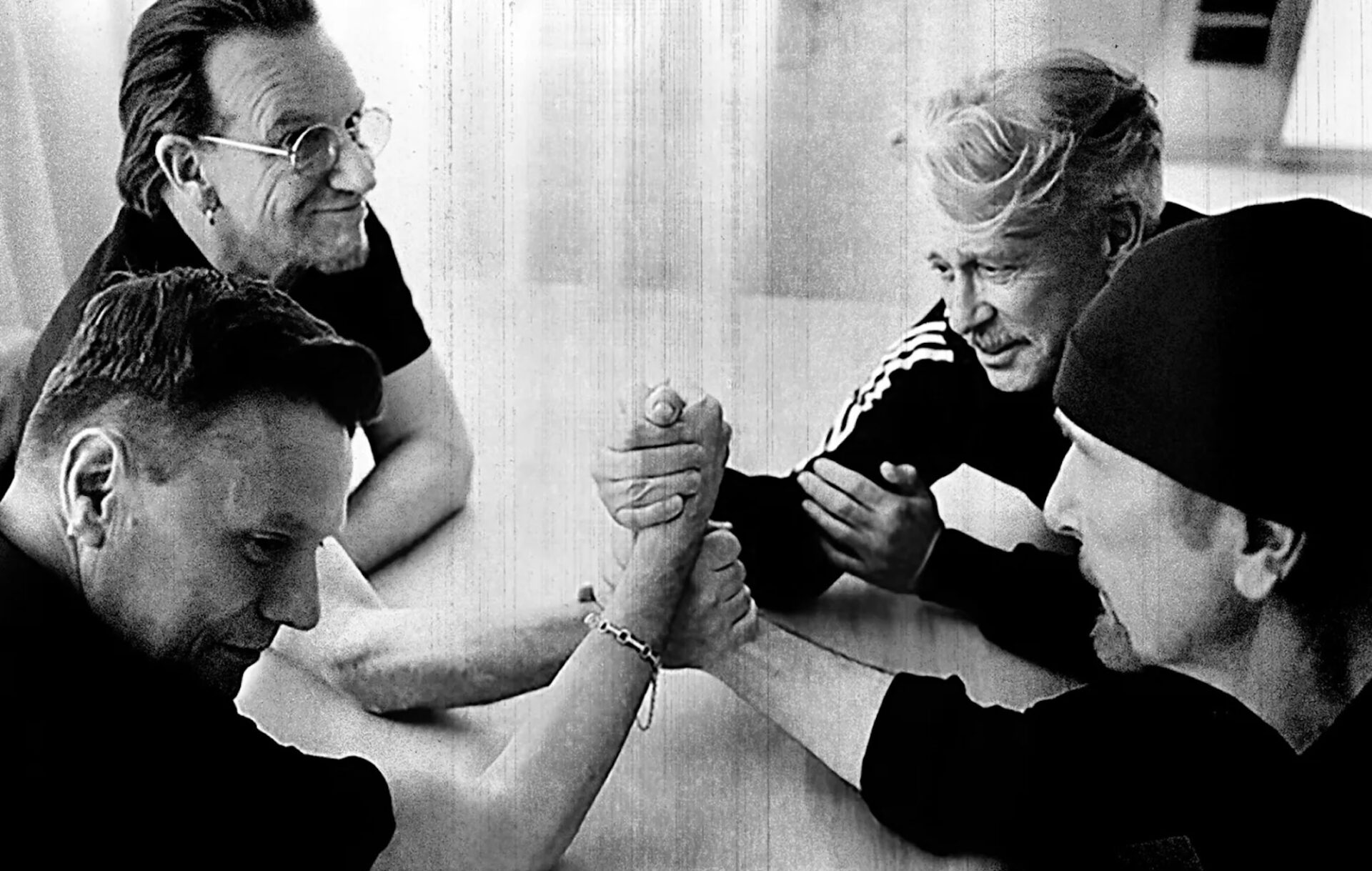
c/o RollingStone UK - "U2 surprise-drop politically charged ‘Days of Ash’ EP with six new songs"

The collection delves into ICE, Israel, the West Bank, Ukraine, Iran — and features a guest vocal by Ed Sheeran

U2 (RollingStone UK - Picture: Anton Corbijn) 

By Andy Greene

'U2 have emerged from a long hiatus with a surprise six-song EP, Days of Ash, available now, in which they address political flashpoints around the world, including ICE raids in the US, the Iranian uprisings, the war in Ukraine, and Israeli settlements in the West Bank.

The six songs — ‘American Obituary’, ‘The Tears of Things’, ‘Song of the Future’, ‘Wildpeace’, ‘One Life at a Time’ and ‘Yours Eternally’ (featuring Ed Sheeran and Taras Topolia) — are all on streaming platforms. They’ve also created lyric videos for each one.' 

Continued ...


Previously: conflict : war : hope : peace

Wednesday, August 06, 2025

'The Bells of Nagasaki' by Takashi Nagai

Individual
|
      INTERPERSONAL    :     SCIENCES               
HUMANISTIC  --------------------------------------  MECHANISTIC      
 SOCIOLOGY  :    POLITICAL 
|


Takashi Nagai, William Johnston (Translator), Richard Lloyd Parry (Introducer). The Bells of Nagasaki. London: Penguin.
https://www.penguin.co.uk/books/469083/the-bells-of-nagasaki-by-nagai-takashi/9781529952605

My source:
Olivia Ward-Jackson. What one man saw in the ruins of Nagasaki, Review, The Daily Telegraph. 26 July 2025. pp.6-7.

See also:


Jones, P. (1994) An Enthusiast's View of CAL. (Problems in production of CAL - Simulation effects of Nuclear Weapons - conversion of GWBASIC to BBC BASIC from BYTE - with original author's permission - J Fanchi). IT in Nursing. 6,2.

Monday, March 31, 2025

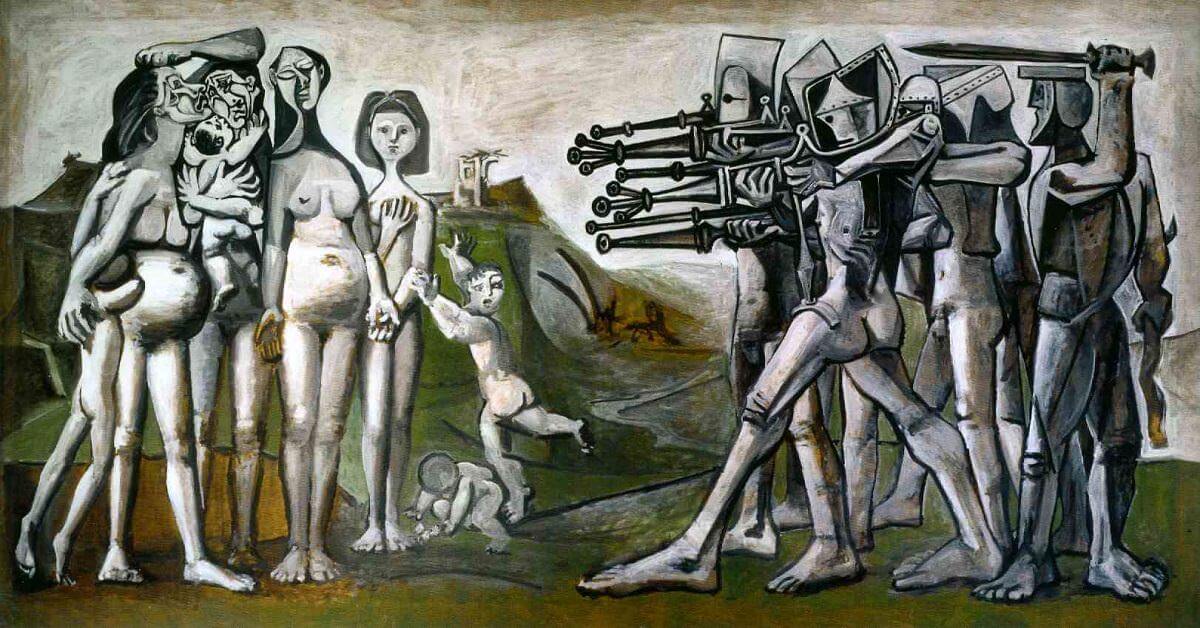
c/o Picasso - 'Massacre in Korea' (1951)

Art is a lie that makes us realize the truth.

                                 - Pablo Picasso

individual
|
INTERPERSONAL : SCIENCES
humanistic ------------------------------- mechanistic
SOCIOLOGY : POLITICAL
|
group


HUMANISTIC - mind


body - MECHANISTIC

"The 'beat' goes on"!?
'Massacre in Korea' (1951)

My source:
Vivienne Chow, How Picasso became a prize for Asia's new collectors, Collecting, FTWeekend. 22-23 March 2025, p.3.

See also: 
https://www.mplus.org.hk/en/exhibitions/ (15 March - 13 July 2025)

https://www.pablopicasso.org/massacre-in-korea.jsp

Monday, January 13, 2025

NPR: What is your wish to improve life on earth in 2025?

Dola Sun for NPR


With thanks to NPR, 'an independent, nonprofit media organization that was founded on a mission to create a more informed public'. NPR asked 11 global health professionals to share their wishes for 2025.

Read in full here:
https://www.npr.org/sections/goats-and-soda/2025/01/06/g-s1-40820/2025-world-wishes-haiti-bird-flu

We asked global thinkers how to improve life on earth in 2025. Here are their wishes

My wish: Honor the legacy of Jimmy Carter Dr. Ifeanyi M. Nsofor, project director, VaxSocial HPV Vaccination Initiative, Nigeria

My wish: World, awaken to the medical emergency in Haiti Dr. Ousmane Abdoulaye, Port-au-Prince in Haiti, medical coordinator, Haiti Mission, ALIMA — The Alliance for International Medical Action

My wish: Nothing too grand. Just a small wish that things for us go back as they were three years ago — when women could go to parks or markets but most of all go to school. Maryam S., Afghanistan, former Master's student of Pashto literature. She asked to be identified by her first name only out of fear that her criticism of Taliban policies would put her and her family in danger.

My wish: Make monumental strides in using advanced technology to detect emerging pathogens Dr. Abraar Karan, physician and researcher, Division of Infectious Diseases & Geographic Medicine, Stanford University

My wish: Let us recognize that violence has never been the true solution to conflict KR Raja, Madurai, India, lawyer advocating for criminal justice reform and the founder of the Indian charity Global Network for Equality, which supports children orphaned by crime

My wish: I dream of a future where there are safe and healthy conditions for workers, where they are free of discrimination and can earn a fair wage. Ashila Dandeniya, Colombo, Sri Lanka, founder and director of the Stand Up Movement, a women-led organization that advocates for workers' rights.

My wish: Make progress in developing treatments to reduce deaths and complications from dengue André Siqueira, head of the Dengue Global Programme at Drugs for Neglected Diseases Initiative and public health researcher at the Oswaldo Cruz Foundation's National Infectious Diseases Institute in Brazil

My wish: For trekkers and travelers to help clean up the waste they leave behind — and to help protect our natural treasures Raj Kumar Shrestha, trekking guide, Kathmandu, Nepal, and founder of Let's Clean Up Nepal, an environmental conservation organization

My wish: Use digital innovation to enable health workers to deliver their care, especially in places where resources are constrained Dr. Junaid Nabi, public health researcher specializing in health-care reform and innovation, and a senior fellow at the Aspen Institute and a Millennium Fellow at the Atlantic Council

My wish: May the year bring peace to the world Dr. Atsbha Merhawit, Ayder Hospital, specialty in endocrinology and diabetes, Mekelle, Ethiopia

My wish: Follow the rules of war regarding the welfare of children Joe English, New York, N.Y., emergency communication specialist for UNICEF ==

What is your wish for 2025?

Best wishes, Neil

HIFA profile: Neil Pakenham-Walsh is coordinator of HIFA (Healthcare Information For All), a global health community that brings all stakeholders together around the shared goal of universal access to reliable healthcare information. HIFA has 20,000 members in 180 countries, interacting in four languages and representing all parts of the global evidence ecosystem. HIFA is administered by Global Healthcare Information Network, a UK-based nonprofit in official relations with the World Health Organization. Email: neil AT hifa.org

n.b. My wish: That "Hodges' Health Career - Care Domains - Model" continues to emerge as a generic conceptual framework shared and understood by all learners for lifelong learning.

Thanks Neil. I will post this with HIFA link.

Saturday, December 21, 2024

When a bomb goes off, ...^

INDIVIDUAL
|
INTERPERSONAL : SCIENCES              
humanistic ------------------------------- mechanistic
SOCIOLOGY : POLITICAL   
|
GROUP


.. whatever's     around ..

"WHEN A BOMB
GOES OFF,

.. gets      weaponised"


donate.redcross.org.uk
msf.org.uk
ideals.org.uk
map.org.uk
uk-med.org


Rosanna Dodds, Operation Gaza, HTSI, FTWeekend, December 9th, 2024. p.37-38.

Victoria Rose, Plastic Surgeon: https://www.youtube.com/watch?v=AzZjmG791Dk

^anywhere ...

Saturday, November 23, 2024

'Little Shrew' (Snowflake)

INDIVIDUAL
|
INTERPERSONAL : SCIENCES              
humanistic ------------------------------- mechanistic
SOCIOLOGY : POLITICAL   
|
GROUP


Chappell, P. Heathcliff, it's me again: more new music from Kate Bush on the horizon, The Times, October 26th 2024, pp.18-19.

Saturday, September 14, 2024

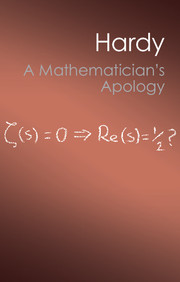
Hardy (1940) A Mathematician's Apology


In Liverpool I came across G.H. Hardy's short book A Mathematician's Apology. At £2.00 - a pristine bargain and a  marvellous read, especially the latter sections.

From being taught and applying Hodges' model in a case study in 1987 through to online work since 1998; I have to ask myself. Do I need to write:

'A Nurse's Apology'?

Aware of Hardy in the history of mathematics, and having read his apology, I'm no Hardy. My antics are a lesson in addition, but this is more 'Laurel and Hardy' - with apologies to comic genius of course. 


By their nature professions seek to maintain, and assure their continuity. A professional body can point to a definable body of theory, practice (curricula), that carries social and political status, if not patronage. There is national agreement that the NHS needs reform; radical reform no-less. The new Labour government is drawing lines to negotiate with the BMA, other professional bodies and unions. Specificity, specialisation is key. In healthcare people have suggested to me that Hodges' model invites genericism. Any suggestion of genericism is to be shunned. There seems an almost allergic reaction such is the threat to professional identity; unless, of course, you are a 'General Nurse', or General Practitioner - GP family doctor). Even Hardy warns:
"'GENERALITY' is an ambiguous and rather dangerous word, and we must be careful not to allow it to dominate our discussion too much." p.105.

This also applies to the quality and solidity of professional agencies and bodies whose role is to provide governance and set standards. The NMC has stumbled? Life and death is made up of details AND big pictures. How do you provide for - balance both? Curricula are another concern. Is the future of mental health nursing guaranteed as a profession? 

https://hodges-model.blogspot.com/2016/08/future-of-mental-health-nurse-training.html

The instrumental potential of Hodges' model is obvious. It invites a checkbox approach. One-to-one clinical encounters and interactions reduced to a tick-box exercise. This reduces any sense of specialist knowledge, training and education needed to assess, plan, deliver and evaluate high quality, effective, sustainable healthcare.

'THE second quality which I demanded in a significant idea was depth, and this is still more difficult to define. It has something to do with difficulty; the deeper? ideas are usually the harder to grasp: but it is not at all the same.' p.109.

Hardy's thoughts (and no doubt similarly expressed by other mathematicians and logicians) can be 'found' in Hodges' model; with an addition. Depth and difficulty rests on the uniqueness of  the 'one'. 

Here, Hardy is comparing between 'real mathematics' and chess:

'A chess problem also has unexpectedness, and a certain economy ; it is essential that the moves should be surprising, and that every piece on the board should play its part. But the aesthetic effect is cumulative. It is essential also (unless the problem is too simple to be really amusing) that the key-move should be followed by a good many variations, each requiring its own individual answer. 'If P-B5 then Kt-R6; if .... then if .... then ...., ....' - the effect would be spoilt if there were not a good many different replies. All this is quite genuine mathematics, and has its merits; but it is just that 'proof by enumeration of cases'  (and of cases which do not, at bottom, differ at all profoundly*) which a real mathematician tends to despise.' p.114.

*I believe it is now regarded as a merit in a problem that there should be many variations of the same type. (footnote)

While Kings, and Queens et al. undoubtedly have their own unique personalities, in healthcare effective clinicians make a concerted effort not to merely enumerate cases. The professional emphasis is (idealistically, professionally, purely and in application to) person-centredness; with the compassion, complexity, cussedness, and (sometimes literal) complications this brings. From 1-1 interaction, the clinical encounter, the therapeutic relationship, and alliance are the reason for practitioners achieving and sustaining intra- and interpersonal communication skills. Our attitudes towards knowledge, what is thoughts affects what we feel individually and collectively. Science should be neutral. It might be concluded that this question is for the philosophers and ethicists to wrestle with. In healthcare ethics are central: 'Do no harm'. Whether the practitioner, theorist, manager, policy maker is a nurse, scientist or mathematician such questions impact upon the person. As they are social, cultural and political. Revisiting Bronowski's Ascent of Man, this question arose in Archive on 4.

'It seems that mathematical ideas are arranged somehow in strata, the ideas in each stratum being linked by a complex of relations both among themselves and with those above and below. The lower the stratum, the deeper (and in general the more difficult) the idea.' p.110.

(my emphasis)

individual
|
INTERPERSONAL : SCIENCES
humanistic ------------------------------- mechanistic
SOCIOLOGY : POLITICAL
|
group

logical & mathematical reasoning
depth of reasoning (memory)
mathematical aptitude
intelligence(s)
pure maths
identity

vector
relations
mathematics
logic
depth of analysis, complexity
Cricket!
pure - applied maths
"1" problem per visit

patient - health practitioner 
relationship
Watching cricket - conversation

reports - outcomes
enumeration of cases


Back-tracking to page 104, Hardy:

'The relations revealed by the proof should be such as connect many different mathematical ideas.'

Our proof is person-centredness, placing the person at the center (in this case - of Hodges' model). The proof can be quantitative and qualitive. There are a great many ideas at work. Critically, the ideas that might be called upon (even improvised) are not all health-related, but can extend beyond to encompass the four care (knowledge) domains of Hodges' model. In healthcare as in Hardy's life the spiritual is encountered. So, the determinants of health are ALL available to us - as required. Well not available as a resource might be, they are available in the hope they will be seen as factors. Hardy would approve I think of the direction of travel, not just as a vector, but a model of multidimensional vectors - reaching for relations.

Hardy, G.H. (1940) A Mathematician's Apology, Cambridge: Canto.
https://www.cambridge.org/core/books/mathematicians-apology/B90D81A8E28674119781863988A3E11B

Wednesday, April 17, 2024

Policy Dialogue - Water, Conflict and Peace in the Middle East: online

Dear colleagues,

I am delighted to invite you to the next Policy Dialogues from the JHU-UPF Public Policy Center:

Water, Conflict and Peace in the Middle East
Thursday 25th April, 6pm CEST
Online via Zoom (registration required)
Language: English

The Middle East is a region of both severe water problems, and acute political instability. But what is the relationship between these two things? This Policy Dialogue will provide an opportunity to reflect on this question and its implications. It will overview the region’s water problems, and consider how these problems are – or are not – contributing to conflict. It will also examine, conversely, how war and violence are affecting patterns of water resource degradation and water insecurities, and will reflect on opportunities for water-related peace-building, including on how water for peace initiatives might best be pursued.

We are delighted to invite Natasha Carmi (Water Peace Programme Manager at the Geneva Water Hub) and Jan Selby (Professor of International Politics and Climate Change at the University of Leeds, UK) to share their expertise during this session.

We invite you to join us and explore the complexities of this extremely important issue. You can register here. Please also share this invitation within your networks.

Best regards,
Aeve

Aeve Ribbons
she/her

Educational Projects Manager of JHU-UPF Public Policy Center (UPF-BSM)
Managing Editor of the International Journal of Social Determinants of Health and Health Services (IJSDOHS)

My working days are Monday-Thursday / Mis días laborables son de lunes a jueves.

Website: http://www.upf.edu/jhu-ppc/

Twitter: https://twitter.com/pubpolcenter


My source:

Politics of Health Group Mail List Messages

Visit the PoHG website for lots of interesting links and publications: http://www.pohg.org.uk/

Visit PoHG on Facebook: https://www.facebook.com/282761111845400

Follow us on Twitter: @pohguk

Wednesday, April 03, 2024

Exceptional Events . . . . . . .

Individual
|
      INTERPERSONAL    :     SCIENCES               
HUMANISTIC  --------------------------------------  MECHANISTIC      
 SOCIOLOGY  :    POLITICAL 
|
Group

Exceptional person(s)

C/o AP - Aol

"The exception to the rule."

"... avoid civilian casualties
as no other army in history ..."

deconfliction


Previously:
From - https://hodges-model.blogspot.com/search?q=Palestine

BBC Today and PM, 3 April 2024.

Images:
https://www.aol.com/news/aid-organizations-suspend-operations-gaza-190605787.html

https://cdn-01.media-brady.com/store/sifr/media/catalog/product/s/i/sifr_cx3a_1_std.lang.all.gif

Tuesday, April 02, 2024

Ukraine we see you - RD4U

"The Register of Damage Caused by the Aggression of the Russian Federation against Ukraine (RD4U) is proud to announce a major milestone in its mission to address the consequences of the war and bring justice and reparations to Ukraine and its people. On 2 April 2024, RD4U will officially open the claims submission process for compensation of damage, loss or injury caused by Russian aggression against Ukraine.

The historic launch will take place in The Hague as part of the Ministerial Conference "Restoring Justice for Ukraine", in the presence of the Secretary General of the Council of Europe, Marija Pejčinović Burić, heads of international organisations, ministers and senior officials from more than 60 states, underlining the global support for Ukraine's quest for justice and reparation.

The RD4U Board decided to open the Register for the submission of claims, evidence and related information after confirming that the formal and technical framework is in place. This step follows the approval by the Conference of Participants of RD4U of the rules and regulations of the Register, including the rules for the submission, processing and recording of claims and the list of categories of claims eligible for inclusion in the Register.

“Our decision to start the process of submission of claims is an important first step in this process. Success moving forward will require continued support from all stakeholders. The Register of Damage for Ukraine will continue its work with dedication and resolve to deliver justice to the Ukrainian people in conformity with its mandate”, said the Chair of the Board, Robert Spano.  

The initial launch on 2 April will focus on one critical category, namely damage or  destruction of residential property. The destruction of homes in war has an immense impact on people's lives. Between 300,000 and 600,000 claims are expected in this category. The claim form for submission of this category of claims has also been approved." . . .

Continued . . .


Individual
|
      INTERPERSONAL    :     SCIENCES               
HUMANISTIC  --------------------------------------  MECHANISTIC      
 SOCIOLOGY  :    POLITICAL 
|
Group

Loss of belongings

Trauma

Stress - Anxiety

Injury - deaths

Damage / Loss of homes / Infrastructure

Displacement 
Loss of family members

Livelihood

Education

Loss of whole communities


Palestine!: Your turn next? 

Israel - Palestine: utter despair personified.

Previously:
From - https://hodges-model.blogspot.com/search?q=ukraine

My source: 
BBC World Service, World Business Report. 2 April 2024
https://www.bbc.co.uk/programmes/w3ct606r

Thursday, February 29, 2024

'LA Gun Club' (2016) by Jane Hilton

intent - maximum damage - social/vicarious trauma - policy fatigue(s)

Individual

   |
      INTERPERSONAL    :     SCIENCES               
HUMANISTIC  --------------------------------------  MECHANISTIC      
 SOCIOLOGY  :   POLITICAL 
|
Group


With thanks to Jane Hilton

https://www.palogallery.com/exhibitions/35-la-gun-club-jane-hilton/overview/

Top left: intra- interpersonal
Target E. Age: 26. Occupation: Architecture student. Gun: Smith & Wesson .44 Magnum revolver.
"I wanted to use the same gun as Clint Eastwood used in the movie Dirty Harry."

Top right: sciences
Target G. Age: 37. Occupation: Range master for a gun club. Gun: Beretta 92 FS 9mm pistol.
"I have the perfect job. I own many guns, I just love looking at them. I'm not bothered about shooting them. My favourite is the Kimber Warrior because it shoots large bullets."

Bottom left: sociology
Target A. Age: 35. Occupation: Federal security. Gun: Glock 22 .40 caliber pistol.
"I cannot believe I shot that hostage's ear on my target. I learnt to shoot when I was in the military Marine Corps infantry."

Bottom right: political
Target H. Age: 32. Occupation: Stay at home Mom. Guns: Smith & Wesson .357 Magnum revolver, Beretta 9mm pistol and Colt 5.56mm rifle (shooter's own).
"I own all 3 guns I used to shoot my target. Me and my husband go to different gun clubs all the time."

My source:
Alexander James, SNAPSHOT: 'LA Gun Club' (2016) by Jane Hilton. FT Weekend, Life&Arts, 17-18 February 2024. p.19.

Saturday, October 14, 2023

"I'd like to Teach the World to Sing ..."


INDIVIDUAL
|
     INTERPERSONAL    :     SCIENCES               
HUMANISTIC --------------------------------------  MECHANISTIC      
SOCIOLOGY  :   POLITICAL 
|
GROUP

intelligence


ARTIFICIAL

Peoples

Communities

Societies

Peace

 "Joseph Votel, a recently retired head of the Pentagon's Central Command, said last year he was struck by how Israeli forces mounting strikes in Gaza in May had been integrating AI into their operations and by "the impact that is having on their targeting cycles". He says Israel is using AI to generate a large range of potential targets for surveillance to whittle down. This lets its forces "disrupt enemy attacks without the need for a lengthy development period or a longer campaign."

 America's armed forces, helped by Palantir (an AI company which, like Anduril, takes its name from "The Lord of the Rings") and other contractors, is trying to build such technology into a system which can narrow down a huge range of potential targets and pass information about them freely to where it is most needed. Given the finite capacity of communication systems, not to mention the vulnerability, this requires that an increasing amount of processing be done "on the edge" - that is, on the platform carrying the sensor.

 In 2016 a Pentagon project called Maven started trying to address the "lots of surveillance but not much to show for it" problem identified by General Ryan. The idea was to automate the identification of people and objects in the petabytes of video footage sent back by surveillance drones. It ended up producing software efficient enough to run on the drones themselves. In Scarlet Dragon, a recent-AI focused American exercise in which a wide range of systems were used to comb a large area for a small target, things were greatly speeded up by allowing satellites to provide estimates of where a target might be in a compact format readable by another sensor or a targeting system, rather than transmitting high-definition pictures of the sort humans look at.

 In a world where bandwidth is often the biggest constraint such parsimony is a boon. It speeds up kill chains while reducing vulnerability to jamming. At the same time, it puts a greater burden on the automated parts of the system to provide reliable synopses of what they see, which is a worry for people keen to ensure that fully informed and responsible human beings stay on top of all decisions about where and when to blow things up." p.9. 


 Signals from Noise. Heads in the clouds. The Economist Technology Quarterly, Defence technology, Hide and seek. January 29th 2022. 442: 9281. pp. 9-10.

https://www.youtube.com/watch?v=mR_7Swtv0XM

Sunday, August 13, 2023

History: Hepatoscopy and the Census


INDIVIDUAL
|
     INTERPERSONAL    :     SCIENCES               
HUMANISTIC --------------------------------------  MECHANISTIC      
SOCIOLOGY  :   POLITICAL 
|
GROUP

"Perhaps it was merely an oversight of this historian that he failed to mention another religious practice, hepatoscopy. For this, the Romans down to imperial times relied on Etruscans. Divination from the liver of sacrificed animals was a most complicated business. 


To get the interpretation right required a sound knowledge not only of astronomy but also of anatomy and pathology.

In 1877 at Piacenza a bronze model of a liver was found. It was evidently a model used in a priests' school for teaching the art of haruspicy, and of a fairly late period. On the upper surface are marked sixteen divisions in which are inscribed the names of some thirty gods, some more than once. Each of the sixteen divisions corresponded to a section of the heavens, for the Etruscans regarded the liver as an image of the cosmos, as a microcosm of the universe. The liver, it was believed, exactly reproduced the heavenly firmament with its sacred laws and controlling divinities and its division, first into four, by the intersecting axes and then into sixteen subdivisions." p.87.

 
The Etruscans

"Censuses for purposes of taxation and military service still exist. But not many know that it was an Etruscan king who first legally established such a registration in Rome, from whence, with the rise of the Roman empire, it spread throughout Europe." 

"What this measure was is stated by Livy thus: 'The population was divided into classes and 'centuries' according to a scale based on the census, and suitable for both peace and war." p.146.


Keller, W. (1975) The Etruscans. Norfolk: Book Club Associates. [Cover image: AbeBooks]