Hodges' Model: Welcome to the QUAD: past

Hodges' model is a conceptual framework to support reflection and critical thinking. Situated, the model can help integrate all disciplines (academic and professional). Amid news items, are posts that illustrate the scope and application of the model. A bibliography and A4 template are provided in the sidebar. Welcome to the QUAD ...

Showing posts with label past. Show all posts

Sunday, September 20, 2026

'Shattered' by Hanif Kureishi

Cathleen Schine, Ungovernable, Capricious Life, The New York Review of Books, April 10, 2025, Volume LXXII, Number 6, pp.15-16.

Shattered by Hanif Kureishi. Ecco, 328 pp., $28.00

'Shattered' c/o Penguin  

'Hanif Kureishi, the English playwright, screenwriter, and novelist, posted these words on his Substack in January 2023: 

  On Boxing Day, in Rome, after taking a comfortable walk to the Piazza del Popolo, followed by a stroll through the Villa Borghese, and then back to the apartment, I had a fall.

I had been following Kureishi's Substack for a while out of admiration, curiosity, and loyalty-though Id met him only once, briefly. His dispatches were warm and entertaining, often about the writer's life. But this one was shocking: 

   I cannot move my arms and legs. I cannot scratch my nose, make a phone call or feed myself. As you can imagine, this is both humiliating, degrading and a burden for others. 

According to his hospital report, his fall resulted in neck hyperextension and immediate tetraplegia. An MRI scan showed a severe stenosis of the vertebral canal with signs of spinal cord injury from c3 to C5. It was unclear, he said, whether he would be able to walk again "or whether I'll ever be able to hold a pen." He was speaking these words through Isabella, who was slowly typing them into her iPad.' p.15.

individual
|
INTERPERSONAL
: SCIENCES             
humanistic ------------------------------- mechanistic
SOCIOLOGY : POLITICAL   
|
group
shattered

SHATTERED

SHATTERED

shattered


'A hospital is the place from which modesty and dignity disappear, desert you, seemingly forever, as soon as you cross the threshold. Kureishi, a reliably sexy, unrestricted writer, presents the physical deterioration and indignities he undergoes with his usual wit. The sense of vulnerability is crushing, but it is also one of the characteristics Kureishi reveals about himself that makes him so likable here, and the writing so intimate. The tone is remarkable: even the self-pity has no self-pity. One way he achieves this is by sprinkling punch lines throughout:

I woke up and started to cry. When you cry you must wipe away your tears, which is something I'm unable to do. So my eyes filled with bitter salty water and I got into a panic and thought I might lose my eyesight along with everything else. Finally, a kind nurse came into my room and downed me with a good dose of Lorazepam, then she touched me on my cheek and said, "It's not so bad, at least you're not in a coma."' pp.15-16.

Friday, August 14, 2026

Sometimes it can take an old model ...


'Sometimes it can take an old model, 
to build a new one, 
that makes the existing model obsolete.'

To borrow from Buckminster Fuller.                         

 
Resurgence & Ecologist, Sept/Oct 2020, Issue 322, p.33.

Tuesday, February 24, 2026

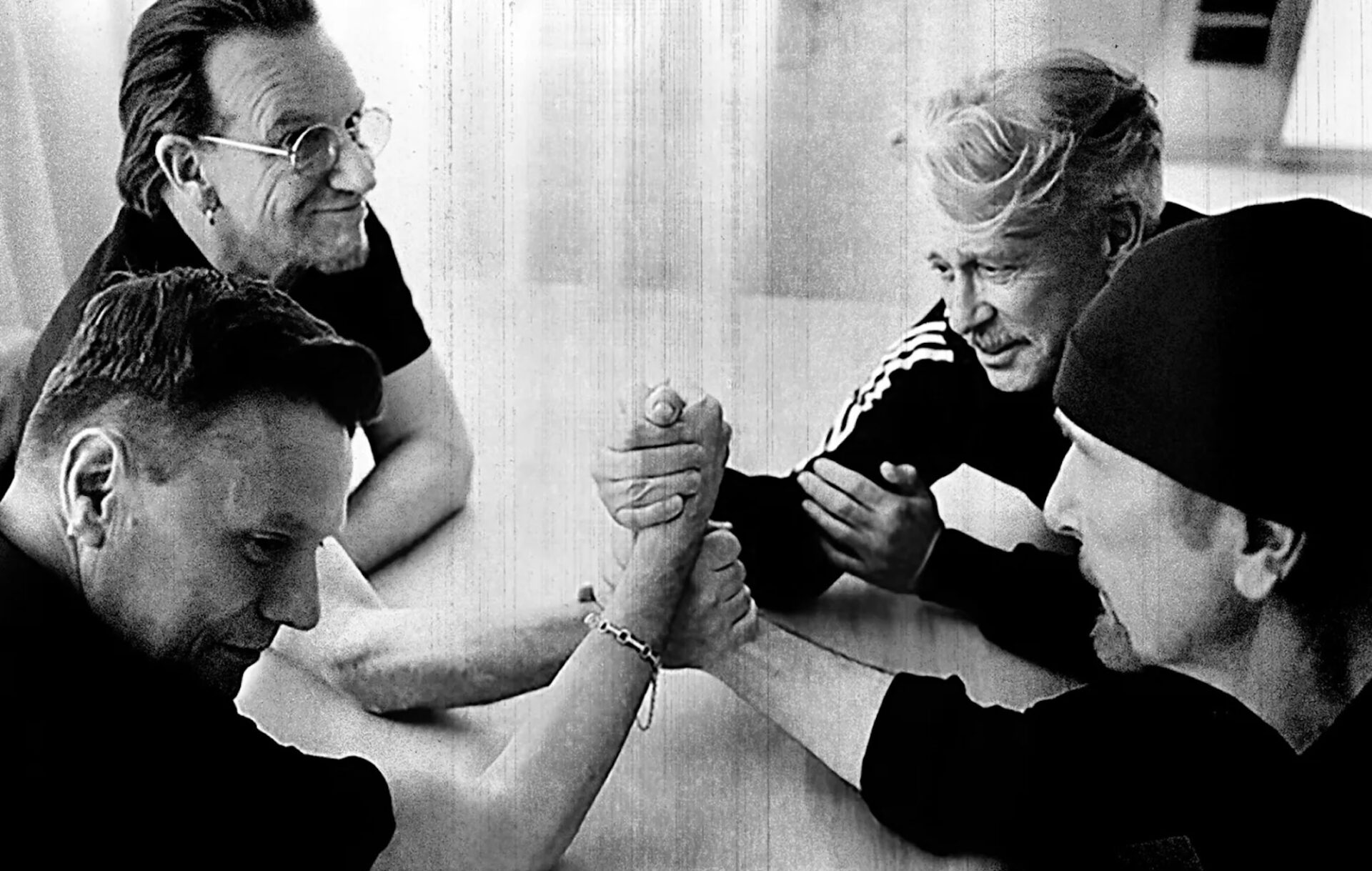
c/o RollingStone UK - "U2 surprise-drop politically charged ‘Days of Ash’ EP with six new songs"

The collection delves into ICE, Israel, the West Bank, Ukraine, Iran — and features a guest vocal by Ed Sheeran

U2 (RollingStone UK - Picture: Anton Corbijn) 

By Andy Greene

'U2 have emerged from a long hiatus with a surprise six-song EP, Days of Ash, available now, in which they address political flashpoints around the world, including ICE raids in the US, the Iranian uprisings, the war in Ukraine, and Israeli settlements in the West Bank.

The six songs — ‘American Obituary’, ‘The Tears of Things’, ‘Song of the Future’, ‘Wildpeace’, ‘One Life at a Time’ and ‘Yours Eternally’ (featuring Ed Sheeran and Taras Topolia) — are all on streaming platforms. They’ve also created lyric videos for each one.' 

Continued ...


Previously: conflict : war : hope : peace

Monday, October 13, 2025

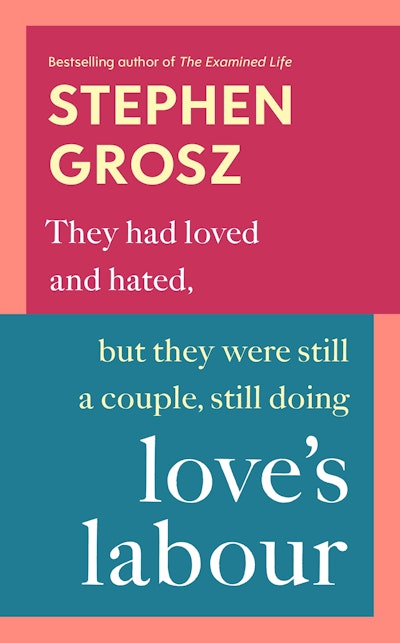
Book: Love's Labour by Stephen Grosz

They had loved and hated,
but they were still a couple, 
still doing love's labour ...

Luminous and necessary stories from the psychoanalyst's consulting room; on desire, heartbreak and learning how to love.

When it comes to love why do we find things so difficult? Drawing on over forty years of candid and surprising conversations with his patients, Stephen Grosz asks, what gets in the way of our falling in love? And what must we do to stay there? Penguin UK.
<>
'Ravi, a maths lecturer, is tormented by his wife Sonal's supposed infidelity, but won't look at the CCTV - even though that might reveal her to be innocent. This chapter has a sting in its tail when 19 years later Grosz is contacted by Sonal. She is dying of cancer and Ravi is cruelly neglecting her. Grosz feels that he missed a vital clue all those years ago, concerning Ravi's ingratitude and envy.

This moment of "failure" on Grosz's part forms an aspect of this small book's power. It shows that the psychoanalyst is not a machine, and the process is fallible. But it is also a testament to human complexity. When he hasn't understood the patient sufficiently, Grosz brings the case to his supervisor, and we, the reader, are witness to their exchange.' Life&Arts, FTWeekend.
Individual
|
      INTERPERSONAL    :     SCIENCES               
HUMANISTIC =========================  MECHANISTIC      
 SOCIOLOGY  :    POLITICAL 
|
My source: Kathy O'Shaughnessy. The hard work of seeing ourselves. Books, Life&Arts, FTWeekend, 27-28 September 2025, p.11.


Iamge: https://cdn2.penguin.com.au/covers/400/9780701188979.jpg

Thursday, February 06, 2025

Last Word by Ann Williams

LAST WORD

In Africa, one word for now,

Another word for tomorrow,

But forty words for the past.

The elephants do not forget.

They stand close in a circle,

Turn the heaped pile of bones

This way and that, stroke

Leg-bone, thigh and skull,

Rub dust into their faces.


Sighing, they understand

The weight of grief,

How memory is carried.

by Ann Williams

Poetry, edited by Peter Abbs (RIP 2020), Small Epiphanies, Resurgence & Ecologist, Sept/Oct 2013, Issue 280: p.52-53. I cannot locate a web presence for Ann Williams, if anyone can assist please get in touch. Resurgence & Ecologist is a marvellous read. I do not subscribe but enjoy a copy when visiting a city.

P.S. I feel bad not subscribing, but you have to 'cut your cloth'. That's not the only pain factor. An online subscription may be greener, and cheaper? As with book reviews (Ethics and AI - to follow), I need a physical copy, spending enough time on-screen already. The publication is much more than a magazine. The magazine represents a change of mindset and ironically reflects former and for many 'new' ways of life.

Friday, April 05, 2024

CALL FOR PAPERS i - Lagoonscapes 4 | 2 | 2024

Special Issue's Title: Ecologies of Life and Death in the Anthropocene

Guest editors: Professor Peggy Karpouzou, National and Kapodistrian University of Athens, Greece & Dr. Nikoleta Zampaki, National and Kapodistrian University of Athens, Greece

Both life and death are natural states of humans and non-humans, coexisting and at the same time in an implicit ‘conflict’. The perception and mostly the experiences of death have varied through different local communities historically, often aiming to explain death through philosophical or religious interpretations of human and non-humans’ afterlife (e.g. Merchant 1979).

In the present condition of a precarious planetary time when environmental crises, wars, violence and pandemics are before us, entire ecosystems are annihilated or even destroyed. Human and more-than-human world’s vulnerabilities get amplified as death and loss become urgent environmental concerns, manifested in many cultural connotations, e.g. literary, artistic, philosophical etc., seeking to explore and explain death matter in nature as well as the consequences of death on species’ behavior and psychology. “It is about recognizing our shared vulnerabilities to human and non-human bodies, and embracing our complicity in the death of these other bodies- however painful that process may be” (Cunsolo 2017, 3-4).

Writers and artists have explored the representations of death matters beyond the human, the mourning for past, present and future ecological loss (Barnett 2022), while attempting to visualize and express ecological grief, mourning and melancholia, carve out memorial spaces and also imagine practices of the afterlife. For example, in literature, the poetic subgenre of elegy found as (anti-)pastoral elegy, eco-elegy or “ecological lament” (Morton 2009) is built on the poet’s acceptance of “death as natural […], in line with the season pattern and rebirth” (Twiddy 2012). Here death is not only synonymous with a biological end, but a rebirth, a state of a new being. However, the loss of nature itself, turning it into a ‘mirror’ of human loss, redefines the traditional elegy’s search for consolation (Sacks 1987).

Grounded in the theoretical framework of death studies, this special issue explores life and death eco-imaginaries and engagements, as they are interwoven through the study of the human and more-than-human world. It is there where an ontology of ecologies of life and death is being exposed and where the ethical territories of eco-grief and eco-mourning unfold. Therefore, the possibility of studying the ecology of life and death is questioned: How do we come up with death issues in nature? Is nature grievable? How do we mourn for it? How about the circular and linear way between life and death in nature’s spatiality and time? How about writers and artists’ perception of ecologies of life and death and how are they represented in texts and artworks? How do ecologies of life and death affect the way of writing or artistic outcome? How about the posthuman perspective on dead bodies and afterlife issues? What will it mean to live and die in the Anthropocene? (e.g., Scranton, 2016; Stiegler 2018).

While the ecologies of life and death give way to ‘decentralize’, even ‘deconstruct’ concepts like melancholy, grief and mourning, also ‘view’ the last ones as an approach of resilience and symbiosis between them, even a ‘spur’ to act. In this sense, there is a need to re-organize what is holding humanity back, such as the fear of humans' destructive power, and take action to achieve life’s preservation in order to build sustainable futures. We particularly welcome submissions that revolve around, but are not limited to, the following axes and concepts:

  • ecologies of life and death in ecocriticism, ecopsychology, eco/bio-philosophies, bioethics, plant humanities, animal studies, etc.
  • eco-anxiety, eco-grief, eco-mourning, solastalgia, toxic environments, extinction studies, political ecology of death
  • ecologies of life and death in -cene, e.g., Anthropocene, Neganthropocene, Necrocene, Symbiocene etc.
  • the genre of elegy (e.g., eco-elegy, “ecological lament”, (anti-)pastoral elegy etc.
  • ecologies of life and death in continental philosophy
  • ecologies of life and death in posthumanities (e.g., posthumanism, transhumanism, a-humanism, meta-humanism, anti-humanism, super-humanism etc.)
  • ecologies of life and death in medical humanities (e.g., pandemics, epidemics, plagues, biotechnology etc.)
  • ecologies of life and death in religious studies and anthropology
  • postcolonial narrations of death
  • “necropolitics” (Mbembe), “bare life” (Agamben), “slow death” (Berlant)
  • ecologies of life and death in indigenous studies
  • human and more-than-human world in queer death studies and gothic studies
  • ecologies of life and death in disability studies
  • ecologies of life and death in arts and aesthetics / ars moriendi
  • ecologies of life and death in visual studies, media studies, film studies
  • memorials, ways of remembering, rituals of eco-mourning
  • images, tools and practices of the afterlife in literature, philosophy and arts (e.g., mummification, cryonics, end-of-life applications, 3D printing for facial reconstruction etc.)

Deadline for full articles’ submissions: Kindly submit a full article of no more than 50,000 characters (spaces and references included), an abstract of no more than 650 characters spaces included, and at least five keywords by 31 of July 2024 at the latest.

Should your article be accepted for inclusion in the upcoming December issue, you will receive an email containing instructions on how to upload your final version within 15 days from receipt. Such articles must be suitable for blind peer review.

Please make sure to obtain the necessary reproduction rights documentation if you need to include photos in your text.

Articles must be written in English. In case you have further queries, you are welcome to send an e-mail to the Editors’ e-mails: pkarpouzou@phil.uoa.gr and nikzamp@phil.uoa.gr.


Best regards, 
on behalf of the Editors

Nikoleta
--
Dr. Nikoleta Zampaki
Postdoctoral Researcher
Faculty of Philology, National and Kapodistrian University of Athens, Greece
E-mail: nikzamp@phil.uoa.gr

Series co-Editor of "Posthumanities and Citizenship Futures" at Rowman & Littlefield: https://rowman.com/Action/Series/_/LEXPCF
Assistant and Managing Editor of “Brill Research Perspectives in Critical Theory”: https://brill.com/display/serial/RPCTS?contents=about

Saturday, April 16, 2022

"A Peculiar Shade of Blue" c/o Rowan Jacqueline

 
INDIVIDUAL
|
 INTERPERSONAL    :     SCIENCES               
HUMANISTIC --------------------------------------  MECHANISTIC      
SOCIOLOGY  :   POLITICAL 
|
GROUP

personal grief ..

the facts of life, death and place ..


Rowan Jacqueline: https://www.spiderflower.org/


My source: https://twitter.com/artdotearth

Tuesday, February 08, 2022

"Room 5" BBC Radio 4

 
The Health Career Model has four obvious care (knowledge) domains,
but of course there is a 5th.

This is even clearer when 'health career' is seen as 'life chances'.

 
  Self - Individual - Person
|

INTERPERSONAL : SCIENCES
humanistic ------------------------------------------ mechanistic
SOCIOLOGY : POLITICAL
|
Community - Group - Population
Personal meaning / sense-making

Whatever your beliefs there is a spiritual domain.

*Who exactly 'were' you before?

diagnosis
(as category, classification, ...)

prognosis
(... TI:ME .... into the future ..?)

pre-morbid*


What does this <diagnosis> mean to others?


school span
work span
healthspan
lifespan

What sense do governments
make of the above?


Friday, March 12, 2021

14-20 March - Patient Safety Awareness Week

Next week 14-20 March is Patient Safety Awareness Week. 

Further information here:

http://www.ihi.org/Engage/Initiatives/Patient-Safety-Awareness-Week/Pages/default.aspx

​​​​​​​​​​​​About the Initiative

Patient Safety Awareness Week is an annual recognition event intended to encourage everyone to learn more about health care safety. During this week, IHI seeks to advance important discussions locally and globally, and inspire action to improve the safety of the health care system — for patients and the workforce.

Patient Safety Awareness Week serves as a dedicated time and platform for growing awareness about patient safety and recognizing the work already being done...
--
 
[See link above for events - webinars.. PJ]

My source:
 
Neil Pakenham-Walsh, HIFA Coordinator, neil AT hifa.org www.hifa.org

HIFA: Healthcare Information For All: www.hifa.org

Tuesday, December 31, 2019

Happy New Year: Nostradamus c/o Al Stewart

"A Man for All Seasons" ...
"A Woman ... and other gender identities ..."
"A Child ..."
"A model ..."

"A model for Past, Present, Future"

A series of Frames - Janus-like view:

Pre-morbid, Diagnosis, Prognosis ...

Clinical and Case -
Assessment
Planning
Formulation
Evaluation
Engagement

individual
|
INTERPERSONAL : SCIENCES
humanistic ----------------------------------------------- mechanistic
SOCIOLOGY : POLITICAL
|
group - population


Nostradamus - Al Stewart
From the Album: Past, Present, Future

Sunday, June 25, 2017

anatomy of a suicide

individual
|
INTERPERSONAL : SCIENCES
humanistic ----------------------------------------- mechanistic
SOCIOLOGY : POLITICAL
|
group - population

Photo source: Anatomy of a Suicide production images (Stephen Cummiskey)


Saturday, March 04, 2017

A Hospital Room with a View

individual
|
INTERPERSONAL : SCIENCES
humanistic -------------------------------------------  mechanistic
SOCIOLOGY : POLITICAL
|
group-population


Lucy
Barton


Photo: Waterstones Tottenham Court Road Window Display 4/3/2017

Book cover: Waterstones

Friday, October 31, 2014

Metamorphosis (Ste p e-learning [curve?] )

I'm walking over ground of a gradually steepening pitch. At a certain point, I pause and start using my hands; the real mountain begins. I am climbing. Do I, as soon as my back slopes forward, return to the state of the quadruped? Almost: my body transforms; feet become hands and my two manual grips secure balance. Homo erectus, the standing man, of recent date, reverts back to the one from whom he is descended: the archaic quadrumane. This thunderbolt recollection became so black, in me, that I no longer fear to speak of the beast; I remember who we were (p.3).
Michel Serres (1999) Variations on the Body, Univocal.

Sunday, April 15, 2012

What really makes us human?

"Remembering is fundamentally recursive,
because it involves inserting a past mental state into the present one."

Michael Corballis, Essay: What really makes us human?, New Scientist, 1st September 2007 p.48-49.
https://www.newscientist.com/article/mg19526196-300-essay-what-really-makes-us-human/

Thursday, June 10, 2010

Special appeal: for former (current) users of Hodges' model - Isle of Man


It appears there have been two visitors to W2tQ from the Isle of Man. Over the years there have been many such hits on the website. Nursing staff on the Isle of Man did use the Hodges' model many years ago. A former colleague and manager worked there for a time, and there were students who attended the then Manchester Polytechnic and were taught the model on nursing courses - CPN Cert in Community Psychiatric Nursing.


If anyone there (or any other Isle - worldwide) is reading this - please get in touch; it would be great to hear from you of your experience, and possibly feature your thoughts and insights here.

Thanks and best regards,
Peter J.
h2cmng @ yahoo.co.uk


To follow - enquiries about end of life care and carer support.