Hodges' Model: Welcome to the QUAD: benefits

Hodges' model is a conceptual framework to support reflection and critical thinking. Situated, the model can help integrate all disciplines (academic and professional). Amid news items, are posts that illustrate the scope and application of the model. A bibliography and A4 template are provided in the sidebar. Welcome to the QUAD ...

Showing posts with label benefits. Show all posts

Friday, July 24, 2026

WHO’s Self-Care Month (June 24th – July 24th) and International Self-Care Day July 24th


The Global Self-Care Federation (GSCF) is putting the spotlight on the benefits of self-care ahead of and beyond WHO’s Self-Care Month (June 24th – July 24th) and International Self-Care Day July 24th – two key annual advocacy milestones. 
 
GSCF’s 2022 International Self-Care Day campaign builds on the #SelfCarePromise theme, encouraging everyone to make and share their personal commitment to embrace a specific self-care action. This year, we are specifically focusing on the topic of resilience.  

Self-care is any action that an individual takes to look after their own health, based on the knowledge and information available to them. This practice can also occur in collaboration with healthcare professionals when needed. Actively managing your own health and well-being through self-care has numerous benefits, including better choice between healthcare options, better care for individual wellbeing and better value for governments and health systems worldwide.

Continued ...
 

individual
|
INTERPERSONAL
: SCIENCES             
humanistic ------------------------------- mechanistic
SOCIOLOGY : POLITICAL   
|
group

SELF-CARE
Mental health 
self-care & wellbeing
Individual Health literacy
(- and other literacies!)

Self Advocacy

Physical self-care
Personal resilience
Evidence-based interventions
Disease prevention
Diagnostics, Drugs, Devices, 
Integrated into Care


Health Promotion & Education
Community Empowerment
Community Resilience
Community Advocacy
Social cohesion
Rehabilitation, Recovery
& Reablement


Knowledge & Information Access
Learning opportunities
 
Universal Health Coverage
Approp. Policy frameworks
Improved care outcomes
Advocacy representation
WHO and agencies


See also:WHO - Self-care for health and well-being

Saturday, July 11, 2026

Leapspace iii - References ii

Regards the two other references listed by Leapspace in the previous post:

Jones, P. (2009) Socio-technical structures, 4Ps and hodges' model. Nursing and Clinical Informatics: Socio-Technical Approaches. https://doi.org/10.4018/978-1-60566-234-3.ch011 

Jones, P. (2011) Socio-technical structures, 4Ps and hodges' model. Clinical Technologies: Concepts, Methodologies, Tools and Applications. https://doi.org/10.4018/978-1-60960-561-2.ch215 

The doi links above lead to a page where to read the 'View Full Text HTML', or 'PDF' you need a login. This suggests a paywall(?), but the paper can be found here:

https://papers.ssrn.com/sol3/papers.cfm?abstract_id=1842543&rec=1&srcabs=886584&alg=7&pos=3

These are not the original reference or title:

Jones, P. (2009) Socio-Technical Structures, the Scope of Informatics and Hodges’ model, IN, Staudinger, R., Ostermann, H., Bettina Staudinger, B. (Eds.), Handbook of Research in Nursing Informatics and Socio-Technical Structures, Idea Group Publishing, Inc. Chap. 11, pp. 160-174.

I am unable to check fully, but it appears in 2011, the paper was republished in another collection. It is nice to have a 'bovine' experience, with a lesson about copyright, open access, and predatory publishing. Alteration of titles is bound to result in repetition, confounding the accuracy of publication metrics and indices?

I am not going to add the second reference to the blog's bibliography.

Wednesday, April 22, 2026

BCS SPECIALIST GROUP ON ARTIFICIAL INTELLIGENCE (SGAI) - Ethical and Legal Aspects of AI

The next in our series of free evening virtual seminars will be on Wednesday May 6th from 6 p.m. to 7.30 p.m. (UK time). The topic will be Ethical and Legal Aspects of AI.
 
The speakers will be

  • Prof. Bernd Stahl (University of Nottingham) on 'Artificial Intelligence for a Better Future - An Ecosystem Perspective on the Ethics of AI'
  • Prof. Dr. Griet Verhenneman (Ghent University, Belgium) on 'Patch Day in Brussels: How the EU AI Act ran into the unusual scenario of reform prior to application' and
  • Dr Uchenna Nnawuchi (Sheffield University) on 'The “Why” being Algorithmic Decision Making: Explainability as the Backbone of AI Governance'.
The seminar will be chaired by Dr. Carlisle George (Middlesex University).
 
The virtual seminar series is free and open to all. For further details and for the zoom link to use go to https://bcs-sgai.org/seminars/2026-05-06/.
 
Details of future SGAI events will be placed on the website at https://bcs-sgai.org as they become available. To register to be sent information about future SGAI events by email go to https://www.bcs-sgai.org/register/.
 
Max Bramer
Chair, BCS SGAI
----------------------------------------------------
Chair, British Computer Society Specialist Group on Artificial Intelligence
Emeritus Professor, School of Computing, University of Portsmouth, UK
http://www.maxbramer.org

My source: BCS SGAI list

Monday, November 10, 2025

Modelling turbulence in flight: and other situations?

'Thomas Q. Carney, a retired professor of aviation technology at Purdue University in Indiana who has logged more than 11,000 flight hours as a pilot, said, "The better the model, the more it captures of the particular turbulent field, then the better the forecast, which is what the pilot is going to use."'
individual
|
INTERPERSONAL : SCIENCES
humanistic -------------------------------------------  mechanistic
SOCIOLOGY : POLITICAL
|
group-population
complexity
and
turbulence
here ...

Birnir, B., & Angheluta, L. (2025). Scaling of Lagrangian structure functions. Phys. Rev. Res., 7(2), 023225.  https://doi.org/10.1103/PhysRevResearch.7.023225


here

and here ...


'To try to make sense of chaos, Dr. Birnir worked with Luiza Angheluta-Bauer, a theoretical physicist at the University of Oslo, to devise a model that combines two different methods for observing turbulence: what are known as Lagrangian and Eulerian mechanics. Experts say that neither framework can fully explain how turbulence works. 

That's because these two frameworks look at fundamentally different aspects of a turbulent system. In Lagrangian mechanics. researchers observe a simple particle. while in the Eulerian framework they look at a single point in space. Put simply, Lagrangian mechanics is like watching a leaf flow downriver, subject to the whims of eddies in the water. On the other hand, Eulerian mechanics is like watching a rock that protrudes from the river's surface and studying how the turbulence of the water moves around that fixed point.

Lagrangian turbulence is trickier to model because it requires an understanding of how a lone particle will behave. That lone particle will "execute the most complicated motion that you could imagine," Dr. Birnir said.

Knowing how each type of turbulence fits into the bigger picture is akin to selecting the appropriate lens for a microscope, since both are highly dependent on perspective. "Same turbulence, different stories," said Tomek Jaroslawski a postdoctoral fellow at the Center of Turbulence Research at Stanford University.' Nazaryan, p.12.


Nazaryan, A. A new theory of in-flight turbulance lands, Science: The New York Times International Edition, October 15, 2025, p.12.

[Subscription: https://www.nytimes.com/2025/09/24/science/physics-airplanes-turbulence.html ].

See previously: 'care architecture' : 'Serres' : 'complexity' - and, if needed 'spiritual'

Tuesday, October 21, 2025

The Sveriges Riksbank Prize in Economic Sciences in Memory of Alfred Nobel 2025

individual
|
INTERPERSONAL : SCIENCES
humanistic -------------------------------------------  mechanistic
SOCIOLOGY : POLITICAL
|
group-population


'This year’s prize relates to the explanations for sustained growth based on technological innovation. Economic historian Joel Mokyr is rewarded with one half of the prize for his description of the mecha­nisms that enable scientific breakthroughs and practical applications to enhance each other and create a self-generating process, leading to sustained economic growth. Because this is a process that challenges prevailing interests, he also demonstrates the importance of a society that is open to new ideas and permits change.'

'The other half of the prize is awarded to the economists Philippe Aghion and Peter Howitt. In a joint publica­tion from 1992, they constructed a mathematical model of how companies invest in improved pro­duction processes and new, better-quality prod­ucts, while the companies that previously had the best products are outcompeted. Growth arises through creative destruction. This process is creative because it builds upon innovation, but it is also destructive because older products become obsolete and lose their commercial value.'


'It is apparent that, in the long run, sustained growth does not only have positive consequences for human wellbeing. First, sustained growth is not synonymous with sustainable growth. Innovations can have significant negative side effects. Mokyr argues that such negative effects sometimes initiate processes that uncover solutions to problems, making technological development a self-correcting pro­cess. Clearly, however, this often requires well-designed policies, such as in the areas of climate change, pollution, antibiotic resistance, increasing inequality and the unsustainable use of natural resources.'


Previously on W2tQ: 'Nobel prize' : 'socio-economics'

Sunday, September 14, 2025

Graphene just broke a fundamental law of physics

Graphene just broke a fundamental law of physics.

Its electrons just did something physicists thought was impossible. For nearly 200 years, metals have obeyed the Wiedemann-Franz law – the rule that electrical conductivity and thermal conductivity always rise and fall together. 

But in ultra-clean graphene, researchers at the Indian Institute of Science found the opposite. As electrical conductivity increased, thermal conductivity dropped, shattering a principle taught in every physics textbook. 

The key lies at the “Dirac point,” a strange electronic tipping point where graphene is neither a metal nor an insulator. Here, electrons stop behaving like individual particles. Instead, they flow collectively as a nearly perfect fluid – a state called a “Dirac fluid.” 

This discovery doesn’t just rewrite the rules for graphene. It provides a tabletop window into extreme physics usually reserved for black holes and high-energy colliders. Scientists say this behavior could help probe mysteries of quantum entanglement, black hole thermodynamics, and the very fabric of matter itself.

 ["Universality in quantum critical flow of charge and heat in ultraclean graphene." Nature Physics, 2025] ...
Individual
|
      INTERPERSONAL    :     SCIENCES               
HUMANISTIC  --------------------------------------  MECHANISTIC      
 SOCIOLOGY  :    POLITICAL 
|
Group
While I can't fully understand this paper (even the abstract!), I realise that it is taking what seems a long time^ for industry and business to understand and realise the potential of graphene in industrial and technological applications. 


Hopefully, applications will emerge, that are beneficial to all. Reducing energy use, improving efficiency, removing pollutants even more effectively, imcreasing the durability and hence lifetime of materials and products, and more.

Also, marvellous to see global collaboration at work, as science continues to asks questions.

^I could have written exploitation there, but could we put the collective and planetary first?


Majumdar, Aniket and Chadha, Nisarg and Pal, Pritam and Gugnani, Akash and Ghawri, Bhaskar and Watanabe, Kenji and Taniguchi, Takashi and Mukerjee, Subroto and Ghosh, Arindam. (2025) Universality in quantum critical flow of charge and heat in ultraclean graphene, Nature Physics. http://dx.doi.org/10.1038/s41567-025-02972-z

My source: https://x.com/Rainmaker1973/status/1966896966316474505

Which includes a video 5m 'Quantum Critical Flow in Graphene: Charge & Heat Dynamics'

https://www.youtube.com/watch?v=LrImy9PAHGk

See also on W2tQ: 'physics : 'women'

Friday, April 18, 2025

ERCIM News No. 141 Special theme: "AI for Cultural Heritage"

Dear ERCIM News reader,

The April 2025 issue of ERCIM News (Number 141) is now online! The articles featured in this issue highlight the wide spectrum of applications in the cultural heritage field that benefit from AI, as well as the diverse forms of AI being employed across the sector.

Including:

Who Are You, AI? – Artificial Intelligence as a Potential Metaphysical Humiliation of Humanity. pp.32-33.

By Michael Fleischhacker (University of Applied Sciences Burgenland), 
Igor Ivkić (University of Applied Sciences Burgenland and Lancaster University), and Friedrich Roithmayr (University of Applied Sciences Burgenland) 
'Artificial Intelligence as a potential fourth metaphysical humiliation—questioning human uniqueness in reason, freedom, and moral standing, and unsettling our place in the world after Copernicus, Darwin, and Freud.'

My source:
Peter Kunz
ERCIM
https://www.ercim.eu
https://ercim-news.ercim.eu

Follow us on LinkedIn: https://www.linkedin.com/company/ercim
Join the ERCIM LinkedIn Group: https://www.linkedin.com/groups/81390/
Follow us on X: https://x.com/ercim_news

Monday, February 17, 2025

Harnessing the Power of Artificial Intelligence to Improve Outcomes for Patients with for Long-Term Health Conditions

 Dear Colleagues and Friends,

We are organising a Special Session: Harnessing the Power of Artificial Intelligence to Improve Outcomes for Patients with for Long-Term Health Conditions

(https://aiih.cc/lthc/) in the International Conference on AI in Healthcare (AIiH), 8-10 September 2025, Jesus College, University of Cambridge.

We would like to accept both full length papers (12 pages plus references) and short abstracts (up to 5 pages including references) for special sessions. Submission guideline can be found here, including paper templates in both Word and LaTeX: https://aiih.cc/paper-submission/

The accepted full papers and abstracts will be published in the Springer LNCS volumes.

Full Paper submission deadline:            Friday 11 April 2025

Abstract submission deadline:               Monday 30 June 2024

We are looking forward to meeting you.

Best wishes

Shang-Ming Zhou

Professor in e-Health | Faculty of Health | University of Plymouth | PL4 8AA | UK.

Email :  shangming.zhou AT plymouth.ac.uk; smzhou AT ieee.org

https://www.plymouth.ac.uk/staff/shang-ming-zhou

https://www.plymouth.ac.uk/research/centre-for-health-technology

Sunday, February 09, 2025

iConference 2025 & new Community Informatics Research Network list

Dear CI colleagues,

I am writing with two updates.

First, this listserv* has been moved to the iSchool at the University of Illinois Urbana-Champaign: https://lists.ischool.illinois.edu/lists/info/ciresearchers. To post a new message to this mailing list, please use the following email address: ciresearchers AT ischool.illinois.edu

I'd like to thank the Metropolitan New York Library Council for hosting this list during the past several years. We moved the list to the iSchool at Illinois where it will be supported in the years ahead.

Second, the new iSchools Community Informatics group will meet during the on-site portion of the 2025 iConference at Indiana University on Wednesday 19 March 2 PM-3:30 PM local time in Bloomington, Indiana. To learn more about the iConference, please visit the conference website: https://www.ischools.org/iconference


Dr. Khalid Hossein has generously agreed to help lead the iSchools Community Informatics group *virtual* session on Tuesday 11 March 9:30 PM-11:00 PM local time in Bloomington, Indiana. Khalid and I are hoping to provide opportunities for everyone to engage virtually in both sessions of the conference.

Please stay tuned for more information about the conference.

Thank you,
Colin
—
Colin Rhinesmith, Ph.D.
Pronouns: he/him
Visiting Associate Professor
Director, Digital Equity Action Research (DEAR) Lab
School of Information Sciences
University of Illinois Urbana-Champaign

 *My source, with my editing. PJ

Saturday, February 08, 2025

Book review: Handbook on the Ethics of AI #1

For the impatient, a book's introduction might present an unwelcome delay to the main course, and course is the word with Gunkel's edited text and said introduction. As a nurse with a BA(Joint Hons.) in Philosophy and Computing this book deserved the close reading sought. In that respect - the learning is ongoing. A book so titled could be 'heavy' going; especially given the many associated technicalities (hard and soft), the sheer dynamism that is AI (as per the arrival of DeepSeek) and uncertainties this provokes.

So, is this heavy? No, the book isn't, it is a learned production. Speaking of which the quality of production (hardback - for which many thanks to the editor and Edward Elgar Publishing Ltd) is very high; the design, text, legibility, layout. Vital for me, there is an index that seems in-depth and spans just over ten pages. There are notes too. Chapter 15 did have me wondering. Initially I did not look up the note '1' in the title. Had I done so, I would known the adopted format aims to represent a conversation: so all good. If you don't check the notes as you meet them, you will play number-tracking for a minute or two. There are a couple of typos but these are repeated words e.g. is is (page 17). Otherwise, the bar is set very high. Added to the notes, which do add to the chapters, the introduction sets a well referenced tone. As an appetiser the five part intro divides the book as follows:
  1. Definitions, Foundations and Context
  2. Responsibilities
  3. Rights
  4. Politics and Power
  5. Thinking Otherwise
As written previously, I get 'bogged' down with books - in a positive way - this one brings even more joy. My copy has many notes (light pencil!) in the margin and on various coffee receipts. The contents which includes and from each of the above:
1 What Is This Thing Called the Ethics of AI and What Calls for It?
2 AI Ethics before Frankenstein: Mary Shelley, Enlightenment Political Thought, and the Problem of Bad Education
4 What are Responsible AI researchers really arguing about?
5 Responding to the (techno) Responsibility Gap(s)
7 AI Ethics and Machine Ethics
8 From Ethics to Law: Why, When, and How to Regulate AI
9 AI, Design, and More-than-Human Justice
10 Anthropomorphism and its Discontents
11 A Relational Approach to Moral Standing for Robots and AI
13 AI and the Environment
15 The (Un)bearable Whiteness of AI Ethics
16 Ethics beyond Ethics: AI, Power, and Colonialism
19 Feminist Ethics and AI: A Subfield of Feminist Philosophy of Technology
21 Queering the ethics of AI
- is much needed across all disciplines, in education and professions. 

A political emphasis is evident already in the divisions 1-5 listed above. Preoccupied as I am with Hodges' model, to me this means the book is accurately balanced at this time. The contents may be daunting to some, but it is readable, and structured. The volume gels together in the prose style with some obvious individual differences which complement rather than jar. As a handbook it delivers and provides avenues for further reading - web resources in addition to more conventional text sources. As befits a handbook, the introduction part 6, reads Instructions for Use, which prompted the thought of Hodges' model as a self-directing* situated 'handbook'. Duly anthropomorphised, the book's cover looks east to new beginnings. I'm sure the editor did not realise the irony of the introduction's closing sentence:
'And in this effort - as I hope the handbook makes clear and evident in both its content and form - diversity is a valuable resource, as there is more to be gained from differences in approaches, perspectives, and methods than there is from the pretense to unanimity.'. p.12.
With US politics gradually unfurling itself; I thought too of irony2 as AI wakes, efforts commence to erase wokeness.

Much more to follow ...

Handbook on the Ethics of Artificial Intelligence. David J. Gunkel (ed.). Cheltenham, UK: Edward Elgar Publishing Ltd. ISBN: 978 1 80392 671 1245
https://www.e-elgar.com/shop/gbp/handbook-on-the-ethics-of-artificial-intelligence-9781803926711.html

*or group.

Sunday, February 02, 2025

Social Capital - related to Hodges' model: c/o Andy Haldane FT

'The world is more diverse and interwoven than ever before - economically, culturally, ethnically, generationally. This is largely the result of the postwar explosion in cross-border flows of:'
ME
|
      INTERPERSONAL    :     SCIENCES               
HUMANISTIC  --------------------------------------  MECHANISTIC      
 SOCIOLOGY  :    POLITICAL 
|
WE

INFORMATION*

GOODS

PEOPLE

MONEY

 *Here I am treating information as analog - attached to meaning and sense-making, human reasoning - thought; information is of course also digital and an economy in itself.

'There is no ecosystem on the planet that is not enriched by increased diversity. The complexity of rainforests and oceans explains their abundance. In social systems, the cross-pollination of ideas, cultures and practices in diverse communities has been a driver of innovation and dynamism for millennia.
Yet this is a double-edged sword. A rainforest or an ocean are vulnerable to antagonistic arrivals such as humans seeking timber or fish. If cultures clash rather than cohere, diverse communities exhibit similar fragility.
Every complex system faces this balancing act, but it can be improved by strengthening ties and trust - what Harvard political scientist Robert Putnam calls social capital. The depletion of social capital over the past half-century, documented by Putnam, has tilted the scales decisively towards fragility. Today's open, connected economies are nested in brittle, disconnected societies. Neither can flourish like this.
One policy response is to reverse economic course, tightening restrictions on cross-border flows of people, goods, technologies and information. While economists (like me) tell us that doing so would diminish economic dynamism, given these policies address the insecurities felt by many at source, it is no surprise they are gaining support - especially on immigration and trade.' 

ME
|
      INTERPERSONAL    :     SCIENCES               
HUMANISTIC  --------------------------------------  MECHANISTIC      
 SOCIOLOGY  :    POLITICAL 
|
Group

My - sense of security
My - trust

 (AFTER) -
FORETHOUGHT


... Rainforest : Ocean
Wetlands : Kelp forests ...^

Maps of Social Capital1

Spatial planning


Social capital
Social mobility
Sociable housing2
Social cohesion

Social -

Policy
Curricula
Governance, Citizen Trust
Nat. Strategy for social connection3

Capitalism

'An Office of the President or Prime Minister, charged with lacing social cohesion through policy, should be hard-wired into the machinery of governments.'

(Here, here!).

1. Raj Chetty - Social Capital Atlas: https://www.socialcapital.org/
2. Richard Sennett
3. Chris Murphy

^Sometimes perhaps the map is the territory? Discuss.

With thanks to:
Andy Haldane, How to get from the me to the we society. Opinion: FT Weekend, 14/15 December 2024, p.12.

Upswing image: 
https://www.allenandunwin.com/browse/book/Robert-D.-Putnam-and-Shaylyn-Romney-Garrett-Upswing-9781800750371

Sunday, December 29, 2024

btw: A game in 4 moves*

INDIVIDUAL
|
INTERPERSONAL : SCIENCES              
humanistic ------------------------------- mechanistic
SOCIOLOGY : POLITICAL   
|
GROUP

btw - by the way:
"Are you working?"
'THE WORK ETHIC'
MENTAL STATE
MENTAL ILLNESS
MOTIVATION
MINDSET-ATTITUDE
LIFELONG LEARNING


Economic activity
Demographics
Productivity
PHYSICAL HEALTH
PHYSICAL ILLNESS
dis-ABILITY
'Plumbus oscillans?'
EDUCATION - re-TRAINING


Social trends
Social attitudes
Social capital
'Living wage'
'Cost of Living'
Social contract
Social justice


Welfare spending, inc.
Sickness-Incapacity
Political:
angst,bias,debate ..
Policy^:
incentives, action
BACK TO WORK - btw


*Or 5 - [ ( sciences, intra- interpersonal, sociology, political ) spiritual ]?

^Fitness for purpose?

Saturday, September 14, 2024

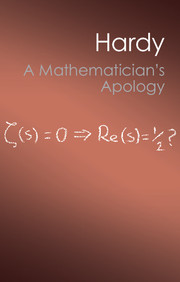
Hardy (1940) A Mathematician's Apology


In Liverpool I came across G.H. Hardy's short book A Mathematician's Apology. At £2.00 - a pristine bargain and a  marvellous read, especially the latter sections.

From being taught and applying Hodges' model in a case study in 1987 through to online work since 1998; I have to ask myself. Do I need to write:

'A Nurse's Apology'?

Aware of Hardy in the history of mathematics, and having read his apology, I'm no Hardy. My antics are a lesson in addition, but this is more 'Laurel and Hardy' - with apologies to comic genius of course. 


By their nature professions seek to maintain, and assure their continuity. A professional body can point to a definable body of theory, practice (curricula), that carries social and political status, if not patronage. There is national agreement that the NHS needs reform; radical reform no-less. The new Labour government is drawing lines to negotiate with the BMA, other professional bodies and unions. Specificity, specialisation is key. In healthcare people have suggested to me that Hodges' model invites genericism. Any suggestion of genericism is to be shunned. There seems an almost allergic reaction such is the threat to professional identity; unless, of course, you are a 'General Nurse', or General Practitioner - GP family doctor). Even Hardy warns:
"'GENERALITY' is an ambiguous and rather dangerous word, and we must be careful not to allow it to dominate our discussion too much." p.105.

This also applies to the quality and solidity of professional agencies and bodies whose role is to provide governance and set standards. The NMC has stumbled? Life and death is made up of details AND big pictures. How do you provide for - balance both? Curricula are another concern. Is the future of mental health nursing guaranteed as a profession? 

https://hodges-model.blogspot.com/2016/08/future-of-mental-health-nurse-training.html

The instrumental potential of Hodges' model is obvious. It invites a checkbox approach. One-to-one clinical encounters and interactions reduced to a tick-box exercise. This reduces any sense of specialist knowledge, training and education needed to assess, plan, deliver and evaluate high quality, effective, sustainable healthcare.

'THE second quality which I demanded in a significant idea was depth, and this is still more difficult to define. It has something to do with difficulty; the deeper? ideas are usually the harder to grasp: but it is not at all the same.' p.109.

Hardy's thoughts (and no doubt similarly expressed by other mathematicians and logicians) can be 'found' in Hodges' model; with an addition. Depth and difficulty rests on the uniqueness of  the 'one'. 

Here, Hardy is comparing between 'real mathematics' and chess:

'A chess problem also has unexpectedness, and a certain economy ; it is essential that the moves should be surprising, and that every piece on the board should play its part. But the aesthetic effect is cumulative. It is essential also (unless the problem is too simple to be really amusing) that the key-move should be followed by a good many variations, each requiring its own individual answer. 'If P-B5 then Kt-R6; if .... then if .... then ...., ....' - the effect would be spoilt if there were not a good many different replies. All this is quite genuine mathematics, and has its merits; but it is just that 'proof by enumeration of cases'  (and of cases which do not, at bottom, differ at all profoundly*) which a real mathematician tends to despise.' p.114.

*I believe it is now regarded as a merit in a problem that there should be many variations of the same type. (footnote)

While Kings, and Queens et al. undoubtedly have their own unique personalities, in healthcare effective clinicians make a concerted effort not to merely enumerate cases. The professional emphasis is (idealistically, professionally, purely and in application to) person-centredness; with the compassion, complexity, cussedness, and (sometimes literal) complications this brings. From 1-1 interaction, the clinical encounter, the therapeutic relationship, and alliance are the reason for practitioners achieving and sustaining intra- and interpersonal communication skills. Our attitudes towards knowledge, what is thoughts affects what we feel individually and collectively. Science should be neutral. It might be concluded that this question is for the philosophers and ethicists to wrestle with. In healthcare ethics are central: 'Do no harm'. Whether the practitioner, theorist, manager, policy maker is a nurse, scientist or mathematician such questions impact upon the person. As they are social, cultural and political. Revisiting Bronowski's Ascent of Man, this question arose in Archive on 4.

'It seems that mathematical ideas are arranged somehow in strata, the ideas in each stratum being linked by a complex of relations both among themselves and with those above and below. The lower the stratum, the deeper (and in general the more difficult) the idea.' p.110.

(my emphasis)

individual
|
INTERPERSONAL : SCIENCES
humanistic ------------------------------- mechanistic
SOCIOLOGY : POLITICAL
|
group

logical & mathematical reasoning
depth of reasoning (memory)
mathematical aptitude
intelligence(s)
pure maths
identity

vector
relations
mathematics
logic
depth of analysis, complexity
Cricket!
pure - applied maths
"1" problem per visit

patient - health practitioner 
relationship
Watching cricket - conversation

reports - outcomes
enumeration of cases


Back-tracking to page 104, Hardy:

'The relations revealed by the proof should be such as connect many different mathematical ideas.'

Our proof is person-centredness, placing the person at the center (in this case - of Hodges' model). The proof can be quantitative and qualitive. There are a great many ideas at work. Critically, the ideas that might be called upon (even improvised) are not all health-related, but can extend beyond to encompass the four care (knowledge) domains of Hodges' model. In healthcare as in Hardy's life the spiritual is encountered. So, the determinants of health are ALL available to us - as required. Well not available as a resource might be, they are available in the hope they will be seen as factors. Hardy would approve I think of the direction of travel, not just as a vector, but a model of multidimensional vectors - reaching for relations.

Hardy, G.H. (1940) A Mathematician's Apology, Cambridge: Canto.
https://www.cambridge.org/core/books/mathematicians-apology/B90D81A8E28674119781863988A3E11B

Friday, December 08, 2023

The Digital Collective (DC) a Symposium: Digitalisation, Subjectivities, and Care

Dear colleagues, 

We recognise that many people who wanted to join our symposium on Digitalisation, subjectivities, and care were unable to join in person. For this and other reasons we have moved our symposium to be fully online. Our intention is for the symposium to be accessible to all of our colleagues including those who are outside the NL. 

If this is you, we hope you will now consider submitting an abstract, and as such we have extended the deadline to 31 January 2024.

Decisions will be made by 14 February 2024.

Please find the amended call below.

CFP: Digitalisation, subjectivities, and care
7 March 2024, 9.30am – 6pm, online
Deadline abstract submission: 27 November

The Digital Collective (DC) at the University of Twente in the Netherlands is planning a symposium on digitalisation in care. More information below. Please consider submitting an abstract for a talk or poster presentation, deadline: 31 January 2024. 

Any questions to: dc-bms AT utwente.nl 

Introduction

Digitalisation is more than a technological phenomenon. It concerns an ever shifting relation between digital technologies and societal developments. Digital tools are increasingly common in care contexts, reshaping practices, institutions, relations, and social structures. Understanding digitalisation of care therefore requires a multidisciplinary approach to distinct yet related issues that cover the scale of technology innovation, societal impacts (benefits and drawbacks), as well as the pace of development and its ubiquitous nature. In this interdisciplinary symposium we will therefore explore the relation between digital tools and those who use them, willingly or otherwise. 

Topics of interest:

Possible topics related to digitalisation include, but are not limited to: 

  • Digital users and digital tools
  • Care institutions
  • Data development / use in digital care contexts
  • Epistemic injustice in digital care contexts 
  • Perspectives on ‘users’ of digital care content
  • Realities and subjectivities of ‘digital users’ 
  • (Multi-)methodological approaches to digital care
  • Care labour economies
  • Global justice perspectives on care
  • Human-technology relations
  • Health economics 
  • Health Technology Assessment of digital health technologies

The DC is a multidisciplinary platform and we welcome submissions from a broad range of disciplinary and interdisciplinary perspectives, including from outside academia.

Overview of the symposium:

Schedule and further information about the day to follow.

Submission deadlines:

  • Extended abstract submission: Wednesday, 31 January 2024
  • Notification of decisions: Wednesday, 14 February 2024

Please note:

  • Extended abstracts should be between 500 and 1000 words. 
  • Submissions should be sent by email to dc-bms AT utwente.nl 
  • Poster proposals should be sent to the same email, and clearly labelled as such. 
  • If you want your work to be considered for both a presentation and a poster, please make this clear in your submission. Abstracts not accepted for presentation may be invited to present a poster instead.
  • Each submission will receive at least two reviews. 

Additional information:

The Digital Collective (DC) is an interdisciplinary research platform on digitalisation at the University of Twente in the Netherlands. DC consists of social scientists and philosophers specialised in digitalisation and with domain expertise in health, higher education, artificial intelligence, and related technologies. 

After the symposium the DC intends to build a consortium with a view to developing collaborative work, including for a Horizon Europe funding proposal.


Event and venue information:


The event will be free for all participants. It will be fully online. Further details to follow.


Symposium organisers and programme Committee:

Please send questions to: dc-bms AT utwente.nl 

Dr Y. J. Erden

Associate Professor in Philosophy
University of Twente
AISB Vice Chair 

My source:

Philos-L "The Liverpool List" is run by the Department of Philosophy, University of Liverpool https://www.liverpool.ac.uk/philosophy/philos-l/ 

Follow the list on Twitter @PhilosL. Follow the Department of Philosophy @LiverpoolPhilos 

n.b. With the event now including provision for online presentations I am submitting an abstract.