Showing posts with label collective. Show all posts
Showing posts with label collective. Show all posts
Monday, August 31, 2026
Saturday, July 25, 2026
vi WCCS26: World Conference on Complex Systems 20-22nd April
April and WCCS26 seems an age ago, but the motivational impetus provided by this experience has been ongoing.
 |
At the closing ceremony there was an award for the best paper which was awarded to Luis Comolli for:
Emergence in Designed Agroecosystems:
Collective Dynamics in a Perennial Multi-Species Agroforestry Network
Sat by Luis, I offered to take his photo to which he agreed - so better late than never! And: Well done Luis!
My presentation on the 21st April was part of:
Parallel Session 2
Track 1 - Agent-Based and Social Complexity
Session chair: Helena Knyazeva
▪ Peter Jones
Presenting a Universal and Simple Conceptual Workbench to Situate and Encompass Complexity
▪ Nisrine Jarmoune and Bouchra Lebzar
The Ontology of Behavior: Formalizing the Institutional Project as a Complex System
▪ Lionel Scotto d’Apollonia, Florian Charvolin, Lise Verlaet, Deborah Nourrit, Dominique Deveaux, Elisabeth Sénégas and Nourdine Bara
Participatory Action Research with and for Society: The Case of “Oasis of Fraternity”
▪ Harvey Spencer Sánchez-Restrepo, Jorge Louçã, Martha Belén Carmona-Soto and Sofialeticia Morales-Garza
Topological Patterns of Academic Success: Insights from Complex Network Analysis
To be clear there was a great deal in all the sessions (see below!). I noticed in Nisrine Jarmoune's presentation, however, more specific conceptual overlap in terms of the individual, collective - groups, behaviour and institutions, with reference to ontology and philosophy. Several mathematical concepts also arose and since April online discussion has proved very interesting. In the near future I hope to report on how ideas develop and may be taken further, both for Nisrine's PhD studies and my work on Hodges' model.
We are considering, especially with the options to participate available -
https://www.measuringbehavior.org/'The next Measuring Behavior conference will take place from 28 to 30 April, 2027, in Düsseldorf, Germany. Düsseldorf is in a region with a high concentration of behavioral research across a variety of fields both in universities and industry. It is easy to reach by international trains and flights. It is a city combining innovative modern architecture with a historic city centre. The conference will take place in the Clayton Hotel, which is in the Little Tokyo region of Düsseldorf, with its distinctive Japanese flavor. We will be hosted by the Heinrich Heine Medical University and the location is within easy walking distance of the central station.'
https://www.measuringbehavior.org/call-for-symposia-mb2027-2/
Going back to the Monday, the closing Keynote Speaker: Abdelmajid Ibenrissoul
Public Decision-Making and Complexity: What Rationality for Evaluation?
- provided fascinating insights and economic history:
 |
Abdelmajid Ibenrissoul - Public Decision-Making and Complexity: What Rationality for Evaluation? |
There remains much to follow up, seek understanding and see how this relates to Hodges' model.
More details to follow.
I have noticed the main website for WCCS appears to be unavailable? I will check.
Wednesday, July 22, 2026
I don't want to look cool ...
individual
|
INTERPERSONAL : SCIENCES
INTERPERSONAL : SCIENCES
humanistic ------------------------------- mechanistic
SOCIOLOGY : POLITICAL
|
group
"What is it with all this | |
... what I want is for those with the power, to keep the planet cool." |
Sunday, July 12, 2026
Level Headed Questions about Identity
individual
|
INTERPERSONAL : SCIENCES
INTERPERSONAL : SCIENCES
humanistic ------------------------------- mechanistic
SOCIOLOGY : POLITICAL
|
group
Individual - Person IDENTITY Personality Character Traits Spiritual identity Religious identity brain in a vat thought experiment SPIRIT level |
| ||
Social identity (cohesion) Collective & Cultural identity Role & Family identity Relational identity Languages media(-ted) identities | Local / Regional identity National identity: North-South :: West-East divide Organisational / Inst. identity Political GLOBAL NORTH:SOUTH |

The Legend of St Edmund and the Wolf
Source: 'The Bay Horse' local pub and Coffee House.
Previously: 'identity' : 'philosophy' : 'alcohol' : 'South' : 'language'
Saturday, July 11, 2026
"Train midwives as nurses" - Ockenden
Re. Ockenden Report
Catching up on the newspapers, I noticed in the Times reporting of Ockenden calling for midwives to train as nurses first. Provoking debate about nurse education.
Within maternity services there are problems with continuity of care and skills in dealing with complex cases:
'Maternal Deaths
60. The Review examined 27 maternal deaths that occurred between 2006-2024. Five cases fell outside of the Terms of Reference of the Review. Of the 22 remaining cases, reviewers identified failures in care that may have or substantially impacted on the outcome in six deaths.
61. The profile of maternal deaths at NUH over this period broadly aligned with the known demographics and causes as identified by MBRRACE. 11 of the deaths occurred to women living in the most deprived areas of the city and 14 occurred amongst women who were not white British.
62. The common failures reviewers identified that might prevent future maternal deaths included: listening to women and families and acting promptly on concerns; continuity of care particularly for those with additional social/medical complexities; robust clinical governance to ensure timely information sharing across organisations and prompt access to imaging for women presenting with concerning neurological symptoms.' xiv
AI Overview (Ecosia) suggests that although direct entry to midwifery has always been possible(?), the English National Board created the pathway some 39 years ago.
The Ockenden Report describes how in combination health systems, culture, leadership and training can contribute to compassion fatigue (p.313).
When you look at Hodges' model and our languages, a great many challenges for curricula, training and education programmes can be found. The most powerful of what can be progressive, or threats are invariably mechanistic:
- shorten
- bypass
- shortcut
- cutting corners
- short-circuit
Nursing must always move forward, continuous professional development is built on this principle. In the late 70s and 1980s post-registered qualifications were held in high esteem. Especially midwifery, paediatrics, health visiting, emergency and intensive care.
Clearly, decision and policymakers can underestimate the value of basic nurse training. Having an idea since childhood is brilliant, but at interview saying you're compassionate and want to make a difference will soon be tested. Sometimes as a student rather bluntly, as with a first placement in forensic nursing. I wonder how many students have been lost there? I'm sure the majority will cope, manage, enjoy and prosper, but I've seen the student peers who miss these cohort members on subsequent learning experiences. What preparation is employed?
Basic nurse training, is just that. Demonstrating competence in communication, awareness of basic needs and how these are expressed behaviourally. What interpersonal skills and knowledge are needed. As highlighted before, the director of nurse education worried about those of us who worked as nursing assistants risked being trained in poor care. Not recognising 'bad practice', a 'poor attitude', not using observation and most important of all listening: to what is said and unsaid. When I started I remember thinking about not responding - as individually programmed to do so, through a reflex action. That was a worry back then.
While the news in the Ockenden Report is bleak. The depth of the report (for me) is manifest in identification of not only socioeconomic factors, but sociotechnical too (with five mentions) and the critical interplay of seeing (and hearing!) the individual amid the collective:
'2. Fetal monitoring
Rather than reflecting simple failures of individual interpretation, growing evidence suggests that intrapartum fetal monitoring is best understood as a complex sociotechnical practice, shaped by system design, workload, team dynamics, guideline variability and organisational culture.119 Continuous CTG itself has well-recognised limitations, including poor specificity for predicting long-term neonatal outcomes and substantial inter- and intra-observer variation in interpretation.5 Reviews of intrapartum care are therefore unavoidably influenced by retrospective bias, with greater apparent clarity afforded by knowledge of the outcome than was available to clinicians at the time.
However, despite this, a sociotechnical understanding does not negate the importance of examining individual cases in which intrapartum monitoring was demonstrably substandard. National inquiries and confidential reviews repeatedly describe cases involving sustained failure to recognise pathological fetal heart-rate patterns, delayed escalation despite repeated triggers, and missed opportunities for timely intervention. 2,3,120,121 These cases cannot be explained solely by the inherent limitations of CTG or by hindsight bias.' p.143.
It is quite shocking to hear this conclusion: the need to train as a nurse first. Counterarguments: where is the evidence(?!) - have followed. But then if you undervalue and miss the fundamentals (see Hodges' model!) then individuals, families, communities, students, practitioners, services and systems suffer.
Thursday, May 21, 2026
June 4-5 'Ecologies of Care' - London, UK
With more to follow from RCN Congress, this morning I received the agenda for next month's conference 'Ecologies of Care'. I am speaking, first session on the Thursday, which is a good to know and see the broad range of presentations.
The focus on attention, is helpful for a possible further event in October. In the meantime, the Call for Papers began:
Chancellor’s Hall, Senate House London
June 4 & 5, 2026
Keynote lecture by Professor Yves Citton
How do increasing demands on our attention influence what we know, and how we act, in response to climate change? Despite a strong scientific consensus that climate change is ongoing and anthropogenic, political and legal action remains fragmented. Ecologies of Care asks to what extent the environmental crisis is a crisis of attention. Speaking to the dynamics of the attention economy, Yves Citton notes that “the new scarcity is no longer to be situated on the side of material goods to be produced, but on the attention necessary to consume them.” The word ‘attention’ is etymologically linked to the notion of care, or that which one attends to. This relationship (of subject and object) is fundamentally collective, insofar as collective attentional regimes influence what each one of us pays attention to on a daily basis, and how we navigate the barrage of informational flows from popular media.
Terms such as "the Anthropocene" and "planetary boundaries" function both as scientific descriptors and attempts to provoke action commensurate to the urgency that scientists believe their research demonstrates. The recent decision not to formalize the Anthropocene as an official geological unit, for example, highlights growing unease concerning intensifying media attention directed at scientific expertise. Under conditions of increasing disparity between what we know, and how we act, in response to climate change, the role of scientific expertise plays an increasingly normative, and not only informative, function. Scientific expertise attempts to direct what we attend to, and consequently, how (or if) we care. This is a collective practice of narrating and internalizing mythologies, whereby informational flows draw attention to some thing that needs to be cared for: Earth, the planetary, capital, or each other.
Continued ...
c/o Law and the Environmental Humanities Network
n.b. With little time, I'm not going to transfer the pdf text, but may add here.
Saturday, March 07, 2026
A definition of the 'Psycho-Political'
Clearing books, magazines and journals (to make space for a few new acquisitions) on a trip to Hay-on-Wye, I bought a secondhand copy of:
Weizsacker, Carl Friedrich von. (1980). The Unity of Nature.
I noticed chapters on the definition of health and illness, and information.
Models of Health and Illness, Good and Evil, Truth and Falseness
Chapter Jun 2014
https://doi.org/10.1007/978-3-319-03671-7
In book: Carl Friedrich von Weizsäcker: Major Texts in Philosophy (pp.74-89)
AbstractUnfortunately, I cannot find a copy of the lecture. In my softback copy the title is "Lack of Peace as Psychic Illness".
This essay is the core of our reflections on cybernetics. It is the only essay in this Part that tries to describe concretely what cybernetics can achieve. Written in the fall of 1967 but unpublished until now, it was inspired by a lecture on “Peacelessness as Mental Illness” delivered in Bethel in 1967 (published in Der ungesicherte Friede; Göttingen: Vandenhoeck & Ruprecht, 1969). On that occasion the question arose whether it is medically justifiable, or merely metaphoric, to call the inability to maintain peace an illness. As far as I can see, contemporary medicine lacks a sufficiently clear concept of illness to decide this question. Since I had no desire to merely skirt the issue, I was faced with the task of outlining a scientifically justifiable definition of illness. The result is presented in Sect. 6.2 of this essay; its social application is very briefly sketched in Sect. 6.4.
(My emphasis)
We don't tend to think of mental illness in the collective, but history provides many examples within and extended across communities - 'mass psychogenic illness'. More recently there is a literature on the mental health, competency of global leaders, also known as 'hubris syndrome' previously. Even the history of Carl Friedrich von Weizsäcker is controversial, his World War II record and knowledge of nuclear physics.
We have a veritable storm across all the domains of Hodges' model (including the spiritual) that point to the model's ongoing relevance, consider:
- climate crisis;
- pollution (air, water ...)
- geopolitics;
- disruption of the international rules-based order;
- the status and reputation of global organisations (were they ever 'international'?);
- the record of current global political leadership;
- the need to protect Political titles (not just Professional titles, Dr, Nurse, ...)?;
- the rise of artificial intelligence.
Link:
https://www.researchgate.net/publication/300477492_Models_of_Health_and_Illness_Good_and_Evil_Truth_and_Falseness?
Sunday, February 15, 2026
vii Book: Bill Ross - 'Order and the Virtual'
'The Philosophy and Science of Deleuzian Cosmology'
On the publisher's site, the content listing is limited to the chapter (section) titles (as shared in iii).
There is also one review:
'In classical physics and its mechanical paradigm, events are stories about fundamental objects. In quantum physics, it is the objects that are the stories by which we understand physical systems in their most fundamental form--as histories of events. In Order and the Virtual, Bill Ross makes a compelling case that the event-ontological philosophies of Deleuze and Whitehead will become for the new physics what the philosophies of Newton and Locke were for the old.'
It is worth listing the content details in full:
Series Editor's Preface vii
Preface by Robin Durie and David Webb ix
Abbreviations xii
Chaos I
Chaos and Complexity Theory I
Nietzschean Chaos and the Superior Principle of Sufficient Reason 5
The Eternal Return and the Disparity of Forces 8
Ergodicity and Infinite Duration 10
Post-Classical Physics and the Question of Entropy 15
2. Entropy and the Complete Concept in Leibniz and Deleuze 24
Dissymmetry, Energy Gradients and the Ultimate Origination of Things 29
On the Ultimate Origination of Things 30
From Many Worlds to Chaosmos 34
The Calculating God 36
Mathematical Thought, the Problem and the Cosmos 38
The Compete Concept and Disjunctive Synthesis in Sufficient Reason 44
Physical Systems, Disparity and Disjunctive Synthesis 50
Chaosmos as Cosmology 56
Absolute Zero, Limits and the Infinite 60
Simple Order 68
3. Order 71
Mechanism and Vitalism, Order and Complexity 73
The Game Analogy #I: Leibniz and Kant 81
The Game Analogy #2: Claude Shannon and Michel Serres 83
Game #2.1: Claudo Shannon's 'A Mathematical Theory of Communication' 86
Game #2.2: Michel Serres The Birth of Physics 94
Game #3.0: Deleuze's Ideal Game 984. Order as Complexity 109
Complexity as Principle 122
Limits without Negation 127
5. Sufficient Reason as Dissymmetry and the Evolutionary Paradigm 131
Limits and Non-Locality 135
A Network Paradigm: Loop Quantum Gravity 150
A Holographic Paradigm: David Bohm's Implicate Order I54
Evolutionary Expansiveness 161
Conclusion 175
Notes 182
Bibliography 207
Index 217
I can see why my reading of OatV is not at the usual 21st century pace. 'Section 2. Entropy and the Complete Concept in Leibniz and Deleuze', pp.24-68, as already noted, is a real melange of ideas from several sources. As noted already, you have to unpick Deleuze, Simondon and Ross's guiding thought. your reading and purpose also matters however; an amazing gift of texts like this.
'CHAOSMOS AS COSMOLOGY
If energy gradients are the sufficient reason of all that appears for ther- modynamics, symmetry is to most intents and purposes the sufficient reason from which modern physics draws its rationale. Mathematical relations of symmetry have come to take the place of 'law` in classical physics: where there is symmetry, science identifies an underlying order, As we shall see, however the point of contention between Deleuze and the prevailing scientific consensus is by no means so black and white. and far from universally upheld among the scientific community. Once again, it is in the particularities of this tension that productive exchange may be found.' p.56.
Leibniz's 'individual' (and monads) differs from that in Hodges' model, but there is the question of time and scale (at both ends of the vertical axis in Hodges' model):
'Each individual is in contact with, expresses, all individuals in the world, but obscurely, again, as with Leibniz, through infinitely ramifying lines of divergence.' p.54.
'Each individual, then, remains necessarily the sum of all its predicates, but in the same sense as a singularity contains its own power of expressing innumerable contradictions; here is Deleuze's 'object = x', the concept which overcomes the idea of world understood merely as a circle of convergence.' p.55.
We often speak in terms of 'take-aways'. Ross provides a packed (yet nutritious!) lunch and really useful snippets:
'Disjunction becomes a relation' (p.49).
Identity runs through section 2. Difficulties of orientation are noted. I wondered about a symbol for singularity, but I cannot find one(?). Ross, himself, describes as dense, Leibniz's essay on 'Origination'.
Is the nursing process, predicated up Aristotlean 'hylomorphism' (p.50)? To capture the (cognitive) orientation of an individual, do we locate the basis for the immanence of nursing, in problems that are potential, or actual?
Amongst, particle physics, absolute zero, a two-dimensional plane, and 'symmetry'; I found 'ill health'. At least, I did in a spontaneous pencilled note. And, nearby: 'Symmetry is Law'; (p.59)'.
There is grist-for-the-mill in producing new formulations for Hodges' model. Do 'non-commutative relationships, and vectorial transformations abound? (p.60)
Health and ill-health break symmetry (which Deleuze resists), and do so within and across all the domains of Hodges' model.
Ross quotes in Section 3 'Order', page 73 in Bergson's Creative Evolution (236): '[The mechanistic order] may be defined as geometry which is its extreme limit; more generally, it is that kind of order that is concerned, whenever a relation of necessary determination is found between causes and effects'. I could go on ... but scribbled 'cogeography/cogeographical'.
Many thanks to Edinburgh University Press for my review copy.
More to follow here ...
Bill Ross (2024) Order and the Virtual: The Philosophy and Science of Deleuzian Cosmology. Edinburgh: Edinburgh University Press.
https://edinburghuniversitypress.com/book-order-and-the-virtual.html
Bill Ross (2024) Order and the Virtual: The Philosophy and Science of Deleuzian Cosmology. Edinburgh: Edinburgh University Press.
https://edinburghuniversitypress.com/book-order-and-the-virtual.html
Wednesday, February 04, 2026
vi Book: Bill Ross - 'Order and the Virtual'
'The Philosophy and Science of Deleuzian Cosmology'
Over time I have equated the center of Hodges' model with a nexus. Framing the whole model as a chaotic system, comprised of four domains, with two (or more?) Lorenz attractors, how do we make sense of what is going on?
A previous post visited this too: Threshold Concepts: Reflection on chaos, complexity and AI
Reading Order and the Virtual the new vocabulary, provides glimpses. The perspectives I'm adopting are no doubt naive and favour my context. If we freeze the situation from the center - the nexus the variables, parameters are frozen within their respective domains and tracks around the attractors. They tell us little (now), for obvious reasons, but (with AI and) acknowledging the social and political is a huge step forward (in healthcare).
'The word 'appetition' occurs not infrequently in Whitehead's work, though his own coining is 'prehension`. Both words convey essentially the same import. All individuals 'prehend' all others - the entire universe is expressed through the relations pertaining to any given individual therein.36 Prehension belongs cqually to the event as to the conscious decision. The 'nexus' or 'actual occasion' is the outcome of prior appetitive or prehensive enfolding for Whitehead as it is for Leibniz, and the aggregate of past prehensions shapes the future of the individual. The crucial refinement comes with the term 'negative prehension'.
For Whitehead, accepting those same tenets that characterise Leibniz's metaphysics, the interconnection of all things and the tendency of systems to enfold elements from their total situation, negative prehension is a necessary corollary to positive appetition. It belongs to the 'principle of limitation' which Whitehead saw as a necessary supplement to Spinozist metaphysics, and which we shall encounter in some detail in following chapters.'
It helps me, that Spinoza is heard here.
'Instead of how is it that all things are interconnected, the question becomes, "Given that all things are interconnected, how is it that individuation is possible?'
Before recourse to Lorenz's butterflies, I saw 'oscillations', a constant swing from individual to other(s); then back again.
`Every present state of a simple substance is a natural consequence of its preceding state, in such a way that its present is big with its future',37 (all p.47.)While concerning a 'simple substance', is this a prelude to self-care and preventive health care?
I noted in pencil: In Hodges' model 'nexus' is framed as the now - that just was. Ross carries on to discuss 'the multiplicity of components in the nexus can enter explicit feeling as contrasts.' p.48.
Yes. 'The local and global are entwined' p.49; and now with the glocal too. Ross points out how Deleuze draws upon Simondon's treatment of the organic and inorganic within the same framework, p.50.
I've also been reminded about resolving some abbreviations:
https://hodges-model.blogspot.com/2025/07/axiomatic-simondon.html
Many thanks to Edinburgh University Press for my review copy.
More to follow here ...
Bill Ross (2024) Order and the Virtual: The Philosophy and Science of Deleuzian Cosmology. Edinburgh: Edinburgh University Press.
https://edinburghuniversitypress.com/book-order-and-the-virtual.html
Bill Ross (2024) Order and the Virtual: The Philosophy and Science of Deleuzian Cosmology. Edinburgh: Edinburgh University Press.
https://edinburghuniversitypress.com/book-order-and-the-virtual.html
Monday, January 05, 2026
Primary & Secondary Health Care - How long...?
THE DAWSON REPORT
MINISTRY OF HEALTH.
CONSULTATIVE COUNCIL ON MEDICAL AND ALLIED SERVICES.
Presented to Parliament by Command of His Majesty. [... selected extracts]
3. The general availability of medical services can only be effected by new and extended organisation, distributed according to the needs of the community. This organisation is needed on grounds of efficiency and cost, and is necessary alike in the interest of the public and of the medical profession. Measures for dealing with health and disease become, with increasing knowledge, more complex, and, therefore, less within the power of the individual to provide, but rather require combined efforts. Such combined efforts to yield the best results must be located in the same institution. As complexity and cost of treatment increase, the number of people who can afford to pay for a full range of service diminishes. Moreover, enlightened public opinion is appreciating the fact that the home does not always offer the best hygienic conditions for dealing with serious illness, which requires special provision in order to give the patient a full chance of recovery.
4. In days gone by such conditions as appendicitis were treated with poultices and drugs in the patient’s home. Now they are treated by operation, which is more effective, but requires more equipment, a team of workers, and a larger expenditure. Such conditions as diseases of the lungs formerly received clinical examination and treatment by drugs. They now may require, in addition, the attention of the pathologist and the radiologist. This means greater efficiency, but more organisation and higher cost.
5. Preventive and curative medicine cannot be separated on any sound principle, and in any scheme of medical services must be brought together in close co-ordination. They must likewise be both brought within the sphere of the general practitioner, whose duties should embrace the work of communal as well as individual medicine. It appears that the present trend of the public health service towards the inclusion of certain special branches of curative work is tending to deprive both the medical student and the practitioner of the experience they need in these directions.
6. Any scheme of services must be available for all classes of the community, under conditions to be hereafter determined. In using the word “available,” we do not mean that the services are to be free; we exclude for the moment the question how they are to be paid for. Any scheme must further be such that it can grow and expand, and be adapted to varying local conditions. It must be capable of comprising all those medical services necessary to the health of the people.
7. The foregoing are some of the considerations which have guided us in drawing up the scheme outlined below.
The services maybe classified into-
Those which are Domiciliary as distinct from those which are Institutional.
Those which are Individual as distinct from those which are Communal.
1. We begin with the home, and the services, preventive and curative, which revolve round it, viz., those of the doctor, dentist, pharmacist, nurse, midwife, and health visitor. These we style domiciliary services, and they constitute the periphery of the scheme, the remainder of which is mainly institutional in character. A Health Centre is an institution wherein are brought together various medical services, preventive and curative, so as to form one organisation. Health Centres may be either Primary or Secondary, the former denoting a more simple, and the latter a more specialised service.
2. The domiciliary services of a given district would be based on a Primary Health Centre -an institution equipped for services of curative and preventive medicine to be conducted by the general practitioners of that district, in conjunction with an efficient nursing service and with the aid of visiting consultants and specialists. Primary Health Centres would vary in their size and complexity according to local needs, and as to their situation in town or country, but they would for the most part be staffed by the general practitioners of their district, the patients retaining the services of their own doctors.
3. A group of Primary Health Centres should in turn be based on a. Secondary Health Centre. Here cases of difficulty, or cases requiring special treatment, would be referred from Primary Centres, whether the latter were situated in the town itself or in the country round. The equipment of the Secondary Centres would be more extensive, and the medical personnel more specialised. Patients entering a Secondary Health Centre would pass from the hands of their own doctors under the care of the medical staff of that centre. Whereas a Primary Health Centre would be mainly staffed by general practitioners, a Secondary Health Centre would be mainly staffed by consultants and specialists. It would be a consultant service in function and would be carried out by specialists or by general practitioners acting in a consulting capacity.
4. Secondary Health Centres must of necessity be situated in towns, where alone an efficient consultant service and adequate equipment could be expected, and the necessary means of communication exist. The selection of these towns will need careful consideration, and full information will be required as to the extent of existing provision of hospital and allied facilities, and of its distribution in relation to population and means of public conveyance. In rural areas the natural currents of traffic and business and existing medical facilities will usually indicate the town or towns in which a Secondary Health Centre may best be placed. In this connection we would like to point out the importance of carrying out a “Hospital Survey” at an early date. The results of this survey would afford data for recognising the areas in which the existing provision is inadequate, and the degree of the inadequacy. The Secondary Health Centres would vary in size and elaboration according to circumstances.
5. Secondary Health Centres should in turn be brought into relation with a Teaching Hospital having a Medical School. This is desirable, first in the interest of the individual patient, that in difficult cases he may have the advantages of the highest skill available, and secondly in the interest of the medical men attached to the Primary and Secondary Centres, that they may have the opportunity to follow the later stages of an illness in which they have been concerned at the beginning, to make themselves acquainted with the treatment adopted, and to appreciate the needs of a patient after his return to his home. In those towns where Teaching Hospitals exist, Secondary Health Centres would sometimes be merged in them.
LONDON PUBLISHED BY HIS MAJESTY'S STATIONERY OFFlCE
1920. Price 2s. Net. Cmd. 693
See also:
https://www.adph.org.uk/resources/175th-anniversary-timeline/
My emphasis.
Sunday, October 19, 2025
Space, Leadership, Choice, Politics II - Do Ho Soh
individual
|
INTERPERSONAL : SCIENCES
humanistic ------------------------------------------- mechanistic
SOCIOLOGY : POLITICAL
|
group-population
| Who do we put on a pedestal? | |||
| |
|
/https://tf-cmsv2-smithsonianmag-media.s3.amazonaws.com/filer_public/dd/24/dd24ebff-1d12-4f2a-92a8-bcd645154a26/img_9233.jpg)
Do Ho Suh - Lehmann Maupin
Image: Smithsonian - Take a Closer Look at a Surprising New Sculpture That Rethinks Who We Put on a Pedestal
My source: Andy St. Louis, Sculptural approach to far-fetched ideas, Arts, Life&Arts, FTWeekend, 31 August/1 September 2024, p.12.
Previously on W2tQ: Space, Memory, Home, Organisation I - Do Ho Soh
"There is another!" Karma (2003) by Do Ho Suh
Monday, October 06, 2025
On the 'front' - or behind the line(s)?
In many sources on socio-economics, politics, health policy ... I still note the challenge to represent the INDIVIDUAL and COLLECTIVE within a figure. Of course the author's subject, purpose, the context all influence the final depiction and the message to be conveyed.
I wonder if Hodges' model can provide a starting point to explore relationships, oppositions, arguments and synergies?
Hodges' model provides an
expansive and potentially powerful 'front'
through its horizontal axis
[ HUMANISTIC ↔ MECHANISTIC ].
This axis - drawn across and through the model vertically, may make it easier(?) to analyse and synthesize the relations at work and produce a diagram?
Individual
|
INTERPERSONAL : SCIENCES
HUMANISTIC ========================= MECHANISTIC
SOCIOLOGY : POLITICAL
|
Group
INDIVIDUAL | INDIVIDUAL |
GROUP - POPULATION | GROUP - POPULATION |
Friday, August 15, 2025
Big Mind: How Collective Intelligence Can Change Our World
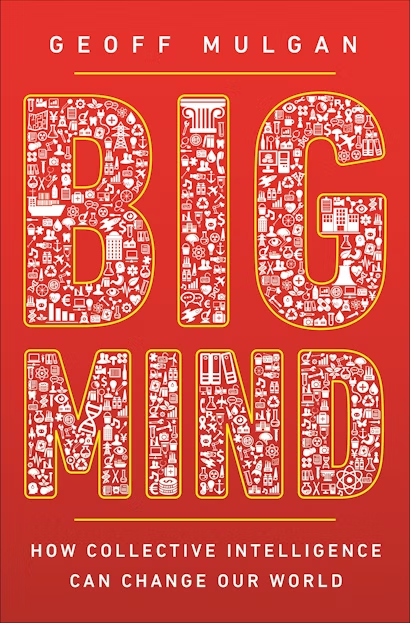
Speech, gesture, behaviors, drawing, writing and other media all provide a way of recording and representing information, and knowledge. Digital technologies are the latest tools to extend our memories, and ability to analyse, synthesise and abstract from and to our experiences.
How we see the individual and collective (society) is a subject of much debate across many disciplinary fields, spanning the sciences and humanities; economics, healthcare, sociology, ethics, and philosophy. Mulgan considers as infrastructure, the measures that have emerged to support collective intelligence:
'They have evolved from physical objects (such as steel production) through aggregate concepts (like GDP and GNP) to intangibles (such as innovation indexes or measures of the value of creative industries). They have evolved from single measures of things like population to indexes (like the UN Human Development Index), and from activities to outputs and then outcomes (such as QALYs - quality adjustied life years - and DALYs - disability adjusted life years in relation to health). In all these ways, both states and societies watch themselves and recognize well-calibrated observation as the precondition for thought.' (p.52)
Using Hodges' model the focus is primarily upon individuals and teams application. Mulgan's chapter 12 (pp.145-160) on 'Problem Solving' is subtitled 'How Cities and Governments Think'. An excellent question, that was asked of me in February. How can a national government be informed of Hodges' model and its potential utility? Cities have repeatedly had to solve problems created by changes in transport, work, housing, population density, the movement of people, goods, materials, and links to rural and agricultural centers. The logistics of access to routes, ports, airports, and where to place industries efficiently (and safely)? 'City planning' is a key example of our cities thinking?
Perhaps, we need to think of mobility in a cognitive sense, and not just AI-mediated. So as we walk, run, seek access - we should take care we don't get stuck!
Individual
|
INTERPERSONAL : SCIENCES
HUMANISTIC -------------------------------------- MECHANISTIC
SOCIOLOGY : POLITICAL
|
Group
subjectivity models we use can be a trap (p.120) emotional intelligence quality | objectivity SYSTEMS energy, food, transport.. physical media & 'memory' quantity |
'Society Thinking as a System?' Chap. 16. Group - Collective | collective intelligence Patient Reported Outcome Measures (PROMs)? |
See also: 'literacy' : 'prevention' : 'service' : 'severe' : 'change'
Geoff Mulgan (2017) Big Mind: How Collective Intelligence Can Change Our World, Princeton University Press.
Image: Princeton University Press.
Tuesday, August 05, 2025
Collective loneliness
Individual
|
INTERPERSONAL : SCIENCES
HUMANISTIC -------------------------------------- MECHANISTIC
SOCIOLOGY : POLITICAL
|
Group
loneliness | depopulation demographics Japan | ||
| 'Stop the boats' 'global trends' |
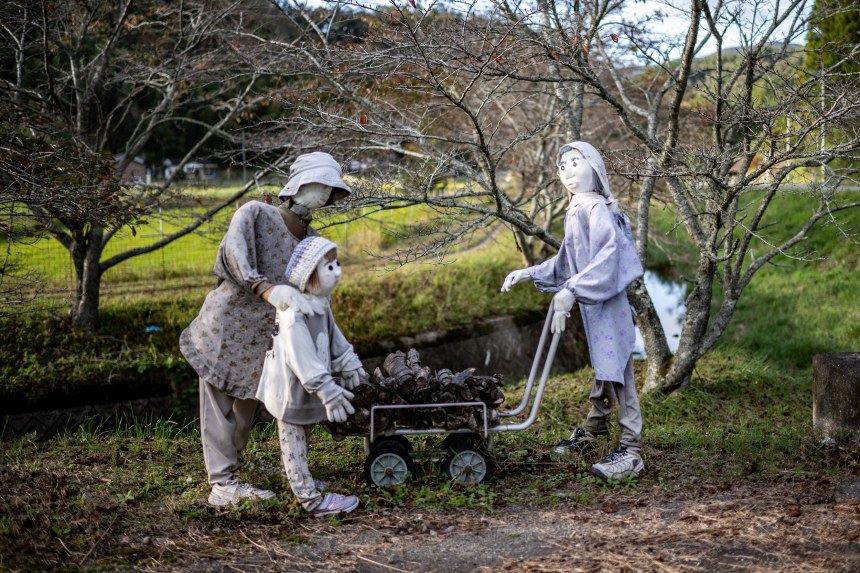
My source: Sam Freedman. The truth about migrant workers: demonised but in demand, and few of us can live without them. The Observer, 03.08.25. pp.12-13.
https://observer.co.uk/news/national/article/sam-freedman-demonising-migrants-wont-fill-jobs-or-boost-falling-populations
Image and context:
'Outnumbered by puppets': Depopulated village in Japan crafts dolls for sense of life
https://www.nbcnews.com/news/world/outnumbered-puppets-depopulated-village-japan-crafts-dolls-sense-life-rcna177216
Friday, July 18, 2025
Narketpally syndrome: A different approach to medical education and research
From: Marc Jamoulle
MD (UCL 1974), PhD (ULg 2017)
Family physician, Belgium (INAMI 15324119004)
marc.jamoulle AT uliege.be
Associate researcher at HEC-Liège, BAS-SCM, University of Liège, University of Rouen, D2IM & CAMG-UCL, Brussels
hi friends,
in an unknown syndrome, another way to deal with the patient, to learn from the patient, to develop a partnership with the patient, caring while waiting for the cure,
Jamoulle, M., & Soylu, S. (2025). Phenotyping Long COVID in Children in Primary Care: A Case-Based Study Using the Human Phenotype Ontology. ORBi-University of Liège. https://orbi.uliege.be/handle/2268/334447
From: Rakesh Biswas
rakesh7biswas AT gmail.com
This paper illustrates a global patient-centered learning ecosystem, anchored in Narketpally, that adopts a syndromic approach to medical education and research. Rooted in the etymological origins of 'syndrome' ("together we flow"), this approach reframes medical research as a collective, contextual response to individual patient needs.
https://pubmed.ncbi.nlm.nih.gov/40674544/
Methods: The structure of the paper is intentionally modeled as a team-based learning exercise, grounded in our prior Web 2.0-based cognitive tools: CBBLE (Case-Based Blended Learning Ecosystem) https://pmc.ncbi.nlm.nih.gov/articles/PMC6163835/ and PaJR (Patient Journey Record) https://pajr.in/. These are framed against the conceptual scaffolding provided by three key publications: a framework by Sturmberg et al. and two contrasting commentaries by Greenhalgh and Ioannidis.
Results: Through our ongoing CBBLE-PaJR workflow, thematic learning outcomes emerged in response to these frameworks. Sturmberg's stratified realism helped us recognize how individual patient connections, recorded in our daily practice and online learning portfolios, can drive both contextual learning and meaningful changes in patient outcomes. Greenhalgh's commentary inspired our conceptualization of a 'wildebeest river crossing value model,' contrasting population-based efficiency with individual-centered compassion. Ioannidis's critique of methodological rigor highlighted the potential for expanding low-resource, high-impact research through patient-centered designs, particularly in phases 1 and 4 of the clinical trial hierarchy.
Podder, V., Kulkarni, R., Samitinjay, A., Salam, A., Gade, S., Agrawal, M., Surendran, A. K., & Biswas, R. (2025). Narketpally Syndrome and the Embedding of Contextual Values in Real-Life Patient Pathways. Journal of evaluation in clinical practice, 31(5), e70186. https://doi.org/10.1111/jep.70186
[Citation added PJ].
--
My source:
You received this message because you are subscribed to the Google Groups "Unnecessary Services in Clinical Medicine & Public Health" group.
[Citation added PJ].
--
My source:
You received this message because you are subscribed to the Google Groups "Unnecessary Services in Clinical Medicine & Public Health" group.
Saturday, June 14, 2025
Call for Papers: Compassionate Futures for Collective Well-Being
Despite an academic affiliation, without any (part-time) tutoring hours this past year, it may be difficult to avoid article processing fees (APCs). A shame as I believe that Hodges' model can address this call (below) in a somewhat novel manner.
If anyone is interested in exploring a writing project framed around Hodges' model and employing a relational - diagrammatic approach please let me know.
The exercise would be greatly enhanced by:
- Engaging with one of more academics, adept in formal methods (maths, logic..?) and keen to apply their talents within the social sciences - humanities.
- And, exploring the possibility of working with early career researchers, including from developing nations, independent and 'late career'(!) scholars would also be very welcome.
Previously:
Jones, P. (2004) Viewpoint: Can informatics and holistic multidisciplinary care be harmonised? British Journal of Healthcare Computing & Information Management, 21, 6, 17-18.Jones, P. (2004) The Four Care Domains: Situations Worthy of Research. Conference: Building & Bridging Community Networks: Knowledge, Innovation & Diversity through Communication, Brighton, UK.
Jones, P. (2008) Exploring Serres’ Atlas, Hodges’ Knowledge Domains and the Fusion of Informatics and Cultural Horizons, IN Kidd, T., Chen, I. (Eds.) Social Information Technology Connecting Society and Cultural Issues, Idea Group Publishing, Inc. Chap. 7, pp. 96-109.
Jones, P. (2009) Socio-Technical Structures, the Scope of Informatics and Hodges’ model, IN, Staudinger, R., Ostermann, H., Bettina Staudinger, B. (Eds.), Handbook of Research in Nursing Informatics and Socio-Technical Structures, Idea Group Publishing, Inc. Chap. 11, pp. 160-174.
Compassionate Futures for Collective Well-Being
Academic Editors: Karin Hannes (KU Leuven) and Natalia Martini (KU Leuven)Deadline for Abstracts: 15 September 2025
Deadline for Articles: 30 January 2026
Social Inclusion, peer-reviewed journal indexed in the Social Sciences Citation Index (Web of Science; Impact Factor: 1.4) and Scopus (CiteScore: 3.5), welcomes new and exciting research papers for its upcoming issue "Compassionate Futures for Collective Well-Being," edited by Karin Hannes (KU Leuven) and Natalia Martini (KU Leuven).
We encourage contributions that engage in an interdisciplinary dialogue among scholars, practitioners, and policymakers about what it means to create a caring society in the face of persistent inequalities. In addition, we welcome papers that demonstrate where and how humans take up the responsibility to conceptualize compassionate futures from a multi-species perspective, as well as those that focus on what hinders or supports the idea and the project of compassionate futures. We accept theoretical papers presenting frameworks on compassionate futures, prospective policy analyses, cases featuring the use of futures studies and co-creative approaches that promote compassion and care as central principles in re-imagining the future, and reflection papers focusing on global cooperation for fostering compassionate futures. Authors should connect to the general idea of how humans could or should relate to other agents with whom they share the planet or illustrate how the new narratives they developed support collective well-being.
Authors interested in submitting a paper to this issue are encouraged to read the full call for papers here:
https://www.cogitatiopress.com/socialinclusion/pages/view/nextissues#CompassionateFutures
Abstracts welcome until 15 September 2025.
Kindest regards,
Mariana
Mariana Pires
Social Inclusion
Cogitatio Press
1070-129 Lisbon
Portugal
New issues (open access):
Public Participation Amidst Hostility: When the Uninvited Shape Matters of Collective Concern
https://www.cogitatiopress.com/socialinclusion/issue/view/419

Violence, Hate Speech, and Gender Bias: Challenges to an Inclusive Digital Environment
https://www.cogitatiopress.com/socialinclusion/issue/view/415
My source: https://www.jiscmail.ac.uk/cgi-bin/webadmin?A0=COMPLEXITY-PRIMARY-CARE
Saturday, February 15, 2025
'Life's compass' ...
'... I have been thinking a lot about the responsibilities of leadership. How do people in positions of power reach decisions and do they fully consider the consequences of these decisions? In questioning how someone chooses to lead, I'm also asking how that individual navigates the possible courses of action, and what kind of compass is being used to guide them. It has made me think about how any of us choose to navigate our way through life and where we look for a sense of direction. I wonder what we might change about the choices we make if we were more reflective about what serves as a compass in our lives.'
'"The Invention of the Compass" is attributed to an anonymous painter of the late 16th century, although there exists a roughly contemporaneous plate of the same title, and of an almost identical image, engraved by the Dutch artist Jan Collaert the Elder. In the original painting an old man with a long white beard, and dressed in a voluminous red and brown cloak, sits behind a large table in the centre of a room. As well as a canopied bed and another desk spread with books and scientific instruments, there is a model, or vision perhaps, of a carrack sailing ship hanging from the ceiling. There is also a large round compass device that sits heavy on the floor on the left foreground of the canvas. ...'
'It is as if this painting (Caravaggio) intended to serve as a compass, helping to move our steps and actions in the direction of caring for others. This is a powerful idea, and it suggests that all images contain that potential to influence how we live. Where we choose to direct and keep our gaze to some extent can determine how we permit our lives to be guided, if not in a physical sense then toward a value system that can end up having an impact on the way we engage with the wider world.' (My emphasis)
Ack. Enuma Okoro, Life's compass, The art of life, Life&Arts, FTWeekend, 1-2 February 2025. p.2. (Still need to subscribe, marvellous reading!)
|
|

INDIVIDUAL
|
INTERPERSONAL : SCIENCES
HUMANISTIC -------------------------------------- MECHANISTIC
SOCIOLOGY : POLITICAL
|
GROUP
moral compass personal values my choices | maps - compass position - navigation direction - distance degrees of freedom |
the public the public good group think | leadership power political freedom |
Enuma Okoro, Life's compass, The art of life, Life&Arts, FTWeekend, 1-2 February 2025. p.2.
Images:
New Inventions of Modern Times [Nova Reperta], The Invention of the Compass, plate 2https://collectionapi.metmuseum.org/api/collection/v1/iiif/659663/1403273/main-image
By Caravaggio - Unknown source, Public Domain, https://commons.wikimedia.org/w/index.php?curid=10286196
Previously:Friday, November 22, 2024
Ethics and the 'big picture'
'It has been my experience that many of the most successful and creative heads of major research labs around the country came to their place from other disciplines. For example, one prominent geneticist that I know has his Ph.D. in chemistry. He told me that coming to genetics from outside the discipline gave him an awareness of structures and values that were invisible to those laboring inside the established system. Much as one has critical insights into the ambience of a city or culture when one comes from outside as a foreigner, so also is there critical understanding of academic disciplines. Thus, one response to the add-on question is to reply that the material you are providing can make your students better scientists by giving them a more global, contextual perspective. A global, contextual perspective allows one to consider divergent research designs that approach a problem in many directions. This is sometimes called "big picture" thinking. Part of the big picture includes other scientific contexts. For example, biology is seen in the context of chemistry, and chemistry is seen in the context of physics. But it is more than that. It also includes values. Should I, as a scientist, pursue all questions with the same vigor? Are there some questions that should be avoided because of the social consequences of their results? Is the scientist compelled to think in terms of helping humankind or helping himself to a Nobel Prize in any way he can? All of these involve values and ethics. They are critical components to global big picture thinking. Such a perspective is a valuable tool for anyone seeking excellence in scientific research.' p.28.Boylan, M., & Donahue, J. (2003). Ethics across the curriculum : a practice-based approach. Lexington Books.
INDIVIDUAL
|
INTERPERSONAL : SCIENCES
humanistic ------------------------------- mechanistic
SOCIOLOGY : POLITICAL
|
GROUP
PERSONAL ETHICS INDIVIDUAL INTEGRITY MY EXPERIENCE MY REFLECTIONS INTERSUBJECTIVITY PURPOSE BELIEFS CHARACTER EDUCATION PROFESSIONAL EDUCATION | PROCESS OBJECTIVITY FACTS EMPIRICISM 'We define ethics as the process of reflection on the moral meaning of actions.' p.5. 'BIG PICTURE' PROFESSIONAL EDUCATION |
PRACTICE COMMUNITY OF PRACTICE ETHOS^ (Chap. 6) 'Ethics is not a discrete body of knowledge that one simply acquires for application and use in particular situations. It entails the ongoing appropriation of ideas of the good as they relate to the changig situations, contexts, and developments in individuals and groups lives. ^ Ethics reflects on actions the actions of individuals and groups.' p.5. | PROFESSIONAL BODIES PROFESSIONAL STANDARDS PROFESSIONAL & COMMERCIAL - ACCOUNTABILITY PROFESSIONAL ETHICS DUTY OF CARE POLICY LAW JUSTICE autonomy; nonmaleficence; beneficence; justice* |
*Beauchamp, T. L., & Childress, J. F. (2013). Principles of biomedical ethics (7th ed.). Oxford University Press. (Chap. 6, Boylan & Donahue)
Wednesday, September 04, 2024
Laughter and Medicine Conference
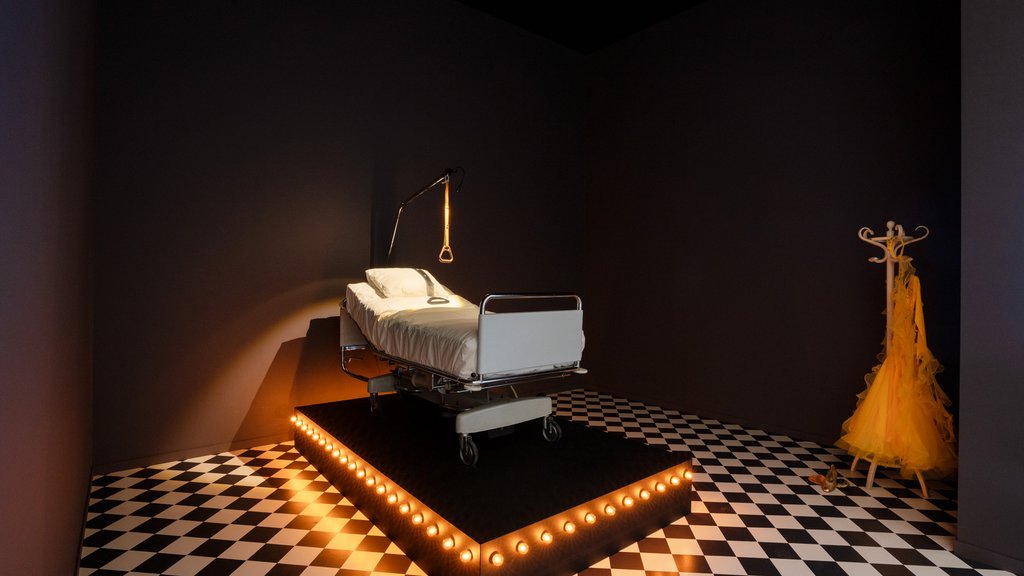 |
| Manon, Laughing Gas, 2019, installation, Kunsthaus Zürich photographer: Franca Candrian, 2022. |
British Academy/Wellcome Trust Conferences bring together scholars and specialists from around the world to explore themes related to health and wellbeing.
'Connecting knowledge across the disciplines, this conference will put practicing doctors in direct dialogue with researchers in the humanities – especially scholars of literature, cinema and cultural history. Together, they will seek to understand the social, diagnostic, therapeutic and physiological implications of laughter, inside and outside the clinic. Laughter is not always the 'best medicine', nor is it linked only to comedy and enjoyment. 'Healing laughter' differs markedly from pathological laughter, hysterical laughter, forced or bitter laughter, laughter aimed at mitigating awkwardness in unsuccessful communication, laughter intended to deceive, or laughter signifying fear, discomfort or aggression. Irony and other double-coded signifiers that abound in comic and parodic representations of medical practitioners and their patients often reveal medicine’s paradoxical place in various cultural imaginaries and in individual and collective experience.
This conference will study the diverse forms of laughter occurring around medicine in particular eras and cultural environments alongside comparative analysis of patterns and problematics over the long history of Western medicine and its representations.'
https://www.thebritishacademy.ac.uk/events/british-academy-conferences/laughter-and-medicine/
individual
|
INTERPERSONAL : SCIENCES
humanistic ------------------------------- mechanistic
SOCIOLOGY : POLITICAL
|
group
I don't find this funny! | I laughed so much it hurt! |
"All the world's a stage" | Politics is a running joke - that's never funny. The human epic of triumph and tragedy. |
Previously (with overlap):
arts :: drama :: poetry :: literature :: narrative
Sunday, July 07, 2024
Book for review: v "Philosophy of Care - New Approaches to Vulnerability, Otherness and Therapy"
I think this is the final post for Philosophy of Care (think! There is so much more ...). There are other chapters more salient to me personally, but for Hodges' model and the collective human enterprise, I think chapter 5 by Virginia Held is the most important. There's not just a chapter, but three in Part II 'Care and Economy'. I appreciate the reminder of Kate Raworth's Doughnut Economics which challenges;"the dominant assumption of the economy as a machine". I notice on Twi/X Kate Rowarth reflects on the UK's election:
The book 'Doughnut Economics' opens with the story of Yuan Yang who, as a young economics student back in 2008, was challenging the outdated theory she was being taught. Last night she was elected as the first-ever MP for Earley & Woodley. Huge congratulations @YuanfenYang!
https://x.com/KateRaworth/status/1809216007518507248
I gave Keir Starmer a copy of Doughnut Economics just 10 days before he became Labour Party Leader. So will the book make it onto his bookshelves in Number 10? More importantly: will policies for a regenerative & distributive UK become real under this government?...
https://x.com/KateRaworth/status/1809235013403136029
While in Philosophy of Care, another three words stood out:
"'Big-picture thinkers'^, Raworth notes, have offered alternative visions, but they have been dismissed by the field of economics." p.102.
Subscribe to:


 orcid.org/0000-0002-0192-8965

