Hodges' Model: Welcome to the QUAD: surgery

Hodges' model is a conceptual framework to support reflection and critical thinking. Situated, the model can help integrate all disciplines (academic and professional). Amid news items, are posts that illustrate the scope and application of the model. A bibliography and A4 template are provided in the sidebar. Welcome to the QUAD ...

Showing posts with label surgery. Show all posts

Sunday, May 24, 2026

South Sudan Medical Journal Vol 19 No 2 May 2026


Dear Reader,

The May 2026 issue is online here; we thank all the copyeditors and reviewers who helped prepare these papers. SSMJ is indexed by African Journals Online (AJOL) – go here to see who reads us.


Editorial 

  • Ebola: The Bundibugyo virus is back Edward Eremugo Kenyi

RESEARCH ARTICLES

  • Risk factors in glaucoma: Insights from a prospective case–control study, Belagavi, India Asawari Kabure, Bhushan Kulkarni, Shilpa Kodkany, Murigendra Hiremath
  • OV16 antibody seropositivity reveals persistent onchocerciasis transmission and cross-border risk in Magwi County, South Sudan: a population-based survey Ezbon WApary, Yak Yak, Benson Ojara, Wilson Ladu, David Oguttu, Ian Hennessee, Pita Jane, Johan Willems, Thok Chol, Kamulete Horasio, Okot William, Amanya Jacob
  • Prevalence of urinary schistosomiasis in communities along the River Niger Basin areas, North-Central Nigeria Nyamngee Amase, Ikpe Raphael Terlumun, Kayode Yusuf Abel, Sulaiman Mariam Kehinde, Akanbi II Aliu Ajibola
  • Developing a communicable and infectious diseases research agenda in South Sudan: A multi-stakeholder prioritisation approach Amanya Jacob, Ezbon WApary, Dhieu Daniel, Atemthi Dau, Matur T. Tieng, John Rumunu, Cicilia Konga, Bol Atem, Betty Eyobo, Robert Napoleon, Joseph Panyuon, Kenneth L Sube, Kon Alier, Joseph Lako, John Suraj, Abuelguasim M. Hassan, Mapuor Areu, Lazarus Atem, Aja Kuol, Pizzi Wilson, Achcer Adup Mou
  • Determinants of disaster preparedness among public health facilities in Juba City, South Sudan Dumba Samuel Kenyi, Muthoni Mwangi Eunice, Musa Olouch
  • Evaluating the role of the health information system infrastructure in enhancing data quality in Central Equatoria State, South Sudan Matur T. Tieng, Karani Magutah, Joseph Muchiri
  • Impact of developmental stimulation education on maternal knowledge and caregiving practices in stunting: a longitudinal study Ning Iswati, Azizan Omar, Sukhbeer Kaur Darsin Singh, Putra Agina Widyaswara Suwaryo 
  • Holding the line: lived experiences of mental health, moral injury, and organizational support among public-health professionals in the Rohingya Camp, Bangladesh — phenomenological study Md. Ruhul Amin
CASE REPORTS 
  • Endoscopic endonasal repair of post-traumatic sphenoid sinus cerebrospinal fluid leak with encephalocele Justin Rubena, Khalid Coco, Francis Swaka, Othwonh Twong 
  • A rare pathological feature of portal vein thrombosis complicated by portal hypertension and haematemesis Hamidine Illa, Ganiou Tidjani Kabirou, Amadou Magagi Mahamane Ibrahim, Maman Brah Moustapha, Soumaila Abdou, Habou Garba Abdoul Malik, Adamou Harissou

REVIEW ARTICLE

  • Interpersonal and community-level factors influencing intimate partner violence in South Sudan: a literature review Nyinypiu Tong Chol Adong 

SHORT COMMUNICATIONS

  • Letter to the Editor J. Clarke McIntosh
  • Letter to the Editor Eluzai A. Hakim
  • News from the Gordon Memorial College Trust Fund Eluzai A. Hakim

BACKCOVER: CDC Poster: Flu or Ebola? 

Thanks to everyone who supports SSMJ. Tell your colleagues they can join our mailing list here.

The SSMJ team
Email: southsudanmedicaljournal AT gmail.com
Website: http://www.southsudanmedicaljournal.com
Follow us on X: @SSMedJournal and our Facebook Group,

Monday, March 02, 2026

Thoughts re. 2026 Lancaster Philosophy of Psychiatry Work in Progress Workshop

After posting on the 19th February about the 2026 Lancaster Philosophy of Psychiatry Work in Progress Workshop last Thursday, 1100 through to 1530 on Friday - was well worth attending. I am also grateful for the opportunity to present Hodges' model, share current challenges and questions. Running through the programme what helped here:

While seemingly open in title the first presentation with Hane Maung, was (as with all) specific, but related to aspects of psychiatry and philosophy applicable here; classification, what is a 'disease'?, concepts, Millikan also appears in a reference: https://philpapers.org/go.pl?aid=MAUTDO-6.

As 2nd speaker, there were several questions after my presentation. Fourteen slides went to time: 20 minutes with 10 for Q&A. I'm not the best judge, but I believe I answered them. As my 'subject' is always the same in Hodges' model, I do make an effort to try (at least) to say something new. Listening, I soon realised this is an established Lancaster-grounded group, and welcoming too. If there is ever another opportunity, something new would definitely have to follow.

I can see scope for this in Matthew Williams's - The failure of the harm-minimisation argument for BID Surgery and the necessity of therapeutic justification. 'BIDS' is 'Body integrity dysphoria surgery' a challenging and ethics-bound situation, that while still rare, has made the news for (as ever) the wrong reasons. The relations to be considered cross all the domains and dimensions of health, care and more.

It is possible to become complacent regards our conceptual currency. Without taking care, we grow to take them for granted. I'm grateful to Clive Duddy for a refresh were autonomy is concerned.

'Difference' is a recurring trope in healthcare, informatics and other fields. George Turner's 'difference denied' and subsequent discussions was extra insightful therefore, addressing ongoing (legacy?) issues for service users, carers, patient and public involvement and engagement (PIE).

Presenting, 'Different ways of medical knowing in Walzer's different spheres of justice?', Dieneke Hubbeling drew my attention to Walzer's book: Spheres Of Justice: A Defense Of Pluralism And Equality. In addition capacity and capacities (to achieve an outcome), plus difference (again), especially when it comes to knowledge and knowing. I remember thinking about rather than putting the person at the centre of Hodges' model, place 'equality' and reflect upon that.

I note that we overlap with a journal too, and another topic - overtreatment - that was something of an elephant in the room (perhaps?): a further theme to follow - https://openaccess.sgul.ac.uk/id/eprint/113806/1/jep.13632.pdf

Ali Walker's Forget Fictionalism: Psychiatric Disorders are Quasi-Real,with a topological - cartographic themed slide perked me up later afternoon. The subject of Borderline Personality Disorder also reminded me of the extent of change in adult community mental health services, in practice through 1985-1995 and that encountered in 2019. Much to digest here. A 3 minute video of Ali's thesis BPD Disorder - Trauma is available from last year: https://www.youtube.com/watch?v=5tMSyt71hvs

I will review/add more details here, or a new post.

Wednesday, February 18, 2026

Move Over LLMS! AI Legends Yann LeCun and Alex LeBrun Debut AMI Labs' Bold Ambitions for World Models in Healthcare


My source: https://x.com/OffCallDotCom/status/2022708074105242035?s=20

Wednesday, January 28, 2026

ii Math Without Numbers - final notes & obs

In Math Without Numbers the chapters and topics flow and slot in really well, even for novices. There is no index, the inclusion of which is a first-check usually. The book's appeal was its non-technical title and invitation reading the sleeve notes. The title throws up words and visuals, the latter, to repeat, are ably and simply furnished by M Erazo. Remaining notes to highlight (record here) include (and capture overthinking!):

Math Without Numbers

Reference to 'ideology space', 'conceptual space' and the role of visual analogies, idioms, and how 'the list of spaces to choose from is always the same.' ... pp.28 & 29. On page 30, 'When you say that gender is a spectrum rather than a binary, that's a topological claim: You're  saying gender space is one-dimensional (a line) rather than zero-dimensional (two separate points). 'Questions about which conceptual paradigm to use sometimes boil down to questions of dimensionality.' Discussion of an infinite continuum had me making an axis of Hodges' model warp, this way and that: concave-convex (p.59). Maps and correspondence is already well established, as per a new paper (abstract and thanks to follow 1st Feb):

S. Bettiol, P. Jones, H. A. Onyedikachi, and W. G. Kernohan, “Bridging Gaps in Oral Health Frameworks: Mapping With Hodges' Health Career - Care Domains - Model”, Journal of Public Health Dentistry (2026): 1–14, https://doi.org/10.1111/jphd.70034 

Interesting to read of general map facts, flowing substances inside a rigid container, and vector maps. A pencilled note to share:

'Because when you look at things in the abstract like this, dusting off the specifics of a situation to focus on underlying dynamics, you start to realize there are only so many different patterns and structures out there. These patterns and structures are called mathematical objects, and thinking about them is called math.' p.79

The chapter on (generalised) Algebra, forced me to reconsider the Socratic, guided discovery and arrival at the structure of Hodges' model. (lines & points : nodes & edges). For page 88, I noted 'generic' invites abstraction. Isomorphism is discussed. Again I tested this against Hodges' model. I've always found it helps to immerse oneself in a new vocabulary: so welcome (anew) - structures, fields, rings, groups, loops, graphs, lattices, orderings, semigroups, groupoids, monoids, magmas, modules . . . algebras, p.101. Some are named only, but on graphs raises questions ... p.103.

'How densely interconnected is it? How segregated into different cliques? Does it cut clean into two subgraphs, with no connections between them? Can it be drawn without any lines crossing? Are there any lone dots without any connections?' 

There's the matter of 'friend of a friend' who have broken out of the sociological domain. Other notes to self: Significance of concepts - patient-centred, service-centred? The distance between between (vertical, horizontal, diametric)? There are weighted graphs (p. 104) and acknowledgement of category theory (p.115). A chapter on modelling pp.161-175, and models p.164 & p.169 are just a selection of highlights on a marvellous tour.

A hidden puzzle in the book remains a mystery for me.

Milo Beckman (2021) Math Without Numbers. London, Penguin Books. Illustrated by M. Erazo.

Previously: 'math' : 'diagrams' 
Plus, now archived Science domain links: 
https://web.archive.org/web/20150414125339/http://www.p-jones.demon.co.uk/linksTwo.htm

Believe it or not, this 'diversion' does help my reading of Order and the Virtual. 

Sunday, January 25, 2026

'Maths Without Numbers' by Milo Beckman

'Before you go tell your loved ones that you read a book about math and learned that a square is a circle, keep in mind: Context matters. A square is a circle, in topology. A square is most certainly not a circle in art or architecture, or in everyday conversation, or even in geometry, and if you try to ride a bike with square tires you won't get far.' pp.7-8.

'Like a line:

(Illustration - pen drawing of a line, a 'C' and an almost closed circle.)

A line can be bent almost into a circle, but to finish the job we'd need to click the ends together--not allowed. No matter how you manipulate a line, you'll always have those two special points on either end, where the shape just stops. You can't get rid of end-points. You can move them around and stretch them apart, but the two end-points are an unchanging feature of the shape.

For a similar reason, a figure-eight is a different shape too. There aren't any end-points, but there's still a special point in the middle where the lines cross, where there are four arms reaching out instead of the usual two at any other point. Stretch and squeeze all you want, you can't get rid of a crossing-point either. p.9.

Math Without Numbers
'The circle (aka S-one) and the infinite line (named R-one) are the only manifolds in the first dimension. To avoid end-points, you either have to loop back around or just go on and on forever. And don't forget: Because all the shapes in topology are stretchy, this also covers any closed-loop shape and any goes-on-forever shape. It doesn't have to be literally a circle or a straight line.' p.16.

The third dimension, dough-type manifolds, is pretty well understood at this point, though it took a hundred years and a million-dollar prize to get there, and we still don't have a totally neat and clean classification like the lower dimension. In dimensions five and up, topologists use a set of techniques called "surgery theory" to operate on manifolds and construct new ones.

That just leaves dimension four.

I wish I could tell you what's going on in dimension four. I'm not sure there's anyone who really knows. It's a weird boundary case: too many dimensions to do visually, but not enough to use sophisticated surgery tools. There are entire textbooks dedicated to what little we know about four-manifolds, and I couldn't make sense of anything past the opening pages. A professional topologist once told me she'd wanted to work on four-manifolds as an undergraduate but was advised to steer clear.' pp.23-24.

"Like a line" ... Yes. Take two that cross. Then the universes open up. 

Milo Beckman (2021) Math Without Numbers. London, Penguin Books. Illustrated by M. Erazo.

Previously: 'surgery'

Thursday, November 20, 2025

South Sudan Medical Journal - November 2025

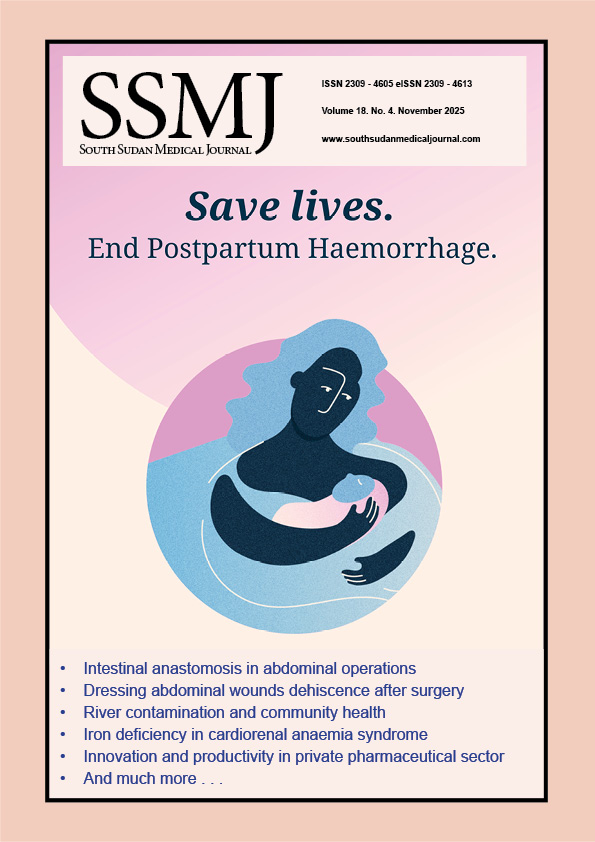
SSMJ Vol 18 No 4 November 2025

 Dear reader,

The full issue of our November 2025 issue is now online; this is a bumper issue featuring 14 full articles and other news items, listed below. We thank the copyeditors and reviewers who helped prepare these papers. Let us know if you would like to join the Editorial team. We need you if you have time and editing skills.
 
Editorial

Research Articles

  • Comparative study between classical two-layer and one-layer extra-mucosal intestinal anastomosis in elective and emergency abdominal operations. John Chol Ajack, Galal Abouelnagah, Haytham Fayed
  • Comparison of improvised negative pressure wound therapy and conventional wound dressing in abdominal wounds dehiscence after surgery. Nasra Lichika, Edward Ketson Msokwa, Alphonce Chandika
  • River contamination and community health: mining impacts in rural central Kalimantan, Indonesia. Nawan, Septi Handayani, Agnes I. Toemon, Hepryandi L. D. Usup, Seth Miko, Joni Rusmanto
  • Iron deficiency in cardiorenal anaemia syndrome in Dodoma, Tanzania Gidion Edwin
  • Guerrilla investors: Firm-level innovation and productivity in South Sudan’s private pharmaceutical sector Garang M. Dut
  • Paediatric deaths at Al-Sabbah Children’s Hospital, Juba, South Sudan – an audit Zechariah J. Malel, Garang Dakjur Lueth, Mary Poni Jackson, Nicolas Kazimiro Sasa
  • Prevalence of anaemia among pregnant women attending the antenatal clinic at Bor State Referral Hospital. Mark Kuoi Jongkuch Kuoi and Shalini Ninan Cherian
  • The impact of dietary compliance on diabetic foot ulcer healing: A cross-sectional study. Dadi Santoso, Rajesh Kumar Muniandy, Putra Agina Widyaswara Suwaryo

Review Articles

  • Personal determinants of gender-based violence: a review of intimate partner violence in South Sudan. Nyinypiu Adong
  • Misdiagnosing Muslims: The hidden risk of using the CAGE questionnaire in some Islamic contexts. Anas Ibn Auf and Sayed Halaly
  • Impact of healthcare worker training on paediatric tuberculosis detection and reporting: A systematic review. Suryanti Chan, Hamzah Hamzah, Miftahul Falah

Case Reports

  • Lupus nephritis overlap syndrome in a male with albinism: A case report. Adam Gidion Edwin, Baraka Alphonce, Sabina Mmbali, Alfred Meremo
  • Rare isolation of Pseudomonas mendocina from a postoperative wound in a diabetic patient: A case report. Vimal Kumar Karnaker, Asem Ali Ashraf, Bhadra Jyothikumar

Short Communications

  • News: Physicians Association of South Sudan and Association of Gynecologists and Obstetricians of South Sudan. Sudan

Back Page: Supporting Wet Nursing During Emergencies
 
Articles in SSMJ are indexed by Scopus, African Journals Online (AJOL), and the Directory of Open Access Journals (DOAJ), and as well as being on our website. SSMJ is included in the EBSCO scientific research collection.
 
Thanks to everyone who supports SSMJ. Tell your colleagues they can join our mailing list here.
 
The SSMJ team
Email: southsudanmedicaljournal AT gmail.com
Website: http://www.southsudanmedicaljournal.com

Thursday, October 30, 2025

In Browder, 'care' is mentioned over 150 times!

OK - so now you're teasing ...

'Surgery theory investigates the homotopy types of manifolds, using a combination of algebra and topology. It is the aim of these notes to provide an introduction to the more algebraic aspects of the theory, without losing sight of the geometric motivation.' Ranicki, 2001. 
'IV. Surgery and the Fundamental Theorem

In this chapter we develop the techniques of surgery for constructing normal cobordisms and use them to prove the Fundamental Theorem. The ideas of surgery have their origins in the theory of 2-manifolds, in the process of "cutting off handles", and in general, in the theory of Marston Morse of non-degenerate critical points of differentiable functions.' Browder, 1972.

In Browder, care is mentioned over 150 times!

'Poincaré' that is.

individual
|
INTERPERSONAL : SCIENCES
humanistic -------------------------------------------  mechanistic
SOCIOLOGY : POLITICAL
|
group-population


'The Classifying Spaces for Surgery
and Cobordism of Manifolds'

Try to - follow the language* ...

"Follow the money!"


Ranicki, A. (2001) An introduction to algebraic surgery. Surveys on Surgery Theory, Volume 2, edited by Sylvain Cappell, Andrew Ranicki and Jonathan Rosenberg, Princeton: Princeton University Press, 2001, pp. 81-164. https://doi.org/10.1515/9781400865215-005

Browder, W. (1972) Surgery and the Fundamental Theorem. In: Surgery on Simply-Connected Manifolds. Ergebnisse der Mathematik und ihrer Grenzgebiete, vol 65. Springer, Berlin, Heidelberg.
https://doi.org/10.1007/978-3-642-50020-6_4

Madsen, I. H., and Milgram, R.J., (1979) The Classifying Spaces for Surgery and Cobordism of Manifolds. Princeton University Press.

Image: https://m.media-amazon.com/images/I/41THEeVvpdL.jpg

*concepts!

Sunday, August 31, 2025

Play - “The Ballad of Crooked Lane” 6th & 7th Oct.

Media Release - 

Blind Poet’s Life to be Celebrated in New Play. 

The life of Edward Rushton, Blind Poet and key figure in the Campaign against Slavery, will be spotlighted in a new production by Valley Theatre Drama Group in Liverpool. The play – entitled “The Ballad of Crooked Lane” – is set on the day Rushton, now well into middle age, awaits eye surgery to regain his sight. While waiting, he goes over his eventful life with his friend and biographer, William Shepherd, the Minister of Gateacre Chapel.

“Rushton was a larger-than-life character,” says writer and director Tom Mclennan. “The story is that he lost his sight going below deck to help sick African captives on their way to the plantations. I first read about him in Bill Hunter’s biography “Unsung Hero” and have always felt his life deserves more recognition.”

Apart from campaigning against the slave trade – not always a popular thing to do in those days, since a large amount of Liverpool’s wealth was based on the evil triangular trade – Rushton was also instrumental in establishing the Liverpool School for the Blind, one of the first in the country, as well as being at the forefront of efforts to end the notorious pressgangs that terrorised coastal neighbourhoods, intent on kidnapping sailors for the British Navy.

“The Ballad of Crooked Lane” will be performed as part of a double bill along with Day Sheehan’s “Wake” for the Liverpool Fringe on Monday October 6th, 7.30pm, at Valley Theatre n Netherley, and on Tuesday 7th October, 7.30pm, at The Studio Beyond, 63 Wood Street, Liverpool L1 4AL

Entrance for the Valley Theatre event is free (pay a donation if you like it). Tickets for the Studio Beyond are £8/£6 and can be bought from:

https://store.makeitwrite.org/product/balladandwake/

I read a part for this at Valley Theatre, very interesting and will look to see a performance.

See also: Edward Rushton: Who was this blind revolutionary?
https://www.bbc.co.uk/news/blogs-ouch-29957645

My source: https://www.philosophyinpubs.co.uk/

Currently reading, Arnold Wesker's 'The Friends'.
https://www.arnoldwesker.com/plays/the-friends/index.html

Wednesday, August 27, 2025

Nursing models of care: "There is another"!

It seems Star Wars forums continue to debate the meaning of Yoda's response to Obi-Wan that "There is another". 

The lack of practice-based debate in nursing and health education about 'nursing theory' and 'models of care, confirms that these academia sagas did indeed take place in a galaxy far, far away.

There is, as ever, positive and negative news too. The bibliography in the sidebar keeps growing. I'm hoping for news of additions dropping into the inbox before the end of the year. Not just prospective papers I know about (yes, there is another prospect!), but other work. In a way the latter is even more special. As these sporadics reveal that there are research heroes out there, on their own path and journey of discovery. Finding Hodges' model, they have applied it to their respective field.

Yesterday, searching for 'Activities of Daily Living' (first published in 1980) while writing the DASH post, on BMJ Careers I came across:

'What models do nurses use to guide their care?'

Is that 'models' plural?

Perhaps the response to the question says something about:
  • nurse academia;
  • how our medical colleagues view nursing;
  • and more importantly - their understanding of nursing, the nursing profession, ongoing aspirations and relevance to self , health and social care in the 21st century?
In January, frustrated at the effort that is getting published (a shared experience then) and lack of attention to theory I posted:
The literature trail for Hodges' model is not voluminous, but it is there:
  • as a model of care, conceptual framework;
  • person-centredness;
  • integrated and holistic care;
  • holistic bandwidth
  • SDGs
  • life chances, health career, prevention, life-style and literacies
  • socio-technical approach
  • global health;
  • reflection and reflective practice;
  • critical thinking
  • mind-mapping;
  • concepts, conceptual spaces, threshold concepts
- with much more to do, even in the above.

Please, call this a gentle nudge. Thank you.

Image: http://www.quickmeme.com/

Saturday, July 19, 2025

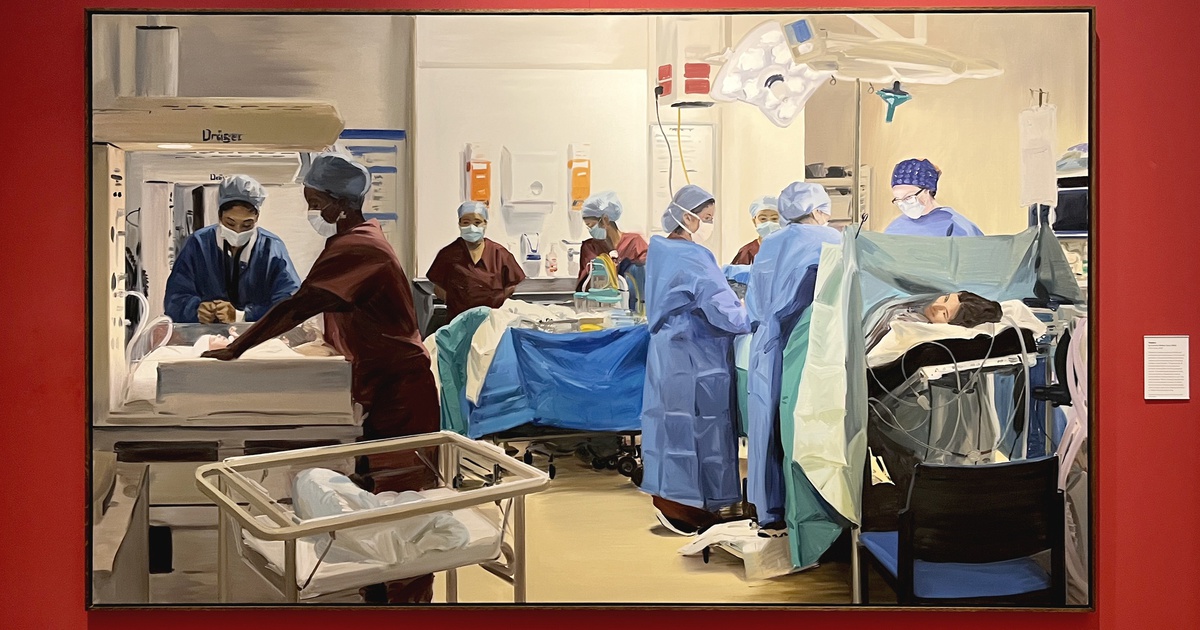
'Theatre' by Caroline Walker

Individual
|
      INTERPERSONAL    :     SCIENCES               
HUMANISTIC  --------------------------------------  MECHANISTIC      
 SOCIOLOGY  :    POLITICAL 
|


Image source: 
https://www.inglebygallery.com/news/7465-caroline-walker-the-scottish-national-portrait-gallery-theatre/

line of sight (seeing is believing) : 'care' : 'community' : 'theatre'

My source:
Harriet Baker, PAINT, FEED & PLAY, FT Weekend, Magazine. July 12 2025.  #1,133, pp.46-52.
https://www.ft.com/content/6e50181b-689e-4cd5-b084-37b311446e94

Great read too. The exhibition moves to Pallant House Gallery, Chichester from November 22nd.

Sunday, July 06, 2025

Int. Joint Workshop of AI for Healthcare (HC@AIxIA) and HYbrid Models for Coupling Deductive and Inductive ReAsoning (HYDRA)

From: Francesco Calimeri, Mauro Dragoni, Fabio Stella on behalf of the
HC@AIxIA – Working Group on Artificial Intelligence for Healthcare 

HC@AIxIA + HYDRA 2025 

International Joint Workshop of Artificial Intelligence for Healthcare (HC@AIxIA) and HYbrid Models for Coupling Deductive and Inductive ReAsoning (HYDRA)

Bologna, Italy, 25-26 October 2025

CALL for PAPERS

The workshop welcomes original research contributions, summaries of recent work, and work-in-progress studies on frameworks, applications, and methodologies for combining deductive and inductive approaches. It invites a wide multidisciplinary spectrum of researchers, industrialists, entrepreneurs, and healthcare practitioners: submissions are welcome from a range of stakeholders, including Computer scientists, health informaticians, and emergency medicine experts; Public health experts, epidemiologists, clinicians, etc.; National and international public health agencies; Epidemic intelligence systems providers; NGOs and Agencies; Industry and startups. Collaborations across disciplines will bridge the gap between theory and practice and foster actionable AI-driven solutions across diverse domains. 
Continued ...

Monday, February 24, 2025

SSMJ February 2025 - South Sudan Medical Journal

Dear Reader,

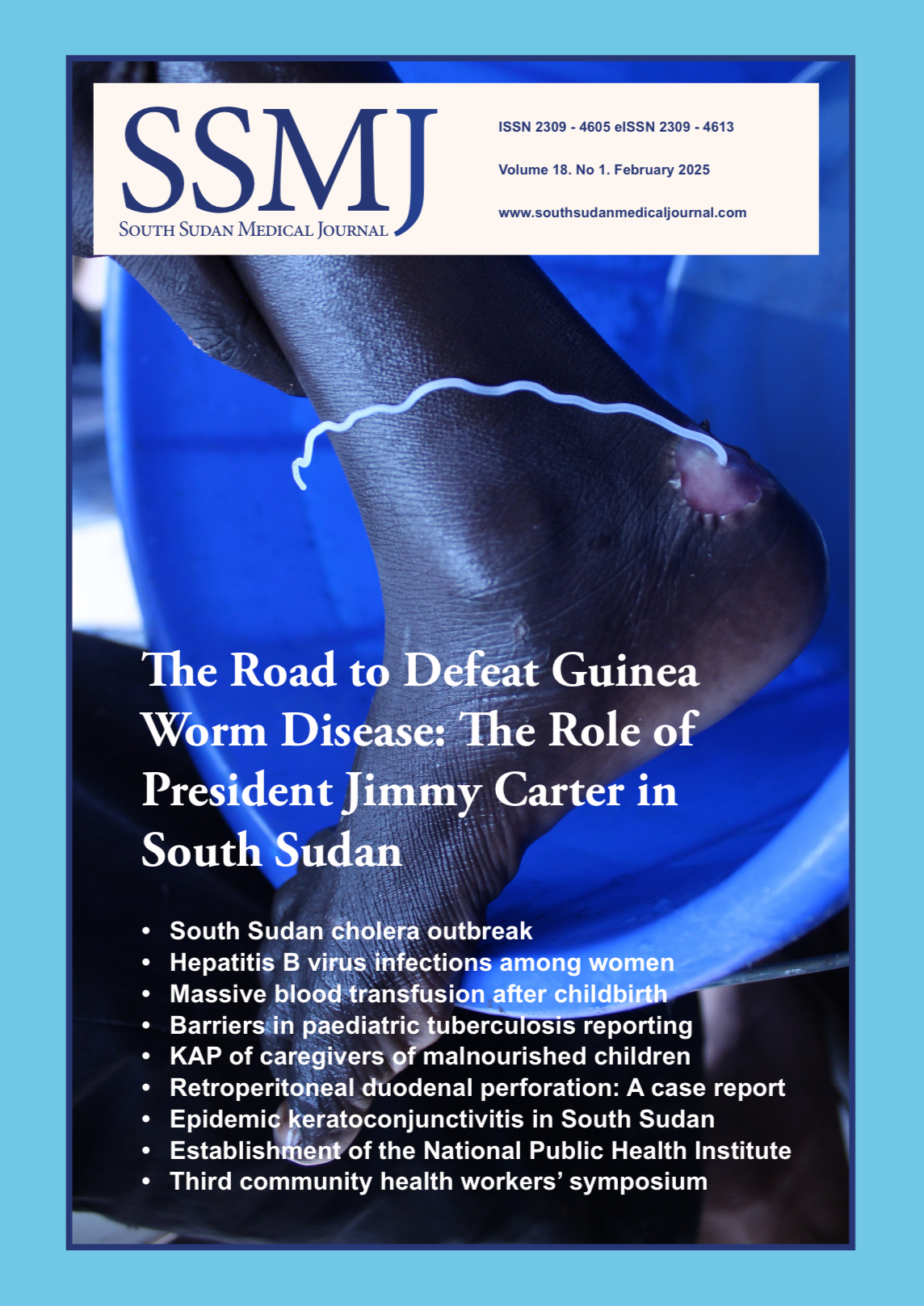
The full issue of our February 2025 issue is online here; the articles are listed below. 

Editorial 
  • South Sudan cholera outbreak: A call to improve sanitation Ruot Garjiek Teny 
Research Articles 
  • Prevalence and associated risk factors of hepatitis B virus infections among women of reproductive age in Juba, South Sudan Ezbon WApary, Akway M. Cham, Oromo F. Seriano 
  • Management and outcome of women requiring massive blood transfusion after childbirth: A cross-sectional study at Muhimbili National Hospital, Tanzania Wangwe Peter Joseph, Sawe Eshi-Fisha Linda, Meda Elineema Robson 
  • Addressing barriers in paediatric tuberculosis reporting: A qualitative study of private healthcare providers’ perspectives Suryanti Chan, Idris Adewale Ahmed, Hamzah Hamzah 
  • Knowledge, attitudes, and practices of caregivers of malnourished children at the Al Sabbah Children’s Hospital, Juba, South Sudan Francis Beek Akook, Nyok Daniel Ngor 
Case Report 
  • Evaluation and surgical repair of retroperitoneal duodenal perforation following blunt trauma: A case report Rashmi Ranjan Sahoo, Abhinav Voona, Nalini Naik, and Jyotirmay Jena 
Main Articles 
  • Epidemic keratoconjunctivitis (Pink Eye) in South Sudan: A review Wani Mena The Establishment of the National Public Health Institute (NPHI) in South Sudan Nyinypiu Tong, Anthony Garang, Joseph Lako 
  • The third community health workers’ symposium, Liberia, 2023: What are the implications for South Sudan’s Boma Health Initiative? Kon Alier, Solomon Anguei, William Kuon, Christopher Ajumara 
Short Communications 
  • South Sudan’s journey to defeat Guinea Worm Disease: The role of President Jimmy Carter and the Carter Center Makoy Samuel Yibi Logora 
  • Letter to the Editor: President Jimmy Carter deserves a special recognition for his work to eradicate Guinea worm in South Sudan. Victor Vuni Joseph 
  • Letter to the Editor: Simulation-based education amid conflict: The Sudanese American Medical Association experience in Sudan Mohamed Almahal, Mohamed Ahmed, Omer Gomaa, Salaheldin Abusin, Ihab Abdalrahman
  • Obituary: Maj. Dr Santino Kuot Maluil 
  • Obituary: Dr Benjamin Peter Oduk 
See the back page for instructions on how to prepare and submit manuscripts for publishing in SSMJ.

Thanks to everyone who supports SSMJ - authors, editors, and, especially, our peer reviewers.

The SSMJ team
Email: southsudanmedicaljournal AT gmail.com
Website: http://www.southsudanmedicaljournal.com
Follow us on Twitter@SSMedJournal and our Facebook Group,

SSMJ is published by the Health and Social Science Research Institute of South Sudan (HSSRI-SS)

Copyright © 2025 South Sudan Medical Journal, All rights reserved

Previously on W2tQ:

Saturday, December 21, 2024

When a bomb goes off, ...^

INDIVIDUAL
|
INTERPERSONAL : SCIENCES              
humanistic ------------------------------- mechanistic
SOCIOLOGY : POLITICAL   
|
GROUP


.. whatever's     around ..

"WHEN A BOMB
GOES OFF,

.. gets      weaponised"


donate.redcross.org.uk
msf.org.uk
ideals.org.uk
map.org.uk
uk-med.org


Rosanna Dodds, Operation Gaza, HTSI, FTWeekend, December 9th, 2024. p.37-38.

Victoria Rose, Plastic Surgeon: https://www.youtube.com/watch?v=AzZjmG791Dk

^anywhere ...

Wednesday, December 20, 2023

'Mechanical medicine' is a thing ...

Planet Medicine

"Mechanical Medicine: Ancient surgery, poultices; some herbal medicine and bodywork; all Western technological medicine. 

Since healing occurs in the physical world, all medicines must have some substance, if only the substance from which a potency is derived or the bodies of the participants. The acupuncture needles are not pure energy, and the herbs of the Ayurvedic or Basque doctor grow from real soil; even the mind has the external properties of the brain. The San Pedro cactus of Peru which, according to Eduardo Calderon, transfers its light and vibration to the patient and locks with his aura to drive all physical and mental aspects of alienation to the surface, originates in the physical properties of the desert." p.374.


Grossinger, R. (1982) Planet Medicine - from stone age shamanism to post-industrial healing, London: Shambala Publications Inc.

Book cover: Ebay.

Wednesday, August 30, 2023

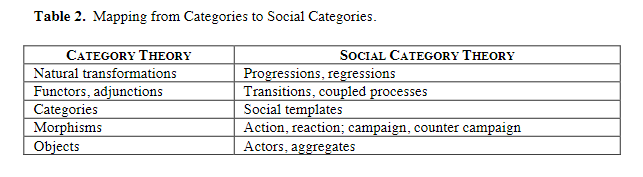
Paper - Categorical Social Science: Theory, Methodology and Design by Sallach (2012)

This conference paper from 2012 - cited at length here - is very encouraging as I try to work on category theory within Hodges' model. This is timely too, as a new (northern) academic year begins - post to follow ...

Sallach, D.L. Categorical Social Science: Theory, Methodology and Design. In: Conference Paper - 4th World Congress on Social Simulation. Taipei, Taiwan (September 2012). https://www.researchgate.net/publication/275584554

"The prospect of representing social processes at multiple scales, at an arbitrary level of detail, is likely to produce rich, interwoven models with the potential to provide a more effective map of historical and policy-oriented dynamics. However, this potential will also raise significant challenges in validating such a model [15].

One approach to managing the complexity (both conceptual and computational) of social models is to move them toward a higher level of abstraction."

"Category theory requires specification of a type of mathematical object in terms of identity, composition, and a group of morphisms that preserves their structure. This definition of objects and morphisms, in conjunction with two standard axioms (associativity & identity), defines a framework that is simple enough to be broadly applicable."

Conclusion:

"The present analysis introduces more analytical potential than can currently be demonstrated. Nonetheless, it makes a case for the relevance of category theory for the representation of social applications, and illustrates a variety of ways in which these conclusions are, or ultimately can become, compelling.

Category theory provides a rigorous yet expressive formalism for representing and integrating challenging modeling domains. It is also a formalism that can support extensive theoretical and modeling syntheses, while still maintaining appropriate levels of exactness. These strengths make CT particularly appropriate for providing a mathematical foundation for computational social science.

Ultimately, it is important to return to the issue of the validation of social models. The practical use of historical and/or policy-oriented models is highly dependent upon their credibility. Category theory provides a formalism that can be precise when applied to theory, explicit during the design stage, and definitive at the assessment stage, while also attending to the consistency of intermediate stages. It deserves serious exploration and investigation."

Saturday, July 01, 2023

ERCIM News No. 134 Special theme: "Explainable AI (XAI)"

Dear ERCIM News reader,

ERCIM NEWS 134
ERCIM News No. 134 has just been published. This issue's special theme dives into Explainable AI (XAI) – uncovering its application across healthcare, industry, ethics, climate change, and generative language models. Discover the significance of transparency and interpretability in complex ML models, offering insights into decision-making and building trust.

This special theme was coordinated by our guest editors by Manjunatha Veerappa (Fraunhofer IOSB) and Salvo Rinzivillo (CNR-ISTI).

Thank you for your interest in ERCIM News! Help us spread the word by forwarding this message to those who might find it interesting. We also appreciate your support on Twitter @ercim_news and other social media platforms. Let's keep the conversation going and share the latest updates together!


Includes:

Explainable AI in Health Care

16 Explaining Ensemble Models for Lung Ultrasound Classification

by Antonio Bruno, Giacomo Ignesti and Massimo Martinelli (CNR-ISTI)

18 A Governance and Assessment Model for Ethical Artificial Intelligence in Healthcare

by Luigi Briguglio, Francesca Morpurgo and Carmela Occhipinti (CyberEthics Lab.)

20 Current Challenges and Future Research Directions in Multimodal Explainable Artificial Intelligence

by Nikolaos Rodis, Christos Sardianos and Georgios Th. Papadopoulos (Harokopio University of Athens)

22 Predictive Model for Functional Outcome after Orthopaedic Surgery Using Machine Learning Methods

by Alexandre Lädermann (Hôpital de La Tour, Meyrin, Switzerland), Philippe Collin (American Hospital of Paris, France) and Patrick J. Denard (Oregon Shoulder Institute, Medford, Oregon, USA)

23 Unleashing the Power of Artificial Intelligence for Personalised Drug Design

by Michaela Areti Zervou, Effrosyni Doutsi, Panagiotis Tsakalides (University of Crete and ICS-FORTH)

Next issue:
No. 135,  October 2023
Special Theme: "Climate-Resilient Society".

Submissions are welcome! See call for contributions.

My source:
Peter Kunz                      	
ERCIM Office
2004, Route des Lucioles
BP93
F-06902 Sophia Antipolis Cedex

https://www.ercim.eu
https://ercim-news.ercim.eu 
--------------------------------
@ercim_news
http://twitter.com/ercim_news

join the ERCIM Linkedin Group
https://www.linkedin.com/groups/81390/

Saturday, April 22, 2023

Nursing care of the patient - 1976 and Earth Day . . .

Moidel, H.C., Giblin, E.C., Wagner, B.M. (Eds) (1976) Nursing care of the patient with medical-surgical disorders. New York: McGraw-Hill,  ISBN 10: 0070426554 / ISBN 13: 9780070426559

"The process of nursing assessment is a deliberate and systematic analysis of the patient and his environment with the purpose of gathering data about the patient's health-illness status and resources. A systematic and recorded assessment also provides (1) a baseline measure for identifying change over a period of time; (2) a foundation for the nursing-care plan, giving direction to nursing interventions; (3) a means for evaluating the effectiveness of nursing care." p.8.

"The nurse's major tools for obtaining data regarding a patient's health-illness status and resources include communication (with the patient, his family, health team, and nursing-team members), direct observation and examination (through the use of all sensory channels and technological adjuncts), consultation, and review of the literature. The use of these tools, which is amplified in chap. 7, should be in accordance with some organized, systematic, valid, and reliable framework." p.9.

The need for systematic and deliberative approach remains, despite the passing decades. Whatever 'system' is adopted it needs, as per 1-3 to be dynamic, act as a substrate; that is also neutral - non-prescriptive (apart from); facilitating the flow of assessment, planning, interventions and evaluations, and what used to measure effectiveness, outcomes, quality and safety. As an American text, chapter 7 is also concerned with 'nursing diagnosis' and Orem is referenced.

Nursing care of the patient
with medical-surgical disorders


Nursing Management

"Nursing management is based upon and follows assessment. It is the process of determining and initiating goal-directed nursing action in relation to the patient problems diagnosed during assessment. Without assessment, nursing management becomes mechanical, dependent on physician's orders, and detached from the ultimate goal of wholeness for the patient." p.9.


We still need balance in humanistic-mechanistic care delivery. Paying attention and due regard to the interpersonal detail and needs, while also seeing the whole.


"Delong studied the impact of preoperative information on recovery from surgery. In general, individuals who were given specific detailed information regarding the surgery and postoperative care had a less complicated recovery and were discharged earlier than those who received general nonspecific information. When coping styles were considered, it was found that those who exhibited flexible patterns of coping with general stress in their lives recovered well regardless of the type of information they received. Copers, who were defined as individuals who seek out information regarding potential threat, recovered better if they were given specific information before surgery. Avoiders typically showed slow, complicated recoveries, regardless of specific or nonspecific information; however, those who received specific information had more postoperative complications than those who heard only the general information." pp.38-39.

Now in healthcare, we are concerned with Health Information for All, and Health Literacy. I wonder what the informational nuances are in 2023 bio-psycho-socio-politically: and of course spiritually?


"All the disease and illness concepts cited above have reshaped society's thinking and practices about health, maintenance of health, and treatment of disease when it appears. But each emphasizes specific aspects of the totality of interwoven dynamics that constitute disease and illness, leaving us with cumbersome vocabularies and classifications that are partial and imprecise. Theoreticians, endowed as they are with a sense of order and logic, will most assuredly seek to bring the various viewpoints together into new conceptual frameworks." p.51.

Now our 'new' conceptual frameworks must incorporate nursing, patient-nurse relationship, the 'team', society, research and evidence-based care, policy - local, national, and global, plus technical and climate change all amid the politics of health and the informational milieu - or melee?

Also of note (Chap. 1):

Section headings: Care as a Nursing Function, with Cure, and Coordination as Nursing Functions.

Ecologic Orientation, Part 2.


Individual differences in patterns of anxiety arousal, stress-relevant information and recovery from surgery. Delong, R. D., University of California, Los Angeles ProQuest Dissertations Publishing, 1970. 7116307. https://www.proquest.com/openview/0d64def524b9e5845b7e168aa4cc5876

<>


As I continue to sort through 'old' books and papers, on Earth Day we are (duty) bound to reflect on the future. As my grandson was on the post-school play ground this week, I noticed the infants and those at risk of walking into the merry-go-round. I wondered whether in their senior years, will the ice be returning, the sea-levels stabilise, and will the CO2 in the atmosphere be reducing? 

What of - Nursing care in 2076? We need a conceptual framework that can project the care of the past and now, into the future. For those who are not yet here.

Previously:

'Planetary Health'

Gaia

'climate change', 'ecology' . . .

Wednesday, December 07, 2022

STEM Women: Dame Clare Marx [RIP]

Pablo Picasso. Science and Charity. Barcelona, [March-April of] 1897. Oil on canvas 197 x 249.5 cm.
Museu Picasso, Barcelona. Donation Pablo Picasso, 1970. MPB 110.046. Museu Picasso, Barcelona.
Fotografía, Miquel Coll © Sucesión Pablo Picasso, VEGAP, Madrid 2020


 INDIVIDUAL
|

 INTERPERSONAL    :     SCIENCES               
HUMANISTIC --------------------------------------  MECHANISTIC      
SOCIOLOGY  :   POLITICAL 
|
GROUP
Clare

 intelligence ...

physical contact, touch

... good surgical hands ...
Marx

... ability to talk to patients

Dame


Dame Clare Marx
"First woman to be elected president of the Royal College of Surgeons who sought to root out sexism and expand surgical training ... A charismatic colleague taught her the three qualities of a successful surgeon: intelligence, good surgical hands and an ability to talk to patients."

"Marx said Picasso's Science and Charity emphasises
'the importance of physical contact' between doctor and patient."


Register, Obituaries, The Times, November 30, 2022, p.53.

See also: 'Arts'

Wednesday, August 17, 2022

The dimensions and directions of self-care

 INDIVIDUAL
|
 INTERPERSONAL    :     SCIENCES               
HUMANISTIC --------------------------------------  MECHANISTIC      
SOCIOLOGY  :   POLITICAL 
|
GROUP
Mental capacity
Personal autonomy
My choice
Subjective (lived-) experience
Quality of (my) life
Mood - mental state (assessment)
Psychic pain - trauma
Expectations - 'desired outcome'
Can't keep a job

"If it's all in my head - that's what one of the doctors said - I said, if it's an imaginary pain, how is the swelling there?"

Nick

Physical pain - cause not identified
Injury - trauma: history - playing football
Goalpost collision - snapped -
posterior cruciate ligament
28 years ago
On feet leg swells
Leg amputation 'best' option
Twelve operations to date -
Still in constant pain
Clinical experience specialists, advice
Guidance
Evidence base
Aggregated outcomes

Brown


Housebound for days
Feels guilty - holding family back
Living pain-free ... would be a
"New lease of life"
Experience & expectations of family, friends ..
Holiday, spoke to a veteran four years ago ..


Fundraising
Mental Capacity Act
Medical accountability
Professional opinion - general outcomes
NHS - "no" - 'Cosmetic'?
Pain management (clinics)?
Private operation £18,000
'desired outcome'


Chappell, P. Injured man fundraises for own leg amputation, The Times, August 10, 2022, p.19.

https://thetimes.pressreader.com/article/282080575609624


Friday, December 17, 2021

Event January 2022: How VR and other technologies will impact the future of NHS service delivery

Hi all,

Hope you’re keeping well.

I’m working with the South-West AHSN to put on a Future of Care distinguished address in January featuring Health Futurist Dr. Shafi Ahmed talking about how VR and other technologies will impact the future of NHS service delivery; it should get Universities thinking about how our teaching and learning needs to develop.  I’m hoping it will be a really inspiring event for colleagues as well as our students at the University.

It will be an online as well as on campus event, although given the way Omicron is going could well be just online.

The event is planned for Thursday January 20th 2022, 7-8pm.

I wondered if it would be possible to promote this within your organisations for colleagues to sign up to if interested.

The flyer is available online here > https://pub.lucidpress.com/future-of-care-event/


Best wishes

Rob

Rob Blagden

Director of Libraries, Technology and Information

University of Gloucestershire

FW103, Fullwood House

The Park, Cheltenham

GL50 2RH

Email: rblagden AT glos.ac.uk

My source: NHS-HE-FORUM list