Hodges' Model: Welcome to the QUAD: Search results for Gaia

Hodges' model is a conceptual framework to support reflection and critical thinking. Situated, the model can help integrate all disciplines (academic and professional). Amid news items, are posts that illustrate the scope and application of the model. A bibliography and A4 template are provided in the sidebar. Welcome to the QUAD ...

Showing posts sorted by relevance for query Gaia. Sort by date Show all posts

Saturday, September 23, 2023

MYTH, RITUAL AND PRACTICE FOR THE AGE OF ECOLOGICAL CATASTROPHE

Fabrice Monteiro, a garbage spirit, from his series
The Prophecy (2017)

The European Forum for the Study of Religion and the Environment

- is pleased to announce its
seventh international conference

Friday May 17 to Sunday May 19, 2024

Universität Potsdam, Potsdam, Germany

MYTH, RITUAL AND PRACTICE
FOR THE AGE OF ECOLOGICAL CATASTROPHE
 
Click here for the Call for Papers and Conference Description:

https://www.religion-environment.com/conference/open-call-for-papers

Proposals will be accepted until 31 October, 2023

This conference will explore the many questions that arise from the apparent continuing philosophical-scientific indigestibility of mythology, ritual and practice. What does or would gaia-logical mythology, ritual or practice look like? Are they, could they be more pedagogically effective with non-experts than analysis and critique? Is the solution to ecological alienation the same as the age-old solutions to spiritual alienation? Is ecological alienation parallel to the emic/etic divide in ethnography? Is “practice” the way “in”? Is “belief”? Does gaiaism demand rituals and practices? Are contemporary scholarly analyses (Haraway, Latour, Stengers, Mary-Jane Rubenstein’s pantheologies, Sloterdijk, etc.) today’s form of ecological myth? Is myth, with its associations with the archaic (despite the work of Cassirer, Barthes and others), a fitting genre for today? (Many traditional myths are hardly gaian.) Must gaian myth, rituals or practices be atheological (i.e., is theology, as some argue, inherently not deep-ecological)? Does subtractive theology (à la Badiou) better lend itself to legitimate gaian mythology? Do ecotheologies written out of specific continuing pre-modern cultural-religious traditions that are not entirely or comfortably gaian satisfactorily bridge the spaces between emic and etic genres/approaches and satisfy calls for new gaia-ologies? Is there a meaningful difference between the myths of “major religions” and “indigenous” cultures? How do or might “old” and “new” cultural material relate to one another? Must scholars-scientists, environmentalists or artists use only material from “their own” heritages in producing gaia-ologies? Are there bases for and modes of considering or evaluating the skill or usefulness of gaia-ologies, gaian myths, rituals or practices? How have religious or spiritual environmentalists created gaian myths, rituals or practices? How might they? What artists, artistic works or modalities or works of popular culture stand as noteworthy examples?

Conference Chair: Jonathan Schorsch jschorsch AT uni-potsdam.de

We will be most grateful if you could circulate this through your networks.

Kind regards,
Jonathan Schorsch
-- 
Professur, Jüdische Religions- und Geistesgeschichte
Institut für Jüdische Theologie
Universität Potsdam
  jschorsch AT uni-potsdam.de
  +49 (0)331 977 1744

Founder and Director
Jewish Activism Summer School
  www.jassberlin.org

Founder and Director
The Green Sabbath Project
  www.greensabbathproject.net


My source:

Philos-L "The Liverpool List". Department of Philosophy, University of Liverpool https://www.liverpool.ac.uk/philosophy/philos-l/
https://www.facebook.com/PhilosL/
@PhilosL @LiverpoolPhilos

Image: c/o https://www.fabricemonteiro.com/

I am planning to submit an abstract, to develop further ideas encountered and contributed at SOPHERE.

Saturday, October 29, 2022

Gaia and Philosophy – international seminar

Dear all,

Here is the program for an upcoming international symposium: 

Jean Michel Etchecolonea, CC BY-SA 3.0 via Wikimedia Commons / Cropped
Gaia and philosophy

1-3 December, Donostia – San Sebastián
Basque Country University (UPV/EHU)
Organised by IAS-Research – Outonomy project


The recently edited volume of James Lovelock's and Lynn Margulis scientific correspondence will be presented for the first time at the occasion. Different lectures will discuss the scientific and philosophical status of Gaia theory and contemporary approaches to the understanding of the Earth as a self-organised entity. 

The seminar will be available to follow online. Feel free to distribute to however might be interested.

Registration form.

best regards
Alejandro Merlo 

---
IAS Research Centre for Research on Life, Mind and Society
Department of Logic and Philosophy of Science
University of the Basque Country UPV/EHU

---

n.b. I plan to attend online.

Monday, October 15, 2007

Blog Action Day: h2cm around the water whole

Today is Blog Action Day when bloggers unite, posting on the key theme of the environment:

+

It is often said that the planet 'Earth' should be renamed such is the surface area covered by water. Water has long been the reason for life to congregate.

H20: the planet-wide religion of life.

For people water means settlement, hence the fear that in future it is water resources that will drive conflicts.

As we try to get to grips with the environmental issues and their solutions conceptual frameworks like h2cm can help bring everyone and everything together.

Around the water hole
fabric and art .com

Think of Hodges' model as a watering hole.

People, communities, nations arrive there. Peering into the water we see ourselves and our neighbours.

TI:ME to share, if not barefoot TI:ME to kick off the shoes, touch the Earth and reflect:

ONE & MANY
MANY & ONE

From the four corners of the compass some of Earth's travellers arrive together. Others approach alone. Yet others will claim their arrival is spiritual. Whichever knowledge domain is the point of arrival, this provides the primary context.

The 21st century is the century of context: SITUATION

Flora + Fauna = 1

Flora + Fauna + Earth = 1

Gaia's Oasis

h2cm is not the starting point. We must bring experience, birth and death and all that is in-between to help solve our problems: transform attitudes. While we may be reaching for the stars there is nowhere to run.

Gaia
taps our shoulder with increasing insistence. Who will turn and look her in the eye? The dare increases in magnitude moment by year. Avoidance of Nature’s gaze will not serve to protect, because we are already turning to shades of grey.

Comets were cast in the role of Hermes, the harbingers of tomorrow. Today, the appearance of contrails near the horizon is striking, so comet like; especially as they buzz the sun. In addition to finding h2cm there, what other messages are writ large in the sky? When will we once again see the stars reflected in the water hole?


Images with thanks:

Thursday, December 12, 2019

Time to Define: Person-Centred Care...

In a global, planetary context self-care also takes on new meanings and urgency:

INDIVIDUAL
|
INTER-PERSONAL : SCIENCES
HUMANISTIC -------------------------------------------------- MECHANISTIC
SOCIOLOGY : POLITICAL
|
GROUP - POPULATION

::

|
ANXIETY : TIME
LOVE - CARING --------------------------------- biospherics
responsibility ------------------------------ evidence
CONSUMERS : POLICY VACUUM
|
Global Consciousness
Gaia's Friends*

personal
growth

self-motivation, anger, sense of betrayal,
trust in political motivation


PLANETARY
HEALTH
cloud air water soil land glacier
weather: temperatures, rains, winds, sea level ...
Communities
Societies
People's

Bound to 'consume':
but a collective 
aspiration to be 
more than:
CONSUMERS

economic growth ... ?


*Gaia does not have 'friends' of course.
Get this wrong - 'We' are gone.

Thursday, August 12, 2021

Post Tokyo Olympics 2021: Yes 'Shun' fits, Gaia knows ...

MOST individual
   patient / client  PERSON student / practitioner
|

INTERPERSONAL : SCIENCES
MOST humanistic ------------------------------------- MOST mechanistic  
SOCIOLOGY : POLITICAL
|
society - community of practice - profession
 MOST group


"There's this wonderful Japanese word shun, which is when something is full of its life force," says Pearson. "In that peak, when the meadows are flourishing, everything is reaching for the solstice, and you can feel the energy pouring from it. It's quite overwhelming - you're aware of this special time slipping through your fingers and you can't take it all in because it's so alive."p.36.

On second reading, maybe not? And, not for the fact that the next solstice is mid-winter here in the Northern hemisphere.

'Glances'

Visiting McDonalds for a coffee (only) at the end of 2020, I noticed one of the merchandising screens was displaying an error message. The message referred to glances, which I read as the content that changes after several seconds in succession. I meant to take a photo for a post such as this, and back in the area, I'll take my chance if spied again. [Success!]  I did speak to a member of staff but they couldn't help. The take away (you could say!) is of a 'glance' as the content of a single care domain. This isn't very accessible, emphasizing the visual nature of Hodges' model, but I'm kicking ideas around...

Media - marketing screen

Reading the above I thought of 'holistic bandwidth' in Hodges' model. If the model was fully populated with care concepts and, no doubt, some annotations, key relationships then I thought shun might be appropriate. By holistic bandwidth I mean the semantic distance between care concepts. This is what 'MOST' suggests above. Beyond these concepts we are in the realm of the spiritual: do they join up in some way? Obviously, 'complete' in fulfilling the purpose of assessment, care planning, intervention, evaluation whether clinical or learning activity. But then shun as a celebration of nature seems inappropriate in many clinical contexts, especially palliative and end-of-life care. Yes, time for second thoughts here too.

The role of nature in healthcare, the value of green spaces, for recovery or a peaceful ending is well documented. Then again, the shun as experienced in 2021 by a person, do they really see how it is diminished, how it has changed, is changing? The point was made recently, of the different experiences of the Seasons, the weather, now across generations: diminishing 'norms' birds, bees ...?

Perhaps, after all, shun can signify a complete care matrix. If we carry on as we are then Nature will act, is acting now. Gaia knows.

Coulson, C. Double Act, Work, rest and weed: Dan Pearson and his partner Huw Morgan share their garden vision, HTSI, FTWeekend, April 2021,  pp.36-39. 

https://www.ft.com/content/74061538-d1ef-4922-a821-09ed5484e7ec

Photos added 8/9/21.


Sunday, November 15, 2020

Radiating mechismo...

soul - self - person - individual - person - body - systems - organs - tissues - cells - atp ...
|
INTERPERSONAL : SCIENCES
humanistic ----------------------------------------------- mechanistic
SOCIOLOGY : POLITICAL
|
dyad ... family - group - community - population - Gaia::Earth - Cosmos


Blush


"Blush is a radiator by Icelandic designer Thorunn Arnadottir that is covered in thermochromatic paint and both looks like and simulates capillaries. She says, 'Blush is a very important organ of the house. Regulates the temperature and keeps it warm and alive. Blue when cold, but blushes with red when warm.'"

https://laughingsquid.com/blush-a-radiator-that-simulates-capillaries-blushes-red-when-warm/

 My Source:

IDN, 2012. Volume 19, NO. 3. 080.

See  also:

Book: The Vital Question


Thursday, May 07, 2026

Interviews, playwriting, and clinical encounters: pause for breath - Roger Lewin

It can be surprising how you know something. Something that should be obvious to you. It's your 'Bread and Butter' as the saying goes. And yet for a variety of reasons, you persist in not seeing it, or you frame it in a way that ultimately reveals a bias, influence, and may even mask several aspects of truth. It might be the influence of work over four decades plus. Sitting down, or frequently finally getting out for a walk after several weeks of nudging, in a one-to-one therapeutic context. Or, ever since secondary school, that distant performed encounter with the Crucible. And, more recently as 'Ken', a Post Office subpostmaster and his wife (a brief 10-12 mins), and over the years a desire to write dialogue.

Reviews of Roger Lewin's Complexity, vary in their conclusions about the book's quality. No surprise there, but reading the book it was a revelation to see the method: a series of interviews and the resulting dialogues. 

'In this revision of his book originally published in 1992, Roger Lewin explains what the science of complexity is all about through interviews with some of its most important practitioners (and critics) organized around some of the central ideas. As such this is both a fine introduction to the subject and an interesting read. Lewin includes 16 pages of photos of the scientists he interviewed captioned with a significant quote from each. He has added an afterword on the application of complexity science to business, and an appendix about John Holland, whom he dubs, "Mr. Emergence."

"Everything works toward an ecology" is an old dictum of mine. I have the sense that I came up with that myself, but I probably read it somewhere years ago. At any rate, what is being said here is that complex systems work toward a state of equilibrium near a transition phase, near "the edge of chaos." This equilibrium can be an ecology (Darwin's "tangled web"); indeed it can be the entire planet, as in the concept of Gaia in which "the Earth's biological and physical systems are tightly coupled in a giant homeostatic system" (quoting Stuart Kauffman on page 109).'

Source: https://www.goodreads.com/en/book/show/384547.Complexity

There's nothing profound in this post, and yet this melange of interviews, playwriting, and clinical encounters gives me pause for breath.

Previously: 'Our broken sticks' c/o Roger Lewin "Complexity: life at the edge of chaos"

Friday, July 17, 2020

Ecovisionaries: The Royal Academy - Nov 23 - Feb 23 2020

Late autumn I received news of an exhibition that sounded right-up my street - down in London.

Eco-Visionaries at The Royal Academy.

Without wishing to sound grandiose, I see myself as an 'eco-visionary' in several respects:

  • yes, as a white, middle-class male and would-be environmental do-gooder;
  • yes, as this is the perspective that Hodges' model fosters;
  • yes, because now we all need to be eco-visionaries.

As this post's title shows, the exhibition had a short run. Probably a norm in London, but from the NW of England not straightforward but then there was great news and a golden opportunity.

The RA was organising a symposium:

Confronting a Planet in a State of Emergency: Eco-Visionaries Symposium

Sat 22 Feb, 10am-6pm
From futuristic visualisations of a world without humans, to innovative ways of measuring toxicity in cities, creative research into the climate crisis is proving essential for imagining solutions. Join us for a full day of presentations and discussions looking at how we can protect and understand our environment now and in the future. 

And! There was a call for abstracts. Just the thought of a symposium makes me go wobbly, so could I imagine this: actually being an eco-visionary and presenting at the RA! Goodness me.


On twitter I read of many people's efforts to present and publish. I've tried for the Planetary Health event and been unsuccessful but will try again. To those people who try, I say: If you've a message, a resource - keep trying.

Previously on W2tQ [ Waste not, want not ... ], I recycled an 'Item for discussion' that was not accepted last year for RCN Congress, so once again:

Abstract:

In healthcare we are and must be in permanent readiness for emergency situations. Education, continuing professional development, theory and practice are all predicated on lifelong learning and safety. Triage is applied in a practised, reflex manner. This paper will explain how we can better critique the climate emergency and debate solutions using a resource created in healthcare. Healthcare must not only respond to extreme levels of demand, but it is itself demanding. Practitioners and learners must provide safe, high quality care; which must be holistic to achieve a person-centred focus, a positive lived-experienced and integrated outcome. Health is a dedicated Social Development Goal (3), this paper reveals a map of all seventeen.

Despite the proclamations of technophiles, technology alone cannot deliver solutions, a socio-technical perspective is essential. Health and health care systems achieve this by being situated. The climate change emergency highlights not just the interdependency of people to the-ir environment, but the biosphere as a whole. We take health for granted until something goes 'wrong' and now the weather is 'wrong'. This paper addresses: “Creative approaches to conveying information on climate change, air pollution or other environmental issues” but can potentially represent all the symposium's themes. Does this matter? It does in terms of finding not only solutions, but reconciling socio-economic, political groups, global dependencies, issues and vested interests.

The environment needs nursing now.

Health professions will not take kindly to the 'system' placing the climate crisis at their feet and proclaiming “triage this!” Ironically, (bar mass-extinction events) since life emerged the 'system' that really matters is self-regulating. The first example of self-care is vested in Gaia. Eco-vision calls for vision of scale. This paper will share a care architecture worthy of eco-vision and the visionaries we must all aspire to be ...

Title:

A Unique Space: a Care Architecture for Person, Population and a Planet

I'm sure the above can be re-purposed, since alas, it was also unsuccessful. I knew the chances were slim. Hearing the speakers and panel discussions, this is clearly their forte and all very well qualified as Eco-Visionaries. The organisers were very gracious and encouraging, which helped to temper the disappointment. I was offered a complimentary place at the symposium and and was informed there would be Q&A, so I would have chance to highlight the model behind the abstract.

I arrived in London on the Thursday before and visited the exhibition Friday 21st - the last day. It was stimulating, challenging, thought-provoking and upsetting - a video of a giraffe being shot. If shock was the intention: it worked.

With a white rhino in the exhibition and an elephant in the lecture theatre called 'COVID' the symposium appeared full the day after.

I will defer to The Guardian's Oliver Wainwright's review of the exhibition:

Eco-Visionaries review – the salt flats will die and the jellyfish shall rise

I asked several questions / raised points at the symposium, but I suspect for many of us the weeks and months of disruption since disrupted the positive momentum that I at least left with - which is a pity.

I hope the RA Architecture team re-visit this theme. Not so much that I can try to submit again, but more to perfect the technique of framing Hodges' model within a question.

The exhibition and symposium were very good for learning and I really appreciate the opportunity to attend.

Monday, April 08, 2013

Exoplanets, exobiology, exocortex, exocare ...?

http://www.guardian.co.uk/books/booksblog/2008/may/14/godvsatanindeepspace
Exoplanets

planets outside the solar system
An exoplanet (or extrasolar planet) is a planet orbiting a star different from the Sun (the "exo" prefix means "outside" in Greek). Up until now, one has found mainly gas giant planets, which are easier to detect than telluric planets. However, due to the increasing sensitivity of the detection methods, one already begins to observe the first planets of sizes comparable to the Earth.
Source: http://media4.obspm.fr/exoplanets/pages_definition/questce.html

Exobiology
The term exobiology ... covers the search for life beyond Earth, and the effects of extraterrestrial environments on living things.
Source: http://en.wikipedia.org/wiki/Astrobiology

Exocortex
-noun
An artificial external information processor that augments the brain's high-level cognition. Julia used her exocortex to access the memory of her tenth birthday.
Source: Fleming, N. The next wave. New Scientist, 14 May 2011. 210, 2812, p.33.

Exobuilding
ExoBuilding explores the novel design space that emerges when an individual‟s physiological data and the fabric of building architecture are linked. In its current form ExoBuilding is a tent - like structure that externalises a person's physiological data in an immersive and visceral way. This is achieved by mapping abdominal breathing to its shape and size, displaying heart beat through sound and light effects and mapping electro dermal activity to a projection on the tent fabric.
Source: http://www.cs.nott.ac.uk/~hms/pdfs/SchnadelbachEtAl_ExoBuilding_CameraReady_AuthorVersion.pdf
(8 April 2013 #DTMD13)

Exoskeleton

http://www.infoniac.com/hi-tech/top-10-robotic-exoskeletons.html
n.
ex·o·skel·e·ton ( k s -sk l -tn). n. A hard outer structure, such as the shell of an insect or crustacean, that provides protection or support for an organism.
Source: http://www.thefreedictionary.com/exoskeleton
exoskeleton: A medical device that allows individuals with severe spinal cord injury to walk and enhances rehabilitation for stroke victims.
Source: http://tagdef.com/exoskeleton


Exocare: Depends on your perspective - context / situation sensitive

Care exercised by a planet, or that planet's representation (on Earth the UN) towards life on other worlds, includes ethics, protocols and first contact.
See also: https://www.seti.org/seti-institute/project/details/seti-and-policy

Care not delivered by statutory health services. Care delivered by the individual also described as self-care.

Care directed at specific celestial objects, often as a result of long held ethnocultural beliefs and customs, the moon for example.

Care that extends 'human ecosystems' to what is external to the physical self, to encompass Gaia - the Earth and biosphere. Love directed not at a single person, or thing but the sense of what is whole.

Also refers to the use of a conceptual framework to frame reflections on health and social care - individually, socially or globally. Provides a means to integrate concepts of care according to the situation and salience incorporating the individual-group (population); the local, global and glocal.

Tuesday, October 01, 2024

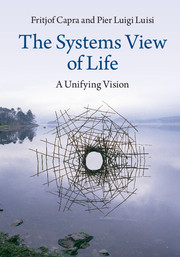
[iv] Book: The Systems View of Life - A Unifying Vision

The Systems View of Life -
A Unifying Vision


If you are about to start studying biology, Part 3 'A new conception of life'  is an excellent introduction to some broad and yet pivotal concepts. I haven't checked the 'current' curricula for biology or human biology, but I suspect there is content provided that may be missing? How are biology curricula characterised? If the 'subject' is comprehensively covered at school - college, there may still be value in the way in which they are presented in TSVoL. And, yes the book is a decade old. There's a step-wise development, that is coherent and fascinating.

The opening sentences to chapter 7, which asks 'What is Life?' :

'7.1 How to characterize the living

It is a common understanding that it is impossible to provide a scientific definition of life which is universally accepted. This stems from the fact that the background of scientists dealing with the question - biologists, chemists. computer scientists, philosophers, astro-biologists, engineers, theologians, social scientists, ecologists differs considerably from one another, depending on one's conceptual framework. In this book, we will not dwell so much on the question of a unique definition of life a single sentence catching all the various aspects of life - but rather, we will consider the more general question: what are the essential characteristics of a living system?' p.129.

- for some reason puts me in Plato's Cave? Maturana and Varela would (and do) have very broad shoulders by now. Autopoiesis is described with structure, systems (of course), self-maintenance, nonlocalization, coupling, and emergent properties. 'Life is a factory that makes itself from within'. p.132. Well that will do me. Even though we talk of political, social and psychological processes, I've always associated the SCIENCES domain of Hodges' model with processes. This includes whether the processes are biological, manufactured by human hand/intellect, such as, industrial working, project management and planning.

For life, initial descriptions concern the cell, DNA, RNA, cell walls and the cellular logic of life. Key is life's interaction with the environment. This is emphasised 7.2.4 and 7.4. I gained a lot of encouragement from:

'According to Maturana and Varela (1980, 1998), the organism interacts with the environment in a "cognitive" way whereby the organism "creates" its own environment and the environment permits the actualization of the organism.' p.134.

It is not just mind - but 'embodied mind'. The joy (for Hodges' model) continues with the impact of social autopoiesis in the social sciences.  

'While behaviour in the physical domain is governed by the "laws of nature,' behavior in the social domain is governed by rules generated in the social system itself.
Thus, two questions arise: is it meaningful to apply the concept of autopoiesis to these domains at all, and, if so, to which domain should it be applied?' pp.136-37.

It's almost like Descartes has taken on a quantum property. We don't know when life is physical (time, space, velocity) and when it is mental - cognitive? Contemplating life, death is never far behind (taxes p.419 if you're wondering). The ethics of death and dying are acknowledged in medical intervention (or not) and religious beliefs and edicts. Again the figures are helpful, illustrating the dynamic modes of an autopoietic unit: homeostasis, reproduction, and death of a cell (p.138). The trilogy of life then is also illustrated as environment, cognition, and autopoietic unit (p.142). When it comes to knowledge domains (social science & ecology) are clearly ubiquitous too.

Concepts of Modern Mathematics
Ian Stewart, 1975

It is Chapter 8 that delivers the biological goods. Beginning with a fascinating account of molecular, or prebiotic evolution, giving rise to biological structures and the interplay of soaps and lipids - "amphiphilic" substances, with molecules that contain a hydrophilic (water loving) head group, and long hydrophobic (water-hating) chains. Well illustrated too, box 8.1 describes 'Surfactants, lipids, and liposomes'. Self-organization, emergence are skillfully threaded together and with creativity - the generation of new forms. Unsurprisingly, Gaia is highlighted 8.3.3 and in a guest essay 'Daisyworld' by Stephen Harding of Schumacher College; which also reminded me of the 1970's BBC drama 'Edge of Darkness'. Maths has another turn in the text; a chiral one. Biomathematics is posited as a new mathematics frontier: here - the numerology of plant growth, the golden section (there's one primary context?), nature's spirals, and symmetry breaking. This helps my current return to maths (the struggle!) trying to get to grips with basic concepts. Ian Stewart is cited, later work than 1975's 'Concepts' I must seek out the 'Mathematics of Life' 2011/12.

Darwin, the resulting biological revolution, history, polymers, peptides and proteins plus DNA and RNA continue a suitably in-depth treatment of 'life' in chapter 9. The conclusion on Darwinism today and the status of genes in science and relation to our identity, being and the effect of chance and contingency is worth being reminded of. In mental illness - psychiatry and psychology a sometimes vitriolic debate continues.  Commercial realities are also apparent, the extent of their influence described: the race to map the human genome. In the text protein folding has advanced markedly since the book's original publication. Now new commercial pressures allied with artificial intelligence make you wonder how the author's would deal with this new 'content'? Exobiologists will enjoy chapter 10 as the focus is planetary: the origins of life on Earth. Useful, basic chemistry figures here - informational and functional (concentration). The notion of 'cognitive' is raised again - information carrying. 

While we are concerned for all life, chapter 11 takes in the human adventure, including the determinants of being human. 'Determinants' have taken on more import today. Chapter 12 in addressing 'Mind and consciousness' is helpful in the approach, the easy and hard problems of consciousness, types of consciousness, schools study. There is another guest essay. Chapters 13-15 deal with spirituality (inc. eco-literacy); life mind and society (I wonder if topology does have a role in the mental realm? (p.311). Chapter 15 is a gift for healthcare professionals - 'The systems view of health' with the question, 'What is health?'. Not to diminish this statement, but I will return to this subsequently; whether in the closing post for this 'review,' or afterwards. This completes part III of what is a great read.

Many thanks again to CUP for the paperback copy, much easier on the eyes. While this copy is new, I do make extensive use of secondhand books.

Fritjof Capra and Pier Luigi Luisi (2014) The Systems View of Life - A Unifying Vision. Cambridge: Cambridge University Press.

https://www.cambridge.org/gb/universitypress/subjects/life-sciences/genomics-bioinformatics-and-systems-biology/systems-view-life-unifying-vision?format=HB&isbn=9781107011366


Wednesday, February 14, 2024

Distance: Shoulders and ships that pass ...

James Lovelock, 2005 (cropped).jpg
Lovelock in 2005: Wikipedia

Over the past 10-20 years I've become more aware of the distance from scholars and people whose work is relevant to Hodges' model. Distance in the sense of their concomitant 'celebrity', hence the issue of how to make contact; and the stage of their career and my discovery of their relevance. Three people come to mind ... 

I've long admired the work of James Lovelock, and when writing on ecological themes in -

Jones, P. (2008) Exploring Serres’ Atlas, Hodges’ Knowledge Domains and the Fusion of Informatics and Cultural Horizons, IN Kidd, T., Chen, I. (Eds.) Social Information Technology Connecting Society and Cultural Issues, Idea Group Publishing, Inc. Chap. 7, pp.96-109.
- I wondered about trying to contact Dr Lovelock. As the majority of people are aware his thought and books, especially the Gaia hypothesis with Lynn Margulis caught the public's imagination from first publication and through the 1970s. Was there a Horizon TV programme? James Lovelock's influence was not just in ecology, but also earth (planetary) sciences through work for NASA. In early 2021 I thought I would reach out, through his most recent book and publisher/agent. I passed a message, which was forwarded but I never heard anything more.

As a nurse - with experience in older adult community mental health, I was acutely aware that this senior gentleman - in every sense of the word - may not want to be mithered by a scouser*, now living near Wigan Pier. I stressed not wanting to disturb the Dr. I also thought, given Dr Lovelock being of independent mind - a maverick, he might on the contrary love to be disturbed. 

Sadly, I was too late, hearing the news of Dr Lovelock's death in 2022. Of course, I was seeking validation (and still am) for the project here. I can't help thinking though, that Dr Lovelock really would have 'got' Hodges' model.

James Lovelock: BBC Radio 4 The Life Scientific

<>

Philosophy has long been an interest B.A.(Joint Hons.) Comp./Phil.. In a way you have no choice as a nurse, especially trained in mental health and general nursing: the theory and practice invariably touch reality, consciousness, perception, subjectivity, objectivity, knowledge, being, perception, data, information, time and so on.

Once acquainted with Hodges' model, scale is the dimension that asserts itself. I wrote about this and referenced Mario Bunge in about 1998, on the old, now archived website:

https://web.archive.org/web/20100329050839/http://www.p-jones.demon.co.uk/infintro.htm

Scale is a constant and multicontextual focus, but interest was piqued once again as I try to look at Hodges' model mathematically (yes, who am I trying to kid!) - as an object and relationally. I was reminded of Prof. Bunge's work noting a paper that included 'isomorphic-ism':

Bunge, M. (1969). Corrections to “Foundations of Physics”: Correct and Incorrect. Synthese, 19(3/4), 443–452. http://www.jstor.org/stable/20114653

https://link.springer.com/article/10.1007/s10838-021-09553-7

Mahner, M. Mario Bunge (1919–2020): Conjoining Philosophy of Science and Scientific Philosophy. J Gen Philos Sci 52, 3–23 (2021). https://doi.org/10.1007/s10838-021-09553-7

There may be a brief email exchange with Prof. Bunge, a request for a paper or two. Any emails are now stored (CD-ROM and portable drive) in a Turnpike folder, an old email client. Last year I was disappointed again, to learn of Dr Bunge's passing in 2020. His focus on science, philosophy, and systems - hard / soft is also very informative.

<>

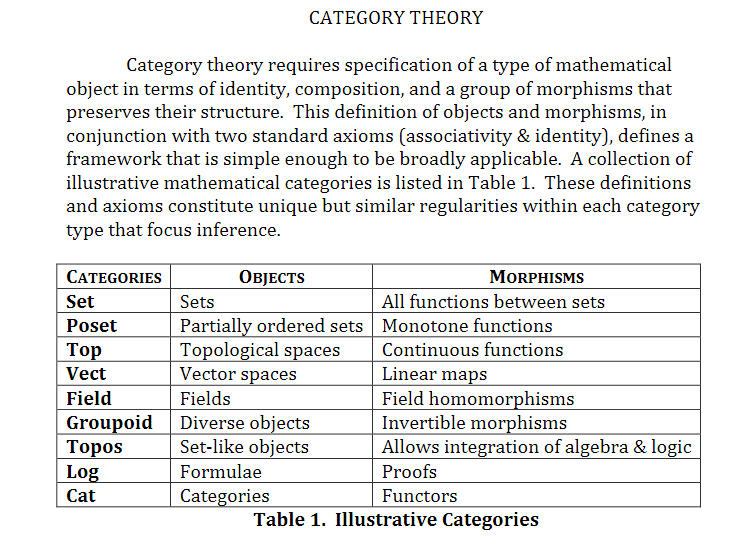
More recently, I came across the fascinating work of David Sallach, one paper (a conference from 2012) includes:


Sallach, D.L. Categorical Social Science: Theory, Methodology and Design. September 2012
Conference: Fourth World Congress on Social Simulation. Taipei, Taiwan.
https://www2.econ.iastate.edu/tesfatsi/Sallach2012CategoricalSoSci4.WCSS-SS.pdf

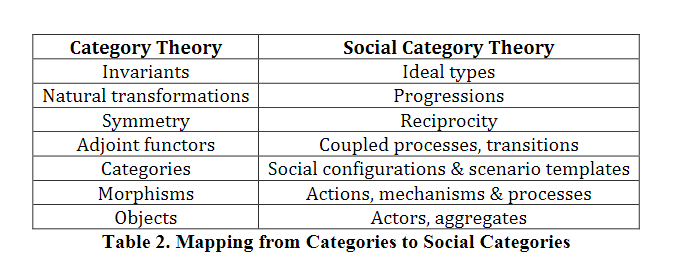
Plus, developed further in table 2:

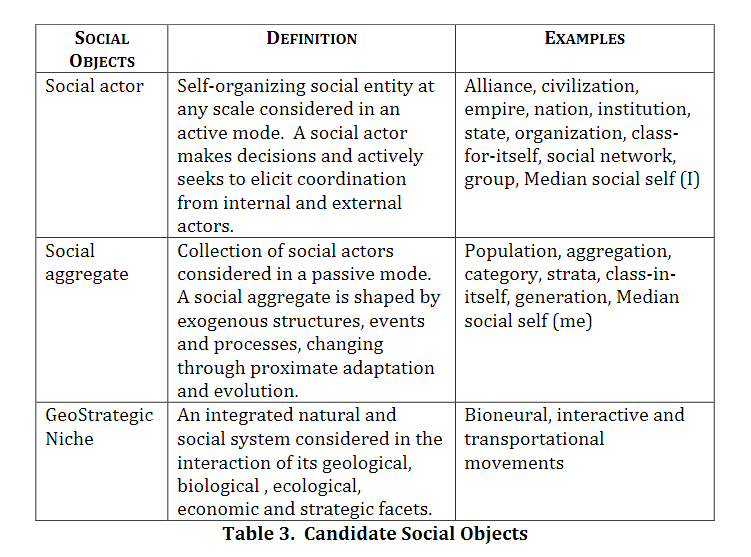
If time permits as an exercise, please consider Sallach's table 3 below. It may be interesting to map this to the domains of Hodges' model(?) [template]:
:

If you can see the potential utility of Hodges' model, you may also appreciate why Sallach's paper  resonates. Having emailed Dr Sallach, without reply, I did some checking. More sad news followed.

I, and no doubt many people will continue to discover and appreciate the legacy left behind by the above and many other pioneers. 

<>

I must acknowledge - Enid Mumford - whose work on socio-technical systems continues to inform my study and application of Hodges' model. This includes recognition of the many x-disciplinary bridges (or, barricades?) that can be found within Hodges' model. 

Clearly, much reading still to do.
<>

Returning to Hodges' model as a mathematical object, the 'distance' above is suddenly interstellar (and yes, sudden, as in faster than light!). I'm following videos, papers, and specific work-streams by  universities (I won't mention presently...) seeking to apply category theory to the social sciences. This suggests, at least, I'm not (completely!) wasting my time. If you have thoughts yourself on Hodges' model, the journey from Sallach's tables 1 - 2 not just 3, I'd be delighted to hear from you. 

There is another approach I will share this (N) spring. This author - researcher I have been able to contact.

*Scouser - https://en.wikipedia.org/wiki/Scouse
(Re. Liverpool - further post to follow).

James Lovelock image:  Bruno Comby, CC BY-SA 1.0, via Wikimedia Commons.

Sunday, May 01, 2022

APPGs - All Party Parliamentary Groups (Revisited: One-By-One ...?)

Previously in "How many APPGs does your Garden Grow?", I wondered about the number and variety of APPGs related to health and social care. How do they integrate their work, the inputs, outputs and impact on legislation, policy, safety, standards, delivery of care and sustainability in the future? 

A selection of APPGs includes:

APPG on 22q11 Syndrome
APPG on Access to Medicines and Medical Devices

APPG on Acquired Brain Injury

APPG on Adult Social Care

APPG on Ageing and Older People
APPG on Air Pollution
APPG on Allergy
APPG on Antibiotics
APPG on Arts, Health and Wellbeing 

APPG on Autism
APPG on
Axial Spondyloarthritis
APPG on Baby Loss
APPG on Beauty, Aesthetics and Wellbeing
APPG on Black Maternal Health
APPG on
Bladder and Bowel Continence Care
APPG on Blood Cancer
APPG on Brain Tumours
APPG on Breast Cancer

APPG on Bullying
APPG on Cancers
APPG on Carbon Monoxide
APPG on Cardiac Risk in the Young

APPG on Carers
APPG on Cerebral Palsy
APPG on Childhood Trauma
APPG on Children of Alcoholics
APPG on Children who Need Palliative Care
APPG on Children, Teenagers and Young Adults with Cancer

APPG on Cleaning and Hygiene
APPG on Complex Need and Dual Diagnosis
APPG on Coronavirus
APPG on Dementia and Adult Social Care
APPG on Dementia
APPG on Dentistry and Oral Health

APPG on Disability
APPG on Down Syndrome
APPG on
Dyslexia and Other Specific Learning Difficulties
APPG on Eating Disorders
APPG on Extreme Poverty
APPG on Eye Health and Visual Impairment
APPG on Food and Health
[
APPG on Further Education and Lifelong Learning]
APPG on Gaps in Support
APPG on Global Health
APPG on Health
APPG on Health and the Natural Environment
APPG on Health in all Policies
APPG on Health Infrastructure
APPG on HIV and AIDS
APPG on Learning Disability
APPG on Multiple Sclerosis
APPG on PANS and PANDAS
APPG on Parkinson's
APPG on Terminal Illness
APPG on
Water, Sanitation and Hygiene
[APPG on Whistleblowing]
APPG on Yoga in Society

APPG on Young People's Health

There is a 'full' register at:

https://publications.parliament.uk/pa/cm/cmallparty/220323/register-220323.pdf

Revisiting the previous post and its list of APPGs, extended above, you can see some obvious potential sources of influence for several APPGs.

Scanning the register with the list of APPG by countries, I was disappointed not to see Earth, or Gaia listed. But then they are probably not recognised as 'political' entities? Which is the ongoing challenge in the climate crisis (recognition of ecocide?). 

What about, more reasonably 'Global Health'? This was not listed as a country, but further reading is rewarded. There it is - 'Global Health':

https://globalhealth.inparliament.uk/

[ The link in the register is currently broken. ]

I should have remembered this APPG having posted before:

https://hodges-model.blogspot.com/2016/10/triple-impact-nursing.html

On the radio this past week I heard mention of Transparency International and published recommendations to control lobbying, prevent corruption and malign influences of sponsorship.

See also:

"APPGs scandal: MP reveals how lobby firm tried to use her to influence Parliament"

https://www.opendemocracy.net/en/dark-money-investigations/appgs-scandal-mp-reveals-lobby-firm-tried-influence-parliament-alison-thewliss-snp/

This post also helps inform a paper on Hodges' model, Early Intervention in Psychoses and research.

There are so many APPGs related to health, and associated with the purposes of Hodges' model.

One discovery - I must follow the APPG on Health Infrastructure.