Hodges' Model: Welcome to the QUAD: manifolds

Hodges' model is a conceptual framework to support reflection and critical thinking. Situated, the model can help integrate all disciplines (academic and professional). Amid news items, are posts that illustrate the scope and application of the model. A bibliography and A4 template are provided in the sidebar. Welcome to the QUAD ...

Showing posts with label manifolds. Show all posts

Wednesday, January 28, 2026

ii Math Without Numbers - final notes & obs

In Math Without Numbers the chapters and topics flow and slot in really well, even for novices. There is no index, the inclusion of which is a first-check usually. The book's appeal was its non-technical title and invitation reading the sleeve notes. The title throws up words and visuals, the latter, to repeat, are ably and simply furnished by M Erazo. Remaining notes to highlight (record here) include (and capture overthinking!):
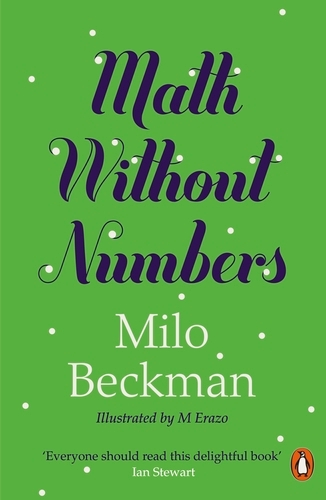
Math Without Numbers

Reference to 'ideology space', 'conceptual space' and the role of visual analogies, idioms, and how 'the list of spaces to choose from is always the same.' ... pp.28 & 29. On page 30, 'When you say that gender is a spectrum rather than a binary, that's a topological claim: You're  saying gender space is one-dimensional (a line) rather than zero-dimensional (two separate points). 'Questions about which conceptual paradigm to use sometimes boil down to questions of dimensionality.' Discussion of an infinite continuum had me making an axis of Hodges' model warp, this way and that: concave-convex (p.59). Maps and correspondence is already well established, as per a new paper (abstract and thanks to follow 1st Feb):

S. Bettiol, P. Jones, H. A. Onyedikachi, and W. G. Kernohan, “Bridging Gaps in Oral Health Frameworks: Mapping With Hodges' Health Career - Care Domains - Model”, Journal of Public Health Dentistry (2026): 1–14, https://doi.org/10.1111/jphd.70034 

Interesting to read of general map facts, flowing substances inside a rigid container, and vector maps. A pencilled note to share:

'Because when you look at things in the abstract like this, dusting off the specifics of a situation to focus on underlying dynamics, you start to realize there are only so many different patterns and structures out there. These patterns and structures are called mathematical objects, and thinking about them is called math.' p.79

The chapter on (generalised) Algebra, forced me to reconsider the Socratic, guided discovery and arrival at the structure of Hodges' model. (lines & points : nodes & edges). For page 88, I noted 'generic' invites abstraction. Isomorphism is discussed. Again I tested this against Hodges' model. I've always found it helps to immerse oneself in a new vocabulary: so welcome (anew) - structures, fields, rings, groups, loops, graphs, lattices, orderings, semigroups, groupoids, monoids, magmas, modules . . . algebras, p.101. Some are named only, but on graphs raises questions ... p.103.

'How densely interconnected is it? How segregated into different cliques? Does it cut clean into two subgraphs, with no connections between them? Can it be drawn without any lines crossing? Are there any lone dots without any connections?' 

There's the matter of 'friend of a friend' who have broken out of the sociological domain. Other notes to self: Significance of concepts - patient-centred, service-centred? The distance between between (vertical, horizontal, diametric)? There are weighted graphs (p. 104) and acknowledgement of category theory (p.115). A chapter on modelling pp.161-175, and models p.164 & p.169 are just a selection of highlights on a marvellous tour.

A hidden puzzle in the book remains a mystery for me.

Milo Beckman (2021) Math Without Numbers. London, Penguin Books. Illustrated by M. Erazo.

Previously: 'math' : 'diagrams' 
Plus, now archived Science domain links: 
https://web.archive.org/web/20150414125339/http://www.p-jones.demon.co.uk/linksTwo.htm

Believe it or not, this 'diversion' does help my reading of Order and the Virtual. 

Sunday, January 25, 2026

'Maths Without Numbers' by Milo Beckman

'Before you go tell your loved ones that you read a book about math and learned that a square is a circle, keep in mind: Context matters. A square is a circle, in topology. A square is most certainly not a circle in art or architecture, or in everyday conversation, or even in geometry, and if you try to ride a bike with square tires you won't get far.' pp.7-8.

'Like a line:

(Illustration - pen drawing of a line, a 'C' and an almost closed circle.)

A line can be bent almost into a circle, but to finish the job we'd need to click the ends together--not allowed. No matter how you manipulate a line, you'll always have those two special points on either end, where the shape just stops. You can't get rid of end-points. You can move them around and stretch them apart, but the two end-points are an unchanging feature of the shape.

For a similar reason, a figure-eight is a different shape too. There aren't any end-points, but there's still a special point in the middle where the lines cross, where there are four arms reaching out instead of the usual two at any other point. Stretch and squeeze all you want, you can't get rid of a crossing-point either. p.9.

Math Without Numbers
'The circle (aka S-one) and the infinite line (named R-one) are the only manifolds in the first dimension. To avoid end-points, you either have to loop back around or just go on and on forever. And don't forget: Because all the shapes in topology are stretchy, this also covers any closed-loop shape and any goes-on-forever shape. It doesn't have to be literally a circle or a straight line.' p.16.

The third dimension, dough-type manifolds, is pretty well understood at this point, though it took a hundred years and a million-dollar prize to get there, and we still don't have a totally neat and clean classification like the lower dimension. In dimensions five and up, topologists use a set of techniques called "surgery theory" to operate on manifolds and construct new ones.

That just leaves dimension four.

I wish I could tell you what's going on in dimension four. I'm not sure there's anyone who really knows. It's a weird boundary case: too many dimensions to do visually, but not enough to use sophisticated surgery tools. There are entire textbooks dedicated to what little we know about four-manifolds, and I couldn't make sense of anything past the opening pages. A professional topologist once told me she'd wanted to work on four-manifolds as an undergraduate but was advised to steer clear.' pp.23-24.

"Like a line" ... Yes. Take two that cross. Then the universes open up. 

Milo Beckman (2021) Math Without Numbers. London, Penguin Books. Illustrated by M. Erazo.

Previously: 'surgery'

Thursday, October 30, 2025

In Browder, 'care' is mentioned over 150 times!

OK - so now you're teasing ...

'Surgery theory investigates the homotopy types of manifolds, using a combination of algebra and topology. It is the aim of these notes to provide an introduction to the more algebraic aspects of the theory, without losing sight of the geometric motivation.' Ranicki, 2001. 
'IV. Surgery and the Fundamental Theorem

In this chapter we develop the techniques of surgery for constructing normal cobordisms and use them to prove the Fundamental Theorem. The ideas of surgery have their origins in the theory of 2-manifolds, in the process of "cutting off handles", and in general, in the theory of Marston Morse of non-degenerate critical points of differentiable functions.' Browder, 1972.

In Browder, care is mentioned over 150 times!

'Poincaré' that is.

individual
|
INTERPERSONAL : SCIENCES
humanistic -------------------------------------------  mechanistic
SOCIOLOGY : POLITICAL
|
group-population


'The Classifying Spaces for Surgery
and Cobordism of Manifolds'

Try to - follow the language* ...

"Follow the money!"


Ranicki, A. (2001) An introduction to algebraic surgery. Surveys on Surgery Theory, Volume 2, edited by Sylvain Cappell, Andrew Ranicki and Jonathan Rosenberg, Princeton: Princeton University Press, 2001, pp. 81-164. https://doi.org/10.1515/9781400865215-005

Browder, W. (1972) Surgery and the Fundamental Theorem. In: Surgery on Simply-Connected Manifolds. Ergebnisse der Mathematik und ihrer Grenzgebiete, vol 65. Springer, Berlin, Heidelberg.
https://doi.org/10.1007/978-3-642-50020-6_4

Madsen, I. H., and Milgram, R.J., (1979) The Classifying Spaces for Surgery and Cobordism of Manifolds. Princeton University Press.

Image: https://m.media-amazon.com/images/I/41THEeVvpdL.jpg

*concepts!
