Hodges' Model: Welcome to the QUAD: colour

Hodges' model is a conceptual framework to support reflection and critical thinking. Situated, the model can help integrate all disciplines (academic and professional). Amid news items, are posts that illustrate the scope and application of the model. A bibliography and A4 template are provided in the sidebar. Welcome to the QUAD ...

Showing posts with label colour. Show all posts

Tuesday, May 26, 2026

By Helen Frankenthaler - 'A Green thought in a Green Shade'

individual
|
INTERPERSONAL : SCIENCES
humanistic ------------------------------- mechanistic
SOCIOLOGY : POLITICAL
|
group
 
Helen Frankenthaler: A Green Thought in a Green Shade, 1981
119 × 156 1/2 in. (302.3 × 397.5 cm). Acrylic on canvas


© 2026 Helen Frankenthaler Foundation, Inc. / Artists Rights Society (ARS), New York

Image used with kind permission of The Helen Frankenthaler Foundation - and with thanks.
My source: Phoebe Evans. Opening Shot, FT.com/HTSI FTWeekend. 23rd April, 2026, p.13.
 
Gagosian. Helen Frankenthaler: The Moment and the Distance
April 30–July 2, 2026 West 21st Street, New York 
 

Thursday, October 16, 2025

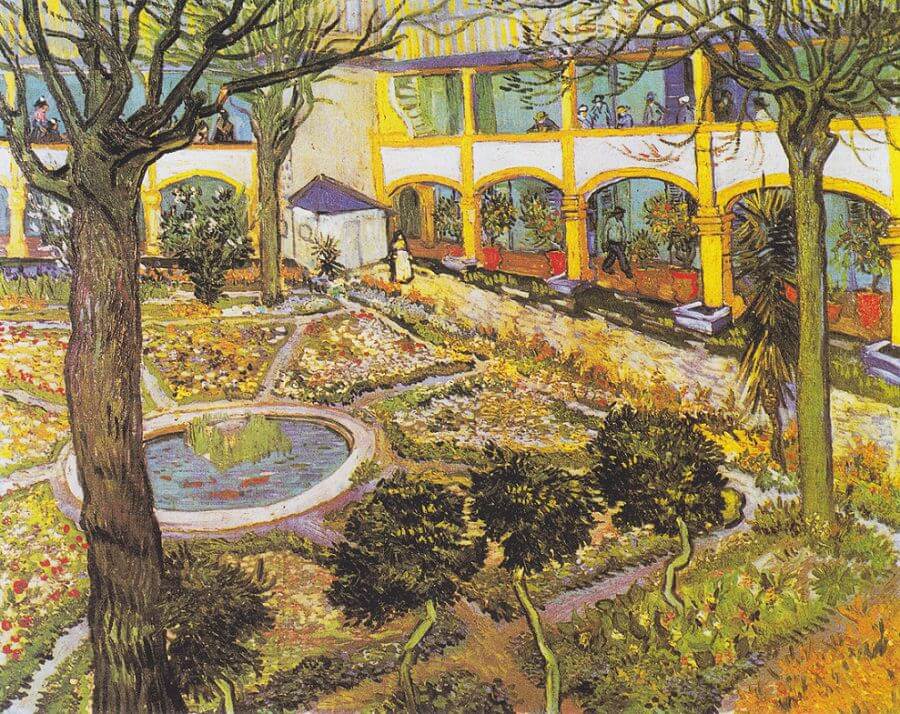
Recovery, Rehabilitation, Reablement by Van Gogh

Individual
|
      INTERPERSONAL    :     SCIENCES               
HUMANISTIC =========================  MECHANISTIC      
 SOCIOLOGY  :    POLITICAL 
|


My source: Van Gogh exhibitions (at least two); and Robin Lane Fox. Two years in Provence, House&Home, FTWeekend, 11/12 January 2025. p.10. 

Image source: https://www.vincentvangogh.org/the-asylum-garden-at-arles.jsp

Tuesday, September 30, 2025

Rachel Jones: Gated Canyons

As mentioned, with three co-authors, we're writing a paper on dental health, and policy frameworks viewed through the (quadratic?) lens of Hodges' model. The exhibition - 'Rachel Jones: Gated Canyons' ends on October 19 (with my next London visit 6-8 November*), so I won't be able to visit now. It's not as if there are key ideas to be found there that will now be missed, but it does sound and look interesting: and - who knows?

Individual
|
      INTERPERSONAL    :     SCIENCES               
HUMANISTIC  --------------------------------------  MECHANISTIC      
 SOCIOLOGY  :    POLITICAL 
|
Group


On the paper, we are now revising so fingers x'd. This exhibition has toured, so I will of course 'watch the spaces'.

My source: Durrant, N. first night. A tasty body of work. The Times. August 1 2025. p.10.

Saturday, July 22, 2023

Migraine: Mind - Body and Art c/o Kustaa Saksi

"A migraine, says Kustaa Saksi, is like an unexpected visit from an irritating old friend. A sudden attack upends your plans; causes havoc; you never know when it will leave. 
The 48-year-old Finnish textile artist has lived with these repetitive, immobilising headaches and their accompanying visual disturbances — ranging from partial blind spots to borderline hallucinations — since childhood. 
'It usually happens on the side of my eye, then it’s like a sun, travelling from east to west,' he says. 'At one point it will take over my whole vision, then it vanishes.'" 

https://www.ft.com/content/f85c900b-9547-44a5-bbc1-ba65d44331d9


INDIVIDUAL
|
INTERPERSONAL    :     SCIENCES               
HUMANISTIC --------------------------------------  MECHANISTIC      
SOCIOLOGY  :   POLITICAL 
|
GROUP
'Aftermath' 2019 Jacquard Weave
172 x 236cm (67" x 93") 
'Attack' 2019 Jacquard Weave
166 x 238 cm (66" x 94") 


My source:
Barrett, H. (2023) Interiors: A migraine's many colours. FTWeekend, House&Home. 8-9 July. p.6.

Sunday, January 29, 2023

Information design: Tufte & Raskin

Art & Science

Information Design  Edited by Robert Jacobson  Foreword by Richard Saul Wurman      $50.00 Paperback     Hardcover  373 pp., 8 x 9 in,      Paperback     9780262600354     Published: August 25, 2000     Publisher: The MIT Press
"Every major field of human activity is a mix of art and science. Theoretical physicists and professional mathematicians speak of the aesthetics of their work and are driven by concerns about elegance and beauty. Is a painter any less an artist for knowing perspective, understanding Josef Alber's elegant experiments and demonstrations about color, or being aware of chemical incompatibilities between various kinds of paint?

Designing the presentation of information, by the same token, partakes of the nature of both art and science. Edward Tufte's books reflect such a blend of knowledge. In one of them he outlines his five principles for designing graphics (1983: 105):" p.346.

[see below ...]
"The first four principles are (mostly) science-based. But the last, "revise and edit," tells us not only to check repeatedly that the first four conditions are met, but also apply our aesthetic judgement to the final work." p.347.
 INDIVIDUAL
|
  INTERPERSONAL    :     SCIENCES               
HUMANISTIC --------------------------------------  MECHANISTIC   
SOCIOLOGY  :   POLITICAL 
|
GROUP

5.revise and edit

  1. above all else show the data
  2. maximize the data-ink ratio
  3. erase non-data ink
  4. erase redundant data ink *

5.revise and edit

5.revise and edit

N.B. Take note of the potential significance of 'revise and edit' in the Political domain, and its consequences socially and personally (and spiritually within the 5th domain). 

*In terms of #5 revise and edit, and as I work to complete a draft paper on:

Reflecting Society, Technology, COVID19 and Information Disorder within Hodges' Model

- the ability to create and generate deep fakes using technology and generative AI, presents a major SOCIO-POLITICAL challenge. When public trust in media is fractured then everything can be denied - 'The Liar's Dividend' (Gregory, 2022).

Gregory, S. (2022). Deepfakes, misinformation and disinformation and authenticity infrastructure responses: Impacts on frontline witnessing, distant witnessing, and civic journalism. Journalism, 23(3), 708–729. https://doi.org/10.1177/14648849211060644

Raskin, J. (2000). Presenting Information. In R. Jacobson (Ed.), Information Design (pp. 341-348). Cambridge, MA: The MIT Press. 

See also: (The link below may time out, but 'Try again' works here.)

https://web.archive.org/web/20010710223205/http://www.jefraskin.com/forjef2/jefweb-compiled/published/NursingTheoryForSite.html

Wednesday, April 22, 2020

Munker illusion: Finding a palette for holistic, person-centred care

Hodges' model - Integrated Care?

It is as obvious as black and white.

Health, social care & education
are bound to be siloed.

Get over it!

What do you want: a rich picture?

Color Assimilation Grid Illusion


"Only the grid is colorful, the rest of the video is in grayscale, but the lower resolution of our color perception makes the color assimilate/blend into the grayscale cells within the human visual system."
https://www.patreon.com/posts/color-grid-28734535
 
"I've found that the grid works best."  Øyvind Kolås

individual
|
INTERPERSONAL : SCIENCES
humanistic ----------------------------------------------- mechanistic
SOCIOLOGY : POLITICAL
|
group - population


#carearchitecture #careresolution #integratedcare

See for original post:
https://www.patreon.com/posts/color-grid-28734535

My source: Massimo

Saturday, January 18, 2020

Book* - "Healing Spaces"


- plus, five care knowledge domains*

and a question...?


individual
|
INTERPERSONAL : SCIENCES
humanistic ----------------------------------------------- mechanistic
SOCIOLOGY : POLITICAL
|
group - population


"What is missing from the book is a precise figure on just how great a contribution a restful atmosphere makes to healing - something health chiefs are sure to demand before making changes in our hospitals. Nevertheless, it provides a pleasant glimpse of the possible future of rest and recuperation." p.45.


Which, if any, healing space - or care domain in Hodges' model should be the priority?
 
Justify your choice and subsequent ordering.


My source:
Geddes, L. (2009) Books&Arts, A view to recovery, New Scientist, 9 May 2009, 202:2707. p.45.

See also:
Ulrich, R. (1984) View through a window may influence recovery from surgery. Science, 224: 4647, 420.
https://doi.org/10.1126/science.6143402

Sunday, September 08, 2019

"Cloud Reservoirs in Finite Glitch Space" by Jacob Hashimoto

individual
|
INTERPERSONAL : SCIENCES
humanistic ----------------------------------------------- mechanistic
SOCIOLOGY : POLITICAL
|
group - population


Jacob Hashimoto

Cloud Reservoirs in Finite Glitch Space (Reservoir III), 2018.
Woodblock monoprint, 65 x 60 inches


My source: The New York Review of Books, August 15 - September 25, 2019, Volume LXVI, Number 13, p.19.

Monday, August 26, 2019

"IV Square" by Sandra Blow RA.


Sandra Blow RA. IV Square (2004)


Screenprint on paper. The Golder - Thompson Gift (2010) (c) The Estate of Sandra Blow

A second print from this issue of Printmaking Today, in which I can see the need for the 'Public Understanding of Science' amid great uncertainty.


My source:
Simmons, R. A Collection of Collections, Printmaking Today, Spring 2019, Volume 28. pp.36-37.


Saturday, August 03, 2019

Seeking Care & Global Cultural Neutrality in White Houses(?)


The email concerned a book
- | White Houses | -
 and posed a question.

Needless to say it caught my attention ...

Is White a Statement or a Neutral Surface for Expression?


This is a question I ask myself, but in respect of Hodges' model.

To what extent is Hodges' model neutral across cultures?

Remove the green, blue and red colours I adopted for the care domains  and what you have is a blank sheet; an empty conceptual space.

Is it empty? 

Very quickly it can become filled with what the person, patient, client, group ... brings with them.

Hodges' model is a stage. Several stages.

It is a theater.

It is a challenge for the performer, as they take their turn. As they navigate the space, they seek to ensure, assure, obtain feedback that the other - listener(s) are with them; whether in agreement or not.
Hodges' model is an arena for personal, group reflection, debate, argument(ation) or as described these days - co-production.


How suitable is #h2cm as a tool to support global health objectives, such as, the Social Development Goals and the Social Determinants of Health (and their ongoing development)? For me, Hodges' model is not just a neutral surface, it is a neutral substrate for the many forms of knowledge needed to solve the problems of the 21st Century.

individual - self
|
INTERPERSONAL : SCIENCES
humanistic ----------------------------------------------- mechanistic
SOCIOLOGY : POLITICAL
|
group- population


My source: Thames & Hudson

Later in the summer - autumn I might post another photo in memory of my father and a holiday ...

Tuesday, January 15, 2019

"Four Colours Make a Forest" c/o Donna Ong

individual
|
INTERPERSONAL : SCIENCES
humanistic ----------------------------------------------- mechanistic
SOCIOLOGY : POLITICAL
|
group


http://thailandbiennale.org/en_US/donna-ong/
Donna Ong “Four Colours Make a Forest” UV Printed on Aluminium Plates, Wires, Concrete


http://thailandbiennale.org/en_US/donna-ong/


"Singaporean artist Donna Ong sources tropical imagery from 18th-century lithographs for her work, Four Colours Make a Forest, which looks at interpretations of the tropics as alluring paradise or places of threat. She will present two perceptions of jungle on a billboard: on one side a collaged layout of tropical landscape prints (a colonial view), on the other a digital camouflage pattern (a militarized view).".p.24.

My source: Kiggell, R. Hot Printing, Preview, Printmaking Today, Winter 2018, 27,4, p.24.

Friday, October 19, 2018

Observing colour from the Political domain

individual
|
INTERPERSONAL : SCIENCES
humanistic ----------------------------------------------- mechanistic
SOCIOLOGY : POLITICAL
|
group


"Kentridge
was ideally placed to
observe
the absurdity of a political system
based on colour ..." p.6.


Coldwell, P. (2018) Traces of Time, Printmaking Today, Autumn 2018, pp.6-7.

Friday, March 03, 2017

Hodges' model: a blanc space, neutral for structure & content

On twitter today I mentioned the discovery of the book Panaesthetics by Daniel Albright. It was a buy in the end. A great discovery saddened to then learn that its author is no longer with us. Although I have not read it there will be much to draw from it: literally. I have often written about Hodges' model being initially a neutral space, a blank sheet. What is a starting position is always political as with Hodges' model. Its structure regiments the paper it is drawn upon. The presence of a political care - knowledge domain makes a statement. Structurally and in content the sense of neutrality is broken. Albright points to historical support as he discusses "What is painting?".

"White, said Superville, is an innocent peaceful color, calming us in the way that pure snow or moonlight calms. Black implies "silence and solitude, sadness, death, and oblivion"; red is "the hieroglyph of life and movement . . . the excess of luminous rays, just as the colour black is its absorption and annihilation." But this correlation of color with emotional state is less original than Superville's belief that color and lines are "the identical signs of one invariable language, and the associations of the one automatically imply the associations of the other" - every color corresponds to a linear pattern, every linear pattern presupposes a certain color. Superville provides a diagram to prove his point: red throws its arms into the air; black is stooped, submissive; "white , an invariable, pure sign, like the horizontal line, occupies the middle space between two extremes" (fig. 27)." p.102.

This is not the exact figure from the book but the meaning is relayed (I think).

A contact from the OU and 'The Difference that Makes a Difference' Conferences David Chapman kindly commented on this post on Facebook:


David Chapman "White is an innocent, peaceful, color". Except when it is the colour of the KKK, colonialism and slavery? I like the use of the shapes and can see that there may be ideas you can use in the quad, though.

I've expanded on my Facebook response below:

Thanks David, Yes I realise there's a potentially racist tone to this "white as pure". It is of course about the ideas, structure and form. I still refer implicitly to Michel Serres' work and the significance of 'blanc' and in previous posts. There are many ethnocultural connotations as to how black, white, greys and colours are interpreted and what they mean. As a tool it is important that Hodges' model conveys neutrality. In this case no emotional, value-based stance is taken.

Another thought from the past I recall is the BBC micro wordprocessor View and its appearance on a monochrome (Phillips) screen. Green on black (the new 'blanc'?) worked best. The penultimate blanc is the night sky...?

Albright, D. (2014) Panaesthetics On the Unity and Diversity of the Arts. New Haven: Yale University Press.

Diagram: http://www.dezenovevinte.net/obras/av_rc_baile_en.htm

Sunday, February 05, 2017

A Model of Nursing: According to Klein

individual
|
INTERPERSONAL : SCIENCES
humanistic --------------------------------  mechanistic
SOCIOLOGY : POLITICAL
|
group-population

Monochrome vert sans titre (M 75), 1955 ca
Région de grenoble (RP 10), 1961

Monochrome rouge sans titre (M 38), 1955
"Klein's paintings take away the expected content of that form, instead focusing our attention on a direct encounter with pure colour freed from all external impurities. Created using mechanical rollers, the works emphasise a non-expressive gestureless presentation of pure pigment, affirming his refusal to 'provoke colour relations'." (TATE Liverpool, Feb 5th 2017).


In the (science and) art of nursing, however; we must provoke assessments and evaluations within these care relations and between them. 

L'infirmière est le travailleur constant, à l'intérieur, sans et entre les deux.


My source: TATE Liverpool, Yves Klein, Feb 5th 2017.

Images: Yves Klein Archives

Friday, June 20, 2014

after Mondrian: Journey with Hodges through Politics, Sciences and Intrapersonal ...

Prompt: Tate email

Subject: "Journey with Mondrian through Paris, London and New York"


individual
INTERPERSONAL : SCIENCES
humanistic ------------------------------------------- mechanistic
SOCIOLOGY : POLITICAL
group

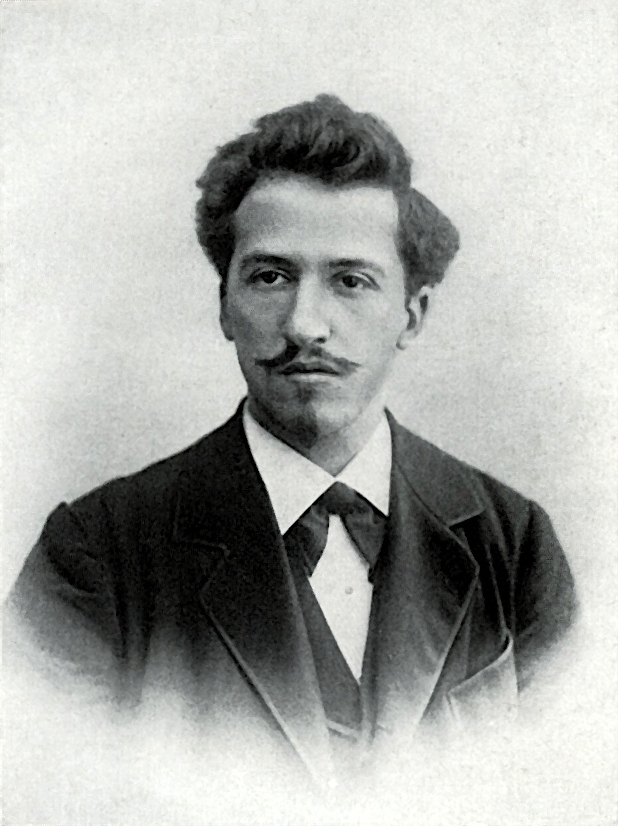
Piet_Mondriaan
Cubo Grande
Photograph by Dominique Mulhem.
https://www.reddit.com/user/sverdrupian/


Image sources (from top left clockwise):
https://upload.wikimedia.org/wikipedia/commons/8/83/Piet_Mondriaan.jpg
https://www.pinterest.co.uk/ordep13/
http://www.fondationtanagra.com/en/article/mily-doll-by-gege/page/but-darling 
https://www.reddit.com/r/MapPorn/comments/2ocwh3/world_map_in_the_manner_of_piet_mondrian_948730/