Hodges' Model: Welcome to the QUAD: stigma

Hodges' model is a conceptual framework to support reflection and critical thinking. Situated, the model can help integrate all disciplines (academic and professional). Amid news items, are posts that illustrate the scope and application of the model. A bibliography and A4 template are provided in the sidebar. Welcome to the QUAD ...

Showing posts with label stigma. Show all posts

Tuesday, March 03, 2026

Thoughts ii re. 2026 Lancaster Philosophy of Psychiatry Work in Progress Workshop

For me, applying Hodges' model I tend to place philosophy and psychiatry (mind, thought, belief, truth, intention ...) within the humanistic part of the model. So, Ewa Grzeszczak and - Philosophy of psychiatry and the methodology of social ontology - stood out. This is helpful as Homeostatic Property Clusters (HPC) are a useful structure, spanning bio-mathematics. As suggested previously with 'equality', we can place the philosophical non-trivial question of kinds at the centre of Hodges' model and proceed (if possible?) from there.

The requirement for a holistic, integrative and pluralistic framework is there in literature. A statement supported by Alessandra Civani's talk: 'What kind of concept is ‘incongruence’? I located a paper:

Enactive psychiatry - A pragmatic and pluralistic approach to mental health and disease

- (and now have a copy c/o and thanks to Alessandra) and am grateful to being pointed to de Haan:

An Enactive Approach to Psychiatry

 I will (must) return to these papers. Earlier on Hodges' model, I'd opined (as on 'X') how the -

  • medical
  • biomedical
  • bio-psycho-social models - are insufficient in the 21st century.

There was a thematic feel to the presentations with Anna Golova - Self-illness ambiguity without a self-illness distinction - following nicely. The styling on the slides was an added bonus. I located an informative (co-authored) paper by Golova:

‘Is it me or my illness?’: self-illness ambiguity as a useful conceptual lens for psychiatry'

Part of the power of Hodges' model derives not so much from its duality; as its dual axes. The two axes can encompass and handle the relatedness between/within reductionism, holist perspectives, the self and otherness, illness and health (well-being).

An hours break brought us to an event which was very well attended, clearly open to the public:

6-7pm Prof Miriam Solomon – Royal Institute of Philosophy talk ‘Stigma as an actant in the history of psychiatry’

In setting out the talk's structure I liked Prof. Solomon's reference to the common, implicit "grime" theory of the dynamic of stigma, and "punching down" as a strategy for managing stigma. 'Grime' made me think of sense of smell, the grime in my father's work van, a diesel. Now so many memories are evoked with the merest whiff. More positively, the patina of physical and mental life also came to mind. You would - might think stigma has been dealt with by now, but of course we are socio-politically far from it.

There is a related podcast from 2025, which also covers Prof. Solomon's early studies. A previous paper was also noted in the slides:

Solomon, M. (2025). The Elusiveness of Hermeneutic Injustice in Psychiatric Categorizations. Social Epistemology, 39(2), 166–177. https://doi.org/10.1080/02691728.2024.2400068
 
Discussion of the DSM inevitably followed (and in the above podcast). In questions the 'reality' of severe mental illness, and suggestion of the acute challenge of managing the negative symptoms of psychoses.
 
Prof. Solomon's conclusion was well worth waiting for, including:
Stigma as an "actant" (cf. Bruno Latour's concept of an agent: causal role without intention)... DSM - ICD...
 
If stigma disappeared tomorrow, the DSM would not have the same categories. 
 
Stigma (more specifically, its management) is shaping the conceptual space, with both scientific and moral consequences.

[Added 4th March...] On Friday - Sam Fellowes, took on, or has taken on - the non-trivial issue of - Modelling psychiatric diagnoses when self-diagnosing - how does this work? Complexity was acknowledged on the first slide, with self-diagnosis, and modelling, set against the Duhem-Quine thesis. 

This technical aspect is welcome and no doubt essential given the socio-technical nature of diagnosis, touching as it does the public (society), primary care, psychiatry, service user groups, policymakers, informatics, and HM Treasury, amongst several 'stakeholders'. With the impact of the internet and social media, much (if not all?) of the vocabulary of mental health professionals has been co-opted and re-framed(?) by patient / service-user groups? It does not, for example, appear that the agency behind the DSM will be able to claim it back. Autism and ADHD were also discussed and debated. I located a previous chapter by Sam (pay-wall):

Fellowes S. Self-Diagnosis in Psychiatry and the Distribution of Social Resources. Royal Institute of Philosophy Supplement. 2023;94:55-76. doi:10.1017/S1358246123000218
 
This really is a thicket of thorns, it spreads as and wherever you go.
 
The welfare bill is such that there should have been government Ministers in attendance. I have responded on behalf of clients to PIP assessments. Agencies have invited me to interview for 'Disability Assessor' roles. Not only is this a complex web, but several logics obtain: a perverse temporal logic operates, binary logic and a fixed mindset can develop so that some (vulnerable!?) individuals can get stuck. Perhaps, a social imperative steps in and disrupts, life chances: their being a NEET ('a young person who is no longer in the education system and who is not working or being trained for work'. Ecosia) is better for someone else? 
 
To unpick, make sense of this, you need a foundational universal model.
 
There is a (co-authored) paper from Giulia Russo, who presented - Epistemic and political role of experience: https://philpapers.org/rec/RUSTPO-112 from which:
'As it is widely known, epistemic injustice was introduced by Fricker (2007) to unveil power relations that have negative consequences on people as epistemic agents. She distinguished in particular two different kinds of epistemic injustice: testimonial and hermeneutical. The first kind occurs when a person (usually in a disadvantaged and oppressed role within the epistemic relation) is damaged as a knower because, as the name suggests, their testimony is overlooked, dismissed or invalidated. The second kind of epistemic injustice occurs when a person is deprived of the epistemic resources to even explain or articulate their experience of distress, or of systemic oppression. In connection to this, the concepts of neurodivergence and neurodiversity come from the political and social arena, and are born explicitly to contrast dominant pathologizing narratives in psychiatry.'
In seeking some 'test' cases to try to model relationally, Hodges' model suggests at least four - without letting the care / knowledge domains wag-the-dog. Giulia's talk was very helpful, ranging across forms of epistemic injustice (addressed by others too), identity, neurodivergence, lived experience, self-, counter- and collective narratives with references. A great resource.
 
Frank Denning, reminded me of an important phenomena, in Using Stebbing’s Directional Analysis to Evaluate ‘Mentalizing’. Talking therapies, or more properly referral to talking therapies often presents several criteria that would-be subjects must 'pass'. An ability to mentalize, can represent one. This is understanable, for effectiveness, efficiency, efficacy ... it is to be found in the manual. But, in terms of power relations, gate keeping in various forms is a literal (virtual) key to service access. Hodges' model is no different (sigh!). At what age can people start to use Hodges' model? What mentalization is involved to cognitively engage in use of Hodges' model? 
 
I struggled to obtain a copy of Stebbing's original work from 1930, but see how closely tied the work is to physics. An Internet Archive copy is poor quality. The search will continue, as I suspect there are links to Bill Ross's text on Deleuzian cosmology. It is marvellous that work from 1930 resonates today. There is: 

Janssen-Lauret, F. (Accepted/In press). Directional Analysis in Susan Stebbing’s Philosophy of Physics. In S. Chapman (Ed.), Susan Stebbing on Logic and Analysis Springer Nature. 
https://pure.manchester.ac.uk/ws/portalfiles/portal/338653274/Directional_Analysis_in_Susan_Stebbing_s_Philosophy_of_Physics_Final_.pdf

Gloria Ayob - Flourishing as mental health - was encouraging. 'TASK 1:EQUATION' a slide was titled, including emotional disorder is meta-evaluative; there are negative and positive poles, plus isomorphism between unpleasantness-pleasantness and disorder-health. I think my stomach was protesting I should have paid more attention. There is a blog post by Gloria: https://blog.oup.com/2024/12/the-concept-of-emotional-disorder/

After lunch Richard Hassall - Hermeneutical Injustice and Damaged Intellectual Self-Trust in Psychiatric Service Users, a reminder of the time and effort that needs to be put into public and patient involvement and engagement in mental health service (when this is desired). References included J.L. Austin and J.S. Bruner. A paper:

Hassall R. Sense-making and hermeneutical injustice following a psychiatric diagnosis. J Eval Clin Pract. 2024 Aug;30(5):848-854. doi: 10.1111/jep.13971. Epub 2024 Feb 20. PMID: 38375925.
https://onlinelibrary.wiley.com/doi/10.1111/jep.13971 

Scoping reviews are more common it seems: Lara Calabrese - Exploring epistemic injustice in dementia care: a scoping review and a qualitative study, plus paper [with QR code on the slide]:

Calabrese L, Brigiano M, Quartarone M, Chirico I, Trolese S, Lambiase F, Forte L, Annini A, Bortolotti L, Chattat R. I'm still here and my opinion matters: a scoping review on the experience of epistemic injustice among people living with dementia. Curr Psychol. 2025 Dec 17;45(1):s12144-025-08519-y. doi: 10.1007/s12144-025-08519-y. PMID: 41445984; PMCID: PMC7618523.
 
The paper's title here brought to mind the radio programme "Does He Take Sugar?" Questions followed regards the studies methods. Since leaving I wondered if there has been an evaluation of Dementia Friendly Communities? Are there dots to usefully joined there?
 
The final talk was delivered (with gusto - pepped me up anyway) by Jacob Barlow - Epistemic borders: experts, communities, communication. Jacob's interest in pragmatism was apparent. I look forward to reading future work, and note Liverpool 2025: ‘Problems with Pragmatism in the Philosophy of Psychiatry’.

All in all, a stimulating and enjoyable event.
Tuesday, May 06, 2025

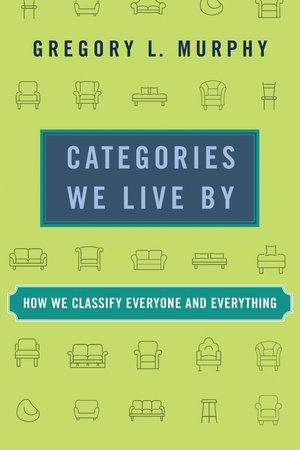
Book review iv: 'Categories we live by'

The introduction to part ii 'Case Studies' is quite prescient: 'Categories have consequences'. p.75.

Certainly timely in the UK as Prof. Murphy returns to gender and birth sex his first example at the book's start. 

Coincidental or not, categories do change. As we try to understand them it is vital we don't mess them up. Consequences follow for people who are subjected to the categorisation. People use them for stability, predictability, so change can be fraught for all. Personal and group identities can all be affected, and (recently) provisions in how 'spaces' are allocated and regulated - controlled.

At infant - junior school I remember the lack of awareness, understanding and empathy for peers affected by epilepsy, stigma was a thing then that wandered the classroom and playground. Through my career I've heard many clients recount experiences pointing to stigma and exclusion.

Of the case studies Murphy writes:
'Each chapter is a more-or-less self-contained case study (including other similar examples), except that chapter 7 is a more general meditation on how determining categories is used in the exercise of power. Some of the case studies get into the weeds, and if you find yourself not that interested in how species are defined, for example, you can skip ahead to the next chapter without losing much. Following part II will be a conclusion, which attempts to summarize some of the lessons learned from all these examples.' p.77.
Murphy's style is accessible, and the case studies are informative. The author is also accessible and responsive I must add. I prefer and need a physical copy of books to reduce screen time, but e-books have their uses. I'm sure I read a short sentence in the case studies that essentially contrasted the individual and collective in sociology. Can I find that word? No luck thus far. I may be mistaken but appreciate Prof. Murphy's reply and thoughts.

There's another 'news' coincidence on p.80 (Chapter 5 'Legal Categories'): are Santa Claus costumes 'clothing' and so subject to tariffs (also referenced)? Every person worldwide, has no doubt pondered on their marked grade in a test or exam - and 'where' this places them?
'In her review of a book about rules, Rivka Galchen (2022) admits to feeling a bit of despair in the end: "Rules that leave a ruler, Or a judge, in charge of interpreting them feel at once humanized and corruptible. Rules that allow no exception seem free of human frailty but alien, and unable to admit properly of complexity." It is very easy to point at what went wrong with an overly strict rule or with a judge who seems biased, but less easy to devise a system of categories that avoids every problem.' p.83.
I often frame the conjunction of the mechanistic axis and the group in Hodges' model in terms of what do need, or get when you have large groups of people? The political domain, including law and disorder is critical of course. Is 'utopia' the perfect system by definition? I like the way even prior to reference to Galchen, Murphy states how 'the precise borders between categories can be essentially arbitrary, and there is no way to avoid that arbitrariness if you insist on dividing things into categories.'. p.83. 

If this book was a BASIC computer program, the first command for Chapter 6 Psychodiagnostic Categories. might well be a 'GOTO' statement: Chapter 7 Categories and Power.

More to follow and nearly there - sadly.

Previously: identity : space : categories

Murphy, Gregory L. Categories we live by: how we classify everyone and everything. Cambridge, MA: The MIT Press, 2024.

Many thanks to MIT Press for the review copy - and the dose of serendipity:

Tuesday, February 11, 2025

Project: Partners against Stigma and Mortality in Epilepsy (PASME) Cameroon

Boyo Association for Rural Development (BARUDEV - Cameroon) has launched a project on epilepsy called Partners against Stigma and Mortality in Epilepsy (PASME).

We are calling for partnerships and support for our project on epilepsy which will focus on mental health and psychosocial support, treatment, knowledge and skills exchange,raising awareness, rights protection amongst patients affected and or bereaved by epilepsy, health care providers. Also reduce seizures and consequences particularly in children and adolescents living with epilepsy and HIV/AIDS. 
  • ADVOCACY AND AWARENESS. Promoting awareness and supporting initiatives that prevent epilepsy. Prioritize epilepsy at national and international levels, while lobbying and advocating support for partners and governments to prioritize epilepsy into their health programs and policies.
  • TREATMENT AND SUPPORT. Provide access to treatment and support initiatives that improve access to effective treatment including medications and their therapies. 
  • PROVIDE BEST-PRACTICE MODELS. Develop and share models for effective management of epilepsy in diverse settings including conflicts and disasters where people are forced to displace.
  • BUILD CAPACITIES THROUGH TRAINING. Advance training and information sharing for healthcare givers, CHWs and family care givers involved in epilepsy care. 
  • PROMOTE HUMAN RIGHTS AND DIGNITY. Advocate for the accessibility of services, protection of human rights and preservation of dignity for all with epilepsy including children and adolescents living with epilepsy and HIV/AIDS. 
  • EMPOWERMENT AND RIGHTS: Lobby and advocate for the rights of people with epilepsy through their associations and to enable them participate in decision making processes. 
  • RESEARCH AND COLLABORATION: Foster research through encouragement and support in epilepsy including causes, prevention, treatment and social impact. Strengthen their associations, develop and support them through mental health and psychosocial support projects and ensuring and protecting their well-being and their families.
BARUDEV is currently building a website (which I will add upon news - PJ).
Please contact me if you need further information

HIFA (my source) profile: Chiabi Bernard Ful is Director of Boyo Association for Rural Development (BARUDEV--Cameroon). This is a local NGO found in Boyo district of North Western Cameroon. Our activities are to empower women, protect the sexual and reproductive health for women and girls, and protect the rights of children. We have been training community health workers to follow up patients, pregnant women, sick children and refer them to the hospital.
barudev AT yahoo.co.uk

Tuesday, January 28, 2025

Sticky Categories and Their Negative Consequences c/o Mikulak et al.

Category - Theory and Practice

Hodges' model -
A model for care in whatever situation, care environment*.

 
Individual
|
      INTERPERSONAL    :     SCIENCES               
HUMANISTIC  --------------------------------------  MECHANISTIC      
 SOCIOLOGY  :    POLITICAL 
|
Group
'I'
Me
My name is . . .
I am a person.
I am an individual.

Even if I don't thank you,
there may be someone out
there who thanks you for
acknowledging, confirming,
sustaining, preserving and
respecting my identity.

Even if I don't ask you
for your name please share
it with me, when you feel
 the time is right.

Together ...

[Abstract] "‘Behaviours that challenge others’ are attributed to 20% of people with learning disabilities. These behaviours are not a diagnosis, it is something people are labelled with. We conducted qualitative interviews with social care staff in the UK within four models of care: independent supported living, residential nursing home, Shared Lives, and living with family and attending a day opportunities centre*. We examine how the category of ‘behaviours that challenge others’ is produced, applied, and contested in adult social care settings. We demonstrate its stickiness and discuss its stigmatising consequences. How behaviours are understood, felt, and talked about matters for the support people with learning disabilities receive and maps onto their consequent inclusion or exclusion from society. We point out the harms the category carries for people who receive it and argue that it should be abandoned." p.110.


"Labeling theory suggests that labels lead to stigma, through changing how a group is perceived by others and supporting stratification (Haft et al. 2023). According to Link and Phelan (2001: 383), stigma ‘exists when elements of labeling, stereotyping, separating, status loss, and discrimination co-occur in a power situation that allows these processes to unfold’ (emphasis added). The acceptance of categories as valid and important differences is described by the labeling element of stigma (Link and Phelan 2001). Here, we attend to how this ‘labeling’ aspect of stigma interacts with its other mechanisms in the category of ‘behaviours that challenge others’." p.112.


"Emotions are not private, rather, they ‘circulate between bodies and signs’ producing meanings and creating ‘the surfaces or boundaries of bodies and worlds’ (Ahmed 2004b: 117); thus, affect is always distributed (Wetherell 2015). We propose the category—and the labeling process behind it—should be understood within an ableist (Campbell 2009) distribution of affect and politics of emotion; one that subordinates the experiences of people with learning disabilities through establishing the ‘truth’ of the reading as external and mediated through the emotions of people without learning disabilities. ‘Behaviours that challenge others’ (and synonyms of the category) are inherently relational but also reflect and reproduce existing power imbalances. We suggest their stickiness rehearses and reinforces the ableist politics of emotion that positions people with learning disabilities as ‘less human’ (Goodley 2021) and at times as monstrous. The category is a product of this politics, one that repeats its rehearsed, sticky associations, making the reading of the proximity of people with learning disabilities in the present a result of histories marked by dehumanization. The method of categorizing people through labels also makes them more susceptible to what McClimens has described as ‘reauthoring’, with collective histories ‘presented in a way that condones or even justifies their current situation’ (2007: 259)." p.113.


Mikulak, Magdalena, Sara Ryan, Elizabeth Tilley, Susan Ledger, Lisa Davidson, Pam Bebbigton, and Dawn Wiltshire. 2024. “Sticky Categories and Their Negative Consequences: People with Learning Disabilities and ‘Behaviours that Challenge Others’.” Scandinavian Journal of Disability Research 26(1): 110–123.
DOI: https://doi. org/10.16993/sjdr.1069 (with my emphasis)

I have cited Mikulak et al. in 1/2 papers submitted yesterday after revision on: threshold concepts, deprivation of liberty, residential care and Hodges' model.

Monday, December 23, 2024

Comment: Menopause - a global health and wellbeing issue that needs urgent attention

On 'X', I noticed a comment piece from the Lancet:


Menopause: a global health and wellbeing issue that needs urgent attention
Gayathri Delanerolle, Peter Phiri, Sohier Elneil, et al. The Lancet Global Health, Volume 0, Issue 0.
Publication History: Published December 18, 2024 
DOI: 10.1016/S2214-109X(24)00528-X

As usual I searched 'Welcome to the QUAD' [W2tQ] for previous posts tagged 'menopause'. The result '0' was a surprise, as there are several posts re.'menstruation' 

https://hodges-model.blogspot.com/search?q=menstruation

And many tagged 'women':

https://hodges-model.blogspot.com/search?q=women 

And this despite, a partner and family members experiencing the effects and impact of menopause. I was also asked in the summer to sort a list of signs & symptoms for menopause that can be associated with mental health nursing.

Interesting to see reference to the Roy Adaptation Model in the paper:
Klotzbaugh R, Fawcett J. Gender minority persons’ perceptions of peer-led support groups: a Roy Adaptation Model interpretation. ANS Adv Nurs Sci 2023; 46: 59–74.
And to address the global health extent and context of menopause:
'The stigma is such that open dialogue is inhibited in the majority of LMICs and the first-generation migrants from these LMICs to high-income countries (HICs); the paucity of broader understanding and acceptance in society exacerbates the mental and emotional strain of menopause and can lead to social isolation, particularly in these stigmatised contexts.' [my emphasis]
If needed there may be a CPD exercise for student nurses, or those qualified with revalidation pending? Hodges' model (the template) can help in achieving a broader understanding of menopause, and women's health to include menstruation and social attitudes, beliefs and attitudes. The paper does not refer to shame, and self-stigma, which may prevent a person from seeking help? So, there is a reflective exercise in reading the text and mapping the recommendations in the paper:

Panel - Recommendations to improve health outcomes for individuals with menopause 
  • Lifestyle modifications 
  • Mental health support
  • Holistic approaches
  • Culturally competent care 
  • Personalisation of hormone replacement therapy care 
  • Peer support groups or social prescribing 
  • Conduct comprehensive research 
  • Improve accessibility
  • Understanding various risk factors, such as lifestyles, environment, and climate
If anyone has events, journal special issues for 2025 ... I can help publicise, please let me know.

Ack. https://x.com/raj_psyc

See also:
Delanerolle, Gayathri & Forbes, Anna & Cavalini, Heitor & Taylor, Julie & Riach, Kathleen & Hinchliff, Sharron & Atkinson, Carol & Potočnik, Kristina & Briggs, Paula & Kurmi, Om & Talaulikar, Vikram & van Vlymen, Jeremy & Shetty, Ashish & Irfan, Muhammad & Kareem, Rabia & Kemp, Helen & Palo, Subrata & Rathnayake, Nirmala. (2024). An Exploration of the Mental Health Impact Among Menopausal Women: The MARIE Project Protocol (UK arm). American Journal of Biomedical Science & Research. 22. 10.34297/AJBSR.2024.22.002992. 

Saturday, August 13, 2022

"Suffering in Silence" c/o David Robertson

 INDIVIDUAL
|

   INTERPERSONAL    :     SCIENCES               
HUMANISTIC --------------------------------------  MECHANISTIC      
SOCIOLOGY  :   POLITICAL 
|
GROUP
David Robertson www.davidrobertsonprintmaker.com QEST Scholar Instagram.com/multiple_of_one
Suffering in Silence, 2018. Woodcut, each 2000 x 910 mm.
Installation: 2400 x 5500 x 5500 mm


"David Robertson’s immersive print installation explores the stigma around mental health and the difficulties men have in reaching out for help. Consisting of 25 life-sized men, the figure is a self-portrait but is representative of any man. Formed of tally marks, each mark representing an individual." ...
[my emphasis].

The Holburne Museum:
https://www.holburne.org/events/holburne-open-david-robertson/

Image: With thanks to David Robertson

David Robertson
www.davidrobertsonprintmaker.com
QEST Scholar
Instagram.com/multiple_of_one 

My source: Printmaking Today Summer 2022, 31:122, p.7.
https://www.cellopress.co.uk/page/printmaking-today

Wednesday, March 23, 2022

"Turning Red"

INDIVIDUAL
|
 INTERPERSONAL    :     SCIENCES               
HUMANISTIC --------------------------------------  MECHANISTIC      
SOCIOLOGY  :   POLITICAL 
|
GROUP


Previously: 'menstruation'

My source: Various


Sunday, June 06, 2021

Mother?

individual
|
 
 INTERPERSONAL : SCIENCES
humanistic ----------------------------------------------- mechanistic
SOCIOLOGY : POLITICAL
|
group
Give Up!


Give Up!


GIVE UP!


GIVE UP![You will!]


... your baby


My source: BBC Radio 4 

https://www.bbc.co.uk/news/uk-wales-57251782


Monday, March 15, 2021

HowTheLightGetsIn - ToTheIntra-InterpersonalDomain*

individual
|
INTERPERSONAL : SCIENCES
humanistic ----------------------------------------------- mechanistic
SOCIOLOGY : POLITICAL
|
group

light

* ... or gets out?

Thursday, September 10, 2020

World Suicide Prevention Day #WorldSuicidePreventionDay #WSPD2020

'Suicide' https://hodges-model.blogspot.com/search/label/suicide 

'Activism' https://hodges-model.blogspot.com/search/label/activism

Wednesday, June 17, 2020

Op-Ed: Why dignified menstruation matters?

"reproductive health rights are human rights"


individual
|
INTERPERSONAL : SCIENCES
humanistic ----------------------------------------------- mechanistic
SOCIOLOGY : POLITICAL
|
group - population
self

self-esteem
 self-respect
dignity
FEMINITY

awareness
ignorance
concepts
personal beliefs 

anxiety
fear
stress

vulnerability 
risk

mental health
trauma - abuse
impact on education

self-care
self-efficacy
health literacy 

psychological privacy
(this is my period - not my shame ...) 

A matter of 
human biology: 
anatomy & physiology
globally?
Bangladesh, Nepal, India, other low and middle income countries
 in South Asia

menstruation, menstrual period

adolescence,
women of reproductive age

wrong information
life threatening ...

menstrual hygiene 
menstrual health management

disaster response
natural disaster, floods, cyclones, conflict, refugees
cyclone shelters
lighting
physical security 
physical access to toilets
traditional materials - cloth
physical privacy
even if it's yours?

intergenerational factors...
"When I was a girl..."

Women's menstruation
menstrual period 
cultural and social beliefs
Health literacy
Health promotion

negligence and whisper
womanhood: dignity and respect
public discussion
 stereotype, ideas, taboos, stigma
shame
age old superstitions  life threatening harmful practices imposed to them by the family members, neighbours and the community
[ Community care?! ]

positive role models
positive support of husbands and families

social privacy

Human Rights Declaration
United Nations in 1948
'dignified menstruation'

UN Water

water, sanitation and hygiene (WASH)

Disaster relief:
1. Male perspective;
2. Cultural taboo;
3. Menstrual health not in plans?

power
control
 budgetary planning

Public Health
Policy

Toilet facilities
Provision of toilets
Toilet-sewage infrastructure

political privacy
(do not compromise my privacy 
by compromising my rights)


"All the stakeholders should explore all-inclusive 
and 
most comprehensive integrated approach 
to ensure dignified menstruation."


The Daily Observer, Why dignified menstruation matters? by PARVEZ BABUL

My source: HIFA

... and previously on W2tQ

Tuesday, January 22, 2019

Paper: Geopolitical factors and mental health I [mapped to h2cm]

" ... we propose that mental health must be seen as a key strategic goal of foreign policy and be used as a measure of success of the foreign aid to ensure that individual people with mental illness are guaranteed a role and support in the civil society and their needs – clinical or social – do not get swept under the carpet. To this end, we examine some key statistics and to address the mental health needs of those worst placed, we propose an index – the Compassion, Action, Pragmatism and Evidence (CAPE) Vulnerability Index – that identifies the most vulnerable communities so that international aid may be more appropriately targeted, possibly ‘ring fenced’ making mental health a strategic building block of foreign policy." p.779.

individual
|
INTERPERSONAL : SCIENCES
humanistic ----------------------------------------------- mechanistic
SOCIOLOGY : POLITICAL
|
group

wither mental health in relief,
shorter life compared with general population, 
poverty including


 As a child
As an adult


Vicious cycle 1:
Disaster experiences - mental health
Traumatic Stress Disorder**

Natural & man-made disasters,
health crises, e.g. Ebola,
Conflict, War
Climate warming
Humanitarian intervention:
Emphasis on
physical survival and physical health
Statistics: globally

Proposed index:
the Compassion, Action, Pragmatism and Evidence (CAPE) Vulnerability Index – that identifies the most vulnerable communities

Vicious cycle 1:
[**Intergenerational transmission of stress and trauma - Epigenetics, social memory]
 Social upheaval, migration and
displacement


mental illnesses assoc with
social failures such as
poor parenting, school failure,
domestic violence and toxic stress,
impacted prospects on earning a living,
stigma
social exclusion

Social Determinants of Health
Displacement refugees, poverty,
women, children,
 trafficking, rape

Foreign Policy
Relief: mental illness =
denial of - human rights, vote,
marriage, inheritance, make a will

Vicious cycle 2:
corruption - inequality
sequestration of assets
crime, law & order
Disaster ('declaration')

Mental health problems cost the world some
US$2.5 trillion per year
 (US$16.1 trillion by 2030)
Foreign aid & assistance
Foreign policy

Populism


Persaud, A. et al. (2018) Geopolitical factors and mental health I. International Journal of Social Psychiatry, 64(8) 778–785. DOI: 10.1177/0020764018808548
https://journals.sagepub.com/doi/abs/10.1177/0020764018808548?journalCode=ispa&

n.b. I have added epigenetics and the intergenerational transmission of stress and trauma.

Monday, December 17, 2018

India: Health needs of manual scavengers: Does our health system care?

individual
|
INTERPERSONAL : SCIENCES
humanistic ----------------------------------------------- mechanistic
SOCIOLOGY : POLITICAL
|
group
SELF

“In India, a man is not a scavenger
 because of his work.
He is a scavenger because
of his birth irrespective
 of the question whether
 he does scavenging or not.”

– Dr. B.R. Ambedkar


WORLD other

Three forms of manual scavenging:
1. removal of human excrement from public streets and dry latrines;
2. cleaning septic tanks;
3. cleaning gutters and sewers.
Health risks & risk of death 
Reported: 1 death every 5 days
Infectious diseases
Respiratory diseases
Musculo-skeletal
Carbon monoxide and methane poisoning
Safety, Protective equipment?


OTHERS

"Dalits of specific sub-caste and
is an archetype of the
oppressive legacy of the
 hierarchical
Hindu varna system"
WORLD others

International Labour Organisation

The Employment of Manual Scavengers and Construction of Dry Latrines (Prohibition) Act (1993)
Prohibition of Employment as Manual Scavengers and their Rehabilitation Act (2013)

International Dalit Solidarity Network
National Safai Karmachari Commission Rashtriya Garima Abhiyan
Ministry of Health and Family Welfare


Original source: twitter
https://www.youthkiawaaz.com/2018/12/health-needs-of-manual-scavengers-does-our-health-system-care

Thursday, April 12, 2018

They Heard Voices - "ILS ENTENDAIENT DES VOIX"

"An independent documentary looking at the hearing voices (HV) movement, chronic psychosis and the schizophrenia label.

A film offering multiple perspectives: is schizophrenia hard science or an arbitrary, catch-all term with no real meaning? What does it mean for those experiencing psychosis? The film is a series of wide-ranging interviews with voice hearers, medical historians, anthropologists and psychiatrists from Britain and America.

Featuring: Erin Emiru, Rai Waddingham, Kevin Healey, Mark Roininen, Angela Woods (Ph.D), Edward Shorter (Ph.D), Dr Avery Krisman, Dr Albert Wong, Suman Fernando, and Stefen Ecks (Ph.D)."

individual
|
INTERPERSONAL : SCIENCES
humanistic ----------------------------------- mechanistic
SOCIOLOGY : POLITICAL
|
group


My source:
Email from Jonathan Balazs

Friday, January 05, 2018

Book: Ants Among Elephants: An Untouchable Family and the Making of Modern India

individual
|
INTERPERSONAL : SCIENCES
humanistic --------------------------------------- mechanistic
SOCIOLOGY : POLITICAL
|
group


Touch

Untouchable?
Ants Among Elephants

Sunday, October 01, 2017

"Loving Vincent"

individual
|
INTERPERSONAL : SCIENCES
humanistic --------------------------------------- mechanistic
SOCIOLOGY : POLITICAL
|
group


My source: various...

Thursday, May 11, 2017

Mental Health Awareness (Second) ... (Hour) (Day) Week (Month) (Year) (Life) (History)

INDIVIDUAL
|
INTERPERSONAL : SCIENCES
humanistic ----------------------------------------- mechanistic
SOCIOLOGY : POLITICAL
|
POPULATION

Thoughts Beliefs Emotions Mood...
Motivation, Confidence
Memory, Experiences, Trauma, Grief

Mental Health - Reasons for Referral

Assessment

Self-help     Self      Self-stigma

Learned Helplessness

Psychological Theories & Therapies

Sleep  Coping  Concentration

self-harm risk, specialist services

Surviving OR Thriving?
Vulnerability

Debate: Ethics, Diagnosis, Philosophy of Care

PSYCHO-
Systematic diagnosis

Evidence-based Care, Treatments

Effective Treatment, Outcomes

Drugs, Side Effects

Local access (200+ miles for a bed?)

Demographics - Research

Data, Information, IT Records

Emergency (MH Crises) Services

Referrer's Knowledge of Care Pathways

Debate: Pathologizing,
Big-Pharma

Evidence Based measures


SOMATIC - BIOLOGICAL
SOCIAL

Group Therapies

Community Family Friends

Relationships - Social Network

Risk  Behaviour  Safety

Mental health as a Social Construct

Stigma

Folk theory UNDERSTANDING Specialist

Sociological Theories
prediction uncertainty expectations

Social Norms      Conformity

Culture, Ethinicity, Education

Anthropology

Quality of Life
POLITICAL

Power         Mental Health Law

Review of Mental Health Act?

WAIT! Government Policy Targets

Gate-keeping
????RING FENCED???
 ? Funding of Services ?
??  Parity of Esteem  ??
???RING FENCED???

 Community Care - Beds - In-patients

Mental Health Services

Primary, Secondary, Tertiary

Mental Health Professionals

Human Resource Planning

Work

Friday, April 14, 2017

Sunday, January 18, 2015

Book Review: Illness


As mentioned on W2tQ before this book has been feigning illness for over a year, sitting static on the bookshelf. Brushing it off has brought great reward that was quickly delivered as the book is just 160 pages plus references and index. My review copy is the revised edition from 2013.

The book is well structured with five chapters, that tread a consistent path through what is a very objective-subjective landscape. The author's aim and orientation is clear from the beginning. Each chapter provides a phenomenological account of how illness affects the life of individual. The shadow that is death is also an important thread throughout the book, culminating in the final chapter. Havi Carel describes the book as neither a personal story nor a purely philosophical reflection on illness. It is both, we are told (p.15).


The introduction lays out the disciplinary, experiential and perspectival divide that the book seeks to address, broadly normativist and naturalistic approaches to health and illness [presented using h2cm]. I say consistent above as you can see the personal story and philosophical aspects, but amid this 'illness' Lymphangioleiomyomatosis (LAM) a balanced gait between the personal account and philosophical dimensions is maintained. According to the text and Foundation: LAM is a progressive lung disease that usually strikes women during their childbearing years. The introduction and chapter 1 provides the narrative to the discovery of having LAM. This demonstrates the rather frequently haphazard, deferred, denial-oriented way in which people seek medical help. Given the apparent severity of the symptoms you might expect that help was sought sooner. I thought that was a male phenomena? This is one of several 'what ifs'... Havi expresses later.

Others reviews (yes I read one) remark on Carel's candidness and honesty. The book is courageous too, engaging the reader as an interviwer-interviewee; some questions are answered in the next paragraph, others left for the reader. Yet privacy, dignity and self-respect of the author foremost and people (family, friends, professionals) involved is preserved.

The philosophical discussion is not very technical, accessible it draws upon ancient Greek philosophers, notably Epicurus and the phenomenological school of Heidegger, Merleau-Ponty. Further reading is listed and related to the book's themes. Critics of the book as Mikey Burley describes, see too many emotion-laden autobiographical anecdotes. The appeal for me of this book and the achievement of the author is to stress how the humanistic is still so frequently lost. The mechanistic stamps on communication, compassion, effective and person-centred care. Recourse to anecdotes is inevitable if we are to integrate an individual's experience and what the sciences can offer. Not just knowledge in all its forms, but seeking 'truth' - or its best approximation. Is the battle the individual Vs. the disciplines? Psychology is well established as a discipline and yet its early beginnings in Wundtian introspection were found wanting. We are still seeking balance.

The book is neither a treatise nor a tractatus, but it does seek to gain traction on meaning within health theory, practice. This is not armchair philosophy, it is everyday philosophy as might now be found in some pubs (public houses), it is trying to move towards philosophical therapy. Havi Carel addresses the way that health is taken for granted: we notice when there is a problem, functionality is curtailed. Contemplation of decline, mortality and death is not for the everyday, it is for the aged, Havi's students: Havi and many others who are touched by illness.

The body and mind feature large as would be expected, embodiment and agency. "We are our bodies; consciousness is not separate from the body" (p.16). What stands out for me is Havi Carel's call for a deeper conceptual shift since physiological accounts are insufficient to represent the personhood of illness. Actually, I know we keep saying 'deeper' but taken literally that might be reduction's way. The dichotomies here: objective-subjective, physical-mental health, internal-external (p.70), social model-medical model, self-other, health-disease and others ... seem to demand conceptual outreach. 'Meta' is everywhere these days, is this the case as Carel writes, with habit or pre-reflective: something for me to explore (p.27)?

Carel states what we know, but needs to be flagged. What does a walking stick represent, a zimmer frame, a wheelchair? In the same way that time can be compressed and extended so too can distance: it is not objective (p.16). As a former cross country runner that lesson was learnt quite a while ago, running diagonally across a ploughed field on a hill in February: oxygen debt. Once paid I recovered, but with a diagnosis like LAM and other rare diseases. I realise another definition of the individual-group axes within Hodges' model: a small group can become and act as one through activism.

Havi writes of mentally recording things, to remember abilities that will be lost, as adaptation and adjustment blur past and present. Experience of nursing people with dementia has prompted me to try to do this. Carel's hiking, swimming desire to push the envelope is universal. I can still remember the path running through Crompton's Woods, the trees, the turns the ups and downs. Reading Illness I recalled my brother vaulting over the back fence, we would land already halfway down the embankment the dust caught in the summer sun. We flew then. The woods for decades now a housing estate. Remember.

While reading was there was a coincidence in the media, the news of disease, cancer, life choices and bad luck (p.37). I suppose it is down to luck who deals with us a patient-client. I've always viewed an accepting, positive, open and caring attitude as fundamental for health and social care practitioners. Carel encounters care professionals who should be doing other things. Chapter two 'The social world of illness' begins with a single word: empathy. Regardless of ongoing austerity - Carel's story begins in 2004-2006 - empathy is the emotion in shortest supply. This really hurts. I am still trying to find a name for the professional who fails to be human, preoccupied with the mechanics of illness (p.47).

We have digital humanities and as noted in W2tQ medical sociology boasts an established literature. The medical humanities and philosophy of medicine are seeing to extend our understanding of health and illness (p.51). I am encouraged in the need for holistic views and approaches, conceptual and cultural frameworks (p.53). The counterpoint to unprofessional, negligent, disrespectful professionals is the need to learn to be rude, in order to cope generally (p.55). Some sentences are definitive. On well-being: "Well-being is the invisible context enabling us to pursue possibilities and engage in projects" (p.64). If I ever write another paper on information I will reference page 70, as I continue to reflect. Is technology, data - big and small and the quantified self the whole answer to healthcare's challenges?

Page 80 invites a philosophical discussion on personal identity, dementia and existence, to which we could also add sense-making and grief. The impact of illness is well made, as is the explanatory power of Heidegger. There is a mental exercise - imagining health within illness. I can extend this:
  • Apply the concept of health to the domains of Hodges' model?
  • Apply the concept of illness to the domains of Hodges' model?
  • Apply the concept of health within illness to the domains of Hodges' model?
Page 81's focus on being, ability and dichotomies is very supportive of my studies. I'm not sure if the irony in mention of Stephen Hawking and a contracted horizon is intentional, but it made me smile. Page 87 reminded me of my hackneyed thoughts about cogeography - a cognitive geography of concepts for healthcare (and more); something beyond a classification system or nomenclature. An architecture that encompasses the dichotomies, disciplines and experiences mentioned above and in the book. Page 90's note of the apparent deficit perspective of medicine towards the lived body, might also emphasize the assumption of deficit in knowledge and the rise of the expert patient, student-centered learning also.

I have many more notes from chapters 4-5 and at least one more blog post to follow. Other questions arose from chapter 5. Will people be referred to mental health services in future because they are deemed suicidal as they decline their personalised genomic treatment (Kim Stanley Robinson's, Red Mars)? Chapter 5 Living in the Present had me thinking about Plato's Philosopher Kings (p.148). At the end of the day we must rule ourselves even in the darkest of circumstances, but this takes wisdom and philosophy. This is a much needed book and I have only scratched the surface. I will let you learn of the book's full title and the significance of the same. A great read, despite the subject.

BURLEY, M. (2011), EMOTION AND ANECDOTE IN PHILOSOPHICAL ARGUMENT: THE CASE OF HAVI CAREL'S ILLNESS. Metaphilosophy, 42: 33–48. doi:10.1111/j.1467-9973.2010.01675.x

Many thanks to Katharine Green, Editorial Assistant, Acumen Publishing for my copy.

Additional link:
BBC Radio 4: In Our Time, Phenomenology 

Monday, January 12, 2015

Reading 'Illness'

Over the UK holiday period in-between searching the literature (pre-reading list) for the next module I've been catching up with very overdue book reviews.

Havi Carel's book Illness (2013) [2nd edition] was received December 2013 and is thankfully short and very readable. The review's still to follow as I am just halfway through, but there is a point in the preface (xvi) that cascades down each side of Hodges' model as Prof. Carel identifies two approaches to how illness is approached:

individual
INTERPERSONAL : SCIENCES
humanistic ------------------------------------------- mechanistic
SOCIOLOGY : POLITICAL
group
NORMATIVIST approach
sees disease as a value-laden term.

NATURALISTIC approach
sees disease as a value-free concept, as biological dysfunction.


SUBJECTIVE

stigma, communication, friends, compasssion...


OBJECTIVE

matters of fact, procedure, targets...

What is clear already from the text is that it is probably more accurate to say that the normativist approach springs from within the sociological domain. Our attitudes to disability and illness are informed by our upbringing, family, friends, education - our formative experience. Then we are socialised into our respective health and social care roles.

Prof. Carel makes clear (up to page 72 at least) the impact (see the domains above!) of an illness upon the individual that can then be compounded by others and by the health care systems that should holistically care before it treats or palliates.

More to follow...

Many thanks to Katharine Green, Editorial Assistant, Acumen Publishing for my copy.
