Hodges' Model: Welcome to the QUAD: Search results for isomorphism

Hodges' model is a conceptual framework to support reflection and critical thinking. Situated, the model can help integrate all disciplines (academic and professional). Amid news items, are posts that illustrate the scope and application of the model. A bibliography and A4 template are provided in the sidebar. Welcome to the QUAD ...

Showing posts sorted by relevance for query isomorphism. Sort by date Show all posts

Friday, May 10, 2024

Towards isomorphisms in Hodges' model

"The concept that best captures the process of homogenization is isomorphism. In Hawley's (1968) description, isomorphism is a constraining process that forces one unit in a population to resemble other units that face the same set of environmental conditions. At the population level, such an approach suggests that organizational characteristics are modified in the direction of increasing comparability with environmental characteristics; the number of organizations in a population is a function of environmental carrying capacity; and the diversity of organizational forms is isomorphic to environmental diversity." p.149.

"We identify three mechanisms through which institutional isomorphic change occurs, each with its own antecedents: 1) coercive isomorphism that stems from political influence and the problem of legitimacy; 2) mimetic isomorphism resulting from standard responses to uncertainty; and 3) normative isomorphism, associated with professionalization. This typology is an analytic one: the types are not always empirically distinct." p.150.

DiMaggio, P. J., & Powell, W. W. (1983). The Iron Cage Revisited: Institutional Isomorphism and Collective Rationality in Organizational Fields. American Sociological Review, 48(2), 147–160. https://doi.org/10.2307/2095101

"Some of them went further, using approaches based in political economy, world systems theory, and theories of neocolonialism and underdevelopment to show that economic imperatives on a global scale were a major force in shaping education worldwide. Others interpreted such change through an institutional lens, arguing that the convergence toward accepted models of modernity has resulted in a process of educational isomorphism within and across countries." p.1.

Carnoy, M., & Rhoten, D. (2002). What Does Globalization Mean for Educational Change? A Comparative Approach. Comparative Education Review, 46(1), 1–9. https://doi.org/10.1086/324053

"The movement is inspired by Rudolf Virchow (1821-1902), who coined the term zoonosis, arguing that there should be no dividing lines between animal and human medicine. This position has been gathering momentum in the last fifteen years. The One Health Initiative is a rather daring interdisciplinary alliance that unites physicians, osteopaths, veterinarians, dentists, nurses, and other scientific-health and environmentally related disciplines, on the basis of a simple hypothesis, which is the isomorphism of structures between humans and animals in immunology, bacteriology, and vaccine developments. This means that humans are both exposed and vulnerable to new diseases, like bird flu and other epidemics, which they share with animal species." p.16.

Rosi Braidotti. (2015). Yes, There Is No Crisis. Working Towards the Posthumanities. DiGeSt. Journal of Diversity and Gender Studies, 2(1–2), 9–20. https://doi.org/10.11116/jdivegendstud.2.1-2.0009

"The chapter begins by developing the logic of strategic voting in a single- member district system, thus won by whichever party or candidate gets the most votes (first past the post, or FPTP). This represents the simplest and easiest case for the logic of strategic voting, and similarities (and sometimes theoretical isomorphism) exist between strategic voting— sometimes called instrumental voting (or voting as an investment)— and expected- utility maximization." p.3.

Aldrich, J. H., Blais, A., & Stephenson, L. B. (2018). Strategic Voting and Political Institutions. In J. H. Aldrich, A. Blais, & L. B. Stephenson (Eds.), The Many Faces of Strategic Voting: Tactical Behavior in Electoral Systems Around the World (pp. 1–27). University of Michigan Press. http://www.jstor.org/stable/j.ctvh4zhzr.4 

"Let us take a closer look at this important topic: what might be termed the isomorphism between the realm of care and the realm of perception/oikeiôsis-allotriôsis." p.57.

Joaquim Braga & Mário Santiago de Carvalho (eds.) (2021). Philosophy of Care - New Approaches to Vulnerability, Otherness and Therapy. Cham: Springer Verlag.
https://link.springer.com/book/10.1007/978-3-030-75478-5

- will add here ... suggestions welcome h2cmng AT yahoo.co.uk

Sunday, June 18, 2023

"Isomorphism of structures": intra- interDomain & model as theory?

"Another illuminating example of the advantages of a posthuman scientific position is the One Health Initiative. The movement is inspired by Rudolf Virchow (1821-1902), who coined the term zoonosis, arguing that there should be no dividing lines between animal and human medicine. This position has been gathering momentum in the last fifteen years. The One Health Initiative is a rather daring interdisciplinary alliance that unites physicians, osteopaths, veterinarians, dentists, nurses, and other scientific-health and environmentally related disciplines, on the basis of a simple hypothesis, which is the isomorphism of structures between humans and animals in immunology, bacteriology, and vaccine developments. This means that humans are both exposed and vulnerable to new diseases, like bird flu and other epidemics, which they share with animal species." p.16.

 
Rosi Braidotti. (2015). Yes, There Is No Crisis. Working Towards the Posthumanities. DiGeSt. Journal of Diversity and Gender Studies, 2(1–2), 9–20. https://doi.org/10.11116/jdivegendstud.2.1-2.0009

<>

I have felt for many years that there is an implicit 'theory' in Hodges' model.

"Lastly, model is defined by May Brodbeck as "an isomorphic representation of objects that leads to an unmistakable identification of the expression of the object with the physical object." p.235.

"Though, Models like theories, are systems of generalizations based on empirical findings yet there are differences between them. A theory basically involves a set of statements, called either laws or propositions which are related to each other and which express relationships between variables under varying states of the system. It has to be kept in mind that although some tentative or untested theories are called models, a model and a theory are only roughly identical, because a model has a more static connotation. Unlike concepts, models are not arbitrary, and can be confirmed or disconfirmed. They differ in the degree of isomorphism they have with the modelled phenomena. In social science, a model is not a concrete of "real" structure. For that would be complete and idiosyncratic, from which it would be difficult to develop generalizations. An important distincton between theory and model is that while the model has primarily predictive power, a theory has both predictive and explanatory power. However, this is not true in all cases. Apart from making predictions, models can also direct us towards new materials and ground which are not yet covered thereby helping us to discover more relationships, thus serving few heuristic functions." p.237.

PATNAIK, L. K. (1989). MODEL BUILDING IN POLITICAL SCIENCE. The Indian Journal of Political Science, 50(2), 234–250. http://www.jstor.org/stable/41855908

<>

I will add other useful references from here:

"Furthermore, in philosophy of science, a pragmatic view on modelling has emerged over the last decade, in which the relation between a model and its target, traditionally expressed as representation in the form of formal, structuralist or syntactic morphism (such as isomorphism), is being replaced by emphasizing a pragmatic relationship, often simply described as a situation where somebody creates a model of something with some purpose (Gelfert 2016, 113)." pp.344-45.

Ciula, A., Eide, Ø., Marras, C., & Sahle, P. (2018). Models and Modelling between Digital and Humanities. Remarks from a Multidisciplinary Perspective. Historical Social Research / Historische Sozialforschung, 43(4), 343–361. https://www.jstor.org/stable/26544261

Plus for completeness:
Gelfert, Axel. 2016. How to do science with models: a philosophical primer. Cham: Springer. 

<>

In the conclusion: "Despite the growing body of research pertaining to a nascent theory of emergence, its central themes are based on a limited theory–model–phenomena conception that does not adequately support those conceptual abstractions. Take, for instance, the direct transfer of microscopic concepts to macroscopic levels of analysis. Strengthening the conceptual link beyond metaphorical device is essential to a robust process of theory building and holds numerous applications, such as underpinning further social science research and theory-building pursuits. Without an effective isomorphism of theory and structures to real-world behaviour, it is an arguable conclusion that a theory of emergence for human organisation does not currently exist. Such is the importance of ontological adequacy and the interchange between conceptual models. It facilitates the practice of interdisciplinary science that characterises much of complexity research." p.319.

Yezdani, O., Sanzogni, L., & Poropat, A. (2015). Theory of emergence: introducing a model-centred approach to applied social science research. Prometheus, 33(3), 305–322. https://doi.org/10.1080/08109028.2016.1144669

My emphasis.

Tuesday, August 27, 2024

(ii) Hodges' model? Ah! You mean the naïve conceptual framework that ...

... thinks it's a theory!

Apparently, the support of computers, through computer proof assistants, to help test and generate proofs in mathematics is creating confusion for mathematicians. 

"When you see “2 + 2 = 4”, what does “=” mean? It turns out that’s a complicated question, because mathematicians can’t agree on the definition of what makes two things equal. ... 

It was the late 19th century when things began to change, with the development of set theory, which provides the logical foundations for most modern mathematics.

To understand why, take the sets {1, 2, 3} and {a, b, c}. Clearly, the elements of each set are different, so the sets aren't equal. But there are also ways of mapping between the two sets, by identifying each letter with a number. Mathematicians call this an isomorphism. In this case, there are multiple isomorphisms because you have a choice of which number to assign to each letter, but in many cases, there is only one clear choice, called the canonical isomorphism. ...

Because a canonical isomorphism of two sets is the only possible way to link them, many mathematicians now take this to mean they are equal, even though it isn't technically the same concept of equality that most of us are used to."


Does this create an 'opening' for others? Others, whose commute also falls between the cold-logic of the hard sciences, and the fuzzy fields of the humanities? Others who may find the threshold as daunting, as it is (truly!?) tantalising.

Alex Wilkins, Confusion over what 'equals’ means. New Scientist, 262: 3495: 15 June 2024. pp.10-11.

Many thanks to Alex Wilkins for a pdf copy.

Wednesday, August 14, 2024

There is this thing - 'universal construction'

The problem of bugs in software is an ongoing problem across all IT industries. For application that are safety critical we are still reminded of the risk implications and consequences if bugs are software is not tested and bugs - errors identified and corrected.

Back in the 90s during BA(Joint Hons. Philosophy & Computing) studies, I was introduced to the formal specification language 'Z'. It was designed for definition, and modelling of computer software, working from specification to implementation, as per these images:

https://personalpages.bradley.edu/~young/CS592M120_OLD/handoutZed.pdf

https://personalpages.bradley.edu/~young/CS592M120_OLD/handoutZed.pdf

To be clear I've never worked as part of a software project and my 'tinkering' - Drupal, Pharo, online groups, hosting platform - reveals how the development stack and work processes have developed apace. The challenge is keeping up. Simultaneously, there is the sense of being on the bank of deep water; or, a vertiginous cliff:

A little learning is a dang’rous thing;
Drink deep, or taste not the Pierian spring:
There shallow draughts intoxicate the brain,
And drinking largely sobers us again.
Fir’d at first sight with what the Muse imparts,
In fearless youth we tempt the heights of arts,
While from the bounded level of our mind,
Short views we take, nor see the lengths behind,
But more advanc’d, behold with strange surprise
New, distant scenes of endless science rise! 
Pope. https://interestingliterature.com/2021/09/a-little-learning-is-a-dangerous-thing-meaning-analysis-origin/

 Acknowledging the need for an 'evidence-base' and theoretical underpinning the effort to 'push' Hodges' model forward is ongoing. Maths remains an alien territory to me, but the 'secret garden' is as tantalizing as ever. Over the years I have posted - with much overlap about:

  • maths
  • relation
  • logic
- and more recently:
  • isomorphism
  • category theory
  • and as previously posted - laws of form.
In an effort to get to grips with the above, I'm following various online videos, books and papers. Bartosz Milewski's videos, blog and publications are aimed at programmers, but are very interesting nonetheless. The first video provides an introduction to the motivation and philosophy of category theory. In another, Milewski refers to 'universal construction' on YouTube and in a blog post about 'Function Types'.

The 'universal' figures in healthcare too: universal health access, and universal health coverage appear to over-shadow 'universal health care'. The quality of 'universal' also creeps into assessment. Data gathering is not merely complete, it is comprehensive. It has to be, to contribute not just to a care plan, for one that is (supposedly) person-centred, with risks identified, strengths, weaknesses - needs, history, social network, and much more. The care plan informs and orchestrates the interventions; then evaluation follows. Are we delivering? What is the patient's (client's, carer's) level of satisfaction. Have care stages and actions been completed as per policy (in time!)? (More on this to follow later this year in light of UK mental health/illness news.)

So as I consider (wrestle with...) initial, and terminal objects, sets and categories … I can hopefully, especially with help, extend the number of posts tagged 'universal' here on W2tQ. In this vein, is Hodges' model a universal construction? There may not be a universal truth to reveal, but it will prove a marvellous learning journey.

Wednesday, January 28, 2026

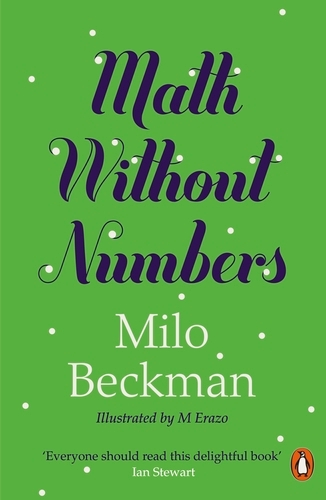
ii Math Without Numbers - final notes & obs

In Math Without Numbers the chapters and topics flow and slot in really well, even for novices. There is no index, the inclusion of which is a first-check usually. The book's appeal was its non-technical title and invitation reading the sleeve notes. The title throws up words and visuals, the latter, to repeat, are ably and simply furnished by M Erazo. Remaining notes to highlight (record here) include (and capture overthinking!):

Math Without Numbers

Reference to 'ideology space', 'conceptual space' and the role of visual analogies, idioms, and how 'the list of spaces to choose from is always the same.' ... pp.28 & 29. On page 30, 'When you say that gender is a spectrum rather than a binary, that's a topological claim: You're  saying gender space is one-dimensional (a line) rather than zero-dimensional (two separate points). 'Questions about which conceptual paradigm to use sometimes boil down to questions of dimensionality.' Discussion of an infinite continuum had me making an axis of Hodges' model warp, this way and that: concave-convex (p.59). Maps and correspondence is already well established, as per a new paper (abstract and thanks to follow 1st Feb):

S. Bettiol, P. Jones, H. A. Onyedikachi, and W. G. Kernohan, “Bridging Gaps in Oral Health Frameworks: Mapping With Hodges' Health Career - Care Domains - Model”, Journal of Public Health Dentistry (2026): 114, https://doi.org/10.1111/jphd.70034 

Interesting to read of general map facts, flowing substances inside a rigid container, and vector maps. A pencilled note to share:

'Because when you look at things in the abstract like this, dusting off the specifics of a situation to focus on underlying dynamics, you start to realize there are only so many different patterns and structures out there. These patterns and structures are called mathematical objects, and thinking about them is called math.' p.79

The chapter on (generalised) Algebra, forced me to reconsider the Socratic, guided discovery and arrival at the structure of Hodges' model. (lines & points : nodes & edges). For page 88, I noted 'generic' invites abstraction. Isomorphism is discussed. Again I tested this against Hodges' model. I've always found it helps to immerse oneself in a new vocabulary: so welcome (anew) - structures, fields, rings, groups, loops, graphs, lattices, orderings, semigroups, groupoids, monoids, magmas, modules . . . algebras, p.101. Some are named only, but on graphs raises questions ... p.103.

'How densely interconnected is it? How segregated into different cliques? Does it cut clean into two subgraphs, with no connections between them? Can it be drawn without any lines crossing? Are there any lone dots without any connections?' 

There's the matter of 'friend of a friend' who have broken out of the sociological domain. Other notes to self: Significance of concepts - patient-centred, service-centred? The distance between between (vertical, horizontal, diametric)? There are weighted graphs (p. 104) and acknowledgement of category theory (p.115). A chapter on modelling pp.161-175, and models p.164 & p.169 are just a selection of highlights on a marvellous tour.

A hidden puzzle in the book remains a mystery for me.

Milo Beckman (2021) Math Without Numbers. London, Penguin Books. Illustrated by M. Erazo.

Previously: 'math' : 'diagrams
Plus, now archived Science domain links: 
https://web.archive.org/web/20150414125339/http://www.p-jones.demon.co.uk/linksTwo.htm

Believe it or not, this 'diversion' does help my reading of Order and the Virtual

Tuesday, March 03, 2026

Thoughts ii re. 2026 Lancaster Philosophy of Psychiatry Work in Progress Workshop

For me, applying Hodges' model I tend to place philosophy and psychiatry (mind, thought, belief, truth, intention ...) within the humanistic part of the model. So, Ewa Grzeszczak and - Philosophy of psychiatry and the methodology of social ontology - stood out. This is helpful as Homeostatic Property Clusters (HPC) are a useful structure, spanning bio-mathematics. As suggested previously with 'equality', we can place the philosophical non-trivial question of kinds at the centre of Hodges' model and proceed (if possible?) from there.

The requirement for a holistic, integrative and pluralistic framework is there in literature. A statement supported by Alessandra Civani's talk: 'What kind of concept is ‘incongruence’? I located a paper:

Enactive psychiatry - A pragmatic and pluralistic approach to mental health and disease

- (and now have a copy c/o and thanks to Alessandra) and am grateful to being pointed to de Haan:

An Enactive Approach to Psychiatry

 I will (must) return to these papers. Earlier on Hodges' model, I'd opined (as on 'X') how the -

  • medical
  • biomedical
  • bio-psycho-social models - are insufficient in the 21st century.

There was a thematic feel to the presentations with Anna Golova - Self-illness ambiguity without a self-illness distinction - following nicely. The styling on the slides was an added bonus. I located an informative (co-authored) paper by Golova:

‘Is it me or my illness?’: self-illness ambiguity as a useful conceptual lens for psychiatry'

Part of the power of Hodges' model derives not so much from its duality; as its dual axes. The two axes can encompass and handle the relatedness between/within reductionism, holist perspectives, the self and otherness, illness and health (well-being).

An hours break brought us to an event which was very well attended, clearly open to the public:

6-7pm Prof Miriam Solomon – Royal Institute of Philosophy talk ‘Stigma as an actant in the history of psychiatry

In setting out the talk's structure I liked Prof. Solomon's reference to the common, implicit "grime" theory of the dynamic of stigma, and "punching down" as a strategy for managing stigma. 'Grime' made me think of sense of smell, the grime in my father's work van, a diesel. Now so many memories are evoked with the merest whiff. More positively, the patina of physical and mental life also came to mind. You would - might think stigma has been dealt with by now, but of course we are socio-politically far from it.

There is a related podcast from 2025, which also covers Prof. Solomon's early studies. A previous paper was also noted in the slides:

Solomon, M. (2025). The Elusiveness of Hermeneutic Injustice in Psychiatric Categorizations. Social Epistemology, 39(2), 166–177. https://doi.org/10.1080/02691728.2024.2400068
 
Discussion of the DSM inevitably followed (and in the above podcast). In questions the 'reality' of severe mental illness, and suggestion of the acute challenge of managing the negative symptoms of psychoses.
 
Prof. Solomon's conclusion was well worth waiting for, including:
Stigma as an "actant" (cf. Bruno Latour's concept of an agent: causal role without intention)... DSM - ICD...
 
If stigma disappeared tomorrow, the DSM would not have the same categories. 
 
Stigma (more specifically, its management) is shaping the conceptual space, with both scientific and moral consequences.

[Added 4th March...] On Friday - Sam Fellowes, took on, or has taken on - the non-trivial issue of - Modelling psychiatric diagnoses when self-diagnosing - how does this work? Complexity was acknowledged on the first slide, with self-diagnosis, and modelling, set against the Duhem-Quine thesis. 

This technical aspect is welcome and no doubt essential given the socio-technical nature of diagnosis, touching as it does the public (society), primary care, psychiatry, service user groups, policymakers, informatics, and HM Treasury, amongst several 'stakeholders'. With the impact of the internet and social media, much (if not all?) of the vocabulary of mental health professionals has been co-opted and re-framed(?) by patient / service-user groups? It does not, for example, appear that the agency behind the DSM will be able to claim it back. Autism and ADHD were also discussed and debated. I located a previous chapter by Sam (pay-wall):

Fellowes S. Self-Diagnosis in Psychiatry and the Distribution of Social Resources. Royal Institute of Philosophy Supplement. 2023;94:55-76. doi:10.1017/S1358246123000218
 
This really is a thicket of thorns, it spreads as and wherever you go.
 
The welfare bill is such that there should have been government Ministers in attendance. I have responded on behalf of clients to PIP assessments. Agencies have invited me to interview for 'Disability Assessor' roles. Not only is this a complex web, but several logics obtain: a perverse temporal logic operates, binary logic and a fixed mindset can develop so that some (vulnerable!?) individuals can get stuck. Perhaps, a social imperative steps in and disrupts, life chances: their being a NEET ('a young person who is no longer in the education system and who is not working or being trained for work'. Ecosia) is better for someone else? 
 
To unpick, make sense of this, you need a foundational universal model.
 
There is a (co-authored) paper from Giulia Russo, who presented - Epistemic and political role of experience: https://philpapers.org/rec/RUSTPO-112 from which:
'As it is widely known, epistemic injustice was introduced by Fricker (2007) to unveil power relations that have negative consequences on people as epistemic agents. She distinguished in particular two different kinds of epistemic injustice: testimonial and hermeneutical. The first kind occurs when a person (usually in a disadvantaged and oppressed role within the epistemic relation) is damaged as a knower because, as the name suggests, their testimony is overlooked, dismissed or invalidated. The second kind of epistemic injustice occurs when a person is deprived of the epistemic resources to even explain or articulate their experience of distress, or of systemic oppression. In connection to this, the concepts of neurodivergence and neurodiversity come from the political and social arena, and are born explicitly to contrast dominant pathologizing narratives in psychiatry.'
In seeking some 'test' cases to try to model relationally, Hodges' model suggests at least four - without letting the care / knowledge domains wag-the-dog. Giulia's talk was very helpful, ranging across forms of epistemic injustice (addressed by others too), identity, neurodivergence, lived experience, self-, counter- and collective narratives with references. A great resource.
 
Frank Denning, reminded me of an important phenomena, in Using Stebbing’s Directional Analysis to Evaluate ‘Mentalizing’. Talking therapies, or more properly referral to talking therapies often presents several criteria that would-be subjects must 'pass'. An ability to mentalize, can represent one. This is understanable, for effectiveness, efficiency, efficacy ... it is to be found in the manual. But, in terms of power relations, gate keeping in various forms is a literal (virtual) key to service access. Hodges' model is no different (sigh!). At what age can people start to use Hodges' model? What mentalization is involved to cognitively engage in use of Hodges' model? 
 
I struggled to obtain a copy of Stebbing's original work from 1930, but see how closely tied the work is to physics. An Internet Archive copy is poor quality. The search will continue, as I suspect there are links to Bill Ross's text on Deleuzian cosmology. It is marvellous that work from 1930 resonates today. There is: 

Janssen-Lauret, F. (Accepted/In press). Directional Analysis in Susan Stebbing’s Philosophy of Physics. In S. Chapman (Ed.), Susan Stebbing on Logic and Analysis Springer Nature. 
https://pure.manchester.ac.uk/ws/portalfiles/portal/338653274/Directional_Analysis_in_Susan_Stebbing_s_Philosophy_of_Physics_Final_.pdf

Gloria Ayob - Flourishing as mental health - was encouraging. 'TASK 1:EQUATION' a slide was titled, including emotional disorder is meta-evaluative; there are negative and positive poles, plus isomorphism between unpleasantness-pleasantness and disorder-health. I think my stomach was protesting I should have paid more attention. There is a blog post by Gloria: https://blog.oup.com/2024/12/the-concept-of-emotional-disorder/

After lunch Richard Hassall - Hermeneutical Injustice and Damaged Intellectual Self-Trust in Psychiatric Service Users, a reminder of the time and effort that needs to be put into public and patient involvement and engagement in mental health service (when this is desired). References included J.L. Austin and J.S. Bruner. A paper:

Hassall R. Sense-making and hermeneutical injustice following a psychiatric diagnosis. J Eval Clin Pract. 2024 Aug;30(5):848-854. doi: 10.1111/jep.13971. Epub 2024 Feb 20. PMID: 38375925.
https://onlinelibrary.wiley.com/doi/10.1111/jep.13971 

Scoping reviews are more common it seems: Lara Calabrese - Exploring epistemic injustice in dementia care: a scoping review and a qualitative study, plus paper [with QR code on the slide]:

Calabrese L, Brigiano M, Quartarone M, Chirico I, Trolese S, Lambiase F, Forte L, Annini A, Bortolotti L, Chattat R. I'm still here and my opinion matters: a scoping review on the experience of epistemic injustice among people living with dementia. Curr Psychol. 2025 Dec 17;45(1):s12144-025-08519-y. doi: 10.1007/s12144-025-08519-y. PMID: 41445984; PMCID: PMC7618523.
 
The paper's title here brought to mind the radio programme "Does He Take Sugar?" Questions followed regards the studies methods. Since leaving I wondered if there has been an evaluation of Dementia Friendly Communities? Are there dots to usefully joined there?
 
The final talk was delivered (with gusto - pepped me up anyway) by Jacob Barlow - Epistemic borders: experts, communities, communication. Jacob's interest in pragmatism was apparent. I look forward to reading future work, and note Liverpool 2025: ‘Problems with Pragmatism in the Philosophy of Psychiatry’.

All in all, a stimulating and enjoyable event.