Hodges' Model: Welcome to the QUAD: Indigenous

Hodges' model is a conceptual framework to support reflection and critical thinking. Situated, the model can help integrate all disciplines (academic and professional). Amid news items, are posts that illustrate the scope and application of the model. A bibliography and A4 template are provided in the sidebar. Welcome to the QUAD ...

Showing posts with label Indigenous. Show all posts

Friday, August 21, 2026

"Poetics of Relation" by Édouard Glissant

'The Slave Trade came through the cramped doorway of the slave ship, leaving a wake like that of crawling desert caravans. It might be drawn like this:

African countries to the East; the lands of America to the West. This creature is in the image of a fibril.

African languages became deterritorialized, thus contributing to creolization in the West. This is the most completely known confrontation between the powers of the written word and the impulses of orality. The only written thing on slave ships was the account book listing the exchange value of slaves. Within the ship's space the cry of those deported was stifled, as it would be in the realm of the Plantations. This confrontation still reverberates to this day.' p.5.
'Not just a specific knowledge, appetite, suffering, and delight of one particular people, not only that, but knowledge of the Whole, greater from having been at the abyss and freeing knowledge of Relation within the Whole.' p.8.

 
Édouard Glissant. (1990, 2025) The Open Boat. Poetics of Relation. Dublin: Penguin.

The above image runs within the text in the book.

My image source: https://annstreetgallery.org/Nolan-Oswald-Dennis

Monday, August 17, 2026

'Becoming family with place' - Wooltorton et al. (2020)

The second R&E piece 'spoke' immediately of distance, peoples - their societies, culture, heritage and communities, plus place and connection to land, landscape, water, fauna, flora and sky.

individual
|
INTERPERSONAL
: SCIENCES             
humanistic ------------------------------- mechanistic
SOCIOLOGY : POLITICAL   
|
group


Spirit

Sense of Belonging


PLACE


PEOPLE

family

Place and Planet 
are lost here.
Look at what 'country'
 means and does here.


Wooltorton, Sandra, Collard, Len, Horwitz, Pierre, Poelina, Anne & Palmer, David. (2020). Sharing a place-based indigenous methodology and learnings. Environmental Education Research. 26. 1-18. 10.1080/13504622.2020.1773407. 
https://www.tandfonline.com/doi/full/10.1080/13504622.2020.1773407.

My source: Wooltorton et al. (2020) 'Becoming family with place'. Resurgence & Ecology,  Issue 322. 2020. pp.34-35.

See also:

Jones, P. (2008) Exploring Serres’ Atlas, Hodges’ Knowledge Domains and the Fusion of Informatics and Cultural Horizons, IN Kidd, T., Chen, I. (Eds.) Social Information Technology Connecting Society and Cultural Issues, Idea Group Publishing, Inc. Chap. 7, pp. 96-109.

Hayward, B.A. (2020), Mental health nursing in bushfire‐affected communities: An autoethnographic insight. Int J Mental Health Nurs. doi:10.1111/inm.12765 

Previously: 'Australia' : 'Indigenous' : 'South' : 'landscape'

Friday, March 06, 2026

The land speaks through Bears & Peoples: Together

Figure 2

ABSTRACT

Landscape genetic analyses of wildlife populations can exclude variation in a broad suite of potential spatiotemporal correlates, including consideration of how such variation might have similarly influenced people over time. Grizzly bear (Ursus arctos) populations in what is now known as coastal British Columbia, Canada, provide an opportunity to examine the possible effects of a complex set of landscape and human influences on genetic structure. In this collaboration among the Nuxalk, Haíɫzaqv, Kitasoo/Xai’xais, Gitga’at, and Wuikinuxv First Nations and conservation scientists, we characterized patterns of genetic differentiation in the grizzly bear, a species of high cultural value, by genotyping 22 microsatellite loci from noninvasively collected hair samples over a 23,500 km² area. We identified three well-differentiated groups. Resistance surfaces, which incorporated past and present human use, settlement, and landscape resistant features, could not explain this pattern of genetic variation. Notably, however, we detected spatial alignment between Indigenous language families and grizzly bear genetic groups. Grizzly bears sampled within an area represented by a given language family were significantly similar to those sampled within that language family (P = 0.001) and significantly divergent to those sampled outside the language family (P = 0.001). This spatial co-occurrence suggests that grizzly bear and human groups have been shaped by the landscape in similar ways, creating a convergence of grizzly bear genetic and human linguistic diversity. Additionally, grizzly bear management units designated by the provincial government currently divide an otherwise continuous group and exclude recently colonized island populations that are genetically continuous with adjacent mainland groups. This work provides not only insight into how ecological and geographic conditions can similarly shape the distribution of people and wildlife but also new genetic evidence to support renewed, locally led management of grizzly bears into the future.

INDIVIDUAL
|
    INTERPERSONAL    :     SCIENCES               
HUMANISTIC --------------------------------------  MECHANISTIC      
SOCIOLOGY  :   POLITICAL 
|
GROUP
'This work is dedicated to the late Nuaqawa (Evelyn Windsor), who taught us that people learned their language and way of life from the bears.'

Geographic distance

Spatial overlap

Grizzly bear (Ursus arctos)

Population genetic structure

Landscape genetics


Biocultural diversity

Indigenous language families

Human linguistic diversity

Awareness - Respect


 [What price the future? pj]


Henson, L. H., N. Balkenhol, R. Gustas, M. Adams, J. Walkus, W. G. Housty, A. V. Stronen, J. Moody, C. Service, D. Reece, B. M. vonHoldt, I. McKechnie, B. F. Koop, and C. T. Darimont. 2021. Convergent geographic patterns between grizzly bear population genetic structure and Indigenous language groups in coastal British Columbia, Canada. Ecology and Society 26(3):7.
https://doi.org/10.5751/ES-12443-260307

My source:
Roman Goergen. Grizzly spoken here! Resurgence & Ecologist, July/August2023: 339: pp.10-11.

See also: https://iaac-aeic.gc.ca/050/documents/p21799/85674E.pdf

Previously: 'landscape' : 'ecology'

Thursday, December 04, 2025

Yuki Kihara: Darwin in Paradise Camp - The Whitworth, Manchester

3 October 2025 – 1 March 2026

'A visually stunning exhibition centring Indigenous, queer worlds by Japanese-Sāmoan artist Yuki Kihara.
The Whitworth is proud to present Yuki Kihara’s acclaimed installation Paradise Camp (2022), first presented at the Aotearoa New Zealand Pavilion in the 59th Venice Biennale in 2022, and a new video work, Darwin Drag (2025).

Kihara delves into art histories and archives to unpick the effects of colonialism on the peoples and ecologies of the Pacific. Her visually compelling projects centre and empower the Fa’afafine and Fa’atama in Sāmoa, traditional yet marginalised third gender communities to which the artist belongs. In this exhibition, Kihara focuses on two celebrated Western figures – French modernist artist Paul Gauguin and evolutionary biologist Charles Darwin (1809-1882) – who each shaped Western understandings of the Pacific.

Paradise Camp responds to famous paintings of Tahiti and its people by French modernist artist Paul Gauguin (1848-1903). Through archival research, Kihara links Gauguin’s paintings to colonial photographs taken in Sāmoa. Described by Kihara as an act of 'upcycling', she recreates Gauguin’s compositions in a series of 12 resplendent high definition photographs, shot on location in Upolu Island. Collaborating with Fa’afafine models and production crew, Kihara repurposes these cultural artefacts to speak to, and from, queer Indigenous worlds in a profound gesture of reclamation.'

My source:

Josh Lustig. Yuki Kihara, Gallery, FT Magazine, November 22, 2025, #1152. pp.12-13.

Saturday, November 08, 2025

COP30: Seeking change shopping in the far North & SOUTH

individual
|
INTERPERSONAL : SCIENCES
humanistic -------------------------------------------  mechanistic
SOCIOLOGY : POLITICAL
|
group-population


'John Kørner (born 1967, Danish): Understanding the Impact of Architecture, 12, 2020

Lithograph

Kørner pursues his artistic practice through various media, including painting, printmaking, ceramics, installations, sculpture, videos and theatre work. Throughout his career he has tackled contemporary global issues such as migration, war, and systems of production and consumption. He refers to these as 'Problems' that form an ongoing process of enquiry in his work. In his series of paintings and prints Understanding the Impact of Architecture (begun in 2014) he explores the way architecture influences, impacts and interacts with people and their environment. This print from the series addresses blind consumerism and its effect on the fragile Nordic landscape. It was made at Edition Copenhagen which along with Borch Editions is the other major print workshop in Denmark.

Acquisition supported by AKO Foundation, 2023,7056.2'

Text and my source: British Museum Room 90

Nordic noir
works on paper from Edvard Munch to Mamma Andersson


Exhibition
 / 09 October 2025 – 22 March 2026

See previously: 'care architecture' : 'architecture'

Monday, September 29, 2025

Raven Chacon - graphical musical scores

Individual
|
      INTERPERSONAL    :     SCIENCES               
HUMANISTIC  --------------------------------------  MECHANISTIC      
 SOCIOLOGY  :    POLITICAL 
|
Group
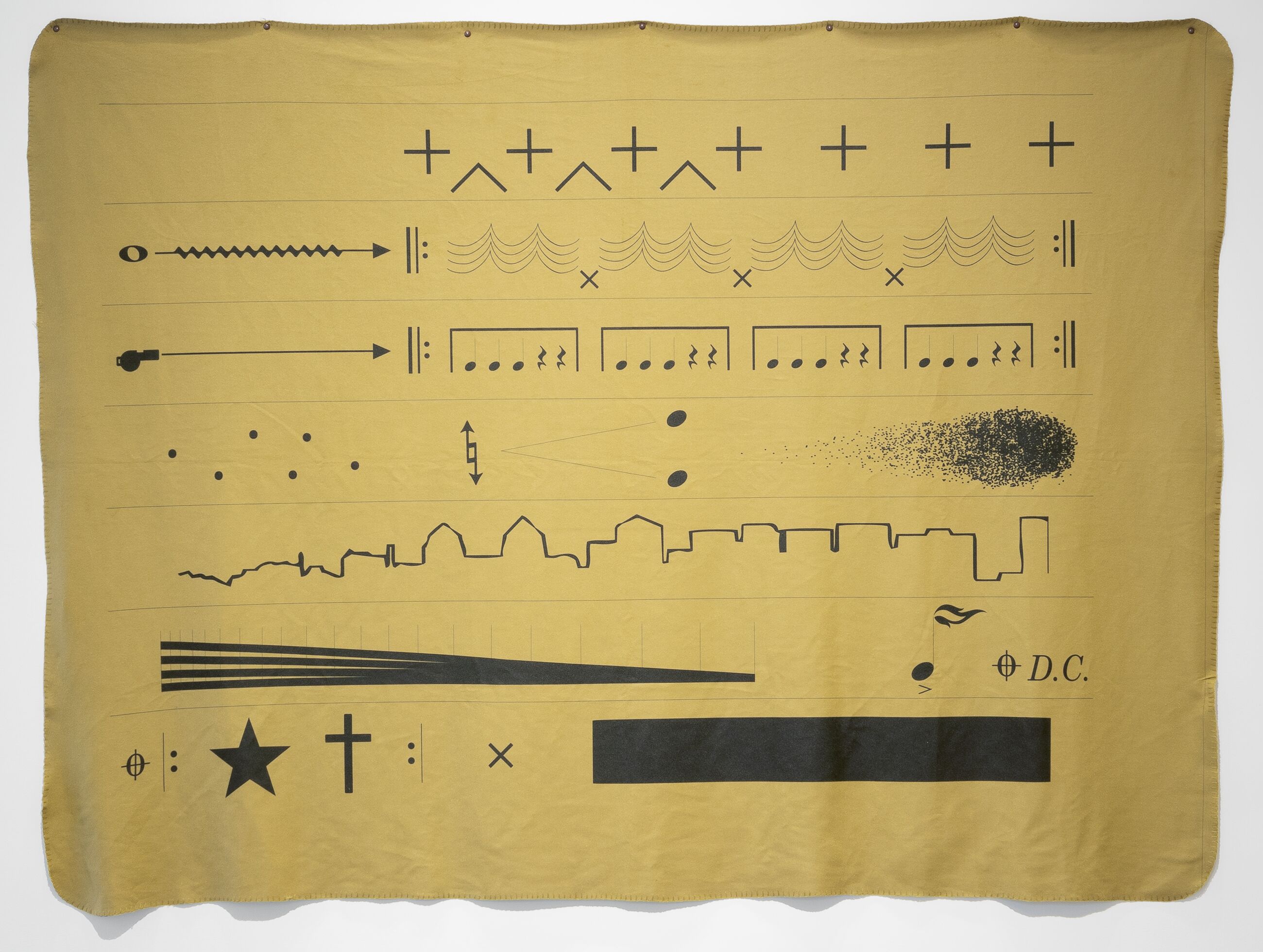
'The artist and composer Raven Chacon, 46, who grew up in Albuquerque and now divides his time between the city and upstate New York, used to explore these lava fields as a youngster, ingesting psychoactive plants such as jimson weed and searching for petroglyphs on the sides of rocks. Some - spirals, zigzags and dotted lines, for example - have found their way into the graphic musical scores for which he is now known. When I visited him in Albuquerque, he drove me out to see them.'
Raven Chacon, American Ledger No. 1 (Army Blanket), 2020. Graphic score


My source: Griffin, J. Sound of a different music. Life&Arts. FT Weekend. 24/25 February 2024. p.17.

Image: ECHOES OF A PLACE - Raven Chacon on transforming land, memory and political resistance into sound: https://www.hauserwirth.com/ursula/echoes-of-a-place-raven-chacon/

See also: RAVEN CHACON - https://spiderwebsinthesky.com/

https://en.wikipedia.org/wiki/Raven_Chacon

Previously: 'music'

Thursday, May 29, 2025

Health Policy Watch: WHO’s Big Push to Integrate Traditional Medicine into Global Healthcare Framework

This is quite a development for the lived experience of all individuals, global health and for Hodges' model. Not only for Hodges' model as a universal framework (template) and model for / of care, but the capacity of Hodges' model to conceptually and culturally encompass all data, information, knowledge and wisdom.

c/o HIFA list:

Full text: https://healthpolicy-watch.news/whos-big-push-to-integrate-traditional-medicine-into-global-healthcare-framework/

'The World Health Assembly delivered a landmark victory for traditional medicine and indigenous cultures Monday evening, approving a strategy that calls for increased investment in research and integrating ancient healing practices into modern healthcare systems worldwide.
'The approval marks a breakthrough moment for advocates of traditional medicine, with nations across Asia, Africa, the Middle East and Latin America celebrating the decision. Iran called it “a visionary yet realistic roadmap” to integrate thousands of years of medical like its own.

'But the strategy text shows WHO walking a careful tightrope, embracing practices that represent “accumulated wisdom and healing practices passed down through generations” while demanding they meet modern scientific evidence standards that could take decades to satisfy...'
Best wishes, Neil

HIFA profile: Neil Pakenham-Walsh is coordinator of HIFA (Healthcare Information For All), a global health community that brings all stakeholders together around the shared goal of universal access to reliable healthcare information.

See also: 'Oceania' : 'indigenous' : 'ancient' : 'map' : 'nature'

Wednesday, April 30, 2025

Global South - Global Perspectives

As mentioned before, I try to keep grounded, in terms of my parochial perspective on the world, even as technology brings this world, and many others to so many screens.

 BBC Radio 4 'PM' 1700-1800 UT today mentioned this news and an event to follow:

Mākereti "Maggie" Papakura was an internationally renowned Whakarewarewa guide.

  • 'Oxford University will award a posthumous Master of Philosophy degree to pioneering Māori scholar Mākereti Papakura.
  • Papakura, known as Guide Maggie, was the first indigenous woman to study at Oxford.
  • Her work, published posthumously, was the first ethnographic study by a Māori author.
Pioneering Maori scholar and famed Whakarewarewa guide Mākereti Papakura will be honoured with a posthumous degree more than 100 years after she began her studies, Oxford University has announced.

Her family and iwi say they are grateful for the tribute to her memory, and it is testament to her determination to ensure Māori stories would not be forgotten.

Born in 1873 at Matatā, Papakura is believed to be the first indigenous woman to study at the university, Oxford’s School of Anthropology and Museum Ethnography said in a statement.

She made her name as the pre-eminent guide at Whakarewarewa in the early 1900s and was known as Guide Maggie'. . . .

...  I will watch for further news. 

The above stood out as last evening I greatly enjoyed listening to Discovery on the BBC World Service:

'Dr Julia Ravey and Dr Ella Hubber are both scientists, but it turns out there’s a lot they don’t know about the women that came before them. In Unstoppable, Julia and Ella tell each other the hidden, world-shaping stories of the scientists, engineers and innovators that they wish they’d known about when they were starting out in science. This week, a Māori marine scientist is combining indigenous knowledge with marine science to save the oceans that are so integral to her heritage. ...'

Image and text:
https://www.nzherald.co.nz/rotorua-daily-post/news/te-arawas-makereti-papakura-to-receive-posthumous-degree-from-oxford-university/SBI3TR733RHZBOAS3BLDAZPMTU/

Previously: 'Oceania'

Sunday, January 28, 2024

Learning Health Systems: Volume 8, Issue 1 - January 2024

Learning Health Systems is an Open Access journal.

Volume 8, Issue 1 (January 2024)

All articles shown below are freely available and downloadable.

COMMENTARY

Socio‐technical infrastructure for a learning health system


Charles P. Friedman, Edwin A. Lomotan, Joshua E. Richardson, Jennifer L. Ridgeway

LEARNING FROM DATA

Privacy‐preserving record linkage across disparate institutions and datasets to enable a learning health system: The national COVID cohort collaborative (N3C) experience


Umberto Tachinardi, Shaun J. Grannis, Sam G. Michael, Leonie Misquitta, Jayme Dahlin, Usman Sheikh, Abel Kho, Jasmin Phua, Sara S. Rogovin, Benjamin Amor, Maya Choudhury, Philip Sparks, Amin Mannaa, Saad Ljazouli, Joel Saltz, Fred Prior, Ahmen Baghal, Kenneth Gersing, Peter J. Embi

RESEARCH REPORTS

Analysis of FRAME data (A‐FRAME): An analytic approach to assess the impact of adaptations on health services interventions and evaluations


Heather Z. Mui, Cati G. Brown-Johnson, Erika A. Saliba-Gustafsson, Anna Sophia Lessios, Mae Verano, Rachel Siden, Laura M. Holdsworth


Automated generation of comparator patients in the electronic medical record


Joseph Rigdon, Brian Ostasiewski, Kamah Woelfel, Kimberly D. Wiseman, Tim Hetherington, Stephen Downs, Marc Kowalkowski


Stakeholder perspectives on data sharing from pragmatic clinical trials: Unanticipated challenges for meeting emerging requirements


Stephanie R. Morain, Juli Bollinger, Kevin Weinfurt, Jeremy Sugarman


Learning healthcare systems in cardiology: A qualitative interview study on ethical dilemmas of a learning healthcare system


Sara Laurijssen, Rieke van der Graaf, Ewoud Schuit, Melina den Haan, Wouter van Dijk, Rolf Groenwold, Saskia le Sessie, Diederick Grobbee, Martine de Vries


Frameworks, guidelines, and tools to develop a learning health system for Indigenous health: An environmental scan for Canada


Emma Rice, Angela Mashford-Pringle, Jinfan Qiang, Lynn Henderson, Tammy MacLean, Justin Rhoden, Abigail Simms, Sterling Stutz


Predictive modeling for infectious diarrheal disease in pediatric populations: A systematic review


Billy Ogwel, Vincent Mzazi, Bryan O. Nyawanda, Gabriel Otieno, Richard Omore

TECHNICAL REPORT

Learning health system benefits: Development and initial validation of a framework


Lisa C. Welch, Sarah K. Brewer, Titus Schleyer, Denise Daudelin, Rechelle Paranal, Joe D. Hunt, Ann M. Dozier, Anna Perry, Alyssa B. Cabrera, Cheryl L. Gatto

BRIEF REPORTS

Exploring nationwide policy interventions to control COVID‐19 from the perspective of the rapid learning health system approach


Ayat Ahmadi, Leila Doshmangir, Reza Majdzadeh


Developing LHS scholars’ competency around reducing burnout and moral injury


Sirin Yilmaz, Michele LeClaire, Abbie Begnaud, Warren McKinney, Kasey R. Boehmer, Cory Schaffhausen, Mark Linzer


Assessment of learning health system science competency in the equity and justice domain


Patricia D. Franklin, Denise Drane

EXPERIENCE REPORTS

Training the next generation of delivery science researchers: 10‐year experience of a post‐doctoral research fellowship program within an integrated care system


Richard W Grant, Julie A Schmittdiel, Vincent X Liu, Karen R Estacio, Yi-Fen Irene Chen, Tracy A Lieu


Implementing the learning health system paradigm within academic health centers


Douglas Easterling, Anna Perry, David Miller


Learning from an equitable, data‐informed response to COVID‐19: Translating knowledge into future action and preparation


Morgen Stanzler, Johanna Figueroa, Andrew F. Beck, Marianne E. McPherson, Steve Miff, Heidi Penix, Jessica Little, Bhargavi Sampath, Pierre Barker, David M. Hartley


Conceptualizing and redefining successful patient engagement in patient advisory councils in learning health networks


Madeleine Huwe, Becky Woolf, Jennie David, Michael Seid, Shehzad Saeed, Peter Margolis, ImproveCareNow Pediatric IBD Learning Health System 

COMMENTARIES

Toward a common standard for data and specimen provenance in life sciences


Rudolf Wittner, Petr Holub, Cecilia Mascia, Francesca Frexia, Heimo Müller, Markus Plass, Clare Allocca, Fay Betsou, Tony Burdett, Ibon Cancio, Adriane Chapman, Martin Chapman, Mélanie Courtot, Vasa Curcin, Johann Eder, Mark Elliot, Katrina Exter, Carole Goble, Martin Golebiewski, Bron Kisler, Andreas Kremer, Simone Leo, Sheng Lin-Gibson, Anna Marsano, Marco Mattavelli, Josh Moore, Hiroki Nakae, Isabelle Perseil, Ayat Salman, James Sluka, Stian Soiland-Reyes, Caterina Strambio-De-Castillia, Michael Sussman, Jason R. Swedlow, Kurt Zatloukal, Jörg Geiger


Can we identify the prevalence of perinatal mental health using routinely collected health data?: A review of publicly available perinatal mental health data sources in England


Sarah Masefield, Kathryn Willan, Zoe Darwin, Sarah Blower, Chandani Nekitsing, Josie Dickerson


My source: Email request by -

Kathleen Young
Editorial Assistant, Learning Health Systems journal
Victor Vaughan
1111 East Catherine Street
Ann Arbor, MI 48109

Saturday, September 23, 2023

MYTH, RITUAL AND PRACTICE FOR THE AGE OF ECOLOGICAL CATASTROPHE

Fabrice Monteiro, a garbage spirit, from his series
The Prophecy (2017)

The European Forum for the Study of Religion and the Environment

- is pleased to announce its
seventh international conference

Friday May 17 to Sunday May 19, 2024

Universität Potsdam, Potsdam, Germany

MYTH, RITUAL AND PRACTICE
FOR THE AGE OF ECOLOGICAL CATASTROPHE
 
Click here for the Call for Papers and Conference Description:

https://www.religion-environment.com/conference/open-call-for-papers

Proposals will be accepted until 31 October, 2023

This conference will explore the many questions that arise from the apparent continuing philosophical-scientific indigestibility of mythology, ritual and practice. What does or would gaia-logical mythology, ritual or practice look like? Are they, could they be more pedagogically effective with non-experts than analysis and critique? Is the solution to ecological alienation the same as the age-old solutions to spiritual alienation? Is ecological alienation parallel to the emic/etic divide in ethnography? Is “practice” the way “in”? Is “belief”? Does gaiaism demand rituals and practices? Are contemporary scholarly analyses (Haraway, Latour, Stengers, Mary-Jane Rubenstein’s pantheologies, Sloterdijk, etc.) today’s form of ecological myth? Is myth, with its associations with the archaic (despite the work of Cassirer, Barthes and others), a fitting genre for today? (Many traditional myths are hardly gaian.) Must gaian myth, rituals or practices be atheological (i.e., is theology, as some argue, inherently not deep-ecological)? Does subtractive theology (à la Badiou) better lend itself to legitimate gaian mythology? Do ecotheologies written out of specific continuing pre-modern cultural-religious traditions that are not entirely or comfortably gaian satisfactorily bridge the spaces between emic and etic genres/approaches and satisfy calls for new gaia-ologies? Is there a meaningful difference between the myths of “major religions” and “indigenous” cultures? How do or might “old” and “new” cultural material relate to one another? Must scholars-scientists, environmentalists or artists use only material from “their own” heritages in producing gaia-ologies? Are there bases for and modes of considering or evaluating the skill or usefulness of gaia-ologies, gaian myths, rituals or practices? How have religious or spiritual environmentalists created gaian myths, rituals or practices? How might they? What artists, artistic works or modalities or works of popular culture stand as noteworthy examples?

Conference Chair: Jonathan Schorsch jschorsch AT uni-potsdam.de

We will be most grateful if you could circulate this through your networks.

Kind regards,
Jonathan Schorsch
-- 
Professur, Jüdische Religions- und Geistesgeschichte
Institut für Jüdische Theologie
Universität Potsdam
  jschorsch AT uni-potsdam.de
  +49 (0)331 977 1744

Founder and Director
Jewish Activism Summer School
  www.jassberlin.org

Founder and Director
The Green Sabbath Project
  www.greensabbathproject.net


My source:

Philos-L "The Liverpool List". Department of Philosophy, University of Liverpool https://www.liverpool.ac.uk/philosophy/philos-l/
https://www.facebook.com/PhilosL/
@PhilosL @LiverpoolPhilos

Image: c/o https://www.fabricemonteiro.com/

I am planning to submit an abstract, to develop further ideas encountered and contributed at SOPHERE.

Monday, June 05, 2023

The Flying Cholitas c/o Luisa Dörr

 INDIVIDUAL
|

 INTERPERSONAL    :     SCIENCES               
HUMANISTIC --------------------------------------  MECHANISTIC      
SOCIOLOGY  :   POLITICAL 
|


"In traditional Bolivian dress, on the outskirts of El Alto, the Flying Cholitas launch themselves at each other. At first, I was fascinated by the skill of these indigenous women flying through the air, reclaiming the clothing their community was forced to wear as servants for Spanish occupiers. But then I saw it went beyond the ring. They are fighting for their rights, for recognition, for equality. They're fighting for their lives." Luisa Dörr 

This image, would also 'sit' in the POLITICAL domain, if the women would stay still; but they clearly have individual and collective purpose.

My source:
Luisa Dörr ON THE FLYING CHOLITAS (2019). The Daily Telegraph, 4 March, 2023. p.9.

[Please note: I contacted Luisa Dörr, seeking permission to use the photograph above, but received no response.]

See also:
'What We See: Women and Nonbinary Perspectives Through the Lens' (White Lion, £22). 
Details: womenphotograph.com

Sunday, April 24, 2022

Harvard Medical School Primary Care Review

"I'm writing to invite you to contribute your
narrative stories of health, community, and equity!"

 
Dear Spirit of 1848:

I hope this email finds you well. I'm a Family Medicine Physician, Instructor at Harvard Medical School, and Editor-in-Chief of the Harvard Medical School Primary Care Review. I'm writing to invite you to contribute your narrative stories of health, community, and equity!

The Harvard Medical School Primary Care Review is an international community-facing publication, and our mission is to “Share stories to amplify the voices of health everywhere.” Publications are approximately 750-1200 words in length, and all references should have hyperlinks (rather than end- or footnotes). The following is a brief set of guidelines for the Review: https://info.primarycare.hms.harvard.edu/review/submission-guidelines. The following Review pieces are nice examples of the type of narrative and community health content we strive for:

Please also share this call with your community partners! We look forward to hearing from you!

Warmly,
Rebekah

-- 
Rebekah Rollston, MD, MPH  (she/her)
Family Medicine Physician, Cambridge Health Alliance
Instructor in Medicine, Harvard Medical School

--
Posted from the Spiritof1848 Listserv WWW.SPIRITOF1848.ORG #Spiritof1848

Saturday, November 13, 2021

Living on the Edge: 'Counting the Coast'

Individual
|

INTERPERSONAL : SCIENCES
humanistic ------------------------------------------ mechanistic
SOCIOLOGY : POLITICAL
|
Group
COAST*
C
O
A
S

T

COAST

C
O
A
S
T

COAST
COAST"
C
O
A
S
T
COAST
COST

C
O
S
T
COST^

*Coast - a spiritual place - this 'home' where I imagine and dream - as our people have done for ages.

"Coast - where grandmother, grandfather and elders explain to me where the coast used to be ...

^cost - 'the bottom line'


 My source: BBC World Service, Business Report - COP26

Mention of the challenge for governments of island nations to persuade their peoples and communities to move from the coast, to be resettled and the ultimate prospect of whole islands / nations being lost, with the need for mass migration.


Monday, July 19, 2021

"The day a language died"

individual
|
INTERPERSONAL : SCIENCES
humanistic ----------------------------------------------- mechanistic
SOCIOLOGY : POLITICAL
|
group


Catawba


"This week another language died: Carlos Westez, more widely known as Red Thunder Cloud, the last speaker of the Native American language Catawba, died of a stroke at the age of 76. With him passed away the Catawba language. 
Anyone who wants to hear the war songs, the hunting songs and the religious chants of the Catawba can apply to the Smithsonian Museum, where, back in the Forties, Red Thunder Cloud recorded a series of them for posterity. Some earnest folk might even take the trouble to learn some of them by heart. But Catawba as something that lived and breathed and developed organically is gone for good. Of the creatures alive on the planet, only Red Thunder Cloud's dog, which survived him and understood commands in no other tongue, still presumably has snatches of Catawba rolling around his brain."


Popham, P. The day a language died, The Independent, 20th January, 1996, p.15.

https://en.wikipedia.org/wiki/Red_Thunder_Cloud