Hodges' Model: Welcome to the QUAD: resource allocation

Hodges' model is a conceptual framework to support reflection and critical thinking. Situated, the model can help integrate all disciplines (academic and professional). Amid news items, are posts that illustrate the scope and application of the model. A bibliography and A4 template are provided in the sidebar. Welcome to the QUAD ...

Showing posts with label resource allocation. Show all posts

Thursday, March 27, 2025

Vectors of the Biopolitical - (Chap. 2) c/o Bull
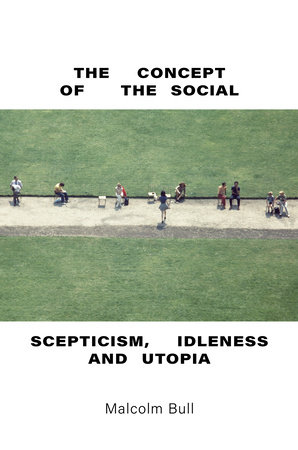
The Concept of the Social
'From one sentence in Aristotle derive two arresting theoret- ical discourses of the twenty-first century: Michel Foucault's biopolitics, provocatively reformulated by Giorgio Agamben in terms of the relationship between sovereignty and the body, and the capabilities approach developed by Amartya Sen and Martha Nussbaum as a means of evaluating and promoting development, justice and freedom. Both are characterized by deep reflection on the sources of Western political thought, and by urgent engagement with contemporary social and legal problems. Both are in some sense biopolitical in that they are shaped by the interplay of the same Aristotelian categories the human and the animal, politics and nature. But they are on opposite sides of the divide that has opened up in the human sciences since the 1960s, and there currently seems no optic through which they might simultaneously be viewed, no way of integrating or comparing their insights.
 
In part, this reflects a situation in which political debate appears to have fragmented into a multiplicity of single issues. The ancient 'Who will rule?' and the modern 'Who shall have what?' have been supplemented by an array of questions that deal with matters once exclusively cultural, personal or natural. For previous eras, the relative integrity and unmalleability of cultures, bodies and environments rendered such questions redundant. Now they frequently appear unanswerable from within established political traditions, and incommensurable in relation to each other. Within this expanded field, biopolitics and the capabilities approach have unusual salience and potential, for both bundle together issues otherwise assumed to be distinct. If they, in turn, could be coordinated, perhaps we could begin to map the new territory.' p.68.

individual
|
INTERPERSONAL : SCIENCES
humanistic ------------------------------- mechanistic
SOCIOLOGY : POLITICAL
|
group
'Who shall have what?'

nature

human - animal

bio-
culturepolitical

'Who will rule?'


Bull, M. (2021) The Concept of the Social, London: Verso.

Saturday, December 09, 2023

Processing people ... in Nursing and Social Services

 When the nursing process was introduced in the UK in the late 1970s - early 1980s, the change was resisted to a degree with concern that patients were at risk of being  'processed': assessed, care planned, interventions delivered then evaluated, discharged or re-assessed. ...

 Individual
  |
     INTERPERSONAL    :     SCIENCES               
HUMANISTIC --------------------------------------  MECHANISTIC      
SOCIOLOGY  :   POLITICAL 
|
GROUP
play 
my quality of life
my quality of care

Emotional, Health and Care Plans

Teaching Assistant provision

continuity of care 

'demand'

time
my quality of life
my quality of care

self-care - feeding
23% rise in demand 
for school transport

Human geography
'supply'

families

'informal carers'

needs that can (supposedly) be met at home

Government funding crisis

social inclusion

social capital

Care in the community

'demand'

£4bn overall funding gap in
children's services

Children and Families Act
Index of Multiple Deprivation
Needs-based funding?
Children with special educational needs and disabilites (SEND)

Parental resort to specialist tribunal courts: 96% legal challenges successful (2022)
National / local taxation
'supply'

'broken' social care market - "dysfunctional"


"The costs are rising inexorably," he said. "Children are very often being processed rather than looked after."

Williams, J. Children at sharp end of council funding crisis, FTWeekend, 2-3 December 2023, p.3.

🤔Just a thought - every supply has a supply' every demand a demand' potentially duplicated across the care domains.

Friday, November 27, 2020

Diametros: Invites commentaries on “Setting Health-Care Prorities”

The Editorial Board of Diametros invites commentaries on the recent work “Setting Health-Care Prorities” by Torbjörn Tännsjö as well as independent research articles focused on the problem of resources allocation in healthcare.

All those interested in obtaining a copy of Tännsjö’s book for a review, are asked to send a request via e-mail to the following address: diametros_pl AT uj.edu.pl.

Diametros


We believe that a confrontation of global perspectives with those elaborated by Tännsjö might be of particular interest and importance for the debate on distributive justice in the context of healthcare. The papers may be addressed to different issues, from metaethical ones, through issues associated with general normative theories of justice, and ending with papers addressing particular dilemmas concerning the distribution of healthcare resources in different fields of healthcare. Of special importance is also the discussion of ethical theories such as egalitarianism, prioritarianism, utilitarianism and sufficientarianism. 

The deadline for submission is the 31st of December 2020. Manuscripts (both: commentaries and original research articles) should not exceed 40,000 characters and should be prepared in accordance with our guidelines, which may be found here:


https://www.diametros.iphils.uj.edu.pl/diametros/about/submissions

We are proud to mention that Diametros is the best general philosophy journal in Poland (according to SJR rank), and is also indexed by Web of Science. We publish all articles without charge in open access form.

Dr Piotr Grzegorz Nowak
Diametros Editorial Board

My source:

Philos-L "The Liverpool List"
Department of Philosophy, University of Liverpool 
https://www.liverpool.ac.uk/philosophy/philos-l/
