Hodges' Model: Welcome to the QUAD: ICD

Hodges' model is a conceptual framework to support reflection and critical thinking. Situated, the model can help integrate all disciplines (academic and professional). Amid news items, are posts that illustrate the scope and application of the model. A bibliography and A4 template are provided in the sidebar. Welcome to the QUAD ...

Showing posts with label ICD. Show all posts

Monday, September 01, 2025

BCS - AI Health 2025 - Artificial Intelligence SG (reminder)

Date and time: Friday 7 November, 9:30am - 4:30pm

Location: BCS, The Chartered Institute for IT, Ground Floor, 25 Copthall Avenue, London, EC2R 7BP

Price: 42 - 108 GBP

Synopsis

BCS-SGAI, the BCS, The Chartered Institute for IT's Specialist Group on Artificial Intelligence, was founded in June 1980. Its mission is: "To foster achievement, capability and awareness in both business and research in Artificial Intelligence, and to promote the interests of the related community". It is one of Europe's longest-established groups working to support the community of artificial intelligence developers and users and is the organiser of one of the longest-running annual series of AI conferences in Europe: the AI-20xx series.

In England, 189 out of 208 (91%) hospital trusts are using electronic health records (EHRs) bringing opportunities and challenges and for Artificial Intelligence (AI). In the morning, there will be a session about EHRs with speakers from UK (animal health records), France (European Health Data Space infrastructure for the use and exchange of EHRs), and Spain (personal health records). Before lunch break, there will be a brief 101 hands-on tutorial about Neuro-Symbolic AI with short exercises. In the afternoon, there will be a session about clinical decision, exemplifying the use of AI-based healthcare technologies. Come along if you are interested in AI and its potential in healthcare.
  • A comparison between open-source biomedical LLMs and general-domain LLMs (e.g. DeepSeek, Gemini, Claude, and ChatGPT-4)
  • How to lower the technical skills overhead (understanding of AI and programming code) needed to use open-source LLMs for content generation and content analysis of text, images and audio
  • Exploring the plausible benefits of neuro-symbolic AI, combining neural AI (to process and extract patterns for health issues from unstructured data) with symbolic AI (explicit representations of background knowledge)
There will be Certificates of Attendance for those who register and attend the event.

We hope that you will come and join us, and that you enjoy this new offering from the BCS SGAI.

Speakers

Programme

More details and registration ...

(I look forward to attending.)

My source: BCS SGAI mail list.

Monday, May 12, 2025

'International Nurse's Day' 2025 #2 - c/o ICN & WHO

State of the World’s Nursing Report 2025


State of the World’s Nursing
Report 2025

'As the world’s nurses celebrate International Nurses Day (IND), ICN issues a rallying cry to governments around the globe for urgent nursing support, following the launch of the second World Health Organization (WHO) State of the World’s Nursing (SOWN) report.

The SOWN report is a vital assessment of the global nursing workforce in the aftermath of the COVID-19 pandemic and underscores the urgent need for bold investments in nursing to address shortages, strengthen health systems, and promote global resilience and economic stability.

The SOWN report reflects ICN’s IND 2025 report, Caring for nurses strengthens economies, and related Survey of National Nurses' Association (NNA) Presidents, reinforcing the central role of nurses in achieving global health, including Universal Health Coverage (UHC), and calling for immediate action to address long-standing challenges. The SOWN data presents a mixed picture. It highlights progress in areas such as advanced practice and nursing leadership, but indicates gravely concerning continued workforce shortages, inadequate compensation and working conditions, poor mental health support, inequities in the distribution and employment of nurses, and failures to fully enable nurses as practitioners and health care leaders.'

Continued ...

Caring for nurses strengthens economies


Caring for nurses
strengthens economies


'As we face growing health care challenges, from ageing populations and rising chronic diseases to climate-related emergencies and deepening global inequalities, the need for a strong, sustainable nursing workforce has never been greater. We cannot meet these challenges without sufficient nurses who are themselves well-cared for and supported. ICN’s International Nurses Day report reveals the severity of our current nursing shortage and well-being crisis – and the path forward. ICN’s “Caring for Nurses Agenda” provides a comprehensive roadmap for creating environments where nurses, patients, and entire health care systems can flourish.'

Saturday, May 10, 2025

v Book review: 'Categories we live by'

Our lives and careers (hopefully) are full of bridges, some recognised, but not taken, others passed-by on our way (and unseen). Before I completed my training as a student mental health nurse beginning in 1977, I saw a critical bridge between the knowledge and skills on mental health nursing and general nursing. Crossing this bridge was essential (for me) to being a registered 'nurse'.

Chapter 6 on Psychodiagnostic Categories is a gift therefore. It's a gift because another bridge emerged in 1980-1981 with the Sinclair microcomputers and advent of 'home computing'. With a ZX81 there was going to be a need to navigate this space between the what is human and what is machine. Two categories that remain key concerns today.

The DSM (Diagnostic and Statistical Manual of Mental Disorders - published by the American Psychiatric Association [APA] ) is on the chapter's first page, plus the patient, researchers, psychiatrists and the conditions learned during their medical education, contrasted with individual psychiatrist's clinical encounters with patients. 

Very quickly (the next page p.86) Murphy identifies the 'circumstantial factors' that cause mental illness. This is very positive as acknowledging the determinants across health is key, however framed, e.g. social determinants, economic, educational we must take into account all of them. Otherwise our assessment must be considered as incomplete, or at least lacking?

The utility of Prof. Murphy's short book is in how prior to the case studies we see the problem of definitions. And how what is determined is often a matter of convenience. This is a non-trivial matter - especially in health, economics, sciences, politics, future and peace studies: you get the idea...

Of immediate relevance in the USA is the need for categories for insurance purposes. It is an industry. Yes, indeed: 'The truth is that psychiatric patients vary in every possible way', p.86. Computers of course are well-equipped to help us in the creation, revision and publication - access to categories; with classification, taxonomy, nomenclature ... also in the mix. I was reminded of WHO's history of classification (see below) which I point students and colleagues to.

The way DSM is applied is explained and the politics duly noted (especially in Chap. 7). Resort to 'miscellaneous' is described as a sign that 'the categories are not necessarily picking out 'natural kinds'. I remember in the 90s, our PICK database on a community mental health project had Murphy's 'X' not otherwise specified. I don't think I read the word 'caseness', but there is a lot 'inside'!? References are ongoing. I wondered if there could be more recent examples, but perhaps this is in turn symptomatic of categorisation tending to be the rear car? Fuzziness is discussed. Plus, the observation that 'a few psychiatric categories may be true natural kinds, like gold or rainbow trout.' p.89. 

'Change' is a mantra for all disciplines in the NHS and global healthcare. So pragmatic to see how revision and change in the DSM can be used by - dare I mention - anti-psychiatry advocates and clinicians as to what change represents to these respective interest groups? At a time when research is experiencing funding changes, Murphy contrasts how DSM was developed for the use of clinicians to identify people with similar profiles, but they were not developed to identify (research - Nat. Inst. for Mental Health) underlying causes. Raising the determinants once again, p.91.

It is obvious but as personnel and Brits may look at private medicine with coding purposed for insurance purposes; there is within the NHS (public-funded healthcare) and psychiatry (a single domain too) within and the need by patients for diagnosis, and the welfare system. Here in the UK the rise of mental health in young adults, autism and waiting lists for assessment for ADHD are a moot point.  

Through Hodges' model we some possibly fascinating bridges, that are much less-travelled these days? In many cultures, even if we do not need permission to be sick, it needs to be recognised socially - and so politically. Society needs to deal with individuals who are ill, infirm, disabled. It's interesting then to reflect on this issue and phenomena through the lens of anthropology and medical sociology. Murphy warns to of the dangers 'of thinking of something as being the category'. In medicine a new approach is needed, as Murphy also notes. A nice bridge to chapter 7 Categories and Power.
'The case studies discussed in the previous chapters remind us that categories can be political and social tools. An old department chair of mine had the saying, "She who sets the agenda controls the meeting." We might coin a new one, "Those who make the categories control the outcomes." If your psychodiagnostic categories are made by working therapists and physicians, they might facilitate treatment- -and also benefit those practitioners. If they are made by researchers, they might not be very useful for treatment at all. And if they are made by insurance companies, all bets are off.' p.95.
Trying to take my attempts to find theoretical underpinning (category 'trying to clever') I've a diagram scribbled here. Nearby, p.100, I picked up on 'the cost of losing information or distorting reality to some degree.' Murphy picks up on the ICD Int. Classification of Diseases here. Twitter is still twitter here - thumbs up for that! There is a useful example of the impact of categories in age, pregnancy and medical attention provided.

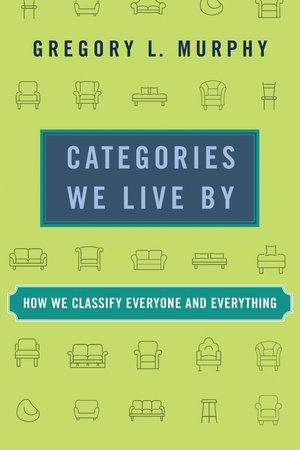
From Chapter 8, I picked out: Naming Nature: The Clash Between Instinct and Science, by Carol Kaesuk Yoon. W. W. Norton: 2009. 352 pp. £19.99/$27.95 9780393061970 | ISBN: 978-0-3930-6197-0; and checking, I remember the book's cover. Murphy's book overall highlights the convenience of our categories, the ongoing challenges and everyday conundrums they present though the remaining chapters on Species (8); Peanut Butter, Potato Chips, Almond Milk... (9); Racial Categories (10). These all contribute, still building a coherent picture, chapter 10 vital among them with a url provided (which may have changed):

https://anthropology-tutorials-nggs7.kinsta.page/adapt/adapt_4.htm


The one-drop rule (David, 1991) on p.126, is deeply troubling. Especially so given some examples of human reasoning even today. Medicine, by way of blood tests, features again. I smiled wryly reading how people from different countries have different rates of disease, e.g. 'heart disease in Scotland'. Instantly, and crackling - a deep-fried Mars bar popped into my mind. 

The things people do. You - really could read this book! 

Murphy, Gregory L. Categories we live by: how we classify everyone and everything. Cambridge, MA: The MIT Press, 2024.

Many thanks again to MIT Press for the review copy and Prof Murphy for a great read.

Previously: DSM : fuzzy : categories

Friday, August 16, 2024

Health & Care results in mountains of data: c/o Burke & Cao 2024

"When medical schools train medical students, they teach them to treat patients as collections of various data points. They are laboratory tests and results, each measured to a standard number of significant figures. Notes students write hack down the richness of patients' identities and experiences: unemployment increases suicide risk while having a religion diminishes it. Each positive result that an interview or physical exam reveals adds another data point to the growing mountain, while a negative result erases a branch of possibilities in a treatment algorithm. It is a familiar process for every doctor, almost second nature, and yet it creates a chasm between patients and providers. Learning about a patient and their life becomes a process of deleting what's seen as irrelevant, and a patient's humanity gets lost in the chaos of data. ..."

"How would Nan Shepherd treat a mountain without her vision being mangled by medical training? She would probe it, palpate its surface, and listen to it rather than trying to comprehend it by reading reams of surveyor data. She would build a portrait of it in her mind beyond solely that which was intended to slot into the criteria of the IC-10. Perhaps she'd write a sensuous physical exam: ..."  

individual
|
INTERPERSONAL : SCIENCES
humanistic ------------------------------- mechanistic
SOCIOLOGY : POLITICAL
|
group


"CONSTITUTIONAL:
a granite mountain range, millions of years old, overall stable and solid, teeming with living, breathing organisms
CARDIOVASCULAR:
its rivers are patent, low and high turbulence at turns, its veins crisscross the surface
RESPIRATORY:
the wind carves through it in mighty exhales
MUSCULOSKELETAL:
its stone carries a range of lives, and the wind, the snow, the sun slowly bend the range of its form
GI/GU:
it slowly digests, grows, evacuates, and seethes as its wastes give rise to new life
NEUROLOGICAL:
the mountain is awake but dreaming with you"

The Living Mountain


Burke, R., Cao, E. To Care for a Mountain - What medical practitioners can learn from Nan Shepherd. Oxford Review of Books, Summer 2024, Volume 8, Issue 2. p.14. In association with Stanford. Ack. length of quotations in relation to length of author's article.

Nan Shepherd 1893 - 1981:  Scottish Poetry Library 2024.
https://www.scottishpoetrylibrary.org.uk/poet/nan-shepherd/

Cover image: Allen and Unwin

Wednesday, April 15, 2020

Forgotten Rationales ... ?

individual
|
INTERPERSONAL : SCIENCES
humanistic ----------------------------------------------- mechanistic
SOCIOLOGY : POLITICAL
|
group - population


"One of the earliest attempts to systematically classify disease began with John Graunt’s mid-seventeenth-century examination of London’s Bills of Mortality (1939[1662]). London’s series of bubonic plague outbreaks in the first half of the seventeenth century served as the backdrop for Graunt’s statistical analysis. His primary objective was to develop a more comprehensive picture of London’s mortality in order to construct a disease-incident baseline from which to better understand the effects of plague, which tended to overshadow other causes of death. Essential to these objectives were the broader concerns for creating "population profiles through a study of causes of death" (Alter and Carmichael 1999, 121), which Graunt accomplished by estimating London’s population through a geographical analysis, allowing him to calculate crude mortality rates." p.96.


UK coronavirus: care providers allege
Covid-19 death toll underestimated

Care operators warn coronavirus may
 already be in more than
50% of nursing homes

(Robert Booth and Rowena Mason,
Wed 15 Apr 2020 07.09 BST.
The Guardian)


"Sydenham designed his nosology with the needs of the physician rather than those of the statistician in mind. Accordingly, Sydenham and Graunt produced different classification systems based on the distinct purposes for which they were intended. This distinction (clinical vs. demographic) played a more significant role in the nineteenth century, foreshadowing some of the tensions and cross-purposes that informed the development of modern classification systems. As Alter and Carmichael (1999, 121) note: 'The problematic relationship between causes of morbidity and causes of mortality thus presented an ideological barrier between the concerns of physicians and the interests of statisticians. ...one group were lumpers, the other splitters.'" p.97.


Beemer, Jeffrey Keith, "Social Meanings of Mortality: The Language of Death and Disease in 19th Century Massachusetts" (2011). Open Access Dissertations. 428.
https://scholarworks.umass.edu/open_access_dissertations/428


Q. Is the state of social care and the applicable policy and legislation under which it operates an example of an 'inverted ring-fence'? Discuss & debate, justifying key policy and legislation as you see it and the implications amid the COVID-19 crisis and future (health and social care) policy.
https://twitter.com/h2cm/status/1250405469929328647?s=20


Remember(?) also:
Forgotten Streams ...  

Sunday, February 07, 2016

Hodges' model - Integrating the five vignettes?

Some reading while working on my research proposal:


Vignette methodologies for studying clinicians’ decision-making: Validity, utility, and application in ICD-11 field studies

Abstract

Vignette-based methodologies are frequently used to examine judgments and decision-making processes, including clinical judgments made by health professionals. Concerns are sometimes raised that vignettes do not accurately reflect “real world” phenomena, and that this affects the validity of results and conclusions of these studies. This article provides an overview of the defining features, design variations, strengths, and weaknesses of vignette studies as a way of examining how health professionals form clinical judgments (e.g., assigning diagnoses, selecting treatments). As a “hybrid” of traditional survey and experimental methods, vignette studies can offer aspects of both the high internal validity of experiments and the high external validity of survey research in order to disentangle multiple predictors of clinician behavior. When vignette studies are well designed to test specific questions about judgments and decision-making, they can be highly generalizable to “real life” behavior, while overcoming the ethical, practical, and scientific limitations associated with alternative methods (e.g., observation, self-report, standardized patients, archival analysis). We conclude with methodological recommendations and a description of how vignette methodologies are being used to investigate clinicians’ diagnostic decisions in case-controlled field studies for the ICD-11 classification of mental and behavioural disorders, and how these studies illustrate the preceding concepts and recommendations.


Evans, Roberts, Keeley, Blossom, Amaro, Garcia, . . . Reed. (2015). Vignette methodologies for studying clinicians’ decision-making: Validity, utility, and application in ICD-11 field studies. International Journal of Clinical and Health Psychology, 15(2), 160-170. DOI: 10.1016/j.ijchp.2014.12.001 

Abstract

Vignette studies use short descriptions of situations or persons (vignettes) that are usually shown to respondents within surveys in order to elicit their judgments about these scenarios. By systematically varying the levels of theoretically important vignette characteristics a large population of different vignettes is typically available – too large to be presented to each respondent. Therefore, each respondent gets only a subset of vignettes. These subsets may either be randomly selected in following the tradition of the factorial survey or systematically selected according to an experimental design. We show that these strategies in selecting vignette sets have strong implications for the analysis and interpretation of vignette data. Random selection strategies result in a random confounding of effects and heavily rely on the assumption of no interaction effects. In contrast, experimental strategies systematically confound interaction effects with main or set effects, thereby preserving a meaningful interpretation of main and important interaction effects. Using a pilot study on attitudes toward immigrants we demonstrate the implementation and analysis of a confounded factorial design.

Atzmüller, C., & Steiner, P. (2010). Experimental Vignette Studies in Survey Research. Methodology: European Journal of Research Methods for the Behavioral and Social Sciences, 6(3), 128-138. DOI: 10.1027/1614-2241/a000014 

Thursday, April 01, 2010

MCQ (answer) on clinical coding and classification

The answer to the multiple choice question is item 4:

- a product of the 18th century driven by death?

François Bossier de Lacroix (1706-1777*), better known as Sauvages, is credited with the first attempt to classify diseases systematically.

Sauvages' comprehensive treatise was published under the title Nosologia methodica.

A contemporary of Sauvages was the great methodologist Linnaeus (1707-1778), one of whose treatises was entitled Genera morborum.

Beginning of the 19th century, the classification of disease in most general use was one by William Cullen (1710-1790), of Edinburgh, published in 1785 under the title Synopsis nosologiae methodicae.

My source:
http://www.who.int/classifications/icd/en/HistoryOfICD.pdf


Now(?) https://www.who.int/publications/m/item/history-of-the-development-of-the-icd

* I note sources that record Sauvage's year of death as 1767.
http://www.persee.fr/web/revues/home/prescript/article/rhs_0048-7996_1969_num_22_4_2601

Friday, March 26, 2010

MCQ (question) on clinical coding and classification

Q. The development of clinical coding and classification systems, such as International Classification of Diseases (ICD) is …

  1. a manifestation, since the 1960s, of health care specialisation and technology in medicine?
  2. a product of the National Programme for Information Technology and the International Health Terminology Standards Development Organisation (IHTSDO)?
  3. a product of Körner statistics and resource management in the 1990s?
  4. a product of the 18th century driven by death?
  5. an international initiative prompted by The Plague and launched by Dr Who?

Answer and further reading to follow next month.