Hodges' Model: Welcome to the QUAD: quantity

Hodges' model is a conceptual framework to support reflection and critical thinking. Situated, the model can help integrate all disciplines (academic and professional). Amid news items, are posts that illustrate the scope and application of the model. A bibliography and A4 template are provided in the sidebar. Welcome to the QUAD ...

Showing posts with label quantity. Show all posts

Monday, March 30, 2026

Lavoisier: Math - Chemistry; Quantity, Quality, Principle ...

The philosophy of science, can not avoid being viewed historically, which leads us to learn how mathematics literally took hold, from physics, to chemistry and biology. The application of mathematics to chemistry provides many and ongoing insights:

'Curiously enough, Kant’s own student, Jeremias Benjamin Richter (1762-1807), would only a few years later disprove his professor with his PhD dissertation On the use of the mathematical method in chemistry (Richter 1789). It laid the groundwork for stoichiometry as an algebraic approach to chemistry, including what was later called the ‘law of constant proportion’ that John Dalton used for his atomism on chemical grounds (Richter 1792-3, Dalton 1808). Moreover, at the time of Kant’s writing, experimental philosophy was taking over most of the centers of European research to become the mainstream methodology of modern science, which would later denounce the ideal of a priori knowledge in science as ‘mere’ metaphysics. Although some philosophers of mathematical physics still adhere to that ideal today, Kant was a late partisan in the struggle for the methodological priority of mathematics in the study of nature as it was exemplified by the old field of ‘rational mechanics’. Yet, his view on science became marginalized as much as his verdict on chemistry, that it would be alien to mathematics, was refuted.'

The pitfalls presented and Schummer's 2.4 A methodological suggestion for defining mathematical chemistry are helpful.

Joachim Schummer. Why Mathematical Chemistry Cannot Copy Mathematical Physics and How to Avoid the Imminent Epistemological Pitfalls. HYLE--International Journal for Philosophy of Chemistry, Vol. 18, No.1 (2012). pp. 71-89. https://www.hyle.org/journal/issues/18-1/schummer.htm

Maths is filled with tragedy, but the personal manifestation in my lack of ability, pales to insignificance to the many scientific and human tragedies history reveals. Consider Galois, and Lavoisier:

‘Only a moment to cut off that head and a hundred years may not give us another like it,’ lamented the 18th-century French mathematician Joseph Louis Lagrange. The head in question had belonged to the French aristocrat and chemist Antoine Laurent Lavoisier, who was executed at the hands of French revolutionaries on 8 May 1794. Lavoisier’s ideas changed the face of chemistry. He is best remembered for overthrowing the phlogiston theory, but perhaps his greater and more lasting achievement was to impose order on the language and symbolism that have shaped the thoughts of chemists.'

Paul Board, The Aristocrat who revolutionised chemistry, New Scientist. May 7, 1994 (Volume 142, Issue 1924). https://www.newscientist.com/article/mg14219243-300/

In an essay in the Charles Coulston Gillispie's essay in the history of scientific ideas, Chapter VI. The Rationalization of Matter, describes how Lavoisier sought to develop an algebraic approach:

'But what is most interesting is Lavoisier's mode of representing these results, so correct in quantity, so wrong in principle. In order to sec what he was about, one has to follow him into some detail. It is obvious, he writes, that acidification of a metal involves many variables-heat, concentration, chemical affinities, etc. each of which is a force acting with characteristic energy. Therefrom results a problem complex and difficult of solution: [my emphasis]

"Better to exhibit the state of the question in this respect, and in order to show at a glance the result of what happens in metallic solutions, I have constructed formulas of a sort, which could at first be taken for algebraic formulas, but which have not the same object, and do not derive from the same principles . . ."'

Gillispie, Charles Coulston. The Edge of Objectivity: An Essay in the History of Scientific Ideas. Princeton, N.J.: Princeton University Press, 1960.

Gillispie quotes at length to demonstrate Lavoisier's approach*. There is a more accessible (for me, here) source in -

Stefano Zambelli (2012). Chemical Kinetics, an Historical Introduction, Chemical Kinetics, Dr Vivek Patel (Ed.), ISBN: 978-953-51-0132-1, InTech, Available from: 
http://www.intechopen.com/books/chemicalkinetics/chemical-kinetics-an-historical-introduction

Please see page 6: 3. Chemical equilibrium conception: The law of mass action.

To close, there is reading and advice to be carried forward in:

Guillermo Restrepo & José L. Villaveces, "Mathematical Thinking in Chemistry". Special Issue: Chemistry and Mathematics, Part 1. HYLE--International Journal for Philosophy of Chemistry, Vol. 18, No.1 (2012). pp. 3-22. https://www.hyle.org/journal/issues/18-1/restrepo-villaveces.htm

Gillispie concludes his illustrated exploration of Lavoisier:

'Is this not the most tantalizing memoir in the history of chemistry, and in Lavoisier's the most appealing? Here alone, one gets a sense of modesty. He never claims for these expressions the dignity of algebra. "We are still very far from being able to introduce mathematical precision into chemistry, and I beg, therefore, that no one consider these formulas . . . as more than simple annotations, of which the object is to ease the labors of the mind." (But compare this disclaimer with what he says of algebra itself in the Method of Chemical Nomenclature: "Algebra is the analytical method par excellence: it was invented to facilitate the labors of the mind, to compress into a few lines what would take pages to discuss, and to lead, finally, in a more convenient prompt and certain manner to the solution of very complicated questions.")' p.245.

*in - Lavoisier, A.L. (1782). Considerations sur la dissolution des metaux dans les acides, Mémoires de l’Académie des sciences 1782, pp. 492-527, Available from http://www.lavoisier.cnrs.fr/ice/ice_book_detail-fr-text-lavosier-Lavoisier-49- 5.htm
Tuesday, February 25, 2025

So, I can proceed, fall flat on my face - [ concepts-maths iii/iii ]

- and utilise the inevitable!

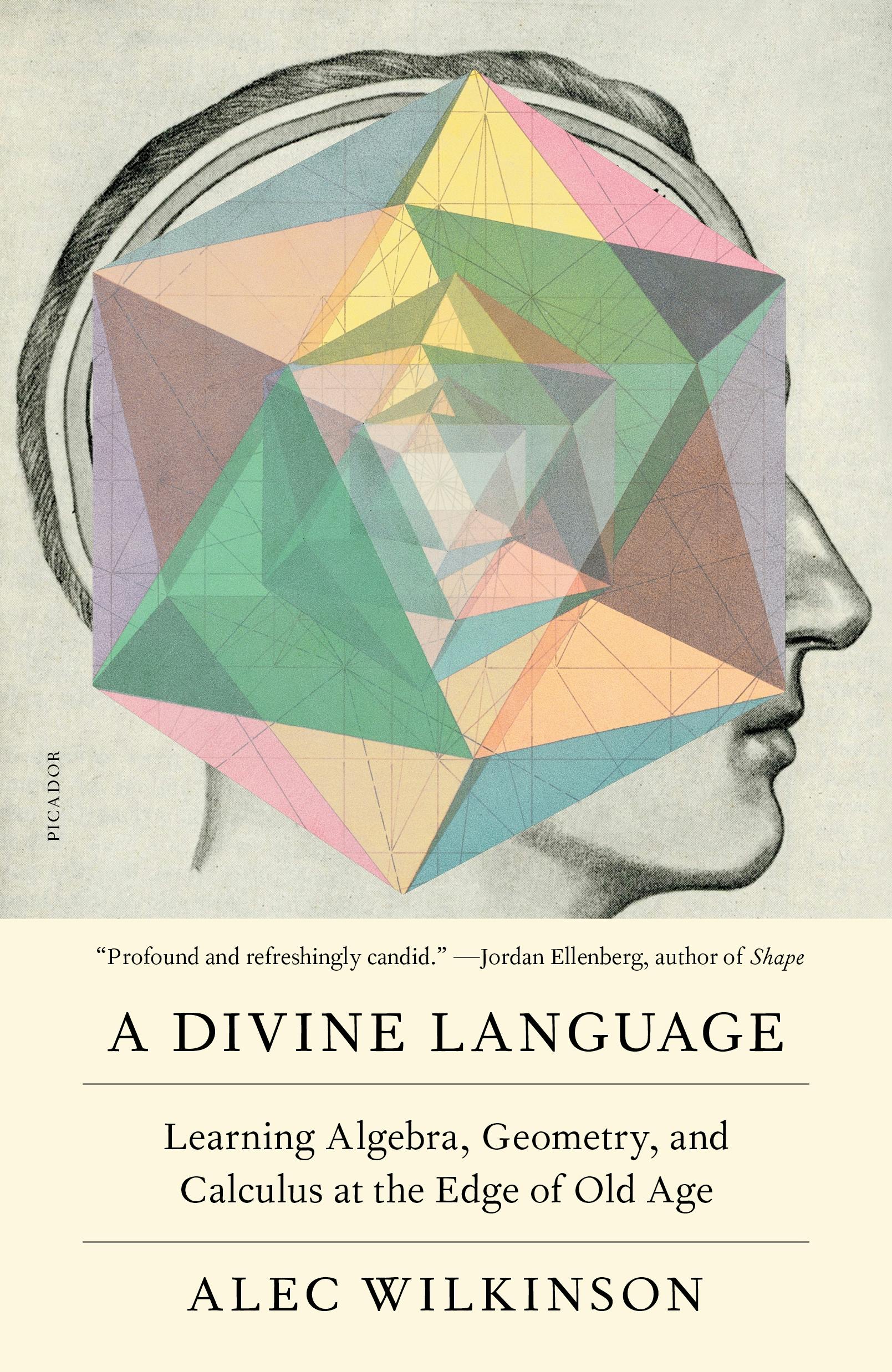
'Decades after struggling to understand math as a boy, Alec Wilkinson decides to embark on a journey to learn it as a middle-aged man. What begins as a personal challenge—and it's challenging—soon transforms into something greater than a belabored effort to learn math. Despite his incompetence, Wilkinson encounters a universe of unexpected mysteries in his pursuit of mathematical knowledge and quickly becomes fascinated; soon, his exercise in personal growth (and torture) morphs into an intellectually expansive exploration.' 
https://us.macmillan.com/books/9781250168580/adivinelanguage/


A Divine Language

As observed many times in the literature and here on W2tQ writing about Hodges' model, healthcare - medicine and nursing are both a science and art. Hodges' model is an invitation to the arts in liberal form, with an emphasis on practice: social sciences, humanities, physical sciences and even mathematics. 

There is now quite a bank of posts on W2tQ tagged art/arts and more specifically prints. I still plan to attend a workshop on printing. As ever, in my head, my mind's eye - I've an amazing, brilliant .. (!?) arts project, just waiting to be released. A true collage of the care concepts.

If Hodges' model is 'simple' in its basic form, then it is clearly possible for other people to create their own artistic impressions, interpretation of Hodges' model. My effort would of course be unique, as would theirs. There could be a competition and I end-up missing out. Not even short-listed for a prize; a victm of familiarity perhaps? 

Quite 'naturally' in a way, or at least by way of childhood experiences, a need for therapy and validation; I have also arrived at a belief that there is a mathematical project here (Oh, for goodness sake! Is there no end to this?). 

As posted before, like Alec Wilkinson I am no mathematician. Embarrased, shamed to a husk at school on many occasions, I encountered math teachers who must have empathised. Well, that's one way to explain the appreciation of maths I have always felt. Or more accurately, a love of knowledge; of which maths and logic are a part? Since I can hardly understand, I am more in love with the idea of maths, than mathematics itself. I have always been in awe of maths and people who 'get it', even if that is only  mastery of the high school mathematics curriculum.

Convinced that there is more to Hodges' model than meets the eye, I have thought of following Wilkinson - who tries to be systematic - to underpin a book - back into the nightmare lands of my youth. Should I retake GCSE maths? 'There be dragons', without a doubt. The heat can be recalled, like it was yesterday. This isn't just a dragon, it is a chimera. At times it wants to be a friend, providing familiar terms, domain, set, and group. Wilkinson's quest is structured and seeks a reasoned and disciplined approach. Why am I bothering? I have a choice surely? Nursing, health, global health can all collectively furnish many items of epistemological fruit. No need for calculative flagellation. Through Hodges' model you can productively span the disciplinary bridges once again: call in - sociology, economics, policy and more. How many Königsberg bridges do you need?

While the artist in me, might waste time. In pointing to Hodges' model as a potential mathematical object, this little seed might fall on fertile and (much) more capable ground(?), as Wilkinson describes:

'Mathematics might be the only creative pursuit in which inevitability figures. Other artists might be defeated by a task beyond their capabilities, but they do not live with knowing that sooner or later, if their work is consequential, someone will do what they haven't been able to do. Mathematicians work within a discipline in which, so long as their suppositions are correct, there is always a precise and irrefutable answer, even if they can't find it.' p.135.

I can hope for this at least.

Alec Wilkinson. (2022) A Divine Language. Learning Algebra, Geometry, and Calculus at the Edge of Old Age. New York: Farrar, Straus and Giroux. https://us.macmillan.com/books/9781250168580/adivinelanguage/

Previously: How 'divine' is the language of care?

n.b. At some point I will go though all the posts and unpublish/delete items that add little to the core.

Monday, September 16, 2024

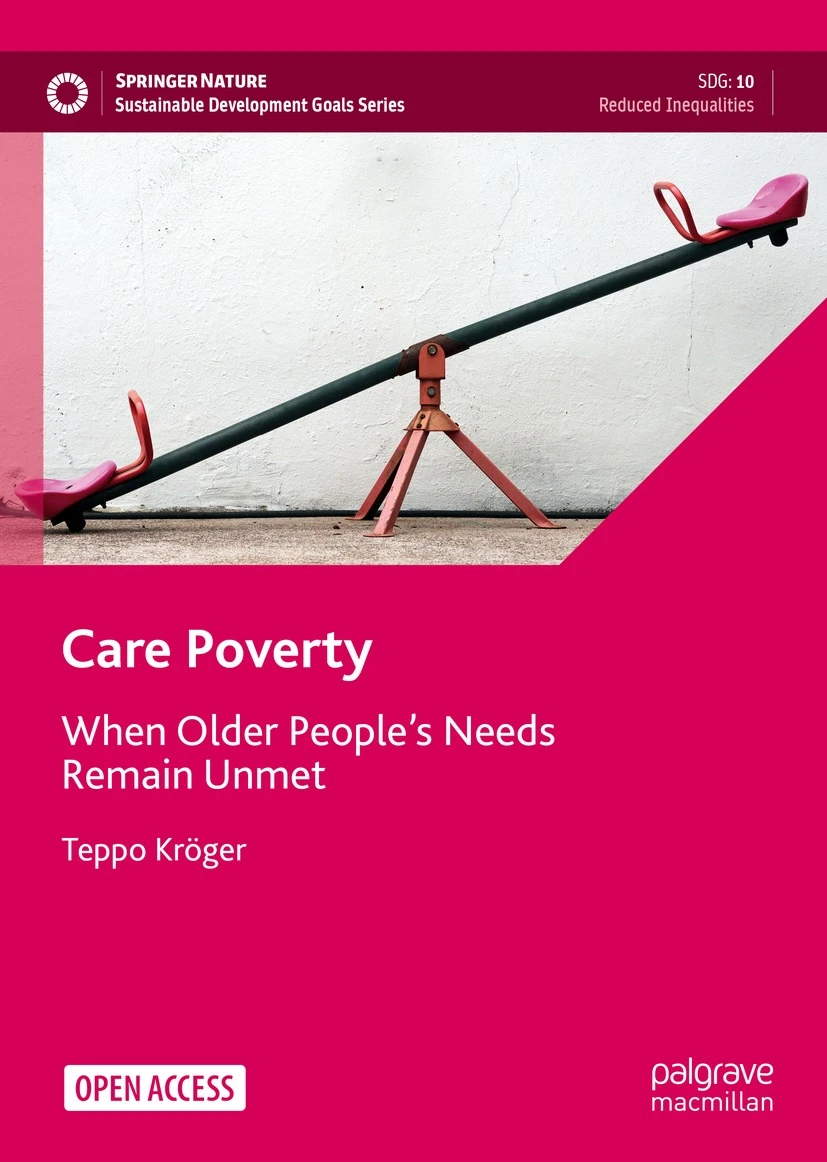
Book: Care Poverty - When Older People’s Needs Remain Unmet

CARE POVERTY
'This open access book turns the research attention of social policy scholars and long-term care researchers from comparative descriptions of care systems, focusing mostly on expenditures and volumes of long-term care services, to outcomes, and in particular to the question whether older people really receive the support that they need. Without knowledge about which needs and which social groups are currently inadequately covered, it is impossible to guide policy development.

The book puts forward a novel theoretical framework to guide future research work and public discussion on the issue of unmet long-term care needs, by broadening the current discussion so that inadequate care is seen in its societal and policy contexts, taking structural issues and policy designs into account. Kröger outlines three different domains of care poverty (personal care poverty, practical care poverty and socio-emotional care poverty) and differentiates between main methods how unmet needs are measured.' [my emphasis]

In psychiatry and psychiatric nursing, a person may be assessed to display poverty of thought, ideas or speech. As an exercise it may be useful to invert the rendering below in Hodges' model, and  consider Kröger's forms of poverty and possibly others that arise from your critique, reflections and life experience to date. Clearly, another book to add to the list!
 
individual
|
INTERPERSONAL : SCIENCES
humanistic ------------------------------- mechanistic
SOCIOLOGY : POLITICAL
|
group

CARE


CARE

CARE

POVERTY


Previously on W2tQ - (unmet) 'needs'

Kröger, T. (2022) Care Poverty - When Older People’s Needs Remain Unmet. Cham: Palgrave Macmillan. https://link.springer.com/book/10.1007/978-3-030-97243-1#about-this-book

Will check on a related title too.

Saturday, July 20, 2024

Frayn - on maths

"Pure arithmetic is not about particular things but about particular relations between things. Algebra preserves an even loftier detachment from the world. It is not about relations between things - it about relations between relations. Numbers are variables that can be quantified in the physical world. Algebraic terms are variables that can be quantified in the world of numbers." pp.154-155.


Frayn, Michael (2006). The human touch: our part in the creation of a universe. 'Fingerhold', Chapter 5. London: Faber & Faber. pp.139-170.

individual
|
INTERPERSONAL : SCIENCES
humanistic ------------------------------- mechanistic
SOCIOLOGY : POLITICAL
|
group

human


TOUCH


... human human  human  human human ...


Don't you dare!
Yes, please do!


Wednesday, February 21, 2024

Universal and Generic: Hodges' model and conceptual frameworks, or

What the papers say . . .

The purpose of many research papers is to produce a conceptual framework, perhaps as a step towards a greater goal and objective.

Whatever the context or purpose of the conceptual framework:

  • Theoretical Framework
  • Conceptual Model
  • Empirical Framework
  • Descriptive Framework
  • Analytical Framework
  • Conceptual Framework for Policy Analysis
  • Logical Frameworks
  • Conceptual Frameworks for Program Evaluation
  • Conceptual Frameworks for Organizational Analysis
  • Conceptual Frameworks for Strategic Planning*

Hodges' model can be applied. This past week I saw a way to illustrate the scope of Hodges' model, which I will revisit. As ever, this merely scratches an itch on #MentalHealthNursesDay.

With apologies to authors and publishers - original citations follow:

Divya Sussana Patil, Ajay Bailey, Sobin George, Martin Hyde & Lena Ashok (2023) Unpacking the role of (INSERT [focus1..x/protected characteristic]) among (INSERT [Population]) for accessing healthcare in (INSERT [City, Town, Village, 3-words; Country]). Global Public Health, 18:1, DOI: 10.1080/17441692.2023.2274438


Ahuvia, I.L., Mullarkey, M.C., Sung, J.Y., Fox, K.R. and Schleider, J.L. (2023), Evaluating a treatment selection approach for (INSERT [modality, delivery]) single-session interventions for (INSERT [Life-stage, Condition/Diagnosis]). J Child Psychol Psychiatr, 64: 1679-1688. https://doi.org/10.1111/jcpp.13822


Xu H, Bayless TM, Østbye T, Dupre ME. Care sequences leading to the diagnosis of (INSERT [Disease] and [related]): An analysis of (INSERT [format / owner]) records. Alzheimer's Dement. 2024; 1-10. https://doi.org/10.1002/alz.13669


Original citations:


Divya Sussana Patil, Ajay Bailey, Sobin George, Martin Hyde & Lena Ashok (2023) Unpacking the role of transport inequalities among older adults for accessing healthcare in Bengaluru, India, Global Public Health, 18:1, DOI: 10.1080/17441692.2023.2274438

My source: https://x.com/HydeM1976/status/1718975653175796085?s=20 (and prompt)

Ahuvia, I.L., Mullarkey, M.C., Sung, J.Y., Fox, K.R. and Schleider, J.L. (2023), Evaluating a treatment selection approach for online single-session interventions for adolescent depression. J Child Psychol Psychiatr, 64: 1679-1688. https://doi.org/10.1111/jcpp.13822

https://x.com/acamh/status/1759539440605606159?s=20

Xu H, Bayless TM, Østbye T, Dupre ME. Care sequences leading to the diagnosis of Alzheimer's disease and related dementias: An analysis of electronic health records. Alzheimer's Dement. 2024; 1-10. https://doi.org/10.1002/alz.13669

https://x.com/DukeGHI/status/1759978730192306179?s=20


*https://researchmethod.net/conceptual-framework/

Tuesday, December 26, 2023

Immigration - in Hodges' model

 Individual
  |
     INTERPERSONAL    :     SCIENCES               
HUMANISTIC --------------------------------------  MECHANISTIC      
SOCIOLOGY  :   POLITICAL 
|
GROUP

You - have seen nothing yet ...?

"One of the key ideas behind Brexit was to 'take back control' of immigration. Back in 2010, David Cameron pledged to bring net migration to under 100,000 a year, but the promise was never met. ...

However, in the post-Brexit years, immigration has soared to unprecedented levels. Net immigration, which hovered around 200,000 in pre-Brexit years skyrocketed to an all-time high of 745,000 in 2022." p.10.

We - have seen nothing yet ...?
How Migration Really Works


Hass, H. de., The Necessity of Immigration, BIG ISSUE, 4 December 2023. Issue 1593, pp.10-11.

Thursday, June 24, 2021

Learning for quality health services: A new thematic discussion on HIFA

The WHO Global Learning Laboratory (GLL) for Quality UHC and Healthcare Information For All (HIFA.org) are delighted to announce a new thematic discussion on HIFA: Learning for quality health services. The discussion starts on 28 June and will continue through to 20 August.

Quality of health services is critical to achieving universal health coverage (UHC): Between 5.7 and 8.4 million deaths are attributed to poor quality care each year in low- and middle-income countries, accounting for up to 15% of overall deaths in these countries. Improving access to health services must go hand in hand with improving the quality of these services. There is an urgent need to place quality at the centre of national-, district- and facility-level actions in order to progress towards UHC.

The discussion will explore in depth the following questions:
- What does quality of care mean to you, in your particular context? Why is it important to make the case for quality of care?
- From your experience, what might work best to enhance national commitment to quality of care? Have you seen any practical solutions that should be shared wider?
- From your experience, what are the biggest challenges for district health managers in tackling quality of care issues? Have you seen any practical solutions that should be shared wider?
- From your experience, what are the biggest challenges for improving quality of care at the facility level? Have you seen any practical solutions that should be shared wider?

Please forward this message to your contacts and networks and invite everyone to join us!

www.hifa.org/joinhifa

We have more than 60 HIFA members volunteering for this project. Also, we are introducing for the first time the concept of HIFA Catalysts, whose role is to stimulate comment and debate. We look forward to a rich discussion!

HIFA profile: Neil Pakenham-Walsh, HIFA Coordinator, neil AT hifa.org www.hifa.org

 <>

Mapping some points to Hodges' model:

individual
|
INTERPERSONAL : SCIENCES
humanistic ----------------------------------------------- mechanistic
SOCIOLOGY : POLITICAL
|
group
SAFETY

cognitive access

QUALITY of CARE
quantity of CARE

health literacy

mental health
SAFETY
faculty - facilities
physical access

QUANTITY of CARE
quality of CARE

distance
rural : urban

Between 5.7 and 8.4 million deaths
are attributed to poor quality care each year ...
accounting for up to 15% of overall
deaths in these countries
PRACTICAL SOLUTIONS
low- and middle-income countries

national commitment to quality of care

Universal Health Coverage


Tuesday, May 18, 2021

Gatekeeping: Across the care domains

individual
|

INTERPERSONAL : SCIENCES
humanistic ----------------------------------------------- mechanistic
SOCIOLOGY : POLITICAL
|
group
Cognitive gate (access):
Mental state: Risk to Self/Others?
Literacy: My articulation of my needs
Understanding of Consultation/plan
Service name: acronyms

My understanding hence awareness of services, referral
Opt-in
Self-neglect

Physical gate (access):
Physical state 'emergency'?
Telephone call, reception

Obtain appointment
Phone/Video, Face-to-Face
Surgery, Clinic, Hospital, Home

Letter: 'x' days?
[ Triage
Assessment, Planning
Intervention
Evaluation ]

Individual: Collective: WAIT data?

Social-Cultural gate:
Cultural diversity/Accessibility
Service - Semiotics/Semantics/Signage

Family/Social commitments (access)
Sociology of Illness/Sick role
Carer role
Community/Local Understanding & Involvement?
Reporting, Info sharing

Political gate:

Service Provision/Use [by postcode?]
Referrer's knowledge ...
"Policy says..." ...
URGENT, routine, 1,5 days...
Service Pathways/Signage/Appearances

Work commitments (access)
Previously known?
[ MAIN GATE: Therapeutic Modality? ]
 
Open to suggestions... 

Wednesday, December 30, 2020

Weighty matters ...

individual
|
INTERPERSONAL : SCIENCES
humanistic ----------------------------------------------- mechanistic
SOCIOLOGY : POLITICAL
|
group
 I have due regard for
my
'footprint'?


"The weight of roads, buildings and other constructed or manufactured materials is doubling roughly every 20 years, and authors of the research said it currently weighed 1.1 teratonnes (1.1 trillion tonnes)."

Our 'footprint'?

Our 'footprint'?


https://phys.org/news/2020-12-manmade-mass-outweighs-life-earth.html

My source: several

Global human-made mass exceeds all living biomass, Nature (2020). DOI: 10.1038/s41586-020-3010-5 , www.nature.com/articles/s41586-020-3010-5


Tuesday, July 30, 2019

Book: In Praise of Walking - The new science of how we walk and why it’s good for us


Count: the number of steps...?

You don't have to count - just walk ...

individual - self
|
INTERPERSONAL : SCIENCES
humanistic ----------------------------------------------- mechanistic
SOCIOLOGY : POLITICAL
|
group- population
"The sea squirt starts life boring, and gets more so, but along the way it does one thing that is very interesting indeed. In its larval stage this creature swims around the rock pool, its tail propelling it much like a tadpole's. Its talents at this time are not impressive, being  limited largely to staying upright and hiding from predators. At least it moves, though. When adulthood approaches that changes. It sticks itself to a rock, where it will stay fixed for the rest of its life. And the first thing it does upon finding a suitable site, the one interesting act in its life? It consumes its brain." Whipple, 2019.
In Praise of Walking


As you walk, let Hodges' model provide a cognitive map for your reflections ...

My source (several)
Whipple, T. (2019) Walking - our super power, Saturday Review, The Times, p.14.

Tuesday, August 15, 2017

A primitive Pythagorean triple

individual
|
INTERPERSONAL : SCIENCES
humanistic --------------------------------------- mechanistic
SOCIOLOGY : POLITICAL
|
group


Happy 40th to me #NHS!


Saturday, December 31, 2016

Inner model

individual
|
INTERPERSONAL : SCIENCES
humanistic -------------------------------------------  mechanistic
SOCIOLOGY : POLITICAL
|
group-population


'I beseech you to take interest in these sacred domains so expressively called laboratories. Ask that there be more and that they be adorned for these are the temples of the future, wealth and well-being. It is here that humanity will grow, strengthen and improve. Here, humanity will learn to read progress and individual harmony in the works of nature, while humanity's own works are all too often those of barbarism, fanaticism and destruction.'
Louis Pasteur (1822-1895)


Do we need more 'laboratories' in 2017?
Can we produce the researchers and other staff to fill the labs?
What labs should be prioritised?
What progress have we made in integrating knowledge since the time of Pasteur?
Does it matter?
How evidence-based is evidence-based?
Are laboratories more about analysis and hence reduction than synthesis?
Where are the social sciences exactly?

Happy New Year!

Thursday, September 04, 2014

UK - USA - Global health (physical care, mental health care, social care)

individual
INTERPERSONAL : SCIENCES
humanistic ------------------------------------------- mechanistic
SOCIOLOGY : POLITICAL
group


Affordable?

Affordable?


Affordable?

Accountable?


Prompt:
5 Megatrends With The Potential To Transform U.S. Health Care
http://www.forbes.com/sites/robertpearl/2014/09/04/5-megatrends-with-the-potential-to-transform-u-s-health-care/

Sunday, September 08, 2013

Research Design Service North West (RDS NW) September 2013 e-bulletin

A very useful resource:
Dear Colleague,
Please follow the link below to the September 2013 e-bulletin from the Research Design Service North West (RDS NW).
In this issue:
  • is my study research?
  • NIHR showcases the clinical research that could bring hope to the nation’s dementia sufferers
  • funding opportunities
  • events and training
  • approaching funding deadlines.
We hope you find this helpful and as always welcome any feedback.
Thanks,
RDS NW
Research Design Service North West
Central Coordinating Office
Tel: +44 (0) 1524 593209
Follow the Research Design Service on Twitter: @NIHR_RDS

Source: Thanks to RDS NW and Paul Dolby

Monday, October 31, 2011

What's the difference between 6 and 7? About 11 years ...

Gradually over the past few months I've checked the care domain links. Deleting those where the domain is now "For Sale", broken, or the content is plain out of date. The final domain was the SCIENCES. It's the largest still and while the links are monsters, it is interesting working through them occasionally.

One change caught my eye last month in the 'Environment, Sustainability, Ecology & EcoSystem Health' listing (now former h2cm website). I clicked on Six Billion and Beyond and duly found that it has been retired from pbs.org. A few weeks ago I'd shared with students and have included on the CARDI conference poster the fact that today it is believed that the Earth's human population reaches 7 billion.

Looking back Six Billion and Beyond aired in 1999. So in 11-12 years there are an extra billion souls. You have to ask:

  • What will we all drink and eat?
  • Will we all have a (dry) home?
  • Will we all read? (Have access to information and info technology)
  • What will this latest generation believe in?
  • Whose beliefs will they be?
  • Can the 7 Billionth human being of Earth be a true citizen?
  • Before that - for how long will they be allowed to be a child?
  • Will they pray? Who to and why - choice?
  • Will they have to fight (in a uniform)?
  • What will their sense of quality of life be?
  •  Will that 7 Billionth person and their family have access to:
    • health information?
    • basic health care?
    • education?
  • What space is there for their human rights?
  • Can technology finally deliver Socially?
Checking the links this time around proved quite a lesson in global demographics - how long till the next...?

Additional links:

https://www.worldometers.info/world-population/

The world is home to 7 billion people but how far has it come?
The population milestone is a reminder that there is much work to do on sexual and reproductive health and HIV if we are to meet the millennium development goals by 2015, The Guardian, Monday 31 October.

Saturday, December 04, 2010

h2cm and clinical equipoise

The past few weeks reading the Journal of Evaluation in Clinical Practice - I've encountered the concept of equipoise: specifically the clinical form.

The Health Career - Care Domains - Model is all about 'poise'.

The model's care domains provides the perfect workout.

Medicine, health and social care constantly exercises us. We are, whether or not we recognize it, on a balance board. In fact if you consider that image and then factor in the complexity of health care today you realise just how much stuff (technology), how many people (subjects, agents) need to be on that same board. Who does the board belong to though? Well of course it's -

Jo Public's (... and often off-balance, strengths depleted, sick (and tired), relapse prone...)

The April 2010 issue of the above journal is a fascinating read. I noticed today that some of our placement students were not aware of the recent and current position regarding health policy: that is the 'long view' of decades such as: Health of the Nation, the National Service Frameworks, Darzi ... They need to address that and I'm sure they will.

This journal issue prompts me to consider evidence based medicine anew, especially:
  • Its history spanning 20 years.
  • Its occupying the SCIENCES domain, with its weight threatening to overbalance all (you could say it's a significant singularity).
  • The realization that the Emperor is short on clothes.
  • Given the above it can mature. Bogdan-Lovis and Holmes-Rovner (2010)
Back to that board: and stepping onto the health care domains - all four of them so spread your feet - you can see instantly (feel that feedback) how EBM, shared decision making and (person) patient-centered care are all related. As Bogdan-Lovis and Holmes-Rovner (2010) highlight:
Equipoise is the heart of the shared decision making movement, and it embodies the problems for which patient decision aids are most often developed to explain the risks and benefits of competing alternatives. p.377.
h2cm is well suited to this task on so many levels.

The past week or two I've also noticed several mentions of the need to nudge people - here and there - both in the media and in Bogdan-Lovis and Holmes-Rovner's paper and references.

More to follow - and as you step-off take care ....

Wilson, K. (2010) Evidence-based medicine. The good the bad and the ugly. A clinician's perspective. Journal of Evaluation in Clinical Practice, 16, 398-400.

Bogdan-Lovis, E., Holmes-Rovner, M. (2010) Prudent evidence-fettered shared decision making. Journal of Evaluation in Clinical Practice, 16, 376-381.

And for the week ahead:

One mind, many minds - ONE PLANET. One need, many needs - ONE PLANET: what price stability?

http://hodges-model.blogspot.com/2009/02/one-mind-many-minds-one-planet-one-need.html

Monday, August 02, 2010

From: Harvard Business Review - The Four Phases of Design Thinking

I came across the following post on the Harvard Business Review Blog Network - The Conversation:

10:54 AM Thursday July 29, 2010
by Warren Berger

What can people in business learn from studying the ways successful designers solve problems and innovate? On the most basic level, they can learn to question, care, connect, and commit — four of the most important things successful designers do to achieve significant breakthroughs.
Having studied more than a hundred top designers in various fields over the past couple of years (while doing research for a book), I found that there were a few shared behaviors that seemed to be almost second nature to many designers. And these ingrained habits were intrinsically linked to the designer's ability to bring original ideas into the world as successful innovations. All of which suggests that they merit a closer look.
You can read the whole of Warren's original post, while below I have taken his focus concepts CONNECT, CARE, COMMIT and QUESTION and associated them to the care (knowledge) domains of Hodges' model. Following that there is a rationale. ...

connectquestion
carecommit


Connect:Intrapersonal
Placed in the intra-interpersonal domain this is the domain of concepts, thoughts, ideas, creativity and innovation. This is the essence of Warren's reference to 'connect' -
Designers, I discovered, have a knack for synthesizing--for taking existing elements or ideas and mashing them together in fresh new ways.
The INTERPERSONAL links page also highlights other conceptual 'inhabitants' here; in particular knowledge management, the semantic web and psychology. If analysis and reduction is the outcome of the hard sciences, then here as Warren writes is synthesis, integration and invention. We can see how self-belief is critical to many innovators who pursue their dreams regardless of rebuffs by the establishment, to whom - within the health career model - they are also diametrically opposed.

Question:Sciences
The ability to question lie at the heart of human activity, and although thought and mind are represented in the interpersonal domain, questions also exemplify the output of human reasoning powers in the SCIENCES. Evidence based care depends on an ongoing process-ion of questions that drive research. Problem solving with its iterative sequence of assess (question), plan, action, evaluation (question). The health career model reminds us though of the need to consider not only quantity, logic and objective measures, but the role of qualitative research and methods.

Care:Sociology
Seeing Warren's inclusion of 'care' drew me to his post. Here he concludes:

Focus groups and questionnaires don't cut it; designers know that you must care enough to actually be present in people's lives.
Health and (social!) care are social activities. Our students are socialised into the professions and disciplines as they pursue their careers. Our work depends on the effectiveness of human communication and relationships. You can read about 'counselling' and only get so far; ultimately health care is experiential. It is something to be practised.

Commit:POLITICAL
Warren deals with the way designer's view risk and committing early to an idea and the project that might follow. For me 'commit' and being committed has explicit political - power - connotations. So, Warren's reference to commit in the sense of producing a model or prototype and working through problems can be extended. Invention and design may be cognitive pursuits, but they are non-trivial in that they must ultimately and literally be negotiated. Being able to 'commit' needs to be sanctioned. Individuals need to be empowered, or recognise when to either proceed or seek advice and guidance. Furthermore, Warren notes:
The designer's ability to "fail forward" is a particularly valuable quality in times of dynamic change. Today, many companies find themselves operating in a test-and-learn business environment that requires rapid prototyping. (?)
Perhaps the recognition in health policy of the need to balance negative and positive risk taking, self-care and personalised budgets can also be discerned in the above?

Acknowledgement:
Thanks to Warren Berger and HBR

Monday, March 15, 2010

Prime Minister’s Commission on the Future of Nursing and Midwifery in England – 2010

Earlier in March The Prime Minister’s Commission on the Future of Nursing and Midwifery in England published its final report.

You can download the report in full.

Box 3.1.2 (on page 43) features key statistics on nursing and midwifery:

  • In 2009 there were nearly 595,000 RNs on the register residing in England, 77% of them registered in the adult nursing branch.
  • In 2009 there were over 31,000 RMs on the register residing in England.
  • Nine out of 10 of RNs in England are female.
  • There are disproportionate numbers of men in more senior nursing positions and certain specialties: a third of mental health nurses, for example, are male.
  • Nearly all RMs in England are female. There are 131 male midwives.
  • Well over half the RNs and RMs working in the NHS in England (57%) are aged between 35 and 54, with less than 3% under 25. Almost 70% of RNs and RMs on the NMC register in England are aged 40 and over.
Reporting on the Commission's report the RCN Bulletin (10 March) notes the need to encourage more men into the profession and people from black and ethnic minority groups. As the list above highlights, however - There are disproportionate numbers of men in more senior nursing positions and certain specialties: a third of mental health nurses, for example, are male.

From my early nurse education days (especially from mental health to general nursing) you had no choice, but be aware of gender and just w(h)ere you had landed. Upon my first encounter with Hodges' model, the model stood out in the list of theories and models of nursing.

It was not listed on the original nursing theory website.
(Hence, the initial website project)
The majority of models and theories were created by women and outside England.#

The future of nursing depends on successfully addressing* the numbers: totals, proportions, recruits, retirees*. ... We can use the numbers, quality, safety and I have to say - Hodges' model to help craft the creative and innovative messages needed. We really are in for a fascinating and exciting 20-30 years in nursing; here in the UK, EU and Internationally.

* Note the use of 'addressing' not balancing - that's why this is also challenging.
# This is not a complaint, just an observation.


Sunday, March 01, 2009

Squaring circles: Compressed patient care pathways = rich(er) patient experiences?

The use of Lean and Six-Sigma, their combination and other service improvement approaches has resulted in much more effective patient care pathways. A shining example is that of diagnostic medicine and subsequent out-patient appointments, apparently patients can attend for diagnostic services such as imaging and on the same day also attend for their first out-patient appointment. This saves time for all, with expensive imaging technology also proving its worth and RoI by working from 0700-2200.

Trust Boards are well pleased with such progress, but there is no such thing as a free lunch. Managers and execs know the lunch (diagnostics and imaging) isn't free, but quantitative aspects aside what does does this mean in terms of quality and assurance? Quality in the sense of:

  • patient (and carer) experience;
  • staff capacity to find and take advantage of patient learning (self-care, patient health career management) opportunities;
  • assessment and evaluation of patient (carer) comprehension;
There is a circle to be closed by relating quality to quantitative aspects; such as, re-referral rates, re-admission, medication / treatment concordance, plus the infusion of intelligence from local and national patient related outcome measures [PROMS] to new patient journeys.

In information science there is the concept of information compression, taking out the redundancy - repetitive data in an image or text to save on processing, transmission, and storage. As Lean Six Sigma assists teams to remove tasks, processes that do not 'add value' then the result is a richer experience. The patient journey has in this sense been compressed. The patient has fewer hospital and clinic visits with fewer bus, taxi journeys, or they pay less in car park fees. Health personnel and specialists are primed to help and deliver services that really count.

What does this compressed - 'denser' experience - mean though? Does it mean that:

  • patient's are exposed to more information (2-3 significant interviews / leaflets / instructions)?
  • there is less time available for education, health promotion, info Px giving?
- or alternately:
  • does this 'value packed' patient journey help by providing rapidly successive hooks - experiential threads to integrate patient (carer and staff!) learning?
It will be interesting to see answers to these questions and how extensive the scope of benefits are of these patient experiences across different care contexts.

Is there an optimal number for 'clinical encounters' before things start to go awry?

PROMS are quite specific (as they need to be initially), but amid richer and varied patient journeys there will be a need for other (national and local) measures.
What about the extent and level of 'care complexity' and 'holistic care'?

Image source: http://www.navyenterprise.navy.mil

Thursday, September 11, 2008

BBC R4 Today - NHS productivity

Following the post yesterday - Don't waste energy - use a care plugin... - there was an item this morning on BBC R4 Today:

0815
A report published by the Office for National Statistics suggests that NHS productivity has been falling by 2% a year. Martin Weale of the National Institute of Social and Economic Research, and Shadow Health Secretary Andrew Lansley discuss the efficiency of the NHS.
There's no transcript of the interview so maybe I was (still) dreaming? At some stage though this a.m. a point was also made about the public (as tax payers and patients) either wanting to go into hospital to be treated and cured (quickly and efficiently) OR have a 'good' (positive) patient experience.

Why can't the two go hand-in-hand -
especially with all the emphasis on 'partnerships'?

Martin Weale highlighted how efficiency is not everything - people may have other requirements. If a patient is treated very efficiently and quickly - all evidence based, latest and greatest interventions - but their experience is at best neutral, or at worst negative, then how will that experience affect their recovery, staying well - relapse prevention - and any future care episodes and admissions? Complex indeed ...

- and Remembering...
