Hodges' Model: Welcome to the QUAD: abuse

Hodges' model is a conceptual framework to support reflection and critical thinking. Situated, the model can help integrate all disciplines (academic and professional). Amid news items, are posts that illustrate the scope and application of the model. A bibliography and A4 template are provided in the sidebar. Welcome to the QUAD ...

Showing posts with label abuse. Show all posts

Thursday, June 18, 2026

Evidence sent to Cumbria Police about 61 baby deaths at church-run home c/o ITV News

'Some babies born with disabilities were denied medical help because they were judged unadoptable, as ITV News Social Affairs Correspondent Sarah Corker reports


Evidence has been submitted to Cumbria Police in connection with allegations of historical abuse at a church-run mother and baby institution where more than 60 newborn babies died, following an ITV News investigation.

A new report by Dr Michael Lambert, an historian of the welfare state at Lancaster University, has outlined a high infant death rate at St Monica’s home in Kendal.

The report concluded that the deaths were due to a combination of failings, including inadequate facilities, malpractice and poor care from those delivering babies and a lack of oversight from the church and state.

Analysis of public health records, alongside birth and death certificates, indicated that children with disabilities born at the mother and baby home were deemed "un-adoptable" and denied modern medical care, according to the new research.'

◇

individual
|
INTERPERSONAL
: SCIENCES             
humanistic ------------------------------- mechanistic
SOCIOLOGY : POLITICAL   
|
group
emotional neglect and abuse
 grief, trauma and guilt
 shame
 
physical neglect and abuse
 high infant death rate
inadequate facilities
malpractice


mother and baby  
social / societal punishment 
public health 


 institutions
 criminal investigation
 records              


Source: ITV: NW News and https://www.itv.com/news/2026-06-09/evidence-sent-to-cumbria-police-about-61-baby-deaths-at-church-run-home

Thursday, June 11, 2026

NHS Corridor Care – Urgent and Emergency Care Daily Situation Reports

If politicians & policymakers regularly 'walked'
 all the corridors of Hodges' model -
 they would see the false economy 
of their combined incremental works.

Incremental? Yes, in first being a 'temporary measure', then having a deleterious impact as the duration per patient and number of patients on corridors increased.

Now to the situation when the standard of care is unsafe, sub-standard, and denigrates the NHS as a social institution.

The fact of insufficient beds and its effect on care (pathways) and patient (and family) experiences severely affects staff morale, as they recognise subtle abuse, a precursor to structural and attitudinal changes that foster, encourage and establish institutionalised harm.

Staff also realise that they risk being de-skilled, 're-educated' -
becoming less compassionate ... (a 'lesser Nurse') as corridor care 
and its consequences are normalised.

Ignoring demographic trends and without an alternative concerted 
preventive/health education and health promoting plan, this is the result 
of the health and social care funding and policy
of successive governments, enacted by NHS management.

NHS England: Corridor Care – Urgent and Emergency Care Daily Situation Reports
https://www.england.nhs.uk/statistics/statistical-work-areas/corridor-care-urgent-and-emergency-care-daily-situation-reports/

Monday, April 07, 2025

Book: 'The Sleep Room' by Jon Stock i

Somewhat indirectly - I must emphasize, a book review reminded me of my Registered Mental Nursing student nursing days; and the mind - body divide. Without realising it then I heard the sound of two keys out of the five in Hodges' model. There were positive role models in the staff nurses involved; plus, learning in the routes and modalities of physical and psychological responses to treatments; in the form of medication and therapy. 

'The Sleep Room' highlights the dangers of unbounded belief in recourse to physical treatments. Such books are designed of course to 'sell', to be emotive, sensational. But mental illness - the asylum systems, presents a history of humanistic intent and mechanistic horrors. If mental illness, severe emotional responses can render us as a rag-doll, pursuit of physicalist solutions to the nth degree, is tantamount to shaking the doll: violently.


individual
|
INTERPERSONAL : SCIENCES
humanistic ------------------------------- mechanistic
SOCIOLOGY : POLITICAL
|
group
mental

physical 

treatment


SOCIO-
resistance?

-POLITICS of health


More to follow - ii ...

Sansom, I. Abused by a 'hero' of British medicine, Review. The Daily Telegraph, 29 March 2025. p.15. 

Sunday, February 12, 2023

Tuskegee Healing, the Moral Determinants of Health, and the Ethics of Research on Black Health

My source: SpiritOf1848 list - Lachlan Forrow

This will build from two November 2022 events (see their flyers below) commemorating the 90th/50th/25th anniversaries of the USPHS Study of Untreated Syphilis in the Negro Male at Tuskegee and Macon County, the first organized/hosted by the National Center for Bioethics at Tuskegee University, the second organized/hosted by CDC (see details and video of that here; the first 2min30sec include Dr. Termika Smith’s wonderful intro [60 seconds] and President Biden’s remarks [90 seconds]. 

I would also strongly recommend watching ~5 minutes starting at 11min45sec – Mrs. Lillie Head, daughter of Fred Tyson, one of the men in the Study, and founder/leader of Voices for Our Fathers Legacy Foundation, explaining what the Study was really about (i.e. the moral issues were racism, dehumanization, etc. etc., not just “failures of informed consent”). 

For our Feb 17 session, after presentations by Carmen J. Thornton (Lillie Head’s daughter, i.e. granddaughter of Fred Tyson) and Susan Reverby (arguably the leading historian of the Study), and then presentations about applying this framework to 3 concrete areas of severe and ongoing “Black health disparities” (Jesse Milan, President/CEO of AIDSUnited on HIV/AIDS; Wangui Muigai on the history and current realities of Black maternal/infant mortality; and I hope [not yet confirmed] Rev. Jeffrey Brown [co-chair of Embrace Boston] on gun violence) the “Commentators” will be Dr. David Hodge, Associate Director of the National Center, who organized their Nov 2022 event, and Dr. Termika Smith, who organized and moderated the CDC event. Then Carmen J. Thornton, as granddaughter, will have closing words -- what her grandfather might say, and what she herself thinks, about MLK’s question: Where Do We Go From Here? 

Tuesday, May 31, 2022

Key Safeguarding Legislation [UK]

I have been catching up on mandatory e-learning for work, which included safeguarding. This included a review of forms of abuse:

Physical abuse
Domestic violence or abuse
Sexual abuse
Psychological or emotional abuse
Financial or material abuse
Modern slavery
Discriminatory abuse
Organisational or institutional abuse
Neglect or acts of omission
Self-neglect  [SCIE]

In addition to the list of legislation below, readers may wish to relate these forms of abuse to the care (knowledge) domains of Hodges' model. 

Remember the model is an idealisation, but it is a very useful starting point for reflection, critical thinking, problem solving, analysis and synthesis.   [ Re. (self) - see below. ]


INDIVIDUAL

|
 INTERPERSONAL    :     SCIENCES               
HUMANISTIC --------------------------------------  MECHANISTIC      
SOCIOLOGY  :   POLITICAL 
|
GROUP

(self)

(self)


"Care Act 2014

Mental Capacity Act 2005 / Court of Protection

Human Rights Act 1998

Domestic violence crimes and victims act 2004  (amended in 2012)

Mental Health Act 1983

Safeguarding vulnerable groups act 2004 amended by Protection of Freedoms Act in 2012

Sexual Offences Act 2012"
(list not exhaustive)


As a means to help understand a situation, the model is applicable in risk and public safety more generally. In assessing risk students often recognise 'risk to self' and 'risk to others', but self-neglect can be a key part of the picture.

 
My source/prompt: E-learning


https://twitter.com/imathematicians/status/1530724466073952261?s=20&t=eF1XRD9HbkSJ2XWWbIk2qQ

Thursday, March 03, 2022

"Information Disorder:" c/o Wardle and Derakhshan (2017) The transmission of ritual ...

INDIVIDUAL
|
 INTERPERSONAL    :     SCIENCES               
HUMANISTIC -----------------------------------  MECHANISTIC    
SOCIOLOGY  :   POLITICAL 
|
GROUP


“The transmission view of communication is the commonest in our culture — perhaps in all industrial cultures... It is defined by terms such as ‘imparting,’ ‘sending,’ ‘transmitting,’ or ‘giving information to others.’ ...


... The ‘ritual view of communication’, by contrast, is not about “the act of imparting information but the representation of shared beliefs.” pp.14-15.


Wardle, Claire, and Hossein Derakhshan. 2017. “Information Disorder: Toward an Interdisciplinary Framework for Research and Policy Making.” 162317GBR. Council of Europe. https://edoc.coe.int/en/media/7495-information-disorder-toward-an-interdisciplinary-framework-for-research-and-policy-making.html.

Previously:

WHO: Infodemic Management News Flash Thursday 4 November 2021 #25


Tuesday, February 01, 2022

Webinar 3 February: An Investment Case to End FGM

  Girl - [Vulnerable ] Individual - Youth, Woman
|

 INTERPERSONAL    :     SCIENCES               
HUMANISTIC  ----------------------------------  MECHANISTIC
SOCIOLOGY  :   POLITICAL 
|
Community - Group - Population


Dear colleagues,

I am pleased to invite you to a webinar to commemorate International Day of Zero Tolerance for Female Genital Mutilation: 

An Investment Case to End Female Genital Mutilation

Thursday 3 February 2022 at 8am EST/2pm CET/4pm EAT 

The webinar will bring together global stakeholders and experts to discuss the economic burden of FGM and the urgent action needed to achieve Sustainable Development Goal target 5.3 on the abandonment of FGM. 

The webinar will coincide with the publication of the “Economic Burden of Female Genital Mutilation in 27 High-Prevalence Countries” by BMJ Global Health, a study, conducted by WHO, in collaboration with Triangulate Health Ltd. 

There will be live interpretation in French and Arabic. You can register here. 

Please join us and please share the link to the event with your networks.

Kind regards, 

Christina

Christina Pallitto, PhD
Scientist
Dept. of Sexual and Reproductive Health and Research

Skype: cpallitto
Mail: pallittoc AT who.int

My source: GANM and IBPnetwork lists (and the images above).


Sunday, September 13, 2020

"Can you hear me?" Nalini Malani

individual
|
INTERPERSONAL : SCIENCES
humanistic ----------------------------------------------- mechanistic
SOCIOLOGY : POLITICAL
|
group - population
A still from stop-motion animation work 'Can you hear me?' (2017-20)


Commission
Nalini Malani: Can You Hear Me?

23 September 2020 – May 2021

Whitechapel Gallery unveils a major new work, Can You Hear Me? by Nalini Malani (b. 1946, Karachi, Undivided India), as part of its prestigious annual programme of artist commissions.

My source:

Spence R. (2020) Written on the body, FT Weekend, Life&Arts, 5-6 September, p.13.

https://www.ft.com/content/2793f080-6690-4047-bc8d-8afab2b60026

Monday, March 05, 2018

c/o BMJ: Rediscovering humanitarianism in the wake of the aid agencies scandal

individual
|
INTERPERSONAL : SCIENCES
humanistic --------------------------------------- mechanistic
SOCIOLOGY : POLITICAL
|
group

PURPOSE
individual values, ethics...

whistle blower
courage

Psychology of:
bystander as co-worker?

(Good work and the greater good
 excuses
the misdeeds of an individual*)

empowerment vs. exploitation

define: "humanitarian"

natural disasters

"Hollywood to Rochdale"

scale of organisations:
larger = lower costs

monitoring challenge for large organisations in chaotic settings (for all orgs.)
PROCESS


PRACTICE

HUMAN WELFARE

vulnerable persons

Public interest
Private vs. Public

community trust

"football club"

(inveiglement)

Charities (raising money)
Corporations (making money)
POLICIES
Donors
competition
"reputation management"
organisations
organisational governance & values
Leadership
*individuals in positions of power over others
Human Rights

Safeguarding
International Summit
Regulation - not just a ▢ here?


BMJ: Rediscovering humanitarianism in the wake of the aid agencies scandal

My source: HIFA - David Southall of MCAI

Q. What is the first rule of first aid?

Sunday, July 23, 2017

"Get in that corner! Now!"

"Which one?"

"Don't you be so hard-faced with me.
Go!"

individual
|
INTERPERSONAL : SCIENCES
humanistic --------------------------------------- mechanistic
SOCIOLOGY : POLITICAL
|
group
anxiety                                fear

guilt                                  hate
here - out of sight    out of reach - over here

this corner: out of earshot         that corner
shame                              ridicule

embarassment                     alienation
bullying - abuse                     punishment

injustice                           deportation

Thursday, June 22, 2017

There's finding home and then there's Finding Home...

individual
|
INTERPERSONAL : SCIENCES
humanistic ----------------------------------------- mechanistic
SOCIOLOGY : POLITICAL
|
group - population

Home
is
where
the
heart
is

Finding home

HOME


powerless power powerful


My source: Bloomberg

Sunday, November 20, 2016

Cut here and here and...

individual
|
INTERPERSONAL : SCIENCES
humanistic -------------------------------------------  mechanistic
SOCIOLOGY : POLITICAL
|
group-population


..................
CUT HERE
..................


       CUT HERE        


and
CUT HERE


"Tulip Mazumdar has an uncomfortable encounter with a "cutter" and undergoes a demonstration of what really happens during FGM." BBC Radio 4.

Mazumdar, T. (2016). My quarrel with a proud FGM cutter. BBC.

My source: From Our Own Correspondent, BBC Radio 4. Neither Love Nor Money

Image: https://www.mysoti.com

Thursday, September 29, 2016

ERCIM News No. 107 Special theme: "Machine Learning"

Dear ERCIM News Reader,

ERCIM News No. 107 has just been published at http://ercim-news.ercim.eu/en107

This issue features :

- A Special Theme presenting a selection of articles about current trends and new paradigms in Machine Learning, coordinated by the guest editors Sander Bohte (CWI ) and Hung Son Nguyen (University of Warsaw).

- A Research and Society section dedicated to Open Access - Open Science, coordinated by Laurent Romary (Inria).

- A "Research and Innovation" section with news about research activities and innovative developments from European research institutions

This issue is also available for download in pdf and ePUB

Thank you for your interest in ERCIM News. Feel free to forward this message to others who might be interested.

Next issue: No. 108, January 2017 - Special Theme: "Computational Imaging"

Best regards,
Peter Kunz
ERCIM News editor in chief

Sunday, October 04, 2015

Stamping about the world and Hodges' model

I don't know if they say things about stamp collectors but there's one over here. In mitigation I'm of the dormant type, it's more about buying gifts for junior family members. Things to keep if the recipients are minded to. Over the years stamps have taught me a great deal: the rise plateau and fall of an empire; the changing face of Africa and the 'Rest of the World', the politics of the world and the truth and lies behind geographic projections. Like painting, drawing and other possibilities the stamps are there, imprinted on my brain as a possible thing to do.

As a mental health nurse I've come across many people (demographically predictably usually males) who have planned for retirement for quite a while and then when it happens the impact is a psychological sledgehammer. While it's also surprising to learn of the people who do not have any interests, you can also see how trite, inappropriate, insensitive ... the question of "Do you have any hobbies?" can seem.

That's because when you listen and hear:

the harried, hesitant, hopeless bound accounts of not knowing who is looking back in the mirror in a morning. Why am I standing there at all? Walking the dog, whatever the month, you see the crucial umbilicus is failing. The one that connects me simultaneously to myself, others, the world at large and joie de vivre:

then you know.

Then you listen and watch for the positive change working with colleagues. You look for the chinks of light that might show the darkness is perforating and the light shows through. Maybe then there is promise in hobbies and interests of all kinds. Keeping mind, spirit and body active, alive. 

Maybe though - it is just being able to be once again.

individual
|
INTERPERSONAL : SCIENCES
humanistic --------------------------------------- mechanistic
SOCIOLOGY : POLITICAL
|
group
Dr. Arieti, Italy, pinterest.ca
Einstein, stamp, ebay.com
Australia, Community, Stampgallery
End Violence Against Children
UN Stamp:
End Violence Against Children
unstamps.org


Saturday, February 28, 2015

Coming to the Table, Leaving, Coming to the Table ... Realpolitik

individual
INTERPERSONAL : SCIENCES
humanistic ------------------------------------------- mechanistic
SOCIOLOGY : POLITICAL
group


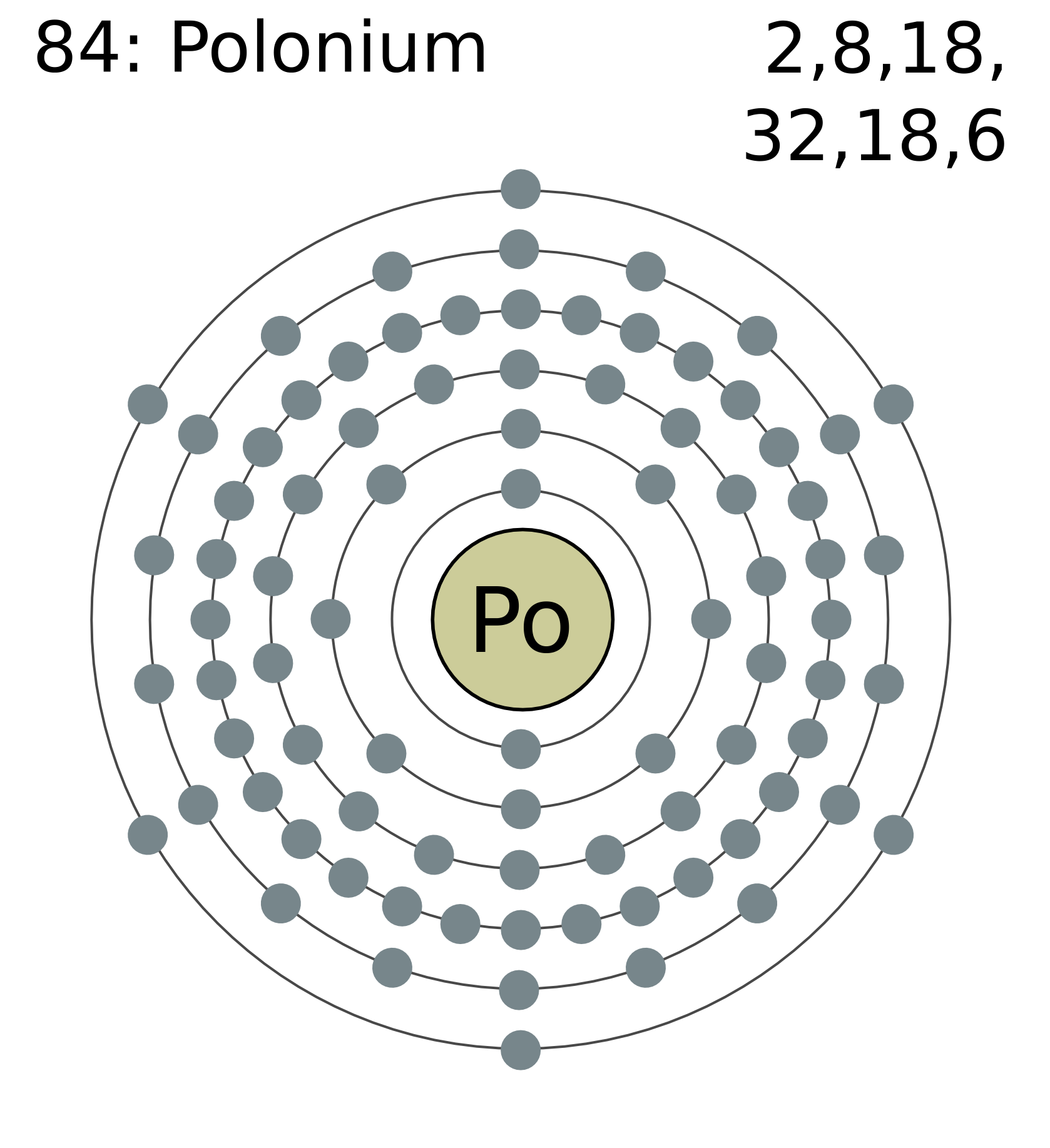
The 'Periodic' Table


Polonium

Memorial
https://www.memo.ru

Boris Nemtsov:
https://www.bbc.co.uk/news/world-europe-31669061

Image: By Greg Robson
http://commons.wikimedia.org/wiki/File:Electron_shell_084_polonium.png

Thursday, October 09, 2014

Privacy: Open Data, Individual and Group

The vertical axis of Hodges' model is the individual - group, or self through to collective. Health and social care constantly negotiates this from the ideals and delivery of person-centred care to public mental health. So often for health professionals the emphasis is on the individual, the person's care needs, their strengths, their rights, outcomes and feedback on care received. The same individual focus is also ascribed to records and information. Protection of data, maintaining confidentiality is an essential duty of health care  professionals.  

Earlier this year the government's care.data scheme was placed on hold. 'Open' is the way of the world: open access, open source, open data and open government. Increasingly the group as an entity needs to considered in what may be a new way, as Floridi writes:

The idea that groups may have a right to privacy is not new, and it is open to debate, but it has not yet received all the attention it deserves, although it is becoming increasingly important.
 ...
Open data is more likely to treat types (of customers, users, citizens, demographics population, etc.) rather than tokens (you, Alice, me), and hence groups rather than individuals. But re-identifiable groups are ipso facto targetable groups.It is therefore a very dangerous fallacy to think that, if we protect personal data that identify individuals, the protection of the groups will take care of itself. p.23.

Luciano Floridi. Group Privacy. The Philosophers' Magazine. Issue 65, 2nd Quarter 2014. pp. 22-23.


http://grantabooks.com/The-Private-Life

Here is a related book (on my list) a BMJ award winner:

The Private Life, Josh Cohen:
https://granta.com/products/the-private-life/

The war over private life spreads inexorably. Some seek to expose, invade and steal it, others to protect, conceal and withhold it. Either way, the assumption is that privacy is a possession to be won or lost.

But what if what we call private life is the one element in us that we can't possess? Could it be that we're so intent on taking hold of the privacy of others, or keeping hold of our own only because we're powerless to do either? ...


Wednesday, February 06, 2013

Extrasolar planets, x-phi and The Francis report

I'm sure there is a planet out there - extrasolar - with the physical make-up such that be it an incredible water fall, tidal surge, or rolling polished mega-rocks - the noise, could we hear it, would do far more than make your ears bleed.

Today, here in England there is a legal, health and political media event of very serious import. The ruckus in health and political circles might also make for more than bleeding noses and definitely thousands of continuing broken hearts.

The Francis report will be published today. Further insights and findings will be revealed c/o the Public Inquiry with recommendations on the Mid Staffordshire NHS Foundation Trust health care debacle.

In Philosophy Now Jan/Feb 2013 Tibor Fischer's editorial mentions the need for marketing within philosophy and literature, with the suggestion of placing x-phi on a T-shirt.

'X-phi' of course reads as experimental philosophy.

In health care, nursing and social care evidence counts for everything (and for h2cm too). Evidence based practice that is founded upon research is essential. Experiments are needed that can be reproduced, extended, validated. ...

Today is a profoundly sad day for everyone in the NHS, as many commentators have already predicted. The future constantly beckons, but today reflect we must that in the clamour for evidence based care, does this mean we must don T-shirts?:

x-care

Have we forgotten the principles of what it is to care: compassion - our duty of care?

No, but amid the cacophony of technology, technical care, the targets, statistics, budget cuts, the challenges to morale and nursing's values we need to be ever more vigilant.

We must learn how to x-listen and x-shout in the 21st century health care environment(s).

But experiments in how to listen, how to blow a whistle? Surely not.

Well yes: as clearly here basic care systems did not work they failed terribly: individually, organisationally and across the FIVE care domains of h2cm.

Monday, March 12, 2012

Use and ab-use of knowledge

The effective ‘use’ of knowledge is constantly espoused in health care both informally with patients and formally in evidence based research. Knowledge is the key to improving patient safety and delivering efficient, high quality care interventions and effective outcomes. Things become complicated in health and social with the number of potential knowledge sources and the disciplines intent on seeing, gathering, recording and utilizing knowledge that is theirs. From that adopted vantage point they are bound to have a certain perspective.

There are still vestiges of C.P. Snow’s The Two Cultures (1959) when we view the use and ab-use of knowledge, particularly the way knowledge is sliced, diced, partitioned and housed into disciplines. In the Introduction to Michel Serres' Parasite, Cary Wolfe notes that:

... the Latin prefix ab- meaning, the Oxford English Dictionary tells us, “off, or away from”: "abuse" value at a tangent to use and exchange value, at a distance from it: a different vector, a different type of value (Wolfe, 2007). p. xx.

Literally looking at the model we see that whilst there is increasing interdisciplinarity and collaboration between disciplines, practitioners and managers, academics and policy makers … there remains much ab-use between the domains of (care) knowledge.

If by definition abuse brings individuals, agencies and whoever falls in-between into disagreement, dispute and possibly much worse then clearly a tool that can help furnish a common understanding and insight should be welcomed.


For all that Hodges’s model can offer as a common foundation and bridge for the disciplines, we must ask where is the patient, the carer and the public? Is there a new discipline emerging?

What is needed to help gauge the potentials of use and ab-use in health and social care ...?

Additional links - for the image:
Coxeters Loxodromic Sequence of Tangent Circles
http://mathworld.wolfram.com/CoxetersLoxodromicSequenceofTangentCircles.html

Donald Coexeter
http://www.geometry.net/detail/scientists/coxeter_donald.html

Snow, C.P. (2001 [1959]). The Two Cultures. London: Cambridge University Press.

Wolfe, C. (2007). Introduction to the New Edition. Bring the Noise: The Parasite and the Multiple Genealogies of Posthumanism. In Serres, M. (1980). The Parasite. University of Minnesota Press.

Image source:
http://en.wikipedia.org/wiki/File:Coxeter_circles.png

Thursday, March 08, 2012

Thursday, June 02, 2011

E-ACTION FOLLOWING BBC PANORAMA INVESTIGATION - Learning Disability

Dear All,

Following last nights BBC Panorama investigation into the abuse at Winterbourne View Hospital the learning disability coalition have created the following e-action:

...

It calls on MP's to ensure that the human rights of people with a learning disability are at the heart of the forthcoming social care white paper.

Please share this around your networks.

Many thanks

Anthea

Anthea Sully MA LLM FInstLM
Director Learning Disability Coalition
anthea.sully AT learningdisabilitycoalition.org.uk

My source: The Choice Forum is brought to you by the Foundation for People with Learning Disabilities http://www.learningdisabilities.org.uk  The Foundation provides staff training, consultancy on service improvement, and undertakes research into policy and practice development on all areas related to people with learning disabilities. For more information please see http://www.learningdisabilities.org.uk/our-work/

========
Dear Peter,
Thank you for taking the time to email your MP and asking them to reform the social care system so that the kind of abuse shown on BBC Panorama cannot happen again. It is vital that we have a social care system which is well funded and enables people with a learning disability to have the same choices and chances as everyone else.
Please forward any responses you receive to ldc@learningdisabilitycoalition.org.uk and don't forget to ask your friends to email their MP too.
You can find out more about the Learning Disability Coalition and our campaigns by visiting http://www.learningdisabilitycoalition.org.uk/
Best wishes,
Anthea Sully
Director
Learning Disability Coalition

Join us on Facebook: http://tiny.cc/LDCFacebook
Follow us on Twitter: http://twitter.com/LDCoalition
Read our blog:
http://learningdisabilitycoalition.wordpress.com/