Hodges' Model: Welcome to the QUAD: scales

Hodges' model is a conceptual framework to support reflection and critical thinking. Situated, the model can help integrate all disciplines (academic and professional). Amid news items, are posts that illustrate the scope and application of the model. A bibliography and A4 template are provided in the sidebar. Welcome to the QUAD ...

Showing posts with label scales. Show all posts

Friday, January 23, 2026

Optimism - Pessimism c/o Baggini & Macaro

INDIVIDUAL
|
 INTERPERSONAL    :     SCIENCES               
HUMANISTIC --------------------------------------  MECHANISTIC      
SOCIOLOGY  :   POLITICAL 
|
GROUP

Cognitive flaws,
or psychological adaptations?

'Van der Lugt: "reality confound"

... Optimists believe they have more control over what happens than they actually do.'
 
Dunning-Kruger Effect: 
people tend to overestimate their own expertise.

Baumeister: 
"The negativity effect"
 
Norem:
"defensive pessimism"

Optimism and Pessimism are independent scales.

'Age also makes a difference, for the simple reason that life and its potential future vary accordingly.'

'Designated Cassandra'^
Rotation of role.

'When your prospects are bleak, a gloomy outlook is realism, not pessimism.'
'... how optimistic we feel depends not just on us, but on our life circumstances. 

Think about how race, class and social inequality have real impacts on life chances.'

'In western culture, optimism is valorised more than pessimism.'

'To suggest that people struggling in an unequal system should simply adopt a more positive attitude is to turn social and economic problems into psychological ones.'


^With apologies.

Source: J. Baggini, A. Macaro. In defence of pessimism. Or. why optimism is not quite a prerequisite for achieving a valued goal. FT Weekend Magazine, 1131: June 28, 2025, pp.18-20.
https://www.julianbaggini.com/in-defence-of-pessimism/

Books noted in the above article:

Sharot, T. (2011). The optimism bias: A tour of the irrationally positive brain. Pantheon/Random House.

Tierney, J., & Baumeister, R.F. (2019). The power of bad: How the negativity effect rules us — and how we can rule it. New York: Penguin.

Van der Lugt, M. (2025). Hopeful Pessimism. Princeton University Press. https://doi.org/10.2307/jj.17707125

See also:

Baumeister, R. F., Bratslavsky, E., Finkenauer, C., & Vohs, K. D. (2001). Bad is stronger than good. Review of General Psychology, 5(4), 323–370. https://doi.org/10.1037/1089-2680.5.4.323
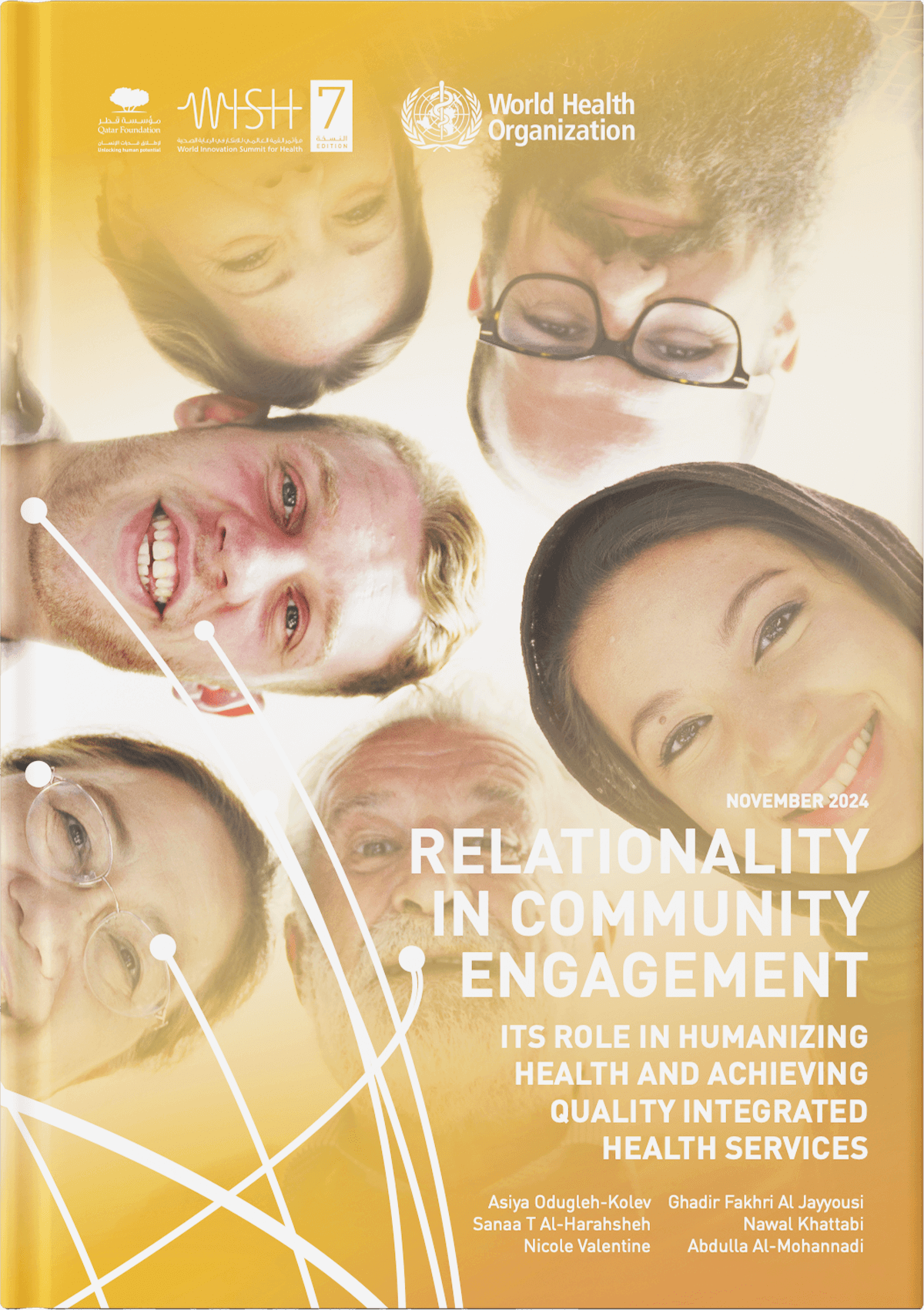
Wednesday, April 02, 2025

Webinar: 8 April Humanizing Health Care Through Relationality -

Exploring The Science And Practice Of Community Engagement


Join us for the first of four webinars co-hosted by the WHO Department of Integrated Health Services (IHS) and the Global Health Partnerships (GHP) (formerly THET). This webinar series is based on a new policy report launched at the World Innovation Summit for Health (WISH) -

https://wish.org.qa/wp-content/uploads/2024/09/Relationality-in-Community-Engagement.pdf 

The report revisits foundational concepts of community and examines how a deeper understanding of the relational nature of community engagement can contribute to improving quality of health care and transforming health systems. The webinar series hopes to inspire a shared understanding of community engagement’s transformative potential and how it can be leveraged for people-led change.

Continued ...


 Previously: relational :: community :: scale

Wednesday, February 03, 2010

HoNOS, checklists and semi-structured interviews

Mental health services not routinely (and formally) using HoNOS (Health of the Nation Outcome Scales) are gearing up with a push to implement the scale across services by April. HoNOS has been around for a long time almost 20 years so it is time it earned its keep. Perhaps high quality tools take time to emerge from the noise and chatter of the care marketplace? ;-)

Although they are available, I've been putting a presentation together to help get to grips with HoNOS in the role of a trainer. The evidence for the validity and benefits of using HoNOS is well established, with the HoNOS family of scales boasting global usage and development:

  • HoNOS for working age adults
  • HoNOS65+ for older people
  • HoNOSCA for children and adolescents
  • HoNOS-Secure for use in health and social care settings secure psychiatric, prison health care and related forensic services, including those based in the community)
  • HoNOS-LD for learning disabilities
  • HoNOS-ABI for acquired brain injury (ref.)
The number of assessment, intervention and evaluation tools available to clinicians AND managers begs the question (ironically): is there 'space' in the toolkit for yet another tool? If HoNOS can help establish a coherent currency for mental health commissioning beyond the block contract then this is most welcome. Mental health services need to move forward on several fronts. There is a timeline running with completion of this difficult task in its sights.

One set of guidance for HoNOS points out that:

The scales are not used as a checklist or semi-structured interview, but form a brief record of severity.

There is some succor there then, since Hodges' model is a checklist and a quad-structured interview there is still a role for a global conceptual framework.

There's nothing like a full and tidy set of tools!

Honos health of the nation outcome scales report on research and development July 1993 - December 1995
