Hodges' Model: Welcome to the QUAD: rent

Hodges' model is a conceptual framework to support reflection and critical thinking. Situated, the model can help integrate all disciplines (academic and professional). Amid news items, are posts that illustrate the scope and application of the model. A bibliography and A4 template are provided in the sidebar. Welcome to the QUAD ...

Showing posts with label rent. Show all posts

Thursday, December 05, 2024

iii 'Our Housing Disaster'
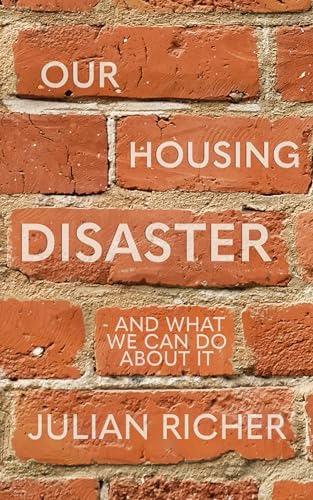
'Our Housing Disaster'
Image: Goodreads

Here on W2tQ many posts have referred to 'common sense' over the years. Apparently, there is no such thing - which may be another blog post).

https://www.psychologytoday.com/gb/blog/too-many-goals/202005/theres-no-such-thing-common-sense

In 'Our Housing Disaster' Julian Richer is simultaneously analytic in identifying problems and potential solutions, logical and to me commonsensical. There is a need for debate and decisions at a political level. Residents, must also be involved, have a say. Chapter 10 lists shorter-term actions and longer-term. 

The history of this disaster is tackled in chapter 3. Chapter 4 links very well explaining the rise of renting. If there was ever to be another edition - which the book and issue well-deserve; it would be good to a nod to evidence-based housing policy? This is suggested, as is integrating the many threads of housing; work, transport, infrastructure, shops, water and services. I've posted here about the number of All-Party Parliamentary Groups and talk of joined-up government. Housing is anything but joined-up. You could argue all MPs and Lords should read this book. 

Overall, the book is well produced, the text very readable, large size and well laid out. The 'references' for each chapter are in the form of links. Needless to say, I have only tried a few. The book seems smaller - narrower than a standard paperback, so may have fewer words / line. For posts i & ii, I extracted text from photos, which is a challenge without stressing the book's spine (as I've written before no doubt, I'm squeamish when it comes to books).

In the UK, the Right to Buy and Help to Buy, have long been a feature of housing policy. Of Help To Buy, it has 'cost taxpayers £29 billion in cash terms by 2023' (p.45) and has additional consequences. Milton Keynes is the 'right-to-buy-to-let' capital of England (2017, p.48). Surely, it is time to move on -  and quickly. The history of how we got here is fascinating, like a slow car-crash with critical events that accelerated the inevitable. Taxpayers and citizens all: we have missed out. There is mention of preventing corruption (but yes, more effort on money-laundering and tax evasion please!). The need for buildings inspection, standards of construction and materials and responding to the climate crisis and high energy costs are also stressed.

Richer's stance is tempered, and sets an effective tone. He is not preaching, even as he points to land owned by the Church of England. I remember the NHS selling estate, and yet there is more. While the book is not long, an index would help. I like the final summarising and concluding sentences for each chapter. Physically, they are bound to be there obviously, but there's a welcome sensible thread to these imho. With an index, perhaps I could check back to look up 'productivity, reduced', a problem that has plagued the UK economy. To what extent does housing contribute to this now; since the 1960s? The King's Fund and many other organisations and commentators advocate daily for social care. While it is acknowledged, social care is not one of the government's 5 key 'missions', and now (5th Dec.) there are milestones. Richer refers to the problem of bed-blocking in the NHS, and the need for suitable future housing so older adults can continue to 'live' in their homes.

So often in health we are taught, and learn to assess, plan, intervene, and evaluate a person-centred set of needs, a patient's needs, and a carer's needs. It is welcome to see a collective - population-based focus on needs. The book delivers on the title. So there are no details of nations (or cities) that have a  much better housing system and controls. Over the years it's been interesting and encouraging to read about Vienna in the FT. Below I have mapped/associated selected concepts to the care / knowledge domains of Hodges' model:

INDIVIDUAL
|
INTERPERSONAL : SCIENCES              
humanistic ------------------------------- mechanistic
SOCIOLOGY : POLITICAL   
|
GROUP
psychological security
mental health
'my' home, my space
identity
peace of mind when costs met
facilitate well-being
memories
LAND - the 'hope' value
sense of continuity / permanence
children being safe making friends
access to 'GREEN' spaces
my life course - personal history
Cognitive assurance: my area -
family & friends / pets /school / work -
attachment

LAND - UK geography
physical shelter
physical health (NO damp, mould, noise...)
House building targets/programmes
my space/room
having an address - identity
displacement
public/environment health
eviction
house building - infrastructure
land - costs
transport links
bed-blocking in hospitals
Climate Change

place to make a home
raise a family
belonging
sense of community
friends & neighbours
 anti-social behaviour by tenants
social care - older adults
social care disabled
access to work, schools
resources to service a community
lack of spare capacity to support people & families in need/crisis

the economy: interest/mortgage rates
indebtedness - poverty
housing POLICY :: COSTS
national housing & land assets
inspection and building standards
forms of tenure: private, rented, housing assoc.
LAW - housing & land legislation
housing rights
migration, refugees
independent advocacy / NGOs
compulsory purchase


Thank you Mr Richer for an excellent read and synopsis. I do hope the government listens! My daughter's partner works in estate agency, so I know where my copy is heading: a new home!


Wednesday, December 04, 2024

'Our Housing Disaster' ii

'Our Housing Disaster'
Image: Goodreads

Late to reading about economics, apart from the 'quality press' and an 'O' level in social history (which has actually been really useful in my nursing career), this book can ground and crystallize 'housing' as heard and viewed in the news.

I've a love for hi-fi that I share with Julian Richer, but my wealth lies elsewhere and is decidedly non-monetary. Reading his column in The Sunday Times, I'm impressed with Mr Richer's insight and the extent of his philanthropy. The book notes several initiatives and collaborations, e.g. TaxWatch -https://www.taxwatchuk.org/

On the news you hear of 'intervention' in the market - usually equity or bonds. You - the government - can intervene, or let the market, a market by implication, look after itself. Markets find their own equilibrium, shift to stability ultimately; and this despite economic crises, billion-busting scandals and political parties totally screwing-up.

So, it appears governments have allowed the housing market, to make its own moves.

It's back to the future, the 18th century of laissez-faire: the market has spoken, and its a utter mess.

The book's contents are well structured and delivered in full.
Introduction
1 Disaster? What Housing Disaster?
2 A Housing Crisis That Harms
3 Where Did Housing Go Wrong?
4 The Rise of Renting
5 The Shrinking of Social Housing
6 Underregulated and Oversubscribed
7 Land and Planning: The Price of Permission
8 Making Better Use of Buildings and Land
9 Building a Solution
10 Time for Action - My Housing Manifesto
Conclusion

OHD covers the population as a whole, but 'health' is very well represented in terms of personnel and the impacts of lack of housing and poor quality, unregulated housing: 

'Inability to afford housing is one of the grievances feeding into strikes by public sector workers - even better-paid ones. A survey by the British Medical Association (BMA) in December 2022 found that nearly half (45.3%) of junior doctors had struggled to afford their rent or mortgage in the past year. To earn more, some were taking on extra shifts and the BMA said this added to its concerns around junior doctor exhaustion and burnout. 

The consequences reach out to the public at large, as housing problems hit staff recruitment in health services, education and so on. The NHS visibly cant cope: basic structures are crumbling.' p.25.
We can imagine the anxiety and depression this might provoke. Even for people you might think (assume) would be ordinarily resilient. These are clearly extraordinary times. An email - RCN Magazine - today supports the same conclusion:


The relationship between health and housing is not limited to chapter 2. In chapter 2 though damp and mould (yes a specific case), unsanitary conditions the loss of environment health officers and skilled personnel, reminded me of decades ago an article in HSJ, or in that 'quality press' about the community health councils - CHCs having their teeth extracted. Public (MENTAL) health has taken a stunning fall and desperately needs to be put back together.

More to follow...

Tuesday, December 03, 2024

'Our Housing Disaster'

Our Housing Disaster

I must finish the spring and summer's reading as pictured, with another two books in the wings. While the smallest text Our Housing Disaster is cheap to buy, an important read and insightful.

Politically, in the UK and many other nations, housing and its opposite -  homelessness, and the supply and cost of housing are ongoing issues.

Julian Richer's book is low cost £4.99 post free with a promo-code; even as I obtained a free copy, learning of the book in Business section of The Sunday Times. 


Our Housing Disaster gets off to a flying start:

'Falling or stagnant house prices are seen as national 'ill' that we must recover from but, in fact, fast-rising house prices and interest rates have proved to be the real ill, destroying the dream of a property-owning democracy that was supposed to benefit all.

Britain's housing policy, such as it is, has failed on its own terms.' p.9.

I remember when Grand Designs appeared on our TVs. Especially the episode with the wood-frame eco-house by Ben Law. This seemed sustainable and time-limited too. Julian Richer really nails the housing problem without delay. Unfortunately, the audience appeal of TV programmes like Grand Designs, Location, ... seem to me symptomatic of the issue Richer raises above. I used to think that the 'middle class' were shooting themselves in the foot; as house prices rose and rose. There was a collapse at one point with the trap of negative equity that my family almost got caught in (had we bought a new home). Richer corrects this view, with a national perspective across ten chapters and 180 pages.

 If the link between health and housing needs to amplified Richer ably achieves this, and quickly:

'Poor housing is harming the nation's health. The housing ombudsman, Richard Blakeway, whose office deals with complaints from social housing tenants about disrepair and mould and damp in their homes, problems recognised now to be a threat to health, has found the situation to be so bad that he has called for a Royal Commission to look at the links between housing, health, and welfare. Too often, the various agencies in housing, health and social care tend not to link up, or even know what the others are doing. which can end up making people's housing situation worse. Someone who has been homeless or who has mental health needs, for example, can require a lot of support once they are housed so that they can pay the rent and maintain the tenancy. If they just get housed and then left to cope on their own, they can struggle, lose the tenancy, become homeless and whole cycle starts again, with all that waste of money and damage to lives.' p.16.
'In addition to the 8m, there must be millions more who are not in crisis, but who have a blight on their future: typically, young, working people, perhaps with children, who are living in private rented accommodation, with a roof over their heads but always worrying they might be evicted. The insecurity and uncertainty that they experience is not good for them or their children. Just as job insecurity makes it hard for people to build a career, housing insecurity makes it hard for people to establish a life.' p.19.
The statistics flow thick and fast but as readable as they are focussed they weave an effective narrative referring to the history of just how we got to this point. The text make stark the dire crisis and need for action and an urgent government response. 

More to follow.

Tuesday, January 30, 2024

"Maslow's hierarchy of needs hides housing horror" c/o Gary Backler in FTWeekend

"John Burn-Murdoch sets out graphically the intergenerational horror story of housing in Britain since 1980 (Opinion, January 13). ...
Abraham Maslow, the American psychologist, placed the need for "shelter" at the very bottom of his famous hierarchy of needs. 
We used to know this. I have a photo of my newly married parents' first rentbook for the council house into which they moved in 1953. It is clear on the cover that after the "accountant to the council", the next most responsible officer is the "medical officer of health". ...
Individual
   |
      INTERPERSONAL    :     SCIENCES               
HUMANISTIC  --------------------------------------  MECHANISTIC      
 SOCIOLOGY  :   POLITICAL 
|
Group

mental health

emotional needs

physical health

shelter/physical security

social needs - belonging

social care

society
Rentbook for council house in 1953 © Gary Backler


Backler, Gary, Maslow's hierarchy of needs hides housing horror, Letters. FT Weekend, 20-21 January 2024, p.8.
Ack. Financial Times. https://www.ft.com/content/3b8719f6-d8e9-4997-b9b5-7dd7ba96fc08

Previously: Maslow.
