Hodges' Model: Welcome to the QUAD: inpatient

Hodges' model is a conceptual framework to support reflection and critical thinking. Situated, the model can help integrate all disciplines (academic and professional). Amid news items, are posts that illustrate the scope and application of the model. A bibliography and A4 template are provided in the sidebar. Welcome to the QUAD ...

Showing posts with label inpatient. Show all posts

Monday, September 07, 2026

Host|Guest by Hospital Rooms

To mark its 10-year anniversary, arts and mental health charity Hospital Rooms presents a major exhibition at Victoria Miro this September.

Bringing together leading contemporary artists from across the Hospital Rooms programme, the exhibition features re-creations of monumental new artworks created for hospitals this year, alongside artists the organisation has collaborated with over the past decade. It reflects on the impact of transforming NHS mental health environments through art, while looking ahead to expanding access to creative programmes nationwide.

Host|Guest


My source: Ellee Su, Gallery, HOSPITAL ROOMS, FT Weekend Magazine, Number 1,192. 5 September 2026, pp.10-11.

Thursday, July 10, 2025

ii 'Thinking outside the box ...' by Amber Javis

Second reply to a blog post by Amber Jarvis on The Mental Elf:

Thinking outside the box: alternatives to standard inpatient mental health care

Amber's post considers a study by:

Griffiths, J. L., Baldwin, H., Vasikaran, J., Jarvis, R., Pillutla, R., Saunders, K. R., … & Johnson, S. (2025). Alternative approaches to standard inpatient mental health care: development of a typology of service models. International Journal of Mental Health Systems, 19(1), 1-13: https://pubmed.ncbi.nlm.nih.gov/40247283/

Jarvis highlights concern within inpatient services of:
'use of coercive practices ... (Nyttingnes et al., 2018; Belayneh et al., 2024). These include physical restraint (physically holding a person), seclusion (holding a person in a locked room) and chemical restraint (the use of sedating medication to manage distress or behaviour, sometimes administered “as needed” rather than as part of any planned treatment). Poor relationships between staff and service users have also been noted, ...'
Reflecting since the previous post, I realise that I encountered efforts to prevent admission and treat in the community prior to going part-time. A short stay unit at a general hospital. Being a member of Intermediate Support for older adults; shifts ran 0800-2000 - early or late. Then working part-time, there were short-stay placements in the community that the recovery team would visit providing support.

Mental distress is distressing (a truism of course), both as lived experience (with or without self-awareness in-situ/crisis) and for others in the vicinity. Family, friends - who see a person they thought they knew, perhaps even thought they were a friend, a person who loved them; but now!? They present as distant, aggressive, subdued, agitated, unpredictable, inconsolable and possibly expressing thoughts of self-harm, threats to harm others, or totally bizarre, 'psychotic' ideas. This is not the person they thought they knew. For the person affected, familiars are strangers. A relational breakdown. We forget the severely mentally ill at our peril. A pervasive sense of helplessness is readily transferred: the reflex conclusion that help is needed - and fast.

To say we are creatures of habit, is to also acknowledge that change our environment results in a change in our behaviour. When relatives did arrive on the psychogeriatric ward I mentioned previously, they cried. Apologising for the environment, yes; efforts to reassure ensued and eventually family, friends were won over. They shouldn't have been. Unless we're in a game, play, or movie, who wants to find themselves in a Victorian era institution?

I've posted previously (or is it in draft?) on the importance of design in the design of care environments. It was a relative's visit to a care home, that resulted in a nursing home design business (Sunday Times). 
A person who is severely mentally ill needs service-centred care, not purely person-centred care. Person-centredness is key, but safety of self, and the public soon makes itself known. We also forget this at our peril. The problem is that control, and law literally take over. Plus, it's our place not yours. Loss of power the person struggling, ill, in crisis then follows. Amber continues:
'The concerns described above chime uncomfortably with modern mental health agendas of prioritising autonomy, compassion, trauma-informed and person-centred care. In light of these tensions, and the growing number of crisis alternatives – ranging from crisis cafes to intensive home treatment services – researchers  at the NIHR Policy Research Unit in Mental Health set out to map current alternatives to traditional inpatient care, both nationally and internationally. Griffiths and Baldwin’s findings raise important questions about how mental health services could evolve to better suit people’s needs, providing a valuable starting point for service planners considering developments in care.'
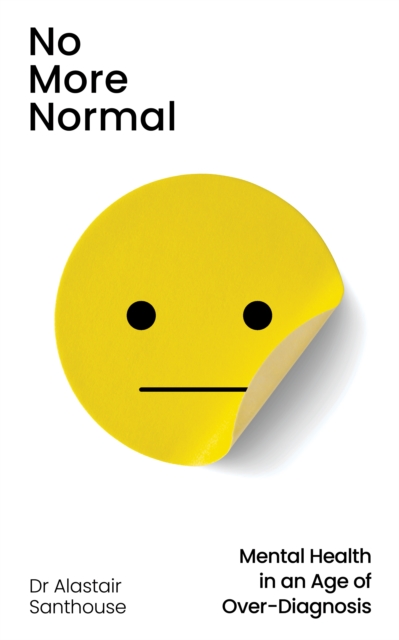
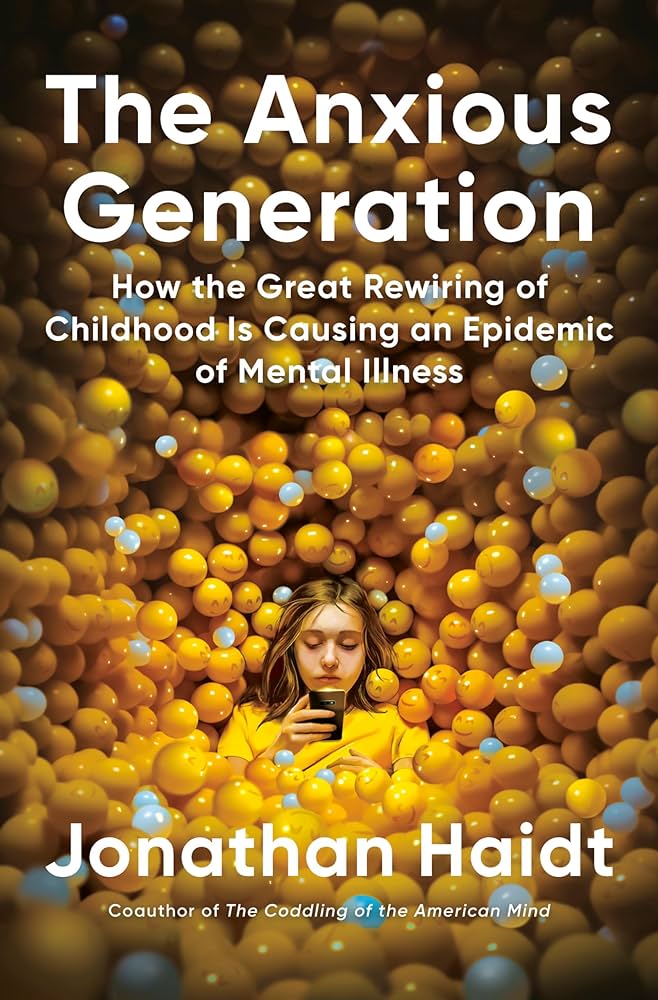
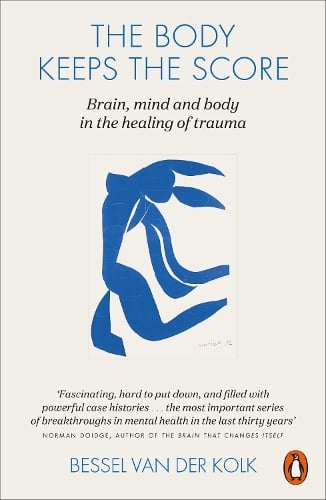
Hodges' model is ideal to help reflect and critique the relation-ship between 'a person' and 'the service'. I passed two gentlemen in London over the weekend. Clearly unkempt, standing but gesticulating, freely verbalising, incoherent on passing. Neither appeared intoxicated ( but I wasn't that close) or 'stoned'. That's the other question; passing-by what was I going to do? Does the 'community' care? On 'X' you encounter the extremes of debate. Anti-psychiatry, resort to and risks of dependence on medication - anti-depressants, anxiolytics; the damage from anti-psychotic drugs and atypical antipsychotics. The continuous debate about ECT. A dizzying stream of texts about mental health, over-diagnosis and wellbeing:


Medical prescribing has a partner. Social prescribing is well established, with organisations, events, publications and research emerging. People, have scoffed at the suggestion that gardening can help; or going for a run. Especially when you can't get out of bed. Chronic fatigue syndrome, long-COVID are seemingly monolithic in their resistance to change. A real challenge and so counter to the person's 'pre-morbid' personality and lifestyle.

For several years the state of mental health nursing as a specialty has been questioned. Is the mental health nursing curriculum being genericised? Enrollment of students nurses in learning disability has also dropped.

Medical prescribing has a partner. Social prescribing is well established, with organisations, events, publications and research emerging. People, have scoffed at the suggestion that gardening can help; or going for a run. Especially when they can't get out of bed. Chronic fatigue syndrome, long-COVID are seemingly monolithic in their resistance to change. A real challenge and so counter to the person's 'pre-morbid' personality and lifestyle. As a conceptual framework Hodges' model is ideal as a semantic net, to reflect and critique concepts that stretch and so disrupt (for a time) out norms. Concepts with a dual character. If social prescribing is one example, take crisis cafe mentioned by Jarvis above. If you think in physical - environmental terms where do you envisage a crisis occuring or playing out? What about a cafe? What is the ambience of these places?

I noticed a little visual game, an animation of characters running, jumping, climbing over an obstacle course. You focus on one figure and follow them for a time. This makes a difference, called distraction. In psychosocial intervention and managment of psychosis and anxiety audio - music, poetry, repetition has also bee used. The essence here must be when the intervention begins. Recognising relapse triggers, requires preparatory work. The Griffith reference is provided, but Jarvis begins to describe the results:
'Researchers identified 65 alternative service models to standard inpatient care. These were organised broadly organised according to the setting (e.g., community-based, hospital-based, or cross-setting) and the target population (e.g., adults versus children). Across these categories, ‘community-based alternatives’ were the most common category of alternative service models, followed by hospital-based and cross-setting approaches. We’ll explore each of these in more detail below.'
In post (i) and here I suppose I am advocating for mental health nursing as a distinct programme of study, practice and proven competence. For several years the state of mental health nursing as a specialty has been questioned. Is the mental health nursing curriculum being genericised? Enrollment of students nurses in learning disability has also dropped. 


There is a saying: 'You get what you pay for'. There is a sense that there are people who would like to ignore, deny, erase 'mental health'. After all, the truth really is that you can 'see' a broken leg. This isn't an issue if you can afford a private psychotherapist, or a psychoanalyst.
The elephant here (well, there always is one) is education and the literacies. For prevention: the ultimate change - this is where we must focus. But of course for the problem at hand - and mind it is too late.

(Post iii likely to follow.)

Individual
|
      INTERPERSONAL    :     SCIENCES               
HUMANISTIC  --------------------------------------  MECHANISTIC      
 SOCIOLOGY  :    POLITICAL 
|
Group
subjectivity         
mental state - crisis - mind
quality
objectivity
hand - physical state - crisis
quantity
Social prescribing
Cafe

Housing - crisis
Cost of living - crisis

See also: 'literacy' : 'prevention' : 'service' : 'severe' : 'change'


Sunday, December 27, 2015

H2CM bibliography: New reference in "The Psychology of Arson"

I have only just caught up with a new addition to the bibliography for Hodges' model (please see the side bar).

Abstract: key points
  • One in ten patients in secure mental health settings have a conviction for deliberate fire-setting.
  • This chapter views the issue of inpatient care and management from a forensic mental health nursing perspective. 
  • Hodges’ Health Career – Care Domains – Model (HCM; Hodges, 1998) is used to provide an overview of the political, biological, psychological and sociological aspects of care and management.
  • Nurses can deliver and/or support all aspects of care and treatment and have particularly significant roles related to management of relational security and recovery-oriented practice. 
  • The HCM can be usefully supplemented by a firesetting specific model to enhance nursing assessment.

Dickens, G.L. & Doyle, M. (2015) Mentally disordered firesetters in secure mental health care: a forensic mental health nursing perspective (Chapter 17) In, The Psychology of Arson, 1st Ed., (Eds.) Doley, R.M., Dickens, G.L., Gannon, T., pages 260-275. Oxford: Routledge. ISBN: 978-0-415-81069-2

Thursday, January 15, 2015

Architecture and Design: 4 beds in 4 domains

'Privileged' is definitely the wrong word. Perhaps it is the advantage of experience and the passing of almost four decades and more....

Times have changed since arriving at Winwick Hospital on a bike as a student nurse for an early shift at 0655. I would  leave my bike just down a small corridor to the right of the main entrance. I don't think I locked it. Then depending on the ward allocation I walked through the red carpeted front of the hospital to the increasingly rough and seemingly lost corridors beyond.

Hospitals have changed markedly. Winwick and other asylums have gone - thank goodness.

Cockroaches, leaking roofs, two-storey blocks where when necessary the patients would carry the meals up the stairs. A charge nurse set about ensuring that the patient's were provided with proper safety equipment if there were no lifts. The dormitories were large: 40+ bedded and more. There were lockers of some description I think, but personalised clothing was still to follow in 1977.

Despite the emphasis on community care, a project that in reality is still a work in process, the need for hospital beds remains. I have worked to keep people out of hospital, to help provide crisis support at home. When beds are needed the experience for members of the public and their families is radically different today. As taxpayers we recognise the need for efficiency in design, procurement, commissioning and managing new buildings. So it is within the NHS. Visiting new modern facilities, and this includes private nursing homes, you really appreciate the benefits good design can bring for patients-residents, staff, students and visitors.

individual
INTERPERSONAL : SCIENCES
humanistic ------------------------------------------- mechanistic
SOCIOLOGY : POLITICAL
group
My space
Private space - observations permitting/negotiated
Space to wander
Space for wheelchairs
Colour
Personalisation
Temperature

Why is Joe staying in bed?
Why is Mary not going in the lounge?
...?
4 Bed Multi Bed Bay c/o ProCure21+


Public space
Quiet spaces (who says?)
'Community'
Lounge
Dining areas
Activities room
Noise levels
Meeting rooms
Interview rooms
...?


Public Engagement
Staffing
Volunteers
Project Management
Value for Money
Savings
Security
Policies
Safety
Services
ProCure21+
...?

Image source: http://www.procure21plus.nhs.uk/standardshare/

Tuesday, August 26, 2014

Heat maps and hotbeds in Hodges' model

individual
INTERPERSONAL : SCIENCES
humanistic ------------------------------------------- mechanistic
SOCIOLOGY : POLITICAL
group
out of area


family contact

"Out of area placements are a good indicator of heat within the system and how over-stretched it is." p.5

Prof. Paul McCrone,
Lintern (2014).


Sources:
Image: http://www.usability.gov/sites/default/files/images/eye-tracking-full-option1.jpg

Lintern, S. (2014) Analysis reveals mental health trust funding cuts, Health Service Journal. 124, 6411, 4-5.

Friday, November 16, 2012

Conceptual Reflections on Schizophrenia - Hodges' model

A decade ago I was studying the Psychosocial Interventions for Psychosis (COPE) pathway part-time at Manchester University. The student body was interprofessinal made up of nurses, psychologists, occupational therapists, nurses and if memory serves me right people from the voluntary (third) sector. What I learned then left me wondering where I had been all those years since qualifying (lost in IT....).

There are many universities now delivering this curriculum, presenting the very latest research. The lecturers are frequently the researchers themselves, working in ongoing multicenter trials studying  various aspects of the treatment and care management of psychosis.

This is why it is very alarming to hear of the lack of progress not just within in-patient care as per the findings of the Schizophrenia Commission, but the delivery of care for these individuals and their families across the health and social care system. Of course, as a former student and holder of a PG(Dip.) I am not at present practising these skills formally.

In the h2cm table that follows I have highlighted some of the main concepts across the care domains of Hodges' model:

INTERPERSONAL : SCIENCES
SOCIOLOGY : POLITICAL

beliefs, perception, attention, anxiety, stress, vulnerability, pleasure, feedback, motivation, mood, therapies, therapeutic relationship, communication, assets, cognitive triad, perception, delusions, hallucinations, positive and negative symptoms, person-centered care, existing coping strategies, mental health assessment, literacies (3Rs, emotional, health), salience, attention, attribution, meaning, creativityphysical health, weight, fitness, side effects, medication, atypical antipsychotics, evidence,
genetics, research, diagnosis, (cognitive) information processing, dual diagnosis, risk, models of care, recovery, hierarchy of clinical evidence, care processes - assessment, care planning, access to interventions, audio recording of sessions, protocols, DSM IV
clinical supervision, social attitudes - family, friends, community, stigma, myth, media, carers, familes, social relationships, network, self help groups, survivors,
www.hearing-voices.org/
activities, daily routine, 'value' of a diagnosis - pros & cons (discuss), community centers, clinical supervision, positive risk management, employment, social history of mental health, social psychiatry, stories,education - schools & community,
'community care', housing
mental health history, institutional vs. community care, mental health law, autonomy, consent, capacity, best interests, equity
mental health services, early intervention, access, POLICY, anti-psychiatry, equity, governance, data gathering, statistics, reporting, outcomes, services,
secure provision, early intervention, crisis intervention, DSM V, commissioning,
funding for mental health, education and training, sickness - welfare benefits - 'incapacity' review 'return to work'

The relative position of concepts above does not indicate priority.
