Paper: "How can we mainstream mental health in research engaging SDGs? -
A theory of change." i
This paper caught my eye on twitter, quite a while ago - the combination of mental health and SDGs:Madill A, Bhola P, Colucci E, Croucher K, Evans A, et al. (2022) How can we mainstream mental health in research engaging the range of Sustainable Development Goals? A theory of change. PLOS Global Public Health 2(8): e0000837. https://doi.org/10.1371/journal.pgph.0000837
"The recently updated WHO Comprehensive Mental Health Action Plan 2013–2030 [1] concurs with this vision in that two of its six cross-cutting principles are: (i) a multi-sectoral approach, and (ii) action on social determinants. This acknowledges that “integrating mental health across wider sectors such as education, employment and social welfare helps address social determinants of mental health and ensures a comprehensive and holistic approach” [7 p12]. Shen, Eaton and Snowden [8] investigated mental health mainstreaming in 42 countries in terms of a shift towards providing mental health care from institutional to community settings. They concluded that “different countries have adapted deinstitutionalization in ways to meet idiosyncratic situations and population needs” [7 p313] and that more needs to be done with regard to management and implementation strategies. While the keyword for Shen, Eaton and Snowden [8] is ‘deinstitutionalisation’, for Gómez-Dantés and Frenk [9] it is ‘integration,’ and they provide a dimensional approach with regard to what is involved in mainstreaming mental health: “(i) incorporating mental disorders to the global and local agendas related to NCDs [non-communicable diseases]; ii) moving away both from the biological and sociological reductionisms around mental health prevalent in the past century; iii) addressing the whole range of conditions related to mental health; iv) migrating from the idea that mental diseases have to be treated in secluded clinical spaces; and v) expanding the use of a comprehensive approach in the treatment of these disorders, which includes medication, psychotherapy and other types of therapies” [9 p214]." p.2/23
Selected concepts are related to Hodges' model below. In addition to the 2x2 table below, it may be useful for visitors to consider the paper's figures against the model? There is no doubt an overlap across the care / knowledge domains of Hodges' model, but hopefully the 'holistic bandwidth' of the model and its potential as a generic conceptual framework will also be highlighted.
Note for example the way mention of 'clinical' tends to attract care (understandably) to clinics, hospitals, institutions, controlled (mechanistic) spaces where resources can be controlled and concentrated. Additionally, to find appropriate concepts, we must appreciate how 'local' is applied not only geographically, regionally, but culturally also - within and across a community, or several.
Hodges' model provides several disciplinary bridges of relevance here:
- psycho-political
- psycho-social
- socio-economic
- socio-political
- bio-social
I will revisit the paper again soon ii.
INDIVIDUAL
|
INTERPERSONAL : SCIENCES
HUMANISTIC -------------------------------------- MECHANISTIC
SOCIOLOGY : POLITICAL
|
GROUP
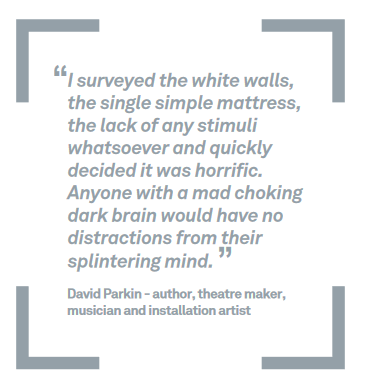
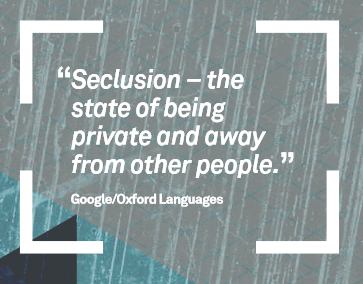
intra-personal - mental health (contribution to individual's overall health status) self advocacy qualitative evidence mental health practitioners psychotherapy, counselling individual health literacy/education "Implications for researchers include: recognising the potential of their projects to have psycho- | quantitative evidence time, environment, geography - locale treatment resources (time and physical - space) digital technologies 'clinical' seclusion spaces multiple locally-appropriate concepts 'clinical spaces' seclusion/isolation |
| -social wellbeing impact"* "collaborating with local communities, researchers, and service providers to effect change." "developing a more inclusive and flexible language around mental health that bridges cultures and disciplines ..." multiple locally-appropriate concepts resources - social, family, community | LMICs - 'workforce gap' shift from institutionalised to community settings security - conflict advocacy resources $$$ income/welfare/micro-finances/ banking/digital access legislation, policies, strategies and services |
*The paper also refers to "psychosocial disabilities".
My source (twitter):
https://twitter.com/PLOSGPH/status/1565066449798205440?s=20
Madill A, Bhola P, Colucci E, Croucher K, Evans A, et al. (2022) How can we mainstream mental health in research engaging the range of Sustainable Development Goals? A theory of change. PLOS Global Public Health 2(8): e0000837. https://doi.org/10.1371/journal.pgph.0000837
Madill A, Bhola P, Colucci E, Croucher K, Evans A, et al. (2022) How can we mainstream mental health in research engaging the range of Sustainable Development Goals? A theory of change. PLOS Global Public Health 2(8): e0000837. https://doi.org/10.1371/journal.pgph.0000837



 orcid.org/0000-0002-0192-8965

