Hodges' Model: Welcome to the QUAD: self respect

Hodges' model is a conceptual framework to support reflection and critical thinking. Situated, the model can help integrate all disciplines (academic and professional). Amid news items, are posts that illustrate the scope and application of the model. A bibliography and A4 template are provided in the sidebar. Welcome to the QUAD ...

Showing posts with label self respect. Show all posts

Tuesday, June 13, 2017

Boxing 'II'

As young children we may encounter 'boxing' quite early on. This first experience, which we may or may not wholly remember is undoubtedly critical to our personality and subsequent psyche. Such early experiences influence our ability to 'look after ourselves', how we deal with bullies, anxiety, the potential for conflict and develop assertiveness skills. When a 'scrap' happens it can be quite sudden, that total impact of everything out of control, sheer danger and literal impacts. The environment might be nursery, playground, cloak room and the presence of peers as onlookers can be another key factor.

In the late 1960s early 70s I found some old boxing gloves under the stairs at my nan's. I had a handful of uncles on mum's side (just two now - Uncles Tom and Ken!) and the gloves had clearly been swung and jabbed down the line. I don't count myself as a fighter, unless someone tries to push their beliefs - without invitation - down my throat. Then it will be more a case of a reflex action. The 'arc' being comprised of vomit. In the school playground I learned to talk my way out of trouble, resorting to humour at times; as you learn to deploy whatever intellect you might have judiciously. Legs are essential to a boxer:

“First your legs go. Then you lose your reflexes. Then you lose your friends”
Willie Pep

My legs helped me a time or two.

Not too many years ago, so a new generation is in the frame and a nephew had boxing gloves of his very own. He trained with a local club and had some fights. I didn't go watching, but didn't make too big a big fuss either. He doesn't box now as it happens; he's married with family and busy earning a living. Over four decades I've cared for several gentleman, former boxers who developed dementia. Hence, my lack of enthusiasm. (Although the selective literature listed below does not reflect it, women's boxing is of course also well established.) The extent to which boxing caused their dementia is not the point here. It's trying to acknowledge the ongoing debate: the risks, the history (Ancient Greece 688BC), the discipline, sense of belonging and self-respect it can instill. Of course a great many sports can do this. Of course, I listened very attentively as one gent could still relate how perhaps he had been 'used' in terms of the fights and purses back in the 50s-60s. Vulnerable adults of today and yesteryear. Today American Football is concerned about head injuries, in football heading the ball repeatedly is in the news. Technology should be able to reduce the risks even more and protect individuals from injury that is obvious and more insidious in nature.

Some of these points I've considered in Hodges' model as follows:

individual
|
INTERPERSONAL : SCIENCES
humanistic ---------------------------------------  mechanistic
SOCIOLOGY : POLITICAL
|
group

SELF

self-awareness
Identity
self-belief

way-finding

dementia - cognitive damage

personality change

aggression

tactics  strategy

motivation training attitude

self-discipline

ethics

mental health - mental capacity
emotions

mood

Personal safety

boxing technique

reflexes speed movement balance

punching fitness

weight, reach, statistics

THE RING

stamina nutrition hydration

concussion
sub-concussive

exposure models

unconscious knockout

Head - Brain injuries

physics: force time (duration) momentum

technology - sensor equipped gloves

Sports Medicine Research
Headgear
Safety - Evidence

Medical risks

OTHER

Ethnographics
Coaches <-> Boxers
Mentors

Support network

THE STREET

personal history-family
History
sports history

trainer friends club

Sporting behaviour

family friends
Socio-
Rules (changes)

Conflict Power

promotion media finance

codification rules

Amateur Professional

Refereeing

Regulating bodies

Governance

Law

Contracts

Economics


Selective reading:

Sacha, J. (2017). Fighting Feelings. Sociological Perspectives, 60(1), 77-94.

Erlanger, D. (2015). Exposure to sub-concussive head injury in boxing and other sports. Brain Injury, 29(2), 171-4.

Falvey, &., & Mccrory, P. (2015). Because not all blows to the head are the same. British Journal of Sports Medicine, 49(17), 1091.

Mcintosh, A., & Patton, D. (2015). Boxing headguard performance in punch machine tests. British Journal of Sports Medicine, British Journal of Sports Medicine, 14 July 2015.

http://www.welshboxers.com/quotes/

See related post 2016: 'Boxing' I

Wednesday, May 24, 2017

What does professionalism mean to me? #IND2017 (dnf: draft never finished)

Something along, within and across these lines...


INDIVIDUAL
|
INTERPERSONAL : SCIENCES
humanistic ----------------------------------------- mechanistic
SOCIOLOGY : POLITICAL
|
POPULATION

Being self-aware, reflective and
reflexive including aspects of your
role that either you don't especially
like, or you're just not 'good' at.
Recognise when to ask
for help, advice, supervision.
Anticipating needs.
Indicating pros and cons.
Keeping up-to-date.
*Have the courage to blow
that whistle if you must.
Communicate to the best of your
ability and learn constantly as human
nature dictates you must.
Look after yourself: if ill Be ill.
Take care
of your personal ethics and values,
don't be bullied into lowering them
and running with the crowd.
Nurse = Lifelong Learner
... then you will question your own competence.
As you strive to be someone else remember you can be yourself.
The things you take personally are those you open the door to. Learn from them.
Never forget your shield,
protect yourself and others in
what you disclose about
yourself and others.


Being compass-ionate requires

360 degree

vision, hearing ...
learning and forgetting...

Your keen are you?
So really observe.

Care about time,
your management of it as a resource
and the time frames of
past, now, future, hoped for and imagined.
Remember you need to understand information systems, data management in so far as it supports or places at risk the care you deliver and the safety of your patients.
If I use IT based media I bear in mind the scope of the platform.
Open to innovation:
but see the elephant as an elephant.

When the robots knock on your door being professional means you won't be in: "Moved On"

As you care, draw on learning
regards where you stand -
 you are a guest in someone's home,
As your feet are then grounded politically,
so too is touch and
negotiating personal spaces.
 Learn from others 
Expectations Expectations Expectations
Manage them in a way such that you do not make promises you can not keep.
Be committed to what you do.
Learn from your peers, especially for safety's sake, but also form your own opinion.
Talk this and work through with colleagues.
Not everyone will 'like' you; you in turn may not 'like' people. Working through this (without experiencing abuse) as your role demands is being professional.
By all means be a team player, but don't let the games that people play distract you from being professional.

Patient-Carer
Community Care
End of Life Care
 As you learn from others 
pay most attention to the lessons 
in Love as you will witness many. 

The trust and respect of others take time to earn,
but can be lost in an instant;
if you have 'it' use it to foster trust and self-respect in others.
You have to remember constantly
you are accountable here.
Remind yourself of codes of conduct the legal aspects of your role.
Know your lines -
especially when crossed | STANDARDS.
With your ID have your whistle ready*.
What you do and who you are is a privilege.
Know your scope of practice, but be ready to question it. If you do not the future will.
This domain is the most powerful and neglected to the professional nurse. As a professional what are YOU going to DO here?
The art of leadership is filled with wonder: at what together you can all achieve.
Take stock and ask in Year 1 what are the
legacy issues my seniors are wrestling with?
In years 10 20 30 40 ...
(robotics permitting) repeat and reflect.


... because, being professional means learning and unlearning when the lines are there for a purpose and when they need to be shifted, lifted or plain erased ...


Previous post c/o NMC

Wednesday, February 17, 2016

Petition to get Mental Health Education on the curriculum c/o Change.org


Laura Darrall London, United Kingdom


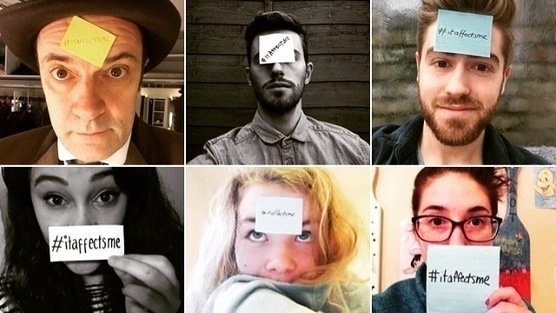
"Last year I had what society refers to as a mental breakdown and after coming out the other side I knew I needed to give something back. I started the #itaffectsme campaign to encourage people who have suffered or who know someone who has suffered to post selfies on social media - to help prove that the one in four people who suffer from mental health issues really are everywhere. 
#itaffectsme wants to see Mental Health Education put on the National Curriculum. To arm our children with knowledge, understanding and compassion. 1 in 4 people suffer with mental illness and 50% of those are established by age 14. We teach our children symptoms of chlamydia and gonorrhoea so why not depression, OCD and anxiety?" 
continued...

Note: I have copied this petition as Hodges' model could definitely be used in schools, colleges to frame and support Personal Social Health Economic Education. 


Saturday, July 25, 2015

A headspace full of 'cans'

individual
|
INTERPERSONAL : SCIENCES
humanistic --------------------------------------- mechanistic
SOCIOLOGY : POLITICAL
|
group
"My headspace

is 25m long."


join me!


Sport England: This Girl Can

Photo: PJ Bus stop WN4

Wednesday, July 30, 2014

Monday, November 07, 2011

Bortz's Next Medicine: Defining 'health' and h2cm

On page 137 of Next Medicine, Walter Bortz assembles the Health Equation:

Genes (A) + Extrinsic Agency (B) + Intrinsic Agency (C) + Aging (D) = Health

After providing values for the other elements Bortz notes that:

Intrinsic Agency = Health - 0.45

In other words, such reckoning, though admittedly coarse, means that internal agency accounts for around 55% of the values we need for health, which is similar to the figure obtained by Mike McGinnis of the Institute of Medicine and Bill Foege of the Gates Foundation. (p.137)
'Conceptual frameworks' are referred to frequently in the literature and in a way quite distinct from h2cm. I've just posted about h2cm as a conceptual framework - a potential conceptual space. Bortz stresses the value of having several conceptual frameworks that, for example: enable pursuit of preventive strategies; and the conceptual framework provided by thermodynamics that informs our understanding of life, health and not surprisingly - ageing.

Bortz's conclusion above however also serves to highlight:
  1. The need for a global, generic, universal (data-, information-, knowledge-centric) conceptual framework to pull the elements of this equation together (and much more besides).
  2. This IS essential as those elements include the various disciplines. agents (stakeholders)  involved.
  3. Bortz's conclusion that internal agency accounts for around 55% also acts as a definition of person-centered health care.
From 1 - 3 perhaps h2cm can also serve as an indicator of a (the) prerequisite literacy level that an individual needs to achieve self-efficacy in health terms?

Chapter 10 next and posts on last week's Cardi conference - which was excellent.

Acknowledgement: I am very grateful to Oxford University Press for the review copy.
