Hodges' Model: Welcome to the QUAD

Hodges' model is a conceptual framework to support reflection and critical thinking. Situated, the model can help integrate all disciplines (academic and professional). Amid news items, are posts that illustrate the scope and application of the model. A bibliography and A4 template are provided in the sidebar. Welcome to the QUAD ...

Saturday, September 06, 2025

Scholarship in Arnold Wesker's 'The Friends'

... n'just t'lethee know that's, scholrship up int North ...

'MANFRED. Our trouble, Crispin, us lot, the once-upon-a-time bright lads from up north, is that we've no scholarship. Bits and pieces of information, a charming earthiness intelligence and cheek, but-not scholarship. Look at these books here. (He picks up a pile and throws them round him.) Renan, Taine, Kirkegaarde, Wittgenstein, Spengler, Plato, Jung, Homer, Vico, Adorno, Lukacs, Heine, Bloch-you've not heard of half of them, have you? And half of them, two-thirds, I'll never read. Do you know, new knowledge disrupts me. Because there's no solid rock of learning in this thin, undernourished brain of mine, so each fresh discovery of a fact or an idea doesn't replace, it undermines the last; it's got no measurement by which to judge itself, no perspective by which to evaluate its truth or its worth; it can take no proper place in that lovely long view of history scalloped out by bloody scholarship, because each new concern renders the last one unimportant. No bloody scholarship, us. And when I sometimes get a feeling that two people in love or one man afraid of death might be a supreme consideration, along comes this man with his 'we are moving into phases of creative disorder' and his 'everywhere the lines are blurred' and I've no defence. He sounds so right, I think, and besides-he's got scholarship. What's 'silly loving' and 'banal dying' in all that? Evil? You want me to confess to the knowledge of evil? I confess it. I say it-evil! So? And what  shall I do with that bit of knowledge?' p.18.

 WESKER, Arnold. The Friends. London: Jonathan Cape, (1970). Hardcover. First edition.

Friday, September 05, 2025

Submit your pitch for Black History Month 2025

London Arts and Health
and The Culture Health and Wellbeing Alliance


To celebrate Black History Month this year, London Arts and Health and The Culture Health and Wellbeing Alliance will commission six artists to explore and showcase their creative practices. This initiative is rooted in the belief that the arts can be a powerful force for health, climate justice, and cultural empowerment.

More details ...

Thursday, September 04, 2025

Parity of Esteem: It's all smoke and mirrors ...

Having just visited the National Gallery and an exhibition on Millet:

https://www.nationalgallery.org.uk/exhibitions/millet-life-on-the-land

Dr Sanil Rege on twitter provided:


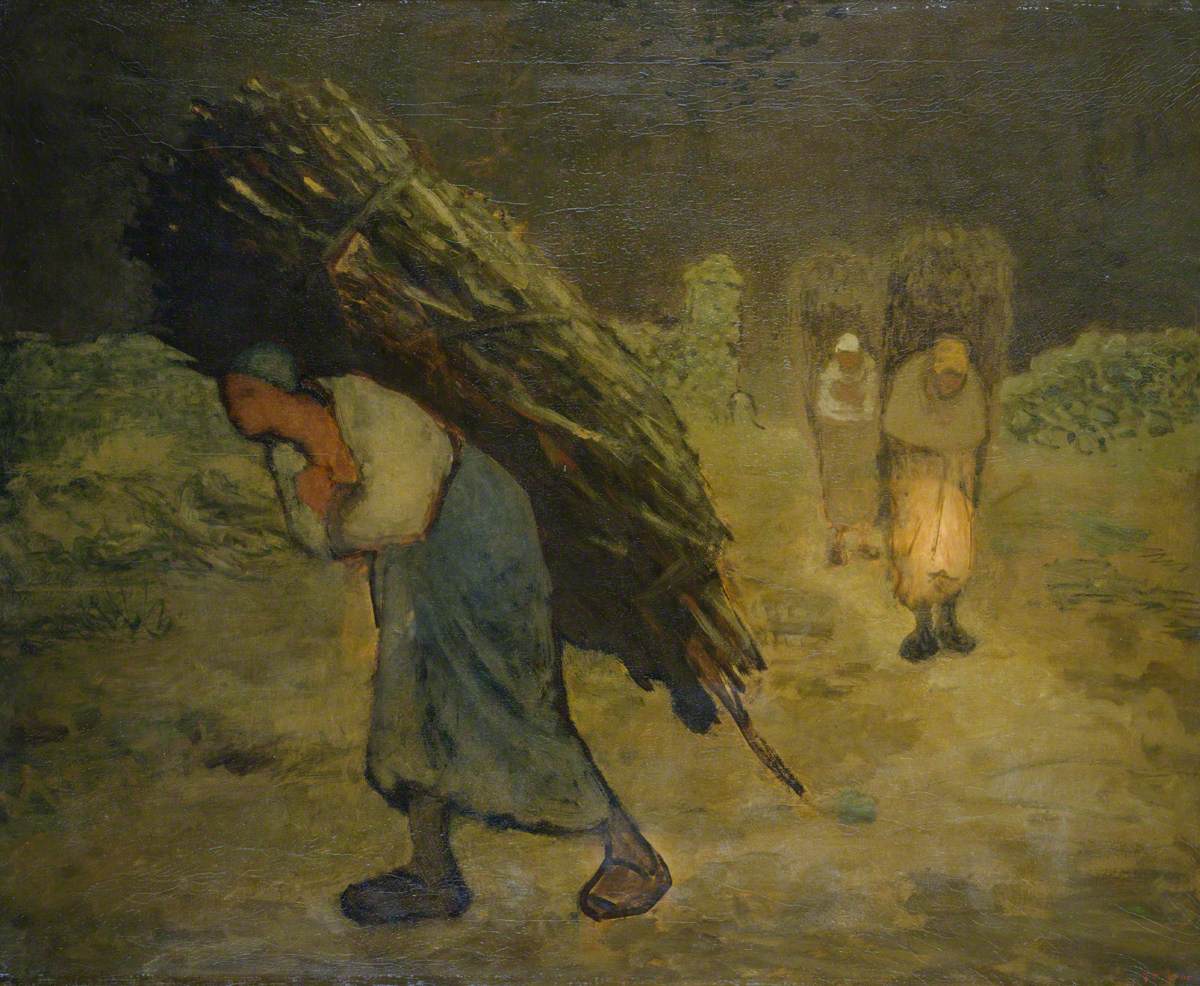
Seeing, and reading (again?) about 'The Faggot Gatherers' I couldn't help but see socio-economic history enacted:

'Two women are taking a short rest from gathering tree branches for sale as firewood. The older woman’s hunched back and clawed hands betray a lifetime of physical toil. The setting is the forest of Fontainebleau, south of Paris, close to the village of Barbizon. Millet was an exponent of Realism, a movement that rejected historical art and idealisation in favour of a truthful view of contemporary reality.'

Text: https://www.nationalgalleries.org/art-and-artists/232271
Winter, The Faggot Gatherers Jean-François Millet (1814–1875) National Museum Cardiff

The National Gallery's accompanying text reads:

'Three women are on their way home trom the forest of Fontainebleau. One of its entrances, the Porte aux Vaches, is visible at the back right. The staggering scale of their loads threatens to overwhelm them in their stumble homewards. The scene evokes Millet's 1851 letter to his biographer Alfred Sensier, in which he described how seeing 'a poor figure laden with a faggot reminded him of the constant fatigue of people's lives.
While the painting is unfinished, the elemental figures are typical of Millet's vork. The extreme simplification of their forms results in austere silhouettes.'

Mental illness has always been a facet of humanity, evidence of trephination from prehistoric times and across cultures and geographies bears testimony to the mind - body divide. Life was brutish physically too. What chance did the weakest stand? If, that is a broken bone: you could be left behind? But perhaps we underestimate the knowledge and experience of our ancient ancestors. Knowledge gained and passed orally, culturally, even before written history. Perhaps too, we struggle to understand how early humanity expressed itself beyond the big-stick of nature and the struggle for survival as the hominids that led to 'us' were winnowed down?

Even as recent as the 19th century life was hard. As the notes above attest, Millet's work seeks to record the sheer physicality of labour, even as the industrial age emerged. The advent of the industrial revolution brought its own pressures and privations, as pastoral life is replaced with change work at home (spinning cotton) to urban and factory growth. 

Severe mental illness would have been institutionalised in poor houses, religious and charitable organisations. Parity of esteem is grounded, to some extent in the questions: "What happened to you?", or "How are you feeling today?" In Millet's work the physical cost and strain stands out. While in the L'Angelus there is debate about prayer, or grief. What is visible usually speaks first, and stands for itself. This is why self-awareness, reflection, critical thinking, observational and interpersonal skills are important; and why mental health nursing calls for specific knowledge and skills. And, in psychiatry too, even when the same is contested.

Image source: Oil on carvas Lent by Amgueddfa Cymry - Museum Wales. Bequeathed by Gwendoline Davies in 1952.

Wednesday, September 03, 2025

TEL us a story ... Hard, Soft and being Smart

Sorting papers I'd saved I came across -

David Mossley and Clare Saunders: A revolution in philosophy teaching? from the The Philosophy Magazine. 3rd quarter. 2013. pp. 40-45. 

Checking back, I see I posted and cited this item in 2013:


In the decade-plus since, how things have changed in tech, education and philosophy!

The story is ... that around this time I needed a new website and in the past I practised computer aided learning. Or should I say mCAL, microcomputer aided learning on the ZX81 and BBC Micro (related citations below). In 2013-2014, I started a PhD (as noted elsewhere) thinking I could recover and update some IT skills. Could I recapture the CAL days, by picking up TEL - technology enhanced learning? I stepped outside healthcare, and nursing specifically. I see now this was an error, but of course I still venture off-piste. The latest detour is even more extreme? On a personal - psychological level I'm visiting a subject maths - formal methods that simultaneously fills me with wonder (recognising its power and utility) and yet terrifies me with its complexity, made me feel sick at school, as a pre-teen and after.

My 'research question' was poorly formulated - which I did recognise. Two years were not wasted, far from it. The journey then was also driven by personal circumstances, married with events in 2007, 2010 and then 2015. 
 
Sticking with the current conference theme, I noticed a call for the 7th International Soft Computing and Engineering Applications Conference. Selected themes from track #4 include:


Track 4: Soft Computing for Smart Sustainable World

Smart agriculture and aquaculture
Smart cities
Smart communication
Smart disaster monitoring and management
Smart earth system
Smart education
Smart elderly care
Smart environment and ecosystems
Smart governance
Smart healthcare
Smart homes and buildings
Smart learning
Smart living
Smart machines and robots
Smart materials and fabric
Smart medicine
Smart social services
Smart villages
Smart wearables and implants

Amid all the (understandable) emphasis on 'smart' we need to retain a place for the human. That's the challenge in simultaneously considering the hard and soft of today's and tomorrow's world.

Citations

1982 CAPA: COMPUTER AIDED PATIENT ASSESSMENT, Sinclair ZX81, advertised in Nursing Mirror (see below) provided on audio cassette tape.

1983 THE NURSING PROCESS – Computer Aided Learning program, BBC Micro, published by Open Software Limited (OSL)

1984 HAEM. Blood Groups Computer Aided Learning program, BBC Micro – (OSL).

1989 SHADES OF GREY, Computer Aided Learning program, BBC Micro. Simulation of nuclear weapons, Based on Fanchi, J. Local effects of nuclear weapons, BYTE, Volume 11. Issue 13. Dec., pp. 143–155. Computer Aided Learning program, BBC Micro, published by Open Software Limited..

Jones, P. (1986) Computing in Nursing NEWS. Computerised Patient Assessment. Nursing Times. 85: 5. Sep 3-9;82(36):63-5. PMID: 3532039 (Describes 'CAPA', a BBC microcomputer program for student nurses.)

Jones P. 1988 Thunderbirds are Go? (Impact of technology in society, disasters, macro-engineering). Popular Computing Weekly.

Jones, P. (1989) Computers in Nursing NEWS. Creating a Program. Nursing Times. Feb 1-7;85(5):66-8. PMID: 2648342 (Describes 'HAEM', a BBC microcomputer program for student nurses on blood and blood groups.)

Jones, P. (1989) Information Technology is Good For You! (Effects of information technology) IT in Nursing, BCS-Nurs. Specialist Group. 1,1

Jones, P. (1990) Creating a Community Mental Health IS (Creation of a community mental health resource centre - a multidisciplinary research project). IT in Nursing and Paper at BCS NSG Conference. 2,4.

Jones, P., & Beckingham, D. (1991) The Ins and Outs of a small mental health Information System. Healthcare Computing 91 Conference Paper.

Jones, P. (1992) Nursing: All in the mind and machine? (Models of nursing and computing). British Computer Society -Nursing Specialist Group Conference Paper

Tuesday, September 02, 2025

12TH ANNUAL TANZANIA HEALTH SUMMIT 2025 (reminder)

THEME: "Harnessing Data Utilization and Technologies to Accelerate Universal Health Coverage"

INTRODUCTION 

Healthcare systems are evolving worldwide through the integration of health data and technologies. This integration is crucial for advancing Universal Health Coverage (UHC), particularly in developing nations. Data forms the foundation, encompassing patient information, treatments, and outcomes. Technologies on the other hand serve as tools like cloud storage, IoT devices, and blockchain that enable efficient data collection and processing. AI, a subset of digital technologies, then transforms this data into actionable insights through machine learning and predictive analytics, improving healthcare delivery and decision-making. The healthcare AI market's projected growth of 36.8% CAGR from 2025 to 2030 (Matsukatov, 2024) reflects its potential to revolutionize healthcare delivery, from diagnosis to resource allocation. Tanzania exemplifies how this integration impacts developing healthcare systems - with its UHC service coverage index expected to exceed 48% by 2025, the country is working to bridge healthcare access and quality gaps (WHO, 2025). The upcoming 12th Tanzania Health Summit will address how these components work together in low-resource settings. The focus will be on practical applications: health technology platforms for data management, technology infrastructure for connectivity, and AI-driven analysis for disease prediction. This integrated approach shows how developing nations can leverage technologies to accelerate progress toward comprehensive healthcare coverage despite the current resource constraints. 

CONTEXT 

Tanzania's healthcare system exemplifies both the challenges and opportunities in leveraging digital technology to achieve Universal Health Coverage in sub-Saharan Africa. With a doctor-to-patient ratio of 1.3:10,000 (against WHO's recommended 1:1,000), the country has strategically embraced digital innovation to bridge critical healthcare gaps (WHO, 2025). The Tanzania Digital Health Strategy (2019-2024) serves as the blueprint for this digital transformation, focusing on three key areas: health information systems, electronic medical records (EMRs), and data-driven decision-making (Ministry of Health, Tanzania Digital Health Strategy; 2019-2024). This initiative has shown measurable progress, with EMR deployment reaching 66.57% of healthcare facilities nationwide (PORALG, 2025). The implementation of DHIS2 (District Health Information System 2) has enhanced national health data collection and analysis, notably improving disease outbreak response capabilities.

Conference details 
Text: Concept note

Monday, September 01, 2025

BCS - AI Health 2025 - Artificial Intelligence SG (reminder)

Date and time: Friday 7 November, 9:30am - 4:30pm

Location: BCS, The Chartered Institute for IT, Ground Floor, 25 Copthall Avenue, London, EC2R 7BP

Price: 42 - 108 GBP

Synopsis

BCS-SGAI, the BCS, The Chartered Institute for IT's Specialist Group on Artificial Intelligence, was founded in June 1980. Its mission is: "To foster achievement, capability and awareness in both business and research in Artificial Intelligence, and to promote the interests of the related community". It is one of Europe's longest-established groups working to support the community of artificial intelligence developers and users and is the organiser of one of the longest-running annual series of AI conferences in Europe: the AI-20xx series.

In England, 189 out of 208 (91%) hospital trusts are using electronic health records (EHRs) bringing opportunities and challenges and for Artificial Intelligence (AI). In the morning, there will be a session about EHRs with speakers from UK (animal health records), France (European Health Data Space infrastructure for the use and exchange of EHRs), and Spain (personal health records). Before lunch break, there will be a brief 101 hands-on tutorial about Neuro-Symbolic AI with short exercises. In the afternoon, there will be a session about clinical decision, exemplifying the use of AI-based healthcare technologies. Come along if you are interested in AI and its potential in healthcare.
  • A comparison between open-source biomedical LLMs and general-domain LLMs (e.g. DeepSeek, Gemini, Claude, and ChatGPT-4)
  • How to lower the technical skills overhead (understanding of AI and programming code) needed to use open-source LLMs for content generation and content analysis of text, images and audio
  • Exploring the plausible benefits of neuro-symbolic AI, combining neural AI (to process and extract patterns for health issues from unstructured data) with symbolic AI (explicit representations of background knowledge)
There will be Certificates of Attendance for those who register and attend the event.

We hope that you will come and join us, and that you enjoy this new offering from the BCS SGAI.

Speakers

Programme

More details and registration ...

(I look forward to attending.)

My source: BCS SGAI mail list.

Sunday, August 31, 2025

Play - “The Ballad of Crooked Lane” 6th & 7th Oct.

Media Release - 

Blind Poet’s Life to be Celebrated in New Play. 

The life of Edward Rushton, Blind Poet and key figure in the Campaign against Slavery, will be spotlighted in a new production by Valley Theatre Drama Group in Liverpool. The play – entitled “The Ballad of Crooked Lane” – is set on the day Rushton, now well into middle age, awaits eye surgery to regain his sight. While waiting, he goes over his eventful life with his friend and biographer, William Shepherd, the Minister of Gateacre Chapel.

“Rushton was a larger-than-life character,” says writer and director Tom Mclennan. “The story is that he lost his sight going below deck to help sick African captives on their way to the plantations. I first read about him in Bill Hunter’s biography “Unsung Hero” and have always felt his life deserves more recognition.”

Apart from campaigning against the slave trade – not always a popular thing to do in those days, since a large amount of Liverpool’s wealth was based on the evil triangular trade – Rushton was also instrumental in establishing the Liverpool School for the Blind, one of the first in the country, as well as being at the forefront of efforts to end the notorious pressgangs that terrorised coastal neighbourhoods, intent on kidnapping sailors for the British Navy.

“The Ballad of Crooked Lane” will be performed as part of a double bill along with Day Sheehan’s “Wake” for the Liverpool Fringe on Monday October 6th, 7.30pm, at Valley Theatre n Netherley, and on Tuesday 7th October, 7.30pm, at The Studio Beyond, 63 Wood Street, Liverpool L1 4AL

Entrance for the Valley Theatre event is free (pay a donation if you like it). Tickets for the Studio Beyond are £8/£6 and can be bought from:

https://store.makeitwrite.org/product/balladandwake/

I read a part for this at Valley Theatre, very interesting and will look to see a performance.

See also: Edward Rushton: Who was this blind revolutionary?
https://www.bbc.co.uk/news/blogs-ouch-29957645

My source: https://www.philosophyinpubs.co.uk/

Currently reading, Arnold Wesker's 'The Friends'.
https://www.arnoldwesker.com/plays/the-friends/index.html

Saturday, August 30, 2025

Revisiting "patient career"

Almost a decade ago I posted:

Medical Sociology: The Importance of 1894....2015 patient career - health career

- which was prompted by:

McKinlay, J.B. (1971) The concept “patient career” as a heuristic device for making medical sociology relevant to medical students. Social Science and Medicine, 5(5), 441-460.
https://pubmed.ncbi.nlm.nih.gov/5160599/

McKinlay's abstract reads:
Abstract

Increasingly it is being suggested that the behavioural sciences can contribute to medical education and should be incorporated into the medical curriculum. Evidence for the development of this view in Great Britain can be found in the recommendations of the recent Royal Commission on Medical Education and the submissions of various bodies to it. Given that the behavioural sciences in general and medical sociology in particular, can contribute in a positive way to the medical curriculum this paper attempts to: (a) draw together and crystallize some of the major problems inherent in past attempts to organize and include the behavioural sciences in the medical curriculum; (b) devise some criteria for determining the behavioural science content of the medical curriculum; (c) outline and discuss one possible course in medical sociology utilizing, as an organizing framework, the concept “patient career”.
Brian Hodges created his eponymous model with curriculum planning, design and development as a key purpose. In the early-mid 1980s nursing was looking forward to becoming a degree, undergraduate course of study.

McKinlay's use of 'patient career' (and others) can obviously be associated with the impact of life chances upon a person's health career. 

Individual
|
      INTERPERSONAL    :     SCIENCES               
HUMANISTIC  --------------------------------------  MECHANISTIC      
 SOCIOLOGY  :    POLITICAL 
|
Group


'While discussing the relationship between the medical and social sciences, and the role of the social scientist in teaching and research in medicine, Butler groups the range of medical topics which have been studied sociologically into four main categories [l4]. These are,

the sociology of illness,
the sociology of health,
the sociology of medical care
and the sociology of healing.' p.443.^


McKinlay sees these categories as too comprehensive. Although within the SOCIOLOGICAL domain of Hodges' model this is a 'start'? McKinlay proceeds to identify specific difficulties presented to educators, which include (in summary and with my emphasis):
'(a) The failure to identify needs, specify objectives and devise criteria
(b) The failure to distinguish between perspectives

'Very generally, the behavioural sciences can be said to be conccrned with the description and explanation of the health and illness behaviour of groups and social categories, whilst medicine (especially clinical medicine) aims at the understanding and successful treatment of individual patient cases. By working exclusively on the basis of (or failing to take account of) these separate perspectives, meaningful dialogue between behavioural scientists and medical students has been made extremely difficult.'

(c) The failure to distinguish the audience
(d) The failure to take account of temporal location
(e) The failure to provide a conceptual framework

Most courses in the behavioural sciences either offered or proposed, to a greater or lesser extent, tend to ressemble a sort of shopping list. For example, the courses offered by Badgley, Martin et al., and those proposed by the Society for Social Medicine and the Royal Commission all reflect this "'shopping list" charactcristic. After working down the list it is assumed that students will have the technical goods required. It is, of course, difficult for students undertaking these "shopping list" courses to reflect on where they have been, appraise their current position, or consider where they may be going.
Two further general problems seem to be inherent in many of the attempts to systematize the field of medical sociology, and to some extent are associated with some of the problems already outlined. 
(f) The problem of trying to cover too much [Which lists 18 topics for 2nd year students.]
 (g) The problem of omitting important areas' pp.443-445.
McKinlay then, is similarly preoccupied with the curriculum (for medical students):
'This section is concerned primarily with devising criteria which, given the finite amount of teaching time available, will offer some guidance in determining what aspects or areas of medical sociology should be given priority for teaching in the medical curriculum.' p.445.
This work from the 1970s surely invites reflection upon the meaning of 'progress'? 

^My formatting.

More to follow...?