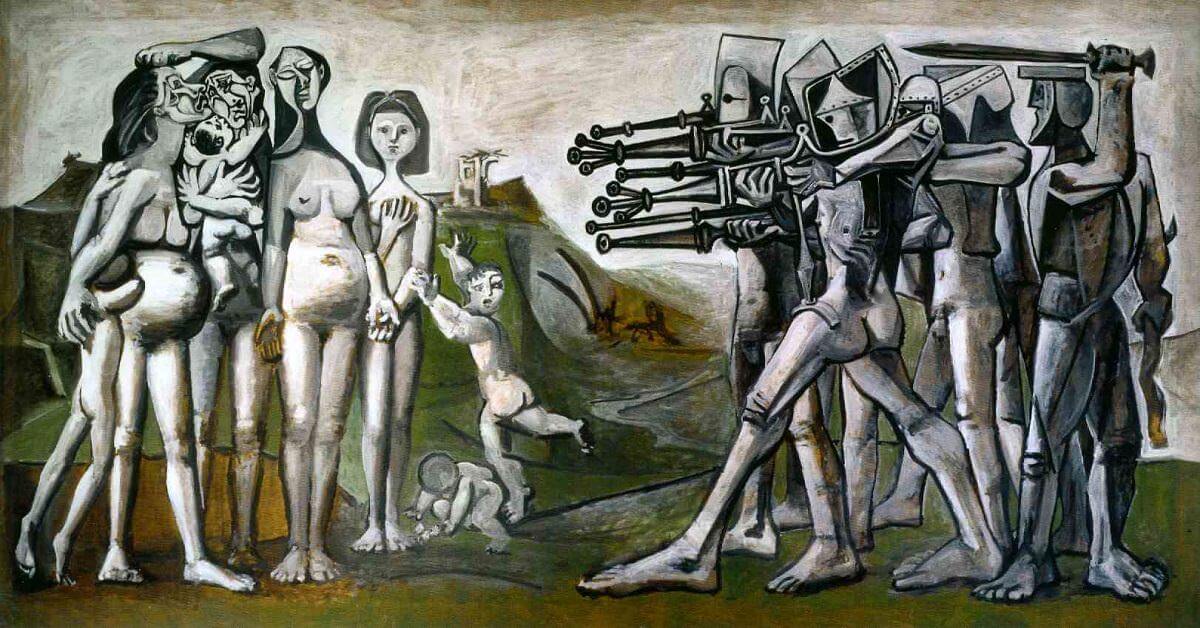
c/o Picasso - 'Massacre in Korea' (1951)
Art is a lie that makes us realize the truth.
- Pablo Picasso
HUMANISTIC - mind | body - MECHANISTIC "The 'beat' goes on"!? |
![]() |
| 'Massacre in Korea' (1951) |
Hodges' model is a conceptual framework to support reflection and critical thinking. Situated, the model can help integrate all disciplines (academic and professional). Amid news items, are posts that illustrate the scope and application of the model. A bibliography and A4 template are provided in the sidebar. Welcome to the QUAD ...
Art is a lie that makes us realize the truth.
- Pablo Picasso
HUMANISTIC - mind | body - MECHANISTIC "The 'beat' goes on"!? |
![]() |
| 'Massacre in Korea' (1951) |
Posted by Peter Jones at 9:04 am | PERMALINK
Labels: art , children , conflict , ethics , fighting , history , humanistic , lies , meaning , mechanistic , politics , power , refugees , social , truth , violence , vulnerability , war , war crimes , women
mental DISABILITY
| physical DISABILITY | ||
| social DISABILITY |
POLITICAL disability^ |
^The Government are deploying AI to figure out:
Posted by Peter Jones at 10:06 pm | PERMALINK
Labels: ability , ableism , ageing , awareness , COVID-19 , disability , finance , function , health , mental health , mental illness , obesity , reablement , recovery , rehabilitation , social contract , welfare benefits , work , workforce
The continent has made significant progress in recent years, but the COVID-19 pandemic has highlighted the need for sustained efforts to address the complex issues surrounding malnutrition, particularly for women and children as we build traction to meet the sustainable development goals by 2030.
"The year 2025 will also be significant as it marks the end of the UN Decade of Action on Nutrition. N4G Paris will serve as a multi-stakeholder summit, advocating for ambitious financial and political commitments and fostering dialogue among diverse actors from around the world, including governments, international organizations, research institutions, civil society organizations, philanthropies, private sector entities, and more." - #N4G
Connecting dots is a a key imperative as we build Africa's nutrition movement. One of them is viewing nutrition from a programmable health systems lens. Have we given this enough traction ?
"The N4G conference presents a crucial opportunity for Africa to gain traction on its mission to eliminate malnutrition. The conference aims to mobilize ambitious financial and political commitments, foster dialogue among diverse stakeholders, and put nutrition at the center of the sustainable development agenda." - United Nations SDGs Professional Support Group for Africa
One of the key lessons from COVID-19 is the importance of strengthening health systems, particularly at the primary healthcare level. The pandemic has exposed weaknesses in many health systems, highlighting the need for increased investment in health care infrastructure, workforce, and services which will ultimately impact on nutrition delivery at the base of the health system.
The upcoming Africa Primary Health Care Forum , scheduled for Abuja on July 14-15, 2025, will provide a platform for stakeholders to discuss the importance of primary health care(PHC) in achieving universal health coverage (UHC) and health security, as well addressing malnutrition in PHC systems. The forum will also explore the role of digital health, digitised workforce, partnerships and financing in strengthening primary healthcare systems and improving general health outcomes.
More details continued at: https://www.phc.africa/
Posted by Peter Jones at 8:51 am | PERMALINK
Labels: Africa , change , children , complexity , conference , finance , health , health systems , life chances , malnutrition , nutrition , policy , politics , prevention , primary care , research , SDGs , strategy , UHC , women
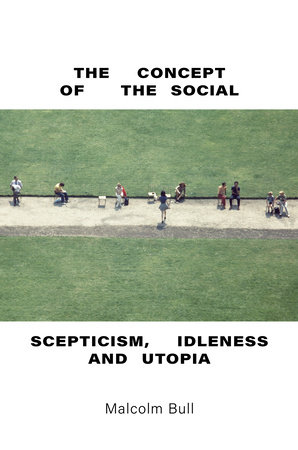
| The Concept of the Social |
'From one sentence in Aristotle derive two arresting theoret- ical discourses of the twenty-first century: Michel Foucault's biopolitics, provocatively reformulated by Giorgio Agamben in terms of the relationship between sovereignty and the body, and the capabilities approach developed by Amartya Sen and Martha Nussbaum as a means of evaluating and promoting development, justice and freedom. Both are characterized by deep reflection on the sources of Western political thought, and by urgent engagement with contemporary social and legal problems. Both are in some sense biopolitical in that they are shaped by the interplay of the same Aristotelian categories the human and the animal, politics and nature. But they are on opposite sides of the divide that has opened up in the human sciences since the 1960s, and there currently seems no optic through which they might simultaneously be viewed, no way of integrating or comparing their insights.
In part, this reflects a situation in which political debate appears to have fragmented into a multiplicity of single issues. The ancient 'Who will rule?' and the modern 'Who shall have what?' have been supplemented by an array of questions that deal with matters once exclusively cultural, personal or natural. For previous eras, the relative integrity and unmalleability of cultures, bodies and environments rendered such questions redundant. Now they frequently appear unanswerable from within established political traditions, and incommensurable in relation to each other. Within this expanded field, biopolitics and the capabilities approach have unusual salience and potential, for both bundle together issues otherwise assumed to be distinct. If they, in turn, could be coordinated, perhaps we could begin to map the new territory.' p.68.
'Who shall have what?'
| nature human - animal |
| culture | political 'Who will rule?' |
Posted by Peter Jones at 2:50 pm | PERMALINK
Labels: animal , authority , biopolitical , body , book , coordination , cultural , human , integration , mapping , mind , nature , political , possessions , relations , resource allocation , salience , social , State , vectors
'You can touch my breasts, caress my stomach, my sex. But, I repeat it, it is the last time,' - read a note L. left in a drawer. |
| ||
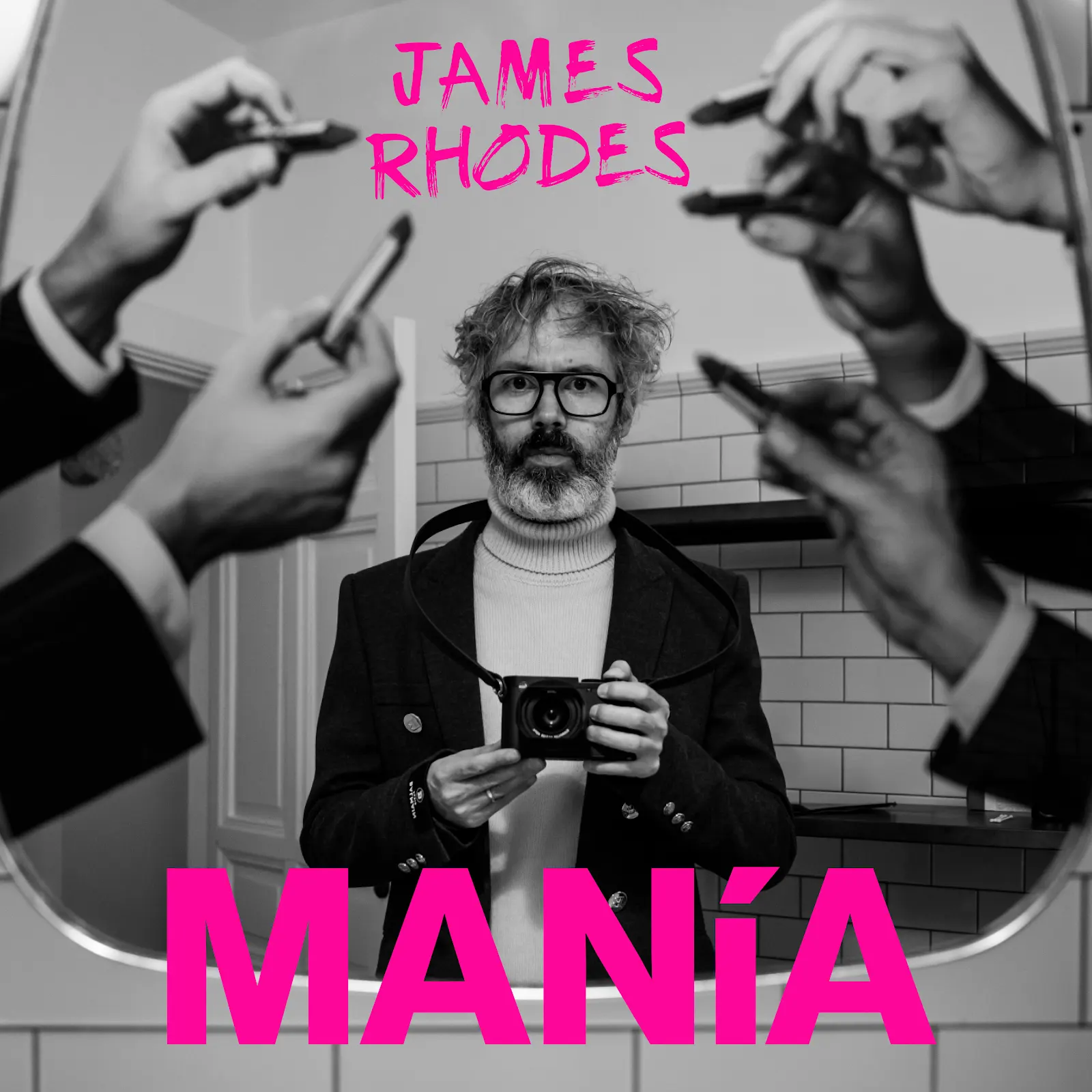
'By now we're all familiar with the idea of music as therapy. For James Rhodes, however, music can be equivalent - at times even preferable - to medication in the management of mental health. "Obviously, I am in favour of medication when it is necessary to save lives," says the 49-year-old British-Spanish classical pianist, when I meet him at Peregrine's, an upmarket piano shop in Clerkenwell, central London. "I was on medication and it genuinely saved my life. What I'm not in favour of is medication as a kind of easy option instead of doing other things that will also have the same effect. And there's no question that music [can]."Manía, Rhodes's new album, is driven by that philosophy. Traversing swaths of classical territory, from JS Bach to 20th-century Argentine composer Alberto Ginastera, it is an attempt to profile the therapeutic properties of music from all angles, "I've always loved this idea of prescribing pieces," says Rhodes. As someone who has struggled with his own mental health, he says he has selected works that "accompany me and my insomnia, my anxiety, my desperation and my fears in the middle of the night"'. p.13.
My source:
Nepilová, H. Music on prescription, Arts, Life&Arts, FTWeekend. 8-9 March 2025. p.13.
Posted by Peter Jones at 5:35 pm | PERMALINK
Labels: art , FT , individual , mania , media , medication , medicine , meditation , mental health , music , prescribing , psychiatry , reflection , relaxed , support , therapy , trauma , treatment
![]() |
| HODGES' MODEL: Axes & Domains |
the human - PURPOSE(S) the machine - | - can become machine PROCESS - can become human |
PRACTICE socio- | POLICY -political |
Posted by Peter Jones at 1:54 pm | PERMALINK
Labels: AI , artificial intelligence , automation , Hodges' model , humanistic , individual , machine , mechanistic , nursing process , person , philosophy , policy , political , practice , process , purpose , task-centred , transhumanism
Posted by Peter Jones at 5:08 pm | PERMALINK
Labels: agency , agents , care , clarity , comms , definition , discussion , evidence , explanation , Hodges' model , ideas , person , practical , pragmatics , sense making , structure , validity , values
Born in Liverpool, NW England, UK.
Community Mental Health Nurse NHS, Part-time Lecturer,
Researcher Nursing & Technology Enhanced Learning
Registered Nurse - Mental Health & General
Community Psychiatric Nursing (Cert.) MMU
PG Cert. Ed.
BA(Joint Hons.) Computing and Philosophy - BIHE - Bolton
PG(Dip.) Collaboration on Psychosocial Education [COPE] Univ. Man.
MRES. e-Research and Technology Enhanced Learning, Lancaster Univ.
Live and work in NW England - seeking a global perspective.
The views expressed on W2tQ are entirely my own, unless stated otherwise.
Comments are disabled.
If you would like to get in touch please e-mail me at
h2cmng AT yahoo.co.uk
orcid.org/0000-0002-0192-8965-=<>=-