Hodges' Model: Welcome to the QUAD

Hodges' model is a conceptual framework to support reflection and critical thinking. Situated, the model can help integrate all disciplines (academic and professional). Amid news items, are posts that illustrate the scope and application of the model. A bibliography and A4 template are provided in the sidebar. Welcome to the QUAD ...

Saturday, January 28, 2017

Hodges' model: A Black Box

"Globally, every theory of systems became a graph of either a simplex or a complex, all things being first of all situated in the depths of a black box." p.3.

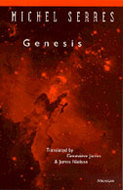
Genesis: Michel Serres
"Who, in the end, and from the other side of the picture can boast of having conceived a general system, of projecting or constructing a general system of communication or relation, as a universal network? What would be conveyed by it? and how? What harmony, what cacophony would come of it? Do we have any sort of an ear for hearing that kind of thing?" p.4.

Michel Serres (1995). Genesis (Studies in Literature & Science). (Trans. Genevieve James, James Nielson) Ann Arbor: The University of Michigan Press.


Friday, January 27, 2017

1938 and counting... A Public (Mental) Health Odyssey? c/o Virginia Woolf

individual
|
INTERPERSONAL : SCIENCES
humanistic -------------------------------------------  mechanistic
SOCIOLOGY : POLITICAL
|
group-population

"A deep concern with subjugated knowledges and with the arts of human communication expressed 50 years ago by Virginia Woolf in Three Guineas. Virginia Woolf, too, was concerned about how education contributed to ...

... the barbarity of mechanised warfare.

Since 'the old education of the old colleges breeds neither a particular respect for liberty nor a particular hatred of war', she wrote, 'it is clear that you must build your colleges differently   (Woolf, 1977, p.39). Asking 'what should be taught in the new college, the poor college?', she replied thus:


Not the arts of dominating other people; not the arts of ruling, of killing, of acquiring land and capital. . . The poor college must teach only the arts can be taught cheaply and practised by poor people; such as medicine, mathematics, music, painting and literature. ... The aim of the new college, the cheap college, should be not to segregate and specialise, but to combine. It should explore the ways in which mind and body can be made to co-operate; discover what new combinations make good wholes in human life. (Ibid. pp.39-40)" 


Virginia Woolf (1977). [1938] Three Guineas. Harmondsworth: Penguin.

Robins, K. and Webster, F. (1989). The Technical Fix: Education, Computers and Industry. Basingstoke: Macmillan. p. 275.

Thursday, January 26, 2017

2001 and counting... A Public Health Odyssey c/o Rabbi Julia Neuberger

individual
|
INTERPERSONAL : SCIENCES
humanistic -------------------------------------------  mechanistic
SOCIOLOGY : POLITICAL
|
group-population
Changes in the way that health professionals are being trained should help future doctors, nurses and others to think more holistically and to share more knowledge. p.77-78.
If a genuinely holistic approach is being taken, it is probable that several activities will be happening simultaneously to tackle any given problem, and that more than one measure of success would be appropriate. Collecting evidence to prove what works and what does not may also take a varied approach that mixes different methodologies and creates some new ones. p.77.


The growing understanding that health should be seen holistically - as being more about general wellbeing than the absence of disease - has not yet been equipped with evidence that policymakers and practitioners can respect.
Throughout the history of the NHS, there has been a tension between the imperative to treat disease in the individual and the need to promote general good health in the population. p.77.


Tackling health inequalities has become a cornerstone* of British government policy. From the corridors of Whitehall to the local board meetings of primary care groups and trusts, the imperative to reduce the health gap between rich and poor is ubiquitous. Yet when action is proposed to turn the rhetoric into reality, particularly when significant investments are required, the cry of "not enough evidence" is invariably heard in opposition. p.77.


*Whatever the state of current Government policy, tackling health inequalities has been a 'cornerstone' within Hodges' model since the model was created in the 1980s. It remains so today in 2017.

Rabbi Julia Neuberger. Where's the Evidence? Making the Case for Public Health.
Source: Journal of Epidemiology and Community Health (1979-), Vol. 55, No. 2 (Feb., 2001), pp.
77-78.
Published by: BMJ
Stable URL: http://www.jstor.org/stable/25569362
Saturday, January 21, 2017

Life - the (pen)ultimate choreographer...?

individual
|
INTERPERSONAL : SCIENCES
humanistic -------------------------------------------  mechanistic
SOCIOLOGY : POLITICAL
|
group-population
Tolerance: Belgium Stamp


Women

Children

Disabled

Unemployed

Healthcare for All
....

(Don't stamp here)


If the religious tolerance represented in the stamp above was the unequivocal reality across the whole of humanity that would be and will be an amazing step forward and a state of bliss.

One day. 
Progress is being made...

Looking at the stamp, we realise that to be inclusive, life - the choreographer - is far more demanding. 

The totality of equality and human rights requires the most complex of footwork and not just for the individual, but the many....


Link and image:
European Diversity Belgium follows the model of Al Andaluz announcing a three-religion stamp

Thursday, January 19, 2017

Hodges' model: Context in a Structure [Constructivism & Constructivists]

"First, we know that human memory for isolated facts is very limited. Knowledge is retained only when embedded in some organising structure. Thus, students who learn many separate facts are unlikely to retain their knowledge beyond the current period of test-taking - a much noticed, worrisome feature of the current educational system. Second, we now recognise that skills and knowledge are not independent of the contexts - mental, physical, and social - in which they are used. Instead, they are attuned to, even part of, the environments in which they are practised. A new challenge for instruction is to develop ways organising learning that permit skills to be practised in the environments in which they will be used (i.e. outside the classroom). Such contextualised practice is needed both to tune skills and knowledge to their environments of use and to provide motivation for practising abilities that in isolation might seem pointless or meaningless." p.22

Resnick, L. (ed.) (1989). Knowing, Learning and Instruction. Pittsburgh: Laurence Erlbaum Associates. p.3.

From: Abbott, J. and Ryan, T. (2000) The Unfinished Revolution: Learning, Human Behaviour, Community and Political Paradox. Stafford: Network. p.22.

Saturday, January 14, 2017

Framing a Life Animated


individual
|
INTERPERSONAL : SCIENCES
humanistic -------------------------------------------  mechanistic
SOCIOLOGY : POLITICAL
|
group-population
(mental) Life
Animated


communication  meaning

singing  dialogue

family friends relationships


documentary

activism

awareness


My source: Whitworth, D. (2016)  The autistic boy whose life was unlocked by Disney, Arts, The Times, 13 December. p.8-9.

Wednesday, January 11, 2017

Person & Sense of Place: A River runs through it ...

individual
|
INTERPERSONAL : SCIENCES
humanistic -------------------------------------------  mechanistic
SOCIOLOGY : POLITICAL
|
group-population
Personhood Personality Identity

Philosophy

Ethics

Panpsychism

Whanganui River

Nature

Environment

Human Ecology

History - Heritage

Indigenous Peoples

Legal personhood

Rights of Nature


My source: Moses, K. (2017) New Zealand River Granted Legal Personhood, Resurgence & Ecologist, Jan / Feb 2017. Issue 300: p.5.

NZHerald Agreement entitles Whanganui River to legal identity http://nzh.tw/10830586 via @nzherald

The Rights of Nature

Monday, January 09, 2017

Comment: From universal health coverage to right care for health - The Lancet

"What is right care? In its simplest definition it is care that weighs up benefits and harms, is patient-centred (taking individual circumstances, values, and wishes into account), and is informed by evidence, including cost-effectiveness." p.1.

Kleinert, S. & Horton, R. (2016). From universal health coverage to right care for health. The Lancet. Published Online January 8, 2017 http://dx.doi.org/10.1016/S0140-6736(16)32588-0


How can we reflect upon universal health coverage and 'right care'?

individual
|
INTERPERSONAL : SCIENCES
humanistic -------------------------------------------  mechanistic
SOCIOLOGY : POLITICAL
|
group-population

harm to the individual

wishes

values

patient (person) centered

information

resources

harm - benefit ratios

unnecessary care
over diagnosis


beliefs

community leaders

harm to the community

social benefits

human relationships

Universal health coverage

cost   finances

organisations

power

policy


My source: Twitter greg fell
