Just saying i
Imaginary | numbers |
|
care? |
Hodges' model is a conceptual framework to support reflection and critical thinking. Situated, the model can help integrate all disciplines (academic and professional). Amid news items, are posts that illustrate the scope and application of the model. A bibliography and A4 template are provided in the sidebar. Welcome to the QUAD ...
Imaginary | numbers |
|
care? |
'Dentistry is high on the public and political agenda. There have been dozens of headlines about access to NHS dentistry, with some people having to travel huge distances to find a dentist, or being put onto long waiting lists to get an NHS appointment.
In this episode of Inside Health, James Gallagher is joined by chairman of the British Dental Association Eddie Crouch, the Oral Health Foundation's Dr Rachael England, and consultant oral surgeon Tom Thayer. Together, they drill into the issues surrounding NHS dentistry. Along the way, they discuss possible solutions, whether contract reforms will help, and the potential future of dentistry in the UK.
Presenter: James Gallagher
Producers: Alice Lipscombe-Southwell and Thomas Hunt
Production coordinator: Stuart Laws
Content editor: Ilan Goodman'
Source & image: https://www.bbc.co.uk/programmes/m002r3nn
Latest paper re. Hodges' model:
S. Bettiol, P. Jones, H. A. Onyedikachi, and W. G. Kernohan, (2026) Bridging Gaps in Oral Health Frameworks: Mapping With Hodges' Health Career - Care Domains - Model, Journal of Public Health Dentistry. 1–14, https://doi.org/10.1111/jphd.70034
Posted by Peter Jones at 2:07 pm | PERMALINK
Labels: accessibility , BBC , contracts , dental care , dentistry , economics , education , health , hygiene , mouth , NHS , oral health , policy , prevention , private sector , radio , self care , training , UK
| Mental Intelligence | |
... ever increasing 'artificial' intelligence here . . .? |
"We? |
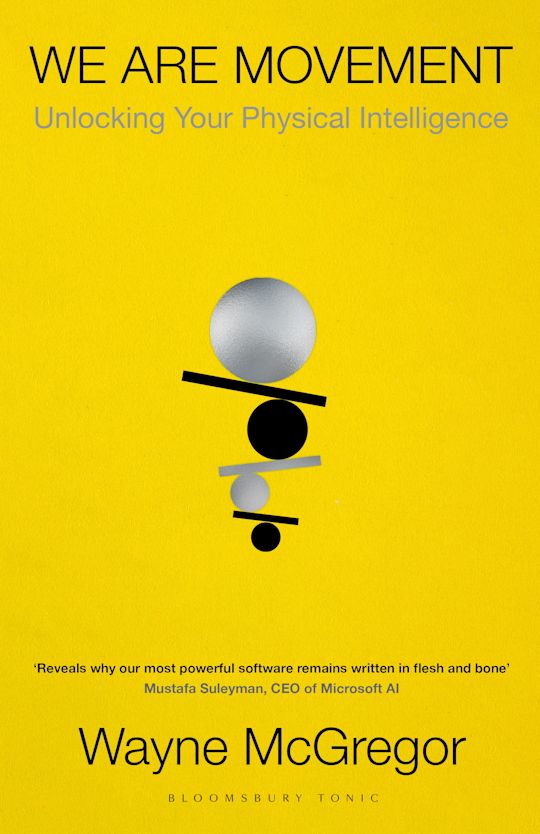
Wayne McGregor (2026) We are Movement: Unlocking Your Physical Intelligence. London: Bloomsbury. (Book cover) https://www.bloomsbury.com/uk/we-are-movement-9781526629531/
My source: Nadia Beard, Our bodies, ourselves. Life&Arts, FTWeekend, 17-18 January, 2026. p.9.
Previously: 'movement' : 'dance' : 'intelligence' : 'art' : 'body' : 'AI'
^. . . help me find (a) the notation?
Posted by Peter Jones at 12:25 pm | PERMALINK
Labels: body , book , communication , community care , creativity , dance , fear , fluency , gesture , health , Hodges' model , injury , memory , mental intelligence , mind , movement , physical intelligence , recovery , senses , touch
NCCH has worked in partnership with NHS England to develop a Creative Health Toolkit. The Toolkit support systems to work with the assets in their communities and to develop their own approach.Creative health is increasingly recognised as a driver of better care and better value in health and care systems. Integrating creative health into prevention, public and population health strategies, management of long-term conditions, treatment and recovery pathways contributes to:
- Reduced incidence of preventable illness
- Improved wellbeing of patients and service users
- Reduced demand on services
Many Integrated Care Systems and providers already incorporate creative health in physical and mental healthcare, social care, and public health, delivering measurable social and economic value.
Find out more about implementing creative health in your service, organisation or system from [our resources the resources ...
Posted by Peter Jones at 10:58 pm | PERMALINK
Labels: art , care systems , creative health , creativity , design , economics , global , integrated care , measures , national , pathways , prevention , public health , public mental health , recovery , toolkit , value
'Many of us will have experienced playing with the interaction of our breath on shiny surfaces such as windows and mirrors, allowing us temporary fields of condensation in which to doodle thoughts or messages. In emergency situations a mirror or shiny surface is held in front of the mouth of a subject to confirm whether or not they are breathing. The Breathe series makes use of these dynamics. The breath of a series of individuals was captured on a shiny copper surface and then etched to create a negative of the breath where it sat on the copper plate. The result is a series of evocative landscapes. This work employs and yet subverts traditional printing processes. The inscription of spent breath onto precious metal immortalises a discharge and presents an alternative to portraiture.' Jayne | Reflection - Reflexive Resuscitation |
Wilton - is a visual artist who explores the breath as a unit of exchange between people and their environments. Her practice uses darkroom processes with drawing, photography, video and sound to capture the usually invisible trace of breath as it moves across a surface. www.jaynewilton.com |
My source and thanks to Jayne Wilton:
Jayne Wilton. Breathe, Artist's Statement. Resurgence & Ecologist, July/August2023: 339: p.47 & (p.49 image).
Previously: 'breathing' : 'reflex' : 'reflection' : 'art'
Posted by Peter Jones at 11:57 pm | PERMALINK
Labels: air , body , breathing , COPD , dynamic , Hodges' model , individual , life , mind , mirroring , negative , other , positive , presence , printmaking , process , reflection , reflexive , resuscitation , surface
Over time I have equated the center of Hodges' model with a nexus. Framing the whole model as a chaotic system, comprised of four domains, with two (or more?) Lorenz attractors, how do we make sense of what is going on?
A previous post visited this too: Threshold Concepts: Reflection on chaos, complexity and AI
Reading Order and the Virtual the new vocabulary, provides glimpses. The perspectives I'm adopting are no doubt naive and favour my context. If we freeze the situation from the center - the nexus the variables, parameters are frozen within their respective domains and tracks around the attractors. They tell us little (now), for obvious reasons, but (with AI and) acknowledging the social and political is a huge step forward (in healthcare).
'The word 'appetition' occurs not infrequently in Whitehead's work, though his own coining is 'prehension`. Both words convey essentially the same import. All individuals 'prehend' all others - the entire universe is expressed through the relations pertaining to any given individual therein.36 Prehension belongs cqually to the event as to the conscious decision. The 'nexus' or 'actual occasion' is the outcome of prior appetitive or prehensive enfolding for Whitehead as it is for Leibniz, and the aggregate of past prehensions shapes the future of the individual. The crucial refinement comes with the term 'negative prehension'.
For Whitehead, accepting those same tenets that characterise Leibniz's metaphysics, the interconnection of all things and the tendency of systems to enfold elements from their total situation, negative prehension is a necessary corollary to positive appetition. It belongs to the 'principle of limitation' which Whitehead saw as a necessary supplement to Spinozist metaphysics, and which we shall encounter in some detail in following chapters.'
It helps me, that Spinoza is heard here.
'Instead of how is it that all things are interconnected, the question becomes, "Given that all things are interconnected, how is it that individuation is possible?'
Before recourse to Lorenz's butterflies, I saw 'oscillations', a constant swing from individual to other(s); then back again.
`Every present state of a simple substance is a natural consequence of its preceding state, in such a way that its present is big with its future',37 (all p.47.)While concerning a 'simple substance', is this a prelude to self-care and preventive health care?
I noted in pencil: In Hodges' model 'nexus' is framed as the now - that just was. Ross carries on to discuss 'the multiplicity of components in the nexus can enter explicit feeling as contrasts.' p.48.
Yes. 'The local and global are entwined' p.49; and now with the glocal too. Ross points out how Deleuze draws upon Simondon's treatment of the organic and inorganic within the same framework, p.50.
I've also been reminded about resolving some abbreviations:
https://hodges-model.blogspot.com/2025/07/axiomatic-simondon.html
Many thanks to Edinburgh University Press for my review copy.
Posted by Peter Jones at 11:16 pm | PERMALINK
Labels: book , chaos , collective , complexity , cosmology , Deleuze , future , individual , interconnection , Leibniz , nexus , order , philosophy , prehension , present , science , Simondon , Spinoza , virtual , vocabulary
My partner and I both received a letter today from our respective GPs. An invitation for a 'FREE LUNG HEALTH CHECK'.
Overleaf is an information sheet in landscape about the health check, plus three more sides of A4, similarly formatted - inviting trifold presentation.
After the 'Re. ......' an opening sentence asks: 'Have you ever been a smoker?'
Suddenly, I was dragged backwards through his-tory (some things don't change); not one history, but several:
My personal and life experience and not just since my teens . . . | The letter states: **If you have never smoked, you are not eligible for this service** |
My mother and father smoked when I was a child and my siblings. They got the message early 1980s. 'Society' smoked back then! Once old enough, I refused to go to the corner shop. Into the 1990s, patients, smoking (some chain-smoking) on admission, long-stay and other clinical areas. As a community mental health nurse, I learned diplomatic and health promoting skills when in the car, giving a patient a lift to hospital. And, when visiting their home where I was, of course, usually, a guest. |
I wondered what has happened to the GP's records? To the primary care clinical record ? The custodians of my health record, that they should need to ask that question? Or, does confidentiality tie some bureaucratic knots? Where is 'integrated care' and its driver 'clinical informatics'? The letter included the NHS Number. Don't get me wrong, I/we appreciate the obvious effort here, even if the chronology is confusing, or, speaks of afterthought? The letters are dated 19/06/2025. I must admit I haven't accessed my GP record, checking it for accuracy. If anything, this is a prompt to do so. And seek a general medical. |
Posted by Peter Jones at 11:59 pm | PERMALINK
Labels: asylums , bureaucracy , childhood , clinical , EHR , free , GP , hospital , information , integrated care , lungs , NHS , personal , policy , prevention , primary care , records , smoking , standards , Winwick
Born in Liverpool, NW England, UK.
Community Mental Health Nurse NHS, Part-time Lecturer,
Researcher Nursing & Technology Enhanced Learning
Registered Nurse - Mental Health & General
Community Psychiatric Nursing (Cert.) MMU
PG Cert. Ed.
BA(Joint Hons.) Computing and Philosophy - BIHE - Bolton
PG(Dip.) Collaboration on Psychosocial Education [COPE] Univ. Man.
MRES. e-Research and Technology Enhanced Learning, Lancaster Univ.
Live and work in NW England - seeking a global perspective.
The views expressed on W2tQ are entirely my own, unless stated otherwise.
Comments are disabled.
If you would like to get in touch please e-mail me at
h2cmng AT yahoo.co.uk
orcid.org/0000-0002-0192-8965-=<>=-