Hodges' Model: Welcome to the QUAD

Hodges' model is a conceptual framework to support reflection and critical thinking. Situated, the model can help integrate all disciplines (academic and professional). Amid news items, are posts that illustrate the scope and application of the model. A bibliography and A4 template are provided in the sidebar. Welcome to the QUAD ...

Wednesday, February 01, 2017

Hodges' model: A prompt for debate in defining Health & Well-being

WHO definition of Health

"Health is a state of complete physical, mental and social well-being and not merely the absence of disease or infirmity."

The Definition has not been amended since 1948.

individual
|
INTERPERSONAL : SCIENCES
humanistic --------------------------------  mechanistic
SOCIOLOGY : POLITICAL
|
group-population
mental

disease infirmity

physical

disease infirmity


social

disease? infirmity?


political?

disease? infirmity?

The correct bibliographic citation for the definition is: 
Preamble to the Constitution of the World Health Organization as adopted by the International Health Conference, New York, 19-22 June, 1946; signed on 22 July 1946 by the representatives of 61 States (Official Records of the World Health Organization, no. 2, p. 100) and entered into force on 7 April 1948.
See also: Wikipedia - Health (as a human condition)

Text source: https://www.who.int/about/who-we-are/constitution

Tuesday, January 31, 2017

Plug & Play and IT Arms Races ... wither Patients, Persons...

On the internet, in journals and the conference circuit judging from various calls for papers and other announcements, you cannot move for innovation, creativity, biotech and change that is inevitably transformative. This is good don't get me wrong but in the push for plug and play ecosystems or calls for an IT arms race something(s) are repeatedly lost.

In the former its about consumers with a single diagrammatic mention of 'patient'. I looked for the person as in person-centered. I looked for the client. In the latter the arms race will be a mechanistic affair: a circuit that runs from finance to technology. I realise the agenda and audience for the articles is specific: IT is Healthcare IT News and a Consultancy Co. As previously noted here on W2tQ it's not just that I may be talking out of turn: I'm out of Continent too.

Reading these articles just convinces even more of the need for a conceptual grounding. We really should read:

 'plug and play' as mechanistic AND humanistic.

As for the IT arms race. Let's race by all means, that is what innovation and (rapid) progress is all about. But lets exercise our legs too and ensure that the data is not only stored holistically and distributed, but that this is the nature of its inclusive purpose and source.

Here and across the water they just don't get IT.

individual
|
INTERPERSONAL : SCIENCES
humanistic --------------------------------  mechanistic
SOCIOLOGY : POLITICAL
|
group-population

Prompted by:

PwC Health Research Institute December 2015

HIMSS Time for a health IT arms race

Sunday, January 29, 2017

Hodges' model: Combined Care Feature Capture - Black Box + White Box?

Nursing is, in theory and practice, far removed from multimedia; which in turn has changed markedly from when the poster quoted below was published in 1999. 

Nursing is 'multi-media' in the sense of combining several data sources across several domains of knowledge and from a range of media.

[From a conference poster no longer available:]
"Feature Detectors 
Feature detectors are used to build a semantically rich index entry for the original multimedia object. They do this on two different levels:
  1. Blackbox detectors are implemented in a programming language to access the raw multimedia data and to derive the desired features from it. Example: the web_header detector sends a HTTP HEAD request to the specified HTTP server and extracts the content type from the response.
  2. Whitebox detectors consist of queries over the already collected feature values. Example: the page_type detector uses the content type to determine if an object is a page.
In the general case blackbox detectors will derive low-level feature data, e.g., the color distribution of an image. But they can also be used for more complex tasks, like finding a face in an image. The function of whitebox detectors is to relate low-level features to concepts, e.g., an image is a portrait because its color distribution classifies it as a photo and it contains exactly one face."
Hodges' model is situated and in healthcare context is everything. Behind a hospital clinic or ward door we might expect certain features to be found. Out in the community following a referral again certain features will be found. The features take on a personalised nature as key features confirming a diagnosis, problem or care issue are presented by the patient (client) or their carer. I'm not sure whether this is useful or not, but the domains of Hodges' model suggests quite a few boxes are required to tick the box that is holistic - integrated care.

And that does not take account of exactly where the knowledge resides; that is another test.


M., A. Schmidt, M. Kersten. Acoi: A System for Indexing Multimedia Objects. In International Workshop on Information Integration and Web-based Applications & Services, Yogyakarta, Indonesia, November 1999. (n.b. The link in the poster is no longer valid.)

My original source:
ERCIM News No. 59 October 2004 Grammar Enables Effective Multimedia Search Queries. pp.63-64.

Saturday, January 28, 2017

Hodges' model: A Black Box

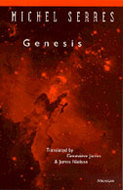
"Globally, every theory of systems became a graph of either a simplex or a complex, all things being first of all situated in the depths of a black box." p.3.

Genesis: Michel Serres
"Who, in the end, and from the other side of the picture can boast of having conceived a general system, of projecting or constructing a general system of communication or relation, as a universal network? What would be conveyed by it? and how? What harmony, what cacophony would come of it? Do we have any sort of an ear for hearing that kind of thing?" p.4.

Michel Serres (1995). Genesis (Studies in Literature & Science). (Trans. Genevieve James, James Nielson) Ann Arbor: The University of Michigan Press.


Friday, January 27, 2017

1938 and counting... A Public (Mental) Health Odyssey? c/o Virginia Woolf

individual
|
INTERPERSONAL : SCIENCES
humanistic -------------------------------------------  mechanistic
SOCIOLOGY : POLITICAL
|
group-population

"A deep concern with subjugated knowledges and with the arts of human communication expressed 50 years ago by Virginia Woolf in Three Guineas. Virginia Woolf, too, was concerned about how education contributed to ...

... the barbarity of mechanised warfare.

Since 'the old education of the old colleges breeds neither a particular respect for liberty nor a particular hatred of war', she wrote, 'it is clear that you must build your colleges differently   (Woolf, 1977, p.39). Asking 'what should be taught in the new college, the poor college?', she replied thus:


Not the arts of dominating other people; not the arts of ruling, of killing, of acquiring land and capital. . . The poor college must teach only the arts can be taught cheaply and practised by poor people; such as medicine, mathematics, music, painting and literature. ... The aim of the new college, the cheap college, should be not to segregate and specialise, but to combine. It should explore the ways in which mind and body can be made to co-operate; discover what new combinations make good wholes in human life. (Ibid. pp.39-40)" 


Virginia Woolf (1977). [1938] Three Guineas. Harmondsworth: Penguin.

Robins, K. and Webster, F. (1989). The Technical Fix: Education, Computers and Industry. Basingstoke: Macmillan. p. 275.

Thursday, January 26, 2017

2001 and counting... A Public Health Odyssey c/o Rabbi Julia Neuberger

individual
|
INTERPERSONAL : SCIENCES
humanistic -------------------------------------------  mechanistic
SOCIOLOGY : POLITICAL
|
group-population
Changes in the way that health professionals are being trained should help future doctors, nurses and others to think more holistically and to share more knowledge. p.77-78.
If a genuinely holistic approach is being taken, it is probable that several activities will be happening simultaneously to tackle any given problem, and that more than one measure of success would be appropriate. Collecting evidence to prove what works and what does not may also take a varied approach that mixes different methodologies and creates some new ones. p.77.


The growing understanding that health should be seen holistically - as being more about general wellbeing than the absence of disease - has not yet been equipped with evidence that policymakers and practitioners can respect.
Throughout the history of the NHS, there has been a tension between the imperative to treat disease in the individual and the need to promote general good health in the population. p.77.


Tackling health inequalities has become a cornerstone* of British government policy. From the corridors of Whitehall to the local board meetings of primary care groups and trusts, the imperative to reduce the health gap between rich and poor is ubiquitous. Yet when action is proposed to turn the rhetoric into reality, particularly when significant investments are required, the cry of "not enough evidence" is invariably heard in opposition. p.77.


*Whatever the state of current Government policy, tackling health inequalities has been a 'cornerstone' within Hodges' model since the model was created in the 1980s. It remains so today in 2017.

Rabbi Julia Neuberger. Where's the Evidence? Making the Case for Public Health.
Source: Journal of Epidemiology and Community Health (1979-), Vol. 55, No. 2 (Feb., 2001), pp.
77-78.
Published by: BMJ
Stable URL: http://www.jstor.org/stable/25569362

Saturday, January 21, 2017

Life - the (pen)ultimate choreographer...?

individual
|
INTERPERSONAL : SCIENCES
humanistic -------------------------------------------  mechanistic
SOCIOLOGY : POLITICAL
|
group-population
Tolerance: Belgium Stamp


Women

Children

Disabled

Unemployed

Healthcare for All
....

(Don't stamp here)


If the religious tolerance represented in the stamp above was the unequivocal reality across the whole of humanity that would be and will be an amazing step forward and a state of bliss.

One day. 
Progress is being made...

Looking at the stamp, we realise that to be inclusive, life - the choreographer - is far more demanding. 

The totality of equality and human rights requires the most complex of footwork and not just for the individual, but the many....


Link and image:
European Diversity Belgium follows the model of Al Andaluz announcing a three-religion stamp

Thursday, January 19, 2017

Hodges' model: Context in a Structure [Constructivism & Constructivists]

"First, we know that human memory for isolated facts is very limited. Knowledge is retained only when embedded in some organising structure. Thus, students who learn many separate facts are unlikely to retain their knowledge beyond the current period of test-taking - a much noticed, worrisome feature of the current educational system. Second, we now recognise that skills and knowledge are not independent of the contexts - mental, physical, and social - in which they are used. Instead, they are attuned to, even part of, the environments in which they are practised. A new challenge for instruction is to develop ways organising learning that permit skills to be practised in the environments in which they will be used (i.e. outside the classroom). Such contextualised practice is needed both to tune skills and knowledge to their environments of use and to provide motivation for practising abilities that in isolation might seem pointless or meaningless." p.22

Resnick, L. (ed.) (1989). Knowing, Learning and Instruction. Pittsburgh: Laurence Erlbaum Associates. p.3.

From: Abbott, J. and Ryan, T. (2000) The Unfinished Revolution: Learning, Human Behaviour, Community and Political Paradox. Stafford: Network. p.22.
