Hodges' Model: Welcome to the QUAD

Hodges' model is a conceptual framework to support reflection and critical thinking. Situated, the model can help integrate all disciplines (academic and professional). Amid news items, are posts that illustrate the scope and application of the model. A bibliography and A4 template are provided in the sidebar. Welcome to the QUAD ...

Sunday, April 27, 2014

12th May Lancaster, Workshop: Patient knowledge and involvement in healthcare

An event I am looking forward to: 

Royal Institute of Philosophy Workshop
Storey Institute, Lancaster
Monday 12th May

In recent years great efforts have been made to listen to “patient voices” in healthcare practice, research, and policy, but such initiatives have met with mixed success and many patients continue to feel that their view are overlooked (sometimes despite the best efforts of health care professionals). In this workshop we consider whether and why patient views matter. We ask what factors act to limit the possibilities for communication between patients and professionals, and consider how they might be overcome.

  • 10-10.40 Chaos, conflict and cooperation. Havi Carel, Senior Lecturer in Philosophy, Bristol University
  • 10.40-11.20 Silencing the sick. Ian J. Kidd, Addison Wheeler Fellow in Philosophy, Durham University
  • 11.50-12.30 On trusting and being trusted. Garrath Williams, Senior Lecturer in Philosophy, Lancaster University
  • 2-2.40 Patient advocacy challenged: The case of ME/CFS. Nancy Blake, Patient activist and PhD candidate, Lancaster University
  • 2.40- 3.20 Medical paternalism and the right not to know. Emma Bullock, Postdoctoral Fellow “Concepts of Health”, King’s College London
  • 3.50-4.30 Negotiating as individuals and groups. Rachel Cooper, Senior Lecturer in Philosophy, Lancaster University
Organisers: Ian J. Kidd and Rachel Cooper


Thursday, April 24, 2014

Interested in writing?

Two items can be readily brought together here: 

----- Forwarded Message -----
From: JS Drummond
To: NURSE-PHILOSOPHY AT JISCMAIL.AC.UK
Sent: Tuesday, 22 April 2014, 18:00
Nursing Philosophy (Post)-Graduate Student Essay Prize
Hi Folks,

To interested parties, there is still time to submit an entry for the (Post)-Graduate Student Essay Prize to the Journal, Nursing Philosophy.

Details are on the IPONS website. http://www.ipons.co.uk

Best Wishes,
John Drummond (IPONS)
Sent on behalf of Derek Sellman, Editor, Nursing Philosophy

The latest paper on Hodges' model -

Exploring the Dimensions of Recovery and User Experience

- has progressed to the point were I am awaiting contact from the production office of the International Journal of Person Centered Medicine.

In addition to the (Post)-Graduate appeal with IPONS there may be an opportunity through h2cm. If there are any student nurses and other health care learners interested in models of care and the future, I would be pleased to offer some support on a paper. Perhaps there are personal tutors out there who could also engage? I can't offer a prize, but there is surely a prospect with the journal Advances in Nursing Sciences:
Models of Care for the Future
Vol 38:1 - June 2015
Manuscript Due Date: October 15, 2014
As nations worldwide seek to establish models of care that provide quality and efficiency, nurse leaders are emerging to play a significant role in the development of these models. For this issue of ANS we are seeking manuscripts that provide theoretical underpinnings of creative models of care, as well as evidence that supports their implementation. Manuscripts should be clearly grounded in a nursing perspective; the content can include philosophic, theoretic, empirical or ethical aspects related to the model.
I do have form here - two submissions without success - but the very helpful feedback did result in a publication elsewhere.

With studies of my own I can't write another paper alone, but perhaps I can help others. It's time for me to not just think about the model, but do something with it too. It feels strange finally having questions out there in the field - a small study.

Earlier this week a colleague referred to the model's elegant parsimony. This is definitely a quality of Hodges' model and one that merits exploration with new explorers.

Sunday, April 20, 2014

Blog birthdays, a missing model and history

Eight years ago today this blog was born. Last month I came across a backup of some old emails and discovered one of my first related to Hodges' model. This was while attending Bolton College for the Post Graduate Certificate in Education in 1997. I had a project to complete and in researching nursing theory came across a resource by Judy Norris then at the University of Alberta in Edmonton. There was one a model of nursing missing. I'd also visited Alberta (ALTA) twice in 1979 and 1989: wonderful holidays.

19 ‎March ‎1997, ‏‎09:28:38

Hello there.

I'm fairly new to the net and E-mail, but fairly conversant with other aspects of I.T.. I would be very interested in being involved. My E-mail is read once a week, when attending college.

Both nursing informatics and nursing theory have been keen interests for some time. Over Easter I'll have more time to explore and learn.
There is one 'model', which I don't think you have listed, although it is debatable whether it qualifies as a model - the health career model.

Perhaps I could write something up with references, and key questions?
(And also consider the list of work for volunteers.)

Bye for now

Peter
P.S. I hope ALTA is still as beautiful as I remember it.
So, h2cm became the preoccupation and now there is a small research project to complete these next six weeks, Hodges' model within the residential care sector.

Nursing theory links: H2cm Links II (any updates?)

Acknowledgement: Judy Norris
Thanks Judy for your encouragement all those years ago and with this post.

Saturday, April 19, 2014

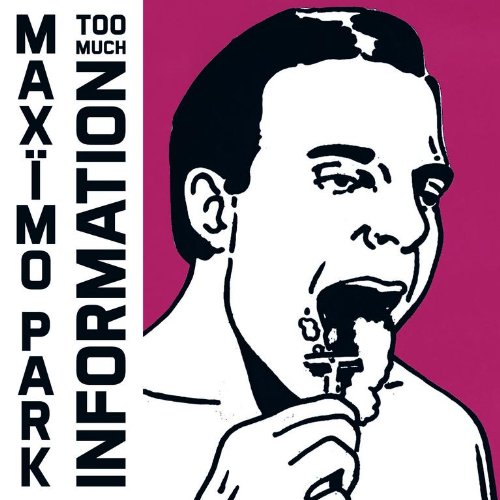
care.data: too much information?

individual
INTERPERSONAL : SCIENCES
humanistic ------------------------------------------- mechanistic
SOCIOLOGY : POLITICAL
group

individual - person
ethics
'personal'
My identity:
 lost in numbers Vs. specificity of patterns
*my attitude to my 'sensitive' information
health literacy
personal responsibility, self care, quantified self
my understanding of care.data
Trust


datasets, BIG data
hospital episodes, treatments
research
privacy research
 anonymising process for nhs data
*care.data is a natural step towards personalised medicine?
axon - neurobiology
Axon - data warehouse
statistics
service development and innovation

Too Much Information
data security, law, information governance
NHS
commercial, contract
potential for abuse - assumptions
public mental health
public health
policy, consultation
policy communication
public engagement, primary care
informed consent, opt-out
data definitions, standards
ISO27001
population, insurance


Additional link:
Allyson Pollock - Protecting confidential patient information and promoting public health research. Three proposed amendments to the Care Bill

Image source:
http://cdn2.thelineofbestfit.com/media/2014/01/Maximo-Park-Too-Much-Information.jpg

Friday, April 18, 2014

[ Exclusive* preview ] Wrinkles


individual, dignity, person, memories, identity,
security, communication, perception, meaning, friends,
belonging, mood, orientation ...


demographics, evidence based care, medication, treatments, physical environment ....
policy, standards, inspection, training, organisation, safety, governance, management culture, leadership ...

Link:
http://www.arrugaslapelicula.com/

*Person centered?

Saturday, April 12, 2014

ERCIM News No. 97 Special theme: "Cyber-Physical Systems"

Dear ERCIM News Reader,

ERCIM News No. 97 has just been published at http://ercim-news.ercim.eu/en97

Special theme: "Cyber-Physical Systems"
http://ercim-news.ercim.eu/en97/special/

Guest editors
:
- Maria Domenica Di Benedetto, University of L’Aquila, Center of Excellence DEWS
- Françoise Lamnabhi-Lagarrigue, CNRS, Laboratoire des Signaux et Systèmes
- Erwin Schoitsch, AIT Austrian Institute of Technology/AARIT.

http://ercim-news.ercim.eu/en97Keynote: "The Importance of Cyber-Physical Systems for Industry" by Clas Jacobson, Chief Scientist for United Technologies Systems & Controls Engineering, USA

This issue is also available for download as:
pdf
:  http://ercim-news.ercim.eu/images/stories/EN97/EN97-web.pdf
epub: http://ercim-news.ercim.eu/images/stories/EN97/EN97.epub

Next issue: No. 98, July 2014 - Special Theme: "Smart Cities"
(the call will be published shortly at http://ercim-news.ercim.eu/call)

Thank you for your interest in ERCIM News.
Feel free to forward this message to others who might be interested.

Best regards,
Peter Kunz
ERCIM News central editor

Includes:
Optogenetics to Unravel the Mechanisms of Parkinsonian Symptoms
Big Data in Healthcare: Intensive Care Units as a Case Study
SEMEOTICONS: Face Reading to Help People stay Healthy


Making learning visible dodging bullet points

Since January and the start of the course in Technology Enhanced Education there's been - and still is - a lot of reading to do. I've gained new and renewed insights into possible research methods and I'll share some of this in the next few weeks. The figure below is from:

Hay, D., Kinchin, I., Lygo‐Baker, S., 2008. Making learning visible: the role of concept mapping in higher education. Studies in Higher Education. 33, 295–311. doi:10.1080/03075070802049251

Figure 4 from Hay.
Over the years I've noticed and been rewarded when after a session on the care domains model some audience members have commented that the exercise made them think. There's nothing special in that of course, simple maths makes me think. Perhaps, people felt relief for a change from the passive absorption of facts, images, acting as static targets for a slew of bullet points. What comes across though is that there was some effort involved. In the figure above we can imagine the energy needed to not only create new and maintain existing concepts, but reject others. This might also constitute one front of the theory - practice gap?

This in a way reflects my thinking that although we refer to person-centred care in theory, practice and policy, this does not automatically follow. Person-centredness should take effort, work and energy. If that is the case, it also needs time.

Wednesday, April 09, 2014

Angling for Ideas

The Angler by Paul Klee (1879-1940, Switzerland)

This is just a rock pool
I reflect

So is this, even before Pollock
just a single drip in the ocean

Fishing for praise

Here we trawl, as we do we maul.
Why owns the holistic ocean?
Does it bleed, does it leak?
Abs-orbs all angles?
just?


Image source: http://en.wahooart.com/@@/8LT48X-Paul-Klee-The-Angler