Hodges' Model: Welcome to the QUAD

Hodges' model is a conceptual framework to support reflection and critical thinking. Situated, the model can help integrate all disciplines (academic and professional). Amid news items, are posts that illustrate the scope and application of the model. A bibliography and A4 template are provided in the sidebar. Welcome to the QUAD ...

Saturday, February 01, 2014

Care pathways: 15 minutes on Monday - how far is that?

On Monday I have a quick visit for 15 minute slot on care pathways at an interprofessional study day for 2nd and 3rd year students.

After the short presentation I'll ask the question of what difference the students can make to the patient's care pathway. There may be value in continuing the 'journey' metaphor?

They can ensure the care pathway is well-documented (otherwise it doesn't exist, and travel on it never happened) they can check it is accessible (an achievable goal) and that it does not trip anyone up (we don't do - iatrogenic).

There are further tests: is it navigable, tried and tested, a safe (evidenced-based) route? As the student's contemplate a major step in their health career, we really need them to focus on the health career of the persons in their care.

[ There won't be time for this: but do we need to wait until the 'end' for the outcome and capturing that (feedback). Or can do we this verbally, incrementally (positive impact on quality)? ]

I could ask them all to stand and make like sign-posts, but for the risk of poked eyes. It's true though, sign-posting is an important job, but how we do that is another post (the value of self-discovery as learning).

Once medically fit the key thing should be checking the person's (not viewing them totally as patient) wayfaring skills.

OK, who took my care pathway?

Can they read the map (are they health literate)? Can they find a map? Do they have a stay-well, recovery and well-being ... compass (a conceptual framework, an app, care plan)? If there literally is no self-care pathway under the patient at present, then the student can help them and their carer if necessary to find or create this compass - across the required care domains.

THEN this person (potential future patient) can avoid having to step off their self-care pathway and onto the health care pathway. You see there's a risk and a cost in that particular transfer.


Image source: http://www.farlandgroup.com/customer-journey-mapping/

Wednesday, January 29, 2014

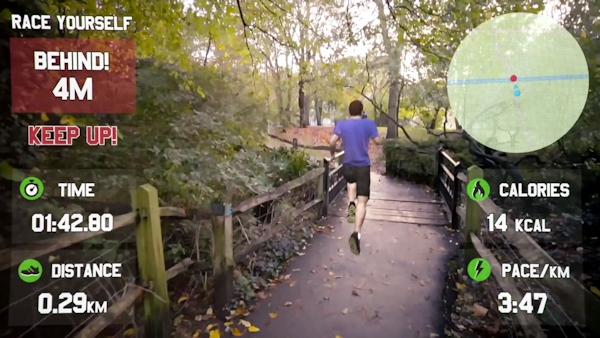
Race Yourself for Google Glass transforms exercise

From ISPR - my source:
http://ispr.info/2014/01/27/race-yourself-for-google-glass-transforms-exercise/?utm_source=rss&utm_medium=rss&utm_campaign=race-yourself-for-google-glass-transforms-exercise

Get Fit This Year by Fleeing From Augmented Reality Zombies: Race Yourself Transforms Exercise Into a Game on Google Glass

Race Yourself is a New Fitness Startup for Google Glass, Aiming to Turn Exercise Into a Game.  By Racing Against a Virtual Projection of Yourself, Attaining Personal Bests, and Burning Calories, You Can Unlock New Game Modes Such as Running Away from Giant Rolling Boulders. Race Yourself has Already Raised £200,000 from Investors Lead by DN Capital, and is Now Launching a Crowd-Funding Campaign Via Their Website, www.raceyourself.com on the 8th January.  ...


http://ispr.info/

INTERPERSONAL : SCIENCES
humanistic ------------------------------------------- mechanistic
SOCIOLOGY : POLITICAL

individual
Am I dreaming?

http://ispr.info/2014/01/27/race-yourself-for-google-glass-transforms-exercise/?utm_source=rss&utm_medium=rss&utm_campaign=race-yourself-for-google-glass-transforms-exercise
technology    virtual reality    physical health


Dreams of Peace
group - population

Monday, January 27, 2014

'Intellectual brutalisation' and the saving grace and power of poetry

BBC Radio 4 Today: An eminent cardiologist has organised and funded a poetry competition for his medical students to stop them becoming, in his words, intellectually brutalised.
Gabrielle Gascoigne, pictured, is a previous winner.
The BBC’s Jane Dreaper discovers more.

[no longer available] Listen to ‘Poetry competition for 'intellectually brutalised' medics’ on Audioboo

PBS: For these medical students, poetry nurtures the soul

Here's (source: http://www.bbc.co.uk/programmes/b03s6mdp/live ) the full version of Mastectomy - For His Wife, by Gabrielle Ruth Gascoigne:

It will be an honour
to bathe the scars.
Don’t think my tears imply
an ounce of sorrow -
only joy
could fill my eyes.

It will be a pleasure
to hold you close.
Know this – your precious flesh
calls the bluff on gold
and silver -
makes me a king.

It will be a delight
to talk with you
into the night we thought
stolen, clean away -
until day
renews our hope.

It would be too heartless
if all this love,
these sinner’s prayers and more
should fall to nothing
more than rain
on empty streets.

INTERPERSONAL : SCIENCES
humanistic ------------------------------------------- mechanistic
SOCIOLOGY : POLITICAL

individual
subjectivity
insight, rapport, empathy
emotional control, detachment, engagement
risk of burnout
objectivity
anatomy, physiology         
physicality, processes, mechanistic
intellectual brutalisation
humanistic
communication, relationships
(medic) poetry

funding, crowded curricula
hidden curriculum
group - population

Saturday, January 25, 2014

Syria's Trojan women

http://www.syriatrojanwomen.org/

The Syria Trojan Women project began by creating drama workshops in Amman, Jordan in autumn 2013, and put on a theatrical production of Euripides’ anti-war tragedy, 'The Trojan Women' in December with a cast and crew of Syrian refugees. The first performances were a great success, and we hope to stage further performances in and around Amman, and a tour of Jordan and the region. http://www.syriatrojanwomen.org/

My source: Charlotte Eagar, Syria's Trojan women. FT Weekend, Life&Arts, 4 - 5 January 2014. pp.1-2.

INTERPERSONAL : SCIENCES
humanistic ------------------------------------------- mechanistic
SOCIOLOGY : POLITICAL

individual
"personal
parallels" p.2.


drama therapy


conflict
group - population

http://hodges-model.blogspot.co.uk/search/label/Jordan

Wednesday, January 22, 2014

Better information means better care

BBC Radio 4: Inside Health 21 January 2013

Margaret McCartney and Mark Porter ask whether the anonymity of patient records on a new NHS database can be guaranteed?
NHS: Your records:
Using information about the care you have received, enables those involved in providing care and health services to improve the quality of care and health services for all. The role of the Health and Social Care Information Centre (HSCIC) is to ensure that high quality information is used appropriately to improve patient care. 
NHS England has therefore commissioned a programme of work on behalf of the NHS, public health and social care services to address gaps in information. Our aim is to ensure that the best possible evidence is available to improve the quality of care for all.  ...
http://www.nhs.uk/NHSEngland/thenhs/records/healthrecords/Pages/care-data.aspx


INTERPERSONAL : SCIENCES
humanistic ------------------------------------------- mechanistic
SOCIOLOGY : POLITICAL

individual
my interests

scientific interests


social interests

commercial interests
group - population

Monday, January 20, 2014

ERCIM News No. 96 Special theme: "Linked Open Data"

Dear ERCIM News Reader,

ERCIM News No. 96 has just been published at
http://ercim-news.ercim.eu/en96

Special Theme: "Linked Open Data"
http://ercim-news.ercim.eu/en96/special/
Guest editors
: Irini Fundulaki (Institute of Computer Science, FORTH) and Sören Auer (University of Bonn and Fraunhofer IAIS)

http://ercim-news.ercim.eu/en96
Keynote: "Linked Data: The Quiet Revolution" by Wendy Hall

This issue for download
pdf
: http://ercim-news.ercim.eu/images/stories/EN96/EN96-web.pdf
epub: http://ercim-news.ercim.eu/images/stories/EN96/EN96.epub

Next issue: No. 97, April 2014 - Special Theme: "Cyber-Physical Systems"
(see the call at http://ercim-news.ercim.eu/call)

Thank you for your interest in ERCIM News.
Feel free to forward this message to others who might be interested.

Best regards,
Peter Kunz
ERCIM News central editor

--------------------------------------------------
An initiative for the ERCIM members: Call for Participation - identifying the emerging grand challenges in ICST http://kwz.me/74

Sunday, January 19, 2014

FOUR QUARTETS T.S. Eliot from EAST COKER - IV


FOUR QUARTETS

T.S. Eliot


EAST COKER
(No. 2 of 'Four Quartets')


IV
The wounded surgeon plies the steel
That questions the distempered part;
Beneath the bleeding hands we feel
The sharp compassion of the healer's art
Resolving the enigma of the fever chart.

    Our only health is the disease
If we obey the dying nurse
Whose constant care is not to please
But to remind of our, and Adam's curse,
And that, to be restored, our sickness must grow worse.

    The whole earth is our hospital
Endowed by the ruined millionaire,
Wherein, if we do well, we shall
Die of the absolute paternal care
That will not leave us, but prevents us everywhere.

    The chill ascends from feet to knees,
The fever sings in mental wires.
If to be warmed, then I must freeze
And quake in frigid purgatorial fires
Of which the flame is roses, and the smoke is briars.

    The dripping blood our only drink,
The bloody flesh our only food:
In spite of which we like to think
That we are sound, substantial flesh and blood—
Again, in spite of that, we call this Friday good.


T.S. Eliot Nobel Prizes biography
http://www.nobelprize.org/nobel_prizes/literature/laureates/1948/eliot-bio.html

Source copy:
http://www.davidgorman.com/4Quartets/notes.htm

http://www.davidgorman.com/4Quartets/2-coker.htm

Thursday, January 16, 2014

Book review: Values-Based Commissioning of Health and Social Care

This book was a welcome change from the last review, being quite brief in comparison at 155 pages including the index. This isn't a criticism, it just helps in clearing the decks for other reading and distance learning.

The text is no lightweight, however; and should be mandatory reading for all health and social care personnel. Well maybe not all; but that is part of the problem. The clinical and social care workforce are trained to care. Commissioning (and clinical coding) is something done in another location, by other personnel.

If there is a recurring criticism of public services it is that they are cossetted, protected, removed from many of the financial realities of the world. The book, published in 2012, was written anticipating the structural and financial change brought in by the Coalition government and the need for austerity. Therefore, the public sector and clinical staff are not  immune from the vagaries of finance as might be assumed. For the past couple of years I've witnessed the regular shakes of the sieve and heard of the same within local authorities.

Christopher Heginbotham's book provides the background and tensions of commissioning and delivers much needed insight on several fronts by conjoining what so often seems remote. The lesson of the book for me is how distinct finance and commissioning are. I can sum this up as: if person-centred clinicians are concerned with sense-making for and with patients and their families, then commissioning is the sense-making of the available finance. Viewed this way you see the importance of commissioning.  Clinicians are concerned with evidence-based care, ethics, the health reforms, outcomes, quality, and of course values. Add to this patient involvement and public engagement and you have a read that opens a field that many clinicians dash by (in the public sector?*) as they manage various clinical priorities.

Chapter 1 and 2 set the scene of values-based commissioning, definitions, the fact-value distinction; and the post-Labour NHS. The health reforms (chapter 3) are central to the text, but despite the date of publication which the author acknowledges there is little loss of significance. The health and social care commissioning landscape is still taking shape, outcomes based commissioning (chapter 9) can make the news as implementation is delayed (Williams, 2013). Chapter 4 describes the seven fat years followed by seven lean years; an excellent overview with the major influences at work, The Wanless Reports and Marmot Review for example. It is salutary in these times to see NPfIT as a footnote, with IT benefits still to be accrued (p.32). The need to respond to the public health challenges are noted (chapter 6), as with the potential mental health impact of climate change.

The book's figures and tables are a great asset, very useful to educate student nurses about commissioning, value and values. There are a couple of references to colour (p.72) in what are black and white - grey illustrations. 'Reading' the diagrams you can follow them. The author's background comes across, as with location and mental health experience. The book is I believe relevant to readers across all sectors. Heginbotham also indicates that the book is one of a series by CUP, and points to Fulford et al. as a sibling. There are a couple of repeated words but otherwise the production is excellent.  I was a little surprised to find a catastrophe in the text - catastrophe theory (p.51). It is well deployed in explaining complexity and values. When I say surprised perhaps I would really like to see more on this theme of complexity and emergence, but Mr Heginbotham stays clearly on track.

My bias - Hodges' model - found the following standout points:

http://www.cambridge.org/gb/academic/subjects/medicine/medicine-general-interest/values-based-commissioning-health-and-social-careThe number of sentences and figures that describe the individual, group, community and population (the structure of Hodges' model). The way that values can act as a counterpoint and essential adjunct to evidence (subjective - objective; qualitative - quantitative).

Some situations are more biological than others - in certain sorts of surgery, for example - and some have a much larger values base - such as in psychiatry (p.40).

 Reference to (Cronje and Fullan, 2003):

The medical literature demonstrates an equivocal attitude which suggests a 'collective need to better integrate scientific quantitative data . . . and the art of human judgement . . . into a common definition of "rational" medical practice (p.40).
Figure 7.8 Filtering the evidence through a values-based matrix (values across four care domains?).

The use of models to test the real world and reference to a values space.

I posted previously about the nhm - new holistic model (p.80).
(back to the review..!)

Technical aspects (a law and index) and ethical issues that beset commissioning are introduced (space is limited), and recur helping to integrate the book as a whole. Chapter 5 deals with public involvement and engagement and how it can be enacted. Chapter 7 on integrative commissioning invariably raises patient and service user care pathways.

Is this the Rorschach test for patient, care professional and commissioner: please draw your care pathway? 

The book admirably deals with the ideal and realised in the space available. As such even when there is a linear care pathway it is how it is experienced that counts (values and outcomes...). (It is sadly the person-affirming life-story pathway that is so often lost.) 

Perhaps, this is what I have in mind above in referring to emergence. Despite the existence of care pathways in practice the route in-through health and social care is probably found in a rather chaotic way (sudden care transitions); with delays, placement changes, ward movement(s)-stasis, choices to be taken into account, lack of attendance, missed appointments. ... This is why trying to define pathways may certainly assist, but it is the granularity of those definitions and their experience that snags at our clothes along the way. As Heginbotham advises - care pathways are not something to use in a slavish way. This excellent and well referenced book should provoke and establish interest in this very important health and social care activity. An activity and process that must be informed by the values of the public and those of patients and be more than a process, but realised in shared purposes and practise.

*When we stop and reflect we also recognise ourselves as tax-payers and so seek value-for money, and the other e's of efficiency, effectiveness, efficacy...

Many thanks to CUP for the copy.

Williams, D. Trust forces delay in outcomes based commissioning plan, Health Service Journal, 6 December 2013. p. 4-5.

Heginbotham, C. (2012) Values-Based Commissioning of Health and Social Care. Cambridge, Cambridge University Press.