Hodges' Model: Welcome to the QUAD

Hodges' model is a conceptual framework to support reflection and critical thinking. Situated, the model can help integrate all disciplines (academic and professional). Amid news items, are posts that illustrate the scope and application of the model. A bibliography and A4 template are provided in the sidebar. Welcome to the QUAD ...

Monday, May 05, 2025

Knowledge - Ignorance: Political leaders always seek an informed citizenry. Discuss?

c/o 'The war on knowledge' Simon Schama 
Life&Arts :: FTWeekend


individual
|
INTERPERSONAL : SCIENCES
humanistic ------------------------------- mechanistic
SOCIOLOGY : POLITICAL
|
group


'As the Founders saw it, the great driver of freedom was knowledge. Two decades before independence, the lawyer and essayist William Livingston insisted in a journal called The Independent Reflector that "knowledge among a people makes them free, enterprising and dauntless; but Ignorance enslaves, emasculates and depresses them".

Are you an 'Independent Reflector'?


MIND

'In 1779, Thomas Jefferson (who would make sure that his role as "Father of the University of Virginia would be inscribed on his tombstone) championed a Bill for the More General Diffusion of Knowledge. Its purpose would be to "illuminate ... the minds of the people at large" - excluding of course, women and the enslaved - "and more especially to give them knowledge of those facts . .. [that] they may be enabled to know ambition under all its shapes." The 1780 Constitution of the Commonwealth of Massachusetts, primarily drafted by Adams, committed itself to "The Encouragement of Literature" so that "Harvard-College in Cambridge" would be the institution through which the diffusion of "wisdom and knowledge" would ensure health of the body politic.'

BODY
PUBLIC


'The informed citizenry'


Public understanding of the sciences.


POLITIC

'As Richard D Brown's important history The Strength of a People: The Idea of an Informed Citizenry in America, 1650-1870 points out, all of America's first four presidents (including James Madison) assumed that the security of the republic depended on the "equation of virtue and knowledge". A century later, Calvin Coolidge might assert that "the chief business of the American people is business", but a rich stream of ideas flowing from the learned optimism of the Founders, through the creation of land-grant colleges and the "brain trust" administrations of Franklin Roosevelt, assumed that professors were not the "enemy" but a resource that was indispensable for the good of the nation. The true enemy of American democracy was not professors, but ignorance.'


My source:
Simon Schama. 'The war on knowledge', Life&Arts, FTWeekend, 26-27 April, 2025, pp.1-2.

Previously: 'knowledge' : 'ignorance' : 'political'

Sunday, May 04, 2025

NHS & Politics: You don't have to do 'The Hokey Cokey'

c/o Lunch with the FT - Amanda Pritchard
Life&Arts :: FTWeekend


individual
|
INTERPERSONAL : SCIENCES
humanistic ------------------------------- mechanistic
SOCIOLOGY : POLITICAL
|
group
'Another question that she says will become increasingly pressing is what "the core business" of the health service should be at a time when parts of the state and voluntary sectors have been squeezed, leaving the NHS to pick up the slack. GPs tell her that between one in four and one in five of their patients come to them for help with non-health problems.

A colleague in a mental health service recently told her it employs a housing team to support patients who couldn't otherwise be discharged from hospital. "You wouldn't say the core business of the health service is as a housing provider, but that's where we've ended up."'

She adds: "Think about how long it takes to train a doctor - you can't change your mind every five minutes. . . Think about what it requires to put new [digital] systems in place. It's not buying the tech - that's the easy bit. It's the implementation . . . and some consistency of leadership is really helpful."

'The NHS contributes between 10 and 
20 per cent to people's health, she says - a figure I find startlingly low. "The rest is what we would recognise as the wider [social] determinants, including housing, and meaningful employment, but also smoking, diet, alcohol and lack of exercise. "I know there's an anxiety sometimes about being too nanny stateish about this . . But it is going to take really bold action to set the conditions for people to then live healthier lives."'


'The abolition of NHS England marks the end of an attempt to take the politics out of the health service by placing its day-to-day running in the hands of an arm's-length body. But Pritchard suggests that if this was the intent, it was probably never realistic. "It's too important to the country [and] we spend too much public money for ... the politics not to be part of it."'


My source:
Sarah Neville, Lunch with the FT Amanda Pritchard, Life&Arts, FTWeekend, 26-27 April, 2025, p.3.

Previously: 'Nye' : 'SOCIO-technical' : 'housing'

Saturday, May 03, 2025

AI-2025: December 16th-18th 2025, Cambridge, UK - fourth call for papers and posters

FOURTH CALL FOR PAPERS AND POSTERS

The proceedings of the AI-20xx conference series are now published by Springer in Lecture Notes in Artificial Intelligence (LNAI), a sub-series of the distinguished Lecture Notes in Computer Science (LNCS) series of conference proceedings.

AI-2025: Cambridge, UK, December 16th-18th 2025

Information for authors and to submit a paper  https://www.conferenceexpert.org.uk/?conf=ai2025&section=authors

Organised by BCS SGAI: The British Computer Society Specialist Group on Artificial Intelligence (a EurAi Member Society).

The leading series of UK-based international conferences on Artificial Intelligence and one of the longest running AI conference series in Europe.

CALL FOR CONTRIBUTIONS

https://www.bcs-sgai.org/ai2025/

AI-2025 is the forty-fifth SGAI International Conference on Innovative Techniques and Applications of Artificial Intelligence.

The scope of the conference comprises the whole range of AI technologies and application areas. AI-2025 reviews recent technical advances in AI technologies and shows how these advances have been applied to solve business problems. Key features are:

  • Papers will be published by Springer in the Lecture Notes in Artificial Intelligence (LNAI) subseries of the popular Lecture Notes in Computer Science (LNCS) series (www.springer.com/lncs).

  • Papers will be presented in two streams. The Technical Stream presents the best of recent developments in AI, covering a wide range of technical areas. The Application Stream is the largest annual showcase in Europe of real applications using AI technology.

  • A mixture of full papers (maximum 14 A4 pages) presented orally and short papers (maximum 6 A4 pages) presented as posters. Papers of both kinds will be included in the proceedings.

  • Prizes for best paper and best student paper in each stream and best short paper.

  • Invited keynote speakers, including Prof. John Naughton, University of Cambridge..

  • The first day comprises tutorials and workshops to provide greater depth in selected topics. (Separate one-day registration for this day is also available.)

  • A panel session on a topical subject.

  • An 'AI Open Mic' session to allow delegates to have their say about any aspect of AI.

  • In addition to the formal sessions, the conference programme includes a welcome reception and a Gala Dinner.
AI-2025 offers a valuable opportunity to keep up to date with developments in AI and to share experiences in the practical issues of developing AI systems.

FAIRS '25, the seventeenth annual forum for AI research students will immediately precede the AI-2025 conference at Peterhouse College on Monday December 15th, 2025. The aim of FAIRS is to support student members of the AI community providing advice and feedback on their research plans and work. This event is free of charge for research students except for a contribution towards the cost of refreshments and lunch in the College and no conference registration is required.

IMPORTANT DATES

  • Paper/Poster Submission: Friday 27th June 2025

    This deadline is considerably later than for previous conferences in this series and will not be extended.

  • Notification of Acceptance: Friday 29th August 2025

  • Camera Ready Paper: Friday 12th September 2025
CONTRIBUTIONS

Contributions presenting original work in AI are invited for both the technical and the application stream. Contributions may be submitted either as full papers of up to fourteen A4 pages for oral presentation or as short papers of up to six A4 pages for poster presentation. ...

For more details of Contribution types please see: https://www.bcs-sgai.org/ai2025/
...

All further information including details of the conference committee, program committees, paper format and uploading instructions is given on the conference website.

ALL CORRESPONDENCE SHOULD BE SENT BY EMAIL TO THE CONFERENCE SECRETARIAT: 
sgai-conference AT bcs.org.uk

My source: SGES List - https://www.jiscmail.ac.uk/cgi-bin/webadmin?A0=AI-SGES

Friday, May 02, 2025

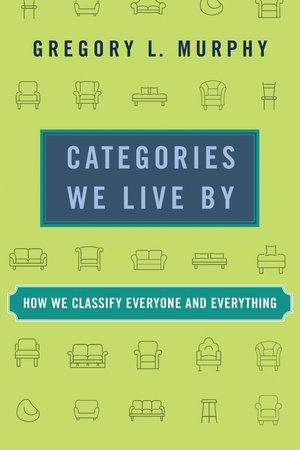
Book review iii: 'Categories we live by'

In thinking about (with?) Hodges' model, I often feel there is a flip-flop nature to where exactly concepts sit; or more accurately the perspective (care/knowledge domain) from which they are viewed.

Murphy introduces dual-character concepts, 'which are things that have both a prototype (or rule) and an ideal.' p.30. and quotes from:

Knobe J, Prasada S, Newman GE. Dual character concepts and the normative dimension of conceptual representation. Cognition. 2013 May;127(2):242-57. doi: 10.1016/j.cognition.2013.01.005. Epub 2013 Mar 1. PMID: 23454798.
Do dual character concepts operate at varied levels, and in their association (semantic) proximity - relationship to other concepts? All this changing according to context.

Murphy explores the dual category nature of people who claim to be scientists, but are really following a hobbyhorse. That is not lost on me. Others, a baker is following scientific principles while not technically being a scientist p.31. The discussion on art - artists is also informative; turn the page, and that on RINOs - Republican In Name Only - is very timely! There are the problems that science itself can contribute. If you don't know your oxeye daisy from osedaxes you can find out here: fascinating. 

'Health' is dual category in a great many respects (and with a chapter to follow). Many have been and will continue to be discussed here:
  • person :: service-centredness
  • parity of esteem (mental - physical)
  • confusion - dementia :: delirium (infection, dehydration)
  • mental capacity :: best interests
  • community care :: 'in care'
  • clinical risk - positive risk taking
  • healthcare :: social care
There's a need for careful deliberation too as does this apply to any situation in which there is a smell of  dichotomy: good, or bad?

Chapter 3 'Categories in the World and in the Head' helps straight away - declaring a false dichotomy. For me, it's worth revisiting natural categories, natural kinds and essential categories and psychological essentialism. Get these right and surely that's a useful toolkit, or more accurately - first aid kit?

I'm grateful for the placeholder essence (p.46) from:
Medin, D. L., & Ortony, A. (1989). Psychological essentialism. In S. Vosniadou & A. Ortony (Eds.), Similarity and analogical reasoning (pp. 179–195). Cambridge University Press. https://doi.org/10.1017/CBO9780511529863.009
'Psychological essentialism should not be equated with the classical view that concepts are representations of classes of objects that have singly necessary and jointly sufficient conditions for membership. ... More generally, we propose that the knowledge representations people have for concepts may contain what might be called an essence placeholder. There are several possibilities for what is in such placeholder. In some cases, but by no means in all, it might be filled with beliefs about what properties are necessary and sufficient for the thing to be what it is. In other cases it might be filled with a more complex, and possibly more inchoate, "theory" of what makes the thing the thing that it is (see Murphy & Medin,1985). It might, additionally, contain the belief (or a representation of the belief) that there are people, experts, who really know what makes the thing the thing that it is, or scholars who are trying to figure out exactly what it is. Just as with theories, what the placeholder contains may change, but the placeholder remains.' pp.184-185.
Hodges' model provides four placeholders. In reading and watching videos on category theory, it appears there is a role for 'placeholders'. I realise the applications - contexts differ, but analogies are powerful too.

Regards, classification as an exercise in convenience, despite the emphasis upon evidence, how often even in clinical matters does it come down to convenience? More to follow on this.

I've never wanted Hodges' model to be a grab-bag for keywords, concepts - categories! So it helps ease that concern, in chapter 4 to see words and categories contrasted. I always wondered about the media's preoccupation with the Inuit and 'snow'. 'Salient' is here as expected in 'Language, Culture and Categories' and with the Sapir-Whorf hypothesis p.53. And, of course, nursing and everything else relies on language p.57. Prof. Murphy's mention of children figuring out when it comes to language, and adults just how crazy it - the rules - can seem. While impossible, by definition, I had this thought of toddlers instigating a class action to get things put right. I like the way Murphy reaches across cultures for answers, highlighting the field of ethnobiology p.61. The appeal of this is exaggerated as it stretches across Hodges' model diametrically [sociology - sciences]. I'm still on the look out for models possessed of an 'otherness', that retain legitimacy, validity where and for whom they are employed. (There is much to debate there still.) The objective and subjective dimensions also loom large. I remember a meeting concerned with nursing terminology 1990s, with reflection on the terms used for injection across the UK. That in itself demonstrated wide regional variations that also give pause for thought.

More to follow, with Part 2 'case studies'.

Murphy, Gregory L. Categories we live by: how we classify everyone and everything. Cambridge, MA: The MIT Press, 2024.

Many thanks to MIT Press for the review copy.

See also:

Categories are destiny' Freud p.6. of 'Categories we live by'


Thursday, May 01, 2025

HC@AIxIA AI&Health May Seminar: 'Building Trustworthy AI for Health'

Dear Madam/Sir,

This is to officially announce the MAY 2025 seminar of the "AI & Health: Seminars 2025" series as hosted by HC@AIxIA, i.e., the "Artificial Intelligence for Healthcare" working group of the Italian Association for Artificial Intelligence.

*** Save the date: 12 MAY 2025. 3:30 CET ***

We hope you will attend and participate in the discussion on the relevant topics that will be presented and by our speakers. Feel free to share this with those potentially interested.

Link for participating: https://bit.ly/hc-2025-05 (PLEASE CHECK the site https://aixia.it/en/gruppi/hc/ for any changes or updates) - Please find some details below, and a poster attached.

== May 2025 seminar ==
2025 May 12 - 3:30PM CET

Prof. Barbara Di Camillo, Department of Information Engineering, University of Padova, Italy

Title: Building Trustworthy AI for Health: Robust and Generalizable Models with a Focus on Challenging Cases

Abstract: To make artificial intelligence useful in real clinical settings, it is crucial that AI tools follow the principles of trustworthy AI. This means ensuring the accuracy and reliability of the results, defining the areas where the results are valid, and making sure the predictions are understandable. This approach ensures that humans remain at the center of the decision-making process. BRAINTEASER (https://brainteaser.health/) is a data science project that uses artificial intelligence to help patients with amyotrophic lateral sclerosis (ALS) and multiple sclerosis (MS), along with their doctors. In the presentation, I will show how, during the development of the machine learning methods within the project, we took into account the robustness and generalizability of the model, and how we identified and characterized the subjects for whom making predictions is more challenging.

Short Bio: Barbara Di Camillo is full professor in computer science with the Department of Information Engineering, University of Padova. Her research activity is centered in the development and application of advanced modeling, data mining and machine learning methods for high-throughput biological data analysis in the field of Bioinformatics and Systems Biology. In particular, she has developed and applied different methods for robust biomarker discovery, predictive modeling and clustering of clinical data and next generation sequencing data. She has also a great expertise in the development and application of differential equation based models, Boolean and Bayesian Networks for modeling the relationships between the variables and the pathways along which they influence the disease progression.

Flyer: https://drive.google.com/open?id=15badJ0Nfj8lrA0gZdFc9aOGeR3pelms-&usp=drive_fs

====

Some notes
Serving as coordinators of the working group on AI for Healthcare of the Italian Association of Artificial Intelligence (AIxIA, see: https://aixia.it/en/gruppi/hc/), part of our commitment consists of fostering contamination and collaboration between AI researchers and experts and operators in Medicine and Healthcare; in particular, we aim to contribute in building a two-way road for informing healthcare operators about AI results and opportunities, while also raising awareness among AI researchers about challenges and problems in medicine and healthcare.
Therefore, the 2025 seminar series, in the trail of the 2024 edition, will feature a number of experts presenting research results, projects, best practices, ideas, and more to a mixed audience of AI researchers and healthcare operators.

Thank you for your interest in the AI & Health seminar series and the HC@AIxIA working group, and see you soon!

Sincerely,
Francesco Calimeri, Mauro Dragoni, Fabio Stella
(coordinators of the HC@AIxIA working group)

Wednesday, April 30, 2025

Global South - Global Perspectives

As mentioned before, I try to keep grounded, in terms of my parochial perspective on the world, even as technology brings this world, and many others to so many screens.

 BBC Radio 4 'PM' 1700-1800 UT today mentioned this news and an event to follow:

Mākereti "Maggie" Papakura was an internationally renowned Whakarewarewa guide.

  • 'Oxford University will award a posthumous Master of Philosophy degree to pioneering Māori scholar Mākereti Papakura.
  • Papakura, known as Guide Maggie, was the first indigenous woman to study at Oxford.
  • Her work, published posthumously, was the first ethnographic study by a Māori author.
Pioneering Maori scholar and famed Whakarewarewa guide Mākereti Papakura will be honoured with a posthumous degree more than 100 years after she began her studies, Oxford University has announced.

Her family and iwi say they are grateful for the tribute to her memory, and it is testament to her determination to ensure Māori stories would not be forgotten.

Born in 1873 at Matatā, Papakura is believed to be the first indigenous woman to study at the university, Oxford’s School of Anthropology and Museum Ethnography said in a statement.

She made her name as the pre-eminent guide at Whakarewarewa in the early 1900s and was known as Guide Maggie'. . . .

...  I will watch for further news. 

The above stood out as last evening I greatly enjoyed listening to Discovery on the BBC World Service:

'Dr Julia Ravey and Dr Ella Hubber are both scientists, but it turns out there’s a lot they don’t know about the women that came before them. In Unstoppable, Julia and Ella tell each other the hidden, world-shaping stories of the scientists, engineers and innovators that they wish they’d known about when they were starting out in science. This week, a Māori marine scientist is combining indigenous knowledge with marine science to save the oceans that are so integral to her heritage. ...'

Image and text:
https://www.nzherald.co.nz/rotorua-daily-post/news/te-arawas-makereti-papakura-to-receive-posthumous-degree-from-oxford-university/SBI3TR733RHZBOAS3BLDAZPMTU/

Previously: 'Oceania'

Monday, April 28, 2025

Book review: 'Categories we live by' ii

In that first post I felt a bit guilty getting bogged down in the introduction, and not really saying much about the book itself.

Well, Chapter 1 is the 'Introduction' so that is great, and as you may be I am swept up by what's between the covers. Speaking of which, this is an effective design, and green colour; especially for a northern reading in March - May.

The book is slim considering the topic, 164 pages, plus just over a page of notes, four and a half of references and an index. It is, I think a slightly larger format paperback but fits well in the hands for outdoors reading. The fonts and layout are clear.

Murphy's style is straightforward and readable. It is not technical, but includes terms such as classification, nomenclature, and domain [ ;-) ]. The division into two parts, lends itself to a wide readership, the second part providing case studies giving the book a pragmatic, practical emphasis. I'll post again about chapters 6 & 7 on Psychodiagnostic Categories; and Categories and Power respectively (brief, but a joy!).


Before moving on from the Intro, Murphy explains how the same category may be thought of in different ways at different times' and encourages us to be 'critical of our categories'. p.12. This stands out for me. Especially being suitably equipped to critique our categories as we use them.

Chapter 2 on The Classical Tradition, has a natural starting point; describing Aristotle (with his book Categories), essences, definitions with properties that are necessary and sufficient p.14-15.
'Necessity: If it's in the category, it has the features,
Sufficiency: If it has the features, it's in the category.' p.15.

I was prompted to reflect on relations and identities here. While I suggested the book is not technical, there is a important point about dictionaries and the definitions we seek there. We should remember that many members of the public would still rely on what is the classical way to create, confirm category membership: there must be a rule.

Wittgenstein follows pp.17-20, but I took note of:
'The problem is that necessity and sufficiency are in tension with each
other. As you make the list of properties longer and longer, it's more likely
to be sufficient but less likely to be necessary. Forming a list of features that
are both necessary and sufficient is usually impossible.' p.19.
I pencilled in (Eleanor) Rosch on p.13, and on page 21 her contribution to the destruction of the classical world is described; with other researchers. The book is well referenced, without being intrusive. Murphy provides specific pointers, suggesting further reading and skipping a chapter. Helpful, given how precious time is these days.

There is a critical invitation on page 13: 

'Want to start an argument with someone? Ask them whether a stove is a kitchen utensil or nursing is a science.'

I wonder if nursing theory colleagues in the United States and globally have already responded?

More to follow - surely!

Murphy, Gregory L. Categories we live by: how we classify everyone and everything. Cambridge, MA: The MIT Press, 2024.

Many thanks to MIT Press for the review copy.
