Hodges' Model: Welcome to the QUAD

Hodges' model is a conceptual framework to support reflection and critical thinking. Situated, the model can help integrate all disciplines (academic and professional). Amid news items, are posts that illustrate the scope and application of the model. A bibliography and A4 template are provided in the sidebar. Welcome to the QUAD ...

Tuesday, May 26, 2020

Journal of Community Informatics - new submissions:

Dear CI colleagues,

After a brief pause and transition in editorial leadership, the Journal of Community Informatics is once again accepting new submissions here:


It is my honor to lead the Journal as the third Editior-In-Chief since the journal was launched by Michael Gurstein with its first issue published in 2004. I want to thank Eduardo Villanueva-Mansilla for his leadership over these past years. I also want to thank Tom Denison who has joined Eduardo as the Journal’s Associate Editors.

I am also excited to announce our esteemed Editorial Board with both new and returning members: http://ci-journal.net/index.php/ciej/editorialBoard

We are preparing our next issue to be published in Sept/Oct. 2020.  We look forward to receiving your submissions in the months and years ahead.

Warm regards,
Colin
—
Colin Rhinesmith (pronouns: he/him)
Associate Professor and Director
Community Informatics Lab
School of Library and Information Science
Simmons University
web: http://crhinesmith.com

Editor-In-Chief
Journal of Community Informatics
http://ci-journal.net/index.php/ciej
 

Sunday, May 24, 2020

COVID-19: Is there a need to separate Science and Politics?

individual
|
INTERPERSONAL : SCIENCES
humanistic ----------------------------------------------- mechanistic
SOCIOLOGY : POLITICAL
|
group - population
Individual accountability
"I’ve great respect for scientists who appear at the daily UK briefings but it’s unfair to ask them to appear with ministers."

The public understanding of science.
"After today’s charade we must separate science from politics & have scientists engage with science journalists."
Martin McKee


The (re-)integration of truth?

My source:
https://twitter.com/martinmckee/status/1264675733395460096?s=20

Saturday, May 23, 2020

People Fixing the World: c/o BBC World Service

The breath of life

"A clever invention is saving the lives of hundreds of children.

Pneumonia kills about 1.4 million children under five every year. Treatment with concentrated oxygen could save many of them, but the machines that make it need a reliable source of electricity. Some hospitals have frequent power cuts, though, which can be fatal.

So scientists in Australia and Uganda came up with an innovative way to produce oxygen by separating it from the rest of the air, using a vacuum created by running water.

Then they designed special bags that can store and deliver oxygen – even when the electricity cuts out. Their systems have provided oxygen for hundreds of sick children in Uganda.

People Fixing the World hears the story of these remarkable inventions."

individual
|
INTERPERSONAL : SCIENCES
humanistic ----------------------------------------------- mechanistic
SOCIOLOGY : POLITICAL
|
group - population
Creativity
Innovation
Problem solving
Pneumonia
Concentrated Oxygen
Storage
Devices - Maintenance
Life cycle management
Repair in the field 
Sustainability


iFixit Medical Device Repair Database

Please forward this to anyone you think might be interested.


The iFixit Medical Device database, a new resource for Biomedical Technicians and Equipment Maintenance workers to access user manuals and repair documentation for the medical equipment in hospital and healthcare facilities has just been released.

https://www.ifixit.com/Device/Medical_Device

Please help distribute this announcement to Biomedical Technicians, Equipment Maintenance workers or anyone you think would be interested.


More information can be found at https://www.ifixit.com/News/41440/introducing-the-worlds-largest-medical-repair-database-free-for-everyone
and
https://www.theverge.com/2020/5/19/21263762/ifixit-medical-device-repair-database-launch


HIFA profile: Arlene G Cohen is a retired Associate Professor of Library Science, based in the USA, having worked at the University of Guam Library for 18 years. She has a particular interest in the information needs of medical and allied health professionals in the Pacific region. She runs the "Pacific Islands Regional Medical Distribution List," a current awareness service open to anyone in the world. arlenegcohen AT gmail.com

My source:

HIFA: Healthcare Information For All: www.hifa.org


individual
|
INTERPERSONAL : SCIENCES
humanistic ----------------------------------------------- mechanistic
SOCIOLOGY : POLITICAL
|
group - population

Repairs Database
Devices - Maintenance
Sustainability

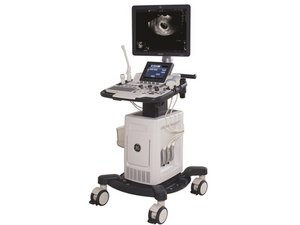
imaging
clinical equipment 
laboratory
surgery
medical support
imaging
medical furniture ...


Friday, May 22, 2020

Book Review: Mathematics and Art: A Cultural History

Spotting this book really hurt my face. The resulting contortion: the half-smile - half-grimace was painful, but I had to approach the publisher for a review copy.

In the email I was honest. I fessed-up to being a mathematical hopeless lover of the discipline. So many maths teachers, so many broken pieces of chalk, so much pain and anxiety. In the early 1970s my late uncle Doug (Engineering, Liverpool University) provided some tuition at weekends. This did not translate into exam success, but he did not diminish my wonder and awe of this subject.

I mention this to set some personal background and give you a sense of my gratitude to Princeton University Press for the privilege of this tome with its 576 pages and 9.5 x 12 in. The email included my work in mental health nursing and having this blog with a small readership and twitter. I've already posted highlighting this book, but thanks to PUP and your faith.

In Waterstones, Gower St, London in February I saw a copy downstairs, so although published in 2016 this book still has currency. The hardback, sat on your knee, you know it's there. That isn't a problem, but sometimes the clearly high production standards and quality literally 'shone' in certain lighting. The quality, high legibility and art reproductions are not to be missed: 444 color + 102 b/w illustrations.

Maybe there are a few math (maths?) teachers who will pass this way and think about their teaching methods, a child's ability, aptitude and sense of wonder. Even if the mind before them doesn't 'get it', please leave that sense of wonder intact. Nurture it, nudge it as best you can to inform the other literacies and provide the momentum for lifelong learning.

There's a word missing from the title, philosophy, which Gamwell combines in a balanced, almost formulaic manner, that had me captured - enraptured from chapter 1. No! Wrong again. Even the preface works indicating the global scope to follow soon. ...

Mathematics and Art: A Cultural History


Lynn Gamwell (2016) Mathematics and Art: A Cultural History. Princeton, New Jersey: Princeton University Press. ISBN: 9780691165288. p.283.

(Thank you to PUP for the review copy - more to follow.)

Thursday, May 21, 2020

REPORT: Creative methods to envision nursing practices addressing AMR - c/o RIPEN

https://www.ripen.org.uk/


Between the summer of 2018 and October 2019 a group of nurses from various disciplines and roles took part in a series of research workshops in Glasgow and London, culminating in a policy workshop event at the RCN in London. It was a pleasure and a challenge to be able to contribute and learn about this very urgent and global issue.


Here from the RIPEN website is a description and link to the report:


March 2020: New report:  Creative methods to envision nursing practices addressing AMR

A report on the use of arts and humanities approaches to co-design healthcare service innovation
 
The RIPEN project has asked: “How can relevant arts and humanities approaches help nurses to re-envisage their infection control practice ecologies in response to antimicrobial resistance?”. Our new report shows how we addressed this question, focusing on the creative methods used and lessons learned. We hope this will be useful for nurses and other healthcare professionals, designers and artists, educators, researchers, policy activists, and anyone else with an interest in the arts and health.

Please feel free to download, share and feedback any comments.

A video is also available on the website.

Tuesday, May 19, 2020

Call - Covid-19 Special Issue: Int. J. of Practice-based Learning in Health and Social Care

Covid-19 Special Issue - Call for Editor/s

We are keen to invite expressions of interest from our readers, authors and reviewers in guest editing a Special COVID-19 issue of the International Journal of Practice-based Learning in Health and Social Care to be published in 2021. Please distribute this call to your colleagues.

The guest editor may be an individual or group of 2 or 3 co-editors. We anticipate that the issue will contain articles on how practice-based learning has adapted to meet the challenges of COVID-19 as well as reflective submissions, or interesting stories, about the changes experienced.

You can contact Helen Buchanan helen.buchanan AT uct.ac.za Lindy McAllister lindy.mcallister AT sydney.edu.au or Lynn Clouder l.clouder AT coventry.ac.uk to share ideas informally.

Expressions of interest must be received by 10th July 2020.

Monday, May 18, 2020

"Care Package" 4 the C.21st ?

"The CARE Package was the original unit
of aid distributed by the humanitarian organization
CARE (Cooperative for Assistance and Relief Everywhere)."
individual
|
INTERPERSONAL : SCIENCES
humanistic ----------------------------------------------- mechanistic
SOCIOLOGY : POLITICAL
|
group - population

Disaster Conflict Refugee context?
Individual choices - 
facilitating autonomy 
whenever possible - Sign Language?
Mental health Care Plan
includes relapse prevention /
 Staying well / Self care
Mental capacity / Decision making
Physical health check
Patient Reported Outcomes*
Specific management of medication - lithium, psychotropics and safety completed and health literacy demonstrated with support if needed.
Making Every Contact Count -
in every care context
Psychological therapies 
One narrative: told recorded once
Cognitive access:
Health Information
Access to my health record
My Care - Why?
Understanding, Awareness
C[P]-Suite "I Consent" - My data,
Genetic Profile, Reimbursement?

INTEGRATED -
Disaster Conflict Refugee context?
Avoid admission, over-treatment
Quaternary Prevention
Preparation for Admission?
Physical Care Plan
includes relapse prevention /
 Staying well / Self care
If in-patient THEN is medication ordered and ready for discharge? e-Prescription?
Electronic Health Record
Mobility - aids, Transport
Advice / instructions
Wound / 
Dressing management
Making Every Contact Count -
in every care context
Clinic location: urban / rural
 transport 
Virtual - Telemedicine, e-Health
m-Health
Patient Reported Outcome Measures
Patient involvement in Research
Trials
Physical therapies - access
Physical access services/devices?

- CARE ?
Care IN the Community?
Housing :: Homeless?
Pre-discharge home visit -
e.g. Occupational Therapy?
Living alone?
Safety
Carers involved with due 
consent in care planning. 
Engaged in recognition and role of warning signs and actions to follow.
Recovery, Rehabilitation, Reablement
Awareness and shared competency in medication, in event of physical illness.
Patient/Family audit of clinical record: accuracy if/when appropriate BUT check completed.
Plan of care - activities, groups, information, arts, studies, 
volunteering.
Carers assessment
Social care.
Advance (anticipatory) care planning
Progress (this time) PRO*
Introduce respite care, day care, volunteering
Avoidance of admission:
this time :: next time?
[Finance of Health Service Delivery]
Care Package for specific groups / populations / circumstances: 
Forensic, Prison, Homeless, 
Substance Misuse, Veterans
Need for interpreter, advocacy?
Feedback on care experience:
patient and carer(s)
Management of Belongings, Cash
Community care - follow up instigated - introductions made with continuity of care (personnel) were possible.
Communication with (family) GP/Doctor
Out-of-hours services 
and contact details.
Patient & Carer invited to phone
purely as a trial-run.
Law - Policy? 72 hour, 7 Day -
follow-up at home.
Incidents - Complaints? Apologies?
Organisational Learning 
Welfare - Employment
Data capture and reporting of care spell/episode.
De-identified.
Reports submitted stats.
Reporting plans to Public re. Health Services
Public involvement in Services


The above is not comprehensive and in itself begs questions of scope and what is a 'comprehensive' care package?

The mapping above to Hodges' model includes many assumptions - existing health service provision, governance, finance, housing, social infrastructure - social determinants of health and how these are mitigated (if at all).