Hodges' Model: Welcome to the QUAD

Hodges' model is a conceptual framework to support reflection and critical thinking. Situated, the model can help integrate all disciplines (academic and professional). Amid news items, are posts that illustrate the scope and application of the model. A bibliography and A4 template are provided in the sidebar. Welcome to the QUAD ...

Thursday, December 07, 2023

Kathryn Jackson - Dow Jones Dealing Room 1994

 Individual
  |
     INTERPERSONAL    :     SCIENCES               
HUMANISTIC --------------------------------------  MECHANISTIC      
SOCIOLOGY  :   POLITICAL 
|
GROUP


Ack. Kathryn Jackson. Dow Jones Dealing Room (1994) 3-D collage

My source:
Jackson, K. another dimension, Artists & Illustrators, June 1998, 141, pp.22-23.

Wednesday, December 06, 2023

COP 28: The water runs deep and broad - Solastalgia for all?

me - you INDIVIDUAL - the few
  |
     INTERPERSONAL    :     SCIENCES               
HUMANISTIC --------------------------------------  MECHANISTIC      
SOCIOLOGY  :   POLITICAL 
|
others - GROUP - many
climate anxiety

eco grief

... as yet unforeseen impacts ...

[personal and collective]
Raise A Paddle
© Fenton Lutunatabua / 350.org
Underwater Cabinet Meeting in the Maldives


political malaise?


"'Solastalgia' was first coined by the philosopher Glenn Albrecht almost two decades ago; it is a blend of the Latin word "solacium" (comfort) and the Greek root "-algia" (pain or grief). Solastalgia, argued Albrecht, was a way to convey the idea of distress caused by irreversible environmental transformation. It is 'the homesickness we feel while still at home', he writes."


Where exactly do politicians and capitalists 'live'?


Frankopan, P., How to avert an 'eco grief' epidemic, The Daily Telegraph, 12 August 2023, pp.6-7.

Maldives image c/o:
https://sos.noaa.gov/education/phenomenon-based-learning/underwater-cabinet-meeting/

Raise A Paddle c/o NMS:
https://media.nms.ac.uk/resources/raise-a-paddle-fenton-lutunatabua-350-org

Sunday, December 03, 2023

Four* care domains - revisited ...

 INDIVIDUAL
  |
     INTERPERSONAL    :     SCIENCES               
HUMANISTIC --------------------------------------  MECHANISTIC      
SOCIOLOGY  :   POLITICAL 
|
GROUP

My source: https://x.com/LeanneHPatrick/status/1731311359554371938?s=20

*Hodges' model can be embedded within the spiritual as per the situation - context.

Saturday, December 02, 2023

'Safe space' - which one?

 Individual
  |
     INTERPERSONAL    :     SCIENCES               
HUMANISTIC --------------------------------------  MECHANISTIC      
SOCIOLOGY  :   POLITICAL 
|
GROUP
psychological safety

physical safety

social safety

"NHS staff will be able to speak out about mistakes without fear of reprisal for the first time, thanks to a new investigation unit with "safe space" powers.
The Health Services Safety Investigations Body (HSSIB), which was launched last week, has been granted a remit that in effect means any testimony or evidence given to it by doctors, nurses and other staff medical staff will not be handed over to another agency - such as the police, a coroner or the General Medical Council - unless the High Court rules that it must."


Lintern, S. 'Safe space' unit to protect NHS staff reporting medical errors, The Sunday Times, 22nd October 2023, p.11.

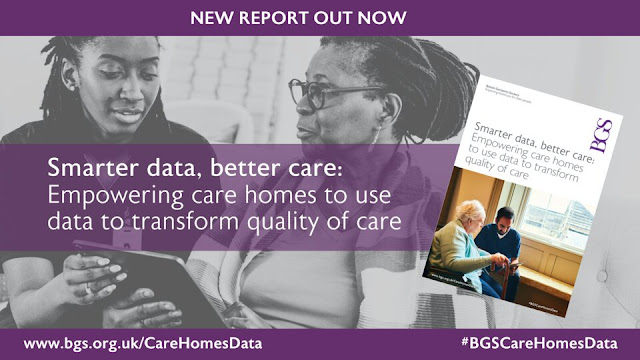
BGS Report "Smarter data, better care: Empowering care homes to use data to transform quality of care"

https://www.bgs.org.uk/policy-and-media/transforming-the-quality-of-care-in-care-homes-through-better-use-of-data


"The British Geriatrics Society (BGS) hosted an event in London in September 2023 on ideas and practice around a minimum dataset for care homes. This report, which is based on presentations at the event and the debate that followed, makes 12 recommendations for the effective implementation and delivery of a national minimum dataset that we believe policy-makers and regulators should consider."
Below, I have related the report's 12 recommendations to Hodges' model:

 Individual
  |
     INTERPERSONAL    :     SCIENCES               
HUMANISTIC --------------------------------------  MECHANISTIC      
SOCIOLOGY  :   POLITICAL 
|
GROUP
my quality of life
my quality of care

care home residents

research - how new Artificial Intelligence can be harnessed safely and ethically to extract optimum value^^ out of linked social care data

my quality of life
my quality of care

integration - a harmonised set of
quality of life and quality of care indicators

not just a process* (data gathering/entry) by care sector on behalf of others

high-level of interoperability

resident's families (advocate)

needs that cannot be met at home

^Government recognition of contribution of social care sector to society

linking of information sources, preserving privacy but improving public's understanding of how such data can be used (benefits)

combine learning from the DACHA study, evidence of the analytic power of data instruments like interRAI, and the lived experience of those working in our care sector


care home managers & frontline staff

shared decision-making - commissioners, regulators and providers

sector-wide conversation around the data that does and does not need to be known by different stakeholders

Investment in a data-informed system for health care and social care - greater equity between the two^

sustained - longer term approach - reduce the data burden

Government funding of dedicated in-home data coordinators - cost recognised from outset


4Ps in Hodges' model -

INTRA- INTERPERSONAL - purpose
SCIENCES - process
SOCIOLOGY - practice
POLITICAL - policy

^^Where does 'optimum value' lie in Hodges' model?
How are these reconciled?

Transforming the quality of care in care homes through better use of data.  https://www.bgs.org.uk/policy-and-media/transforming-the-quality-of-care-in-care-homes-through-better-use-of-data 

Wednesday, November 29, 2023

Mathematical 'objects' c/o TPM

INDIVIDUAL
|
     INTERPERSONAL    :     SCIENCES               
HUMANISTIC --------------------------------------  MECHANISTIC      
SOCIOLOGY  :   POLITICAL 
|
GROUP

"Fine's position is called 'procedural postulationism'. When we postulate, when we do a certain sort of reflection on mathematical objects, our acts in a sense bring those objects into existence. But what's going on is not quite like an author imagining a character. It's more like intellectually bumping into something, where the bumping and the something result in a new grip on mathematical objects. But he suggests that the objects, once we have them, in a  sense have always been there. I ask him how he makes sense of the idea." p.23.

"The right picture isn't one in which we just create the objects the way you might create a statue, bring into existence something that didn't exist before. What you're doing when you postulate is extending the domain of quantification, you're extending the objects about which you're talking. It's not that you're bringing them into existence. You're targeting the domain of quantification, a domain of discourse which hadn't been previously targeted. These objects are themselves mathematical objects that don't exist in time, in fact, if they exist they necessarily exist. So it's not that they previously didn't exist, it's just that you now managed to target a new domain of eternal, necessary existence." p.23.


"Logical and philosophical investigations into parts and wholes have been dominated by a certain tradition that goes under the name 'mereology'. ... I hold the view according to which there are many different ways in which parts can form wholes, and many of those ways are not mere sums. I think it's unfortunate for philosophy that philosophers focus so much on mereology as traditionally conceived."
"But how can a thing be more than the sum of its parts? Where does the more come from? Fine explains, 'If you take a tower of blocks that a child might make, that's composed of the blocks, but it's not a mere sum of the blocks. The blocks have to be in a certain order, one has to be on top of the other. I'm inclined to think of that tower as the blocks in a certain arrangement. So when you think of it in that way it's not a mere sum of the blocks. If you want to actually understand mereological structure as it's presented to us, it's very rare that we're going to be talking about mere sums. We're going to be talking about objects structured in a certain way to constitute a whole.'" p.25.


Garvey, J., with Fine, K. The silence of the lambdas, The Philosopher's Magazine, 4th Quarter 2011. 55: pp.19-27.

Saturday, November 25, 2023

South Sudan Medical Journal - November 2023 Gender-Based Violence

Dear reader,

Our November issue on gender-based violence (GBV) is online here. See details below; we thank the many people who contributed to this important topic.
 
Please share this issue with your colleagues and promote it through your social platforms.


For example: “The South Sudan Medical Journal’s November issue tackles gender-based violence @SSMedJournal #SouthSudan #SSOT” or retweet from @SSMedJournal
 

EDITORIAL


RESEARCH ARTICLES
  • Maternal socio-economic and neonatal medical characteristics associated with survival of preterm neonates in Torit State Hospital, South Sudan: a descriptive cross-sectional study Beatrice Doki, Pontius Bayo and Ronald Jada
  • Factors associated with maternal deaths in Bongor Provincial Hospital, Chad Gabkika Bray Madoué, Allarehene Noudjalbaye, Saleh Abdelsalam, Kainba Passoret, and Diguisna Kadam

FOCUS ON GENDER-BASED VIOLENCE
  • Gender-Based Violence: How South Sudan is fighting back Nyakomi Adwok
  • Clinical management of rape survivors Koma Akim
  • One Stop Centre for the survivors of sexual and gender-based violence at Juba Teaching Hospital Busiri Julius Korsuk
  • SSMJ talks to Data Gordon about Men4Women Ann Burgess and Data Gordon
  • Ask the GBV experts Koma Akim and Nyakomi Adwok
  • The reality of GBV: The story of a South Sudanese girl child in Kenya Nyajuok Tongyik
  • 16 Days of Activism Against GBV Rita Martin Lopidia  
  • Resources on gender-based violence/violence against women and girls related to South Sudan
  • GBV Educational/Training Resources

SHORT COMMUNICATIONS
  • Applications for postgraduate Training Gordon Memorial College Trust Fund (GMCTF)
  • Letter to the Editor
  • Obituary: Dr Bashir Aggrey Abbas Meseka 
  • Obituary: Dr Peter Lado Aggrey Jaden


FRONT AND BACK COVERS IMAGES: From Tales of Lala, No to GBV (Credit: Crown the Woman, South Sudan)
 
Our articles are listed by African Journals Online (AJOL) and the Directory of Open Access Journals (DOAJ) as well as being on our website. SSMJ is included in the EBSCO scientific research collection.

The SSMJ team
Email: southsudanmedicaljournal AT gmail.com
Website: http://www.southsudanmedicaljournal.com
Follow us on Twitter/X @SSMedJournal and our Facebook Group

Thursday, November 23, 2023

Hodges' model - as 'a' philosophy c/o TPM

As much as I might like, or aspire to write, this is not a treatise on Hodges' model as a philosophy. Anyway: why limit ourselves to one 'philosophy', when several might apply, or at least be found?

Other TPM articles within the 50 new ideas issue point to Hodges' model (of course 😉).

Philosophy itself may benefit. Philosophy is "the love of wisdom". While there are dangers in siloed kowledge and the thought that put it there, what is classed as wise across the domains of Hodges' model in a given context? Contexts change, but how can philosophical reasoning help us 'keep our options open'? Or is the situation and context 'closed'? 

Again much as I might like, in response to Benatar's Forsaking wisdom (pp.23-24) I'm not trying to clever - even my sense of humour does not extend that far. We do want to apply Hodges' model  practically. Maybe disciplines exist in a perennial state of self-doubt? Peter Boghossian discusses Philosophy that matters (pp.29-30). Nursing is no exception being challenged still regards its professional and academic identity. In mental health nursing there are concerns about the field as a specialty being genericised. The nursing discipline for which identity and meaning is key finds its own identity challenged. Helen De Cruz writes of The Philosopher's rut (pp.41-42). A contributing factor is the tendency in philosophical debates to be dominated by two-well-outlined opposing positions. This framing can stifle exploration, and yet in Hodges' model with oppositions built-in the model as a whole provides conceptual escape; a series of conceptual spaces to explore. 

Hodges' model can help postpone what De Cruz refers to as cognitive closure, another reason for the philosopher's rut. We tend, psychologically to draw quick conclusions such that we are averse to ambiguity. This may be innate to a degree, as seen in 'black and white' thinking. Ironically, for me with Hodges' model is the counterposition of reflection as navel-gazing, resulting in too many options, and no decision at all.  

With the self, I, individual appearing to take a prime position in Hodges' model, Michael Cholbi reminds us of the philosophical significance and history of self-knowledge (pp.35-36). Student nurses need to acquire sufficient substantial self-knowledge to be safe, effective, competent, satisfied and lifelong learning practitioners. In another issue 98 4th Quarter 2022, Jonathan Matheson asks Why Think for Yourself (pp. 26-32), is there a rationale in intellectual autonomy and love of truth? You can exercise your intellectual autonomy and make it collaborative, by deciding on the port of entry to Hodges' model. This is a determinant in terms of the context, the situation that prompts you reach for the model in the first place. 

me - you INDIVIDUAL - the few
  |
     INTERPERSONAL    :     SCIENCES               
HUMANISTIC --------------------------------------  MECHANISTIC      
SOCIOLOGY  :   POLITICAL 
|
others - GROUP - many
inherent philosophy in Hodges' model

the mind - my mind
Personal identity
epistemology
ontology - being - identity
my - beliefs - (yours)

abstraction
logic - mathematics

concept of opposition^
opposition of concepts^

representation of -isms

ethics - moral reasoning

values - value

unconditional positive regard


physicality - materialism

the brain - my brain - body
Organic identity
implicit binary structure

superimposed relations
vectors

coding and classification

language corpora

reality as orientation:
(e.g., what three things do we need to know?)

personalised medicine ('up here')

professional scope - curricula
silos of knowledge

scientific method/methodologies

language - semantics - meaning
dialectics
'other minds'
practical reasoning

applied philosophy

individual-collective debate:
utilitarian principles

social philosophy

socialisation of learners (professions)

conformance - group think


health in politics
politics in health
human rights

the unborn - future humans

protected human characteristics

diametrical oppositions in Hodges' model
(e.g., 1. my mental state - mental health law; 2. public understanding - of science; 3. my freedom - the law. 4. culture - (techno-culture!) - science...)

power - freedom

political philosophy


In John Corvino's Applied philosophy out of the closet (pp.39-40), I'm not sure if it was Martha Nussbaum who stressed the need for philosophy to be practical. Is this the same as applied? I note her work on capabilities. Hodges' model seeks to reduce the gap between the learning involved in (between - hence bridging) theory and practice - to achieve competencies. For the future of (Brian) Hodges' model this matters, as I understand that efforts are ongoing to apply category theory to the social sciences. It is a pragmatic conceptual structure. To return to identity, A M Ferner tackles (literally?) Organic identity (pp.49-50); while Kerrie Grain takes on what is next-door in Hodges' model - Personal identity (pp. 51-52). As I continue to sort papers, journals and books there is more to follow. 


The Philosopher's Magazine, "50 New Ideas", 1st Quarter 2016. Issue 72. pp.20-120.

TPM #72 cover image: https://ericthomasweber.org/correcting-political-correctness/

^Ack.
Needham, R. (1987). Counterpoints. Berkeley: University of California Press.
(Looking f/w - I think - to chapters 7-8. With specific post(s) to follow.)