Hodges' Model: Welcome to the QUAD: April 2025

Hodges' model is a conceptual framework to support reflection and critical thinking. Situated, the model can help integrate all disciplines (academic and professional). Amid news items, are posts that illustrate the scope and application of the model. A bibliography and A4 template are provided in the sidebar. Welcome to the QUAD ...

Wednesday, April 30, 2025

Global South - Global Perspectives

As mentioned before, I try to keep grounded, in terms of my parochial perspective on the world, even as technology brings this world, and many others to so many screens.

 BBC Radio 4 'PM' 1700-1800 UT today mentioned this news and an event to follow:

Mākereti "Maggie" Papakura was an internationally renowned Whakarewarewa guide.

  • 'Oxford University will award a posthumous Master of Philosophy degree to pioneering Māori scholar Mākereti Papakura.
  • Papakura, known as Guide Maggie, was the first indigenous woman to study at Oxford.
  • Her work, published posthumously, was the first ethnographic study by a Māori author.
Pioneering Maori scholar and famed Whakarewarewa guide Mākereti Papakura will be honoured with a posthumous degree more than 100 years after she began her studies, Oxford University has announced.

Her family and iwi say they are grateful for the tribute to her memory, and it is testament to her determination to ensure Māori stories would not be forgotten.

Born in 1873 at Matatā, Papakura is believed to be the first indigenous woman to study at the university, Oxford’s School of Anthropology and Museum Ethnography said in a statement.

She made her name as the pre-eminent guide at Whakarewarewa in the early 1900s and was known as Guide Maggie'. . . .

...  I will watch for further news. 

The above stood out as last evening I greatly enjoyed listening to Discovery on the BBC World Service:

'Dr Julia Ravey and Dr Ella Hubber are both scientists, but it turns out there’s a lot they don’t know about the women that came before them. In Unstoppable, Julia and Ella tell each other the hidden, world-shaping stories of the scientists, engineers and innovators that they wish they’d known about when they were starting out in science. This week, a Māori marine scientist is combining indigenous knowledge with marine science to save the oceans that are so integral to her heritage. ...'

Image and text:
https://www.nzherald.co.nz/rotorua-daily-post/news/te-arawas-makereti-papakura-to-receive-posthumous-degree-from-oxford-university/SBI3TR733RHZBOAS3BLDAZPMTU/

Previously: 'Oceania'
Monday, April 28, 2025

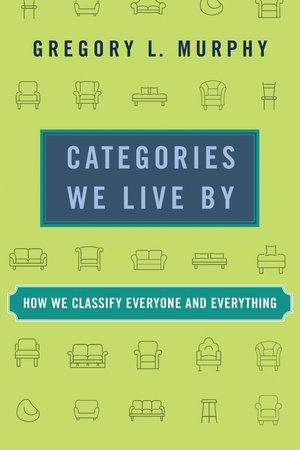
Book review: 'Categories we live by' ii

In that first post I felt a bit guilty getting bogged down in the introduction, and not really saying much about the book itself.

Well, Chapter 1 is the 'Introduction' so that is great, and as you may be I am swept up by what's between the covers. Speaking of which, this is an effective design, and green colour; especially for a northern reading in March - May.

The book is slim considering the topic, 164 pages, plus just over a page of notes, four and a half of references and an index. It is, I think a slightly larger format paperback but fits well in the hands for outdoors reading. The fonts and layout are clear.

Murphy's style is straightforward and readable. It is not technical, but includes terms such as classification, nomenclature, and domain [ ;-) ]. The division into two parts, lends itself to a wide readership, the second part providing case studies giving the book a pragmatic, practical emphasis. I'll post again about chapters 6 & 7 on Psychodiagnostic Categories; and Categories and Power respectively (brief, but a joy!).


Before moving on from the Intro, Murphy explains how the same category may be thought of in different ways at different times' and encourages us to be 'critical of our categories'. p.12. This stands out for me. Especially being suitably equipped to critique our categories as we use them.

Chapter 2 on The Classical Tradition, has a natural starting point; describing Aristotle (with his book Categories), essences, definitions with properties that are necessary and sufficient p.14-15.
'Necessity: If it's in the category, it has the features,
Sufficiency: If it has the features, it's in the category.' p.15.

I was prompted to reflect on relations and identities here. While I suggested the book is not technical, there is a important point about dictionaries and the definitions we seek there. We should remember that many members of the public would still rely on what is the classical way to create, confirm category membership: there must be a rule.

Wittgenstein follows pp.17-20, but I took note of:
'The problem is that necessity and sufficiency are in tension with each
other. As you make the list of properties longer and longer, it's more likely
to be sufficient but less likely to be necessary. Forming a list of features that
are both necessary and sufficient is usually impossible.' p.19.
I pencilled in (Eleanor) Rosch on p.13, and on page 21 her contribution to the destruction of the classical world is described; with other researchers. The book is well referenced, without being intrusive. Murphy provides specific pointers, suggesting further reading and skipping a chapter. Helpful, given how precious time is these days.

There is a critical invitation on page 13: 

'Want to start an argument with someone? Ask them whether a stove is a kitchen utensil or nursing is a science.'

I wonder if nursing theory colleagues in the United States and globally have already responded?

More to follow - surely!

Murphy, Gregory L. Categories we live by: how we classify everyone and everything. Cambridge, MA: The MIT Press, 2024.

Many thanks to MIT Press for the review copy.

Sunday, April 27, 2025

Citation of Hodges' model: 'Sustainable Health Model: Increasing Universal Access to Health Services in Remote Areas'

News received of another citation to add to the bibliography. It's just a sentence, but always welcome.

Noting the journal's title, Hodges' model incorporates a person's, family's, population's health career which is invariably impacted by a cascade of life chances. H2cm can also be applied temporally, longitudinally; taking in the past, current situation and future.

Good to see researchers discovering Hodges' model and considering it in respect of global health and sustainability also. If your purpose is to identify gaps, seek to reduce them, critique and evaluate change then again Hodges' model with the bridges it affords is an effective resource.

It's disappointing to see the journal - JoWFMHN list only the first author of referenced work. I must look at open access in the future, and remain grateful to Dr Wirnitzer - co-author in the cited paper - for assistance with writing and final publication, whose work includes:

The NURMI-Study (NURMI – Nutrition and Running high Mileage)
https://www.nurmi-study.com/en

Science 2 School: Nachhaltig gesund – bewegt & veggie
https://www.science2.school/

Abstract

Access to healthcare services in remote areas remains a significant global challenge, with many populations experiencing disparities in healthcare availability, quality, and affordability. Sustainable health models that ensure universal access to health services are essential for improving public health outcomes in underserved areas. This study investigates the potential for sustainable health models to increase healthcare access in remote regions, focusing on the role of telemedicine, mobile health clinics, and community health workers. The research employs a mixed-methods approach, combining qualitative interviews with healthcare professionals and quantitative data on healthcare access and outcomes in remote communities. The findings indicate that telemedicine platforms have improved healthcare delivery by 40%, while mobile health clinics and trained community health workers have expanded service reach, particularly in geographically isolated areas. Furthermore, community-based health interventions have led to a 30% reduction in preventable diseases in these regions. The study concludes that integrating technology with community-based solutions offers a scalable and effective approach to achieving universal health access in remote areas. However, challenges such as technology infrastructure, resource allocation, and healthcare workforce training need to be addressed to ensure the sustainability of these models.

Ardenny Ardenny, Le Hoang Nam, Pham Anh Tu (2025). Sustainable Health Model: Increasing Universal Access to Health Services in Remote Areas. Journal of World Future Medicine, Health and Nursing. 3. DOI: 10.70177/health.v3i1.1907

Saturday, April 26, 2025

'Categories are destiny' Freud p.6. of 'Categories we live by'


Reading and enjoying for review:

Murphy, Gregory L. Categories we live by: how we classify everyone and everything. Cambridge, MA: The MIT Press, 2024.

Let's start at the beginning -
'Nowadays we are suspicious of categories, especially categories of people. Gender, ethnic, racial, and class categories are seen as a source of discrimination and inequity. If we saw each person as a unique individual, perhaps we wouldn't have all the problems caused by racism, sexism, and all the other -isms that afflict society.
In spite of these problems, I will argue that we cannot get rid of categories in general. They simplify and distract us from individual identities, which can be bad, yet if we didn't have them, we would find it impossible to navigate the world and deal with its incredible diversity.' p.7.


Reading what follows also from the book's introduction, I thought about public sector funded (socialist)  healthcare and the private provision:

'So, my sweater and my hair might both be brown, so we can say that they are both in the category of brown things. They are equivalent in the sense that I call both of them "brown." However, the category of brown things is not very interesting. When you know that something is in that category, you know exactly one thing about it-its color. There's nothing else to be known. Maybe the brown thing is alive or maybe it's inanimate; maybe its microscopic or maybe it's as big as a planet; maybe it moos or maybe it sings oI maybe it is silent. The category doesn't tell you any of those things These single-criterion categories are kind of degenerate. Yes, items that share the criterion (brownness, being three inches long, taking at least half an hour, or whatever) are equivalent, but only in the one property that defines the category. Indeed, you can define trivial categories that only have one ridiculous feature in common, like things that you have touched in the last forty-nine seconds, or objects that are exactly fifteen miles from Cincinnati. Those are not categories that people form, because they are not useful.' p.11.
There is much ongoing debate about parts of the UK's NHS being 'sold-off' - taken-over by private companies with consequences for the quality of care, e.g. cataract services:

https://www.theguardian.com/society/article/2024/jul/10/eye-doctors-say-private-cataract-operations-have-hurt-the-nhs?CMP=share_btn_url

Having worked for the NHS - now NHS Professionals since 1977, the current problems faced by the service and experienced by some patients, carers, friends and family members is upsetting.

Murphy's observation contrasting the utility of categories at the individual and collective level is a great opener. Especially for the basic structure of Hodges' model and the vertical axis.

I've written previously(?) how I think that it is true, throughout my career even as a ward manager (there were some exceptions!) and community MH nurse, I/we have been cocooned from having to be concerned about the budget. When you stop and think about it, how do the 'things' in the category of economics impinge on the biomedical, biopsychosocial model? The ward was a mechanism; it kind-of run itself, which for change agents (those who use the word transformation a lot) is an ongoing issue. The two categories that matter - even as they are global - are illness and prevention. The NHS puts supertankers to shame, in its inability to pivot - turn.

At the end of the day (and night - 24/7/365!) though healthcare must be paid for.

Murphy's explanation about degenerate categories is fascinating too (and this is just the intro!). It sees me (in danger of making a category mistake) as I think about singletons, and 'degenerate' as applies in mathematics, and the debate of finance. The tension of seeing the individual as a unique being, in order to be person-centred, but the service, the system would place them in all in the category of 'payer'.

Viewed across the funding divide, is the other inevitably viewed as degenerate? On page 80 now. More to follow. I'm still kicking all this around; while the government kicks the 'can' of social care down the road.

Many thanks to MIT Press for the review copy.

Thursday, April 24, 2025

Time to revisit Wikipedia?

Yesterday morning an email from a mail list -

https://groups.google.com/g/bytesforall_readers/about

- regards a Wikipedia entry, prompted me to look back at some personal - 'local' history. In 2006 having started this blog, I'd noticed 'models of care', and nursing theories' on Wikipedia.

I posted an entry on Wikipedia about Hodges' model.
This included the now defunct url/domain - p-jones.demon.co.uk (See below).

A request followed to remove it:

https://en.wikipedia.org/wiki/Wikipedia:Articles_for_deletion/Hodges_Health_Career_Model

I must admit there is a repetitive 'spam' quality to emails, contributions, activity on twitter and posts here. I do try to keep things relevant, in context and seek what is salient. 

Given the digital divide and ethos behind the web the 'complaints' now seem exclusive.
After a brief problem with Blogger I also wrote a blog post:

'Thanks Google ... Wiki ... oh for more time ....':

https://hodges-model.blogspot.com/2006/05/thanks-google-wiki-oh-for-more-time.html

At the time I wrote: 'I agreed the submission should be deleted - another time.' 

In writing - 'Another time...', perhaps, I should try again - or leave it to someone else?

Following up, I found that the now archived POLITICAL care/knowledge links page -

original static website 1998-2015
[ Which is itself a useful 'collection' of resources. ]

Since 2006 the bibliography for Hodges' model has grown, please see sidebar:

http://hodges-model.blogspot.com/

Created in NW England higher education in the mid 1980s Hodges' model was intended for use within post-registered nursing courses - psychiatric and learning disability nursing, health visiting and district nursing. Hodges' model, is however, universal in scope and potential application.

As no doubt occurs in other professions/disciplines, advocates for tools, resources, theories, model that may also be simple, free - open access, 'neutral', pragmatic, supportive of lifelong learning, curiosity, literacy and informatics forms can be met with internal resistance - never mind external responses:

Raskin, Jef. "Humbug: Nursing Theory". Archived from the original on July 10, 2001. Retrieved December 14, 2015. (Wikipedia).

More recently the phrase 'Nursing eats its own' has resonated. A phenomena not limited to nursing no doubt?

Monday, April 21, 2025

Biblio - addition: Conceptual Mapping Exercise of DoLS in Residential & Community Care Using Hodges' Model and Threshold Concepts


After a great many years of on-off effort, radical revisions - from one to two papers - part 1 and part 2; and then finally two standalone papers, I received news this morning from ORCID and Wiley of online publication.

News of the second paper (part 1 - to me) is still to follow.

Many thanks to the individuals who read earlier drafts, the editor and team of JECP.

It is a real delight to add an item to the blog's bibliography in the sidebar.

Apologies in advance, the paper is not open access, I cannot personally cover the fees. Happy to assist with an earlier draft.


Once again, if you can add to the bibliography, or are interested in using Hodges' model please let me know. Or as several researchers have done: 'Just get on with it!'. Learning post-publication of a citation for Hodges' model, is a welcome surprise too.


Jones, P. (2025), A Conceptual Mapping Exercise of Deprivation of Liberty Safeguards in Residential & Community Care Using Hodges' Model and Threshold Concepts. Journal of Evaluation in Clinical Practice, 31: e70085. https://doi.org/10.1111/jep.70085

Sunday, April 20, 2025

Safety testing time - evaluations - for users of Hodges' model to be extended

The time to test Hodges' model* is to be extended (in my dreams...).

Or. Do not underestimate 'simple' models.

The time to evaluate Hodges' model:

  • for individual users
  • cross-curricula
  • professional groups (e.g. registered mental health; and general nurses)
  • within multidisciplinary / skilled teams / venues (Nursing home, Community Mental Health Team)
Given the universal, multicontextual scope of the model for public and patient safety it was decided to extend the time for testing by a further month to two quarters [ 😉] - six whole calendar months.

When applied it is important that checkpoints are agreed:

  • Data gathering - initial interview
  • initial formulation / care plan
  • care review / evaluation
  • discharge - staying well 
There is no agreed standard for testing a generic model in healthcare. Is there?
  • Not for the medical / bio-medical model
  • Nor, for the biopsychosocial model?
What chance then for a biopsychosociopolitical model?

*Per user and group of users of course.

My source: 
Christina Criddle, Concerns raised after OpenAI slashes time taken to test potential risks of latest models, FTWeekend, 12-13 April, 2025, p.14. (italicised terms discussed).

See also:
Radhika Rajkumar, Editor. OpenAI used to test its AI models for months - now it's days. Why that matters, ZDNET.

https://www.zdnet.com/article/openai-used-to-test-its-ai-models-for-months-now-its-days-why-that-matters/

Friday, April 18, 2025

ERCIM News No. 141 Special theme: "AI for Cultural Heritage"

Dear ERCIM News reader,

The April 2025 issue of ERCIM News (Number 141) is now online! The articles featured in this issue highlight the wide spectrum of applications in the cultural heritage field that benefit from AI, as well as the diverse forms of AI being employed across the sector.

Including:

Who Are You, AI? – Artificial Intelligence as a Potential Metaphysical Humiliation of Humanity. pp.32-33.

By Michael Fleischhacker (University of Applied Sciences Burgenland), 
Igor Ivkić (University of Applied Sciences Burgenland and Lancaster University), and Friedrich Roithmayr (University of Applied Sciences Burgenland) 
'Artificial Intelligence as a potential fourth metaphysical humiliation—questioning human uniqueness in reason, freedom, and moral standing, and unsettling our place in the world after Copernicus, Darwin, and Freud.'

My source:
Peter Kunz
ERCIM
https://www.ercim.eu
https://ercim-news.ercim.eu

Follow us on LinkedIn: https://www.linkedin.com/company/ercim
Join the ERCIM LinkedIn Group: https://www.linkedin.com/groups/81390/
Follow us on X: https://x.com/ercim_news

Thursday, April 17, 2025

Community - Kids - Photographer - Police

My maternal grandfather was a man of few words (WWI). He did recount tales of when as a lad, he and his friends would knock the policeman's (and it was a 'man' back then) helmet off and leg it. It was, another time in several senses. Given his war experiences, I now wonder how easy it was to end up working at a gas works? Passive, re-traumatisation? Or, just grateful to have a job in the 1920-30s? 


After he retired he had a job as a 'cocky watchman' in a park. I remember visiting him in his hut with my mother. 

These photographs more 'recent' from the 1970s suggests 'community' policing, and calls for its return here in the UK in the 1990s(?). 

The policewoman on the right, also put me in mind of the 'nurse/doctor ...' running in the opening credits of MASH

individual
|
INTERPERSONAL : SCIENCES
humanistic ------------------------------- mechanistic
SOCIOLOGY : POLITICAL
|
group


Leonard Freed Police scooter patrol. New York City, USA. 1978. © Leonard Freed | Magnum Photos

Leonard Freed | Police Work A policewoman plays with local kids in Harlem. New York City, USA. 1978. © Leonard Freed | Magnum Photos

Police Work by Leonard Freed (Reel Art Press, £49.95) reelartpress.com.
https://www.reelartpress.com/catalog/edition/240/leonard-freed:-police-work

My sources:
The Daily Telegraph, Review, 7 December 2024, p.14. 
Neighbourhood Watch. Sunday Times Magazine, 17 November 2024. pp.42-47.

Images: Magnum Photos
https://www.magnumphotos.com/newsroom/police-work-leonard-freed-magnum-photos/

Wednesday, April 16, 2025

AI, Beliefs, Helplessness, Misinformation ...

Viewing this debate and SDGs both as information spaces, and mental health/illness can provide some insights.

'Learned helplessness' is an established phenomenon in psychological studies and history.

Adam Grant in Life&Arts, FTWeekend 29-30 March 2025, p.2. 

( https://adamgrant.net/book/think-again/ )
writes in 'HOW TO UNLEARN HELPLESSNESS'
'Many people believe that in a world of echo chambers and misinformation, it's not possible to talk anyone out of their convictions. They`re wrong. Even a bot can do it.

In recent experiments psychologists recruited thousands of Americans who believed in unfounded conspiracy theories ranging from the moon landing being faked to 9/11 being an inside job. After the participants described their views, the psychologists randomly assigned some of them to discuss these views with an AI chatbot that was prompted to refute them.

After less than 10 minutes of conversation with a ChatGPT-based LLM, more than a quarter of participants felt uncertain about their views - and those doubts persisted two months later. Short exchanges were even enough to move the opinions of strong believers.

Why? It's not just that ChatGPT has access to infinite knowledge. It turns out that AI chatbots are better listeners than the average human. The researchers found that chatbots were persuasive because they presented information that directly challenged the reasons behind people's beliefs.'
Also helpful, as per discussion to consider AI as a new / emerging 'information space' as a literal frontier, a new territory with unknowns that businesses wish to conquer and the public must learn to trust - even as users. What knowledge - understanding is needed of what is happening in the 'box'?

Once again (within Hodges' model) we can potentially draw in (ask questions of - all) the literacies:

3Rs, information, IT, media, culture, spiritual, financial, health, sciences, civic - national, international...

This also means to what extent are existing imbalances in parity of esteem - between the mind and body dichotomy perpetuated, even increased?

It is not surprising that there is an imbalance, in the distribution of datasets - LLMs on huggingface:

https://huggingface.co/docs/hub/en/datasets

e.g. INTRA- INTERPERSONAL [MIND]

BioBert 1.1
UCI ML Drug Review dataset - Subset 
LOST arXiv:2306.05596 [cs.CL]
Mindwell https://doi.org/10.1007/978-981-97-3601-0_34

SCIENCES [BODY]

eScience kidney factomics (PubMed titles)
BioBert 1.1
SAVSNET sample (VetCN) - Important in terms of Zoonotic diseases and planetary health*.

Image datasets: 
Lung Cancer IQ-OTH/NCCD 
Surface Crack Detection 
Oxford-IIIT Pet 
BreastMNIST 
DermaMNIST 
PneumoniaMNIST 
BloodMNIST 
RetinaMNIST

There is overlap also.

Ack. *As mentioned late 2024, the datasets were discussed at: https://www.bcs-sgai.org/health2024/

'ChatGPT (40) Differentiating reliable information from misinformation (12)'

Tuesday, April 15, 2025

The 'animal' in Hodges' model ii

The two pairs of eyes in Hodges' model are provided through the model's two axes

HORIZONTALLY: the humanistic and mechanistic.

VERTICALLY: the individual and the group.

Hodges' model: Axes & Domains
Structure AND Content :: Fight OR Flight

Before delving into this though, let's revisit the model as a template.

Structure aside, Hodges' model acts as a conceptual blank sheet. Overall, the model is also an aide-mémoire. It can prompt us to 'where' we've been, where we need to go in our data gathering, assessment, planning, interventions, evaluations: personal history, family, work and leisure. In an interview how does the patient, client, carer, student ... negotiate the domains of Hodges' model? The model can guide us in what is said, what is omitted - for whatever reason, what is significant within all this; AI-assisted or not.

These two 'horizontal' eyes prompt us to attend to safety, your own, the patient / client and other people in the vicinity. In terms of responding to 'fight', obviously this does not mean you are looking for a fight, but of course you have to be able to defend yourself. Metaphorically, Hodges' model can represent the sword and shield. We are in a fight for justice to secure health services for individuals, families, and the population.

On the side - vision for flight, what is humanistic and mechanistic.

Then, in the vertical axis, there is vision for fighting, for the individual, and the group - population.

In this interplay of person and collective, I'm reminded of Odysseus and the shout "Nobody did it!" (with other sources). It never ceases to amaze, the frequency of this conclusion throughout local, national and global politics?

The individual nightmare of Cyclops; and collective nightmare of the Panopticon.

In mental health nursing you quickly learn about the anatomy^, physiology and psychology of anxiety. Not necessarily simultaneously, but the jig-saw is there to be completed, at least as far as you can as a 1st year student - whatever your health discipline. The pieces that matter (literal keys to action) are provided by the patient, client, carer. ...

In a way it is too late when people are referred to mental health services. Too late for prevention, but given the incoherence between:

  • health systems (as usually found & founded)
  • government policy -
    • state of nutrition - food
    • advertising of foods, beverages
    • life style choices
    • education - health literacy
      • individual
      • family
      • community
      • national (curricula)
  • NHS? National Health Illness/Disease Service
- this isn't a surprise.

Whatever an individual's sensory capacities and abilities we need to do better. With tools to facilitate situational awareness, and realise an individual's and community's potential to learn and prosper.

^Anatomy? How many of us take for granted our limbs are 'there': ready to react?

Previously: The 'animal' in Hodges' model i

Original source - prompt:
Doniger, Wendy. The Rise and Fall of Warhorses. The New York Review of Books. April 10, 2025. Volume LXXII, Number 6. pp.17-19.

Monday, April 14, 2025

Relational Equality and Intergenerational Justice

ABSTRACT

Intergenerational justice has in recent decades become an increasingly important subfield of political philosophy. However, due to the absence of coexistence and other aspects of the intergenerational context, it is often unclear whether and how many ideals of justice apply. As such, relational egalitarianism – the view that justice requires equal social relationships – may appear particularly implausible in this domain. In this introduction, we explain this issue, motivating its further examination. Finally, we briefly summarize how the papers in this volume take up this challenge and offer insightful developments on both fronts, advancing our understanding of intergenerational justice and relational egalitarianism.


individual
|
INTERPERSONAL : SCIENCES
humanistic ------------------------------- mechanistic
SOCIOLOGY : POLITICAL
|
group
I - self - identity
ancestor - descendant

space - resources
past - now - future


INTERGENERATIONAL -  


- JUSTICE


Sunday, April 13, 2025

In 'health' can health itself be treated as aPOLITICAL?

That is, across medicine, nursing, social work, psychology, allied health professionals, public health . . . in theory, practice, management, policy and education ...?

- with all the talk of the biomedical model,
the bio-psycho-social model -
you do do you wonder?


individual
|
INTERPERSONAL : SCIENCES
humanistic ------------------------------- mechanistic
SOCIOLOGY : POLITICAL
|
group

INTRA- INTERPERSONAL


SCIENCES

SOCIOLOGY
freedom

the science
of snowflakes

coherence

unilateral
power

POLITICAL


Friday, April 11, 2025

The 'animal' in Hodges' model i

The New York Review of Books


'The fact that a horse has his eyes on the sides of his head identifies horses as animals of flight rather than fight, in contrast with animals like tigers, who have their eyes in the front.' p.17.


Hodges' model has two pairs of 'eyes'.

Can you see them?


Hodges' model: Axes & Domains
Structure AND Content :: Fight OR Flight

Doniger, Wendy. The Rise and Fall of Warhorses. The New York Review of Books. April 10, 2025. Volume LXXII, Number 6. pp.17-19. https://www.nybooks.com/issues/2025/04/10/

Thursday, April 10, 2025

'Best Interests' - Audio Drama by Sasha Hails


by Sasha Hails


Peter Polycarpou (Read by), Gerard McDermott (Read by), Jonathan Forbes (Read by), James Lailey (Read by), Alex Tregear (Read by), Susie Riddell (Read by), Elaine Caxton (Read by)


A BBC Radio 4 dramatisation


'Two new dramas which get inside the emotional realities of dealing with ethical dilemmas. When a confused young man with no I.D. and a Doctor Who fixation is brought into hospital, the staff have clear rules about how decisions can be made on his behalf. But when he starts to make his own wishes clear, are they right to listen?

Starring Gunnar Cauthery, Clare Perkins, Simon Bubb, and Carl Prekopp. With Peter Polycarpou, Gerard McDermott, Jonathan Forbes, James Lailey, Alex Tregear, Susie Riddell and Elaine Claxton. Script Consultant: Jim Blair, St George's Healthcare NHS Trust. Produced and directed by Jonquil Panting.'


My source: 

Jim Blair @jimgblair - https://x.com/jimgblair/status/1906993515038429252

Wednesday, April 09, 2025

All Day All Night - c/o Christine Sun Kim

Source: https://whitney.org/media/61514


individual
|
INTERPERSONAL : SCIENCES
humanistic ------------------------------- mechanistic
SOCIOLOGY : POLITICAL
|
group
'synaesthetic sphere'

DEAFNESS


SOCIETY

parents signing
friends signing?

ghosting

SOCIO-


ghosting

accessibility
inclusion


-POLITICAL

Ack. Christine Sun Kim - https://christinesunkim.com/

Liverpoool Biennial 2025 - Christine Sun Kim (Look forward to this - may post again.)

My source: Budick, A. The sound of Deaf rage, Life&Arts, FT Weekend. 1-2 March 2025, p.16.

Tuesday, April 08, 2025

Book TSR ii - Mental illness/health: History, process and progress

As posted yesterday through a book review, I developed an awareness for the role of process much earlier than previously thought. It wasn't Enid Mumford's work on the benefits of a socio-technical approach to successful deployment of information systems. I only discovered this well after the advent of home computing with the ZX81 and BBC micro 1981-1995.

It was 1978-79 to be more exact; on an admission ward during my three year student Registered Mental Nursing course at Winwick Hospital. On first recollection, I thought it was a clinic, with patients coming in for Clomipramine (Anafranil) infusion on to the ward. As students on placement we were allocated to support the clinic, completing regular observations, including pulse and blood pressure. Clearly, it was a long time ago. There is a paper (paywall), quite a significant one for me:
O’Flanagan PM. A Clomipramine (Anafranil) Infusion Unit. Journal of International Medical Research. 1973;1(5):375-381. doi:10.1177/030006057300100519 
I remember this Consultant's name being mentioned, but this was before my time(?). From the paper's first - accessible - page I can see the patients involved were actually in-patients. Which given the procedures, safety, observation makes better sense. There is reference to a film, in a hospital newsletter 'The Standard':
'Anafranil Film
In response to the interest shown in the film on Anafranil Infusion, Dr. P. O'Flanagan was present in the In-Service Training Room on Monday, October 29th for a second showing of the film, and to answer any questions from the audience.'
I wonder if the film is archived somewhere?

It isn't a surprise to see my former Community MH manager and friend David McKendrick listed on the Publications Committee. I do miss David - a great mentor!

In the previous post about 'The Sleep Room' I contrasted the mind-body dichotomy. In terms of evidence on 'both sides' of this divide, many people have made the observation of how you can see a broken arm, or leg, and other physical ailments, but mental health issues are often not obvious:
Powell J, Clarke A. Information in mental health: qualitative study of mental health service users. Health Expect. 2006 Dec;9(4):359-65. doi: 10.1111/j.1369-7625.2006.00403.x. PMID: 17083562; PMCID: PMC5060370.

The evidence-base of general medicine - physical health and psychiatry must be dynamic. The volume of publications bears testimony to the relentless change across all the sciences, research, technologies, knowledge, theory, practice, management and policy. On Twitter there is constant 'debate' between psychiatry and anti-psychiatry. 

Studies of intravenous clomipramine continue, the intervention much changed from the 1960-70s:

Fallon BA, Liebowitz MR, Campeas R, et al. Intravenous Clomipramine for Obsessive-Compulsive Disorder Refractory to Oral Clomipramine: A Placebo-Controlled Study. Arch Gen Psychiatry. 1998;55(10):918–924. doi:10.1001/archpsyc.55.10.918

Persson M-L. Adler Mats y Hetta J. Pulse Intravenous Clomipramine as an alternative antidepressant treatment to ECT: A pilot study. Eur. J. Psychiat. [online]. 2007, vol.21, n.4 [citado 2025-04-07], pp.263-267. Disponible en: <http://scielo.isciii.es/scielo.php?script=sci_arttext&pid=S0213-61632007000400003&lng=es&nrm=iso>. ISSN 0213-6163.

Karameh WK, Khani M. Intravenous Clomipramine for Treatment-Resistant Obsessive-Compulsive Disorder. Int J Neuropsychopharmacol. 2015 Jul 28;19(2):pyv084. doi: 10.1093/ijnp/pyv084. Erratum in: Int J Neuropsychopharmacol. 2016 Apr 27;19(10):pyw031. doi: 10.1093/ijnp/pyw031. PMID: 26221004; PMCID: PMC4772819.
Perhaps, someone can please enlighten me? Given the time between William Sargant's practice, and today how much more do we know? We know the gap can't be fully closed (phenomenologically?), but has the evidence-gap been reduced? What are the evidential mile[Km]stones in psychiatry - mental health nursing? What are 'the standard' measures? If we look at a model that is bio-psycho-socio-political, what difference might this make, to the 'debate', theory, practice, research, management and politics (policy)? 

'Woke' is a tainted word these days, but in mental health care and nursing we all need to wake up and in a safe space.

Monday, April 07, 2025

Book: 'The Sleep Room' by Jon Stock i

Somewhat indirectly - I must emphasize, a book review reminded me of my Registered Mental Nursing student nursing days; and the mind - body divide. Without realising it then I heard the sound of two keys out of the five in Hodges' model. There were positive role models in the staff nurses involved; plus, learning in the routes and modalities of physical and psychological responses to treatments; in the form of medication and therapy. 

'The Sleep Room' highlights the dangers of unbounded belief in recourse to physical treatments. Such books are designed of course to 'sell', to be emotive, sensational. But mental illness - the asylum systems, presents a history of humanistic intent and mechanistic horrors. If mental illness, severe emotional responses can render us as a rag-doll, pursuit of physicalist solutions to the nth degree, is tantamount to shaking the doll: violently.


individual
|
INTERPERSONAL : SCIENCES
humanistic ------------------------------- mechanistic
SOCIOLOGY : POLITICAL
|
group
mental

physical 

treatment


SOCIO-
resistance?

-POLITICS of health


More to follow - ii ...

Sansom, I. Abused by a 'hero' of British medicine, Review. The Daily Telegraph, 29 March 2025. p.15. 

Saturday, April 05, 2025

Exhibition: Manchester (and online) “Our Lives, Our Privacy” c/o ICO

This a.m. I heard on BBC R4 Today 07.41.30... news (and interesting discussion) -

https://www.bbc.co.uk/sounds/play/m0029rg4

- of an exhibition in Manchester that may be of interest, if you're local, but it is also accessible online:

https://ico.org.uk/about-the-ico/media-centre/news-and-blogs/2025/04/come-and-visit-manchester-s-latest-exhibition-our-lives-our-privacy-to-celebrate-the-ico-s-40th-anniversary/

Our Lives, Our Privacy
'A digital exhibition featuring 40 items that tells the tale of how privacy has been at the centre of some of the biggest events and milestones we remember over the past four decades was launched last Autumn, but now a physical exhibition has come to Manchester. 
From 2 April to 30 June, we will be displaying the exhibition at Manchester Central Library in the first-floor exhibition space. Members of the public are welcome to pop in and see the items that have shaped our lives and our privacy.  
 
The ‘Our Lives, Our Privacy’ exhibition highlights poignant events in history including the launch of social media, the News of the World phone hacking scandal and the Covid 19 pandemic to name a few. It also looks at technological advancements like smart devices and raising questions about the future, including how accurate the episodes of ‘Black Mirror’ really are.'
==== Previously:

Jones, P. (1996) Humans, Information, and Science, Journal of Advanced Nursing, 24(3),591-598.
https://www.academia.edu/3555654/Humans_information_and_science

Jones, P. (1996) An overarching theory of health communication? Health Informatics Journal,2,1,28-34.

Jones, P. (2004) Viewpoint: Can informatics and holistic multidisciplinary care be harmonised? British Journal of Healthcare Computing & Information Management, 21, 6, 17-18.

Fryer, Jon. “Information Literacies – Learning, to Thrive in a Digital Age” IRMS Bulletin 230 (2022): 16-21.

As listed in the bibliography in this blog's sidebar.

I visited Manchester Central Library about two weeks ago, it is quite a building and full of public, cultural, and local information resources. Must do likewise in Liverpool.

Thursday, April 03, 2025

Survey: Identifying and Fixing Undesirable Behaviors Across Software Versions

Hello,

As part of my PhD at the University of Lille, I am currently conducting a study on how developers handle certain bug scenarios. 
The goal is to better understand current practices, the tools used, and developers' needs regarding debugging in a specific scenario. 

You can find the survey at the following address:
Your participation in this short questionnaire (5 - 10 minutes) would greatly help us analyze existing methods and identify potential gaps in the available solutions. 
This survey will be open for 6 weeks (until May 15th, 2025). The responses will be analyzed and included in a scientific publication. The results will be available here.

If you can, please feel free to share this questionnaire with other developers who might be interested. 
Every response counts and will contribute to a better understanding of the community's practices! 


A big thank you for your help and time. 


Best regards, 
Rémi Dufloer
PhD Student, University of Lille 

---------------------------------------------------------------------------------------------------------------------------


Bonjour,

Dans le cadre de ma thèse à l’Université de Lille, je mène actuellement une étude sur la manière dont les développeurs gèrent certains scénarios de bugs.
L’objectif est de mieux comprendre les pratiques actuelles, les outils utilisés et les besoins des développeurs en matière de debugging sur un scénario précis.

Voici le lien du questionnaire:


https://sondages.inria.fr/index.php/462191?lang=en


Votre participation à ce court questionnaire (5 - 10 minutes) nous aiderait énormément à analyser les méthodes existantes et à identifier les éventuelles lacunes dans les solutions disponibles.
Ce survey est ouvert durant 6 semaines (fermeture le15 mai 2025).Les réponses obtenues seront analysées et feront l'objet d'une publication scientifique.Les résultats seront publiésici.

Si vous le pouvez, n’hésitez pas à partager ce questionnaire avec d’autres développeurs susceptibles d’être intéressés.
Chaque réponse compte et contribuera à une meilleure compréhension des pratiques de la communauté !

Un grand merci pour votre aide et votre temps.

Bien cordialement,

Dufloer Rémi
Doctorant, Université de Lille


________________
My source: Esug-list mailing list & checking with Rémi.

Wednesday, April 02, 2025

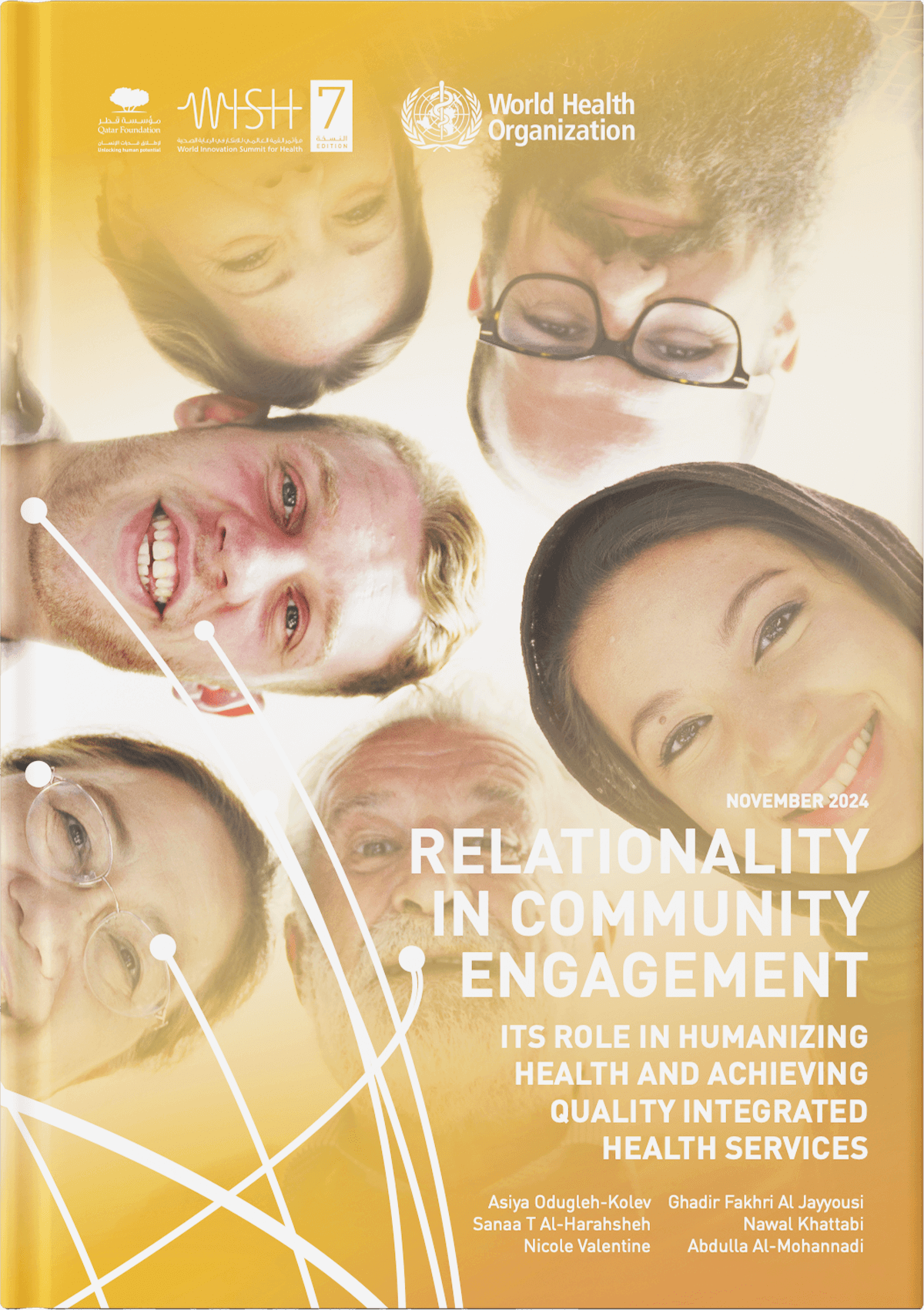
Webinar: 8 April Humanizing Health Care Through Relationality -

Exploring The Science And Practice Of Community Engagement


Join us for the first of four webinars co-hosted by the WHO Department of Integrated Health Services (IHS) and the Global Health Partnerships (GHP) (formerly THET). This webinar series is based on a new policy report launched at the World Innovation Summit for Health (WISH) -

https://wish.org.qa/wp-content/uploads/2024/09/Relationality-in-Community-Engagement.pdf 

The report revisits foundational concepts of community and examines how a deeper understanding of the relational nature of community engagement can contribute to improving quality of health care and transforming health systems. The webinar series hopes to inspire a shared understanding of community engagement’s transformative potential and how it can be leveraged for people-led change.

Continued ...


 Previously: relational :: community :: scale

Tuesday, April 01, 2025

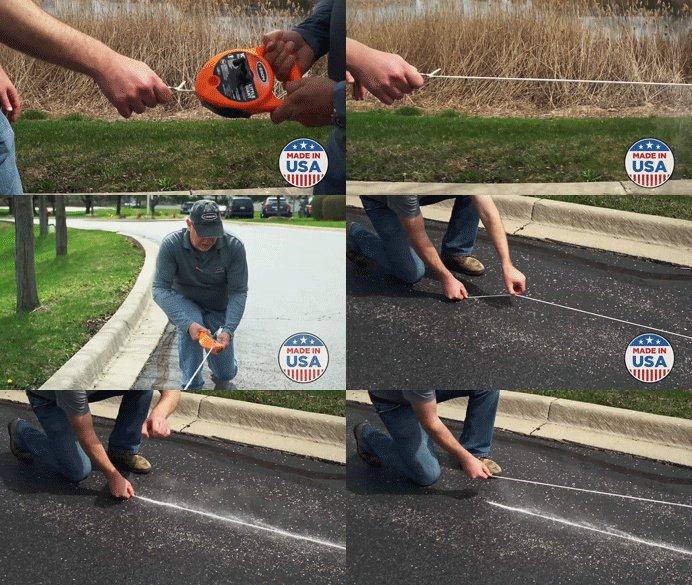
c/o A.Word.A.Day: Hodges' model - Walk the (dual!) chalk line

A.Word.A.Day

with Anu Garg

'Having a tool is like having a superpower in your pocket. With the right gadget, you can do much more than what arms and legs alone allow -- build a magnificent pyramid, lift water from deep below, or even predict whether you’ll need an umbrella tomorrow.


And not all tools need wires, batteries, or instruction manuals. Sometimes, a simple device can save labor -- a lever, a pulley, a piece of string dusted with chalk -- can save hours of sweat and toil.'

chalk line