Hodges' Model: Welcome to the QUAD

Hodges' model is a conceptual framework to support reflection and critical thinking. Situated, the model can help integrate all disciplines (academic and professional). Amid news items, are posts that illustrate the scope and application of the model. A bibliography and A4 template are provided in the sidebar. Welcome to the QUAD ...

Friday, November 03, 2023

Book: Waiting to Be Arrested at Night


'I' - 'Individual' 'self' 'person'
a Would-Be Citizen
|
     INTERPERSONAL    :     SCIENCES               
HUMANISTIC --------------------------------------  MECHANISTIC      
SOCIOLOGY  :   POLITICAL 
|
dyad/couple family GROUP community culture
society population
Let all the people go and be who they can be to the benefit of each other


Tahir Hamut Izgil, Joshua L. Freeman (Translator)

Waiting to Be Arrested at Night
A Uyghur Poet's Memoir of China's Genocide


My source:
Yang, Y. A city under siege, Books. Life&Arts, FTWeekend, 9-10 September 2023, p.11.

Book cover: Penguin Books.

Thursday, November 02, 2023

Book review ii. General Psychotherapy: Principles and Common Theoretical Aspects - Rediscovering Humanity

General Psychotherapy

Chapter 1 confirmed many points for me regarding psychotherapy, especially given the general treatment here. Hartmann-Kottek asks questions of psychotherapy as a science. Hence, the demarcation of science is also raised. The history of psychotherapy spans the 19th century to current day, with references to prehistory. Wundt is a reminder of my introduction to psychology (aged 14-15). 

Physics also features, with quantum theory noted on p.5. and throughout the book. Significant for me, reference to energy, took me back to nursing theory and the work of Prof. Martha Rogers. I've struggled with this in the past. Not just personally, Unitary Beings, is this a 1960s - 1970s thing(?), but what it meant to other students and qualified nurses, in the UK at least? Another factor as I tried to find 'space' - validation for Hodges' model (despite an assumed BEST BEFORE date) there was the perception of those outside nurse academia who questioned the very notion of nursing theory (Raskin, 2001). Pardon the digression, but in the text the scales and potential significance at which the quantum is 'present' are surprising and helpfully amplify the need for an open-mind.

The author highlights recognition in recent decades of quantum phenomena - descriptions in neurophysiological at the molecular - cellular level, meditation, energy, resonance, states of consciousness and unconscious. You will find E=mc2 here too.

The question of the disparate disciplines, schools and their often warring, fractured state is not dodged. The reality of, and accounting for the the multiplicity of approaches to therapy is debated and celebrated. I like the thought of how as a student / learner the first psychotherapy we are exposed to as a clinician (usually?) is imprinted. This experience influences (understandably) how we respond to subsequent psychotherapeutic modalities. I've followed discussion on 'X' regards efforts in academia to work towards a way to integrate psychotherapy, at least improving co-habiting, but as cited by Wampold et al. (2018) p.336:
"In the thousands of (RCT) studies conducted, we are still yet to find a specific treatment for a particular disorder, which was, on average, clinically and systematically superior to any other psychotherapy." p.7.
The aim in this paper was to "find a suitable coordination system that incorporates variety." p.7.

From this and my focus on Hodges' model my motivation to read this book may be obvious:
  • A mapping exercise of core communication concepts to Hodges' model
       (the common framework?)
  • psychology 
  • psychotherapy
  • interprofessional?
Hartmann-Kottek writes:
"Even if the school of psychotherapy were to succeed in establishing a common framework, a certain amount of variation with regard to approach would nevertheless be required. I am referring to the entire field of play between body-therapeutic interventions, scenic realisations, artistic expressions and more restrained verbal interactions. This is the result of the diversity of our human state." p.33.
The politics of psychotherapy recur with exploration of interdisciplinary common factors. A book that takes a neutral stance is highlighted in one of several 'tips'. Interspersed within the text, readers will find other related asides 'important', 'note', and 'cave'. Each chapter (bar conclusion) has a bibliography. For me the references are comprehensive. There are figures too, not many (a listing would help) but they reflect the book's goals. As already suggested there is philosophical and ethical debate. How is science defined in this context and using current tools. Objectivity - Subjectivity are a constant too; while Buber et al. took me back to RN mental health (RMN) and lecture days (CPN Cert.). This is not just a reverie but vital at a time when several lecturers in mental health nursing, are concerned that the mental health nursing curriculum is being genericised.

I like reference to interspaces and constellations - again throughout. While not a psychotherapy, the brief section 1.8.3 Abandoned Aspects of Therapy, made me recall Token Economies, conceived as a therapy.

Chapter 2 discusses good and bad therapists (invariably, wherever people go the apple barrel follows), looking in depth at the therapeutic relationship, and as a common factor. Given the attention devoted to self-care at present^, it is fitting that given that people attracted to train as psychotherapists have experienced stress themselves (2.2.1); should be aware of their own self-care and mental hygiene (2.2.4). Behavioural and client-centered therapies provide focus, with gestalt therapy working towards sections on the 'special therapeutic relationship' and agape. To what extent do you need to be open to holistic orientation, in order to negotiate holistically embedded confrontation (2.4.5)?

More to follow.

Many thanks again to Prof. Hartmann-Kottek and Springer for the review copy.

Hartmann-Kottek, L. (2022). General Psychotherapy, Principles and Common Theoretical Aspects - Rediscovering Humanity. Springer. https://doi.org/10.1007/978-3-030-87466-7

Raskin, Jef. "Humbug: Nursing Theory". Archived from the original on July 10, 2001. Retrieved December 14, 2015. (Wikipedia).

^Not a complaint, welcome in terms of the vertical axis of Hodges' model.

Wednesday, November 01, 2023

ERCIM News No. 135 Special Theme "Climate-Resilient Society"


Dear ERCIM News reader,

A new ERCIM News issue (135) is online with a special theme on Climate-Resilient Society! This special theme aims to put a spotlight on recent research, innovation and Implementation activities that could be taken up by the EU Mission on Adaptation to climate change, focusing on actionable knowledge, tools and solutions for planning, implementation, and progress monitoring. We encourage you to read the full issue to learn more about the latest advances in climate change adaptation research and practice. You can access the issue at the following link: https://ercim-news.ercim.eu/


This special theme was coordinated by our guest editors Athina Lykos (AIT Austrian Institute of Technology) and Sobah Abbas Peterson (NTNU).

Thank you for reading ERCIM News! Please share this issue with anyone who might find it interesting. You can also support us on Twitter (@ercim_news) and LinkedIn (https://www.linkedin.com/company/ercim). 
Let's keep the conversation going and share the latest updates together!

Next issue:
No. 136, January 2024
Special Theme: "Large Language Models". Submissions are welcome! See call for contributions.


Announcements in this issue:

Call for Proposals: Dagstuhl Seminars and Perspectives Workshops Schloss Dagstuhl – Leibniz-Zentrum für Informatik is accepting proposals for scientific seminars/workshops in all areas of computer science.

Social Robotics, Artificial Intelligence & Multimedia Winter School, Grenoble, France, 19-23 February 2024

ERCIM "Alain Bensoussan" Fellowship Programme - postdoctoral fellowships available at leading European research institutions. Simple application procedure. Next application deadline: 30 April 2024.

ERCIM News is published quarterly by ERCIM, the European Research Consortium for Informatics and Mathematics. With the printed and online edition, ERCIM News reaches more than 10000 readers.
All issues published to date are available online.


About ERCIM

ERCIM - the European Research Consortium for Informatics and Mathematics - aims to foster collaborative work within the European research community and to increase co-operation with European industry. Leading European research institutes are members of ERCIM. ERCIM is the European host of W3C.

Peter Kunz                      	
ERCIM Office
2004, Route des Lucioles
BP93
F-06902 Sophia Antipolis Cedex

Includes:
Clean air
20 Improving Urban Air Quality and Climate-resilience in Cities with Inclusive, Policy-relevant Citizen Science
by Pavel Kogut (21c Consultancy), Lieven Raes (Digital Flanders) and Susie McAleer (21c
Consultancy) 
Energy
21 LoCEL-H2 - Low-cost, Circular, Plug and Play, Off-grid Energy for Remote Locations including Hydrogen
by Athanasia-Maria Tompolidi (Consortium for Battery Innovation, CBI), Jonathan Wilson (Loughborough University) and Hassan A Khan (Lahore University of Management Sciences)
Transferable mitigation pathways
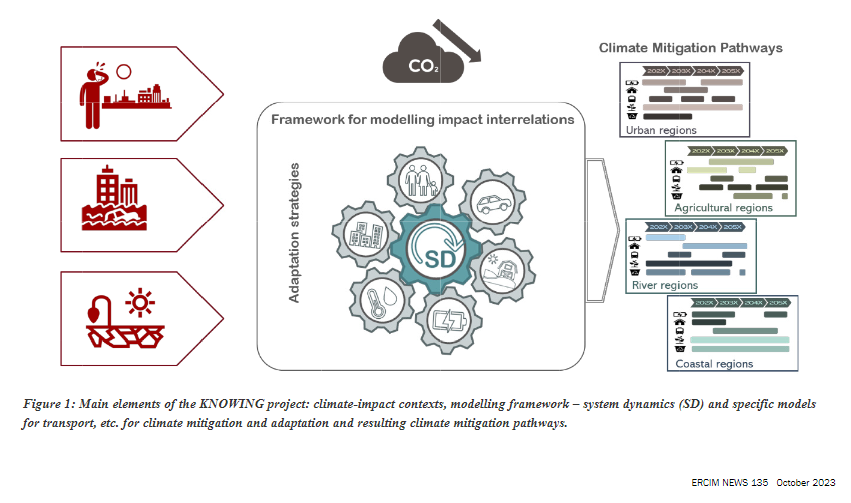
28 KNOWING How to Deal with Climate Change 
by Alexandra Millonig and Marianne Bügelmayer-Blaschek (AIT Austrian Institute of Technology) - with image:
Figure 1: Main elements of the KNOWING project: ... p.28.

Thursday, October 26, 2023

Developing NIHR guiding principles for Community Engagement and Involvement - have your say!

Dear HIFA colleagues,

Today we launch a public consultation on our guiding principles for community engagement and involvement in health research (CEI). We are aiming to build consensus by seeking feedback on the principles, their descriptions and how they could be implemented in diverse local contexts.

Here's the link to the survey: - now closed.

It should take around 15 - 20 minutes to complete, and it closes on 1 December.

The survey is open to everyone with an interest in CEI, and all HIFA members are welcome to participate. Please do share widely with colleagues, networks, and friends. If you have any questions, email ceiglobalhealth AT nihr.ac.uk


** Rationale and more detail:

The NIHR expects Community Engagement and Involvement (CEI) to be integrated in the full spectrum of the research it supports. NIHR has both a vision and goals for CEI. However, we wanted to bring together wider work on the foundations of good CEI in research and present these key attributes in an accessible way. These new guiding principles aim to help clarify the expectations of CEI by: - providing stronger guidance for the global health research community in developing CEI plans that are robust, appropriate, and effective for both the local context and for the study design. - being useful to research funding committee members, providing them with a framework and criteria to carry out more robust assessments of research proposals.

The principles are not a set of rules but more conceptual and will be realised in practice in many ways, reflecting the huge contextual variation in global health research.

To date, we have carried out a rapid scoping review of literature, which, along with previous development work, aimed to identify CEI principles related to how researchers and communities interact within the global health research context. Earlier feedback on the emerging principles was sought from a group of CEI Leads across NIHR awards and from an independent group of CEI experts formed to advise on the work.

**

Best regards, Patrick Patrick Wilson Head of Global Health Communications & Stakeholder Engagement National Institute for Health and Care Research (NIHR)  📨 patrick.wilson AT nihr.ac.uk🌐 www.nihr.ac.uk/globalhealth Subscribe to our NIHR Global Health Research monthly newsletter 📝 https://www.nihr.ac.uk/about-us/stay-up-to-date.htm#six

HIFA profile: Patrick Wilson is Head of Global Health Communications & Stakeholder Engagement at the National Institute for Health and Care Research (NIHR), UK . Professional interest: Global health research. @NIHRglobal 

My source: HIFA

Wednesday, October 25, 2023

Special Issue: Learning Health Systems - Computable Biomedical Knowledge

Learning Health Systems

A unique Special Issue of the Learning Health Systems journal has just been published.  It focuses on Computable Biomedical Knowledge (CBK). 

We invite you to view the table of contents for Volume 7, Issue 4 shown below.


Read the issue at - 
https://onlinelibrary.wiley.com/toc/23796146/2023/7/4

 GUEST EDITOR COMMENTARY

EXPERIENCE REPORT

Modelling clinical narrative as computable knowledge: The NICE computable implementation guidance project


Philip Scott, Michaela Heigl, Charles McCay, Polly Shepperdson, Elia Lima-Walton, Elisavet Andrikopoulou, Klara Brunnhuber, Gary Cornelius, Susan Faulding, Ben McAlister, Shaun Rowark, Matthew South, Mark R. Thomas, Justin Whatling, John Williams, Jeremy C. Wyatt, Felix Greaves

POLICY ANALYSIS

Which computable biomedical knowledge objects will be regulated? Results of a UK workshop discussing the regulation of knowledge libraries and software as a medical device


Jeremy C. Wyatt, Philip Scott, Johan Ordish, Matthew South, Mark Thomas, Caroline Jones, Sue Lacey-Bryant, on behalf of workshop participants

RESEARCH REPORT

A novel method for continuous measurements of clinical practice guideline adherence


Kees C.W.J. Ebben, Cornelis D. de Kroon, Channa E. Schmeink, Olga L. van der Hel, Thijs van Vegchel, Arturo Moncada-Torres, Ignace H.J.T. de Hingh, Jurrian van der Werf

COMPUTABLE KNOWLEDGE PUBLICATIONS

Striking a match between FHIR‐based patient data and FHIR‐based eligibility criteria


Brian S. Alper, Joanne Dehnbostel, Khalid Shahin, Neeraj Ojha, Gopal Khanna, Christopher J. Tignanelli

Evidence Hub: A place to exchange medical knowledge and form communities


Kenny Hong, Druvinka Bandaranayake, Guy Tsafnat

Sync for Genes Phase 5: Computable artifacts for sharing dynamically annotated FHIR‐formatted genomic variants


Robert Dolin, Bret S. E. Heale, Rohan Gupta, Carla Alvarez, Justin Aronson, Aziz Boxwala, Shaileshbhai R. Gothi, Ammar Husami, James Shalaby, Lawrence Babb, Alex Wagner, Srikar Chamala

An application of computable biomedical knowledge to transform patient centered scheduling


Namita Azad, Carolyn Armstrong, Corinne Depue, Timothy J. Crimmins, Jonathan C. Touson

My source: 
Email from Kathleen Young
Editorial Assistant, Journal of Learning Health Systems

  Also noticed:
Bonten T, Rauwerdink A, Wyatt J, Kasteleyn M, Witkamp L, Riper H, van Gemert-Pijnen L, Cresswell K, Sheikh A, Schijven M, Chavannes N, EHealth Evaluation Research Group Online Guide for Electronic Health Evaluation Approaches: Systematic Scoping Review and Concept Mapping Study. J Med Internet Res 2020;22(8):e17774 URL: https://www.jmir.org/2020/8/e17774 DOI: 10.2196/17774

Sunday, October 22, 2023

New animated film Social Care Future - #SocialCareFuture


Individual
|
     INTERPERSONAL    :     SCIENCES               
HUMANISTIC --------------------------------------  MECHANISTIC      
SOCIOLOGY  :   POLITICAL 
|
dyad / couple  family  group COMMUNITY population


Government(s)
politics
power
policy
social care funding
integration of care


"Watch our story

Without big changes to the way we think about social care, we and the people we care about face losing control of our lives and contact with the people and things that make our lives worthwhile. It doesn’t have to be this way.

Watch our new film, narrated by actress, comedian, broadcaster and international disability rights activist Liz Carr and directed by multi-award winning filmmaker Yoav Segal.

View accessible versions, including BSL, subtitles and comic book."


Animating our #SocialCareFuture – the story behind our animated film

My source: 
https://x.com/socfuture/status/1714909895416242221?s=20


Saturday, October 21, 2023

National Survey of the Mental Health Nurses aims to understand reasons behind record vacancies

Researchers from the University of Southampton working with the National Institute for Health and Care Research (NIHR) are launching a national survey of the mental health nursing workforce.

Led by Professor Jane Ball (Professor of nursing workforce policy), it is the first to explore the work lives and wellbeing of registered nurses providing mental healthcare in the UK.

More details: xxxxxxxxxxx
The survey is open to nurses on the NMC register providing mental healthcare to any patient group, in any setting, and for any health and social care provider. It is completely anonymous and will take 15-20mins to complete. xxxxxxxxxx


Friday, October 20, 2023

Book review i. General Psychotherapy: Principles and Common Theoretical Aspects - Rediscovering Humanity

   General Psychotherapy

Predictably, the title of this book caught my attention.

I did do some homework before requesting a review copy, but it was still a surprise that this book by Prof. Dr. med., Dipl. Psych. Lotte Hartmann-Kottek is not edited. It is a comprehensive tome at 491 pages. As a mental health nurse with experience of cognitive, behavioural and family therapy, I am not an expert, but Prof. Hartmann-Kottek's experience in psychotherapy, the history, theoretical development, clinical application, theoretical underpinnings (including physics) and political machinations are well demonstrated.

A disappointment for me is the lack of an index. This seems a major omission, and yet a comprehensive index here, might itself be difficult to navigate. There are some errors in word-use, repetition but they do not detract from the book and reading experience overall. The book is apparently translated from German. The book is expensive, but students may have access through their institutions and special schemes(?).

The book's subtitle: Principles and Common Theoretical Aspects - Rediscovering Humanity is delivered. The title General Psychotherapy - attracted me for several reasons:

'General' - the (seeming) opposition of generalist-specialist is relevant to the theory and application of Hodges' model.

'Psychotherapy' - I was interested to see how Prof. Hartmann-Kottek dealt with the disparate schools of psychotherapy, given some awareness of the politics and efforts to integrate and reconcile therapeutic approaches, philosophies, and legacies. 

Consequently, the chapters address multiplicity, systems, efficacy, commonalities and interspaces. If a book should benefit its reader, rewarding time/cost then this text has contributed to my continuing professional development. Discussion of systems, individual, whole, humanistic, interdisciplinarity, integration, the therapeutic relationship, transcripts and therapy scenarios provides ongoing stimulus for my efforts with Hodges' model.
"The increasing joint adoption of methods and methodological aspects through the partitioned barriers of the otherwise politic(al)ly competing schools in recent decades has, of course, been met with mixed reception, especially when the adoption was coupled with contemporary political and social repression.

However, it may be precisely this difficult topic of the mutually uncoordinated, intellectual adoption and incorporation of vicinity aspects on a macro scale that may indicate that the time has come for an integrative reconciliation or fusion of the essence of psychotherapeutic approaches. As perhaps needs no mention, this path will require an extensive field of play." p.viii. Preface.


'I' - 'Individual' 'SELF' 'Patient' 'Client'
|
     INTERPERSONAL    :     SCIENCES               
HUMANISTIC --------------------------------------  MECHANISTIC      
SOCIOLOGY  :   POLITICAL 
|
dyad / couple  family  GROUP community population

psychological systems
MIND psycho-
identity
psycho-therapy / therapies
subjectivism
cognitive  access

physical systems
-somatic BODY
identity?
evidence
objectivism
physical access

social systems
culture
history
community of practice
social access

political systems
power
professionalism
health systems/services funding
political access

Many thanks to Prof. Hartmann-Kottek and Springer for the review copy.

More to follow.

Hartmann-Kottek, L. (2022). General Psychotherapy, Principles and Common Theoretical Aspects - Rediscovering Humanity. Springer. https://doi.org/10.1007/978-3-030-87466-7