Hodges' Model: Welcome to the QUAD

Hodges' model is a conceptual framework to support reflection and critical thinking. Situated, the model can help integrate all disciplines (academic and professional). Amid news items, are posts that illustrate the scope and application of the model. A bibliography and A4 template are provided in the sidebar. Welcome to the QUAD ...

Friday, November 29, 2024

'Domain-specific is wider than specific domain knowledge' Kalyuga (2013)

 'Developing learner ability to apply knowledge in relatively new situations is an important aim of learning and instruction, and many instructional programs and materials explicitly state this goal. However, not many of them demonstrate a consistency in achieving this goal using sufficiently well-specified instructional procedures and techniques. According to a popular view, transferable knowledge and skills in complex domains result from problem solving experiences (e.g. Inagaki and Miyake 2007). At the same time, there is evidence indicating the importance and effectiveness of explicit learning generalized theoretical frameworks and abstract conceptual knowledge for deep understanding of tasks and en hancing transfer capabilities (Karpov and Bransford 1995; Hinds et al. 2001). Gick and Holyoak (1983) convincingly demonstrated the value of the acquisition of abstract schémas as mediators of analogical transfer between very different task areas.'

'Many studies in expert problem solving have demonstrated that relying on highly contextualized domain-specific knowledge associated with concrete situations is the most effective way to solve problems in familiar task areas and that expert performance is largely based on the acquisition of organized domain-specific knowledge structures (schémas; Chi et al. 1982). ... For example, the game of chess has traditionally represented a classical example of expertise based on the acquisition of a huge amount of highly specific knowledge structures (chunks) corresponding to various concrete game situations (De Groot 1965; Chase and Simon 1973). However, more recent studies have indicated that experts use not only concrete chunks but also more general patterns, such as "templates" (Gobet and Simon 1998) or generalized chunks (Walczak and Fishwick 1997) representing typical classes of chess positions with substantial variations in concrete board locations. Based on his observations of the behaviour of rats in maze situations, Tolman (1948) was one of the first to discuss the role of broad vs. narrow cognitive constructs (cognitive maps) in both animal and human learning. 

Domain-specific knowledge that is applicable only to a limited range of tasks represents the most powerful tool for dealing with these tasks in terms of efficiency of achieving immediate results. On the other hand, knowledge that can be applied more broadly is likely to be less efficient for solving specific problems since it would require additional searching, reasoning, and elaborating activities, whilst specific knowledge directly leads to a definite solutions.' pp.1478-1479.

Kalyuga, S. (2013). Enhancing transfer by learning generalized domain knowledge structures. European Journal of Psychology of Education, 28(4), 1477–1493. http://www.jstor.org/stable/23580919

Thursday, November 28, 2024

Invitation for User Evaluation of OntoChat

Dear W3C Semantic Web Community,^

(Sending the below on behalf of one of our PhD students-your help would be very much appreciated!) 

We are a research team at King's College London conducting a study on the user experience of OntoChat, a tool built on large language models and designed to assist ontology engineers in creating user stories for ontology development. If you are currently or have previously been involved in ontology engineering projects, performing tasks such as ontology development, refinement, alignment, extension, or evaluation, we invite you to participate in this study to help improve OntoChat's design.

Participation Details:
  • Duration: Approximately 35 - 40 minutes
  • Activities:
    • Use OntoChat to create an ontology user story relevant to your project while sharing your thoughts
    • Answer open-ended questions about your experience
    • Complete a brief questionnaire evaluating OntoChat's usefulness
We are flexible and can accommodate your availability within 19th November and 10th December 2024. If you are interested in participating in this study, please indicate your preferred time and agree to the user consent form by completing the registration form at:

https://forms.office.com/e/2wkmugH9v1

Your feedback is invaluable for refining OntoChat to better support ontology engineering processes. Please be assured that all personal data will be kept confidential and anonymised.

Thank you for considering this opportunity to contribute.

Kind regards,
Yihang Zhao
PhD Researcher, King's College London
Contact: yihang.zhao AT kcl.ac.uk

^Via semantic-web mail list.

Tuesday, November 26, 2024

The naïve approach ii - Seeking / Avoiding a Catastrophe

In addition to Dodson's book I borrowed:

Zeeman, E.C. (1977) Catastrophe Theory-Selected Papers 1972–1977, Reading, MA: Addison-Wesley.

From the mid-1970s I remember catastrophe theory rather bursting on to the science scene. Articles in New Scientist (in a box somewhere?), Scientific American plus a BBC TV episode of Horizon (seeking details - originally aired July 28, 1975, 60 minutes 'Happy Catastrophe')*, that highlighted potential for new insights into the behaviour inside prisons. and other applications in the social sciences.

The CONTENTS reads:
GENERAL INTRODUCTORY PAPERS 

1. Catastrophe theory : Draft for a Scientific American article 1
2. Levels of structure in catastrophe theory 65

 BIOLOGICAL SCIENCES 80

3. Differential equations for the heartbeat and nerve impulse 81 
4. Primary and secondary waves in developmental biology 141 
5. A clock and wavefront model for the control of repeated structures during animal morphogenesis (with J.Cooke) 235
6. Gastrulation and formation of somites in amphibia and birds (Addendum by R. Bellairs.) 257 
7. Dialogue between a Biologist and a Mathematician 267 
8. Brain modelling 287 
9. Duffing's equation in brain modelling 293

 SOCIAL SCIENCES 302

10. Some models in the social sciences (with C.A.Isnard) 303 
11. On the unstable behaviour of stock exchanges 361 
12. Conflicting judgements caused by stress 373 
13. A model for institutional disturbances (with C.S.Hall, P.J.Harrison, G.H.Marriage, P.H.Shapland) 387
14. Prison disturbances 403 

PHYSICAL SCIENCES 408 

15. A catastrophe machine 409
16. Euler buckling 417 
17. Stability of ships 441

MATHEMATICS 496

18. The classification of elementary catastrophes of codimension <= 5 (with D.J.A.Trotman) 497
19. The umbilic bracelet and the double-cusp catastrophe 563 

DISCUSSION 604

20. Research ancient and modern 605 
21. Catastrophe theory : its present state and future perspectives (with R.Thom) 615
22. Afterthought 651 
As an area of contention the subject of catastrophe theory (CT) possibly presents(?) a dual-cusp of contention. Firstly, CT brought with it controversy within academia and mathematics. The book was reviewed by T. W. Barrett, Department of Physiology and Biophysics, University of Tennessee Center for the Health Sciences, Memphis, TN 38163: 
'Catastrophe theory (CT), as a new field in mathematics with many possible ramifications for both the physical and biological sciences, has recently been the subject of much controversy (see [1]-[5]). This controversy, in this reviewer's opinion, has served a valuable purpose insofar as it has stimulated the theory's proponents to refine and delineate their concepts more clearly. Catastrophe theory was developed by the Field prize winner, Rene Thom; but much work has been accomplished by E. C. Zeeman and his group, especially with respect to applications.' pp.609-610. IEEE TRANSACTIONS ON SYSTEMS, MAN, AND CYBERNETICS, VOL. SMC-9, NO. 9, SEPTEMBER 1979. https://ieeexplore.ieee.org/stamp/stamp.jsp?arnumber=4310286 
Stephen Smale also reviewed Zeeman's book; BULLETIN OF THE AMERICAN MATHEMATICAL SOCIETY Volume 84, Number 6, November 1978. 1360-1368. 
https://www.ams.org/journals/bull/1978-84-06/S0002-9904-1978-14580-7/S0002-9904-1978-14580-7.pdf
'To write a review in this environment has a very personal side for me. On one hand my own work on dynamical systems is closely connected to the origins of CT. I have had a long and close personal and professional relationship with both Thorn and Zeeman. More than 20 years ago I was discussing singularities of maps, transversality, and immersions with René Thom. Thom tried to interest me in an early draft of chapters of his book Structural stability and morphogenesis in 1966.

On the other hand I have remained skeptical and aloof from CT, perhaps due to my conservatism in science. While my colleagues and students were showing enthusiasm for CT, I gave critical lectures, one at the University of Chicago in 1974, one at the Aspen Institute of Physics in 1975. More recently I have been quoted negatively in the "Science" and New York Times references above. This is the first time I have written on the subject, and I should warn the reader of this negative bias, far from shared by many of my fellow mathematicians.' p.1360.

Some defenders of CT may accuse me of discussing very special examples not characteristic of the literature of the subject. I feel that the problem of lack of justification discussed above, is also found in Zeeman's other models. Furthermore Thorn's models are even less specific and less developed. On the other hand, Thorn's work in CT covers many subjects; in this connection Zeeman writes in his Scientific American article, April 1976, p. 65: "The method has the potential for describing the evolution of form in all aspects of nature, and hence it embodies a theory of great generality."' p.1366.
The book's introductory papers are somewhat confusing in content, as drawn to 'SOCIAL SCIENCES' it is the introductory section (and Part Two) that includes  'Anorexia nervosa', Example 9 pp.33-52. 

This is the second 'cusp' as the assessment, diagnosis, intervention, outcomes, skilled staff, access to specialised mental health services remains contentious to this day. As a charge nurse on a female acute admission mental health ward in the early 1980s, eating disorders have always presented a 'clinical' challenge. Often within a staff group and for individual staff members too.

Twitter/X is hardly an objective record but it appears today, that people and families affected by eating disorder continue to advocate for appropriate service provision, treatment and recognition. Recognition that can also develop evidence-based interventions. As discussed by Dr. Agnes Ayton, consultant psychiatrist and others in the video below:


A related paper:

Ibrahim, A., Ryan, S., Viljoen, D. et al. Integrated enhanced cognitive behavioural (I-CBTE) therapy significantly improves effectiveness of inpatient treatment of anorexia nervosa in real life settings. J Eat Disord 10, 98 (2022). https://doi.org/10.1186/s40337-022-00620-y [ My source: @AgnesAyton ]

The Zeeman chapter on anorexia nervosa is interesting graphically and conceptually ...

Page 42. Figure 20. The effect of the butterfly factor, d>0.
(Sorry for the image quality)

- but is of course 'from another time' and is clearly not person-centred. Eating disorders affect many people in the UK and are a cause of trauma, distress, disrupted life-chances and mortality. Referring to Hodges' model, such graphics, reinforce the idea that 'solutions' are to be found in the mechanistic and quantitative domains of the sciences and politics (choice, power, services, safety..). Here, maths and theories (seemingly) provide an explanation for people who are ill, and need treatment. As a teenager for most of the 1970s, Hodges' model was not yet a reality. As I have found since 1987-8 looking at the POLITICAL care/knowledge domain, the model's relevance has increased since the start of my nursing career in 1977. Consider for example, the politics of:
  • the global phenomena of famine
  • - whether or not associated with economic crisis, drought, other natural disaster, or conflict, political crisis
  • ultra-processed foods
  • obesity pandemic
  • weight loss drugs
  • appetite stimulants
  • appetite suppressants
  • eating disorder (anorexia and bulimia) across care sectors - primary, secondary, specialist
    • community / in-patient care
    • person-centred care
    • user involvement in service design
  • the availability of treatment modalities - psychotherapy (as in the video)
  • the impact on family relationships and peer group (estranged - loss of friends)
  • diagnostic blurring - psychosis, borderline personality disorder - the rise of 'anti-psychiatry'
Here then is the purpose of this post, what potential is there to look at nutrition from a situated individual and collective (global) perspective? This could be focussed on nutrition, or eating disorder; or alternately take a collective stance to encompass the global food supply and the industry. Discovering the diffeomorphism, I wonder if there are others, and their respective properties and character? 

INDIVIDUAL
|
INTERPERSONAL : SCIENCES              
humanistic ------------------------------- mechanistic
SOCIOLOGY : POLITICAL   
|
GROUP
COGNITIVE THERAPY
EMPATHY&RAPPORT
LISTENING - MUTUAL ENGAGEMENT
MENTAL HEALTH
DIAGNOSIS
TRAINED / SKILLED STAFF
EVIDENCE-BASED INTERVENTIONS*
MOTIVATION
MOOD
MULTIMORBIDITY

RESEARCH
EATING
DIET
NUTRITION
NUTRITIONAL VALUE
WEIGHT
BMI
IN-PATIENT UNIT
place of safety


PUBLIC HEALTH
SOCIETY
FAMILY
CARERS


Developed nations
are collectively and increasingly
'eating disordered'
and exporting this 'lifestyle'.


Before I return the book, I will revisit the discussion section.

See also:
Jones P, Wirnitzer K. Hodges’ model: the Sustainable Development Goals and public health – universal health coverage demands a universal framework. BMJ Nutrition, Prevention & Health 2022;5:doi: 10.1136/bmjnph-2021-000254

*I could not find on BBC website. I have contacted the Open University. I did find - 'In this Horizon episode, Rene Thom's mathematical discovery of the catastrophe theory is investigated.' at  https://thetvdb.com/series/horizon/episodes/1385431

Monday, November 25, 2024

The naïve approach

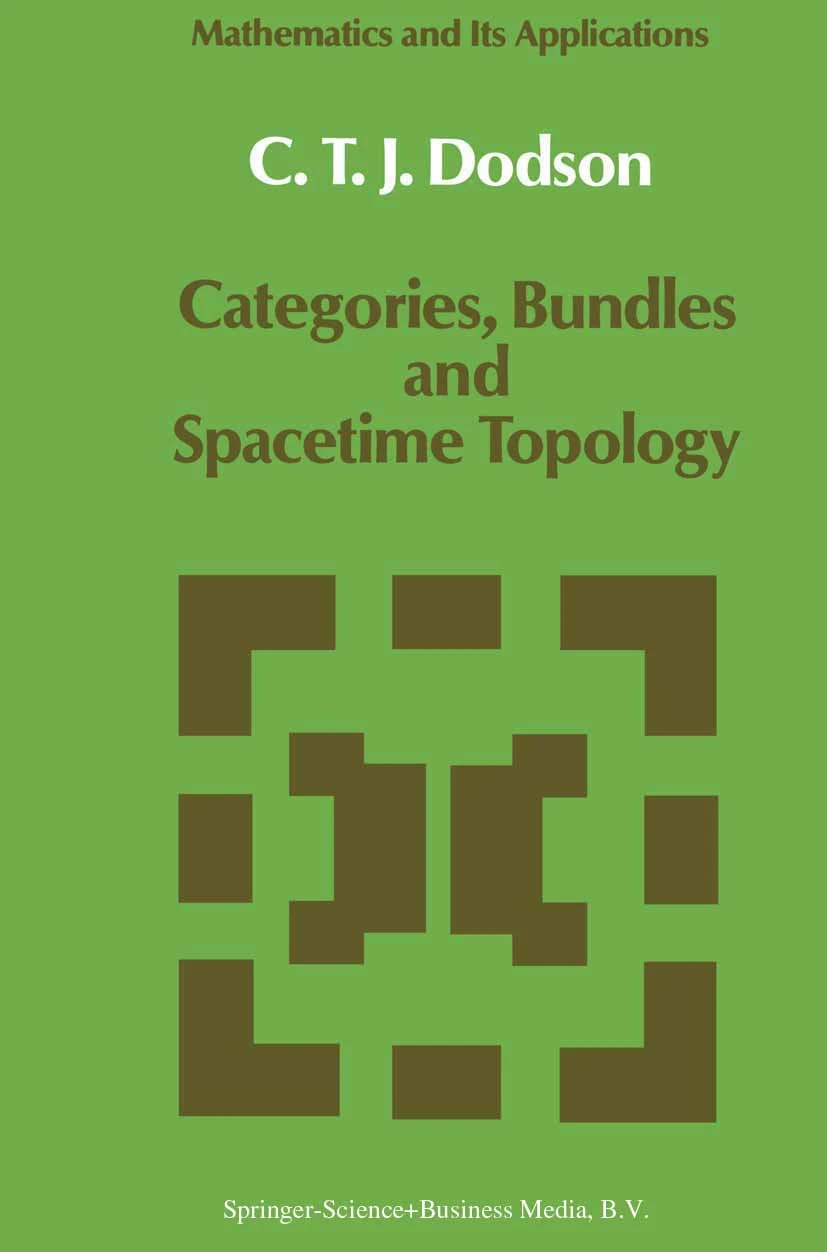
Categories, Bundles and
Spacetime Topology 
 

'First steps' are by their nature plagued by uncertainty of intent and direction, ungainliness, missteps, stumbles and ('finally') possibly falls.

Finding a starting point can be difficult.

Where to find a hand-hold, place one's foot, or other anchor?

At Lancaster University library I came across this book, first published in 1980. The cover displayed is from the 1988 edition.

In order of appeal I read:

applications, categories, spacetime and topology.

Section I starts with Preliminaries: Notation and Abbreviations; always useful (reminder).

The next, Section II Naïve Category Theory, had my immediate attention. We often speak of learners as being naïve. As lifelong learners we all meet this descriptor. I keep revisiting this word, concept - 'naïve'.

Naivety is a starting point for practitioners in health and social care too. Hence the need for supervision, mentors, the tokens of probationary (driver) and 'newly qualified'. 

Many posts on W2tQ stress the diagrammatic quality of Hodges' model. It is visibly a 2x2 matrix, (once again..) beloved of management consultants, psychologists and change agents. In Section II Dodson recognizes the London Underground map as a graph. A small example is developed, explained and illustrated on p.6. 

Graph example, drawing on the London Underground. p.6.

Section II may be a small part of the overall book but it is invaluable to me. As the photo above suggests, the book is old, especially as 1st edition. I will try to access the 2nd edition. If this work is a project with which you can (more ably!) assist, I would greatly appreciate your input. The aim is to signpost Hodges' model as a potential focus for all researchers. Especially researchers interested in trying to conjoin the sciences and humanities and develop visualization in the latter. 

C.T.J. Dodson. Categories, Bundles and Spacetime Topology. 1st Edition, Shiva, Kent. 1980.

Previously: 'math'

'Diagram' resources listed on former, now archived website.

Saturday, November 23, 2024

'Little Shrew' (Snowflake)

INDIVIDUAL
|
INTERPERSONAL : SCIENCES              
humanistic ------------------------------- mechanistic
SOCIOLOGY : POLITICAL   
|
GROUP


Chappell, P. Heathcliff, it's me again: more new music from Kate Bush on the horizon, The Times, October 26th 2024, pp.18-19.

Friday, November 22, 2024

Ethics and the 'big picture'

'It has been my experience that many of the most successful and creative heads of major research labs around the country came to their place from other disciplines. For example, one prominent geneticist that I know has his Ph.D. in chemistry. He told me that coming to genetics from outside the discipline gave him an awareness of structures and values that were invisible to those laboring inside the established system. Much as one has critical insights into the ambience of a city or culture when one comes from outside as a foreigner, so also is there critical understanding of academic disciplines. Thus, one response to the add-on question is to reply that the material you are providing can make your students better scientists by giving them a more global, contextual perspective. A global, contextual perspective allows one to consider divergent research designs that approach a problem in many directions. This is sometimes called "big picture" thinking. Part of the big picture includes other scientific contexts. For example, biology is seen in the context of chemistry, and chemistry is seen in the context of physics. But it is more than that. It also includes values. Should I, as a scientist, pursue all questions with the same vigor? Are there some questions that should be avoided because of the social consequences of their results? Is the scientist compelled to think in terms of helping humankind or helping himself to a Nobel Prize in any way he can? All of these involve values and ethics. They are critical components to global big picture thinking. Such a perspective is a valuable tool for anyone seeking excellence in scientific research.' p.28.
Boylan, M., & Donahue, J. (2003). Ethics across the curriculum : a practice-based approach. Lexington Books. 

INDIVIDUAL
|
INTERPERSONAL : SCIENCES              
humanistic ------------------------------- mechanistic
SOCIOLOGY : POLITICAL   
|
GROUP

PERSONAL ETHICS
INDIVIDUAL INTEGRITY
MY EXPERIENCE
MY REFLECTIONS
INTERSUBJECTIVITY
PURPOSE
BELIEFS

CHARACTER EDUCATION
PROFESSIONAL EDUCATION

PROCESS
OBJECTIVITY
FACTS 
EMPIRICISM

'We define ethics as the process of reflection on the moral meaning of actions.' p.5.

'BIG PICTURE'
PROFESSIONAL EDUCATION


PRACTICE
COMMUNITY OF PRACTICE
ETHOS^ (Chap. 6)

'Ethics is not a discrete body of knowledge that one simply acquires for application and use in particular situations. It entails the ongoing appropriation of ideas of the good as they relate to the changig situations, contexts, and developments in individuals and groups lives. ^ Ethics reflects on actions the actions of individuals and groups.' p.5.


PROFESSIONAL BODIES
PROFESSIONAL STANDARDS
PROFESSIONAL & COMMERCIAL - ACCOUNTABILITY
PROFESSIONAL ETHICS
DUTY OF CARE
POLICY
LAW
JUSTICE

autonomy; nonmaleficence; beneficence; justice*


^Stackhouse, M. (1972) Ethics and the Urban Ethos: An Essay in Social Theory and Theological Construction, Boston: Beacon Press. (Chap. 6, Boylan & Donahue)

*Beauchamp, T. L., & Childress, J. F. (2013). Principles of biomedical ethics (7th ed.). Oxford University Press. (Chap. 6, Boylan & Donahue)

Thursday, November 21, 2024

'Fake news' - nothing new under the Sun

INDIVIDUAL
|

 INTERPERSONAL    :     SCIENCES               
HUMANISTIC --------------------------------------  MECHANISTIC      
SOCIOLOGY  :   POLITICAL 
|
GROUP


PD Reporter with "fake news" from an 1894
illustration by Frederick Burr Opper


Kruck, D. A 'ROYAL' BIT OF FAKE NEWS. Gibbons Stamp Monthly, August 2021, pp.28-30.

Image source:
https://aleteia.org/2018/02/09/fake-news-post-truth-and-technology-in-the-19th-century/

Wednesday, November 20, 2024

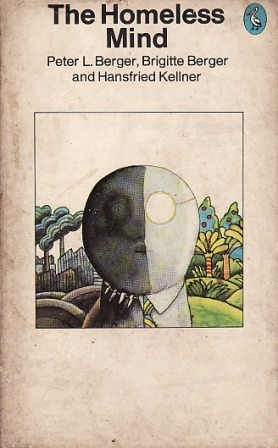
Hello? Is anyone there? 'The Homeless Mind'

individuality
|
INTERPERSONAL : SCIENCES              
humanistic ------------------------------- mechanistic
SOCIOLOGY : POLITICAL   
|
group

'Put differently, the componentiality of the cognitive style pertaining to technological production extends to identity. Again, a specific kind of double consciousness develops. In this case the dichotomy is between concrete identity and anonymous identity. The individual now becomes capable of experiencing himself in a double way: as a unique individual rich in concrete qualities and as an anonymous functionary. This dichotomization in the subjective experience of identity makes it possible for the individual to establish subjective distance vis-à-vis certain features of this identity.9 

For example, the individual will now experience that portion of his identity that contains his anonymization as a 'worker' as being 'less real' than his identity as a private person or family man. Since each portion of identity relates to specific roles, it now becomes possible for the individual to perform some of these roles 'tongue in cheek'. The componentiality of identity, as the componentiality of social relations, makes possible an 'engineering' practice. This time what is involved is the 'engineering' of one's own self. Those aspects of identity that a defined as 'more real' must be protected against threats coming from the 'less real' components of identity.' p.37-38.


Helpful reference to ideas of multi-relational synchronization and institutional vectors and how our mind's became homeless.

Also encouraging, even though 'historic', discussion on life plans and life planning.

'A basic presupposition is that life careers are not firmly fixed but are at least relatively open. Put simply the individual is faced with a number of alternative careers, especially in his " younger years, and therefore must make decisions about these available options. It is possible for the individual to imagine, himself as having different biographies. This possibility has both positive and negative consequences for the emotional economy of the individual. Positively, it may give him a feeling of frees dom to shape at least certain parts of his life. Negatively, it increases the likelihood of frustration regarding specific careers One is, after all, less likely to resign oneself to a particular situation if one believes that other situations are, in principle, possible.' p.67.
'Implicit in this scale of probabilities is a general 'sociology', on whatever level of theoretical sophistication. The individual has a `map of society' within which he can locate and project himself in terms of both past biographical recollection and future projects. The individual's life is perceived as a trajectory across this 'map'. There is also a large body of factual knowledge, most of which is 'weighted' in terms of the individual's life plans. Thus if a particular career appears to the individual as a realistically plausible project, he will have more factual knowledge about it than about a career in which he can participate only in pragmatically irrelevant fantasy. In other words, a good deal of background knowledge is related to 'anticipatory socialization'. p.68.
'However vaguely this may be defined, there is the underlying concept of life plan, both for the individuals and for the a family unit. This life plan is the totalization of all the relevant timetables, their grand sum and their integrative meaning In modern society, such life planning has become a value in itself. Its absence is commonly an occasion for reproach. The family unit thus operates as a life-planning workshop.' p.69.

'There is a general expectation of justice. It is expected that everyone in the relevant category - as, for example, those en-titled by law to a passport - will receive equal treatment. It is, of course, understood that certain persons may be excluded from this relevant category - for example, resident aliens or convicted criminals. It is also understood that the bureaucratic procedures may codify certain preferences, for example, in favour of diplomats or other people travelling on urgent government business. Once the categorial system has been established, however, the presumption of equality holds within each category. In the most general way, bureaucracy is expected to conform to the Roman principle suum cuique. An implication of this is that there will be no favouritism or any other intrusion of personal bias in the bureaucrat's handling of each client's case. The bureaucrat is expected to handle every case sine ira et studio. In other words, there is the general expectation that bureaucracy will operate impersonally and with 'affective neutrality'.2 These considerations bring us to an important point: unlike anything discussed in the preceding chapter, the cognitive style of bureaucracy contains a moral quality, not just as a limiting factor (after all, there are also moral assumptions about technological production - for example, that no one will be killed in the course of it), but as an intrinsic part of its own structure of consciousness. The source for this moral element is probably to be sought in the primary social location of bureaucracy in the political sphere.' pp.52-53.


Berger, P. L., Berger, B., & Kellner, H. (1973). The homeless mind: Modernization and consciousness. Penguin. 

Cover image: https://www.goodreads.com/book/show/3368465-the-homeless-mind

9 This is an amplification, by way of phenomenological description, of what Erving Goffman has called 'role distance'.

2 This term was coined by Talcott Parsons.

See also: 'homeless'