Hodges' Model: Welcome to the QUAD: Search results for epilepsy

Hodges' model is a conceptual framework to support reflection and critical thinking. Situated, the model can help integrate all disciplines (academic and professional). Amid news items, are posts that illustrate the scope and application of the model. A bibliography and A4 template are provided in the sidebar. Welcome to the QUAD ...

Showing posts sorted by relevance for query epilepsy. Sort by date Show all posts

Tuesday, February 11, 2025

Project: Partners against Stigma and Mortality in Epilepsy (PASME) Cameroon

Boyo Association for Rural Development (BARUDEV - Cameroon) has launched a project on epilepsy called Partners against Stigma and Mortality in Epilepsy (PASME).

We are calling for partnerships and support for our project on epilepsy which will focus on mental health and psychosocial support, treatment, knowledge and skills exchange,raising awareness, rights protection amongst patients affected and or bereaved by epilepsy, health care providers. Also reduce seizures and consequences particularly in children and adolescents living with epilepsy and HIV/AIDS. 
  • ADVOCACY AND AWARENESS. Promoting awareness and supporting initiatives that prevent epilepsy. Prioritize epilepsy at national and international levels, while lobbying and advocating support for partners and governments to prioritize epilepsy into their health programs and policies.
  • TREATMENT AND SUPPORT. Provide access to treatment and support initiatives that improve access to effective treatment including medications and their therapies. 
  • PROVIDE BEST-PRACTICE MODELS. Develop and share models for effective management of epilepsy in diverse settings including conflicts and disasters where people are forced to displace.
  • BUILD CAPACITIES THROUGH TRAINING. Advance training and information sharing for healthcare givers, CHWs and family care givers involved in epilepsy care. 
  • PROMOTE HUMAN RIGHTS AND DIGNITY. Advocate for the accessibility of services, protection of human rights and preservation of dignity for all with epilepsy including children and adolescents living with epilepsy and HIV/AIDS. 
  • EMPOWERMENT AND RIGHTS: Lobby and advocate for the rights of people with epilepsy through their associations and to enable them participate in decision making processes. 
  • RESEARCH AND COLLABORATION: Foster research through encouragement and support in epilepsy including causes, prevention, treatment and social impact. Strengthen their associations, develop and support them through mental health and psychosocial support projects and ensuring and protecting their well-being and their families.
BARUDEV is currently building a website (which I will add upon news - PJ).
Please contact me if you need further information

HIFA (my source) profile: Chiabi Bernard Ful is Director of Boyo Association for Rural Development (BARUDEV--Cameroon). This is a local NGO found in Boyo district of North Western Cameroon. Our activities are to empower women, protect the sexual and reproductive health for women and girls, and protect the rights of children. We have been training community health workers to follow up patients, pregnant women, sick children and refer them to the hospital.
barudev AT yahoo.co.uk

Tuesday, May 06, 2025

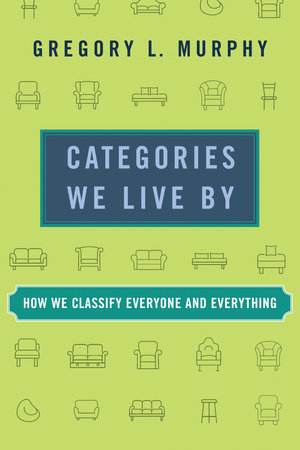
Book review iv: 'Categories we live by'

The introduction to part ii 'Case Studies' is quite prescient: 'Categories have consequences'. p.75.

Certainly timely in the UK as Prof. Murphy returns to gender and birth sex his first example at the book's start. 

Coincidental or not, categories do change. As we try to understand them it is vital we don't mess them up. Consequences follow for people who are subjected to the categorisation. People use them for stability, predictability, so change can be fraught for all. Personal and group identities can all be affected, and (recently) provisions in how 'spaces' are allocated and regulated - controlled.

At infant - junior school I remember the lack of awareness, understanding and empathy for peers affected by epilepsy, stigma was a thing then that wandered the classroom and playground. Through my career I've heard many clients recount experiences pointing to stigma and exclusion.

Of the case studies Murphy writes:
'Each chapter is a more-or-less self-contained case study (including other similar examples), except that chapter 7 is a more general meditation on how determining categories is used in the exercise of power. Some of the case studies get into the weeds, and if you find yourself not that interested in how species are defined, for example, you can skip ahead to the next chapter without losing much. Following part II will be a conclusion, which attempts to summarize some of the lessons learned from all these examples.' p.77.
Murphy's style is accessible, and the case studies are informative. The author is also accessible and responsive I must add. I prefer and need a physical copy of books to reduce screen time, but e-books have their uses. I'm sure I read a short sentence in the case studies that essentially contrasted the individual and collective in sociology. Can I find that word? No luck thus far. I may be mistaken but appreciate Prof. Murphy's reply and thoughts.

There's another 'news' coincidence on p.80 (Chapter 5 'Legal Categories'): are Santa Claus costumes 'clothing' and so subject to tariffs (also referenced)? Every person worldwide, has no doubt pondered on their marked grade in a test or exam - and 'where' this places them?
'In her review of a book about rules, Rivka Galchen (2022) admits to feeling a bit of despair in the end: "Rules that leave a ruler, Or a judge, in charge of interpreting them feel at once humanized and corruptible. Rules that allow no exception seem free of human frailty but alien, and unable to admit properly of complexity." It is very easy to point at what went wrong with an overly strict rule or with a judge who seems biased, but less easy to devise a system of categories that avoids every problem.' p.83.
I often frame the conjunction of the mechanistic axis and the group in Hodges' model in terms of what do need, or get when you have large groups of people? The political domain, including law and disorder is critical of course. Is 'utopia' the perfect system by definition? I like the way even prior to reference to Galchen, Murphy states how 'the precise borders between categories can be essentially arbitrary, and there is no way to avoid that arbitrariness if you insist on dividing things into categories.'. p.83. 

If this book was a BASIC computer program, the first command for Chapter 6 Psychodiagnostic Categories. might well be a 'GOTO' statement: Chapter 7 Categories and Power.

More to follow and nearly there - sadly.

Previously: identity : space : categories

Murphy, Gregory L. Categories we live by: how we classify everyone and everything. Cambridge, MA: The MIT Press, 2024.

Many thanks to MIT Press for the review copy - and the dose of serendipity:

Wednesday, May 01, 2013

Jordan: hospital, hospitality and the global research nurses network

The Jordan conference and experience prompted me to reflect upon 'hospitality' and 'hospital'. Also hospital as a physical environment and the way this contrasts with community care; and those without access to either.

At the research workshop on Monday with Nicola McHugh Project Coordinator for the Global Research Nurses' network, we were asked to consider and record how our respective job had changed. I jotted down the following also expanded here:

Winwick Hospital - Institutional care.
Issued with a (grey) suit and waistcoat.
White coats. Union lapel badges.
Witnessed (not overnight and still ongoing ...?) the transition to community care.
Development of primary care mental health.
The emergence of information technology.
From frontplate - nursing process and models, theories of nursing.
Nurses as advocates - now the addition of independent advocates.
Revisions to the Mental Health Act.
Changes in organizational hierarchies.
Changes in nurse education.
The increase in significance of the POLITICAL care domain:
informed consent, mental capacity, public engagement, litigation.
The cycle of re-organisations - NHS and Social Services.
Community Mental Health Nurses as therapists to assessors.
The development of the care programme approach (CPA).
The reduction in the number of injections / use of electroconvulsive therapy.
New drugs, evidence, specialist teams.
From in-house system to Körner to National Programme for IT to ..........
Less stigma for some conditions: epilepsy, psychosis but much remains
Diseases - Recovery - Self-care

Here are hospital and hospitality:

INTERPERSONAL : SCIENCES
SOCIOLOGY : POLITICAL

individual

During the Middle Ages hospitals served different functions to modern institutions, being almshouses for the poor, hostels for pilgrims, or hospital schools. The word hospital comes from the Latin hospes, signifying a stranger or foreigner, hence a guest. Another noun derived from this, hospitium came to signify hospitality, that is the relation between guest and shelterer, hospitality, friendliness, hospitable reception. 
The word hospitality derives from the Latin hospes, meaning 'host', 'guest', or 'stranger'. Hospes is formed from hostis, which means 'stranger' or 'enemy' (the latter being where terms like 'hostile' derive).
group - population

Sources:
http://en.wikipedia.org/wiki/Hospitality
https://en.wikipedia.org/wiki/Hospital

Saturday, January 05, 2013

c/o HIFA2015 - Meeting Information needs for Mental Health Care

Dear all.

I've been reading the messages about mental health and information needs in low resource settings. I agree that it's still such a disappointment that certain publishers refuse to make these core documents / books (like Where there is no Psychiatrist and Where there is no Child Psychiatrist) open access. Hope 2013 will bring changes......

I know a few free online/download alternatives for the mental health field:

In the Hesperian.org bookstore you find free downloads of a couple of health care guides in different languages including 'Where Women have No Doctor'. This book contains a brief mental health care chapter. Other helpful Hesperian books like 'Disabled Village Children', and the 'famous one' 'Where there is no Doctor'.
Link: http://hesperian.org/books-and-resources

Another is the WHO 'mhGAP Intervention Guide for mental, neurological and substance use disorders in non-specialized health settings'. Free download in English, French and Spanish. This is a 109 pages decision tree manual for depression, psychosis, bipolar disorders, epilepsy, developmental and behavioural disorders in children and adolescents, dementia, alcohol use disorders, drug use disorders, self-harm/suicide and other significant emotional or medically unexplained complaints. It contains also  a chapter on 'general principles of care' and a brief chapter on 'advanced psychological interventions'.
Link: http://www.who.int/mental_health/publications/mhGAP_intervention_guide/en/index.html

The international NGO Basic Needs offers downloads of manuals and reports like 'Community Mental Health Practice, Seven Essential Features for Scaling Up in Low and Middle Income Countries', 'Essential Skills for mental health care',  'Mental Health Care, An Introductory Manual for Training General Health Personnel' amongst others.
Link for books: http://www.basicneeds.org/html/Publications_BasicNeeds_Books.htm
Link for manuals: http://www.basicneeds.org/html/Publications_BasicNeeds_Manuals.htm

For mental health and psychosocial support in humanitarian settings the WHO/World Vision/War Trauma Foundation publication is very helpful: 'Psychological First Aid: Guide for field workers', 60 pages and lots of illustrations.
Link for the PDF:
http://whqlibdoc.who.int/publications/2011/9789241548205_eng.pdf

Or the WHO/IASC 'Guidelines for Mental Health and Psychosocial Support in Emergency Settings', 205 pages and free downloads available in 7 languages. The manual is distributed on CDrom as well.
Link: http://www.who.int/mental_health/emergencies/9781424334445/en/index.html

For psychosocial support of children the NGO HealthNetTPO offers free downloads of their 'Psychosocial Care Package Children' with Modules, Tools and Publications sections. It contains information that describes the rationale, content and step-by-step implementation of the separate components of a comprehensive psychosocial care package (such as a Classroom Based Intervention, Counseling, Clinical Supervision, Screening and Psycho-education).
Link: http://www.healthnettpo.org/en/1311/psychosocial-care-package-children.html

In the field of psychosocial support for children and adults after emergencies or in HIV projects, the IFRC Psychosocial Centre offers free downloads of their manual like 'Psychosocial interventions - A
handbook
', 'Community-based psychosocial support - A training kit', 'Children's Resilience Programme' and more.
Link: ...
This is where I stumbled on in the last few years. Hope it is helpful. Maybe I should write a blog post about it on the in2mentalhealth website, in order to make a comprehensive list which is available on
the internet for a longer period of time. So, if you have any additions please reply in this discussion or mail me with the link!

'Together we know more'.

Roos Korste
psychologist, trainer, blogger and founder of in2mentalhealth:

http://facebook.com/in2mentalhealth

http://www.linkedin.com/in/rooskorste


Plus:
Thanks for the comprehensive list Roos. Handicap International developed a Policy Paper on : "Mental health in post-crisis and development contexts" which can be found here [PDF, 1.1Mb]:

http://www.handicap-international.us/fileadmin/files/documents/PP03_Mental_health_01.pdf

Do feel free to add this to your list of materials. [ *see note below ]

Kind regards

Antony
Antony Duttine
Rehabilitation Technical Advisor in Global Health


[ *Note from HIFA2015 moderator: Neil Pakenham-Walsh

I would also like to mention the Essential Health Links (EHL) gateway. EHL was set up by myself and Lenny Rhine while I was working at INASP in the late 90s and early 00s. It is now hosted by AED Satellife and Lenny continues to maintain it on a voluntary basis. The Mental Health and Psychiatry section is available here:
http://www.healthnet.org/essential-links/mental-health-and-psychiatry

Essential Health Links has more than 750 websites selected according to criteria such as appropriateness for low-resource settings and free access. "Essential Health Links is offered freely for use as a template by others (e.g. medical school libraries, ministries of health, publishers, libraries, NGOs) to develop customised gateways on their own websites. This approach should reduce the risk of duplication of effort while maximising the usefulness of the gateway for specific target groups."

With thanks, Neil PW ]

Thursday, May 09, 2013

Jordan JNC Conference: Mental health and stigma, Student nurse's aptitude and the MDGs

There were a great many fascinating talks at the conference in Amman. The following caught my attention:

Dr Heyam Dalky on Perception and Coping with Stigma of Mental Illness: Arab Families' Perspectives

Since I trained in the late 1970s there has been a marked positive change in the social stigma associated with medical and mental health conditions. People are by and large more enlightened regards epilepsy for example. Although perhaps some of the progress can be related to medication, medicine management and community follow-up. Mental health professionals and services are aware of the potential damage that a diagnosis of 'schizophrenia' can inflict on young adults. Despite any sense of progress I might see, there is much still to be done as campaigns such as Time To Change attest.

It was very useful then to revisit the historical development of thought in stigma. Dr Dalky also shared global insights into stigma perception within families by citing research in a range of countries; for example, in Jordan, Morocco, Sweden, Germany, China, Malaysia, and Ethiopia.

Within Hodges' model the individual, as in the self, is given a pivotal and yet mobile place (transferable from the top of the model to the center) this led me to the concept of self-stigma (Corrigan, 2009) as I draft a paper on h2cm, case formulation and diagrams.

In her presentation Dr Dalky notes:

  • Link and Phelan (2001) defined stigma as the co-occurrence of the components of: 
    • labeling, stereotyping, separation, status loss, and discrimination.
  • “self-stigma” or “stigma perception,” is the extent to which individuals believe others stigmatize them because of who they are.
They say travel broadens the mind and listening to this presentation you really see the difficulties, objectives and aspirations that not only practitioners share but families and our clients too.

Heyam F. Dalky, PhD, RN, Jordan University of Science & Technology, Irbid, Jordan
 

Ever since my engineering aptitude was measured in the mid 1970s by predicting the movement of a series of gears I've always held a special place for aptitude and attitude, as reflected here on W2tQ.

Mrs. Maxie Andrade, et al. presentation Aptitude Towards Nursing: Is it Measurable? highlighted a central challenge within nurse education.

Nurse training represents a major personal investment for the student (their family too in many cases), the educational institutions and societies concerned. As a sign-off mentor I assess third year students on their final placement. This is a great responsibility that is usually a privilege, but it can be a frustration at the loss entailed for a failing student.

Mrs Andrade defined aptitude:
Is a condition, a quality or a set of qualities in an individual, which is indicative of the probable extent to which one will be able to acquire under suitable training some knowledge, skill or composite of knowledge, understanding and skill

Ref: Mangal S L. General Psychology. Fifteenth reprint. New Delhi: Sterling Publishers Pvt. Ltd; 2008.
The main questions:
Do nursing students possess the required ability (aptitude) to become an effective nurse?
What abilities do we really expect from nursing students?
The development of a tool to measure aptitude was described, reviewing the literature. Are there any existing tools within nursing? What exactly should a tool measure? Statistics and results were listed. This was a very interesting presentation and of particular interest to me.

Mrs. Maxie Andrade, Asst. Professor, Manipal College of Nursing Manipal, Manipal University


There was also a reminder of the time left to achieve the Millennium Development Goals [MDGs] c/o Prof. Hester C. Klopper's keynote: The nursing education tipping point: Forces of change. 
Less than 1,000 days and that was last month.

One thing I noticed and a sign of the issues in the Eastern Mediterranean is that the JNC conference website has proved unavailable at times. It is accessible as I post this.

Andrade M. Perceptions of health care consumers, deliverers and nurse educators on nurses, nursing practice and nursing education system. Manipal University, Manipal: 2010. (Dissertation work).
Andrade M. Choice of nursing career: Pleasure or pressure. International Journal of Nursing Education. 2012; 4(1); 42-44. 

Corrigan, P.W., Larson, J.E., Rüsch, N. (2009). Self-stigma and the “why try” effect: impact on life goals and evidence-based practices. World Psychiatry. 8(2): 75–81.

Monday, May 02, 2022

Review ii - "Brainscapes: The Warped, Wondrous Maps Written in Your Brain―And How They Guide You"

Now I know how Umami (p.87) an "example food magazine website to demonstrate some of the features of Drupal core" - got its name. I'm sure this was explained at a Drupal Meetup. Savoury indeed!

There had to be two! The brain has two strategies: brain maps and distributed codes.

"Representing information with a distributed code is entirely different from representing it with brain maps. In a brain map, neighboring neurons represent neighboring regions in space, frequency, time, and so forth. And brain maps essentially represent information using location, or where in the brain area the neurons are most active. In contrast, there is no consistent relationship between neighboring neurons in brain areas that use distributed codes. These areas represent information through the distributed pattern of activity across that entire region of the brain, rather than through the location of activity within it. This pattern of activity is a kind of code." pp.93-94.

This distinction is significant for Hodges' model, as the distributed codes act to deal with novelty, what is new - ongoing (lifelong) learning (p.95). Hodges' model can help distinguish between subjective and objective concerns. Schwarzlose unifies the two - via a catfish (also a goal here - but not necessarily with such an assistant).

"The map in the olfactory bulb is organised into odor zones based on molecular structure, an objective property of these compounds in the physical world. But the second map is organized into zones based on the significance of the odors to the animal." p.100.

Chapter 6 'On the Move: Brain Maps for Action' would have been useful as a student nurse at Winwick Hospital, the history in the book brings back many reminders - late 1970s. Epilepsy, then was less well understood, and managed. In describing the M1 brain map and movement I wondered about consent, but can see that is a distraction. Chapters -

6. On the Move: Brain Maps for Action | 107
7. Maps in the Making: How Brain Maps Develop and Adapt | 131
8. Knowing Again: Brain Maps for Recognition | 151
- offer much to relate to clinical encounters: movement, reaching, infant versus the brain in adults, the senses and catastrophic events such as cerebrovascular accident - stroke. Morphologically there is much still to learn (brain maps are 'primed' before birth), which perhaps is why we recognise the remarkable nature of gestation and birth. 'Maps in the Making' provides wondrous insights, including the need in hospitals to rethink the sensory environment and experience for premature infants.

While reading - I was struck at the experience of the newborn and mothers in Ukraine. The 'health career' model concerns life chances - from birth to later life...

As a community mental health nurse I have found subtle and less-subtle impacts on a person affected by semantic dementia (p.204) and their family. Given the ongoing invasion and war, I also thought about people living with dementia and having to flee their homes. The multiple contexts that pertain in such a crisis situation when considering 'maps' and sense-making. Especially, when the need for action is preemptive - preventive and so must be explained and justified, not once but perhaps repeatedly?

We are all innate mathematicians even if we feel we have no ability. 

https://www.google.com/search?client=firefox-b-d&q=mathematics+in+catching+a+ball

I take some succor in this (p.127).

There's a hodgepodge in here too (p.161 hb). The myriad of objects we encounter and their recognition calls for the combination of brain maps and distributed codes. Chapter 8 is more psychological, touching :-) how we categorise objects, dimensions and scales, size and animacy. Galton's contribution is discussed, his ideas on eugenics also acknowledged. Visual perception, mental imagery and visual learning style remain subjects of note for researchers. I'm not sure why figure 32 stood out ( :-) - please pardon the quality of the photo. Paul Kim's illustrations are an excellent support for the prose.):

FIGURE 32 A comparison of visual perception and mental imagery in
the V1 visual map. Paul Kim

Somewhere I've saved an article on mental imagery from New Scientist I think, about this ability - the mind's eye and how it is missing for some 'brilliant' people (p.182) and posted previously:

In my mind's eye I can picture care: Frame by Frame

I might read Chapter 9 again, attention, action and perception in combination. 

Chapter 10 had me thinking again about 'Conceptual Spaces' (quality dimensions) and threshold concepts (not in the book - but this is a positive!):

"Many of the concepts that rule our financial, social, and emotional well-being have no shape, no color, no odor or weight. How do we grasp these intangible concepts? As it turns out, we often do so by aligning abstract concepts with physical dimensions and then putting our brain maps to work." p.191.

There is a 'mental number line', vertical too, and culture is a factor in how we learn and the brain associates space and quantities, in which L-R, low-high are also brought into play. The question remains here: Is Hodges' model culturally neutral? 

Still with h2cm - mind reading, writing and 'drawing' perhaps? p.236. In "Fortune-Telling with the Brain" we read about how fMRI is allowing us to learn how the brain maps employ teamwork. There is an architecture whose stability can inform predictions of future abilities - reading is described. Reading this you see ethical implications (as Schwarzlose warns p.238), but it may help to target personalised learning, as an adjunct to personalised medicine? I double checked (index) and the connectome is not mentioned, but the benefits of this research is still to be realised. In 'prison health' here in the UK (and globally?) it is long overdue but it is encouraging to hear about the focus on investigation for previous brain injury within the prison population. Remember - lead in fuel and the socio-economic impacts of pollution (ongoing - air and plastic pollution)?

Corporations have literally only 'scratched the surface' of the future potential to 'read' us individually. Through Hodges' model I can qualify and justify the model's increasing relevance. Technology and science not only call for SOCIO-technical approaches. The brain-computer interface and AI (p.239) demands we also consider the several forms of literacy and informatics that are needed in the 21st century: bio-informatics, bio-political, psycho-political and more.

This is very informative and timely read - the diagrams too. This is a book for all. For student nurses specifically, it will enable them to maximize learning in their practical placements and throughout their course of study.

Writing this review I can also see the important messages in chapter 12 - recognition of infancy and the opportunities this affords.

Many thanks to Rebecca Schwarzlose and Profile Books for my review copy.

Schwarzlose, R. (2021) Brainscapes: The Warped, Wondrous Maps Written in Your Brain―And How They Guide You". London: Profile Books.
Monday, November 23, 2009

Learning Disability & Hodges' model

It is Brian E Hodges who created Hodges' model in the early 1980s and one of his qualifications is RNMH - Registered Nurse for the Mentally Handicapped. Today this course and qualification is known as RNLD, that is - Registered Nurse for Learning Disability. What has not changed is the foresightedness and need for a political care domain within the model.

You might well ask:

What is so foresighted about that?

Well a moments reflection and we can soon appreciate the extent to which the following have changed since the early - mid 1980s, not only in terms of theory, policy and practice, but attitudes also:
  • learning disability - independent living
  • human rights
  • institutionalised care
  • role of medication - side effects, consent
  • mental capacity
  • epilepsy
  • educational opportunity
  • special needs
  • social inclusion
  • nurse training
  • social care
  • outcomes directed care
The foresight that Brian extended in realizing the opposition of intrapersonal - political retains its relevance today. There is still so much to do.

There is much more that the existing and any new website could offer in supporting the care agenda, its delivery and refinement for this group of people and their families. It pains me that to date there is a gap here on W2tQ (a paltry six tags), website and links content. By rights the links pages deserve a specific listing for this client group, either in the intrapersonal or political domains. What do you think? More than this though what future content types might support the care, welfare and well-being of people with a learning disability? If you have any ideas, suggestions, or guidance to offer please get in touch.

Additional links:

British Institute of Learning Disabilities
Centre for Studies on Inclusive Education
Foundation for People with Learning Disabilities
Mencap
