Hodges' Model: Welcome to the QUAD

Hodges' model is a conceptual framework to support reflection and critical thinking. Situated, the model can help integrate all disciplines (academic and professional). Amid news items, are posts that illustrate the scope and application of the model. A bibliography and A4 template are provided in the sidebar. Welcome to the QUAD ...

Tuesday, April 08, 2014

From local field to global arena: the rough and tumble of conceptual sport

Jo hit the deck. it was a foul tackle, an apt description for a move that Jo did not see coming.

Talk about a change of perspective!! Sheesh! Was it bone crunching, did I hear something?

It could have been worse. At least the ground knows it’s March and not January.

There was no anticipation, no reflex adjustment, no ability to shift, just in time, no poetry in motion this time.

The coach and physio dashed on to the field. Jo looked up and said “OK, tell me straight, what’s the damage?”

Coach looked down. "Well you're talking that's a start." Assessing rapidly though and through gritted teeth he replied:

“It’s not looking good Jo.”
“Wha..?

[Silence]

Oh come on tell me…”

“Well, kid it’s bad, yes, really bad.

You’ve got an academic detachment.”

Jo groaned, "Oh no, not that! What about the future!!"

<->

OK, sorry about that and I do realise that a great many world class athletes are very well educated people.

The tendency of young and promising athletes to relinquish contact with their academic side and really be the best they can be - remains a challenge for some, but this post concerns academic detachment as in - educational institutions and students with the world.

Call it a paradox, a contradiction in this hyper-connected world, what with gap years, travel opportunities.... that there seem so many examples of a lack of awareness of the bigger picture that is the international stage. Not just in students, in education, but the wider citizenry.

Does this matter. Well it does, at least according to the 2012 Conference of The Association of International Education Administrators (AIEA) which included:

Academic detachment is not an option in the 21st Century

on the theme “Building a Secure World through International Education.”

The point I’d like to make is that Hodges’ model is fit to assist in some of the objectives that the AIEA outlines in this context:
Keynote speaker Abiodan Williams, Senior Vice ‐ President of the US Institute for Peace, offered remarks at the opening plenary. Mr. Williams said that his own international education began with post ‐ secondary level study at the Lester B. Pearson College, United World College of the Pacific, in Victoria, BC. To develop graduates committed to peace and security, he urged educational institutions to teach:
  • Knowledge – including greater interdisciplinarity and learning about conflict prevention
  • International outlook – to shape the attitudes and outlook of a new generation, encourage all students to spend at least six months studying abroad, learn at least one new language and take at least one course about another country
  • Sensibility – alluding to Fielding’s definition of ‘good nature’, developing people of benevolent and amiable temper of mind, who sympathize with the problems of others and who enjoy the happiness of others
“Academic detachment from the world is not an option in the 21st Century,” he said. Globalization is here to stay, and international education is playing a key role in contributing positive answers to many of the challenges that it presents.

Many institutions are actively engaged in programs that further environmental and energy sustainability, broader access to health care and education, resolution of conflicts, pursuit of fundamental human rights, economic development, and greater cross‐cultural understanding around the world. Harnessing the collective effort, and lessons learned, from each of these individual initiatives is important in moving internationalization forward. [AIEA conference website]
With thanks to Katy Rosenbaum:
27 March 2014:
Good morning,
Thank you for your email. I will check with my colleagues to see if they have any suggestions for someone who might be able to provide more information on work within this theme, and if they have any insights on this, I will certainly forward these on to you.
In the meantime, all conference session materials that presenters made available to download are available at the link below. The zip files include multiple presentations and handouts; underneath are links to these materials hosted on other websites: http://www.aieaworld.org/2012-conference#Presentations
The article you referred to mentioned Abiodan Williams' keynote address, which is available here: http://www.aieaworld.org/assets/docs/Conference_Materials/2012/abiodunwilliamsspeech2012.pdf
Thank you for your interest; I hope this information is useful. If my colleagues have other suggestions, I will certainly pass them on.

Best,
Katy Rosenbaum
Program Associate - AIEA
Association of International Education Administrators
www.aieaworld.org
kathryn.rosenbaum AT duke.edu

Additional link:
http://www.ruthnestvold.com/tomjones.htm
Thanks Dad.

Saturday, April 05, 2014

Lancaster University studies - residential past week

It's not listed in the sidebar, but by far the most significant h2cm related event I've attended in the almost eight years of Welcome to the QUAD has been the residential week up at Lancaster. I had just 41 miles to travel; fellow students in cohort 7 came from much further afield: UAE, Egypt, German, Japan, Canada, Saudi Arabia, Oman, Singapore and Isle of Man (Yo! there used to be users of h2cm there!) ....

I was late on the first day.

It was 0930 start last Monday, I arrived 1015. There was an accident at Preston on the M6.

It was great to meet people, fellow students and staff that I'd shared online learning tasks with since January. Strange to think - hope! - that we'd all be meeting again in a year. Meeting cohort 6, the group 12 months ahead of us was very informative. Also exciting that the group are considering an extramural residential in other climes: I hope this happens.

The presentations were a great help and included guest speakers - Prof. Charles Crook and Dr Debbie Prescott (cohort 1).

Now I've a research study to complete and Hodges' model is (will be) a key part of this. It's looking like there will be a literature search to follow.

Yesterday 0930 I thought the day was going to be wasted. It wasn't. I settled on Zotero now and it's a boon (at least I hope I don't have to start afresh!). There are other productivity tools to find, select and master into a workflow.

I hope to hear next week about a research conference in September that will further h2cm studies.

The study double bind is always an interesting one, being scared out your pants ... the 60+ mark: but also reassured - "You wouldn't be here if....".

I'd applied before for other programmes (Netherlands and thought about Italy), drafting a proposal and with subsequent efforts amazed at the demonstrated ineptitude. I think there's progress.

At the reception the progression of studies was stressed. The way, if we get beyond part one, we will be learning more and more about less and less.

How does that sit with Hodges' model and all it entails?

  • A generic conceptual framework?
  • A series of conceptual spaces?
  • Is there such a thing as 'holistic bandwidth'?
  • Can Hodges' model serve as the universal conceptual framework for health care, nursing and social care?
As the birthday of W2tQ beckons later this month there's no escape. Drupal 8 is going to throttle me soon as the pressure to introduce TEL technology enhanced learning to my studies takes hold.

Tuesday, April 01, 2014

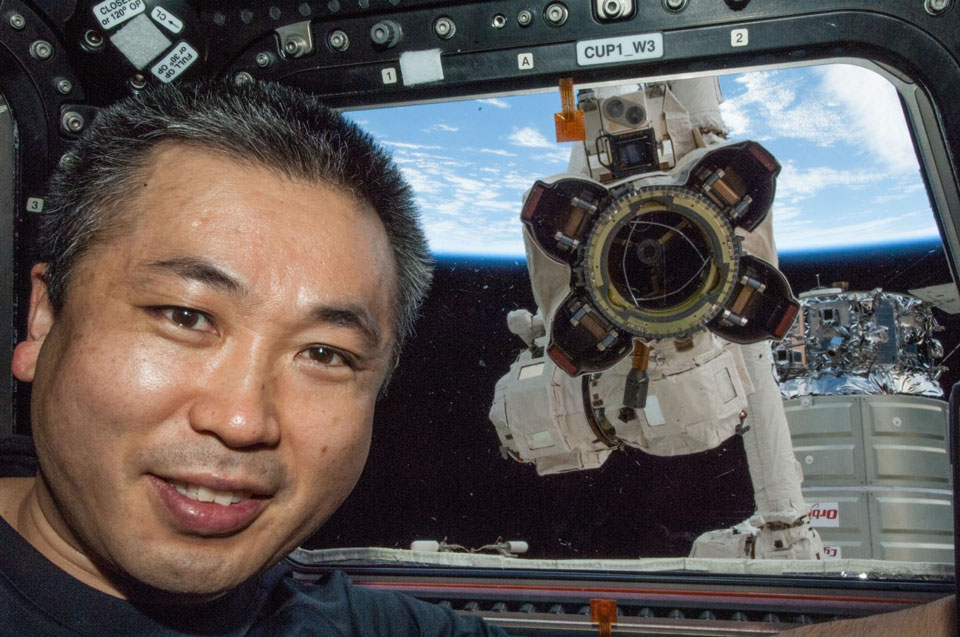
Space Station Robot Forgets Key Again

individual
INTERPERSONAL : SCIENCES
humanistic ------------------------------------------- mechanistic
SOCIOLOGY : POLITICAL
group

Memory: artificial (jokes aside) and real

Just-be?

Making sense of the
activities of daily living

Chunking

Space Station Robot Forgets Key Again


Making sense of someone
else's sense of the
 activities of daily living


Funding for research
(competition!)
group - population

Additional link: The Economist - Rise of the robots 29.3.14
Image source: APOD

Saturday, March 29, 2014

Amelia: with Human Steps Lalala

INTERPERSONAL : SCIENCES
humanistic ------------------------------------------- mechanistic
SOCIOLOGY : POLITICAL
individual

Just-be


with us


NO!
Be still!
Just-ice
group - population

My source: Sky Arts 1 and Amelia - my grandmother

Friday, March 28, 2014

Five Fever Tales: Fact-based dramas about malaria, one of the oldest human diseases

The following radio broadcasts may be of interest:

Five Fever Tales by Lavinia Greenlaw

http://www.bbc.co.uk/programmes/b03yzlhk

Five Fever Tales by Lavinia Greenlaw


These brief plays are very interesting as they present history in a docu-drama approach. The science behind the discovery of what the 'fever' was/is and the challenge for those who first saw new 'living' things through the microscope and then convincing the scientific establishment is quite fascinating.


The economic incentives to solving the 'fever' are also salutary and give pause for thought in considering global health today (and tomorrow - global warning) as is recognition of resistance and current genetic research programmes.

I believe these programmes are freely accessible worldwide, for a limited time period.

Also posted on HIFA2015 c/o the moderator.


Tuesday, March 25, 2014

Extraordinary lives: Demographic influences on academic studies - Life Writing, Life Story Work

Recent reading for studies at Lancaster included
Ethics of Internet Research: Contesting the Human Subjects Research Model

Beyond a week's focus on ethics the above refers to Life Writing:

The study of Life Writing spans many disciplines, and represents 'a fast changing terrain' which is concerned with the study of the writing of lives, encompassing auto/biography as well as aspects of life story that originate outside the written form, such as oral history, testimony, and artifacts such as photography and the visual arts (Jolly, 2001, p. ix). The written text is viewed as a vehicle for an individual's construction of identity, the personal narrative that it records being

…a fundamental means by which people comprehend their own lives and present a 'self' to their audience. (Borland, 1991, p. 71)
...
The multiple approaches taken in Life Writing research can arguably be attributed to the multidisciplinary background of its practitioners. Like Internet researchers, those researching Life Writing have been trained in a variety of disciplines including anthropology, sociology, history, linguistics and literary theory. These various disciplines have contributed a range of insights into the collection of oral history and analysis of the resultant texts (Gluck and Patai, 1991, p. 3). Ethical guidelines for the conduct of Life Writing researchers, such as those published by the Oral History Society in the UK, appear to follow a human subjects model, focussing on the undertaking of the interview, and restricting discussion of the resultant text to issues of copyright. Yet practitioners emphasise the need to remember that as:

…the typical product of an interview is a text, not a reproduction of reality …models of textuality [are] therefore needed. (Gluck and Patai, 1991, p. 3)
What chance is there that Life Writing will be - is being influenced by current demographic and societal trends? Trends and challenges that inevitably present new meanings for history within life and with this new ethical issues? While life writing is clearly an established discipline, how might it develop and what other challenges might apply?

In health and social care Life Story Work is an important part in of assessment and interventions. Has it been discussed, is it appropriate, completed and if so, is this work available and accessible? Do we need people beyond the existing establishment with a dedicated set of skills and knowledge to engage with people diagnosed early on, or will treatments soon make this less of an issue? Will dementia and early dementia especially, with the latest technology prompt new perspectives, or reinforce existing life writing practices? What is an archive? In life story work these people, persons, individuals (and their lives?) are more than subjects.

There are many overlaps already in the mental health state of past and present national leaders, while health services continue to bridge the dementia gap in diagnosis. Biography: world leaders, other recognised lives in Life Story Work and seeking to preserve personal identities in dementia care: clearly these are figures that count.

Sunday, March 23, 2014

Sensing Spaces: Care architecture - memories of choice

Good architecture is often invisible,
but it allows whatever is happening in that space to
be the best experience possible.

Pezo von Ellrichshausen


Good architecture may have something in common with good health; it is something that can be taken for granted. When things go awry and are wrong then architecture and health suddenly impose upon us, a major intrusion.

As I may have mentioned before, in the past I've been asked how I've managed entering such and such care facility for so long. Within health there is recognition of heartsink patients. There are still heartsink buildings too. Not purpose built, seemingly either all narrow dark corridors, interrupted when doors let in shafts of light and assault dignity and privacy; or large 'lounges' that still invite armchairs to be flung against walls.

Architecture like this is not invisible. Walls are walls, blanc, flat and solid. Pictures removed due to safety concerns. Two holes and exposed plaster testify to what? Now, after six months....?

Even for the confused there are few potential found spaces, spaces to sit, stand, be; spaces towards which some personal impetus might have a person gravitate. A space of relative quite, looking out on some-thing relaxing even if not a small garden feature.

"Where's Joan, her friend's here to see her?"
"It's OK, I know where she'll be."

Royal Academy: Sensing Spaces
Education guide