Hodges' Model: Welcome to the QUAD

Hodges' model is a conceptual framework to support reflection and critical thinking. Situated, the model can help integrate all disciplines (academic and professional). Amid news items, are posts that illustrate the scope and application of the model. A bibliography and A4 template are provided in the sidebar. Welcome to the QUAD ...

Saturday, November 08, 2025

COP30: Seeking change shopping in the far North & SOUTH

individual
|
INTERPERSONAL : SCIENCES
humanistic -------------------------------------------  mechanistic
SOCIOLOGY : POLITICAL
|
group-population


'John Kørner (born 1967, Danish): Understanding the Impact of Architecture, 12, 2020

Lithograph

Kørner pursues his artistic practice through various media, including painting, printmaking, ceramics, installations, sculpture, videos and theatre work. Throughout his career he has tackled contemporary global issues such as migration, war, and systems of production and consumption. He refers to these as 'Problems' that form an ongoing process of enquiry in his work. In his series of paintings and prints Understanding the Impact of Architecture (begun in 2014) he explores the way architecture influences, impacts and interacts with people and their environment. This print from the series addresses blind consumerism and its effect on the fragile Nordic landscape. It was made at Edition Copenhagen which along with Borch Editions is the other major print workshop in Denmark.

Acquisition supported by AKO Foundation, 2023,7056.2'

Text and my source: British Museum Room 90

Nordic noir
works on paper from Edvard Munch to Mamma Andersson


Exhibition
 / 09 October 2025 – 22 March 2026

See previously: 'care architecture' : 'architecture'

Friday, November 07, 2025

Half-turns ... to orbit

individual
|
INTERPERSONAL : SCIENCES
humanistic -------------------------------------------  mechanistic
SOCIOLOGY : POLITICAL
|
group-population


 "If you can get your ship into orbit, you're halfway to anywhere."


See: Where did Heinlein say "Once you get to Earth orbit, you're halfway to anywhere in the Solar System"?

Wednesday, November 05, 2025

Book: Algorithmic Rule

ALGORITHMIC RULE
'The future is here and it is not simply digital; it is algorithmic. Algorithms now shape not only what we see and hear through the media, but also how public administrations function and how work is managed. Decisions about health, employment and even children’s education are increasingly outsourced to automated systems. This book explores the algorithmic present, and what can sometimes be described as algocracy – rule by algorithms. To navigate this new reality, we must ask not only technological but also democratic questions. This book is a guide to doing just that.
What national algorithmic scandals have already unfolded, and what lessons can be drawn from them? How is the future of work being reshaped, as employers rely on algorithmic management tools powered by constant workplace surveillance? Should artificial intelligence be allowed to make decisions in the public sector? Where can we find examples of local governments working for inclusion and transparency through open-source programming? How are institutions handling the massive and sensitive data flows that structure daily life? And what does it mean for democracy if the only face of the state becomes a ubiquitous chatbot?' 


Continued:

https://feps-europe.eu/publication/algorithmic-rule/ 


individual
|
INTERPERSONAL : SCIENCES
humanistic -------------------------------------------  mechanistic
SOCIOLOGY : POLITICAL
|
group-population


ALGORITHMIC


RULE


Tuesday, November 04, 2025

Descartes - alive and well ...

... within the Incident Reporting System

'Policy guidance on recording patient safety events and levels of harm 
This guidance is for users of the new Learn from Patient Safety Events (LFPSE) service, to provide context and guidance on selection of appropriate categories when recording incidents. It focuses on which Event Type is appropriate for different circumstances, and how to select the most appropriate options for the Levels of Harm categorisation required within Patient Safety Incidents.'

Previous harm grades

No harm
Low harm
Moderate harm
Severe harm
Death


individual
|
INTERPERSONAL : SCIENCES
humanistic -------------------------------------------  mechanistic
SOCIOLOGY : POLITICAL
|
group-population
New psychological harm grades

No psychological harm
Low psychological harm
 Moderate psychological harm
Severe psychological harm
n/a

New physical harm grades

No physical harm
Low physical harm
Moderate physical harm
Severe physical harm
Fatal


Q. 'n/a'. Discuss.

CPD reading.                      

Monday, November 03, 2025

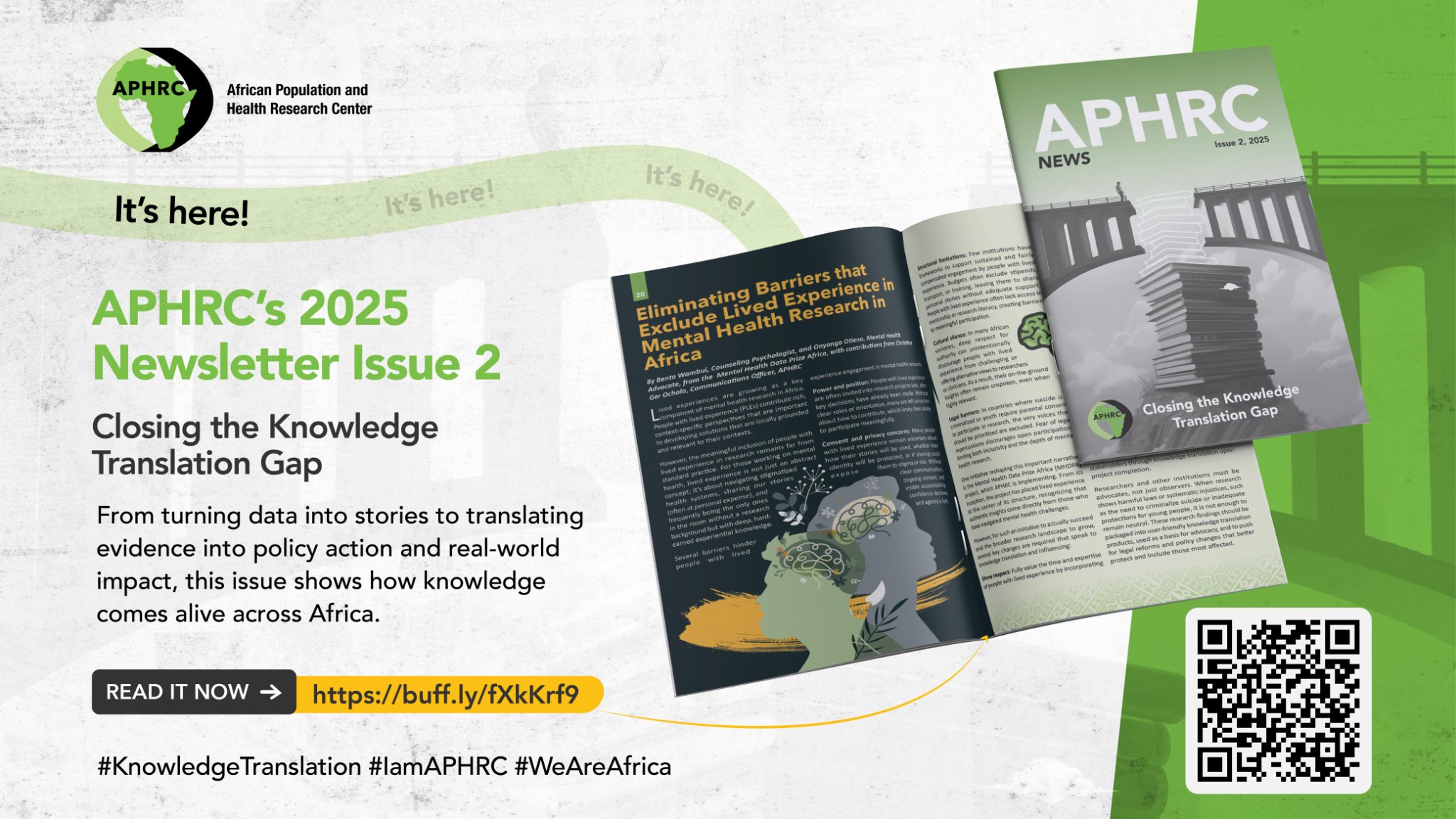
Newsletter: African Population and Health Research Center

APHRC News – Issue 2, 2025

  •  31/10/2025
Welcome to APHRC’s second 2025 newsletter issue! This edition explores how the Center is closing the Knowledge Translation Gap, making research accessible, relatable, and transformative. Dive in to discover stories of change, from climate and health innovations to inclusive education and mental health breakthroughs across Africa.


Sunday, November 02, 2025

The poetry of presence c/o Kenner's 'Mechanic Muse'

'... Eliot's poetry responds to yet another of the new century's pervasive experiences, that of being talked to by people we cannot see. This happens whenever we pick up a telephone, a thing we do so many times a day we quite overlook the strangeness of what lappens next. A character in The Cocktail Party remarks that you can't tell the truth on the telephone, meaning probably that you lose three quarters of your communicative power when you cannot be seen and your breathing body is absent, and you must fabricate mere semantic sequences. Your words are only a fraction of what you say, and the telephone throws you back on nothing but words. It is in Sweeney Agonistes, the play that gives the telephone bell a wholly metrical speaking part, that we hear the famous phrase, "I gotta use words vhen I talk to you."
    When the phone rings in that play - 
    Ting a ling ling 
    Ting a ling ling

Dusty snatches it up and says,

Hello Hello are you there?' 


Kenner, H. (1987) The Mechanic Muse, Oxford: OUP. pp.34-35.

Saturday, November 01, 2025

ii On Sociology & Becoming a Nurse

Two final observations re.

Maclean, Una. (1974) Nursing in contemporary society. London: Routledge & Kegan Paul.
https://wellcomecollection.org/works/qhqc24fv


Firstly, there is a question for new student nurses:
'In the case of nursing, the Royal College of Nursing laid down the course of training and the final tests whilst the General Nursing Council held the solemn register to which aspiring professionals were ultimately to be admitted, and  the aim of these two powerful proponents of the nurse's unique role was to limit he epithet 'nurse' to those who had successfully navigated the straight and narrow path to registration.' p.67.

Q. Above, Maclean refers to a solemn register. What do you believe may have shaped the author's writing at that time in 1974? Is the nurse register, towards which you now aspire still 'solemn'? 2000 words.

There has been much debate of late regards the title 'Nurse'. 'Doctor' also.

Secondly, Maclean was prescient in acknowledging the 'Patient's right to information'. pp.119-120.

On Sociology & Becoming a Patient

'The Subject matter of Sociology
& Becoming a Patient'

A primer for my picking up Hodges' model, or being pressed onboard, was early exposure to history and sociology. There was an understandable emphasis in the (then) school of nursing (registered mental nursing) on the role of society, social history, lunacy and the asylums, law, and attitude towards mental illnesses.

Continuing to sort books (inc. secondhand) and papers, there is:

Maclean, Una. (1974) Nursing in contemporary society. London: Routledge & Kegan Paul.
https://wellcomecollection.org/works/qhqc24fv

individual
|
INTERPERSONAL : SCIENCES
humanistic -------------------------------------------  mechanistic
SOCIOLOGY : POLITICAL
|
group-population


'The sociological viewpoint can be taken on many different subjects. Thus, political sociology has to do with people's voting behaviour and their reactions to the processes of government, while the sociology of education takes into account the influence of various social factors upon educational opportunities and achievements. In addition, social psychology, social psychiatry and social medicine are all related to medical sociology. These terms all imply the use of sociological methods and insights in different areas of human behaviour, and the divisions between them are a convenient way of dealing with what is a very wide territory. Such divisions may suggest that events and things in the real world are already separated in themselves, whereas the divisions are actually in the minds of the people who make them.
It is easier to regard sociology generally as being the study of people's behaviour in groups, groups of all kinds, large and small, casual or permanent, groups of which people are very conscious as well as those of which they may scarcely be aware. Thus, much of sociology is concerned with the human family, a group whose form and composition varies from one part of the world to another and from one set of people to another but which does have common features and functions wherever it is studied. The family will be referred to repeatedly in this book, since not only does it affect all our lives but it profoundly influences the way in which people react in relation to illness.' pp.8-9.


Maclean pointed to the 'innumerable other human groupings' (p.9) and how these - family, schools, clubs, professional training, friendships, audiences, tourist crowds, customers, villager, hostel dweller; such groupings, some historic, temporary or transient - also differentiate into populations, that inform epidemiological and demographic studies. 

It is remarkable how societies have changed globally, since Maclean's 1974 text.

As if to presage the one-to-one encounters to follow, chapter 2 'Becoming a patient' after a brief history 'sickness' arrives at the work of the American sociologist Talcott Parsons.

I don't have the date but I remember making a note the four combined conditions at work for an individual to adopt the sick role. What stood out was how something we think is individually determined is social and so often a question of permission.

Maclean's text (with my emphasis) on these factors follows;
 and is then mapped to the domains of Hodges' model:
'In the first place, the illness must be outside the patient's control, in no sense his own fault. Second, the sick role will allow him exemption from his other roles. with their associated obligations and duties. For example, a man can legitimately give up work and leave his usual family 'responsibilities to his wife. But, third, the sick role requires that the patient should positively desire to get well, he should not relish the relinquishment of responsibility and, fourth, he has the obligation to seek competent medical help.' p.25.
individual
|
INTERPERSONAL : SCIENCES
humanistic -------------------------------------------  mechanistic
SOCIOLOGY : POLITICAL
|
group-population
the sick role requires that the patient should positively desire to get well

the illness must be outside the patient's control,
in no sense his own fault.

the sick role will allow him exemption from his other roles. with their associated obligations and duties

he has the obligation to seek
competent medical help


Again as an exercise you might care to reflect on this and our experiences since the millennium?

What is most remarkable is the need to view this as a 'future lesson' in terms of how societies must, will change to meet the challenges of tomorrow, and the day after that ...