Hodges' Model: Welcome to the QUAD: Search results for implementation

Hodges' model is a conceptual framework to support reflection and critical thinking. Situated, the model can help integrate all disciplines (academic and professional). Amid news items, are posts that illustrate the scope and application of the model. A bibliography and A4 template are provided in the sidebar. Welcome to the QUAD ...

Showing posts sorted by relevance for query implementation. Sort by date Show all posts

Wednesday, June 18, 2025

FINAL CALL: Have your say about evidence-based implementation! c/o HIFA

PARTICIPATE TO WIN PRIZES

View this email in your browser <https://mailchi.mp/nest360/improve-health-worldwide-complete-this-short-survey-10147215?e=f1722a9293>

LAST CHANCE TO INPUT - CLOSING ON 27TH JUNE!

Do you work on improving health and equity in low-and middle-income countries (LMICs)?

Have YOUR chance to: -Democratise research and evidence for implementation! -Ensure your setting is represented! -Win a £50 voucher in the prize draw!

Palestine, Uganda, and Peru shared the most replies so far!

BETTER HEALTH WORLDWIDE!

Complete this 10 minute survey about evidence-based implementation

You could win a £50 voucher!

Click here <https://newborntoolkit.us5.list-manage.com/track/click?u=7a4ba8643fabeb1b06801b973&id=99accaa2ac&e=f1722a9293> and submit for a chance to win!

[content removed as not supported by HIFA]

English Do you work on improving health outcomes around the world?

Have your say! Why? To accelerate evidence-based implementation, with equity, for better health worldwide.

Who? People involved in any aspect of health service implementation and strengthening at any level of the system (e.g. health care provider, data analyst, policy maker).

How? Click here<https://newborntoolkit.us5.list-manage.com/track/click?u=7a4ba8643fabeb1b06801b973&id=a29ce2fd65&e=f1722a9293> to have your say!

What? Participant information<https://newborntoolkit.us5.list-manage.com/track/click?u=7a4ba8643fabeb1b06801b973&id=7579d3a077&e=f1722a9293> is attached to this message.

Evidence-based Implementation: Many life-saving interventions are not implemented effectively, with wide gaps between what is known and what is done, especially in low- and middle-income countries.

We are keen to hear perspectives and realities from implementers in all low- and middle-income contexts. 

We are seeking your insights to help close the gap from evidence to implementation!

We hope you will take a few minutes to complete this brief survey.<https://newborntoolkit.us5.list-manage.com/track/click?u=7a4ba8643fabeb1b06801b973&id=422f1a8283&e=f1722a9293>

Answers can be anonymous and there is no requirement to provide identifying information.


This survey is being conducted as part of the Lancet Commission on Evidence-Based Implementation in Global Health<https://newborntoolkit.us5.list-manage.com/track/click?u=7a4ba8643fabeb1b06801b973&id=ef480cd254&e=f1722a9293>. This study was funded by the Children’s Investment Fund Foundation.

A member of the study team can be contacted via ImplementersVoices AT gmail.com

Please share across your networks!! Let’s begin, click here!<https://newborntoolkit.us5.list-manage.com/track/click?u=7a4ba8643fabeb1b06801b973&id=63a8e4c758&e=f1722a9293>

[content removed as not supported by HIFA - and my source.]

From Harriet Ruysen - Harriet.Ruysen AT lshtm.ac.uk

Sunday, April 26, 2026

Invite to an In-person Interactive Workshop to Advance Action on SDoH [Geneva]

Advancing the Social Determinants of Health during the World Health Assembly

Dear Colleague

Is it possible to share in HIFA Network the following announcement?

Thanks a lot for your precious help

Dr Eric Comte Director of the Geneva Health Forum https://genevahealthforum.com

HIFA profile: Eric Comte is Executive Director, Geneva Health Forum, External Affairs Directorate, Geneva University Hospitals. eric.comte AT unige.ch

Bonjour,

We are pleased to invite you to take part in an interactive workshop dedicated to advancing action on the social determinants of health.

Forty years after the Ottawa Charter, there is broad consensus on the importance of health promotion and the determinants of health. Yet, translating this knowledge into effective policies and concrete action remains a major challenge. In a context marked by climate change, growing inequalities, rapid urbanisation and geopolitical instability, the need for more integrated, preventive and equity-oriented approaches has never been greater.

Building on this observation, this session will bring together, NGO, practitioners, policymakers and experts to move beyond general principles and focus on what really enables implementation in practice. Through the exchange of real-world experiences and case studies, participants will collectively identify actionable lessons, key barriers, and practical ways forward.

The expected outcome is a set of clear, operational messages to strengthen collaboration across sectors and support the implementation of strategies addressing the social determinants of health in diverse contexts. The session will also provide an opportunity to identify concrete avenues for further work, including potential projects that the Geneva Health Forum could support.

The workshop will take place on Tuesday 19 May from 9.00 to 12.30 at Campus Biotech in Geneva.

We would be delighted to count on your participation and active contribution to this important discussion.

👉 More information and registration on the link : https://worldhealthassembly2026.genevahealthforum.com/rethinking-determinants-of-health-in-todays-global-context-from-knowledge-to-action/

Space is limited, so only register if you really want to attend.

Registration is free but required so we can print badges and organize the workshop.

Link with the World Health Assembly discussions

This workshop is directly aligned with the strategic discussions taking place at the World Health Assembly, particularly in relation to document EB158/27 on well-being and health promotion. This report highlights the growing recognition of health promotion and the social determinants of health as essential pillars of public health, while also emphasizing the persistent gaps in implementation and the need to strengthen multisectoral action, governance, and measurable impact.

In particular, it calls for better integration of health promotion across the full continuum of policies and systems, stronger cross-sector collaboration, and a renewed focus on addressing structural determinants of health, including through more effective implementation mechanisms and improved coordination across actors.

Our session contributes to this agenda by focusing on practical experiences and implementation challenges, with the aim of identifying concrete, actionable lessons that can help accelerate the translation of global commitments into real-world action. In doing so, it also seeks to feed into ongoing reflections at the global level and to support more effective implementation of the priorities discussed at the World Health Assembly.

You are receiving this message because you are a member of the community HIFA - Healthcare Information For All.

View this contribution on the web site

Sunday, May 23, 2010

63rd World Health Assembly unanimously adopts the WHO global Code of practice on the international recruitment of health personnel

Dear HIFA2015 colleagues,

Please find below a press release from the Global Health Workforce Alliance. In the words of Dr Mubashar Sheikh, GHWA Executive Director: "The world is now a significant step closer to ensuring health workers are available and accessible to all".

WHO/Jess HoffmanPRESS RELEASE: 'Sixty-third World Health Assembly unanimously adopts the WHO global Code of practice on the international recruitment of health personnel. Alliance members and partners applaud Member States. The Alliance 21/05/2010.

[Photo: WHO/Jess Hoffman. Dr Pierre François Unger, State Councillor of the Canton of Geneva, addresses delegates at the opening of the Sixty-third World Health Assembly.]

'Geneva, 21 May 2010 - In a historic move today, the Sixty-third World Health Assembly unanimously passed a resolution to adopt the voluntary WHO global Code of practice on the international recruitment of health personnel. With this step, the world's nations acknowledge the global dimension and complexities of the health workforce crisis and the interconnected nature of both the problems and the solutions.

'With this resolution, Member States commit themselves to the voluntary principles and practices for the ethical international recruitment of health personnel taking into account the responsibilities and rights of source and destination countries, other stakeholders, and those of the migrant health personnel themselves. The Code provides ethical principles applicable to the international recruitment of health personnel in a manner that strengthen the health systems of developing countries.

'A drafting committee was established on the first day of the Assembly and after three days of negotiations, stayed up till 4:30 am on Thursday, 20 May 2010 to seek consensus on a draft resolution that retained the principles and spirit of the Code while also representing a way forward for all countries.

'The draft was unanimously accepted at the tenth session of Committee A late evening on 20 May 2010 and brought long awaited joy and celebration to the many organizations and individuals, campaigners and professionals, institutions and Member States who had been working tirelessly since the last three years to see a meaningful and equitable resolution on the Code be adopted at the World Health Assembly.

'"The process was not always easy, but there was commitment from all Member States to see a resolution adopted. This helped to keep the process moving and the results are there to see" says Alliance Board member, Bjarne Garden, Assistant Director, Global Health and AIDS Department, NORAD, a member of the Norwegian delegation.

'"This brings to fruition the pioneering work seeded by the Alliance three years ago with the creation of the Health Worker Migration Initiative bringing together the Health Worker Migration Global Policy Advisory Council and WHO led team of technical experts. It is the result of the work of multiple stakeholders who have effectively rallied around together. The world is now a significant step closer to ensuring health workers are available and accessible to all", says Dr Mubashar Sheikh, Executive Director, Global Health Workforce Alliance.

'World Health Organization (WHO) has played a key role in coordinating the process. "The Code sets out a roadmap for implementation. Within 2 years WHO will provide guidance to countries on monitoring implementation of the Code, and then report to the Assembly on the progress against implementation. The Code is voluntary, but progress on implementation will be monitored and reviewed" explained Dr Manuel Dayrit, Director, WHO department of Human Resources for Health.

'Health personnel migration has been a clearly identified priority for the Alliance since its inception. During the First Global Forum on Human Resources for Health in March 2008, the Alliance endorsed the Kampala Declaration and Agenda for Global Action, which sparked broad interest in the creation of the Code.

'Progress on the code has been achieved as a result of consultations and discussions, particularly at all six WHO Regional Committees and national consultations, involving participation by a wide range of stakeholder groups. The UN ECOSOC meeting and the G8 Summit in July 2009, and the UN General Assembly in December 2009 had strongly supported and encouraged WHO to move forward in finalizing the draft code of practice. The 126th Session of the WHO Executive Board, January 2010, had discussed a revised draft of the Code and recommended that it be submitted to the 63rd World Health Assembly.

'At this momentous milestone, the Alliance and WHO call upon Member States and all its partners to reinforce its spirit of working together as they now gear up to implementing the code. The Alliance remains committed to facilitating the process and supporting sharing of information among Member States and all stakeholders.'

The Draft Resolution, dated 20 May 2010, is available here:
http://www.who.int/workforcealliance/knowledge/themes/migration/wha_A63_A_Confpaper_11.pdf

Key elements of the draft code (as described in The Lancet, 15 May) are:

  • Establishment of voluntary global standards for ethical international recruitment of health personnel, balancing rights and obligations of source states, destination states, and health personnel.
  • Promotion of coordination of national policies and international cooperation among states and their partners in health professions and civil society.
  • Recommendation that states strive to meet their domestic needs for health services with their own human resources through planning, education, and training for health workforce.
  • Recommendation that states ensure that international migration should have net positive effect on developing countries through technical assistance, support for health personnel training and retention, twinning of health facilities, and specialised technology and skills transfers.
  • Recommendation that states establish voluntary financial mechanisms to support efforts of developing countries to strengthen health systems.
  • Recommendation that states protect rights of migrant health workers through fair labour practices. In all terms of employment and conditions of work, migrant health personnel should enjoy same legal rights and responsibilities as domestically trained health workforce, without discrimination.
  • Recognition that health personnel have ethical responsibilities to cooperate with local authorities in interests of patients, health systems, and society.
  • Recommendation for national data collection and information exchange on health personnel migration, including establishment of national centre for information exchange, expansion and coordination of national research, and periodic reporting to WHO.
  • Promotion of compliance through periodic state reporting to WHA of measures taken to implement the code; and recommendation that WHA periodically reviews the code's implementation with input from non-governmental sources.
Allyn L Taylor & Lawrence O Gostin. International recruitment of health personnel. The Lancet, 375(9727)1673-1675, 15 May 2010
http://www.thelancet.com/journals/lancet/article/PIIS0140-6736%2810%2960596-X/fulltext?_eventId=login&&version=printerFriendly
(free access after free registration)


My source: HIFA2015 with photo addition

Friday, March 13, 2020

A free online-learning opportunity for those interested in Implementation Science

INSPIRING CHANGE

Open for enrollment March 9 to May 18, 2020

A FREE mini-course providing a high level overview on how to create impact with evidence-based implementation

This mini-course will help you:
  • Understand what evidence-based implementation is and how to proactively plan for change.
  • Discover how process models, theories, and frameworks can be the backbone of your change plan.
  • Be inspired to use behavior change theory.
  • Be more purposeful with your time, by addressing high-priority areas and anticipating resistance to change.
  • Learn simple tips and tricks that can set you up for success.
Cost: FREE

Time to complete: It takes about 1.5 hours to complete the videos and activities.

Available: Enrollment open twice a year (from March to May; and from September to October)


My source:
Julia E. Moore, Ph.D.
Senior Director
647-390-1929
thecenterforimplementation.com
https://www.linkedin.com/in/julia-e-moore/

Follow us on Twitter: @TCI_ca

We urgently need funding to continue our work in 2020. Support the HIFA Appeal: www.hifa.org/appeal

To send a message to HIFA simply send an email to: hifa AT hifaforums.org

HIFA: Healthcare Information For All: www.hifa.org

n.b. My revalidation is due and in (hopeful) preparation for a further three years 2020-2023 I will apply for this myself.

Sunday, May 14, 2023

Share your thoughts: Health Research & Community/Public Engagement

Dear HIFA Community,

As part of a multi-country scoping study commissioned by Wellcome Trust 

https://www.linkedin.com/company/wellcome-trust/

Pivot Collective: https://www.linkedin.com/company/pivotcollective/

- is conducting a rapid survey to better understand community/public engagement and knowledge exchange in health research.

*The Ask:* Provide your insights, thoughts and perspectives - click the survey here: 

https://lnkd.in/dgR6Wak3

This should take 15-30 minutes to complete, and data will be anonymised.

Please complete the survey by Wednesday 17 May 2023.

Thank you!

As background, this survey is part of a larger project that aims to identify more effective routes for communities to be involved in research, with *an ultimate goal of understanding how communities can play a genuinely meaningful, inclusive, and reciprocal role in the research ecosystem.

The project is led by Pivot Collective: https://www.linkedin.com/company/pivotcollective/ in partnership with - 

Eh!woza: https://www.linkedin.com/company/eh-woza
citiesRISE: https://www.linkedin.com/company/cities-rise
Restless Development: https://www.linkedin.com/company/restless-development
Vocal, Praxis, and Fiocruz.

If you'd like to learn more, please don't hesitate to reach out.
We are grateful for your time and insights, and would love to talk.

Best wishes,
Claire B. Cole

Co Director Pivot Collective Consulting +1 917.523.6523
claire AT pivotcollective.org
pivotcollective.org
27 Palmer Road, Muizenberg, 7945 

https://www.facebook.com/PivotCollective/
https://www.linkedin.com/company/30643635
https://www.instagram.com/pivot_collective/

HIFA profile: Claire Cole is Co-Director and Senior Technical Advisor at Pivot Collective USA. Research interests: Participatory and applied research; Sexual and reproductive health and rights; Adolescent health and development; HIV and AIDS; Marginalized and underserved populations; Adaptive management and adaptive implementation; Responsive health systems; Resilience; Implementation science.


My source:
You are receiving this message because you are a member of the community -
HIFA - Healthcare Information For All.

Wednesday, March 03, 2021

Fully funded PhD opportunity: Power

individual
|
INTERPERSONAL : SCIENCES
humanistic ----------------------------------------------- mechanistic
SOCIOLOGY : POLITICAL
|
group


'Power'
How power is exercised here ...

[The above is my addition, and is not an endorsement]

Power as a social determinant of health inequalities (supervised by Mhairi Mackenzie and Sharon Greenwood at the University of Glasgow and Dr Gerry McCartney, Head of the Scottish Public Health Observatory at Public Health Scotland).

This PhD aims to deliver academic and policy learning about how power shapes health and health inequalities at a societal level and methodological learning about collaborative autoethnography as a means of generating data from/with elite participants. The findings will be used to develop learning materials for those engaged in the health inequalities field and to contribute to Public Health Scotland’s ongoing work programme in understanding power as a fundamental driver of health inequalities (HI).

In its proposed focus and methodological approach, the PhD draws on three ideas within the health inequalities literature:

  • Power is not properly understood as a determinant of health and HI – it appears as a relatively amorphous concept whose multiple mechanisms have not been sufficiently delineated; this means that potential policy levers remain obscured.
  • Those working within HI themselves sit within power structures and, as such, are a group whose understanding of power is important to explore. They have opportunities to influence policy debates, experience barriers created through power structures and, it is argued, despite commitment to resolving the problem, themselves benefit from the so-called ‘poverty industry’.
  • Researching concepts such as HI with professional elites is difficult when professionals have well-practiced repertoires of responses.

There is evidence that using non-standard research approaches in the field of HI can bring original perspectives to bear.

Using a novel methodological approach (collaborative autoethnography) the study will:

  • Explore how academic/policy elites working within the HI field:
  1. Understand the mechanisms through which different types of power impact on health outcomes and HI.
  2. Reflect on and conceptualise the power which they deploy or otherwise benefit from within their own personal/professional lives.
  • Generate learning about hidden and actionable levers of power relevant to HI. 
  • Develop learning sets for use with professionals in the HI field.
  • Generate learning about researching with elite participants.

https://www.sgsss.ac.uk/studentship/power-as-a-social-determinant-of-health/


Mhairi Mackenzie,
Professor of Public Policy,
Urban Studies, School of Social & Political Sciences, University of Glasgow,
Email: mhairi.mackenzie AT glasgow.ac.uk

AND:

Deputy Director (Studentships and External Communications) of the Scottish Graduate School Social Sciences: Doctoral Training Partnership
Sgoil Cheumnaichean Saidheans Sòisealta na h-Alba: Com-pàirteachas Trèanaidh Dotaireachd
University of Edinburgh


A selection of recently published papers:

Mackenzie, M., Skivington, K., Fergie, G. (2020) “The State They’re In”: Unpicking Fantasy Paradigms of Health Improvement Interventions as Tools for Addressing Health Inequalities. Social Science & Medicine. 256. https://doi.org/10.1016/j.socscimed.2020.113047

Mackenzie, M., Gannon, M., Stanley, N., Cosgrove, K., Feder, G. (2019) ‘You certainly don't go back to the doctor once you've been told, “I'll never understand women like you.”’ Seeking candidacy and structural competency in the dynamics of domestic abuse disclosure. Sociology of Health & Illness 41(6): 1159-1174. https://doi.org/10.1111/1467-9566.12893

Mackenzie, M., Bradley, L., Gannon, M., Cosgrove, K., Barton, D., Feder, G., Stanley (N) (2019) What might normalisation process theory bring to policy implementation studies? Learning lessons and uncovering questions through a case study of the profound implementation failure of a new policing policy’. Social Policy & Administration 53 (3): 449-463 DOI: 10.1111/spol.12467

Mackenzie, M., Hastings, A., Babbel, B., Simpson, S. and Watt, G. (2017) Proportionate universalism as a route to mitigating health inequalities? Exploring political, policy and practice uncertainties in times of austerity. In: Fee, D. and Kober-Smith, A. (eds.) Inequalities in the UK: New Discourses, Evolutions and Actions. Emerald Publishing Limited. ISBN 9781787144804,

Mackenzie, M., Collins, C., Connolly, J., Doyle, M. and McCartney, G. (2017) Working-class discourses of politics, policy and health: 'I don't smoke; don't drink. The only thing wrong with me is my health'. Policy and Politics, 45(2), pp. 231-249. (doi:10.1332/030557316X14534640177927)

Mackenzie, M., Hastings, A., Babbel, B., Simpson, S. and Watt, G. (2017) Tackling and mitigating health inequalities – policymakers and practitioners 'talk and draw' their theories. Social Policy and Administration, 51(1), pp. 151-170. (doi:10.1111/spol.12154)

My source: POHG

Wednesday, November 01, 2023

ERCIM News No. 135 Special Theme "Climate-Resilient Society"


Dear ERCIM News reader,

A new ERCIM News issue (135) is online with a special theme on Climate-Resilient Society! This special theme aims to put a spotlight on recent research, innovation and Implementation activities that could be taken up by the EU Mission on Adaptation to climate change, focusing on actionable knowledge, tools and solutions for planning, implementation, and progress monitoring. We encourage you to read the full issue to learn more about the latest advances in climate change adaptation research and practice. You can access the issue at the following link: https://ercim-news.ercim.eu/


This special theme was coordinated by our guest editors Athina Lykos (AIT Austrian Institute of Technology) and Sobah Abbas Peterson (NTNU).

Thank you for reading ERCIM News! Please share this issue with anyone who might find it interesting. You can also support us on Twitter (@ercim_news) and LinkedIn (https://www.linkedin.com/company/ercim). 
Let's keep the conversation going and share the latest updates together!

Next issue:
No. 136, January 2024
Special Theme: "Large Language Models". Submissions are welcome! See call for contributions.


Announcements in this issue:

Call for Proposals: Dagstuhl Seminars and Perspectives Workshops Schloss Dagstuhl – Leibniz-Zentrum für Informatik is accepting proposals for scientific seminars/workshops in all areas of computer science.

Social Robotics, Artificial Intelligence & Multimedia Winter School, Grenoble, France, 19-23 February 2024

ERCIM "Alain Bensoussan" Fellowship Programme - postdoctoral fellowships available at leading European research institutions. Simple application procedure. Next application deadline: 30 April 2024.

ERCIM News is published quarterly by ERCIM, the European Research Consortium for Informatics and Mathematics. With the printed and online edition, ERCIM News reaches more than 10000 readers.
All issues published to date are available online.


About ERCIM

ERCIM - the European Research Consortium for Informatics and Mathematics - aims to foster collaborative work within the European research community and to increase co-operation with European industry. Leading European research institutes are members of ERCIM. ERCIM is the European host of W3C.

Peter Kunz                      	
ERCIM Office
2004, Route des Lucioles
BP93
F-06902 Sophia Antipolis Cedex

Includes:
Clean air
20 Improving Urban Air Quality and Climate-resilience in Cities with Inclusive, Policy-relevant Citizen Science
by Pavel Kogut (21c Consultancy), Lieven Raes (Digital Flanders) and Susie McAleer (21c
Consultancy) 
Energy
21 LoCEL-H2 - Low-cost, Circular, Plug and Play, Off-grid Energy for Remote Locations including Hydrogen
by Athanasia-Maria Tompolidi (Consortium for Battery Innovation, CBI), Jonathan Wilson (Loughborough University) and Hassan A Khan (Lahore University of Management Sciences)
Transferable mitigation pathways
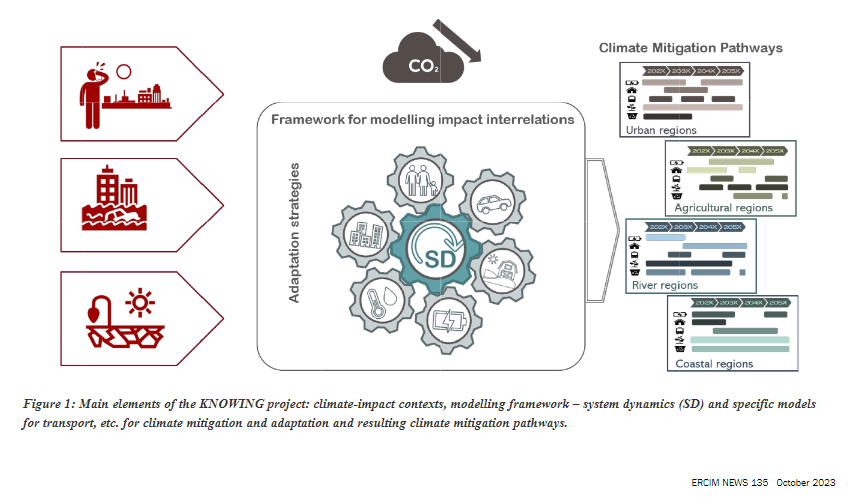
28 KNOWING How to Deal with Climate Change 
by Alexandra Millonig and Marianne Bügelmayer-Blaschek (AIT Austrian Institute of Technology) - with image:
Figure 1: Main elements of the KNOWING project: ... p.28.

Thursday, July 23, 2026

Call for submissions for good practices c/o HIFA

Share your good practice and help strengthen the health system

The Health Systems Trust (HST) invites submissions of good practices for inclusion in the Good Practices Repository. Healthcare workers, programme managers, districts, facilities, academic institutions, non-governmental organisations (NGOs), private-sector partners, industry partners and community organisations are implementing effective solutions to address health system challenges and improve health outcomes. Many of these valuable experiences remain undocumented and are therefore not widely shared or adapted by others facing similar challenges. The Good Practices Repository has been established to identify, document, and share effective practices that can support learning, adaptation, and health system improvement across the country. Most importantly, the real value of sharing good practices lies in its potential to create an exponential effect across the health system. When successful approaches are documented and shared, they can be adapted and implemented in multiple settings thereby extending their impact far beyond the original site. In this way a single innovation or improvement can catalyse widespread change which can accelerate learning and drive improvements in the health space across the country.

What is a Good Practice?

A good practice describes an intervention, programme, service, innovation, policy or approach that has demonstrated effectiveness in addressing health challenges and improving outcomes. Good practices are typically evidence-informed, make use of available resources and has the potential to be adapted, scaled or replicated in other settings.

Submissions may relate to one or more of the following areas:

  • Health priorities
  • Maternal, newborn, child and adolescent health
  • HIV, TB and sexually transmitted infections
  • Non-communicable diseases
  • Mental health
  • Environmental health and climate change
  • One Health
  • Antimicrobial Resistance
  • Health system strengthening
  • Leadership and governance
  • Health financing
  • Digital health and health information systems
  • Human resources for health
  • Service delivery and quality improvement
  • Emergency and disaster preparedness
  • Environmental health and climate change
  • Antimicrobial resistance
  • Medicines, technologies and supply chain management
  • Community and implementation approaches
  • Community engagement and participation
  • Health promotion and disease prevention
  • Multisectoral collaboration and partnerships
  • Knowledge translation and evidence use
  • Equity-focused and people-centred approaches
  • Other Areas
  • Other initiatives that contribute to improved health system performance, health outcomes, or population wellbeing.

Who can submit?

Submissions are welcome from organisations, institutions, programmes, and partnerships involved in the planning, delivery, management, evaluation, or support of health services, including:

  • National, sub-national, regional, district, and local health authorities
  • Public sector programmes and units
  • Non-governmental, civil society and community-based organisations
  • Academic and research institutions
  • Professional bodies and associations
  • Private-sector organisations and industry partners contributing to health system strengthening, service delivery, innovation, or public health programmes
  • Multi-sectoral partnerships and collaborative initiatives
  • Development partners, multilateral agencies, and international organisations

Assessment criteria

  • Submissions will be assessed against an adapted World Health Organization (WHO) Good Practice criteria, including:Demonstrated effectiveness
  • Efficient use of resources
  • Relevance to a priority health system challenge
  • Sustainability
  • Ethical soundness
  • Potential for adaptation or replication
  • Innovation (optional but desirable)

Why submit?

  • Selected practices will:Be featured in the Good Practices Repository
  • Contribute to shared learning
  • Receive national visibility and recognition
  • Support evidence-informed policy and programme development
  • Provide opportunities for replication and scale-up
  • Showcase the achievements of health system implementers and partners
  • Contribute to sustained efforts at improving various tiers of the health system

Submission requirements

Complete submission template including the following information:

  • Executive summary
  • Background: Description of the challenge addressed
  • Intervention: Description of the intervention or practice
  • Approach: Implementation process
  • Key achievements: Results and outcomes achieved (describe outcome measures and metrics for success of the programme/intervention/tool)
  • Lessons learnt: Description of lessons learnt which can inform replication in other contexts
  • Sustainability considerations
  • Supporting materials, where available
  • Only complete submissions containing sufficient information for assessment will be reviewed.

Submissions are accepted on a rolling basis. Feel free to submit throughout the year.

How to submit: Submissions can be completed online through the Good Practices Repository submission portal:

https://www.goodpractices.hst.org.za/for-authors

[n.b. PJ - The link supplied does not appear to work, there is a submit option through the above page.]

For further information, please contact: GoodPractices AT hst.org.za

HIFA profile: Maryam Rumaney currently works as a freelance scientific and English language editor. In addition, she offers consulting services to the laboratory industry. mbrumaney AT gmail.com

HIFA - Healthcare Information For All

View this contribution on the web site

Thursday, March 12, 2009

Pre-Publication Discount: Nursing and Clinical Informatics - Socio-Technical Approaches

Take Advantage of the Pre-Publication Discount by Ordering this Book Today!


Nursing and Clinical Informatics: Socio-Technical Approaches

Edited By: Bettina Staudinger, University for Health Sciences, Medical Informatics and Technology, Austria; Victoria Höß, University for Health Sciences, Medical Informatics and Technology, Austria; Herwig Ostermann, University for Health Sciences, Medical Informatics and Technology, Austria


Description:
The field of nursing informatics is one of the fastest growing areas of medical informatics. As the industry grows, so does the need for obtaining the most recent, up-to-date research in this significant field of study.

Nursing and Clinical Informatics: Socio-Technical Approaches gives a general overview of the current state of nursing informatics paying particular attention to its social, socio-technical, and political aspects to further research and development projects. A unique international comparative work, this book covers the core areas of nursing informatics with a technical and functional respect and portrays them in their proper context.

Table of Contents:
Chapter I: A Treatise on Rural Public Health Nursing
    Wanda Sneed, Tarleton State University, USA The objective of this chapter is to promote public health nursing and community health nursing’s role in the new care delivery patterns, with predictive and preventative care models for populations. This entry will broaden the range of information available for informaticists, as their role expands in the new healthcare arena. Articulation with nursing informatics and the “quality chasm” crossings in U. S. healthcare will assist the informaticists with search and retrieval activities. All players in the healthcare arena will continue to be involved, but probably with a more rational policy-making role.
Chapter II: Assessment in a Computer-Based Nursing Documentation
    Elfriede Fitz, University for Health Sciences, Austria
    Daniela Deufert, University for Health Sciences, Austria
    Johannes, Hilbe, University for Health Sciences, Austria
    Christa Them, University for Health Sciences, Austria
    Experience in nursing practice shows that there are still problems with assessment in computer-based nursing documentation. In addition to nursing documentation, an assessment instrument that captures the needs for care must also be integrated. This chapter describes different Nursing Assessment Instruments and the advantages of Computer-Based Nursing Process Documentation by using quality criteria for assessment instruments such as validity, sensitivity, specificity, reliability, practicability, and the appropriateness of the instrument. Quality criteria for computer-based systems are basically software ergonomic aspects and therefore not part of this study. Each country should choose for itself those specific assessment instruments that capture the needs for care of their clients. The data presented make it possible that facilities are compared (also in regard of reliable cost estimates).
Chapter III: Clinical Decision Support Systems in Nursing
    Dawn Dowding, University of York, UK
    Rebecca Randell, City University, UK
    Natasha Mitchell, University of York, UK
    Rebecca Foster, School of Health Sciences at the University of Southampton, UK
    Valerie Lattimer, School of Health Sciences at the University of Southampton, UK
    Carl Thompson, University of York, UK
    Increasingly, new and extended roles and responsibilities for nurses are being supported through the introduction of clinical decision support systems (CDSS). This chapter provides an overview of research on nurses’ use of CDSS, considers the impact of CDSS on nurse decision making and patient outcomes, and explores the socio-technical factors that impact the use of CDSS. The chapter presents the results of a multi-site case study that explored how CDSS are used by nurses in practice in a range of contexts. The study reveals that how a system is used and may vary considerably from the original intentions of the system designer.
Chapter IV: Culturally Sensitive Healthcare for Newcomer Immigrants
    Jerono Rotich, North Carolina Agricultural & Technical State University, USA This chapter will give an overview of the healthcare-related challenges that most newcomer immigrants and refugees encounter as they acculturate into their new environments in Western countries. It will highlight practical tips that can: a) enhance the caregiver and patient relationships across cultures and across continents; b) enhance culturally sensitive healthcare services; and c) help to create culturally inviting healthcare environments. It is also evident that, although these newcomers enrich their new nations with their diverse backgrounds, language, and cultural differences, each continues to pose formidable obstacles to their health, healthcare providers, and the health system in general. While the patients and providers realize the effects of immigration on the quality and access to healthcare, they seem to be overwhelmed by the barriers.
Chapter V: Mobile Technology in a Developing Context: Impacts and Directions for Nursing
    Pammla Petrucka, University of Saskatchewan, Canada
    Sandra Bassendowski, University of Saskatchewan, Canada
    Thomas F. James, Apogia Networks, Ltd. , Canada
    Hazel Roberts, Government of St. Kitts-Nevis, Ministry of Health, Canada
    June Anonson, University of Saskatchewan, Canada
    This chapter presents the imperatives of mobile technologies in the healthcare. It presents the contextual overview in development of the diffusion, penetration, and uptake of health-related mobile technologies. A consideration of the roles and responsibilities of the diaspora in the embracing of information and communication technologies is emphasized. Key examples of mobile technologies in development to increase understanding and demonstrate promising practices in this emergent field are given.
Chapter VI: Nursing Documentation in a Mature EHR System
    Kenric W. Hammond, VA Puget Sound Health Care System, USA
    Charlene R. Weir, University of Utah, USA
    Efthimis Efthimiadis, University of Washington Information School, USA
    Computerized patient care documentation (CPD) is a vital part of a Patient Care Information System (PCIS). Studying CPD in a well-established PCIS is useful because problems of system adoption and start-up do not interfere with observations. Factors interfering with optimal nursing use of CPD are particularly challenging and of great concern, given today’s shortage of nursing manpower. The chapter describes problems and advantages of CPD usage identified by nurses in a series of research interviews. It is shown that explicit consideration of nursing workflow constraints and communication processes is necessary for development of effective nursing documentation systems. Some findings point to a PCIS reconfiguration strategy that is feasible in the short term. Other findings suggest the value of considering mobile and team-oriented technologies in future versions of the PCIS.
Chapter VII: Nurses and Telehealth: Current Practice and Future Trends
    Sisira Edirippulige, University of Queensland, Australia
    Anthony C. Smith, University of Queensland, Australia
    Mark Bensink, University of Queensland, Australia
    Nigel Armfield, University of Queensland, Australia
    Richard Wootton, University of Queensland, Australia
    Home telehealth, the use of information and communication technologies to deliver and support healthcare directly to the home, is emerging as an important application for nurses. This chapter provides an overview of home telehealth and how it may be applied to the practical challenges nurses face everyday. We provide a summary of the evidence available to support its use in specific areas and a guide for those thinking of implementing telehealth in their own practice. The future of home telehealth lies in carefully considered and designed research, ongoing education, and training and a multidisciplinary approach.
Chapter VIII: Successful Online Teaching and Learning Strategies
    Mary D. Oriol, Loyola University New Orleans, USA
    Gail Tumulty, Loyola University New Orleans, USA
    This chapter presents a theoretical framework and research base for the successful transition of an established Master of Science in Nursing program from that of traditional classroom delivery to one that is Web-based with no geographic limitations to students. The application of socio-technical systems theory to facilitate creation of a positive learning environment for future nurse leaders is described. Use of social processes and application of technology to optimize learning is explained and the latest research on content presentation and student engagement in an e-learning environment are presented. The chapter gives an understanding of the competencies necessary for students and faculty to be successful in online education.
Chapter IX: Shaping Funding Policy for Nursing Services
    Virginia Plummer, Monash University, Australia Concerning nursing resource allocation health service executives have different views about whether systems based on ratios or those based on patient dependency are more accurate. This chapter reports on a statistical analysis of almost 2 million hours of nursing data provided by 22 acute care public and private hospitals in Australia, New Zealand and Thailand. To evaluate both ways an informatics system was used which has the capacity to simultaneously measure nurse patient ratios and nursing workloads by a dependency method of nursing hours per patient day. The results showed that it predicts actual direct nursing care requirements with greater accuracy than ratios for all hospital and patient types, facilitating better allocation of nursing resources and demonstrating that the cost of nursing care would be less for hospitals using that system than for ratios.
Chapter X: Simulations to Assess Medication Administration Systems
    Elizabeth M. Borycki, University of Victoria, Canada
    Andre W. Kushniruk, University of Victoria, Canada
    Shigeki Kuwata, Tottori University Hospital, Japan
    Hiromi Watanabe, Tottori University Hospital, Japan
    A range of new technologies/information systems are being implemented in clinical settings in order to reduce errors associated with the medication administration process. Simulation methods can be used to assess the impact of integrating new technology/information systems into the nurses’ work environment prior to full-scale implementation of a health technology/information system. Simulations as an evaluative tool emerged from a direct need to assess unintended and intended consequences of health information systems upon nurses’ work before systems are fully implemented. Nurse information use of simulations to assess and test health technologies/information systems will allow nurses to determine the impact of a new software and/or hardware upon aspects of nurses’ work before its implementation to allow for appropriate system modifications.
Chapter XI: Socio-Technical Structures, 4Ps and Hodges' model
    Peter Jones, NHS Community Mental Health Nursing Older Adults, UK This chapter explores the potential of a conceptual framework – Hodges’ model – both as a socio-technical structure and means to explore such structures of relevance to nursing informatics theory and practice. The model can be applied universally by virtue of its structure and the content which it can encompass. In apprehending this chapter, readers will be able to draw, describe, and explain the scope of Hodges’ model within contemporary healthcare contexts and the wider global issues presented by the 21st century that influence and shape nursing informatics. Critically, the reader will also gain insight into how socio-technical structures can facilitate cross fertilization of clinical and informatics theory and practice; drawing attention to information as a concept that provides a bridge between socio-technical, clinical, and informatics disciplines. The paper will review the socio-technical literature and venture definitions of socio-technical structures related to Hodges’ model and advocate the need for sociopolitical-technical structures. This chapter also proposes the 4Ps as a tool to facilitate reflection upon and the construction of socio-technical structures. The adoption and significance of the hyphenated form as per “socio-technical” will also be explained.
Chapter XII: Strategies for Creating Virtual Learning Communities
    Beth Perry Mahler, Athabasca University, Canada
    Margaret Edwards, Athabasca University, Canada
    Teaching nursing online requires teachers to purposefully use strategies that facilitate the development of virtual learning communities. This chapter proposes answers to the question, “How can educators effectively teach the very social discipline of nursing in virtual classrooms?” Specific online teaching strategies including Photovoice, Virtual Reflective Centers, and Conceptual Quilting are explored. The social and socio-technical implications of teaching nursing online are considered. A final section in the chapter describes how these developments in online nursing education are changing the social and pedagogical perspectives of distance learning. Research questions that arise from this exploration are presented.
Chapter XIII: The Impact of Technology in Organizational Communication
    Roberta Cuel, University of Trento, Italy
    Roberta Ferrario, Laboratory for Applied Ontology (ISTC-CNR), Italy
    In this chapter a case study is presented, in which the ethnomethodological approach is used to analyze the impact of the implementation of an information system, called Sispes, on organizational communication processes in the residence for elderly Giovanelli (Italy). Sispes is a Web-based platform which sustains communication processes and knowledge management according to a customized workflow management system. Adopting structuration theories in the analysis of the case study, and taking inspiration from the philosophical tradition, especially in epistemology and in the analytic philosophy of law, an innovative perspective is adopted, which specifically acknowledges the role played by the communication processes in shaping both the attitudes of the involved actors and the social reality in which they are immersed. According to this perspective, three types of communication processes are presented, namely the normative, descriptive and constructive approach. These latter are then applied to a concrete case study.
Chapter XIV: The Roles of a Nurse in Telemedical Consultations
    Boris A. Kobrinsky, Moscow Research Institute for Paediatrics and Children’s Surgery, Russia
    Nikolay V. Matveev, Moscow Research Institute for Paediatrics and Children’s Surgery, Russia
    Telemedicine, or distant medical consultations using communication via electronic networks, is gradually becoming a standard of medical care delivery in distant areas worldwide, including both the most developed and the developing countries. For instance, in 2007 telemedical centres existed in 55% of the Russian regions (on average, about 4 centres in each region). In most of the cases, nurses are actively involved into organization of various types of distant consultation. Main types of telemedical services include: (1) emergency consultations of patients by telephone (2) telemedical consultations using videoconferences or store-and-forward systems and (3) home telecare systems. Possible roles of nurses in different types of telemedical consultations are discussed.
Chapter XV: The Role of EBM and Nursing Informatics in Rural Australia
    Daniel Carbone, University of Melbourne, Australia The purpose of this chapter is to discuss broadly the need for enhanced evidence-based medicine (EBM) by nurses in the context of rural Australia and the role that nursing informatics and an informed strategy could facilitate in making such need a feasible reality. First, the introduction highlights current time gaps between health discoveries and eventual practice and the potential for information technology to positively affect this gap. Then, the need for nurses to take an active role in evidence-based medicine in rural settings is argued. The link between information literacy and evidence medicine is consequently presented and gaps in knowledge regarding nursing informatics training are highlighted. Concluding with the argument that to achieve evidence-based research and eventual use, there needs to be a purposeful health informatics learning strategy that recognises the role of computer and information literacy.
Chapter XVI: Use of Handheld Computers in Nursing Education
    Maureen Farrell, University of Ballarat, and RMIT University, Australia The use of mobile technologies in nursing education is rapidly increasing. Handheld computers are the most frequently used of these technologies as they can provide students with information for point of care clinical reference, such as diagnostics, medical terminology, and drug references. Integrating the management and processing of information into clinical practice is an effective learning approach for students and reflects a changing paradigm in nursing education. Traditionally, nursing programs have the tendency to separate the acquisition of academic knowledge from clinical practice, and the process of integrating academic information into the decision-making processes in the clinical area has been difficult for student nurses. This chapter will provide an overview of the use of handheld computers in nursing and medical education, including a brief synopsis of current use in clinical practice. It will discuss the advantages and disadvantages of their use, barriers to implementation and future directions.
Chapter XVII: Using Information Technology in Nursing Education
    Elizabeth Rogerson,University of Dundee, UK
    Linda Martindale, University of Maryland School of Nursing, USA
    Carolyn Waltz, University of Maryland School of Nursing, USA
    This chapter addresses issues relating to nursing informatics as used and applied in nursing education. This includes the use of information technology (IT) in delivering nursing education, as well as the teaching of IT and informatics skills to prepare nurses for practice. Drivers associated with the development and use of IT in nursing education are discussed, as well as current use of IT in nursing education and practice, including both mainstream and emerging technologies. Lastly some key issues for the future are identified. Internationalism is regarded as a consistent theme in IT development and occurs as a recurring thread throughout this chapter.

Saturday, November 30, 2019

iii RCGP’s 7th Health and Justice Summit ...

Returning to Juliet Lyon CBE, Chair of the Independent Advisory Panel on Deaths in Custody, who presented ‘Keeping Safe – how consultation with women and men in prison and health and justice professionals informs our work and advice to ministers.’

In February this year the Independent Advisory Panel on Deaths in Custody (IAP) and the national newspaper for people in prison, Inside Time, began a ground-breaking collaboration - Keeping Safe - to help keep people in prison safe. Supported by the Samaritans and Prison Radio, the IAP called on Inside Time readers to say how best to prevent suicide and self-harm. Prisoners’ recommendations in this Inside Time special report reflect evidence from, and recommendations made repeatedly by, amongst others, the Prisons and Probation Ombudsman, HM Chief Inspector of Prisons, the Chief Coroner and the National Audit Office.
Ms Lyon spoke of the clinical context, hope and time:

What was done in the  ::   Being in Prison  ::    What might be done in the
Past                        Now                             Future

Mention was made of a 'Keeping Safe' event in February 2020. If I learn more, I will add details.

Mark Langridge took us through some technology developments in healthcare as Care UK National Lead Pharmacist:

Socrates (with reference to 5-domains of well-being)
PharmaSelf24
PrisonAssist
Turning-On

There was discussion of "Opt-out" in respect to population screening for antibody positive screening tests and how the question is framed:

"Want your bloods done, luv?"

"We test everyone because    ...
is that OK with you?"

On day 2 Suzy Diamond-White, Governor at HMP Eastwood Park shared management experiences and the quest for change in ‘Delivering Health and Wellbeing in a Women’s Prison’
A look at how health services are delivered within the operational demands of daily life at Eastwood Park given its complex population and wide geographical catchment area. How we keep wellbeing on the agenda to support our contracted health teams. What is so specific about a women’s prison? What needs to be overcome to ensure equivalent service to the community.
Gender was obviously fundamental here, the fit and appropriateness of P.E. kits, the procurement and supply of sanitary towels and incontinence pads. What is 'hygiene' being accounted for through a 'cleaning' budget and other historical legacies to be challenged. The geographical range of Eastwood Park across nine counties and all the consequences for family and children. Talk of prison as a punishment and the public's view was echoed a few times at the summit.

Elizabeth Moody, Deputy Ombudsman at Prisons and Probation Ombudsman provided more reflection on deaths in custody, stressing the families affected by and need for action and lessons to be learned. High profile cases were mentioned in several presentations. The talk gave me a sense on one hand of what families must go through, especially when circumstances suddenly engulfs an individual in the criminal justice system. The work that independent agencies do behind the headlines and sometimes in the midst of them

Chantal Edge, NIHR Clinical Doctoral Research Fellow for Department of Epidemiology and Public Health described research on “Systems barriers to telemedicine in prisons”.
Experiences of systems barriers (prison and hospital/community) encountered in England whilst attempting to operationalise a local prison-hospital telemedicine model, alongside broader evidence on prison telemedicine implementation barriers drawn from a systematic qualitative literature review of published prison telemedicine evidence.
I was late arriving to this session. As per my thoughts concerning Dr Matthew Langley's presentation the potential socio-technical studies might provide some insights?

Although it is also a commercial vehicle, Raconteur published with The Times had a special report on 5G in June. In a similar way to my references to the 5-Care-Domains of Hodges' model, many people talk of 5G and its speed, without fully understanding the change and opportunities this can bring. The report's summary:
"5G is so much more than faster 4G, but the extraordinary hype surrounding it has left many confused over what it will actually do for them. The 5G special report, published in The Times aims to shine light on this, exploring how 5G can transform healthcare and make smart roads a reality ahead of autonomous cars. It covers how to address public concerns over the health impacts of 5G and examines whether the rush to be first in the 5G race is a fool’s errand, with comment on how it might be better to deploy 5G best, rather than deploy it first. Also featured is an infographic measuring the true impact of 5G and looking at the sectors which stand to benefit the most ..."
Chantal provided some copies of an associated paper:

Edge, C., Black, G., King, E., George, J., Patel, S., & Hayward, A. (2019). Improving care quality with prison telemedicine: The effects of context and multiplicity on successful implementation and use. Journal of Telemedicine and Telecare. https://doi.org/10.1177/1357633X19869131


Rachel Gibbs "Equalizing Spaces"
Rachel Gibbs, Assistant Director for Prison Healthcare Services for Northern Ireland shared a travel fellowship “Equalising Spaces”.
Rachel Gibbs was awarded a Winston Churchill Memorial Trust Fellowship in 2019. She will share learning from her visits to Prison Healthcare services/Transitions clinics/Harm reduction rooms in California, North Dakota, New York, Barcelona, Geneva and Stockholm over an eight week period in order to being back innovative ideas to the UK. She will share some of the user involvement work happening in Northern Ireland.


Churchill Fellowship


The title of this session including 'spaces' had my immediate attention and did not disappoint. Rachel's Gibbs also provided help in making me feel a little less guilty in the future. Rachel highlighted and reminded me of the value of travel in the exchange, transfusion and diffusion of ideas, a difficult equation to resolve in these flight-shaming days.


Rachel Gibbs - findings
I do wonder what a global consensus would be on models of care, nursing theory and what other continents have to say (if anything?) on this topic that might inform my study of Hodges' model. Rachel recounted her travels and learning not just from her peers but from prisoners and ex-prisoners. Existing awareness of international health and justice provision was used to focus countries to visit.

Rachel shared her time with:

Transitions Clinic Network (TCN), USA.

and 
One Day at a time
Empowering youth to lead positive lives

Hodges' model repeatedly 'takes' me to spaces of all kinds and also transitions:

Life course - infant - child - teens - adult - older adult - end of life
Life course - infant - child - teens - adult - older adult - end of life :: Diagnosis X (Rare?)
Health - Social Care
Critical information giving :: Pre - Post
Adult service - Older Adult Services
Looked after Children - Adult
Younger Adult, Adult, Older Adult :: Early Onset Dementia
Home care - Day care - Respite care - Residential Care
Continuing Health Care
Justice and Health
Veteran - Civilian
Risk
Formative education - Lifelong learning
Health - Trauma - Intensive Treatment - Return Home
and other Transitions (Prevention!) ...

We often think of tools and the need for them to be ready to hand, as in organising your workspace. Increasingly as the list above suggests there is a need for tools to help keep things 'close to mind' also.

Professor Graeme Henderson (School of Physiology, Pharmacology and Neuroscience for The University of Bristol) gave a serious and yet entertaining talk on“Why are fentanyls so deadly?”
Fentanyls are highly potent opioid agonists. Only small quantities are required to produce their effects and this may make them attractive drugs for smuggling into prisons. fentanyls have pharmacological properties that make them more likely to lead to overdose than other opioids – in addition to their high potency and rapid onset of action these drugs induce respiratory muscle stiffness making it difficult to breath, are less sensitive than heroin to naloxone reversal and may show reduced cross tolerance to other opioids.
Prof Henderson provided statistics that had you paying notice, supporting the first answers to the title:
  • High potency
  • Faster rate of onset of respiratory depression
  • Muscle stiffness (wooden chest) making it harder to breathe
  • Lower cross tolerance between heroin and fentanyl
  • Resistance to naloxone reversal
The Chairs for the summit had quite rightly drew delegates attention to the exhibitors, so I was a bit late again here. The photo is not very good, but brings home the potency of fentanyl. (That is Prof Henderson in the biohazard suit.)


... (still) to be completed - part iv to follow ...

Thursday, January 05, 2023

Call for Papers: The Science of Trust Initiative -


Building and Restoring Trust in Science and Health Information across Patient, Community and Population Settings

 
Message(s) to HIFA alerting to, and response to a Call for Papers:
 
----- Forwarded message -----
From: Neil Pakenham-Walsh <neil.pakenham-walsh@ghi-net.org>
To: HIFA - Healthcare Information For All <hifa@hifaforums.org>
Sent: Friday, 16 December 2022 at 12:11:19 GMT
Subject: [hifa] Call for papers: Building and restoring trust in science and health information across patient, community and population Settings

I am forwarding this from our colleagues at Infodemic Management News, WHO.

Opportunities for action Call for papers: Building and restoring trust in science and health information across patient, community and population Settings

The Journal of Communication in Healthcare: Strategies, Media, and Engagement in Global Health seeks to solicit diverse perspectives and build a robust evidence base for a special issue on trust and misinformation as part of the journal’s Science of Trust Initiative. This special issue will explore topics across different health communication areas aimed at addressing issues fuelled by misinformation such as mistrust, social discrimination, and pervasive stigma. There is specific interest in submissions related to the science of trust that focus on interdisciplinary collaborations to promote social, policy, and/or behavioral change, address key root causes of health inequities, and can help forge the path forward for building and fostering trust. A good opportunity to showcase your latest achievements or research in infodemic management!

To read the call for papers and submit, it’s here. The deadline is 26 February 2022.

Dr Neil Pakenham-Walsh, HIFA Coordinator Healthcare Information For All Global Healthcare Information Network Working in Official Relations with the World Health Organization 20,000 members, 400 supporting organisations, 180 countries, 6 forums, 4 languages www.hifa.org neil AT hifa.org


----- Forwarded message -----
From: Neil Pakenham-Walsh <neil.pakenham-walsh@ghi-net.org>
To: HIFA - Healthcare Information For All <hifa@hifaforums.org>
Sent: Friday, 30 December 2022 at 10:06:18 GMT
Subject: [hifa] Call for papers: Building and restoring trust in science and health information across patient, community and population settings (4)

Dear Najeeb, Meena and all,

Najeeb: "I think this is a golden opportunity for HIFA to publish an article (possibly written by a number of key people in HIFA) and provide a leading statement that emphasizes the role of communication (good quality information) in healthcare for all." https://www.hifa.org/dgroups-rss/call-papers-building-and-restoring-trust-science-and-health-information-across-patient

Meena: "Very nice idea Najeeb and happy to be part of this project." https://www.hifa.org/dgroups-rss/call-papers-building-and-restoring-trust-science-and-health-information-3-hifa-paper

Yes indeed, the call for papers is specifically about 'Building and restoring trust in science and health information'. HIFA is uniquely positioned to explore this issue through dynamic multidisciplinary discussion.

My initial thought is that this could be done within the framework of our current collaboration with WHO and specifically the consultation we are planning for 2023: 'To identify best practices, opportunities and challenges from relevant health related stakeholders, towards pursuing universal access to reliable healthcare information'. https://www.hifa.org/projects/hifa-who-collaboration-plan Lack of trust is a huge challenge and it requires engagement from all stakeholders.

I would like to invite HIFA members and supporting organisations to comment and suggest next steps.

Best wishes, Neil

Dr Neil Pakenham-Walsh


----- Forwarded message -----
From: Najeeb Al-Shorbaji, Jordan <shorbajin@gmail.com>
To: HIFA - Healthcare Information For All <hifa@hifaforums.org>
Sent: Saturday, 31 December 2022 at 22:12:50 GMT
Subject: [hifa] Call for papers: Building and restoring trust in science and health information across patient, community and population settings (5) HIFA-WHO Collaboration

Dear Neil and all members of HIFA family

Happy New Year. The suggestion to invite comments from HIFA members is a logical one and fully supported. HIFA current collaboration with WHO should really be highlighted in this piece especially that WHO and HIFA have both a mission to make high quality information available and accessible by the world. Good quality, timely and accurate health information provided to people is the best prevention, protection and leads to good treatment of diseases. Hopefully this will make heath goals much more attainable. Lets go for it friends.

With kind regards.

Najeeb Al-Shorbaji, PhD, IAHSI

... Website: www.shorbaji.net Director, Knowledge, Ethics and Research WHO/HQ (Retired) e-Marefa Advisor President, Jordan Library and Information Association President, eHealth Development Association, Jordan President, Middle East and North Africa Association of Health Informatics IMIA Vice-President for MEDINFO 2023 Visiting Professor, Ain Shams University, Egypt Member of the International Academy of Pubic Health Scientific Council ORCID ID 0000-0003-3843-8430

----- Forwarded message -----
From: Peter Jones, UK <hifa@hifaforums.org>
To: HIFA - Healthcare Information For All <hifa@hifaforums.org>
Sent: Sunday, 1 January 2023 at 15:45:42 GMT
Subject: [hifa] Call for papers: Building and restoring trust in science and health information across patient, community and population settings (6) Hodges' model and information disorder

As highlighted before on HIFA over many years, Hodges' model can inform such a call for papers and project.

In several ways, including but not limited to - critique and representation of data, information, knowledge, wisdom (literacies - across all academic and professional disciplines):

Jones, P. (1996) Humans, Information, and Science, Journal of Advanced Nursing, 24(3),591-598.
Jones, P. (1996) An overarching theory of health communication? Health Informatics Journal,2,1,28-34.

Additional citation: IRMS Bulletin - November 2022
https://hodges-model.blogspot.com/2022/12/irms-230-h2cm-literacies.htm

"I am indebted to Peter Jones, who shared Hodges’ Health Career Model with the 2022 IRMS conference in Glasgow. Although originally used in a healthcare setting, this simple, two-axis intellectual model can be readily used to analyse any complex interaction between the individual and their environment – in this case, information literacies.

The diagram shows a number of distinct yet overlapping literacies that were potentially in play in our problem example, although there are likely to be many more – even emotional literacy played a part, with the frustrations of the young people in question causing them to dismiss potential solutions before they had been tried or even considered. Likewise, socio-political and socio-economic literacies may have been a factor – if you are unaware that something exists in the world due to blind-spots in your own cultural background then you cannot even begin to look for it."

Jon Fryer, "Information Literacies - Learning, to thrive in a digital age". IRMS Bulletin, Issue 230, November 2022. cc c (A membership journal)

During the summer and the "Communicating health research" thread on HIFA, I thought about 'information disorder' and the infodemic:

https://rm.coe.int/information-disorder-toward-an-interdisciplinary-framework-for-researc/168076277c [*see note below] I recalled this quote too - amid 'information overload'.

“Where is the wisdom we have lost in knowledge? Where is the knowledge we have lost in information?” ― T.S. Eliot, The Rock

As the evidence-base 'accumulates' there may be a questions about the life-cycle of research?

From implementation science to deimplementation: Patey et al. Implementation Science (2018) 13:134 https://doi.org/10.1186/s13012-018-0826-6

As an 'ecosystem' is it imperative that one (or more) part of 'data, information KNOWLEDGE wisdom' must wither on the academic (vine) database - reduced citation hence salience?

The aims and scope of a paper may also encompass the public's understanding of science. Frameworks and models of care/selfcare are needed that can simultaneously:

"... differentiate between science writing for the public and writing across communities of scientific practice. Described by its editors as an interdisciplinary journal, they argue it is a ‘transdisciplinary journal’"

from -Baram-Tsabari, Ayelet, Orli Wolfson, Roy Yosef, Noam Chapnik, Adi Brill, and Elad Segev. Jargon Use in Public Understanding of Science Papers over Three Decades. Public Understanding of Science, 29(6) (August 2020): 644–54. https://doi.org/10.1177/0963662520940501.

Hodges' model being situated can be used in contexts that are inter- multi- transdisciplinary and interprofessional (education).

If I can assist I'd be pleased to proof read, critique drafts, provide a figure / table using Hodges' model to illustrate the conceptual scope and associations of the work.

I may have also referred to agnotology - the study of ignorance, this should (must?) be a concurrent factor in research of literacy. If anyone has time to please read and comment on a near complete draft paper on: COVID-19, technology, society, Hodges' model, fake news misinformation dis- mal- also I'd be very grateful.

[ Since this message was posted to HIFA, I greatly appreciate an offer to read the draft, which should be complete mid-end of February ]

Happy New Year to all - wherever celebrated.

Peter Jones
Community Mental Health Nurse and Researcher
Warrington Recovery Team, NW England
http://twitter.com/h2cm

The call for papers link again:
https://think.taylorandfrancis.com/special_issues/science-trust-initiative/?utm_source=TFO&utm_medium=cms&utm_campaign=JPG15743

[*Note from HIFA moderator (NPW): Many thanks Peter, this publication looks interesting. The first paragraph of the executive summary sets the scene: 'This report is an attempt to comprehensively examine information disorder and its related challenges, such as filter bubbles and echo chambers. While the historical impact of rumours and fabricated content have been well documented, we argue that contemporary social technology means that we are witnessing something new: information pollution at a global scale; a complex web of motivations for creating, disseminating and consuming these ‘polluted’ messages; a myriad of content types and techniques for amplifying content; innumerable platforms hosting and reproducing this content; and breakneck speeds of communication between trusted peers.' I have invited the authors to join us.]