Hodges' model is a conceptual framework to support reflection and critical thinking. Situated, the model can help integrate all disciplines (academic and professional). Amid news items, are posts that illustrate the scope and application of the model. A bibliography and A4 template are provided in the sidebar. Welcome to the QUAD ...
Hodges’ model is a conceptual framework of universal value in theoretical work, practice, policy and care management. While this model is a product of the health-education sector, it is global in scope, taking in the current situation, history and future as complicated by scientific, socio-political, technology and climate change. Practice-based, Hodges’ model is a tool simple in form and yet powerful in terms of how it can help users frame the problems and opportunities of the 21st century. The model was originally taught in studies for the post-registration certificate of care of the mentally ill in the community and other courses. Student assessment included the completion of a case study (vignette), demonstrating competence in application of the model and its embedded (implicit) values.
Access to education, especially early years, is emphasised as foundational for personal and community growth and development. For individuals this can set the course for lifelong learning and an ability to contribute to society and the economy. Given this primary challenge, global institutions and policy makers point to the need for curricula that are relevant. In turn employers and industry leaders need a (global) workforce who are:
reflective practitioners;
critical thinkers;
able to see the ‘big-picture’; and focus on detail and priorities when needed (risk and triage);
decompose a problem, but also integrate (care);
work as team-members;
and extend across several literacies.
These challenges are ongoing for education (being health literate, so as to address personal, social, health and economic education, and the sustainable development goals), and increasingly climate impacts.
England’s First Prevention Demonstrator: Opportunities for Greater Manchester and its VCFSE sector
Greater Manchester has been chosen as England’s first Prevention Demonstrator, an initiative announced in the Government’s 10-Year Health Plan earlier this year. It marks a step toward transforming public services with a more ‘preventative’ approach.
The Greater Manchester Combined Authority (GMCA) was named as the first prevention demonstrator in the UK Government’s 10 Year Plan for Health in July. It will take a community-led preventative approach to the provision of public services which means fixing the foundations of a person’s life – such as housing, and access to education and employment opportunities – as a means of preventing ill health from social and economic detriment and improving lives, as well as reducing pressure on acute and crisis services.
The Prevention Demonstrator will be building on the Live Well Model of service delivery, which brings together services such as health, employment support and debt advice at a neighbourhood level working with the voluntary, community, faith and social enterprise (VCFSE) sector, providing a blueprint for the rest of the country.
Warren Heppolette has been appointed to lead this work, seconded from NHS Greater Manchester where he was Chief Officer for Strategy, Innovation and Population Health. Warren has been closely involved in the GMVCFSE Leadership Group’s Commissioning and Investment sub-group which aims to improving standards and practices for the benefit of the VCFSE sector.
Lucy North, Communications and Policy Officer. Published: December 5, 2025
⍚
'Sustainability' and 'sufficiency' (as per the previous post) are words of the moment. Policymakers want change to have a permanent quality, which ironically means individuals within a population benefitting from initiatives like this have a mindset that makes them flexible to future changes and challenges.
As Camilla Cavendish notes in 'Andy Burnham will need to play a new card now', Manchester's prevention demonstrator has echoes of David Cameron's Big Society and the Troubled Families project. There are two other words that can work for individuals and populations: impetus and momentum. Within this through Hodges' model we can equip people and communities for lifelong learning. We can also highlight, as Prof. Kevin Fong did at RCN Congress 2026 in his marvellous keynote - that resilience is found between people, not within individuals.
Philip Britteon, Alfariany Fatimah, Stephanie Gillibrand, Yiu-Shing Lau, Laura Anselmi, Paul Wilson, Matt Sutton, Alex J. Turner, (2024) The impact of devolution on local health systems: Evidence from Greater Manchester, England, Social Science & Medicine, Volume 348, 116801, ISSN 0277-9536, https://doi.org/10.1016/j.socscimed.2024.116801.
My source: Camilla Cavendish, Opinion: Andy Burnham will need to play a new card now, FTWeekend, 20-21 June, 2024. p.12.
Resolution submitted by the Education Forum That this meeting of RCN Congress asks RCN Council to lobby UK governments to protect nurse education from university sector economic pressures.
Matter for discussion submitted by the Students Committee That this meeting of RCN Congress discusses ways in which the quality of clinical placements can be ensured and consistent across all 4 countries.
For more senior colleagues, you may momentarily think back - all rose-tinted - to the pre-undergraduate Schools of Nursing, but you also realise change was needed and inevitable. A new millennium was fast approaching.
Now, however it seems within the university ecosystem, nursing is a threatened subject and discipline. Nurse education is exposed and itself vulnerable. In the 21st century fitness-stakes - finance wins:
In January 2025 I posted about the situation at Cardiff University. At Congress the matter of the quality of clinical placements, became a resolution. The protection of nurse education provoked an impassioned and emotional debate. Student nurses seeing what is happening to nurse faculty. Nurse faculty seeing the years of experience 'walk' be-pushed out through the door. It seems there is no collective noun for a group, or collection of redundancies. Mass comes to mind, especially in this instance. A 'rash' seems appropriate. But, the condition is more serious and bears further investigation:
How many of us (nurses, and other 'professionals') are seeing job offers(?) such as:
Remote Contract
$35/hr - $80/hr (this is lower than others ...)
About the job
Nursing Informatics Specialist (AI Training) About The Role Your clinical knowledge is more valuable than you think — beyond the bedside. We're looking for experienced nursing professionals to help train and evaluate AI systems built for healthcare. As a Nursing Informatics Specialist at Alignerr, you'll apply your frontline expertise to ensure AI understands real-world clinical workflows, EHR systems, and nursing documentation the way actual nurses do. This is a unique opportunity to work at the intersection of nursing practice and cutting-edge AI — on your own schedule, from anywhere.
Organization: ---------
Type: Hourly Contract
Location: Remote
Commitment: 10–40 hours/week
What You'll Do
Evaluate AI-generated clinical content for accuracy, safety, and alignment with real nursing workflows
Review and annotate EHR documentation scenarios, flagging errors or gaps in clinical reasoning
Translate nursing practice knowledge into structured feedback that improves AI model outputs
Assess how well AI systems reflect clinical informatics best practices across areas like documentation, data integrity, and care coordination
Provide expert insight on health IT tools, including EHR platforms such as Epic or Cerner
Work independently and asynchronously on task-based assignments
Who You Are
Registered Nurse (RN) or equivalent clinical background with hands-on experience in a healthcare setting
Familiar with EHR systems and clinical documentation workflows
Able to analyze clinical scenarios and communicate clear, structured feedback
Detail-oriented with strong written communication skills
Self-motivated and comfortable working independently in a remote environment
No prior AI experience required — your clinical expertise is what matters
Nice to Have
Experience in clinical informatics, health IT, or nursing informatics roles
Familiarity with data annotation, quality review, or evaluation processes
Background in quality improvement, patient safety, or clinical education
Exposure to health data standards (e.g., HL7, FHIR, SNOMED)
Why Join Us
Work on cutting-edge AI projects with leading research labs and AI teams
Fully remote and flexible — set your own hours and work at your own pace
Freelance perks: autonomy, variety, and global collaboration
Apply your nursing expertise in a completely new and impactful way
Contribute to AI that could meaningfully improve how healthcare technology serves patients and clinicians
Potential for ongoing work and contract extension
You might think (no pun intended!):
'Well this all about informatics. Don't worry - it will all work out fine!'
But, please notice, the clinical and nursing requirement:
"Registered Nurse (RN) or equivalent clinical background with hands-on experience in a healthcare setting."
Not exactly, Hodges' model is it? Even if specific to this role, what does it say:
about :: the title of 'Registered Nurse'
about :: Nurses and Nursing as a Profession
and :: to search engines and agentic AI?
So be aware, and concerned (worried even!) for nursing and nurse education ... for the humanity of healthcare:
Day 1: Panel 2 - Rethinking Knowledge in the Age of Complexity
Helena Knyazeva - Dancing with Complexity: How the World Thinks Through Us
Carlos Gershenson - The Implications of Complexity
Leonardo Rodríguez Zoya - Can Statistics Think? Complexity, Future, and Freedom in the Age of Large Language Models Panel Chair: Nigel Gilbert
Courage is one of the 6Cs in nursing, and was on display at WCCS26.
Carlos Gershon began by offering two references, the first:
De Domenico, et al., (2019). Complexity explained: A grassroots collaborative initiative to create a set of essential concepts of complex systems. https://complexityexplained.github.io
This is a brief 20 pages, larger text, and provides a helpful primer to complexity and related concepts covering:
Gershenson, C. The Implications of Interactions for Science and Philosophy.
Found Sci18, 781–790 (2013). https://doi.org/10.1007/s10699-012-9305-8
I liked the practical feel here, the encouragement to think anew, and perhaps taste the "flavors of emergence": synchronic - space; diachronic - time, weak and strong feedback, transversal of scale - upwards and downwards.
There is further conference on complexity later this year (and also online!):
Carlos Gershenson; Complexity, Artificial Life, and Artificial Intelligence. Artif Life 2025; 31 (3): 289–303. doi:https://doi.org/10.1162/artl_a_00462
Gershenson, C. Self-organizing systems: what, how, and why?.
npj Complex2, 10 (2025). https://doi.org/10.1038/s44260-025-00031-5
Leonardo Rodríguez Zoya's presentation helpfully connected social practice, interdisciplinary bridges, statistical rationality, complex (human) rationality and the future(s): desirable, possible, latent and probable.
socio- HUMAN PROBLEMS SOCIAL PRACTICE PRACTICE (one of the 4Ps)
ELECTION - CAMPAIGN SPENDING PEACE NEGOTIATIONS ISLAND ECONOMY CRYPTOCURRENCY
To answer the prompt -
"Give me a less likely but more fruitful interpretation of this [concept]*."
*Replace with a significant concept in your practice
Would it might help to have a simple, and yet complexity (and simplicity!) primed conceptual framework to assist reflection, argumentation, and progress?
I missed the poster at the afternoon break, and followed track 1. I greatly enjoyed Julian Arevalo's - Adaptive Readiness: an Agent-Based Model of Peace Negotiations. Perhaps this accounts for my having no notes or photos for this track except for one. I realise now we did speak, sitting together for the conference dinner. I'm sure I remember Negotiation Lab 1.0 -
This past week I heard discussion (BBC Radio 4) of the 'income' Norway obtains from its expertise and engagement in peace negotiations.
Nicholas Roxburgh, and colleagues Rachel Creaney, Mindi Premarathne and Ruth Wilson through Exploring Interdependencies in an Island Economy, reminded me of public engagement in research. Especially when it involves their community; and that community is somewhat rural, or remote.
Remah Dahdoul, with Jan Korbel and Stefan Thurner presented -
Campaign-Spending Driven Polarization Transition in a Double-Random Field Model of Elections. The following paper brings home the mathematics in complex systems. The reference is:
Jan Korbel and Remah Dahdoul and Stefan Thurner. (2026) Empirical validation of the polarization transition in a double-random field model of elections. arXiv. https://arxiv.org/abs/2510.00612. doi.org/10.1103/9gjj-1df6.
The paper by Saida Hachimi El Idrissi and Mohamed Nemiche is not open access, but the abstract follows.
S. H. El Idrissi and M. Nemiche, "Formation of Complex Societies: An Agent-Based Model Inspired by Freudian Theory," 2024 World Conference on Complex Systems (WCCS), Mohammedia, Morocco, 2024, pp.1-6, doi: 10.1109/WCCS62745.2024.10765573.
Abstract:
The rise and emergence of complex societies in the Old World mark a
pivotal chapter in human history, characterized by the transition from
small, kin-based communities to large, hierarchical states. This
transformation raises fundamental questions: How did human societies
progress from small, cohesive groups characterized by face-to-face
cooperation to the expansive, anonymous societies of today, often
organized as states? What factors account for the significant variation
in different human populations' capacity to construct stable and
functional state structures? To address these questions, we developed an
agent-based model grounded in Freud's hypothesis, which posits that
civilisation could neither emerge nor evolve without the repression of
human desires. In the context of social evolution, this repression of
desires can be interpreted as the repression of intra-societal
competition, ultimately strengthening the society and facilitating the
formation of complex social structures. We implemented this model within
a realistic representation of the Afroeurasian landmass, incorporating
various geographical factors. To validate our model, we compared our
simulated results with historical data. The model-predicted pattern of
expansion of complex societies demonstrated remarkable congruence with
the observed historical patterns in the Old World. The emergence,
growth, and distribution of large-scale societies predicted by our
computational model showed remarkable consistency with the
archaeological and historical record.
Unless you are a microsurgeon (increasingly with robotic co-workers), is the word practice, more likely to manifest what is larger, the big picture, a sense of space, even at a societal or continental scale? In reading, I came across four forms of attractors. For me, how they fit into the question of scale makes this paper worthy of seeking out.
It was COVID-19 that brought home to me the true significance of the 'collective' in the synonyms for group, population, polis, citizenry et al.. An integral part of Hodges' model, an individual, a person is clearly not an island.
Speech, gesture, behaviors, drawing, writing and other media all provide a way of recording and representing information, and knowledge. Digital technologies are the latest tools to extend our memories, and ability to analyse, synthesise and abstract from and to our experiences.
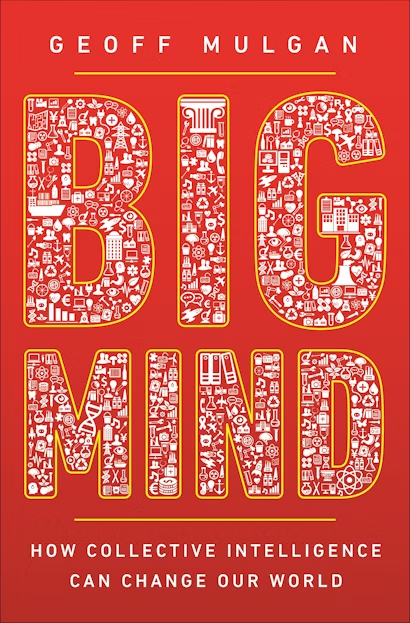
How we see the individual and collective (society) is a subject of much debate across many disciplinary fields, spanning the sciences and humanities; economics, healthcare, sociology, ethics, and philosophy. Mulgan considers as infrastructure, the measures that have emerged to support collective intelligence:
'They have evolved from physical objects (such as steel production) through aggregate concepts (like GDP and GNP) to intangibles (such as innovation indexes or measures of the value of creative industries). They have evolved from single measures of things like population to indexes (like the UN Human Development Index), and from activities to outputs and then outcomes (such as QALYs - quality adjustied life years - and DALYs - disability adjusted life years in relation to health). In all these ways, both states and societies watch themselves and recognize well-calibrated observation as the precondition for thought.' (p.52)
Using Hodges' model the focus is primarily upon individuals and teams application. Mulgan's chapter 12 (pp.145-160) on 'Problem Solving' is subtitled 'How Cities and Governments Think'. An excellent question, that was asked of me in February. How can a national government be informed of Hodges' model and its potential utility? Cities have repeatedly had to solve problems created by changes in transport, work, housing, population density, the movement of people, goods, materials, and links to rural and agricultural centers. The logistics of access to routes, ports, airports, and where to place industries efficiently (and safely)? 'City planning' is a key example of our cities thinking?
Perhaps, we need to think of mobility in a cognitive sense, and not just AI-mediated. So as we walk, run, seek access - we should take care we don't get stuck!
Chapter 7: Searching for Socialism Chapter 8: Mobilizing for Health Equity.
These themes are preceded at the close of chapter 6 with Arnel sharing some personal background, as an immigrant to Canada from a racialized background, who has worked in the health care industry (p.96). COVID also features again, its effects still resonate socio-politically.
It is an unfortunate conjunction - relationship as far as socialism, social justice, the green movement and social cohesion are concerned but Borras provides an invaluable service in linking the Capital-State alliance, which I have capitalised. It seems to be appropriate?
There is 'something' here (I think) in the 'identity' of governments, administrations - I will work through elsewhere.
Having added a note in post iv on expropriation, I see that 'precarity' is also included (p.98).
Chapter 7 gets to grips with 'Welfare Systems in Capitalism'. As before the details are Canadian, but with global reference to other welfare systems - liberal, conservative, and social democratic. If Marxism - Socialism was once feared for its seismic potential, I wondered if chapter 7 points to socialism being in a dormant state? Borras explains welfare state evolution and influences and employs metrics of trade union density, low-wage rates, poverty rates, and infant-mortality rates. On low-wages reference to the US as a capitalist powerhouse that does not provide a favourable environment for most workers, added to my thoughts about nursing globally and the US specifically: despite my parochial vantage point. Five tables aid international comparisons, with inconsistencies in data also highlighted. I couldn't help but feel the need to consider the impact of the wider-determinants of health. Now undoubtedly, an emerging field. The discussion on infant mortality prompts thoughts of my daughter a mum-to-be amid health news in the UK. Plus, Labour's previous and renewed efforts in Sure Start; and the need stressed through Hodges' model to focus on ALL the literacies, including health.
It sounds a contradiction but HHCI frequently had me thinking 'BIG picture' and detail. Reading 'US Empire' (p.110) made me wonder what descriptor might have been applied if written in June 2025? Social democracies are called to account. As a community nurse I am ready to support someone in making a change. But they must want and be the agent of that change. I can't support the individual in their drinking to excess - in the case of alcohol misuse/dependency. Social democracies and capitalism can operate as a conspiratorial dyad, limiting social and welfare progression. The lessons here are invaluable (pp.110-113).
More could be made of the specific political impacts of technology. But clearly that would be another book. For example, no excuse, but BIG-TECH were clearly determined to start[-up] as they intended to go. They had a 'cleanroom' - clean-slate as far as unionisation was concerned. Governments permitted the same - paving the way, enabling and across continents. Ironic, the touchy-feely "We Care" with 'amazing offices', work cafés, dog areas, cycle paths, gardens, breakout spaces, and views. "Now, it is almost a religion: 'Give me a company until it is seven ...'.
As socialism tries to overcome the past, and its associations; a political movement is needed. Somehow 'new socialism' sounds dated. There a call for openness in new ideas and ways to realise socialism. Over the past two decades work has changed, zero-hour contracts, part-time contracts, the rise of employment agencies and self-employed workers. It appears 'complex adaptive systems' can explain and help solve many problems, extending to human organisation and government. Yes. 'It is crucial to understand people's situations and value their experiences.' But how? And, how to 'encourage open conversations and learn from each other.' (p.114)? Neither 'citizen', or 'assemblies' are in the index, as with gambling and advertising. I may have missed one, or more in the text. You have a sense of a need for international organisation. Especially, with AI - artificial intelligence also in the wings.
The results of Erik Olin Wright's analysis of anti-capitalist movements does not sound convincing to me (pp.114-116), but then I'm a nurse. Perhaps economics itself needs to be looked at (again)? Is it an ongoing project - radical economics - that is? How does a new socio-political order 'account' for the existing distribution wealth? The paths toward health equity 1-6, make more sense. The political realism demonstrated, gives me reason to continue here.
A brief section on electoral politics, brought me to short-termism. I have reached out to SIMPOL about this book and will share with the author.
[ Update 20/08/25: I've put the author Arnel in touch John Bunzl at SIMPOL. Short-termism remains an acute problems in our politics and policy. I've always worked clinically, so despite union and professional body membership, policy is something that has been done to my colleagues and I. There did seem some coherence with the National Service Frameworks. That may be illusory as they focussed on long-term conditions, but there was more:
Boardman J, Parsonage M. Government policy and the National Service Framework for Mental Health: modelling and costing services in England. Advances in Psychiatric Treatment. 2009;15(3):230-240. doi:10.1192/apt.bp.106.003095
They also had the attention of 'service user / carer specific organisations' - https://mstrust.org.uk/a-z/national-service-frameworks-nsf
Last week, outside a large bookshop in Hay-on-Wye there were cabinets with books for sale at £1. With £5 worth under my arm, I was ready to go in to pay, and spotted 'Walk Don't Run' an absolute gem which I will post about soon. It links to the first post about Arnel's text and evidence. ].
Chapter 8: Mobilizing for Health Equity. Social justice: It seems the more it is spoken of (shouted even); the further it is to being delivered. We used to talk about minority and disenfranchised groups needing a 'voice'. Now social media amplifies the voice, that gets lost in the cacophony and chaos of information disorder. The 'essence of socialism' needs to quickly get to grips with capitalism as the need for 'labour' changes - is changing. We must listen to literature too: 'Some animals are more equal than others'. Class awareness and the role of unions is discussed. Education is critical. Perhaps we need more Philosophy in Pubs? People learn more effectively when they discover things, and arrive at conclusions for themselves. Use of guided discovery and Socratic dialogue have proved their worth repeatedly. This is why formative education is so important. Young people should be able to reflect and think critically. Within the education system the development of character and values too. That way: 'Workers must become political activists.' (p.126).
As a former health care worker there's a page (+) on engaging nurses in the fight for health equity. It is good to see I am probably right to assume the majority of nurses not 'politically active'. Hopefully, nurses and other formal carers reflect the local community and demographics. Although COVID revealed blatent structural realities.
On page 108 is '2SLGBTQIA+' below is a video that helps:
There are 'minimum demands' - Canada-centric of course. A look beyond policy change limitations and a short review of the need to establish a genuine socialist political party. This begs the question of how 'genuine' would be recognised. There may be a case study emerging in UK politics over the next four years? The bones are here in HHCI- no doubt about that. More is needed, so it's encouraging there is no 'manifesto' in the index either.
Many thanks to Fernwood Publishing for my pb copy.
Arnel M. Borras. (2025) Health and Health Care Inequities - A Critical Political Economy Perspective. Fernwood Publishing.
See also - reference to Hodges' model:
Iris Lohja, Yves Demazeau, Christine Verdier. A multi-agent system approach to dynamic ridesharing for older people: State-of-the-art work and preliminary design. 18èmes Rencontres des Jeunes Chercheurs en Intelligence Artificielle, RJCIA’20, Jun 2020, Angers, France. pp.52-59. ⟨hal-02897446⟩
Yes. Accessibility is critical, but given its age, and presentation of Hodges' model as a 2x2 table, this blog is best viewed on a tablet, laptop, or PC.
If I can help you apply Hodges' model please contact me: h2cmng AT yahoo.co.uk. Assistance in further study of the model, would also be welcome. Thank you.
Hodges' model also known as 'Hodges' Health Career Model' H2CM
A person's health career is impacted by their life chances.
Total Pageviews
Hodges' Health Career - Care Domains - Model
'Care Domains' was added to the model's title as some people thought the model only applied to employment, work, and jobs.
Brian E. Hodges (1942-2022) RIP
Brian E. Hodges - c/o Brian's family.
Peter Jones: Blog author & editor - 2006 ...
Researcher - Practitioner on Hodges' model since 1987
Born in Liverpool, NW England, UK. Community Mental Health Nurse NHS, Part-time Lecturer, Researcher Nursing & Technology Enhanced Learning
Registered Nurse - Mental Health & General Community Psychiatric Nursing (Cert.) MMU PG Cert. Ed. BA(Joint Hons.) Computing and Philosophy - BIHE - Bolton PG(Dip.) Collaboration on Psychosocial Education [COPE] Univ. Man. MRES. e-Research and Technology Enhanced Learning, Lancaster Univ.
Live and work in NW England - seeking a global perspective.
The views expressed on W2tQ are entirely my own, unless stated otherwise. Comments are disabled. If you would like to get in touch please e-mail me at h2cmng AT yahoo.co.uk
* IO Magazine
Source:
Reveal Digital , 01-01-1988
Contributed by: Charles Stein; Don Byrd; A.S. Yessenin-Volpin; Christer Hennix; Henry
Flynt; Henry Flynt; George Quasha; Charles Stein; Christer Hennix; Luitzen Egbertus Jan
Brouwer; L.E.J. Brouwer; L.E.J. Brouwer; Charles Stein
Stable URL: https://www.jstor.org/stable/community.28038534
Hodges' model was created by Brian E. Hodges [Senior Lecturer, Retired] in the mid-1980s at what is now Manchester Metropolitan University.
Peter Jones, author / editor of this blog has championed Hodges' model as a personal initiative online since 1998, but discovered the model on the CPN(Cert.) course 1988. The driver is recognition of the increasing relevance - decade-by-decade - of Hodges' model as a primary resource for local, national, global and glocal (virtual) health and education.
Visitors to this blog, individuals and organisations, are invited to consider use of Hodges' model.
Hodges' model is provided as an open educational resource (OER).
"Open Educational Resources are teaching and learning materials that you may freely use and reuse, without charge. OER often have a Creative Commons or GNU license that state specifically how the material may be used, reused, adapted, and shared." [Google, 8 Feb 2016]
CC CREATIVE COMMONS:
Hodges' model is assigned Attribution-ShareAlike 3.0 Unported (CC BY-SA 3.0):
OER is important for teaching, learning, and collaboration generally. Hodges' model is an ideal tool to span individual and global health care. Peter Jones encourages and will try to respond to support users interested in exploring how Hodges' model can support their work.
Post-publication I have learnt of new papers that have cited, or even used Hodges' model. This is very welcome news. If you are contemplating using h2cm, I'd be pleased to help. The aim is to see h2cm applied, especially in the real world, across disciplines and to help squeeze all the conceptual juice out of the model as per your context.
Nodes & Edges: Structure Content distinct
Self Care + Planetary Care = Future
Is there interest in an open, accessible conceptual framework not only for self-care and health care but for planetary health too? I believe there is ...
THE WORLD NEEDS 2020 VISION
June '26: The previous global counter stopped suddenly, hence reset. Thank you for your time and interest.
BIBLIOGRAPHY & Citations for Hodges' model
Please note the website - p-jones.demon.co.uk listed in many papers below is no longer active and maintained. 'Demon' ceased operating as an internet provider in 2015.
April 23 2025: There is a link to the archived POLITICAL links page, listed under 'External links': https://en.wikipedia.org/wiki/Outline_of_political_science Which is itself a useful page.
A new site for introductory materials and Brian Hodges' original notes will follow (one day!?) ...
Hodges, B.E. (1989) The Health Career Model, IN, Hinchcliffe, S.M. (et al.) 1989 Nursing Practice and Health Care, 1st Edition only, London, Edward Arnold.
Adams, T. (1987) Dementia is a family affair. Community Outlook, Feb, 7-8.
Jones, P. (1999) It's time to master the latest tools and Hodges' Health Career Model, IT in Nursing, 11.2.
Jones, P. (2004) Viewpoint: Can informatics and holistic multidisciplinary care be harmonised? British Journal of Healthcare Computing & Information Management, 21, 6, 17-18.
Jones, P. (2004) The Four Care Domains: Situations Worthy of Research. Conference: Building & Bridging Community Networks: Knowledge, Innovation & Diversity through Communication, Brighton, UK.
Frodge, S. C. (2007). Perceptions of nursing and of a Midwestern Associate Degree Nursing program (Doctoral dissertation). Retrieved from ProQuest Dissertations & Theses. (Order No. 1445113)
Jones, P. (2009) Socio-Technical Structures, the Scope of Informatics and Hodges’ model, IN, Staudinger, R., Ostermann, H., Bettina Staudinger, B. (Eds.), Handbook of Research in Nursing Informatics and Socio-Technical Structures, Idea Group Publishing, Inc. Chap. 11, pp. 160-174.
Kernohan, G. (2010) Theoretical review of public engagement in Nursing. Proc 1st Public Engagement Colloquium, Kells, Co Antrim, 22 April.
Merritt MK, Procter N. Conceptualising the functional role of mental health consultation-liaison nurse in multi-morbidity, using Peplau's nursing theory. Contemp Nurse. 2010 Feb-Mar;34(2):158-66. doi: 10.5172/conu.2010.34.2.158. PMID: 20509800.
Murphy, K., Welford C. (2012) Agenda for the future: enhancing autonomy for older people in residential care.International Journal of Older People Nursing. 7, 75–80.
Jones P. (2014) Using a conceptual framework to explore the dimensions of recovery and their relationship to service user choice and self-determination. International Journal of Person Centered Medicine. Vol 3, No 4, (2013) pp.305-311.
Bom, J. (2015) Geboeid signaleren. De Verpleegkundig Specialist. 10. 14-15. 10.1007/s40884-015-0051-z.
Jones P. Exploring the relationship of threshold concepts and Hodges’ model of care from the individual to populations and global health. Rev Cuid. 2017; 8(3): 1697-720. http://dx.doi.org/10.15649/cuidarte.v8i3.464
Maffissoni, André & Vendruscolo, Carine & De Lima Trindade, Letícia & Zocche, Denise. (2018). Redes de atenção à saúde na formação em enfermagem: interpretações a partir da atenção primária à saúde. Revista Cuidarte. 9. 1-13.
Holmes, D. Perron, A. Jacob, J.D. Paradis-Gagné, É. & Gratton, S (2018). Pratique en milieu de psychiatrie légale: proposition d’un modèle interdisciplinaire, (Practice in forensic psychiatry: A proposed interdisciplinary model). Recherche en soins infirmiers, 134, 33-43. DOI: 10.3917/rsi.134.0033
Ashiquer Rahman, S.K. (2019) Mobilizing ePLANETe.Blue knowledge mediation portal to deal with new challenges of sustainable development in Higher Education and Research Etablishments (HERE) from a perspective of Knowledge Economy.
Thèse de doctorat de l'Université Paris-Saclay
préparée à l’Université de Versailles-Saint-Quentin-en-Yvelines. École doctorale n°578 Sciences de l’homme et de la societé Spécialité de doctorat : Sciences Économiques.
Kennedy, Harry G. (2019). National Forensic Mental Health Service (NFMHS) Model of Care. 10.13140/RG.2.2.30103.59041.
Hayward, B.A. (2020), Mental health nursing in bushfire‐affected communities: An autoethnographic insight. Int J Mental Health Nurs. doi:10.1111/inm.12765
Iris Lohja, Yves Demazeau, Christine Verdier. A multi-agent system approach to dynamic ridesharing for older people: State-of-the-art work and preliminary design. 18èmes Rencontres des Jeunes Chercheurs en Intelligence Artificielle, RJCIA’20, Jun 2020, Angers, France. pp.52-59. ⟨hal-02897446⟩
Byrt R. Forensic Mental Health Nursing in Secure Hospitals and the Criminal Justice System. Nurs Health Care Int J. 2019, 3(2): 000176.
Hamilton EAA, Dornan L, Sinclair M, McCoy J, Hanna-Trainor L, Kernohan WG. A scoping review protocol: Mapping the range of policy-related evidence influencing maternal health outcomes in a fragile, low-income country. J Adv Nurs. 2021 Jul 20. doi: 10.1111/jan.14956. Epub ahead of print. PMID: 34288043.
Elien G Neimeijer (2021) "CLOSE(D) CARE: Group climate in a secure forensic setting for individuals with mild intellectual disability." Radboud University, ISBN: 978-94-6416-713-9
https://www.trajectum.nl/sites/default/files/proefschrift_e._neimeijer_pdf.pdf
Fryer, Jon. “Information Literacies – Learning, to Thrive in a Digital Age” IRMS Bulletin 230 (2022): 16-21.
Kistler KB, Tyndall DE. Application of the Threshold Concept Framework in Nursing: An Integrative Review. Nurse Educ. 2022 Mar-Apr 01;47(2):91-95. doi: 10.1097/NNE.0000000000001041. PMID: 34033613.
Jones P, Wirnitzer K. Hodges’ model: the Sustainable Development Goals and public health – universal health coverage demands a universal framework. BMJ Nutrition, Prevention & Health 2022;5:doi: 10.1136/bmjnph-2021-000254
Kernohan, W. G., & Jones, P. (2023). Hodges’ Health Care Model as a Framework for Quality. Paper presented
at Interprofessional work: developing oral care and the health workforce for the future, Brescia, Italy. https://pure.ulster.ac.uk/en/publications/hodges-health-care-model-as-a-framework-for-quality
Above paper cited by:
Leung, T.C.H., You, C.SX. (2023). Environmental, Social, and Governance (ESG) Promotion to Different Stakeholder Groups. In: Environmental, Social and Governance and Sustainable Development in Healthcare. Sustainable Development Goals Series. Springer, Singapore. https://doi.org/10.1007/978-981-99-1564-4_6
Yadav, V. S., & Singh, B. (2023). Evaluating the Human Rights Perspective on Sustainable Development Goals Accessible Health Coverage. Journal of Law and Sustainable Development, 11(6), e1254. https://doi.org/10.55908/sdgs.v11i6.1254
Kernohan, WG, Dornan, L & Jones, P 2023, 'A reflection on Hodges' Health Career Model for integration of health innovation', Trinity Health and Education International Research Conference 2023, Dublin, Ireland, 7/03/23 - 9/03/23.
McLaughlin, P., Brady, P., Carabellese, F., Carabellese, F., Parente, L., Uhrskov Sorensen, L., . . . Kennedy, H. (2023). Excellence in forensic psychiatry services: International survey of qualities and correlates. BJPsych Open, 9(6), E193. doi:10.1192/bjo.2023.578
Kainat Asmat (2024). Practice Without Theory: A Philosophical Inquiry into Contemporary Nursing in South Asia: Nursing Practice without Theory. International Journal of Practice-based Learning in Health and Social Care. 12. 125-131. 10.18552/ijpblhsc.v12i2.1068.
Güner, Y., Delibalta, B., Üçüncüoğlu, M., Paslı, S. (2025). Challenges encountered by emergency nurses in forensic case management: A qualitative study, Journal of Forensic and Legal Medicine, Volume 109, 102807, ISSN 1752-928X,
https://doi.org/10.1016/j.jflm.2025.102807.
Jones, P. (2025). A Conceptual Mapping Exercise of Deprivation of Liberty Safeguards in Residential & Community Care Using Hodges' Model and Threshold Concepts. Journal of Evaluation in Clinical Practice, 31: e70085. https://doi.org/10.1111/jep.70085
Ardenny Ardenny, Le Hoang Nam, Pham Anh Tu (2025). Sustainable Health Model: Increasing Universal Access to Health Services in Remote Areas. Journal of World Future Medicine, Health and Nursing. 3. DOI: 10.70177/health.v3i1.1907
Jones, P. (2025), A Generic Model and Conceptual Framework to Prime Curiosity Across Health and Social Care Disciplines to Facilitate Lifelong Learning. Journal of Evaluation in Clinical Practice, 31: e70252. https://doi.org/10.1111/jep.70252
Wirnitzer KC, Motevalli M, Tanous DR, Drenowatz C, Moser M, Cramer H, Rosemann T, Wagner K-H, Michalsen A, Knechtle B, Fras Z, Ritskes-Hoitinga M, Marques A, Mis NF, Stanford FC, Schubert C, Goswami N, Leitzmann C, Fredriksen PM, Ruedl G, Wilflingseder D, Lima RA, Kessler C, Jeitler M, Khan NA, Joulaei H, Fatemi M, Knight A, Kratky KW, Palmer KK, Haditsch B, Jakse B, Kofler W, Pfeiffer T, Cordova-Pozo K, Tortella P, Straub S, Lynch H, Schätzer M, Krishnan A, Fathima A. S, Gatterer L, Kriwan F, Abhishek M, Nandgaonkar H, Nandgaonkar S, Adedara AO, Haro JM, Gericke C, Neumann G, Akhtar A, Rashidlamir A, Thangavelu M, Ngoumou GB, Perpék É, Klaper M, Bhattacharya B, Kirschner W, Bessems KMHH, Jones P, Peoples G, Bescos R, Duftner C, Seifert G (2025). Toward a roadmap for addressing today's health dilemma–The 101-statement consensus report., Volume 12:1676080. doi: 10.3389/fnut.2025.1676080. https://doi.org/10.3389/fnut.2025.1676080.
Short form: Wirnitzer, KC. et al. (2025) Toward a roadmap for addressing today's health dilemma – The 101-statement consensus report. Frontiers in Nutrition. Volume 12.
https://frontiersin.org/journals/nutrition/articles/10.3389/fnut.2025.1676080 DOI:10.3389/fnut.2025.1676080
[ For Dr Wirnitzer's work please see:
The NURMI-Study (NURMI – Nutrition and Running high Mileage) https://www.facebook.com/nurmistudy
S. Bettiol, P. Jones, H. A. Onyedikachi, and W. G. Kernohan, (2026) Bridging Gaps in Oral Health Frameworks: Mapping With Hodges' Health Career - Care Domains - Model, Journal of Public Health Dentistry. 1–14, https://doi.org/10.1111/jphd.70034.
Simms, V., Jacobs, N., Magee, J., De Ornellas, K., Mollik, E., Kernohan, W. G., Leacock, J., Akter, J., Sempey, C., Beech, S. E., Naz Asif, R., Yap, L. K., & Miller, K. (2026, Jan 16). Ulster University Open Research Conference 2026: Conference Speaker Abstracts. Ulster University. Advance online publication. https://doi.org/10.21251/0d7780ce-ce97-468f-b5d5-69201ca90b20
-=<>=-
As a source Hughes (1958) below, is clearly dated. Brian Hodges referenced Hughes to define ‘health career’, fundamentally linked to the idea of life chances.
Hughes, E. (1958) Men and their work. New York: Free Press.
A paper in 1977 refers to "Health career model", this is not Hodges' model, but we can match the paper's econometric context as follows: 'health career' equates with 'life chances' and so draws upon the model's INDIVIDUAL domains. While in the paper "Life-cycle and Quality of Life" can be matched with the COLLECTIVE domains of Hodges' model, namely, SOCIOLOGICAL and POLITICAL. Of course, Quality of Life is also an individual, subjective, phenomenological experience. The paper however preempts the ongoing focus upon SOCIAL DETERMINANTS, and more generally, the current state of our Social and Political contracts. Now the further differentiation of political, commercial, geopolitical determinants (where we are born, what 'papers' we possess, or not; are we State/Stateless) is an opportunity for Hodges' model. The ability of Hodges' model to encompass and switch contexts provides evidence of the model's potential and power, a result of its structure and situated content. In health and social care, Quality of Life (clearly) remains an individual AND collective matter, from individual assessment tools, to weighing the ethics, benefits and costs of interventions in collective - aggregated terms (QALY).
"900: Welfare Programs; Consumer Economics; Urban and Regional Economics." (1977). Journal of Economic Literature, 15(4), 1451–1457. http://www.jstor.org/stable/2723014
The two papers below pre-date the first website [1998-2015 webarchived], but show how I have subsequently stressed the role of information, informatics and the socio-technical within Hodges model as a unifying concept. I have copious notes to revisit this subject, on: post-COVID and dis- mis- malinformation; and nursing's legacy issues.
Jones, P. (1996) Humans, Information, and Science, Journal of Advanced Nursing, 24(3),591-598.
Finally some software publications from the microcomputer era.
Jones, P. (1986) Computing in Nursing NEWS. Computerised Patient Assessment. Nursing Times. 85: 5. Sep 3-9;82(36):63-5. PMID: 3532039 (Describes 'CAPA', a BBC microcomputer program for student nurses.)
Jones, P. (1989) Computers in Nursing NEWS. Creating a Program. Nursing Times. Feb 1-7;85(5):66-8. PMID: 2648342 (Describes 'HAEM', a BBC microcomputer program for student nurses on blood and blood groups.)
Please contact me if you have a paper referencing Hodges' model, or you have a project in mind, but need some advice, more information to help you use the model. Thank you.
PRESENTED:
21st April - 6th World Conference on Complex Systems - WCCS 2026 April, 20-22, 2026
Mohammed VI Polytechnic University, Ben Guerir-Marrakesh, Morocco
21th Annual STS Conference Graz 2023:
online: "Critical Issues in Science, Technology and Society Studies" 8th - 10th May 2023
https://stsconf.tugraz.at/
Information & Records Management Society: IRMS22 - Resilience, Recovery, Renewal
Glasgow - DoubleTree by Hilton, May 15-17 2022
8th Biennial Threshold Concepts Conferences
Online, 7–9 July 2021
Global Remote and Rural Healthcare
(Virtual) 17-18th November 2020
ATTENDED:
Systems: Transition to a Sustainable World 15th September 2023, Richmond Building, University of Portsmouth
RCGP’s 7th Health and Justice Summit: Journeys Through Justice – Leadership and Transformation
Bristol, 25-26 November 2019
Participant: Re-envisaging
Infection Practice Ecologies in Nursing through Arts and Humanities Approaches
Spring 2018 - October 2019
Threshold Concepts in Action, University of Dundee: 27th-28th June 2019
Friday 28th June 2019: Threshold Concepts in Health Special Interest Group meeting. Morning: papers/discussion with virtual access for members at a distance; Afternoon: research/writing workshop; sharing advice and ideas
Presented at UKSS Conference 2018
UK Systems Society: Can systemic thinking reshape health services?
Presented at 4th Int. Nursing Conference Jordan The Tipping Point: Creative Solutions to Health and Nursing Challenges
"نقطة التحول: حلول خلاقة للتحديات الصحية والتمريضية"


 orcid.org/0000-0002-0192-8965


