Hodges' Model: Welcome to the QUAD: Search results for cardiff

Hodges' model is a conceptual framework to support reflection and critical thinking. Situated, the model can help integrate all disciplines (academic and professional). Amid news items, are posts that illustrate the scope and application of the model. A bibliography and A4 template are provided in the sidebar. Welcome to the QUAD ...

Showing posts sorted by relevance for query cardiff. Sort by date Show all posts

Thursday, January 30, 2025

Save Cardiff University School of Nursing - Sign the Petition

Cardiff University have announced that the School of Nursing is set to close with cuts to staffing because of a funding shortfall. 

We condemn this action and urge the university to find another solution that does not involve closing the School of Nursing. 

This awful decision will have a direct impact on the number of nurses available to work in health boards across the country . At a time where there is a significant number of nursing vacancies within the NHS this action will undermine an already depleted workforce. 

With well over a 1,000 students within the department, Cardiff University School of Nursing contributes a very important number of nurses which are employed within the NHS each year. 

The school of nursing is ranked 1st in Wales and is an centre of excellence. It is a dynamic, innovative and forward looking school. They are recognised for their excellence in learning, teaching and research. They pride themselves on pursuing research of the highest quality, and are one of the leading healthcare departments in the UK.

As well as this, the staff  work incredibly hard, have invaluable diverse expertise and put their hearts and souls into making the school a vibrant and welcoming place. The nursing department is full of warm, intelligent, passionate people with a wealth of knowledge, who are at danger of losing their livelihoods. We stand in solidarity with the university staff affected by this decision. 

Please sign this petition in the hope that Cardiff University reconsider its decision to close the School of Nursing. 

https://t.co/HU5Cyn8j8p

QR code also available.

Previous posts: 

Nursing, history and (future) travels

Wales

It would be marvellous to be able to deliver a lecture on Hodges' model to new nursing course entrants. Vital though to secure the future of all.

Thursday, September 04, 2025

Parity of Esteem: It's all smoke and mirrors ...

Having just visited the National Gallery and an exhibition on Millet:

https://www.nationalgallery.org.uk/exhibitions/millet-life-on-the-land

Dr Sanil Rege on twitter provided:


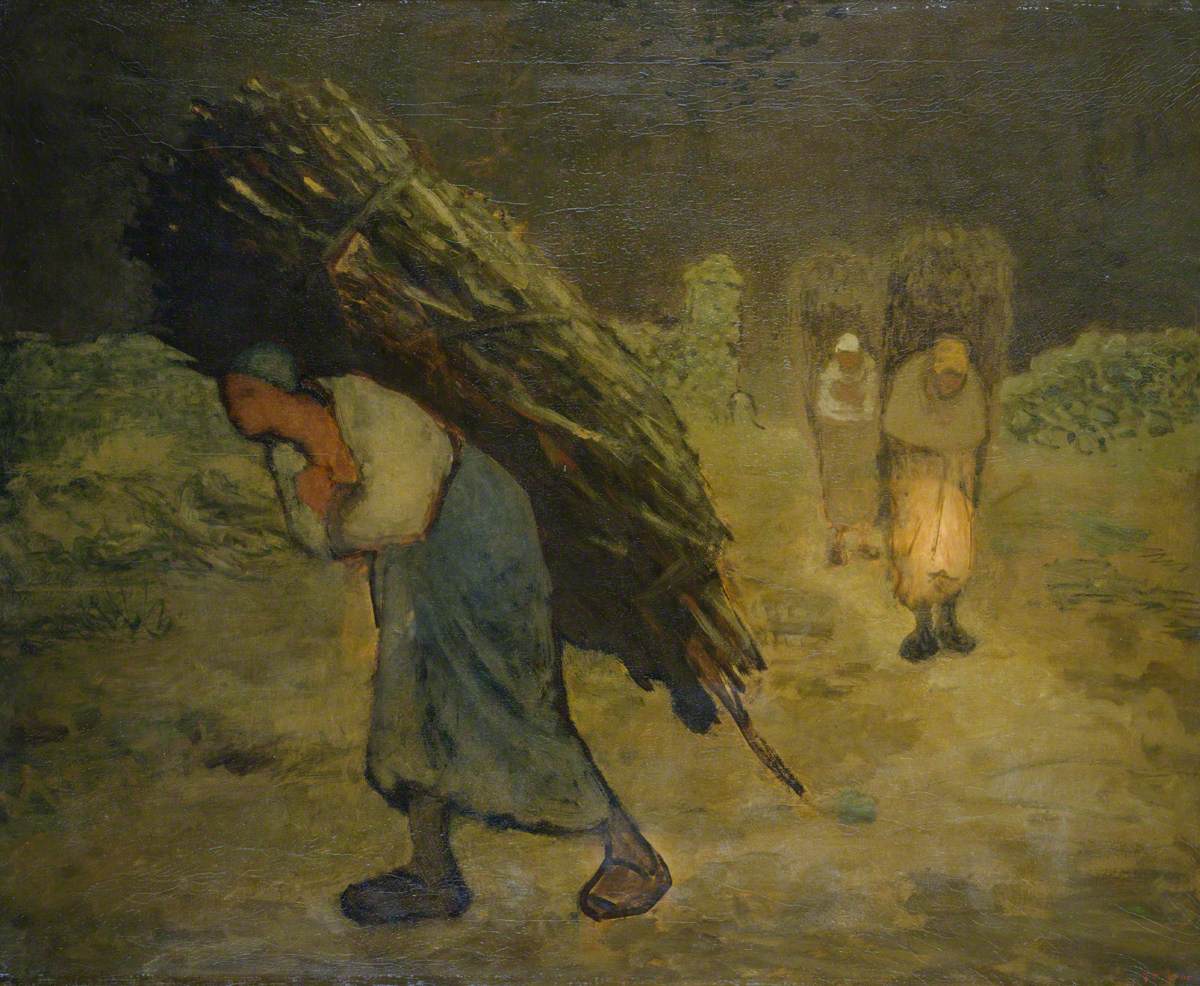
Seeing, and reading (again?) about 'The Faggot Gatherers' I couldn't help but see socio-economic history enacted:

'Two women are taking a short rest from gathering tree branches for sale as firewood. The older woman’s hunched back and clawed hands betray a lifetime of physical toil. The setting is the forest of Fontainebleau, south of Paris, close to the village of Barbizon. Millet was an exponent of Realism, a movement that rejected historical art and idealisation in favour of a truthful view of contemporary reality.'

Text: https://www.nationalgalleries.org/art-and-artists/232271
Winter, The Faggot Gatherers Jean-François Millet (1814–1875) National Museum Cardiff

The National Gallery's accompanying text reads:

'Three women are on their way home trom the forest of Fontainebleau. One of its entrances, the Porte aux Vaches, is visible at the back right. The staggering scale of their loads threatens to overwhelm them in their stumble homewards. The scene evokes Millet's 1851 letter to his biographer Alfred Sensier, in which he described how seeing 'a poor figure laden with a faggot reminded him of the constant fatigue of people's lives.
While the painting is unfinished, the elemental figures are typical of Millet's vork. The extreme simplification of their forms results in austere silhouettes.'

Mental illness has always been a facet of humanity, evidence of trephination from prehistoric times and across cultures and geographies bears testimony to the mind - body divide. Life was brutish physically too. What chance did the weakest stand? If, that is a broken bone: you could be left behind? But perhaps we underestimate the knowledge and experience of our ancient ancestors. Knowledge gained and passed orally, culturally, even before written history. Perhaps too, we struggle to understand how early humanity expressed itself beyond the big-stick of nature and the struggle for survival as the hominids that led to 'us' were winnowed down?

Even as recent as the 19th century life was hard. As the notes above attest, Millet's work seeks to record the sheer physicality of labour, even as the industrial age emerged. The advent of the industrial revolution brought its own pressures and privations, as pastoral life is replaced with change work at home (spinning cotton) to urban and factory growth. 

Severe mental illness would have been institutionalised in poor houses, religious and charitable organisations. Parity of esteem is grounded, to some extent in the questions: "What happened to you?", or "How are you feeling today?" In Millet's work the physical cost and strain stands out. While in the L'Angelus there is debate about prayer, or grief. What is visible usually speaks first, and stands for itself. This is why self-awareness, reflection, critical thinking, observational and interpersonal skills are important; and why mental health nursing calls for specific knowledge and skills. And, in psychiatry too, even when the same is contested.

Image source: Oil on carvas Lent by Amgueddfa Cymry - Museum Wales. Bequeathed by Gwendoline Davies in 1952.

Thursday, July 06, 2017

Money and Mental Health [i] Impact of Mass Unemployment Events (MUEs)


This post was prompted by an infographic on twitter and an associated report that includes the infographics:

Davies AR, Homolova L, Grey C, Bellis MA (2017). Mass Unemployment Events (MUEs) – Prevention and Response from a Public Health Perspective. Public Health Wales, Cardiff ISBN 978-1-910768-42-6.

The report is very interesting, not just in it demonstrating the conceptual scope and application of Hodges' model, but in the real-world examples of people who have experienced this socioeconomic phenomena which impacts so heavily on the individual, spouses (partners) and communities. In addition the research is global across countries and industries. It is sobering to reflect also on the dynamic that is the workforce. Paradoxically, at present UK employment is at a high:


"The employment rate (the proportion of people aged from 16 to 64 who were in work) was 74.8%, the joint highest since comparable records began in 1971." (ONS June 2017).
The report does not mention the 'gig economy', but the rise of 'zero hours' a feature of the new economy is found on page 48. With demographers, forward thinking policy makers and media seers predicting the future of work as the robots not only find their feet, but walk, run and jump - you wonder where we are headed. Children will need to be educated in such a way that they are prepared to retrain, possibly several times in their working lives. Other avenues to ease the human pain are a basic universal income, and a reduced working week. You do wonder if another hidden and subtle MUE is underway? It is not so much massive, as yet, but it is happening in not so slow - slow motion ...?

What follows is drawn from section 4.


individual
|
INTERPERSONAL : SCIENCES
humanistic ----------------------------------------- mechanistic
SOCIOLOGY : POLITICAL
|
group - population


Effect on mental health and well-being

loss of self-esteem, increased stress,
anxiety, changes to perceived control,
shame and loss of status, withdrawal
experiencing a grieving process

insomnia, depression, self-harm,
attempted and completed suicide

loneliness

financial strain

 Effect on pre-existing poor health behaviours - 


helplessness, hopelessness

loss of individual and collective* identity


physical health

reduced freedom from disability

back-pain

mortality
reduced life expectancy

stroke, myocardial infarction
weight gain
relapse to smoking ... again


- such as, increased alcohol consumption, tobacco smoking, illegal and prescription drug misuse, and being overweight

"job for life"
hidden morbidity
spousal mental health

reduced household income

change in family dynamics

emasculation

increased conflict and domestic violence, increased unplanned pregnancy, and reduced infant growth - child educational attainment

Community impact: loss of cohesion and identity*

the already unemployed

social inequalities


women seeking community mental health support as their (male) partners will not seek help

having to work away from home

intergenerational impact

culture of worklessness, unemployability

"job for life of a family"


hidden unemployed

accumulation of debt

jobs offered not local

labour market
competition

housing market - affordability
commuting costs

reliance on food banks

 increased expenditure on antidepressants 
and related drugs

financial hardship

increased hospitalisation, out-patient attendance

Community impact: labour market and economy

Loss of industries
youth move away - 

no workers for new initiatives/industries

loss to local economy of MUE

reliance on welfare benefits


A future post will conduct a similar treatment of a publication by The Money and Mental Health Policy Institute.

Thursday, April 22, 2021

PUBLIC VICES: The individual and collective dimensions of civic and epistemic vices

1-2 October 2021, Università di Genova, Genova (Italy)

Keynote speakers:

Heather D. Battaly                 (University of Connecticut)
Emanuela Ceva                    (University of Geneva)
Fabienne Peter                    (University of Warwick)
Alessandra Tanesini            (Cardiff University)

CFA:

The conference aims to bring together political and moral philosophers to discuss key civic and epistemic vices, to assess their corrupting impact on public life, and to devise effective countermeasures.

Political deliberation is increasingly characterized by epistemic vices, e.g. inaccuracy (Chambers 2020), arrogance (Tanesini 2018), closed-mindedness (Battaly 2020) and epistemic insouciance (Cassam 2018). Consequently, many citizens worry that the public sphere is being polluted by an unprecedented number of misleading claims and inaccurate statements (Matsa and Shearer, 2018; Mitchell et al., 2016, 2019). Furthermore, certain epistemic vices could even compromise the legitimacy of democratic deliberation (Peter 2020).

On the other side, the conference will focus on civic vices. There has been a growing debate on civic virtues which facilitate public life (Croce & Vaccarezza 2018), e.g. prudence (Ottonelli 2018), effectiveness (Zuolo 2020), resilience (Snow 2018) or civic friendship (Schwarzenbach 1996). Yet, comparably less attention has been paid to civic vices, which are not limited to the negative side of civic virtues, but include new character traits with dangerous impact on democratic well-functioning e.g. hyperbolic partisanship (Muirhead 2010), polarization (Aikin & Talisse 2020), radicalization (Waldner and Lust 2018, 109), or corruption (Ceva & Ferretti 2017, 2021).

We welcome submissions relevant to this research aim, broadly construed. Possible topics include, but are not limited to, the following questions:

  • What are civic and epistemic vices? What is the harm in them?
  • Are individuals blameworthy for the development of civic and epistemic vices?
  • Are there genuinely collective civic and epistemic vices?
  • How do civic and epistemic vices impact democratic politics?
  • How can civic and epistemic vices be curtailed or corrected?
  • Are there specific virtues that should be cultivated among democratic citizens?
  • Under what conditions could these be fostered?
  • Where does the responsibility lie for rectifying civic and epistemic vices?
  • What institutional mechanisms, if any, should be ordained to control civic and epistemic vices?

To apply for the conference, send an abstract (500 words) to: callpublicvices AT gmail.com by June 30. Notification of acceptance will be sent within a month.

COVID DISCLAIMER: the conference is organized aiming for personal attendance, as vaccination should have reached significant levels in Italy by the end of September. If circumstances require it, we will consider online alternatives or a hybrid format.

Organizing Committee: Valeria Ottonelli, Angelo Campodonico, Maria Silvia Vaccarezza, Federico Zuolo, Carlo Burelli, Carline Klijnman.

This workshop is part of a PRIN research project: Deceit and Self-Deception. How We Should Address Fake News and Other Cognitive Failures of the Democratic Public (www.deceitproject.com) and it is supported by Aretai Center on Virtues (www.aretaicenter.com).

My source: 

Philos-L "The Liverpool List" run by the Department of Philosophy, University of Liverpool https://www.liverpool.ac.uk/philosophy/philos-l/

Sunday, December 16, 2007

GP launches YouTube health films

Bob Pyke posted the following today:
--------------
I wrote about this about a year ago and they recently updated it, but it is still pretty cool.
http://www.builthsurgery.co.uk/

A GPs' surgery in mid Wales has launched a series of health education films on YouTube, better known as a website featuring home videos.

Advice about flu vaccination and cervical screening are two of the topics covered by Builth and Llanwrtyd Medical Practice in Powys.

Doctors said they wanted to help educate their 7,700 patients and a wider global audience.

Last year, the surgery launched a series of podcasts to advise patients.

YouTube allows users to upload their home videos and other clips online.

Dr Richard Walters, who helped to develop the practice's project, said surgeries normally printed leaflets to advise patients, but added that things were changing.

He told the Western Mail newspaper: "There are a lot of things that we do in a GP practice that have to be conveyed to patients, some of which are not easy to demonstrate within the surgery.

"Sometimes getting patients to watch a quick video on the computer screen is a lot easier."

He added: "We are a practice in rural mid Wales, shops in Hereford and Aberystwyth are an hour away, Cardiff an hour-and-a-half, so although broadband access is not ideal, people tend to use the internet for all sorts of things."

The practice, which covers more than 500 square miles (1,295 sq kms), hopes its advice online will avoid unnecessary travelling to a see a doctor. The videos include tips about asthma inhalers, smear testing, blood sugar testing and the winter flu vaccine, and are made by two practice nurses.

New topics are planned to be added every month. As well as being available on YouTube, the videos are posted on the practice's own website and can be downloaded onto an MP3 player. The surgery is no stranger to using modern technology to get across its health messages to patients. Last year, it launched podcasts demonstrating, among other topics, how to use an asthma inhaler properly.

Story from BBC NEWS:
http://news.bbc.co.uk/1/hi/wales/mid/6234141.stm

Wednesday, May 20, 2026

#RCN26 RCN Congress - Nurse Education

If you think hard-enough all the debates at RCN Congress connect to 'education', but two are laser-focussed:

Protecting nurse education

Resolution submitted by the Education Forum
That this meeting of RCN Congress asks RCN Council to lobby UK governments to protect nurse education from university sector economic pressures.

Quality of clinical placements

Matter for discussion submitted by the Students Committee
That this meeting of RCN Congress discusses ways in which the quality of clinical placements can be ensured and consistent across all 4 countries.

For more senior colleagues, you may momentarily think back - all rose-tinted - to the pre-undergraduate Schools of Nursing, but you also realise change was needed and inevitable. A new millennium was fast approaching.

Now, however it seems within the university ecosystem, nursing is a threatened subject and discipline. Nurse education is exposed and itself vulnerable. In the 21st century fitness-stakes - finance wins:


individual
|
INTERPERSONAL : SCIENCES
humanistic ------------------------------- mechanistic
SOCIOLOGY : POLITICAL
|
group


mental fitness


physical fitness


SOCIAL VALUE 
& VALUES

FINANCIAL FITNESS


At RCN Congress, the status of nursing as a profession in the USA, was raised. Looking online, I found the following at the U.S. Department of EducationMyth vs. Fact: The Definition of Professional Degrees.

In January 2025 I posted about the situation at Cardiff University. At Congress the matter of the quality of clinical placements, became a resolution. The protection of nurse education provoked an impassioned and emotional debate. Student nurses seeing what is happening to nurse faculty. Nurse faculty seeing the years of experience 'walk' be-pushed out through the door. It seems there is no collective noun for a group, or collection of redundancies. Mass comes to mind, especially in this instance. A 'rash' seems appropriate. But, the condition is more serious and bears further investigation:

As a Google search demonstrates - https://share.google/SViFPWuJovKWhErEE

IT doesn't stop there ...

How many of us (nurses, and other 'professionals') are seeing job offers(?) such as:

Remote
Contract

$35/hr - $80/hr (this is lower than others ...)

About the job

Nursing Informatics Specialist (AI Training)

About The Role

Your clinical knowledge is more valuable than you think — beyond the bedside. We're looking for experienced nursing professionals to help train and evaluate AI systems built for healthcare. As a Nursing Informatics Specialist at Alignerr, you'll apply your frontline expertise to ensure AI understands real-world clinical workflows, EHR systems, and nursing documentation the way actual nurses do.

This is a unique opportunity to work at the intersection of nursing practice and cutting-edge AI — on your own schedule, from anywhere.

  • Organization: ---------
  • Type: Hourly Contract
  • Location: Remote
  • Commitment: 10–40 hours/week

What You'll Do

  • Evaluate AI-generated clinical content for accuracy, safety, and alignment with real nursing workflows
  • Review and annotate EHR documentation scenarios, flagging errors or gaps in clinical reasoning
  • Translate nursing practice knowledge into structured feedback that improves AI model outputs
  • Assess how well AI systems reflect clinical informatics best practices across areas like documentation, data integrity, and care coordination
  • Provide expert insight on health IT tools, including EHR platforms such as Epic or Cerner
  • Work independently and asynchronously on task-based assignments

Who You Are

  • Registered Nurse (RN) or equivalent clinical background with hands-on experience in a healthcare setting
  • Familiar with EHR systems and clinical documentation workflows
  • Able to analyze clinical scenarios and communicate clear, structured feedback
  • Detail-oriented with strong written communication skills
  • Self-motivated and comfortable working independently in a remote environment
  • No prior AI experience required — your clinical expertise is what matters

Nice to Have

  • Experience in clinical informatics, health IT, or nursing informatics roles
  • Familiarity with data annotation, quality review, or evaluation processes
  • Background in quality improvement, patient safety, or clinical education
  • Exposure to health data standards (e.g., HL7, FHIR, SNOMED)

Why Join Us

  • Work on cutting-edge AI projects with leading research labs and AI teams
  • Fully remote and flexible — set your own hours and work at your own pace
  • Freelance perks: autonomy, variety, and global collaboration
  • Apply your nursing expertise in a completely new and impactful way
  • Contribute to AI that could meaningfully improve how healthcare technology serves patients and clinicians
  • Potential for ongoing work and contract extension

You might think (no pun intended!): 

'Well this all about informatics. Don't worry - it will all work out fine!'

But, please notice, the clinical and nursing requirement:

"Registered Nurse (RN) or equivalent clinical background with hands-on experience in a healthcare setting."

Not exactly, Hodges' model is it? Even if specific to this role, what does it say:

  • about :: the title of 'Registered Nurse'
  • about :: Nurses and Nursing as a Profession
  • and :: to search engines and agentic AI?

So be aware, and concerned (worried even!) for nursing and nurse education ... 
for the humanity of healthcare:


individual
|
INTERPERSONAL : SCIENCES
humanistic ------------------------------- mechanistic
SOCIOLOGY : POLITICAL
|
group

de-humanisation

BIG TECH


"Where has everyone gone?"
Social values
Social justice

What about research, debate, evidence..?


Nursing Faculty
Universities as Institutions that reflect Society
Why is there an echo in here?
It's been hollowed out.

P.S. I am not a technophobe. Previously: 'AI' : 'SOCIO-technical'