Hodges' Model: Welcome to the QUAD

Hodges' model is a conceptual framework to support reflection and critical thinking. Situated, the model can help integrate all disciplines (academic and professional). Amid news items, are posts that illustrate the scope and application of the model. A bibliography and A4 template are provided in the sidebar. Welcome to the QUAD ...

Monday, October 06, 2025

On models, gaps, deficits, neglect

This a.m. I responded to an email from -

the SDOH Listserv at https://listserv.yorku.ca/cgi-bin/wa?SUBED1=SDOH&A=1

- about a forthcoming book (news to follow). 

I replied, with thoughts (edited) that link to the post earlier today:

On the 'front' - or behind the line(s)?

As a community mental health nurse, I've always recognised (as best I can) the critical, power relation of psychiatry.

This is why I study - champion Hodges' model, because the -
  • medical model
  • bio-medical
  • bio-psycho-social models 
- are all inadequate (in the 21st C. and supposedly post-Institutional care?).*

Inclusion of the 'Political' domain in Hodges' model, is critical in the negotiation between the person and collective.

This is what opens up the wide, expansive 'front' in Hodges' model, where relations can be explored in abstract and concrete terms.

A point I'm currently working through (post - paper?): is it ironic that that education and health have acknowledged and try to mitigate(?) the 'deficit model', but in the very conceptual frameworks / models that these disciplines & professions deploy (esp. medicine?), there is a deficit* - manifest in were we are and how we Care today and tomorrow. This is further aggrevated as capitalism clearly has its way (counter-lobbying the health and care professions)?

*tantamount to neglect?

Despite the pioneering efforts and work of several leaders e.g. Virchow, and fields of medical sociology and public (mental) health.

See also - Joe Wicks: Licensed to Kill Channel 4 UK. 2000hrs 6th October 2025.

'Cereal'
On the 'front' - or behind the line(s)?

In many sources on socio-economics, politics, health policy ... I still note the challenge to represent the INDIVIDUAL and COLLECTIVE within a figure. Of course the author's subject, purpose, the context all influence the final depiction and the message to be conveyed. 

I wonder if Hodges' model can provide a starting point to explore relationships, oppositions, arguments and synergies?

Hodges' model provides an 
expansive and potentially powerful 'front' 
through its horizontal axis 
[ HUMANISTIC ↔ MECHANISTIC ].

This axis - drawn across and through the model vertically, may make it easier(?) to analyse and synthesize the relations at work and produce a diagram?

Individual
|
      INTERPERSONAL    :     SCIENCES               
HUMANISTIC =========================  MECHANISTIC      
 SOCIOLOGY  :    POLITICAL 
|
Group
INDIVIDUAL

INDIVIDUAL

GROUP - POPULATION

GROUP - POPULATION


Saturday, October 04, 2025

Argumentation - Journal: Informal Logic

Early evening (UK) yesterday, I joined a further webinar on argumentation. Through the speaker, and discussion, I was led to a journal

INFORMAL LOGIC

It is in informal logic that I see a role for Hodges' model. The model's structure providing a universal foundation of knowledge domains to be applied in practice. The bonus of this journal, is its being open access, a search revealed the following paper:

Mark Weinstein. Towards a Research Agenda for Informal Logic and Critical Thinking. XII.3, Fall 1990.
https://ojs.uwindsor.ca/index.php/informal_logic/article/view/2609

'This paper recommends that the recent concern with informal logic and critical thinking be redirected from its general philosophical focus and towards a greater appreciation of the particulars of practice in the various domains of human understanding. The redirection recommended is prompted by the central role that critical thinking and informal logic can be seen to play in meaningful educational reform, especially at the undergraduate level.' 

'Critical thinking, similarly, should be redirected from concerns typical of philosophers and towards issues and approaches more representative of critical thinking both within and across the wide range of disciplines represented by the course of undergraduate studies.' p.121.

'The sense that there is an internal relationship between arguments, argumentation and domains of knowledge persists despite attempts to show relevant and useful notions of critical thinking that are generally available for instruction and neutral in respect of the disciplines. The resolution of the issues generated by these competing views, requires that reflective practitioners of the disciplines, students of the history of ideas, methodologists and specialists in teaching increasingly engage in the task of generating and organizing the data upon which an informed and adequate notion of critical thinking across the disciplines must be based.' p.125.

I believe that the structure of Hodges' model provides a basis for Weinstein's ordinary argumentation and stylized argumentation.

For me (at present) ordinary argumentation, is 'open' argumentation. That is, without differentiation in (using) Hodges' model. I might (well, I would) have Hodges' model in mind, but choose not to apply it. As per the paper, stylized argumentation is using Hodges' model and doing so in a multidisciplinary manner - within my discipline. 

The problem and challenge for nurses and other health professionals is the need, if:

  • person/patient-centred;
  • integrated;
  • and holistic - having regard for parity of esteem (mind - body)

- not to stray, extend the disciplinary scope, while working within one's professional scope.

In highly effective multidiscioplinary teams that touch on being transdisciplinary (hybrid?), can experienced team members have insight into the stylized argumentation of their colleagues?

Ack. ​Argumentation network of the AMERICAS - https://www.argnet.org/ethics-of-arg.html

Previously: 'critical thinking'

Friday, October 03, 2025

'National Care Service' - Casey Commission

'Casey Commission tasked with producing plan for ‘national care service’ by 2026

Government remit also asks independent commission to consider services for older people and disabled adults separately and to ensure recommendations stick to government spending settlement

By Mithran Samuel on May 2, 2025 in Adults, Social work leaders

The Casey Commission has been tasked with producing a plan next year for delivering a “national care service” over the course of a decade.

The 2026 report will be followed by a further report, due by 2028, setting out longer-term recommendations for the sector, according to the Department of Health and Social Care’s (DHSC) terms of reference for the commission, published today.

The Independent Commission into Adult Social Care, headed by crossbench peer and renowned government troubleshooter Baroness (Louise) Casey, started its work this week.

The plan to set up the commission sparked criticism from social care organisations, after it was announced in January, due to its three-year timeframe being seen as far too long to develop a plan for a sector under under severe immediate pressures and facing significant future challenges.' 
continued...
https://www.communitycare.co.uk/2025/05/02/casey-commission-tasked-with-producing-plan-for-national-care-service-by-2026/

The Casey Commission


... so many people ...

Individual
|
      INTERPERSONAL    :     SCIENCES               
HUMANISTIC  --------------------------------------  MECHANISTIC      
 SOCIOLOGY  :    POLITICAL 
|
Group


 ... watching this space.


My prompt: Letters to the Editor, The Sunday Times. 12th January 20025. p.22.

https://www.thetimes.com/comment/letters-to-editor/article/sunday-times-letters-labours-national-care-service-proposal-ghx22kzt2

Thursday, October 02, 2025

Will it? Won't it? Artificial general intelligence - AGI

In the media - notably the financial press (radio, TV, Times, FT here) there have been recent questions raised about whether the generative AI bubble is about to burst. The latest releases of GAI are not the step-change that might have been expected. Artificial General Intelligence may not be quite in-sight. As a result I've been reminded of Prof. Peter Gärdenfors work on 'Conceptual Spaces':

'Within cognitive science, two approaches currently dominate the problem of modeling representations. 

1. The symbolic approach views cognition as computation involving symbolic manipulation. 

2. Connectionism, a special case of associationism, models associations using artificial neuron networks. 

Peter Gärdenfors offers his theory of conceptual representations as a bridge between the symbolic and connectionist approaches.' MIT Press.


Hodges'model facilitates a hybrid response to situations, as needed.

A further prompt is the programme for November's AI Health 2025:

https://www.bcs-sgai.org/health2025/?u=programme

Peter Gärdenfors. (2000) Conceptual Spaces: The Geometry of Thought. MIT Press.
DOI: https://doi.org/10.7551/mitpress/2076.001.0001

https://direct.mit.edu/books/monograph/2532/Conceptual-SpacesThe-Geometry-of-Thought

Wednesday, October 01, 2025

Julian Tudor-Hart 'The Inverse Care Law' - c/o The Lancet

On the bottom of my notes re. Giarchi and 'distance decay' I'd written:

'Inverse Care law - p.60. - Giarchi. "those who suffer more ill health are less likely to be assisted."

It made me wonder about the origin of this law having posted about it in 2020.

The Lancet has an editorial and an associated podcast:

50 years of the inverse care law. The Lancet, Volume 397, Issue 10276, 767. February 27, 2021.

'“The availability of good medical care tends to vary with the need for it in the population served. This inverse care law operates more completely where medical care is most exposed to market forces, and less so where such exposure is reduced.”

These understated opening lines of Julian Tudor Hart's paper, The Inverse Care Law, are as relevant now (50 years to the day since publication) as in 1971. The paper is one of the landmark publications in The Lancet's near 200-year history, and the resonance of Tudor Hart's definition of the inverse care law has global and timeless importance. Simply expressed, Tudor Hart observed that disadvantaged populations need more health care than advantaged populations, but receive less.
Tudor Hart's life and career took him from highly privileged beginnings in London and Cambridge to decades spent in the deprived and deeply socialist Welsh valleys. His experience and work has inspired a generation of influential health-care leaders including Andrew Haines, Allyson Pollock, Cesar Victora, and Graham Watt. Today's anniversary issue of The Lancet explores both the global reach of the inverse care law and primary care initiatives in deprived areas around the UK.
Although inequality in health and its many causes are widely understood, inequity in health-care service provision is enduring and fundamental: an intractable concept that lies at the heart of the inverse care law. The inverse care law is primarily about inequity (injustice) in health care that results in unfair social inequalities (imbalances) in health. Since the inverse care law was published, the UK's National Health Service (NHS) has strived to reduce inequity with mixed success. Notably, long-lasting progress was achieved through the 1970s resource allocation formula, which reduced geographical inequality in hospital and institutional expenditure. In the early 2000s, the NHS strengthened primary care provision in disadvantaged areas, leading to a temporary reduction in social inequality, although this progress has reversed following shifts in funding, a slowing of spending, and years of living with austerity.'

See also: 

https://en.wikipedia.org/wiki/Julian_Tudor-Hart

https://www.chpi.org.uk/blog/julian-tudor-hart-and-the-essence-of-primary-care/

Tuesday, September 30, 2025

Rachel Jones: Gated Canyons

As mentioned, with three co-authors, we're writing a paper on dental health, and policy frameworks viewed through the (quadratic?) lens of Hodges' model. The exhibition - 'Rachel Jones: Gated Canyons' ends on October 19 (with my next London visit 6-8 November*), so I won't be able to visit now. It's not as if there are key ideas to be found there that will now be missed, but it does sound and look interesting: and - who knows?

Individual
|
      INTERPERSONAL    :     SCIENCES               
HUMANISTIC  --------------------------------------  MECHANISTIC      
 SOCIOLOGY  :    POLITICAL 
|
Group


On the paper, we are now revising so fingers x'd. This exhibition has toured, so I will of course 'watch the spaces'.

My source: Durrant, N. first night. A tasty body of work. The Times. August 1 2025. p.10.

Monday, September 29, 2025

Raven Chacon - graphical musical scores

Individual
|
      INTERPERSONAL    :     SCIENCES               
HUMANISTIC  --------------------------------------  MECHANISTIC      
 SOCIOLOGY  :    POLITICAL 
|
Group
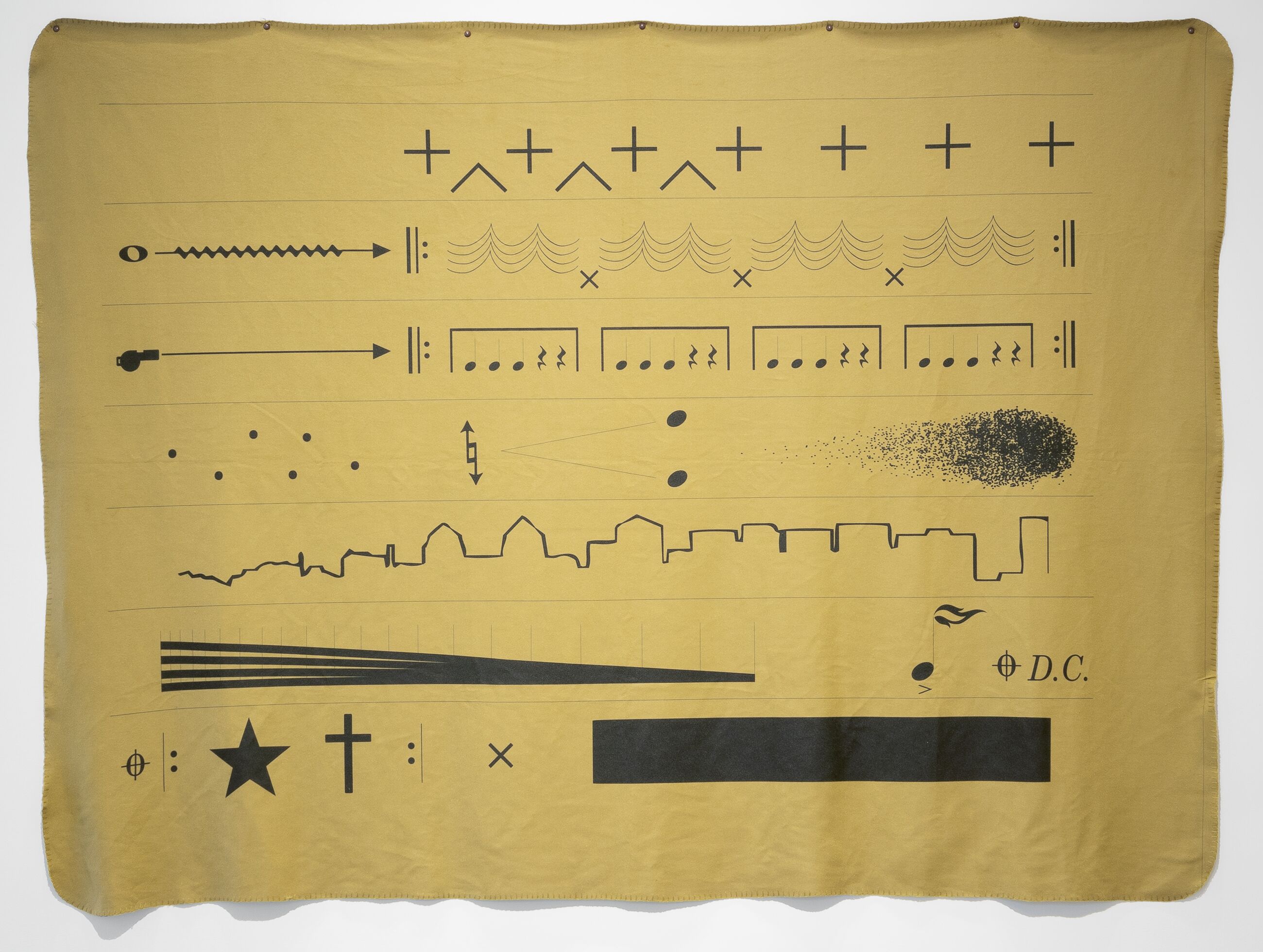
'The artist and composer Raven Chacon, 46, who grew up in Albuquerque and now divides his time between the city and upstate New York, used to explore these lava fields as a youngster, ingesting psychoactive plants such as jimson weed and searching for petroglyphs on the sides of rocks. Some - spirals, zigzags and dotted lines, for example - have found their way into the graphic musical scores for which he is now known. When I visited him in Albuquerque, he drove me out to see them.'
Raven Chacon, American Ledger No. 1 (Army Blanket), 2020. Graphic score


My source: Griffin, J. Sound of a different music. Life&Arts. FT Weekend. 24/25 February 2024. p.17.

Image: ECHOES OF A PLACE - Raven Chacon on transforming land, memory and political resistance into sound: https://www.hauserwirth.com/ursula/echoes-of-a-place-raven-chacon/

See also: RAVEN CHACON - https://spiderwebsinthesky.com/

https://en.wikipedia.org/wiki/Raven_Chacon

Previously: 'music'
