Hodges' Model: Welcome to the QUAD: Search results for time

Hodges' model is a conceptual framework to support reflection and critical thinking. Situated, the model can help integrate all disciplines (academic and professional). Amid news items, are posts that illustrate the scope and application of the model. A bibliography and A4 template are provided in the sidebar. Welcome to the QUAD ...

Showing posts sorted by relevance for query time. Sort by date Show all posts

Saturday, June 15, 2024

Hodges' model: A tool to watch the complications of Care

Individual
|
      INTERPERSONAL    :     SCIENCES               
HUMANISTIC  --------------------------------------  MECHANISTIC      
 SOCIOLOGY  :    POLITICAL 
|
Group
How many
complications
here?
... here?

"Despite its achievement, Vacheron Constantin has not filed a patent, on the Chinese perpetual calendar, saying it doesn't want to reveal details." p.S9.

... and here too?


Foulkes, N. Inside Vacheron's exclusive cabinet of complications, Watches & Jewellery, Financial Times, 9 April 2024, p.4.

Image and text: https://www.hodinkee.com/articles/introducing-vacheron-constantin-berkley-grand-complication

The Complications, 1 Through 63

"There's likely some part of you that's curious about each of the 63 functions that have totaled a record-breaking level of complication. I'll list the functions below, broken down by type, to simplify things.

Time measurement (9 Total): 1. Regulator-type hours, minutes, and seconds for mean solar time 2. Retrograde second for mean solar time 3. Day and night indication for reference city 4. Visible spherical armillary tourbillon regulator with spherical balance spring 5. Armillary sphere tourbillon 6. World time indication for 24 cities 7. Second time zone hours and minutes (on 12 hours display) 8. Second time zone day and night indication 9. System to display the second time zone for the Northern or Southern hemispheres

Gregorian Perpetual Calendar (7 Total): 10. Gregorian perpetual calendar 11. Gregorian days of the week 12. Gregorian months 13. Gregorian retrograde date 14. Leap-year indication and four-year cycle 15. Number of the day of the week (ISO 8601 calendar) 16. Indication for the number of the week within the year (ISO 8601 calendar).

Chinese Perpetual Calendar (11 Total): 17. Chinese perpetual calendar 18. Chinese number of the day. 19. Chinese name of the month 20. Chinese date indication 21. Chinese zodiac signs 22. 5 elements and 10 celestial stems 23. 6 energies and 12 earthly branches 24. Chinese year state (common or embolismic) 25. Month state (small or large) 26. Indication for the Golden number within the 19-year Metonic cycle 27. Indication for the date of the Chinese New Year in the Gregorian calendar.
Chinese Agricultural Perpetual Calendar (2 Total): 28. Chinese agricultural perpetual calendar. 29. Indications of seasons, equinoxes, and solstices with solar hand.

Astronomic Calendar (9 Total): 30. Sky chart (calibrated for Shanghai) 31. Sidereal hours 32. Sidereal minutes 33. Sunrise time (calibrated for Shanghai) 34. Sunset time (calibrated for Shanghai) 35. Equation of time 36. Length of the day (calibrated for Shanghai) 37. Length of the night (calibrated for Shanghai) 38. Phases and age of the moon, one correction every 1027 years.

Split-seconds Chronograph (4 Total): 39. Fifths of a second chronograph (1 column wheel) 40. Fifths of a second split-second chronograph (1 column wheel) 41. 12-hour counter (1 column wheel) 42. 60-minute counter.

Alarm (7 Total): 43. Progressive alarm with single gong and hammer striking 44. Alarm strike/silence indicator 45. Choice of normal alarm or carillon striking alarm indicator 46. Alarm mechanism coupled to the carillon striking mechanism 47. Alarm striking with choice of grande or petite sonnerie 48. Alarm power-reserve indication 49. System to disengage the alarm barrel when fully wound.

Westminster Carillon (8 Total): 50. Carillon Westminster chiming with 5 gongs and 5 hammers 51. Grande sonnerie passing strike 52. Petite sonnerie passing strike 53. Minute repeating 54. Night silence feature (between 22.00 and 08.00 hours – hours chosen by the owner) 55. System to disengage the striking barrel when fully wound 56. Indication for grande or petite sonnerie modes 57. Indication for silence / striking / night modes.

Additional features (6) 58. Power-reserve indication for the going train 59. Power-reserve indication for the striking train 60. Winding crown position indicator 61. Winding system for the double barrels 62. Hand-setting system with two positions and two directions 63. Concealed flush-fit winding crown for the alarm mechanism."

Also: Naas, R. New and extremely complicated. Watches. The New York Times International Edition, April 9, 2024, p.S9

Craftsmanship. "It took a watchmaker a year to assemble the Complication's 2,877 parts, including 31 hands, nine discs and 245 jewels." p.S9. Plus, quote regards the question of a patent.

Vacheron Constantin


(Just to be clear - this post, as with all others is not paid/sponsored.)

Sunday, June 11, 2023

Reflections: "Reimagining the nursing workload: Finding time to close the workforce gap"

Redesigning care models through intentional delegation and
potential tech enablement can free up nurses’ time.

I learned of this study through twitter (see below) and ongoing awareness of the work, contribution and debate regards management consultants over the years. The research study was conducted in USA and I have no work experience there. As stated many times on W2tQ: my context is UK-based and public sector - NHS. I have been seconded in the past to a project which engaged management consultancy companies, the work involving IT and communications. The latter was focussed upon (much needed) IT engagement and being 'on message'. 

If employed long enough in the UK public health sector, you will come across consultancy employees eventually (whoever is in government too). Through news, media, consultants (friendly, with wide experience, eager to engage and deliver) will be introduced to the team, on placement for several weeks to collect data through a series of meetings, and conduct a presentation about impending change. The management consultancy sector  often have a bad press, with ongoing critique and debate regards their role, across the Atlantic and globally. More on that to follow.
McKinsey: LinkedIn


A brief introduction to the study follows:
"We conducted a survey of 310 registered nurses across the United States from February 8 to March 22, 2023. Our goal was to understand nurses’ perception of time spent throughout the course of a shift and to identify existing and desired resources to help nurses provide high-quality care. Our sample focused on nurses in roles that predominantly provide direct patient care in the intensive-care unit, step-down, general medical surgical, or emergency department settings. Insights were weighted by length of shift (the minimum shift time included was six hours)." p.2.
To begin, I like 'reimaging' in the title. Healthcare should always be about imagination, envisioning, and action - on an individual and collective basis. Organisational reimaging is also what management consultancy is predicated upon. 'Care model' here, appears to refer to the care environment (and experience?) as found. Gap, also in the title is another positive. Gaps must be seen, to see how we might close, bridge and span them.
 
Over several decades a preoccupation with 'process' has been apparent: the nursing process and processes as events and sequential series in project management. But what is this? No 'process' but one instance of processes. While this was encouraging, as presented, emphasis is placed on activities and tech - both of which can engender reductive and task-based perspectives. Allied with tech, improved delegation is the stated aim of the study. 'What do you expect?' - might be the rejoinder. As per the twitter replies the study conforms to type, brief and 'message':
"Achieving this may require health systems to invest heavily in technology, change management, and workflow redesign.

Realizing these changes will require bold departures from healthcare organizations’ current state of processes. It will be critical for hospitals to bring both discipline and creativity to redesigning care delivery in order to effectively scale change and see meaningful time savings. Close collaboration beyond nursing is also paramount to ensure alignment across the care team and hospital functions including administration, IT, informatics, facilities, and operations." p.8.
Technology is often described as the catalyst, but the impact (and risks - safety?) are often missed - a case of 'wag the dog'?
 
There is a global shortfall in the nursing workforce. National governments take a local perspective tempered (we hope) with international agreements on overseas recruitment. From the shortage in the USA listed (below), to the potential time saving equivalence is a significant outcome:
"When we translate the net amount of time freed up to the projected amount of nursing time needed, we estimate the potential to close the workforce gap by up to 300,000 nurses." p.2.
I am a technology enthusiast outside of work, but a technology realist at work (I do enthuse with students and enjoy hearing their views and experiences - personally, at university, on placement). I've used two electronic health record systems in mental health over the past four years. It is usable, but - as ever - could be improved. Thoughts re. tech are currently clouded by the UK use of telecoms and IT as the access point for primary care. Unfortunately this acts as a 'gate'. More tech is not necessarily better. Can it be argued that the pace of technical change (hardware and software - cloud, devices, decision support ...) is so fast that it is constantly contested? New systems need to be re-evaluated for patient benefits, improvements in care, safety, fit for purpose and other desiderata. Many consultants and advisors point to the existence of disciplinary and (hence) knowledge silos. What is key, is how IT can disrupt existing practice through these silos, especially in the form of AI. 

To return to the study(!), it is primarily in-patient hence hospital based. Perhaps hospitals are the biggest silos of all? These management studies flow, forming a series, a work-stream that includes:

How ‘Care at Home’ ecosystems can reshape patient care
Virtual hospitals could offer respite to overwhelmed health systems
Nursing in 2023: How hospitals are confronting shortages
 
These are cross-referenced online, but what price integrated care - and person-centred care at home?

Prof Alison Leary's tweet highlights research that has demonstrated the improved patient outcomes when care is delivered by Registered Nurses. The importance of training, registration and need to study the 'work' of nurses and their workload is not new:

Robb, I. H. (1903). The Quality of Thoroughness in Nurses’ Work. The American Journal of Nursing, 4(3), 168–177. https://doi.org/10.2307/3401722
Plus, 

"One of the new applications for decision analysis derives from the realization that if physicians are to become effective advocates for quality health care delivery under the incentives engendered by the newer cost-containment strategies, a common language is required to permit communication between physicians, regulators, policy makers and patients relative to what comprises effective care and why physicians do what they do." Preface, v. (my emphasis)
Knoebel, S.B. (1986). Perspectives on Clinical Decision-Making. New York: Futura Publishing Co., Inc., Mt. Kisco.

Whether 'physician', 'doctor' is cited as the user - an electronic health record should cohere across disciplines including nurses - the multi-disciplinary team; even as disciplinary system use may have its own signature (subsets). We are still seeking a language. For me this remains SOCIO-technical.

Innovations are mentioned in the study, but the specifics are not stated in explicit nursing terms, but related to the role of technology, electronic health records (yes, a care record is critical), building on existing tools and reducing implementation risk. Sadly, the informational environment (body politic?) appears to place constraints on the nursing 'care models' referred to here.

On delegation, the following makes a lot of sense: "While nurses report wanting to spend more time overall on direct patient care, there are specific tasks that could be delegated both vertically and horizontally to ensure that the work nurses perform is at the top of their license and promotes professional satisfaction." p.5. (my emphasis)

INDIVIDUAL
|

INTERPERSONAL    :     SCIENCES               
HUMANISTIC --------------------------------------  MECHANISTIC      
SOCIOLOGY  :   POLITICAL 
|
GROUP
Nurses thinking of leaving - reasons include: "not feeling valued by their organization and not having a manageable workload." with additional settings inc. home care and long-term care facilities.

This is a common expressed wish by nurses: "spend more time with their patients" but how often is it qualified psycho-socially?

310 subjects - nurses

".. estimates still suggest a potential shortage of 200,000 to 450,000 nurses in the United States, with acute-care settings likely to be most affected."

Settings include: intensive-care unit, step-down, general medical surgical, or emergency department.


Direct patient care - relationship building, empathy and rapport?


effectiveness,
efficiency and equity*

The politics of health systems and health service delivery globally.


In the 1990s organisational hierarchies were flattened, middle management roles were reduced. Technology played its part, but there are many other factors:

https://www.nber.org/system/files/working_papers/w9633/w9633.pdf

At a time when applied AI is increasing, nursing is open to innovation, but synergy and assurance of high quality, safe, person-centred care is essential. 

Socially we also need to preserve forms of work that have a role in well-being and community health - care of older people. Hierarchies and the services they 'deliver' will be flattened further and rationalised - if as nurses we are sufficiently passive. Consider the thoughts of Prof. Acemoglu, Economist, MIT:
"He [Acemoglu] imagines a day when teachers could use AI to create individual lesson plans for every student, or nurses might be able to take on much greater roles in, for example, diagnosing disease. 'Why is it that nurses cannot prescribe medications? Why must everything go through this very hierarchical approach where you have to call a doctor [to do that]?' As it is today, the people who spend the most time with patients - nurses, not doctors - are those who are paid and valued the least." p.3.
Foroohar, R. 'When mistakes involve powerful technologies, you're going to have trouble', Lunch with the FT: Daron Acemoglu, FT Weekend, Life&Arts, 20-21 May, 2023, p.3.

There is most likely a 'corporate' signature common to these reports as there will be to the posts here (2006 ... ). For nursing's sake - vested in the sustainable development goals, the determinants of health, and climate change - we need to preserve 'models of / for care' defined, applied and refined by nurses, the profession and professionalism, registration and holistic bandwidth.

See also:

Moisoglou, I., Galanis, P., Meimeti, E., Dreliozi, A., Kolovos, P. and Prezerakos, P. (2019), "Nursing staff and patients’ length of stay", International Journal of Health Care Quality Assurance, Vol. 32 No. 6, pp. 1004-1012. https://doi.org/10.1108/IJHCQA-09-2018-0215 (I have accessed the abstract only).

Kim, J., Lee, J.Y., Lee, E. Risk factors for newly acquired pressure ulcer and the impact of nurse staffing on pressure ulcer incidence. J. Nurs Manag. 2022 Jul;30(5):O1-O9. doi: 10.1111/jonm.12928. Epub 2020 Feb 25. PMID: 31811735; PMCID: PMC9545092.

[ Thanks to Phil Wilson - twitter ].

*Apply the 3Es across the domains of Hodges' model.

Reimagining the nursing workload: Finding time to close the workforce gap
https://www.mckinsey.com/industries/healthcare/our-insights/reimagining-the-nursing-workload-finding-time-to-close-the-workforce-gap
 

Monday, July 24, 2023

Conference 2023: Religious Experience and the Phenomenology of Nature

Society for the Phenomenology of Religious Experience


The Theme of the Conference

Faced as we are with climate change, mass extinctions of species, global pandemics, there is probably no more pressing theme today than that of nature. It is, however, not at all clear what we mean by ‘nature’, and whether discourse about nature is even meaningful today. Many speak of the ‘death of nature’ while at another extreme we find the exhortation toward a ‘re-enchantment’ of [by] nature. What the conference aims to explore is the place of religious experience within this our current situation.

Nature philosophy, including environmental ethics, but also the revival in Schellingian themes and the rediscovery within Phenomenology of the question of nature (Merleau-Ponty, Heidegger, Husserl), questions any unidirectional subject/object relation to nature. Nature is that in which we find ourselves as human beings and despite our molding of our environments, according to such a view, the human engagement with the world itself embodies nature. The emphasis on embodiment shows not alone the limits of dualisms, but also the commonality of the human with the natural world in which we are and breathe. The inter-subjective experience of such being in nature and the inter-corporeal being with animals and plants around us is reflected in the sacramentality of religious observance from totemic rituals to the Christian Eucharist.

Inspired by the overcoming of dualisms of body and mind and nature and freedom deriving from the Phenomenology and Schelling, we can re-examine the religious sense of nature as containing sacredness. This religious sense can be understood metaphysically as an intuition of reality appearing as unapproachable. Phenomenologically, the question as to the source of this sense of the inapproachable and sacred can be understood in terms of feelings of awe (e.g., Otto). Not alone can nature be a source or locus of religious experience, but it may also be the case that religious affectivity gives us access to nature beyond the objectifying and instrumentalizing tendencies of Modernity. In this respect, we can think of the phenomenologies of life (Bergson, Tymieniecka, Henry), which explore modes of appearance of nature beyond the dualities of mechanism and vitalism. These accounts draw on – explicitly or implicitly – religious motifs such Christian notion of life as Christ, Vedantic life as Sat (Truth of Being, identical with self-consciousness and fullness), or Islamic God as truth or reality (al-Haqq), as well as other concepts across many traditions which are connecting life and nature. These motifs can be understood as compatible with the growing movement of panpsychism in the philosophy of mind (Strawson, Goff, Chalmers, Nagel) and the philosophy of life in biology (Varela, Maturana, Wilson).

Living through a pandemic it is important to hear [here?] attend to the core meaning of the word – pan demos, concerning all the people. Just as nature is everywhere, so any discourse about dwelling in nature (eco-logy) must be seen to concern the totality of human experience, in the sense of the full richness of its diversity. One manner in which such diverse experience can be understood is the way in which nature is experienced as a temporal phenomenon. This is clear already in the experience of the cyclicality of the seasons. It is also manifest in the current sense of ecological crisis which draws on a religious sensibility that has remained present in different guises through Modernity, namely the eschatological. In attempting to think nature with respect to religious experience, we are thinking within the intersection of temporal strands: mortal time, conscious time, cyclical, indefinite time, eternal, creative ‘time’. Understood eschatologically or messianically this relation is one in which ending is woven into the fabric of time: time as ending, transforming of past in the present and the opening up of a new future, time of forgiveness, repentance, grace and judgement (kairos)."

Attending online, presentation to follow and suffice to say I'm out of my comfort zone - which is good.

I inquired at first whether introducing Hodges' model might be of interest, as ever, related to the conference's themes. To help establish my context, for the event organisers I attached the paper: "Exploring Serres’ Atlas: Hodges’ Knowledge Domains and the Fusion of Informatics and Cultural Horizons". 

There was delay in my hearing more and acceptance being confirmed. I wish I could attend in-person, but am grateful for the opportunity - both to participate and be green. The paper's title is listed in the programme under: Anthropology and Informatics on the first day. Although the paper isn't the session, it fits well as a starting point. More to follow ...

Saturday, September 15, 2007

Child well-being, Silver Superdreams, DEEP care and DEEPer voices

On the website [archived 2015 - page may not remain] there's a small page that highlights DEEP things...

That is DEEP ECOLOGY, DEEP TIME, DEEP SPACE and of course DEEP CARE. These days it seems everything is DEEP. So it isn't noise that's damaging your ear drums it's pressure.

When I wrote that page deep care was left to fend for itself (there's a books worth there I bet); but then I remembered a day as a student...

In those days I had a silver Honda 250cc Superdream. I'd swear that bike had a built in gyro (except for the time I dropped it in the snow). The bike not only helped me with the a2b; on community experience I had to spend a day at a children's home...

The day started at 2pm working through to 9-10pm. Many of the kids were not yet home from school. So I was able to chat with the house-mothers as the two female staff members were called and I do remember their names. This was a quiet interlude before the chaos ensued. It was spring and the 'instructions' were - when the children are home, join-in outside while tea is prepared.

Well, arrive they did and there I was in this big garden playing football and inevitable rough and tumble with the lads. While all this was going on I could see the house-mothers at the window watching. Watching a bit more. Then not just watching: staring. Was I doing something wrong (and who was cooking tea)?

Anyway, a bell announced tea time to be followed with more antics outside then some indoor games and then time for bed. Stories first of course. I was asked to take a youngster upstairs and settle him down. He couldn't have been more than 5. On my shoulders up the stairs. A brief flight through the air along a carefully judged flight-path suddenly filled with giggles to find the book...

As I started to read one of the house-mothers came in and started to tidy the room and I suppose keep an eye on me. I like reading. As I read that feeling returned - being watched just like in the garden. This time it was a pair of very young eyes doing the staring, with an open-mouthed intensity that was dry-mouth disturbing. Next, I noticed the house-mother had stopped what she was doing to watch and listen. OK: What was going on? We reached a point were the book closed and it was time for lights out and prayers.

Then I was asked for a kiss.

It wasn't that I was upset or anything, but it was the way this little guy asked.

Now I know there are all sorts of considerations these days, equality and diversity, sex and gender roles. This WAS ALL about equality and diversity and something wasn't right.

I responded with that student-male awkwardness that I wasn't about to kiss him, but it would be great to shake his hand and say thanks for everything - the soccer, chocs, drawings, thumbs up for the bike....

So, phew - lights out upstairs - it was time for twenty questions downstairs.

As the home got quieter by the second, the questions were well-formed, but had to wait as I joined the two house mothers sitting at the kitchen table for tea/coffee. Straight away they guessed my star-sign: Aquarius. OK... Then they apologised for staring earlier. I acknowledged that this hadn't gone unnoticed. They explained how pleased and totally fascinated they were to see the young boys able to interact in ways that they - try as they might - just cannot manage. The house-mothers usually read the stories and while I'm no bass-baritone, my voice - a lone male voice - had really struck a cord.

Unfortunately, back then there were issues about recruiting male staff members. I passed on those same concerns and my experience to the school of nursing. The house-mothers agreed that as a consequence there were potential future mental health issues being incubated there - the clients of tomorrow. They were trying to bring about change themselves.

That day will stay with me - I hope. As I rode home I knew it was a real gem in terms of learning experience. Scary, the notions of 'self' and 'others'. I wonder how things have changed in the homes and in society at large?

Friday, June 20, 2025

Theatre in TI:ME

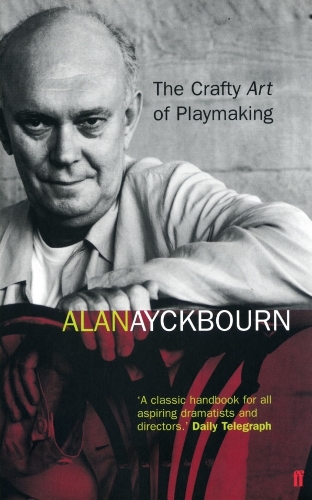
The Crafty Art of Playmaking
In health we're dealing with time in all its forms: cardinal; birth and death and all that happens in-between. Aka, 'life', illness, and palliative care. And, even if not recognised, chronological and pathological time, which policymakers should pay more attention to. The art of theatre, has its time (p.20): stage time, and real (theatre foyer) time. 

'At its most successful, theatre views things from a human standabout.' (p.9). 

I'd second that, especially allied with the notions (ideas!) of health career, and life chances. 

Since the publication of TCAoP in 2004 people seem to quite ready to dispense, disregard, downplay, demote the humanistic with the rise of AI and assisted dying for the terminally ill (of course).

Time recurs - as a frame. (p.25) with a touch of elective surgery. 'Think of your story as a piece of thread. Where you cut in is the point at which the lights come on in Act One. Where you cut out will be your final curtain. (There may be a knot or two in the middle to denote the intervals, too.)' p.25.

In the first post re. TCAoP I stressed the complexity, plethora of ideas that Hodges' model can create. Sir Alan provides a potential 'get of jail free card' (or as near as?) in his original rule no. 9. 

'If a play can be too simple, it can also be too complicated. If one element is particularly complicated, keep the rest of it simple.' (p.25).

Very useful advice! But achieving it when having and applying an idea is another matter.

What's this though? Step back to original rule no. 6:

'There is no hard and fast rule as to which constructional element comes first.' (p.20).

Butrint National Park Albania   

In the guided discovery exercise in students (audiences..) creating the model, there are two constructional elements, that also contribute to the one big idea.

It gets better! Original rule no. 14:

At least fifty per cent of your play is going to be visual. (p.33).

I must make sure I don't confuse concept/ual with visual/imagery.

More to follow.

The Crafty Art of Playmaking by Alan Ayckbourn. Faber, 2004, softcover, ISBN 0571215106.

https://www.concordtheatricals.co.uk/s/45898/the-crafty-art-of-playmaking

Thursday, April 24, 2025

Time to revisit Wikipedia?

Yesterday morning an email from a mail list -

https://groups.google.com/g/bytesforall_readers/about

- regards a Wikipedia entry, prompted me to look back at some personal - 'local' history. In 2006 having started this blog, I'd noticed 'models of care', and nursing theories' on Wikipedia.

I posted an entry on Wikipedia about Hodges' model.
This included the now defunct url/domain - p-jones.demon.co.uk (See below).

A request followed to remove it:

https://en.wikipedia.org/wiki/Wikipedia:Articles_for_deletion/Hodges_Health_Career_Model

I must admit there is a repetitive 'spam' quality to emails, contributions, activity on twitter and posts here. I do try to keep things relevant, in context and seek what is salient. 

Given the digital divide and ethos behind the web the 'complaints' now seem exclusive.
After a brief problem with Blogger I also wrote a blog post:

'Thanks Google ... Wiki ... oh for more time ....':

https://hodges-model.blogspot.com/2006/05/thanks-google-wiki-oh-for-more-time.html

At the time I wrote: 'I agreed the submission should be deleted - another time.' 

In writing - 'Another time...', perhaps, I should try again - or leave it to someone else?

Following up, I found that the now archived POLITICAL care/knowledge links page -

original static website 1998-2015
[ Which is itself a useful 'collection' of resources. ]

Since 2006 the bibliography for Hodges' model has grown, please see sidebar:

http://hodges-model.blogspot.com/

Created in NW England higher education in the mid 1980s Hodges' model was intended for use within post-registered nursing courses - psychiatric and learning disability nursing, health visiting and district nursing. Hodges' model, is however, universal in scope and potential application.

As no doubt occurs in other professions/disciplines, advocates for tools, resources, theories, model that may also be simple, free - open access, 'neutral', pragmatic, supportive of lifelong learning, curiosity, literacy and informatics forms can be met with internal resistance - never mind external responses:

Raskin, Jef. "Humbug: Nursing Theory". Archived from the original on July 10, 2001. Retrieved December 14, 2015. (Wikipedia).

More recently the phrase 'Nursing eats its own' has resonated. A phenomena not limited to nursing no doubt?

Tuesday, May 23, 2006

Thanks Google ... Wiki ... oh for more time ....

Over a month since that first post ...

One thing I did not mention last time, was the existence of a blog set up using the h2cm title. This blog was not concerned with the model, merely hitching a ride.

They say all sorts about imitation and flattery, which is nice, but that needs to set alongside the impressions the Net creates. Being a part-time webslinger with h2cm online since 1998, as you seek to publicise your project this inevitably attracts link spam. Over eight years it appears that enthusiasm can be transformed into over-zealousness. Of course this gets noticed, hence the virtual monkeys on the back. So in addition to the reasons posted in April, that's why I started this blog.


I sent an e-mail to the company concerned and an Exec at Google. Searching for that blog last night the link was listed, but was not found. So if it has gone - many thanks to whoever and Blogger crew.

Does it matter? It does when that 'enthusiasm' has you post an article on Wikipedia that is deemed as ripe for deletion. In fact - hold on - yes its gone! At the time it seemed a good idea; well, we all need a lift sometime and when a bus comes along that's headed downtown - who am I to walk? The Wiki-police-team wondered about evidence as to the model's importance. The link spam was also duly noted. They concluded the site is limited to hits on Google and links that merely circle back to the home page. To be fair the links to h2cm are more credible than the Wikipedia editors stated, with some very reputable organisations and repositories providing introductory and link details.

Their comment that the site has no dedicated url was helpful. A point that was being addressed as I read their comments. I agreed the submission should be deleted - another time. They have enough (brilliant work) to do at WikiPedia without me muddying the waters. They have also merged pages connected with nursing theory/models and deleted the h2cm external link at the same time, flagged as 'did not survive'.

Well enough of me - I have to check the bus timetable, waiting for a number 4 ...

Sunday, April 20, 2008

Book: "Building Powerful and Robust Websites with Drupal 6" - review

David Mercer's Drupal: Creating Blogs, Forums, Portals, and Community Websites introduced me to Drupal 4.7. When I learned of a new Mercer title from Packt I offered to review Building Powerful and Robust Websites with Drupal 6. If you are impatient and read only the first and/or last para of things then to cut to the chase - if you are new to Drupal and content management systems you need this book. So, go and buy it now!

I've been learning Drupal on-and-off (as spare time allows) since last summer. Reading this latest Mercerian effort I've undoubtedly benefited from reading the Drupal 4.7 text. The 4.7 title definitely got me up and running as a Drupal novice, so this formula and style is familiar to me. There are some physical changes: the paper on this latest offering (my copy at least) has better contrast. I could not find the exact font details, but the print size is larger and so there are fewer words per line which naturally helps readability. Consequently, the 4.7 book's 267 pages translates to 362 pages as measured to the last page of the index.

As a Drupal newbie myself I've struggled due to:

  • The whole client-server set-up and creating a database driven community.
  • Drupal's likeness to an iceberg:
    • what you can see - themes, modules, users, forums
    • what you can't see the MySQL, PHP, CSS, server, template and other files...
    • Oh yes, and the things that are on the water-line - blocks, menus, 'nodes and content'
  • Drupal files and folder structure
    • The location of core Drupal elements vs contributed elements (and your content)
  • Security, access and permissions
    • managing users
  • Upgrading and configuration
    • Drupal is very much a work-in-progress
  • Customisation - themes, styles, being 'original' - extending Drupal.
The first fifty pages provide an introduction to Drupal, how it all started with its creator Dries Buytaert; plus installing server software and Drupal itself. Several pictures of the Drupal website highlight this as a pivotal resource with its forums and great sense of community. Mercer had me wondering that you may not be pushing the envelope if you don't need help at some stage.

On page 32 'The Drupal Environment' a sentence states that readers '... might well prefer to dive straight in and make modifications to your Drupal site.' This seems a bit premature to me, as six pages later we are concerned with obtaining and installing Drupal. As this is my first book review the adopted convention is a stolen sentence or two from Packt's summary of the book, with my thoughts:

Chapter 1 introduces you to the world of Drupal and looks at where Drupal comes from, where it’s going, and what it can offer you. - The Drupal community is an invaluable resource and in addition to reading and struggling I've attended a user group, were everyone has something to offer and there is much enthusiasm and skills on tap. So Mercer highlights the web and forums as a source of support and might possibly have made more (even without specific details) of the number of local Drupal user groups and events. Nonetheless, this thorough introduction is capped off with an explanation about Drupal's status as an open source project and the licence. This more than anything explains Drupal's dynamic credentials. Guidance is provided here on building a website - including 'phone a friend' - and don't forget paper and pencil for planning and developing ideas.

Chapter 2 deals with how to get everything you need up and running on a development machine and also briefly looks at how all the requisite technologies gel together to produce a working Drupal site. ... - Going for a combined package, I tried ApacheTriad and XAMPP before settling on WAMP5 for the Apache server, MySQL and PHP5 software. The thing is don't give up. I installed-scratched Drupal a couple of times; my excuse - I'd give it some time ... and then leave it alone. ... Like many things in life, you need to devote and invest time on which to build your knowledge and skills (even a 10-15 minute session can help). This chapter is very informative whichever server approach you adopt. As the author advises - keep that admin password safe! Mercer's task here must be helped I believe by the Drupal 6 install process. Although not yet 'automatic' it has been greatly improved.

Chapter 3 sees us adding functionality to the newly created site. ... - At this point David Mercer had me wondering: I've heard that a lot of people try Drupal and other CMSs and give up. If there were CMS exit questionnaires what would they reveal? A DHTML menu module is used as a module example and needing to find this again it is there in the comprehensive index. Blocks and menus take some getting used to, well for me anyway. It is not necessarily that they are very complex - they are just cussed on 1st, 2nd, even 3rd acquaintance. If you forget to activate a block, a menu will not show. There are graphic handles for drag-and-drop operations within menus, which helped me to finally grasp things. Mercer's advice to check through the modules that are available for your version is well worth the effort. Yes, the number of modules can be overwhelming, but the diversity and scope provide a reason to forge on and there's more to follow.

Chapter 4 looks at the most general settings that all Drupal administrators need to contend with. ... - This chapter could be titled 'chicken or egg', since you need to understand the functionality of Drupal in order to commit to developing your site. There are a lot of options for site configuration and again it's good advice to take the time and check out the available settings, displayed here in pictures with descriptions. Try to appreciate early on the role of clean urls (and path aliases p.325); using two browser windows can help too.

Chapter 5 concerns itself with the topic of access control. ... - This chapter I will certainly be re-reading. It has prompted me to realise that for my new site a forum is vital. Although I've some static content to archive, this would be a waste of Drupal's power. Here roles are covered, with emphasis on planning and creating an access policy p.116. Throughout the book you are reminded about only giving users the permissions they need to perform task x, y or z and NO more. Mercer points out that what roles you have and what your site can 'deliver' overall is also dependent on administration. Are you a one-admin band or will you have some help? It is always difficult to anticipate the future, hence the need to plan an access foundation upon which you can build.

Chapter 6 gets to the heart of the matter by beginning the book's coverage on content. ... - This chapter sheds light blog entries, book pages, forum topics and pages with these content types just the beginning. The learning here is not just the 'what', but 'how' to administer content, plus distinguishing (or not) between nodes and content. When you are working on your site and styles remember the 'input format' section of this chapter - again really useful. I wondered why my drop capitals and table effects were not showing. It was just that some HTML tags were not allowed through the filter.

Throughout the book the work flow approach helps instill confidence by hand-holding step-by-step and yet also encouraging you to experiment alone. Another insight for me here is the wider potential of Drupal's RSS aggregator. You also realise how quick the publishing turn-around is these days, with the pictures of the feed aggregator dated 02/05/2008. p.166. I have in mind a collaborative book on Hodges' model, so the five pages devoted to the book content type proved essential reading. There are graphic handles for drag-and-drop operations within books, in addition to the menus as mentioned previously.

Chapter 7 gives you the edge when it comes to creating engaging and dynamic content. While this chapter doesn't require you to be an expert in HTML, PHP, and CSS it does introduce you to the basics and shows how, with a little knowledge, extremely powerful and professional content can be created. ... - There are some Drupal pearls here: taxonomy, the content construction kit (CCK) and HTML, PHP and content posting. There's even a brief intro to HTML. Time also for considered reading with descriptions of terms, vocabularies, thesauri and related Drupal elements. With some awareness of clinical terminologies and having read this and other Drupal sources perhaps I'm underestimating the power of Drupal?

The CCK section has me a little puzzled. My next task is to install CCK in Drupal 6.2 as Mercer suggests to see if it works. At the time of writing this review though the Drupal site states they are creating a preliminary, development version [of CCK] for D6 soon. As Mercer acknowledges the CCK is dependent on another module called Views, which is still not yet ready for version 6. In a way something like this is to be expected of a book that is first off the blocks. Mercer still sets the CCK up nicely though, as I'm tantalised by the possibilities, especially when combined with Views as I saw demonstrated at the NW England Drupal user group.

Chapter 8 gives you a run down of how attractive, functional interfaces are created in Drupal through the use of themes. ... - Time to get the hands dirty; first though as with the modules I've followed Mercer's advice and checked through the available themes. You could be excused for believing it is a waste of time poring over all the themes (although not that many are available for D6 as yet). On the other hand let physics work for you and (like me) you will gravitate towards a couple of themes. If bones are essential for structure, support and locomotion, then chapters 8 & 9 provide the meat of the book and Drupal.

Chapter 9 really adds the icing on the cake by looking at a host of more advanced topics. From dynamic and responsive content using JavaScript and native jQuery support to supporting opened and implementing actions and triggers, you learn to enhance your website and add that something special. ... - I blame Mercer 4.7 (plus some exciting demos) for prompting me to invest in a specific jQuery book. (The user group directed me to the seminal Drupal book - the 'Pro' title.) jQuery accounts for a brief but very effective five pages, that I hope to incorporate into my test site efforts very soon. Drupal 6 has seen a major emphasis on internationalisation and localisation. This is very welcome functionality for me, that Mercer serves over about 15 pages. My new website must be global in reach, Drupal can deliver and Mercer shows the way. Translation files are still in the future for this Drupal student, but for languages, cacheing, throttling and performance I know where to go for help. OPENID could be a real scoop for user uptake and is covered in just over four pages and begs further investigation. The book is peppered throughout with urls and tips for more resources and reading.

Chapter 10 takes a pragmatic look at the type of tasks in which you will need to be proficient in order to successfully run and maintain a Drupal site. ... - Having backed up the database and run cron jobs manually, there is one major thing I've still to do and that is the non-trivial task of upgrading. The single appendix deals with deployment.

I've a lot yet to prove in terms of learning Drupal and demonstrating proficiency (a deployed website would help!). I'm convinced though that Mr Mercer is helping me move forward with this latest very instructive Drupal book. Significantly there is quite a team behind this title. I wholly endorse this summary from the Packt site:
Written in the same style as the original Drupal title, this book is a pragmatic look at the steps necessary to get a website up and running. Drawing on years of writing experience, David Mercer utilises a friendly, engaging style that is both clear and concise – perfect for the Drupal newbie.

Good luck - I hope this review helps!

(Many thanks to Packt Publishing for the book copy and acknowledging their support of my blog: Welcome to the QUAD).

Saturday, January 02, 2010

Sun Microsystems blog: Pretty good example* of a Strategic (Design) Brief

http://www.mindful-leadership.com/Strategy%20Facilitation.htm
The Sun Microsystems site includes a blog (Martin Hardee) with an article entitled as above that poses eight questions. These questions can greatly inform the process of creating a strategic brief (which is also provided for download). Although the item is from 2005 and the context differs - contrast a corporate website design and a future website for Hodges' model - there is value for me in answering the questions. So here goes... starting with the opening paragraph from the original blog post then the questions in bold, interspersed with my responses:

As I've mentioned in previous postings, the most important single step you can take in designing anything for the web is to create a strategic brief. This should be done early in the discovery phase of any design project. The reason it's so important is that it will make you focus and it will provide a guide map for whoever is creating and implementing your design. To write a strategic brief, you'll need to know a lot of important but oft-ignored basics such as:
A) Why are you embarking on this design (or new web site, or whatever), anyway?

The existing website was created in 1997 using Hot Metal Pro and written in HTML. The site was built as a personal and spare time project around the original course notes of Brian Hodges. These were in the form of Word files produced with secretarial support as part of a Post Graduate Certificate of Eduction project. As a result the current website has developed in a rather ad-hoc manner, with the addition of pages on informatics and information. The home page was re-designed in 2005 using Fireworks (Adobe) reflecting the model for which it is 'home'. At no point thus far has the website provided a community for users of Hodges' model. The site is currently static, without a database to support dynamic content development and a community of users.

Use of Drupal will provide a (truly) dynamic lever by potentiating the following:
  1. sheer unadulterated enthusiasm and fun (lifelong learning - literacy skills);
  2. a more professional footing (hosting...);
  3. international customisation (multiple languages);
  4. ultimately address several audiences (health, education, informatics and public);
  5. find out what would-be users of the model want;
  6. create some consistent styling;
  7. provide an archive;
  8. building on the foundation provided by the website and this blog W2tQ;
  9. provide a foundation for future research (by producing my 1st Drupal site - a beta);
  10. (As already noted I have wondered about linking this project to a research course, but at the moment I ask myself what's the point...?)

B) What are your business objectives and how would you measure success?

There are no 'business objectives' as such, but if this blog and a future site can generate some revenue to support purchase of hardware, (some) software and services then "that's about time". General objectives are to generate critical thinking and decisions on:
  • content types to support the use of Hodges' model;
  • phased development;
  • interface design - use of Ajax, jQuery.
Ultimate (reach for the stars...) objectives:
  • to invite users to contribute to the model's development;
  • reopen the question of visualization in the social sciences;
  • to learn of other conceptual frameworks that might also support 'global health for all';
  • to produce a virtual learning environment that conjoins health, informatics and education;
  • to influence nursing curricula development;
  • to create a self-sustaining global community of users
  • to cover some costs and let go. ....

C) Who are your various audiences or customer segments and what are their objectives (often different from your business objectives, btw)


+ students (health and social care);
students (generic - PSHE);
+
all qualified care professionals
+ lecturers

The objectives here are diverse, but include completion of learning and course tasks, including essays and case studies, tools to support and demonstrate reflection and holistic / integrated care in theory and practice. Lesson plans and means of assessment are also essential, to what extent can students and professionals - indeed all users of a conceptual framework demonstrate - competency? This has to be through specific assignments and marked assessment which could include:
  1. essay;
  2. case study;
  3. oral presentations, audio, video podcasts;
  4. quizzes, e.g., multiple choice;
  5. and possibly specific 'roles' through the Drupal site.
The politics of the educational establishment include that tools should be evidenced, safe, fit for purpose. There may also be a requirement to dovetail with use of dedicated learning management systems and standards such as SCORM. As such a new site should seek to incorporate such standards - through Drupal - in so far as they do not affect innovation and projecting the model into the future.

+ patients and carers

Patients and carers would often benefit from a means to facilitate dialogue with their keyworkers and the associated health and social care team. Hodges' model can help provide a schema, portal and media form for such dialogues. This dialogue can potentially act as:
  • an aide-mémoire for the patient during a Consultant appointment (maximising the time available for both parties);
  • a means for educational engagement (medication concordance, relapse prevention....).
+ policy makers and care commissioners
+ managers

These stakeholders are concerned with metrics, outcomes, quality and evidence.

+ information and communication technology staff

In addition to project management tools ICT staff would benefit from tools that support socio-technical perspectives.

For all the would-be users of Hodges' model the critical question is evidence. The new site should provide a foundation for research in Hodges' model and other conceptual frameworks.


D) What's the scope: How much are you going to tackle at once?


By using a content management system Drupal provides a means to be more productive (once sufficiently skilled!) in terms of addressing the objectives and scope delineated above.

This is the key question!

I need to acknowledge advice already provided from friends at the Drupal NW England group and Ruby community. Basically - do what you need to to get a site out of the door. What I must identify is the baseline functionality and design that will provide the foundation for a site. The baseline must include:
  • roles and access rules;
  • at least one specific content type (whether existing or new) for Hodges' model;
  • RDF;
  • accessibility.

E) What sort of constraints do you have in terms of product, business process, technology, or budget?


Hodges' model is nebulous and grand in its potential scope so it is vital that constraints are imposed on the project. A new PC and software will prove a great advantage leaving behind a trusted 7 year old machine. There is a no dedicated budget for the project.

The biggest constraint is time. This is non trivial and has already impacted this blog in that the comments are disabled. Early on the comments facility invited spam.

F) What existing projects and groups does this project need to coordinate with in order to avoid a train wreck?


None. The only legacy commitment are to move the existing pages to an archive that is readily accessible and signposted.

There are however two considerations:

1. Since first identifying Drupal as the platform to adopt, it was at version 4.7. It is now on the brink of version 7.0. This dynamic development environment presents challenges of its own.

2. As already highlighted if the new site is to reach the educational community it will be necessary to take heed of existing Drupal modules and resources, e.g. the DrupalEd distribution, The Scientific Collaboration Framework and assess their suitability - 'off the shelf'.

G) What kind of market and "voice of customer" research (including site metrics) do you already have?


In ten years with the existing site evidence shows that people do not have time to 'get in touch'; more needs to be offered. The existing website is 'failing' in terms of:
  • as stated its dated design;
  • site metrics - hits;
  • publishing standards (academic, relevance, timeliness and currency, referencing, styling, semantic markup);
  • and user engagement.
Despite the non-trivial constraint of time and website 'stasis' this blog is an emerging as a potential channel of engagement. The clustermaps and recently added 'flags of the world' demonstrate the global appeal of the content here and hopefully the model. Since there is little time for analysis of Google analytics data, the new site will utilise core statistic functionality and contributed modules as available (and proven).

H) What are the roles on the project? For instance, if you're engaging a design vendor what are they delivering vs. what are you delivering to the final mix?


As per the existing site and given budget constraints (i.e. there is none) there are no 'roles' on the project. All are up for grabs and presently rest with me. Hence the appeal of a content management system (Drupal) to ease the design and development burden.

Additional links:

Sun Microsystems blog post:
http://blogs.sun.com/MartinHardee/entry/pretty_good_example_of_a

Drupal

* The good example here is the title of the Sun Microsystems article and not necessarily my answers to the questions.

Image sources:
Drupal Groups
Chess piece:
http://www.mindful-leadership.com/Strategy%20Facilitation.htm

Friday, April 10, 2020

Reflection, Revalidation, RCN Congress and Research

Thinking Out Loud: Journal 'Regulars'

Like many people I looked forward to experiencing RCN Congress again in June. Now of course Congress itself is a casualty of COVID-19.

Last May as already posted, I picked up several nursing journals too. Having time(!) I've read about reflection, I submitted the required reflective accounts to complete my revalidation last month (so good through to March 31 2023) and I've time to reflect now.

Reading some of the papers and browsing through the journals I notice one has "CPD reflective questions" which are specified for full-length article submissions. Here are some examples from one journal issue:
"If a patient presents with red flag signs of impeding airway obstruction, consider the aspects of the 6Cs in nursing and reflect on the care, compassion, and communication required to the patient and family.
Consider the different dimensions of a person-centred climate of a long-term care setting.
Reflect on the nurse's role in the provision of person-centred care in an older adult residential setting.
How could you make the care of patients in your setting more person-centred?
Reflecting on the case study, what do you consider may help nurses in recognising the condition early and minimise the need for investigations?
Reflect on how the time perspective [can] be an indicator of health and quality of life in people with HIV or another patient group.
Consider how the time perspective can be incorporated into the health care of people with HIV.
Think about how nurses can assess the time perspective in people with HIV."
If you understand Hodges' model then you will appreciate how the model can facilitate reflection on all of the above.

The contents page of many publications usually differentiate between 'features', or 'special focus' and pages listed as 'regulars'.

For quite a while I've not only worked on papers (two advanced drafts at present) but (quietly) wondered about those 'regular' pages and what would it take for journals to adopt Hodges' model as a common resource?

Of course, this begs questions of legitimacy, evidence-base, standards ... and as I have acknowledged Hodges' model is no panacea for a practitioner's or a health system's limitations. Hodges' model itself may constrain the adopted perspectives of readers; as opposed to as I believe, liberating them? If all the posts here were analysed, what is the holistic bandwidth of the content?* If Hodges' model was adopted what trends, if any, would be revealed? If students used Hodges' model to reflect on their own well-being in year 1 - year 3 what would they learn? Are there wells of reflection about which reader's reflections would congregate? Would this in turn be influenced by other recognised biases in publishing and the way the above questions are selected?

It would still be amazing to see Hodges' model as a regular and universal prompt. Even as a research project - the aide-mémoire it is intended to be. The journal would then actively engage with its readership and provide invaluable CPD.

My new folder is already open for the next three years ...

Be Well :: Be Safe All

*I admit that there are topics I have avoided posting, as they are potentially fraught 'politically' or in other respects.

British J. of Nursing, 28,9. 2019 (9 May, Congress Bumper Issue!).

Wednesday, November 25, 2009

Nursing management consultants & being optically challenged

Being somewhat optically challenged at present (need new glasses!) I have nonetheless managed to sort some old papers. I came across a more recent news item from the Nursing Times 8 September, p.3 by Sally Gainsbury. What use is late news?

I raise this now because public sector health finance provides the impetus, so this subject is perpetual motion. It is also reported ongoing by HSJ. I refer to this not to take sides, but to acknowledge that politically there is a need to make decisions and find the required £20bn efficiency savings. The news line reads:

DH told 1,500 district nurses could go with no damage to patient care

The item focuses on a report for the DoH produced by McKinsey management consultants. The government has distanced itself from the reports recommendations, but the need for action remains. The Nursing Times news item includes two clocks (with the total nursing time available depicted as 1 hour) that break down the time spent on patients on general medical wards and community wards. While this is just one aspect of a report of more than 100 pages, the findings are of great interest. ...

GENERAL WARD: 15 mins Physical care; 10 mins Psychosocial care; 35 mins non-patient care.
COMMUNITY NURSES: 17 mins Antenatal activities; 13 mins Postnatal; 27 mins npc; 3 mins other and classes.
I have not worked on a general or mental health ward for a long time, but I was surprised to see the time spent on patient being less on the wards than the community - 25 minutes v. 30 minutes. There are challenges in comparing different clinical areas, but I would have thought travel, administration - including paper and e-record data entry would impinge much more on community. On mental health wards there has been an effort to free nurses to nurse - with protected time? So pause for thought there - but only for a moment....

Thinking about community - providers will no doubt vary in the way (district) nursing teams are organized, the location of their bases and how that impacts average journey times. Districts also vary in the way the population is distributed, especially those neighbourhoods were social and economic deprivation is higher and need may be increased.

This is why access to GIS (geographical information systems) by team managers and members is crucial and should not just be some esoteric academic and intelligence artifact. While we should not under estimate the potential use of GIS to inform inpatient care, it is community services that are best placed to benefit from improved intelligence, planning and decisions.

There is a long thread here and the politicians of all parties know it leads into the forest ....

For example, much can be read in a single word "... McKinsey found that only 15 minutes was on the "physical care" of patients while the remaining 10 minutes went on "psychosocial" care, such as talking to patients." I hope that 'only' does not suggest that talking to patients is 2nd best, even though basic nursing care is the factor in the news regarding public perception of the quality of nursing care. This is a constant problem as we move to outcomes. Are we going to have patients saying - "The physical care was excellent, but I felt like I was in a religious retreat. Nobody hardly spoke, explained anything." Patient education, self care, staying well, the effective use of medication and treatment ... is predicated on psychosocial engagement.

What is also very troubling is that cost savings might mean detrimental changes in the skill-mix; the ratio of qualified to health care assistant staff. Some of the best 'natural' nurses I have worked with and work with today are dedicated HCAs. They have a major role and contribution to make, but if safety gains are to be maintained and improved upon then 'safe' skill-mix is critical.

Given the present demographic, 'nurses' are not new to cuts. In the public sector cuts are part of that perpetual motion I mentioned at the start. What frustrates is working on the holistic care mosaic to produce something that is safe, effective, quality care; then as we come to finally add the threads - clinical supervision, PDP, health IT, outcome measures, public engagement we have to unravel and start again.

Image source used with permission and thanks: D L Ennis. Visual Thoughts http://dlennis.wordpress.com/

Friday, April 17, 2026

Ann Hutchinson Guest (Obit.), 'Authority on dance notation ... '

'Although there are many forms of dance notation going back to Pierre Beauchamp's system for Baroque dance in the 1680s, Nijinsky had developed his own cryptic version. Ann Hutchinson Guest first tried to reconstruct his work in 1956 after the choreogapher's widow, Romola, gave her his notes. "I spent years trying to work it out," she said, adding with a laugh: And I'm supposed to be the leading authority on dance notation in the world. She told how Nijinsky had revised his notes many times, often contradicting himself. 'We couldn't get anywhere. Romolo was furious. She said it was taking much too long."
    Hutchinson Guest studied dozens of different dance notation systems, translating many of them into Labanotation, a system developed in the 1920s by Rudolf von Laban who was a central figure in European modern dance. According to a  press report in 1954: "The printed Labanotation page looks like a combination of hieroglyphs, pictographs, Morse dots-and-dashes, đoodles, and a musie score turned on edge" 
    It was not until 1980 that she and Claudia Jeschke, a dance historian, succeeded in cracking Nijinsky's code after finding a copy of his annotated score in the British Library.'
Register, The Times.

My source: Ann Hutchinson Guest (Obit.), 'Authority on dance notation known for reconstructing Vaslav Nijinsky's scandalous ballet, L'Après-midi d'un faune'. Register, The Times. 20 April, 2022, p.48.
https://www.thetimes.com/uk/obituaries/article/ann-hutchinson-guest-obituary-hkw8z88ns


INDIVIDUAL
|
     INTERPERSONAL    :     SCIENCES               
HUMANISTIC --------------------------------------  MECHANISTIC      
SOCIOLOGY  :   POLITICAL 
|
GROUP
abstraction
representation
interpretation
observation - translation
code - formalism

body (bodies)
symbols - forms
dance
choreography
movement - 4D - time

group
ensemble
'anthropological composition?'
'diagnostic grouping'?
social - cultural category . . .

'collective power & attention 
evinced as time'
'The stage: the space for health'^

Hutchinson Guest in 1956
 Source: The Times.


'Dance has been called moving architecture, a truth which the complexities of contemporary choreography may mask. Not only does the dancer's body form shapes and groups of dancers form moving or static designs, but also group arrangements carve up the stage space, establishing areas of open as well as enclosed space which are significant in their changes and contrasting effects.

While the rccording of movement on paper-dance notation-does not look like movement (disregarding primitive stick figure drawings), there is an "architecture" in the sequence of graphic symbols used to record dance patterns. Over the centuries many different devices have been used to capture dance steps on paper. What are the elements that have to be represented?

The process of dance notation requires reducing four-dimensional movement (time being the fourth dimension) to a two-dimensional surface. The parts of the body in action have to be defined, as does the form of movement involved (flexion, extension, rotation, directional placement) and the duration of each in relation to the overall time structure. In group dances the relationship of dancers to one another must be determined and recorded, as well as their location on stage and their paths of travel. In a dance score each performer is like a small orchestra-arms, legs, head, torso, etc. in motion-this is then multiplied by the number of dancers who are performing individual sequences.'


Guest, A. H. (1990). Dance Notation. Perspecta, 26, 203–214. https://doi.org/10.2307/1567163

^Health is always performed in the political domain, make no mistake (excuses, or exceptions). It is not:
  1. Acknowledged, masked - covered by the 'set design' (see #2 below);
  2. Implied in the medical, biomedical, bio-psycho-social model;
  3. The intermission is neither the time, or place, to reflect upon and critique the political in health :: health in politics.

Previously: 'dance' : 'architecture' : 'movement' 
 : 'notation'


Saturday, February 12, 2022

"Personalized learning has a number of levels ..." c/o MIT Technology Review

MIT Technology Review
"... There's a difference between adaptive learning and personalized learning," says Chris Dede, a professor at Harvard University in the Technology, Innovation, and Education Program. Squirrel is doing adaptive learning, which is about "understanding exactly what students know and don't know."But it pays no attention to what they want to know or how they learn best. Personalized learning takes their interests and and needs into account to "orchestrate the motivation and time for each student so they are able to make progress."

Jutta Treviranus, a professor at the Ontario College of Art and Design University who pioneered personalized learning to improve inclusivity in education, breaks it down into further. "Personalized learning has a number of levels," she says: she calls them pace, path, and destination.

If the pace of learning is personalized, students with different abilities are allowed different amounts of time to learn the same material. If the path is personalized, students might be given different motivations to reach the same objectives ("Here's why statistics is relevant to your love of baseball") and offered the material in different formats (e.g., video versus text). If the destination is personalized, students can choose, for instance, whether to learn with a vocational school or university in mind.
"We need students to understand their own learning. We need them to determine what they want to learn, and we need them to learn to learn," Treviranus says. "Squirrel AI doesn't address those things at all. It only make it more efficient to bring all of the students to the same standardized place." pp.27-28.


  Self - LEARNER - Person
|
 INTERPERSONAL    :     SCIENCES               
HUMANITIES - ARTS ----------------------------------  SCIENCES
SOCIOLOGY  :   POLITICAL 
|
Community - Group - Population


path

destination


purpose


pace

destination

path

process

pace

destination

path

practice

pace

destination

path

policy


In the first instance Treviranus's three P's are located in what I feel are the most pertinent domains in bold and underlined. 'Path' is placed in the intra- interpersonal domain because as explained the learning must have meaning, sufficient to motivate the student. This might be global, sharing this domain with 'destination' as an overall goal (personal ambition - aspiration). As ever, having my cake and eating it ... what is the rationale for the secondary... occurrences? Let's take 'destination', first, in the sciences and political domains this may relate to a student's particular interest in a subject, or course of study to enter a profession at a specific university. In the sociology domain, what are the other influences on choice for the student's 'destination'? 

Individual choice is a great gift but only when it can be exercised, can it stand chance of being realised. In the group context, socially and politically is the 'path' and 'destination' (truly) open? The skills of teachers and mentors are key to the secondary execution of 'path'. Knowledge of the subject, technology, and as described the student allied with the latest educational research are essential. A teacher in a subject may prove an inspiration for a student: helping to generate an educational fusion.

'Pace' was placed in the sciences domain, to denote process, sequence, time; a curriculum delivered. In an exam there is no greater enemy than lack of time, but without the facts, knowledge, and insight to answer a question, time can make a mockery of us. Our 'pace' can also be noticed by our peers, which can be positive or negative socially and personally. 'Pace', is invariably political, as the calendar flicks whether by an analogue or digital turn. Outcomes and reports ultimately count.

The 4P's which I associate with each of the model's domains are italicised at the bottom of each domain.

Karen Hao, Born in China, taught by AI. MIT Technology Review - Allow me to introduce my selves, The Youth Issue. Volume 123, Issue 1. Jan/Feb 2020. pp.24-29.

It is interesting to reflect on the State's intervention in 2021 into tutoring and EdTech companies in China since this issue was published.