Hodges' Model: Welcome to the QUAD: Search results for determinants

Hodges' model is a conceptual framework to support reflection and critical thinking. Situated, the model can help integrate all disciplines (academic and professional). Amid news items, are posts that illustrate the scope and application of the model. A bibliography and A4 template are provided in the sidebar. Welcome to the QUAD ...

Showing posts sorted by relevance for query determinants. Sort by date Show all posts

Sunday, April 26, 2026

Invite to an In-person Interactive Workshop to Advance Action on SDoH [Geneva]

Advancing the Social Determinants of Health during the World Health Assembly

Dear Colleague

Is it possible to share in HIFA Network the following announcement?

Thanks a lot for your precious help

Dr Eric Comte Director of the Geneva Health Forum https://genevahealthforum.com

HIFA profile: Eric Comte is Executive Director, Geneva Health Forum, External Affairs Directorate, Geneva University Hospitals. eric.comte AT unige.ch

Bonjour,

We are pleased to invite you to take part in an interactive workshop dedicated to advancing action on the social determinants of health.

Forty years after the Ottawa Charter, there is broad consensus on the importance of health promotion and the determinants of health. Yet, translating this knowledge into effective policies and concrete action remains a major challenge. In a context marked by climate change, growing inequalities, rapid urbanisation and geopolitical instability, the need for more integrated, preventive and equity-oriented approaches has never been greater.

Building on this observation, this session will bring together, NGO, practitioners, policymakers and experts to move beyond general principles and focus on what really enables implementation in practice. Through the exchange of real-world experiences and case studies, participants will collectively identify actionable lessons, key barriers, and practical ways forward.

The expected outcome is a set of clear, operational messages to strengthen collaboration across sectors and support the implementation of strategies addressing the social determinants of health in diverse contexts. The session will also provide an opportunity to identify concrete avenues for further work, including potential projects that the Geneva Health Forum could support.

The workshop will take place on Tuesday 19 May from 9.00 to 12.30 at Campus Biotech in Geneva.

We would be delighted to count on your participation and active contribution to this important discussion.

👉 More information and registration on the link : https://worldhealthassembly2026.genevahealthforum.com/rethinking-determinants-of-health-in-todays-global-context-from-knowledge-to-action/

Space is limited, so only register if you really want to attend.

Registration is free but required so we can print badges and organize the workshop.

Link with the World Health Assembly discussions

This workshop is directly aligned with the strategic discussions taking place at the World Health Assembly, particularly in relation to document EB158/27 on well-being and health promotion. This report highlights the growing recognition of health promotion and the social determinants of health as essential pillars of public health, while also emphasizing the persistent gaps in implementation and the need to strengthen multisectoral action, governance, and measurable impact.

In particular, it calls for better integration of health promotion across the full continuum of policies and systems, stronger cross-sector collaboration, and a renewed focus on addressing structural determinants of health, including through more effective implementation mechanisms and improved coordination across actors.

Our session contributes to this agenda by focusing on practical experiences and implementation challenges, with the aim of identifying concrete, actionable lessons that can help accelerate the translation of global commitments into real-world action. In doing so, it also seeks to feed into ongoing reflections at the global level and to support more effective implementation of the priorities discussed at the World Health Assembly.

You are receiving this message because you are a member of the community HIFA - Healthcare Information For All.

View this contribution on the web site

Saturday, October 26, 2024

NOT 'Nanny State': Protection & assurance of the quality of nutrition

The Government needs a plan to fix our broken food system and turn the tide on the public health emergency

24 October 2024

The House of Lords Food, Diet and Obesity Committee demands that the Government should develop a comprehensive, integrated long-term new strategy to fix our food system, underpinned by a new legislative framework. This is the key conclusion of the Committee’s report, ‘Recipe for health: a plan to fix our broken food system’.

Chair's comments

Baroness Walmsley, Chair of the Food, Diet and Obesity Committee, said:

“Food should be a pleasure and contribute to our health and wellbeing, but it is making too many people ill. Something must be going wrong if almost two in five children are leaving primary school with overweight or obesity and so many people are finding it hard to feed healthy food to their families. That is why we took a root and branch look at the food system and analysed what had gone wrong over the past few decades.

“Over the last 30 years successive governments have failed to reduce obesity rates, despite hundreds of policy initiatives. This failure is largely due to policies that focused on personal choice and responsibility out of misguided fears of the ‘nanny state’. Both the Government and the food industry must take responsibility for what has gone wrong and take urgent steps to put it right.

“We hope, given the recent comments from the Prime Minister, Lord Darzi and the Secretary of State for Health, that there is now an appetite to shift towards prevention of ill health. We urge the Government to look favourably on our plan to fix our broken food system and accept that not only is it cost-effective, but that it would lead to a lot less human misery.”

[My emphasis] 

About time! Real action please.

DO NOT DILUTE TO TASTE!

individual
|
INTERPERSONAL : SCIENCES
humanistic ------------------------------- mechanistic
SOCIOLOGY : POLITICAL
|
group
Personal responsibility
Educational determinants
Health literacy
My choices
Role model
Internal - Extrinsic motivation
The life chances I am afforded
impact my 'health career'.

Environmental/Physical determinants 
Ultra Processed Foods
Smoking
Food & Nutrition
Impacts of Obesity
Child development
Nutritional value of foods


Social determinants
public (mental) health
information
Family economics
Social values
Sustainable Living

Political determinants
'Nanny State' (political rhetoric)
Lobbying - (Food) Industry
Business ethics
Food poverty
Advertising regulation
Cost to Government, NHS, Society
Security

Spiritual determinants: Values of society, governments, citizens, business . . .

Previously:

Jones P, Wirnitzer K. Hodges’ model: the Sustainable Development Goals and public health – universal health coverage demands a universal framework. BMJ Nutrition, Prevention & Health 2022;5: https://nutrition.bmj.com/content/5/2/358

'nutrition' on W2tQ

https://x.com/search?q=%40h2cm%20%27nanny%20state%27&src=typed_query&f=live

Gambling?

Saturday, December 26, 2015

WHO (2010): A conceptual framework for action on the social determinants of health

individual
|
INTERPERSONAL : SCIENCES
humanistic --------------------------------------- mechanistic
SOCIOLOGY : POLITICAL
|
group


 Behaviours (individual)

Education

Micro level - individual interaction

psycho-
Biology

Material circumstances
Living and working conditions
Food availability
social
Behaviours (social)
Social policies
socio-

Culture and Societal Values        Gender
Ethnicity (racism)

Social
Social

Social cohesion & Social capital 

Social determinants 
HEALTH 

Labour market, Land
Macroeconomics
economic                 Governance
Public policies

Occupation     Income

class               HEALTH SYSTEMS
protection
POLITICAL CONTEXT

WHO
Structural determinants
 INEQUALITIES


The concepts mapped within Hodges' model above are taken from:
Figure 5. Final form of the CSDH conceptual framework - page 48.

See:
Solar O. & Irwin, A. (2010) A conceptual framework for action on the social determinants of health. Social Determinants of Health Discussion Paper 2 (Policy and Practice). Geneva: World Health Organisation. p.48.


Tuesday, June 20, 2017

Pointing to the gap: Social Determinants of Health in Hodges' model

Recent discussion on a HIFA forum included mention of the Social Determinants of Health SDH and inequality. Revising the draft paper on h2cm and threshold concepts (abstract to follow soon) social determinants arose in references there also (Aronsson, 2016).

I realised that I have not stressed enough how readily (and obviously) Hodges' model facilitates reflection and critical thinking about SDH. Hodges' model can really come into its own in this particular application.

So, just in case I take Hodges' model for granted in its potential utility, below I have drawn on the following figure (the findings within will no doubt vary over time and with further research).

By Jsonin - Created this open source diagram for our research into standard human data elements Previously published: http://determinantsofhealth.org, CC BY 4.0, Link
I have mapped the main percentage items to Hodges' model below. Clearly there is great deal of overlap; what for example, is the effect of the physical environment upon individual behaviours? Medicine and medical care does not just rest upon several sciences, but it is inherently political and about power.

Throughout my career and many others I am sure, there is an accompanying gap. It follows us around from the initial educational encounters through to our very latest mandatory training and CPD exercises. Whilst educational in being the theory-practice gap, applying SDH to Hodges' model reveals a much greater gap that politically is still being fought over...

individual
|
INTERPERSONAL : SCIENCES
humanistic ----------------------------------------- mechanistic
SOCIOLOGY : POLITICAL
|
group - population
38%
individual behaviour


7% 
physical environment
11%
medical care
21% 
genetics and biology

SOCIAL DETERMINANTS OF HEALTH

23%
social
circumstances


As if we needed to be 'told':

This space suggests that there really is 
still much more to do.

To those who would say: 
"We have done so much!" 
I would say: 
"But, we have only 
scratched the surface of 
the three 'easiest' care domains."


The 38% attributed to an individual's behaviour is a further source of evidence for Hodges' model as a resource for education and personal change.

Aronsson, J. (2016). Transformative sustainability learning within the undergraduate nursing curriculum. Community Practitioner, 89(1), 20-21.


Saturday, May 10, 2025

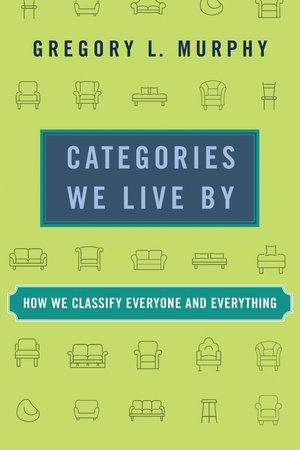
v Book review: 'Categories we live by'

Our lives and careers (hopefully) are full of bridges, some recognised, but not taken, others passed-by on our way (and unseen). Before I completed my training as a student mental health nurse beginning in 1977, I saw a critical bridge between the knowledge and skills on mental health nursing and general nursing. Crossing this bridge was essential (for me) to being a registered 'nurse'.

Chapter 6 on Psychodiagnostic Categories is a gift therefore. It's a gift because another bridge emerged in 1980-1981 with the Sinclair microcomputers and advent of 'home computing'. With a ZX81 there was going to be a need to navigate this space between the what is human and what is machine. Two categories that remain key concerns today.

The DSM (Diagnostic and Statistical Manual of Mental Disorders - published by the American Psychiatric Association [APA] ) is on the chapter's first page, plus the patient, researchers, psychiatrists and the conditions learned during their medical education, contrasted with individual psychiatrist's clinical encounters with patients. 

Very quickly (the next page p.86) Murphy identifies the 'circumstantial factors' that cause mental illness. This is very positive as acknowledging the determinants across health is key, however framed, e.g. social determinants, economic, educational we must take into account all of them. Otherwise our assessment must be considered as incomplete, or at least lacking?

The utility of Prof. Murphy's short book is in how prior to the case studies we see the problem of definitions. And how what is determined is often a matter of convenience. This is a non-trivial matter - especially in health, economics, sciences, politics, future and peace studies: you get the idea...

Of immediate relevance in the USA is the need for categories for insurance purposes. It is an industry. Yes, indeed: 'The truth is that psychiatric patients vary in every possible way', p.86. Computers of course are well-equipped to help us in the creation, revision and publication - access to categories; with classification, taxonomy, nomenclature ... also in the mix. I was reminded of WHO's history of classification (see below) which I point students and colleagues to.

The way DSM is applied is explained and the politics duly noted (especially in Chap. 7). Resort to 'miscellaneous' is described as a sign that 'the categories are not necessarily picking out 'natural kinds'. I remember in the 90s, our PICK database on a community mental health project had Murphy's 'X' not otherwise specified. I don't think I read the word 'caseness', but there is a lot 'inside'!? References are ongoing. I wondered if there could be more recent examples, but perhaps this is in turn symptomatic of categorisation tending to be the rear car? Fuzziness is discussed. Plus, the observation that 'a few psychiatric categories may be true natural kinds, like gold or rainbow trout.' p.89. 

'Change' is a mantra for all disciplines in the NHS and global healthcare. So pragmatic to see how revision and change in the DSM can be used by - dare I mention - anti-psychiatry advocates and clinicians as to what change represents to these respective interest groups? At a time when research is experiencing funding changes, Murphy contrasts how DSM was developed for the use of clinicians to identify people with similar profiles, but they were not developed to identify (research - Nat. Inst. for Mental Health) underlying causes. Raising the determinants once again, p.91.

It is obvious but as personnel and Brits may look at private medicine with coding purposed for insurance purposes; there is within the NHS (public-funded healthcare) and psychiatry (a single domain too) within and the need by patients for diagnosis, and the welfare system. Here in the UK the rise of mental health in young adults, autism and waiting lists for assessment for ADHD are a moot point.  

Through Hodges' model we some possibly fascinating bridges, that are much less-travelled these days? In many cultures, even if we do not need permission to be sick, it needs to be recognised socially - and so politically. Society needs to deal with individuals who are ill, infirm, disabled. It's interesting then to reflect on this issue and phenomena through the lens of anthropology and medical sociology. Murphy warns to of the dangers 'of thinking of something as being the category'. In medicine a new approach is needed, as Murphy also notes. A nice bridge to chapter 7 Categories and Power.
'The case studies discussed in the previous chapters remind us that categories can be political and social tools. An old department chair of mine had the saying, "She who sets the agenda controls the meeting." We might coin a new one, "Those who make the categories control the outcomes." If your psychodiagnostic categories are made by working therapists and physicians, they might facilitate treatment- -and also benefit those practitioners. If they are made by researchers, they might not be very useful for treatment at all. And if they are made by insurance companies, all bets are off.' p.95.
Trying to take my attempts to find theoretical underpinning (category 'trying to clever') I've a diagram scribbled here. Nearby, p.100, I picked up on 'the cost of losing information or distorting reality to some degree.' Murphy picks up on the ICD Int. Classification of Diseases here. Twitter is still twitter here - thumbs up for that! There is a useful example of the impact of categories in age, pregnancy and medical attention provided.

From Chapter 8, I picked out: Naming Nature: The Clash Between Instinct and Science, by Carol Kaesuk Yoon. W. W. Norton: 2009. 352 pp. £19.99/$27.95 9780393061970 | ISBN: 978-0-3930-6197-0; and checking, I remember the book's cover. Murphy's book overall highlights the convenience of our categories, the ongoing challenges and everyday conundrums they present though the remaining chapters on Species (8); Peanut Butter, Potato Chips, Almond Milk... (9); Racial Categories (10). These all contribute, still building a coherent picture, chapter 10 vital among them with a url provided (which may have changed):

https://anthropology-tutorials-nggs7.kinsta.page/adapt/adapt_4.htm


The one-drop rule (David, 1991) on p.126, is deeply troubling. Especially so given some examples of human reasoning even today. Medicine, by way of blood tests, features again. I smiled wryly reading how people from different countries have different rates of disease, e.g. 'heart disease in Scotland'. Instantly, and crackling - a deep-fried Mars bar popped into my mind. 

The things people do. You - really could read this book! 

Murphy, Gregory L. Categories we live by: how we classify everyone and everything. Cambridge, MA: The MIT Press, 2024.

Many thanks again to MIT Press for the review copy and Prof Murphy for a great read.

Previously: DSM : fuzzy : categories

Sunday, August 23, 2020

Social Determinants of Health: The Canada Facts

SDoH: The Canadian Facts


Ten years ago we made available Social Determinants of Health: The Canada Facts to fill the vacuum created by Canadian governments and public health agencies on the social causes of illness and health.  In contrast these issues of health inequalities and their causes are front and centre in the European Union. 

Despite virtually no media coverage the document was downloaded over 1,200,000 times over the decade, 85% of which were by Canadians. It penetrated into just about every civil society and public health agency documents and gets 7560 hits in a google search.


https://www.google.com/search?q=%22social+determinants+of+Health:+the+canadian+facts%22&rlz=1C1CHBD_en-GBCA750CA750&ei=xos2X8ahJMSeytMP-Iab8As&start=0&sa=N&ved=2ahUKEwjGnLzy4JrrAhVEj3IEHXjDBr44ChDy0wN6BAgMECw&biw=1097&bih=541

We have now produced a second edition, available here https://thecanadianfacts.org/

Of special interest to you may be the Epilogue that places all of the disturbing information into a political economy perspective that examines the imbalance in power between the corporate and business sectors and the rest of us and how this skews public policymaking.

Best wishes,

Dennis

https://yfile.news.yorku.ca/2020/08/12/york-professor-continues-to-shift-conversation-on-factors-shaping-health-in-canada/


My source:

Politics of Health Group Mail List Messages

Visit the PoHG website for lots of interesting links and publications: http://www.pohg.org.uk/

Visit PoHG on Facebook: https://www.facebook.com/282761111845400

Follow us on Twitter: @pohguk

Monday, July 28, 2025

Book: ii 'Health and Health Care Inequities'

In the introduction to Health and Health Care Inequities - A Critical Political Economy Perspective, Borras concludes:

'This book aims to spark thoughutful conversation and collaboration by moving away from capitalism to improve society and health. Health is not just about nursing and medicine; it is integrally connected to economic, political, cultural, and institutional systems. Moreover, it encompasses philosophy and ethics. Capitalism's focus on individualism and competition harms people and the environment,making it all but impossible to achieve health equity. We must work together to envision and create a new world that ensures fairer and better health for all.' p.3.
This sets the tone for a short 163 page book, with a page of acknowledgements, (said) introduction pp.1-3, reference listing pp.136-153; 10 page index, and eight chapters:

Chapter 1: Social Determinants of Health Inequities
Chapter 2: Neoliberalism and Canada’s Housing Policies
Chapter 3: Neoliberalism and Canada’s Health Care System
Chapter 4: Political Power and Policy Advocacy
Chapter 5: The Role of Evidence and Ideas
Chapter 6: A Critical Political Economy Approach
Chapter 7: Searching for Socialism
Chapter 8: Mobilizing for Health Equity
Chapter 1 on 'Social Determinants' provides the first of many political points to underscore the effort with Hodges' model here. If income and poverty come second the preceding paragraphs on wages reveal the socialist stance stand of the author, and the acknowledged networks. Throughout the book the relational nature of determinants, inequality, inequity, protected characteristics, socio-economics and political struggle is raised. In the discussion on wages the importance of education is described in cross-cultural and gender-based terms. The book possibly turns on the sentence:
'To effectively address poverty, we need to unite those who are in poverty with individuals who have more economic stability but are still ulnerable within our capitalist system. These individuals are at risk of falling into poverty if they lose their jobs due to workplace closures or privatization. It is essential to acknowledge that certain groups experience higher poverty rates, but we should see them not as victims but as protagonists and capable workers facing unique but connected challenges.' p.7.
For the people who follow the news, the majority of 'us' are (even if only roughly) aware of the distribution of wealth across national and the global population: the injustice. The erosion and lack of union representation within many workforces, especially 'Big-tech'. The way utility enterprises have provided dividends for shareholders at the expense of ongoing investment in infrastructure, the quality of service provided to the public and even public safety. COVID (p.7), crystalised 'difference' for us all. I came to now substitute collective for 'group' in Hodges' model. Suddenly all those individuals, many working in health, were collectively vulnerable:

Individual
|
      INTERPERSONAL    :     SCIENCES               
HUMANISTIC  --------------------------------------  MECHANISTIC      
 SOCIOLOGY  :    POLITICAL 
|
Group
PSYCHOLOGICALLY
EXISTENTIALLY
BELIEFS
SCIENCE
PHYSICALLY
data, information, knowledge
SOCIALLY
CULTURALLY
SOCIAL MEDIA
wisdom, leadership, truth
LAW - POLICY
FREEDOM - CHOICE

Throughout the text, I like the concise coherence Borras demonstrates in the steps from wages, income and poverty to investigate the state of health inequities. Once again (from i) the context is Canada, but the lessons are for all - as globalisation should/must demand?  There is public health history too. As expected Canada's First Nation, Indigenous, and Nunavut populations are frequently referenced regards exclusion and disparity in health services access and provision. Under health inequities, after infant mortality and life expectancy there is a convention(?) adopted of several axes being identified. The first (p.9) is the class-health axis, then class-gender-health and others. No surprise I found the relational and organisational aspects of these 'constructs' very helpful. As I try to think of Hodges' model as a mathematical object I realise (through oft impromtu conversations^) that we don't have two 'axes' in Hodges' model. Still musing on this; and more to follow ...

Arnel M. Borras. (2025) Health and Health Care Inequities - A Critical Political Economy Perspective. Fernwood Publishing.

^A pure maths lecturer, Gower St Waterstones, London.

See also: Post i : Post iii : Post iv : Post v (to follow)

Friday, February 15, 2019

c/o BMJ Open: Mapping of modifiable barriers and facilitators of medication adherence in bipolar disorder to the Theoretical Domains Framework

Finding this item on twitter c/o @Stuart__Maddock its interest and relevance to me is explicit in the title, but also as a protocol, with more to follow. The range and application of the domains listed and the four themes also have significance here. The abstract includes:

"This systematic review aims to identify modifiable barriers and facilitators (determinants) of medication adherence in bipolar disorder. We also plan to report determinants of medication adherence from perspectives of patients, carers, healthcare professionals and other third parties. A unique feature of this systematic review in the context of mental health is the use of the Theoretical Domains Framework (TDF) to organise the literature identified determinants of medication adherence."
Of course there are many potential overlaps. For example, knowledge; the decision processes - to what extent are they collaborative - studies with patient involvement, also concerned with concordance not just adherence? Are they supported through the use of digital technology? Goals can be multiple as in person - patient centred, to support carers, policy development or an assessment instrument. That 'emotion' is all too readily experienced by families too in the event of relapse.

individual
|
INTERPERSONAL : SCIENCES
humanistic ----------------------------------------------- mechanistic
SOCIOLOGY : POLITICAL
|
group
(1) Knowledge

(4) Memory, Attention and ...
(7) Beliefs about Capabilities,
(8) Belief about Consequences
(9) Optimism, (10) Intentions
(11) Goals, (12) Emotion


... Decision Processes (4)


(13) [Physical] Environmental Context and Resources


(2) Skills
(3) Social Influences

(5) Behavioural Regulation
(6) Professional/Social Role and Identity
(13) [Social] Environmental Context and Resources
(14) [Social] Reinforcement


(13) [Political] Environmental Context and Resources

(14) [Political] Reinforcement. 


"Within Nvivo V.12, we will create four themes in line with the aim of this study" ...

I have mapped these themes to Hodges' model as follows:

individual
|
INTERPERSONAL : SCIENCES
humanistic ----------------------------------------------- mechanistic
SOCIOLOGY : POLITICAL
|
group

Patient Perspective


HealthCare Professional Perspective


Carers Perspective


Others Perspectives


These themes reflect to some degree the original website (1998-2015) introductory pages for potential users (four audiences) of Hodges' model per each care domain, as follows:

INTRA- INTERPERSONAL: Patients, Service users, Clients
SCIENCES: Students, Lecturers, Health care professionals, Researchers, Social workers ...
SOCIOLOGY: Carers, the Public, Communities
POLITICAL: Managers, Policy makers, Law makers ..


See also: Elizabeth Mamo
https://twitter.com/ehmamo/status/1095322471224537092


Saturday, October 09, 2021

RSPH Sparks Debates - Geopolitical determinants of health

The Royal Society for Public Health 

Thu, 11 November 2021, 15:00 – 16:00 GMT

Online event

 
Individual
|

INTERPERSONAL : SCIENCES
humanistic ------------------------------------- mechanistic
SOCIOLOGY : POLITICAL
|
Group
 
i m p a c t

GEO-
SOCIAL
determinants of health

POLITICAL
determinants of health


My source:

https://twitter.com/R_S_P_H/status/1446469190198628376?s=20

https://twitter.com/R_S_P_H/status/1445011311478325249?s=20

#RSPHSparksDebate

Saturday, June 01, 2024

Comparison and contrasting the Meikirch Model and Hodges' model

Learning of another conceptual framework, which helpfully is also described as a model, there is a website, publications and illustrations (well executed PNGs). Enter, the Meikirch Model:

Bircher J. und Hahn E. G., Will the Meikirch Model, a New Framework for Health, Induce a Paradigm Shift in Healthcare? Cureus 9(3): e1081. DOI 10.7759/cureus.1081

The title of the paper is impressive, and on reflection worthy because we really do need a paradigm shift in healthcare. 

How to achieve universal health coverage and do so sustainably? In turn, how to realise the Sustainable Development Goals, while having regards the dependencies, determinants of health? For Hodges' model this is factored in by Brian (Hodges') recognising the political in situations including health. (So, I would argue that the required paradigm shift extends much further, but more on that to follow.)

Below I will review some of the main arguments, facets, and principles of the Meikirch Model, drawing from their website: https://meikirch-modell.ch


Meikirch Model: Overview

The Meikirch begins with 'demands of life':

"Each living creature has to fulfill the demands life puts on him or her. In man these demands include biological, psychosocial and environmental shares."

From the outset the INDIVIDUAL being - as a living creature (hence animals, flora too?) is highlighted - as per the individual - self, in Hodges' model. Maslow's hierarchy is presented too in stressing the need for shelter to counter the demands of the environment.

I like the way the individual draws upon 'biological given' and 'personally acquired' "potentials". In Hodges' model the individual's interpersonal development, their intellectual abilities, motivation, attitude, personality and more all contribute to a person's self-actualisation.

Demands of life provides the basis for the Individual in the Meikirch model, as per the figure. In the notes the responsibility of the individual in the extent to which they achieve their potential appears to be emphasized. Responsibility extends to:

  • how he or she cultivates the relationship to other human beings.
  • how she or he participates with the life of the society.
  • how he or she deals with the natural environment.
There is acknowledgement of how the biologically given potential can be reduced, and so:
"may compensate their defects to a large part by further developing their personally acquired potential. "
The Meikirch model is "A new concept of health based on science".

For the Individual, an example is given of type 1 diabetes were the person is able to become an proficient in management of their condition, possibly even an expert - and most likely the expert barring complications (infection ...).

I've blogged (I think!)* and Twi/Xed about the old joke (of course, it is not) of the N.H.S. being a misnomer. It really stands for the "National Ill-Health Service". Since drafting this in February, I'm sure I've heard this again on the radio, amid the ongoing UK election process. The website notes how generally:
"The health care system is 'sick'

This sickness results from a concept of health that is blind itself."

It is also not just just the need for change, as stressed by Meikirch; but how to make the transition to health education, promotion and prevention? Meikirch is a marvellous addition to the argument.

Moving further another common component with Hodges' model is the SOCIETY and social determinants in the Meikirch model, Sociology in Hodges' model. As Profs Bircher and Hahn note, relationships are key:
"The social context of a person encompasses the family, friends, acquaintances, schools, employers, including political institutions. Good lively personal relationships in family and social settings promote health. In contrast, burdensome relationships may compromise health. Whoever damages human relationships, exacerbates the development of the personally acquired potential of affected persons including his own."
The role of the law in the social framework is acknowledged, and how anxiety, greed and abuse can obviously impact on an individual's health. This extends from within the family, community, to the workplace; relationships between employees and managers for example.

Helpfully, society is also responsible for the health of (its) individuals. But this also relies upon mutuality with individuals:
"each individual must also contribute his or her part for a proper functioning of the society."
A reference that links the collaborative nature of society with public health:

Johannes Bircher, Shyama Kuruvilla, Defining health by addressing individual, social, and environmental determinants: New opportunities for health care and public health. Journal of Public Health Policy (2014) 35,363-368. (with link).

The ENVIRONMENT makes up the outer-most ring in the diagram. The Meikirch author's connection with Switzerland is evident in the protective examples of avalanche barriers and a natural deficiency of iodine and fluorine. 
"iodization of cooking and table salt and fluoridation of tooth pastes to prevent thyroid diseases and dental caries. Construction of avalanche barriers and of houses resistant to earthquakes also protects health."
Sadly we have seen backward steps in dental services provision in the UK; and recent earthquakes have demonstrated the tragic consequences of lapse building regulation when buildings 'pancake' in a progressive collapse. 

I contacted the authors https://meikirch-modell.ch/en/authors/ but no response has been received.

I will reflect further - adding a table with concepts related to Hodges' model and discuss the table at: https://meikirch-modell.ch/en/model/

Theories Concerning Health and Disease
Type of thinking

Epistemology

Means for comprehension

Prescientific
Personal experience
Intuition

Scientific: Meikirch-Model
Scientific argumentation
Rational mind

Thursday, December 19, 2019

WHO Health for All Film Festival 2020

Dear All,

The World Health Organization is launching its first ever film festival on 16, 21 and 22 May 2020. The WHO Health for All Film Festival invites independent film-makers, production companies, NGOs, communities, students, and film schools from around the world to submit their original short films on health. The submissions can be on any health issue and/or social and environmental determinants of health for the first two categories (non-fiction and animation). The third category focuses on nurses or midwives to pay tribute to the International Year of the Nurse and Midwife in 2020. Only films completed between 1 January 2017 and 30 January 2020 are eligible for the festival. Closing date for entries is 30 January 2020.

Many thanks to spread the word with the following online multilingual tools, the webpages contain the application rules and access to submission tool:

Youtube link to embed everywhere!
English: https://youtu.be/GporpcgO310
Spanish: https://youtu.be/nFW_n5UWwOM


More linguistic versions of this trailer to come in our Youtube channel.

Multilingual webpages (are available)

Social media kit: https://who.canto.global/b/MUT1S

I share with you, as well this media advisor note to all journalists

Dear Journalists,

The World Health Organization is launching its first ever film festival on 16, 21 and 22 May 2020. The WHO Health for All Film Festival invites independent film-makers, production companies, NGOs, communities, students, and film schools from around the world to submit their original short films on health. The Film Festival aims to recruit a new generation of film and video innovators to champion and promote global health issues. Films are a powerful way to raise awareness, improve understanding and encourage action.

The submissions can be on any health issue and/or social and environmental determinants of health for the first two categories (non-fiction and animation). The third category focuses on nurses or midwives to pay tribute to the International Year of the Nurse and Midwife in 2020. Only films completed between 1 January 2017 and 30 January 2020 are eligible for the festival. Closing date for entries is 30 January 2020.

More information: https://www.who.int/film-festival

Access the application tool

Contacts:
REBOUX, Gilles - rebouxg AT who.int
GUERRA, Jaimie Marie - guerraja AT who.int

All my best regards.

Isabelle Wachsmuth
Universal Health Coverage and Health Systems
World Health Organization
Geneva, Switzerland
Office: +41 (0)22 791 3175
Web: www.who.int

Sunday, June 02, 2024

Black Mental Health Manifesto

"Concrete action is needed to improve mental healthcare for black communities otherwise generations will keep being “held back from achieving their full potential”, a new coalition has warned.

The group said it is calling for “positive change” to alter a system within which it said black people are being failed when they at their most vulnerable.

The coalition – which includes the Black Minds Matter charity, the Centre for Mental Health and Mind as well as smaller grass-roots organisations – has launched what it called the Black Mental Health Manifesto."

        continued ...

Individual
|
      INTERPERSONAL    :     SCIENCES               
HUMANISTIC  --------------------------------------  MECHANISTIC      
 SOCIOLOGY  :    POLITICAL 
|
Group
Mental Health / Illness - Parity of Esteem

Holistic:
Assessment, Planning, Intervention, Evaluation - Competency?

Diagnosis of Psychoses

Physical health

change/revision - WHEN?

Objectivity of assessment / Cultural literacy


Black communities and Families

Culture, History

Radical future?

Stigma, Stereotype

Social determinants


Racism. Economic, Political determinants

Poverty, Housing insecurity

Statistics - Admissions / Recourse to MHA

Incarceration, Injustice

Mental Health Law - Mental Health Act

CHANGE/REVISION - when? Coalition


Thursday, August 31, 2023

The need for Holism 2.0 ... (c/o Porter, 1997)

 or 4.0?

"Disease became conceptualized after 1900 as a social no less than a biological phenomenon, to be understood statistically, sociologically, psychologically - even politically. Medicine's gaze had to incorporate wider questions of income, lifestyle, diet, habit, employment education and family structure - in short, the entire psycho-social economy. Only thus could medicine meet the challenges of mass society, supplanting outmoded clinical practice and transcending the shortsightedness of a laboratory medicine preoccupied with minute investigation of lesions but indifferent as to how they got there. It was only radicals and prophets who appealed to a new holism - understanding the whole person in the whole society; respected figures with the temple of medical science, including Kurt Goldstein (1878-1965) and René Dubos (1901-82), author of Mirage of Health (1959), were emphatic that the mechanical model of the body and the sticking plaster formula would at best palliate disease (too little, too late) but never produce true health." p.634.


Roy Porter, The greatest benefit to mankind: a medical history of humanity from antiquity to the present, London, HarperCollins, 1997.

INDIVIDUAL
|
     INTERPERSONAL    :     SCIENCES               
HUMANISTIC --------------------------------------  MECHANISTIC      
SOCIOLOGY  :   POLITICAL 
|
GROUP


"The psychiatrization of everything occurred first in the United States. It was a trend deliciously mocked in some of Stephen Sondheim's lyrics to West Side Story (1956), in which the crazy mixed-up New Yorkers taunt the police officer on the warpath:

Officer Krupke, you're really square;
This boy don't need a judge, he needs an analyst's care!
It's just his neurosis that oughta be curbed,
He's psychologic'ly disturbed.
We're disturbed, we're disturbed, we're the most disturbed,
Like we're psychologic'ly disturbed. " p.519.

Socio-Economic Determinants of Health
Social Justice
History
Culture

Police
'the Law'
Mental Health Act
Political determinants of Health


Image - frontispiece in Porter's book "Renaissance anatomical illustrations often followed artistic conventions (situating the skeleton in a lifelike pose in a landscape) and played wittily on the tensions between life and death. The contemplating of the skull prefigures Hamlet's later meditation. Line drawing, Valverde de Hambusco, Historia Historia de la composicion del cuerpo humano, Roma, 1556."

Image source:
https://www.royalacademy.org.uk/art-artists/work-of-art/lateral-view-of-male-skeleton

Monday, October 03, 2022

@LJMU @UniofGreenwich @UniNorthants et al. *

Re. new Climate Change degrees ...

What do your students and faculty need to know
to nurture that green knowledge domain,
and turn the other domains green?

INDIVIDUAL
|
 INTERPERSONAL    :     SCIENCES               
HUMANISTIC --------------------------------------  MECHANISTIC      
SOCIOLOGY  :   POLITICAL 
|
GROUP
MENTAL HEALTH
CONNECTION
ATTITUDE
BELIEFS - SPIRITUAL
ADVERTISING (mental pollution)?
[meta-] ETHICS
ECOCIDE
ACTIVISM
EDUCATION - LIFELONG LEARNING
LITERACY - INFORMATICS SKILLS
...

BIOSPHERE
POLLUTION
EXPOSURE - EXPOSOME
THERMAL REGULATION
WATER CYCLE ... AGRICULTURE
GEOPHYSICS, GEOGRAPHY
MEGA-ENGINEERING
PHYSICAL HEALTH
URBAN - RURAL
METRICS, MONITORING
...

SOCIAL HISTORY
SOCIAL MEMORY, ARTS
QUALITY OF LIFE
WAYS OF LIFE - Communities (Nations!)
SOCIAL DETERMINANTS OF HEALTH
SOCIAL JUSTICE
'home-land' -
DISPLACEMENT - RESETTLEMENT
SOCIAL COHERENCE
SUSTAINABLE DEVELOPMENT GOALS
...
POLICY, LAW
PROTECT FUTURE PEOPLES
COP X, UN, UNESCO ...
REGULATION
TRANSFORMATION OF ECONOMICS
- CIRCULAR ECONOMICS
SUSTAINABILITY
COMMERCIAL DETERMINANTS OF HEALTH
FORCED MIGRATION
POLITICAL CHANGE (LONG-TERM)
...

What do they need to believe,
envision and be able to do,
to help transform the World?

My source: Nicola Woolcock, Universities offer first climate change degrees, The Times, March 23, 2021,p.16.

*Hope it is going well, and while we really need it to - this is, of course, a responsibility for us all.

Sunday, February 04, 2024

ImROC: Briefing Paper 24 - Recovering Adult Acute Psychiatric Inpatient Wards

"Explanation, compassion and a holistic understanding of the person’s situation are critical (Royal College of Psychiatrists, 2017)." p.39.
(my emphasis)

"It requires practitioners to critically reflect on their values, beliefs, and biases and actively work to reduce as far as is possible the oppressive systems and practices within inpatient wards." p.15.

What models / frameworks for/of care do practitioners use? 

What models invite - are primed for:

  • critical reflection (individually, or as a group, p.56)?
  • recognition of oppressive situations, phenomena, ethical dilemmas?
  • citizenship - citizenry (p.18)?
  • deciding whether it is a journey, or not?
  • a possible role in burnout (p.54) mitigation?
  • reflection, development, and restoration (p.56)?
  • are all models situated?


Individual

   |
      INTERPERSONAL    :     SCIENCES               
HUMANISTIC  --------------------------------------  MECHANISTIC      
 SOCIOLOGY  :   POLITICAL 
|
Group

neurotypical
neurodivergent/autistic


[Yes.] Can what has been stressed for decades - compassion, listening, validating, empathy, rapport, the therapeutic alliance, seeing the person ... in mental health nurse education, theory and practice, be strengthened through review of skill-mix, and workforce? Whilst, in-turn, being sensitive to the pressures on mental health RNs, as cohorts of students, seek to assure their learning experiences; and as qualified nurses old and new seek to protect their professional identity, values, standards, and ethics - responsive to the demands of the 21st century.


close to home

transport

physical environment:
noise, smells, space, decor, light..

While (originally?) aimed at elective in-patient care, the mantra of discharge planning begins upon admission (even before) has reached mental health services and community mental health teams. Even as the reduced number of beds (perversely) provides ideal conditions, this should (must) not mean the 'game' becomes 'pass the parcel', 'musical chairs' - the person lost in the many processes.


Hell is other people -
as the saying goes ...


When the therapeutic value and potential of relationships are recognised, the need for a tool to identify and critique what is relational is even more critical. Not just to realise what has long-been psycho-social, but the 'alt-def' of person-centred. This demands simultaneity in assurance. We contrast the humanistic with the mechanistic - service-centred.

Let's not forget the
need for integrated** care.

See community/society
as the safety net it can be.


So DO NOT:
raise a patient's / family's expectations (p.49) only to let them down.

least restrictive

Let's not re-learn the lessons of
history, but if you insist...?^

One mention of (social)
'determinants' (p.37)!
Please take a look out of the [safety] window; and beyond the APPG Committee room...

 Wither ambition, courage in policy - to discover what is evidence-based (the lesson since 5th July 1948)?

In-patient care is too late.*

For sustainable health services and systems we need to act sooner, educate, to try to address all the determinants.

Please remember what 'you' (through policy..) have done to the patient as a concept: patiency.

<- Recovery carries political heft. 


Please remember what 'you' (through policy..) have done to the patient as a concept: patiency. Recovery carries political heft. No one wants to create, foster, instill dependency, but (emotional labour) care delivery demands space and time: being with, or at least available.

*If this was the guiding principle for all disciplines, stakeholders, policymakers, researchers could this:
  • place emphasis (again) on prevention; staying well - relapse prevention;
  • help generate alternate modalities for therapy / care;
  • help concentrate services to deliver person-centred, recovery and trauma informed in-patient experiences - where therapeutic outcomes are  at least feasible/possible;
  • begin from literacy-first stance: take up educational focus in schools - PSHE, work-place;
  • health career - life chances?

**physical-mental, care context, philosophy of care - trauma - recovery - strengths, funding, disciplines, pastoral, health - social care - housing ...

^Dept. of Health. Caring for people: the CPA for people with a mental illness referred to specialist mental health services. London: 1990
Joint Health/Social Services Circular  C(90)23/LASSL(90)11

Rachel Perkins, Sharon Gibbard, Yasmin Blackwood, Simon Barnitt, Lowri Smith, Anna Cheetham, Poppy Repper, Anne Rackham, Ben Dorey, Jo Luck, Julie Repper. Recovering Adult Acute Psychiatric Inpatient Wards: Creating Recovery-Focused, Trauma-Informed and Neuro-Inclusive Culture, Relationships and Practice. ImROC. Briefing Paper 24. 2024.


See also:

ImROC (2023) Thinking about Recovery Together

ImROC (2023a) Team Recovery Implementation Plan for Acute Inpatient Wards

Wand, T. (2024), We have to cancel psychiatric nursing and forge a new way forward. Int J Mental Health Nurs. https://doi.org/10.1111/inm.13301

Warrender, D., Connell, C., Jones, E., Monteux, S., Colwell, L., Laker, C. et al. (2024) Mental health deserves better: Resisting the dilution of specialist pre-registration mental health nurse education in the United Kingdom. International Journal of Mental Health Nursing, 33, 202–212. Available from: https://doi.org/10.1111/inm.13236

Plus:
Jones P. (2014) Using a conceptual framework to explore the dimensions of recovery and their relationship to service user choice and self-determination. International Journal of Person Centered Medicine. Vol 3, No 4, (2013) pp.305-311.