Hodges' Model: Welcome to the QUAD: Search results for astronomy

Hodges' model is a conceptual framework to support reflection and critical thinking. Situated, the model can help integrate all disciplines (academic and professional). Amid news items, are posts that illustrate the scope and application of the model. A bibliography and A4 template are provided in the sidebar. Welcome to the QUAD ...

Showing posts sorted by date for query astronomy. Sort by relevance Show all posts

Sunday, August 30, 2026

A Scope with the Big Picture in Mind

Coverage plans are ready for NASA’s Nancy Grace Roman Space Telescope prelaunch and launch activities. Roman is NASA’s next-generation observatory designed to explore some of the universe’s biggest mysteries, including dark energy. NASA and SpaceX are targeting Roman’s liftoff for no earlier than 7:26 a.m. EDT Sunday, Aug. 30, aboard a SpaceX Falcon Heavy rocket from Launch Complex 39A at the agency’s Kennedy Space Center in Florida. Launch coverage begins at 6:20 a.m. Live coverage of these events will stream through a variety of platforms. Learn where to watch online: 


individual
|
INTERPERSONAL
: SCIENCES             
humanistic ------------------------------- mechanistic
SOCIOLOGY : POLITICAL   
|
group
education for ALL
life chances

Nancy Grace

STEMM
Observation
Scale

ROMAN

Girls - Women in Science

Political investment in Science for Public and Planetary Good

See also:

Nancy Grace Roman

https://science.nasa.gov/mission/roman-space-telescope/

Previously: 'women' : 'astronomy' : 'big picture'

Sunday, March 15, 2026

viii Book: Bill Ross - 'Order and the Virtual'

 'The Philosophy and Science of Deleuzian Cosmology'

So much of what we experience is nuanced. What was conscious thought, becomes tacit knowledge and unconscious. Is that consciousness nullified as Ross writes on page 76? I wrote a note 'reflection as hesitation'; also prompted to think about intution (p.83) and our word uses in 'retardation' (which here is no problem at all - in physics and complex sciences/systems. Again the 'principle of least action' arises (p.82). With more physics and cosmology to follow, it helps a little that 'manifold' has landed begging to be understood across the contexts. Bill Ross notes how Delueze and Michel Serres used the game metaphor [Game analogy #1]. Again, lifting this to a scribble 'Health-Illness is quite a game'! This will be the subject of a post soon. In England at least the law and manifold on health (being productive) and illness has been utterly disrupted. The game-table has been kicked over, by those in society who still able? New spaces, and canvases are needed. Kantian thought and interpretations are added to Leibniz. A heady mix but clearly essential as Bill Ross's critique is developed. 
 
The book was a must-read, as in the contents: Complexity (with a presentation next month), cosmology, Serres, and Claude Shannon. In Game Analogy #2, "Communication is understood here to encompass much more than meaningful exchange; all phenomena 'communicate'". p.85. I couldn't agree more with with these 'games', this thought being 'situated within the purchase of information theory' (p.86). Bizarrely (or not), in the same year two papers:
Jones, P. (1996) Humans, Information, and Science, Journal of Advanced Nursing, 24(3),591-598.

Jones, P. (1996) An overarching theory of health communication? Health Informatics Journal,2,1,28-34. 
Ross explains the global view of Michel Serres when it comes to 'information'. This entranced me, and I only scratched the skin:
Jones, P. (2008) Exploring Serres’ Atlas, Hodges’ Knowledge Domains and the Fusion of Informatics and Cultural Horizons, IN Kidd, T., Chen, I. (Eds.) Social Information Technology Connecting Society and Cultural Issues, Idea Group Publishing, Inc. Chap. 7, pp. 96-109.
Here there's a pointer to the cosmology to follow - Ross is true to the title. I have let most of the Astronomy Yearbooks go, but retain a few. Not just for key birth-years, but articles that are well written and researched historical snapshots. Here, Bill Ross discusses the game of Cepheid variables and their significance in mapping the universe. Truly, fascinating. Weaver's three levels of salient action are listed. Threads are tied too, with conclusions offered. These rules are reappraised, physics ever present. In light of one of the above papers I should revisit Serres, and Leibniz; the search for 'overarching explanatory power' (p.91) is ongoing. This game draws on Serres invitation to imagine a diagram, a network of nodes, channels, and propositions. This tabular formulation and its relations for me, spans the history of economics (Quesnay's tableau), the current state of economics (human values), and next (mathematical?) steps for Hodges' model. So many questions here: surely node  can't be an axis? I felt like Hansel, picking up sweets, Cartesian lines, scalene forms, thresholds, coming across hoops to jump through through to terminal equilibri. As you walk the sound of the thalweg, downstream... where Bergson features once again.
 
Reading Ross, over several months coincided with several key themes gaining in personal coherence. Bayesian ideas as might be applied to Hodges' model, even if in a naïve way (c/o feedback on draft notes). The remainder of chapter 3 includes time (thought), percept (space), to close with Deleuze's Ideal Game. I looked up Cortázarian Hopscotch https://en.wikipedia.org/wiki/Hopscotch_(Cort%C3%A1zar_novel), as the preface is titled. Ross reflects on the Ideal Game (does it exist, for Deleuze, only in thought?), and the distinction between 'domestic' chance (Baysian) and radical contingency belonging to the clinamen. In response to 'physical action and and the thought being on the same continuum', don't ask (please!), but I scribbled: 'corridor care' - a dangerous game, far from ideal. Plus, bird's using quantum entanglement to navigate. 'Kant's chaotic manifold', I will also investigate for next month(?).
Chapter 4 'Order as Complexity' proved most relevant. Every page is touched by graphite.

Deleuze has a 'blind spot' (p.111), something that Hodges' model seeks to ameloirate. But then of course at the model's center (nexus - as noted) that decussation of the axes invites a darkness of its own. If Hodges' model assists forethought and foresight  While inviting complexity, this interdisciplinary palette can also facilitate trandiscipinary sense-making. 'Magnitudes of intensity' reminded me of logarithmic thresholds within our perceptual apparatus. This is like reading Serres. A flow of punctum, simultaneity, delay (again) but its contribution to causal series, and Aionic time. I was taken (frequently)  to plane, person, personhood, chronicity, scales, local to global to glocal.

There is a 'corner' amid those thousand plateaus. n.b. to self - 'triangulation always needs one other'. I cannot resolve the frameworks as yet, scientific - otherwise or otherwhere; but you can take flight from here. Physics takes it place as 'complexity begets complexity'. Bill Ross utilises well-recognized sources, Penrose, Kauffman, Kolmogorov and Bohm.

As with the frameworks internal and external complexity must be untangled 1-4 (p.124?). I can laugh now, did I really try to marry up Order  - Disorder :: Simple - Complex (complicated?) to the domains of Hodges' model? So often reading philosophy, you feel an imposter playing games with words, as in: 'different similarities' and 'similar differences' (p.125). But of course, this is serious scholarship. Especially, when it involves lines, a rough circle, segments and dimensions: disorder becomes different degrees of order. Page 126 delivers Deleuze in spades, Ross pulls his thoughts together. It is fitting for me that Ross closes chapter 4 with a nod to transdisciplinarity.
Chapter 5 deals with symmetry and disymmetry; indifference and difference; limits and non-locality. There is an argument to follow (p.133). With 'group theory' mentioned on p.131, I've a lot of things to 'look up' [topology too]. Despite appearances I recognise the lack of symmetry in Hodges' model. This is what the situation does (practice) and means (theory): 'There is no reason under the sun which can rely on perfect symmetry' (p.135).  Where do/can we locate 'spooky action at a distance' in Hodges' model (p.140)? 

The Higgs role! Who knew? 'the speed of light. It represents a retardation.' Thanks Bill Ross, fascinating pp. 135-174. Plus, axes too. Note to self: when we die do we 'simply' set sail on the Dirac Sea? Attending the Bill Ross Memorial Workshop – BSP Special Event 2025 last September:

https://hodges-model.blogspot.com/2025/09/bill-ross-memorial-workshop.html

the esteem .. and love .. that Bill Ross engendered in the people that knew him. The preface refers to chats in university cafes. How I wish. I wonder what Bill would have made of Hodges' model and the ongoing project here? Vitally, I get a distinct sense that he would have found time to listen ... 
'Bill Ross (1964 – 2022) had interests ranging widely across contemporary philosophy and culture, with a particular interest in the relations between science and philosophy. As managing editor, he was the driving force behind Clinamen Press, which in the early 2000s published new works by contemporary philosophers, and English translation of important works by continental philosophers such as Henri Bergson, Gaston Bachelard and Michel Serres. He completed his PhD in philosophy at Staffordshire University, where he taught on the MA in the Philosophy of Nature, Information, and Technology. Bill had a lifelong passion for the connections between science and philosophy, on which he had published several important articles. Bill was working on a monograph on the philosophy and science of Deleuzian cosmology, which was has been posthumously published by Edinburgh University Press. This event is to celebrate Bill’s book and his life, and to allow his friends, his colleagues, and anyone interested in his work or the topics and issues addressed by his work to continue the conversation that Bill’s work inspires.'
https://www.thebsp.org.uk/bill-ross-memorial-workshop-deleuzian-cosmologies/
 
Many thanks again to Edinburgh University Press for my copy - a keeper! Bill Ross RIP.
 
Bill Ross (2024) Order and the Virtual: The Philosophy and Science of Deleuzian Cosmology. Edinburgh: Edinburgh University Press.
https://edinburghuniversitypress.com/book-order-and-the-virtual.html

Sunday, August 13, 2023

History: Hepatoscopy and the Census


INDIVIDUAL
|
     INTERPERSONAL    :     SCIENCES               
HUMANISTIC --------------------------------------  MECHANISTIC      
SOCIOLOGY  :   POLITICAL 
|
GROUP

"Perhaps it was merely an oversight of this historian that he failed to mention another religious practice, hepatoscopy. For this, the Romans down to imperial times relied on Etruscans. Divination from the liver of sacrificed animals was a most complicated business. 


To get the interpretation right required a sound knowledge not only of astronomy but also of anatomy and pathology.

In 1877 at Piacenza a bronze model of a liver was found. It was evidently a model used in a priests' school for teaching the art of haruspicy, and of a fairly late period. On the upper surface are marked sixteen divisions in which are inscribed the names of some thirty gods, some more than once. Each of the sixteen divisions corresponded to a section of the heavens, for the Etruscans regarded the liver as an image of the cosmos, as a microcosm of the universe. The liver, it was believed, exactly reproduced the heavenly firmament with its sacred laws and controlling divinities and its division, first into four, by the intersecting axes and then into sixteen subdivisions." p.87.

 
The Etruscans

"Censuses for purposes of taxation and military service still exist. But not many know that it was an Etruscan king who first legally established such a registration in Rome, from whence, with the rise of the Roman empire, it spread throughout Europe." 

"What this measure was is stated by Livy thus: 'The population was divided into classes and 'centuries' according to a scale based on the census, and suitable for both peace and war." p.146.


Keller, W. (1975) The Etruscans. Norfolk: Book Club Associates. [Cover image: AbeBooks]

Monday, May 22, 2023

Book: "Blue Machine"

How the Ocean Shapes Our World

INDIVIDUAL
|
INTERPERSONAL    :     SCIENCES              
HUMANISTIC --------------------------------------  MECHANISTIC
SOCIOLOGY :   POLITICAL
|
GROUP


Blue Machine


Czerski, H. (2023). Blue Machine. How the Ocean Shapes Our World. London: Penguin. Retrieved May 22, 2023, from https://www.penguin.co.uk/books/441190/blue-machine-by-czerski-helen/9781911709107


Astronomy Picture of the Day

Friday, October 21, 2022

Mathesis Universalis - Caresis Universalis ..?

Frontispiece of Operum Mathematicorum Pars Prima (1657)
by John Wallis, the first volume of Opera Mathematica
including a chapter entitled Mathesis Universalis


"Mathesis universalis (from Greek: μάθησις, mathesis "science or learning", and Latin: universalis "universal") is a hypothetical universal science modelled on mathematics envisaged by Descartes and Leibniz, among a number of other 16th- and 17th-century philosophers and mathematicians. For Leibniz, it would be supported by a calculus ratiocinator. John Wallis invokes the name as title in his Opera Mathematica, a textbook on arithmetic, algebra, and Cartesian geometry"


 INDIVIDUAL
|
 INTERPERSONAL    :     SCIENCES               
HUMANISTIC --------------------------------------  MECHANISTIC      
SOCIOLOGY  :   POLITICAL 
|
GROUP

progress?

progress?

progress?

[PROGRESS?]

Also from: https://en.wikipedia.org/wiki/Mathesis_universalis

René Descartes

In Descartes' corpus the term mathesis universalis appears only in the Rules for the Direction of the Mind.[1] In the discussion of Rule Four, Descartes' provides his clearest description of mathesis universalis:

Rule Four
We need a method if we are to investigate the truth of things.

[...] I began my investigation by inquiring what exactly is generally meant by the term 'mathematics' and why it is that, in addition to arithmetic and geometry, sciences such as astronomy, music, optics, mechanics, among others, are called branches of mathematics. [...] This made me realize that there must be a general science which explains all the points that can be raised concerning order and measure irrespective of the subject-matter, and that this science should be termed mathesis universalis — a venerable term with a well-established meaning — for it covers everything that entitles these other sciences to be called branches of mathematics. [...]

— René Descartes, Rules for the Direction of the Mind; translated by John Cottingham[4]

Sunday, April 03, 2022

MEMO TO: New College of Humanities and London Interdisciplinary School

Re. "Introduction to Lifelong Learning 101"

Since 1998, when I first went 'online' I've always been conscious of etiquette and note how this has changed - developed - over the years. The email associated with the former website domain p-jones.demon.co.uk saw a lot of emails to quite a diverse range of mail lists. Should I? Should I not? These questions remain a key consideration in trying to spread the thought and word on Hodges' model.

Stepping on toes a couple of times, someone also asked about links to blog posts on LinkedIn. Not had those queries recently so I think readers understand the 2x2 table is critical to the post in representing the model. Twitter presents its own challenges [ #WasteOfTime ]. So please pardon my shouting, but there's an important message here about an important resource.

I've lapsed again with no progress on the new site - maybe it is not just vapourware but a dream.

The creation of new education institutions: 

the New College of Humanities and London Interdisciplinary School

- is encouraging for the work here:

"The London Interdisciplinary School wants its students to be problem solvers with a wide range of academic interests."
(Nicola Woolcock, Polymaths plan to teach universities a thing or two. The Times, October 2, 2021. p.17.)

Does it, really - and by implication the NCH, plus New Model Institute for Technology and Engineering (NMITE) and others?

The Times Education Commission with proposals for reform due in June, adds further impetus and evidence ...

I read this evidence as supporting the argument that education and health are and always will be 'legacy issues', that is in need of change, investment, policy. All disciplines of study and knowledge are always dynamic and should be challenging, personally and collectively.

If institutions can distract themselves from fiscal incentive of the bums on seats for a few moments and policy makers look up from the dotting of  I's and crossing of T's then student's learning can be energised by Hodges' model: a generic bootstrap for lifelong learning.

Just to be clear. This model is NOT about boxes, it is about being aware of boundaries and being prepared to cross and use these journeys.

In the 21st century we are humbled by what now constitutes the pantology - the system of all knowledge. No individual can take in - apprehend and master it all, but we should have a means to at least conceptually touch this incredible gift.

INDIVIDUAL
|
 INTERPERSONAL    :     SCIENCES               
HUMANISTIC --------------------------------------  MECHANISTIC      
SOCIOLOGY  :   POLITICAL 
|
GROUP
Education
Philosophy (Ethics, Logic)
Psychology: (Applied, Child, Clinical,
Criminal - Forensic,
Occupational,
Artificial Intelligence ...
Cognitive Sciences
Theology
Arts
Creativity and Design
Eco-Anxiety
Happiness - Metrics
...

Sciences: Biology, Physics, Chemistry*
Health: (Medicine, Nursing ...)
Occupational Professions
Computer Science, Information
Mathematics
[macro - nano] Engineering
Architecture
Design and Creativity
Environmental Studies
Hydrology
Land use: Forestry ...

Arts (Music, Dance, Drama ...)
Literature
Anthropology, Archaelogy
Languages
Ancient-History, History
Future Studies
Social Work
Sociology (Culture, Ethnography ...)
Anthropology
Gender Studies
Philanthropy
...

Politics, Government
Security
Law & Crime - Fraud/Corruption
Policing - Law Enforcement
News and Media studies
Political Science - Citizenry
Economics
Socio-Economics
International Development
Peace Studies
Administration
Leadership and Management
War and Conflict ...


I am pleased to see that the post re. Nicholas Maxwell's work is popular here:

"How Universities Have Betrayed Reason and Humanity—And What's to Be Done About It" c/o Nicholas Maxwell 

*So many sub-disciplines: Climate studies, Epidemiology, Marine biology, Quantum Computing / Physics, Exobiology, Astronomy, Materials, Demographics, Geology, Genomics, Cybernetics, Systems, Epigenetics, Exobiology, Neuroscience, Public (Mental) Health, Allied Health Professions ...


Friday, April 30, 2021

Conference: Diagrams in Science, Science in Diagrams

Johannes Stabius, Astrolabium imperatorium: detail (Nuremberg: Johann Stuchs, 1515). Courtesy Bayerische Staatsbibliothek, Munich, Einbl. VIII, 12, broadside, 61 × 45 cm.

Diagrammatic forms of visualization are ubiquitous in scientific publications, as well as in popular mediations of scientific contents. Every computer interface relies on diagrammatic forms, combining textual and graphical elements. Diagrams abstract and encode information. They are indispensable in many scientific contexts, and, together with charts and graphs, also in the daily media, reaching a wide audience of experts and non-experts.


As natural and familiar as these abstract forms of representing information are to us, they are products of many historical developments. Their historical roots may go back to prehistoric epochs. However, the historical integration of diagrams in scientific contexts is relatively recent. Even if these developments with regard to Western cultures have their origin in antiquity and were significantly developed further in the sciences of the Middle Ages, the early modern period can be considered the first flourishing phase of the diagram in practically all areas of the sciences of that time.

This event proposes to trace this historical development in the early modern period. It takes a truly interdisciplinary approach when talking about a timespan of roughly 500 years (1300-1800) across all early modern sciences, from Architecture to Zodiac men in medicine. The talks bring together research on the culture of the diagram in various sciences of the epoch to form a large overall picture.

This event aims at tracing the emergences and the disruptions of traditions of diagrams in all fields of scientific theory and practice, e.g. (but not restricted to) geometry, astronomy, medicine, philosophy, alchemy, law, theology, and music.

It will address, among others, questions such as the following:


1. Do the diagrams under investigation come from a precise tradition or do they form the foundation of such a tradition?

2. What is the scientific/disciplinary context of the diagrams under investigation and how do they relate to it?

3. What is the aim of the diagrams under investigation (illustration, explanation, demonstration, etc.)?

4. How does the medium carrying diagrams under investigation impact their form and role (print, manuscript)?

5. What are the most intriguing visual/graphical features to be found in the diagrams under investigation?

6. How do the diagrams under investigation interact with the text and which vocabulary is used to refer to the diagrams?

7. What justifies the diagrams under investigation to be labelled as ‘diagrams’ (and not ‘tables’, ‘maps’, etc.) and what is a reasonable demarcation line here?

8. How do the diagrams under investigation relate to scientific practices (experiments, taking measures, etc.)?

More details:

https://www.biblhertz.it/3101937/conference-diagrams-in-science-science-in-diagrams.html

Friday, October 30, 2020

'Proof' of the Four Quadrants

As I have read (and 'reviewed')  Lowy and Hood's (2004) The Power of the 2 x 2 Matrix in applying a matrix, it first has to be created and the process includes identifying and naming the quadrants of concern. The final step is similar to what I see as a key function of Hodges' model: assurance. They refer to proof, being finalising the matrix asking the question are these quadrants real. Are they correct in this (business, industry and commercial) context?

For Hodges' model the quadrants are predetermined. They are 'fixed' but in a way to reassure both those on clinical ethics committees and involved in corporate governance. Although fixed -

individual
|
INTERPERSONAL : SCIENCES
humanistic ----------------------------------------------- mechanistic
SOCIOLOGY : POLITICAL
|
group - population
INTERPERSONAL
SCIENCES
SOCIOLOGY
POLITICAL

 - the terms used can vary as below:

individual
|
INTERPERSONAL : SCIENCES
humanistic ----------------------------------------------- mechanistic
SOCIOLOGY : POLITICAL
|
group - population
MENTAL HEALTH
PHYSICAL HEALTH
CULTURE & SOCIETY
POLITICAL


 'Culture and Society' was a suggestion and I've often wondered about the (meaning) scale and semantic synergy across the terms. Sociology is an academic discipline. As students 'produce' the model, I invariably have them wander about the library with Dewey. 'Politics' maybe a subject of study, but not 'Political'. The context for Hodges' model, however, is the situation in which the patient, nurse, carer, doctor, social worker, occupational therapist, physio ... find themselves. What is political about the situation. Even this is not the whole picture quadrant. What politics are evident? What political aspects should (must) be paid attention to? What is missing politically that is (further) injurious to this patient? (This patient (and carer) who is already helpless, hopeless and vulnerable?)

 In terms of proof, this is of course very important within healthcare. In mental health we often adopt a psycho-social approach and in psychological therapies from counselling to cognitive and gestalt forms in Hodges' model we can distinguish between one-to-one and individual psychology and group therapies and the psychology of a group. As soon as 'self' considers 'other' we also conjoin the model's vertical axis.


individual
|
INTERPERSONAL : SCIENCES
humanistic ----------------------------------------------- mechanistic
SOCIOLOGY : POLITICAL
|
group - population

individual
PSYCHOLOGY


SCIENCES
group
PSYCHOLOGY


POLITICAL


When I write 'sciences' I'm looking at my school time-table (yes - really!). The sciences for me back then were biology, chemistry and physics (which had to include astronomy). Today, we refer to STEM:


individual
|
INTERPERSONAL : SCIENCES
humanistic ----------------------------------------------- mechanistic
SOCIOLOGY : POLITICAL
|
group - population
INTERPERSONAL
Science, Technology, Engineering, Mathematics
SOCIOLOGY
POLITICAL
 
 
In the summer on twitter ComplexWales asked a question and made a suggestion (I must find and copy the tweet). This set me to task to write during lockdown: so I've a good outline of a short manual for Hodges' model.

In the last post, this is why I'm grateful to Lowy and Hood. I can now also factor this into the manual,  future presentations and workshops.
 
Real proof as an evidence-base goes far beyond this. I can see an exercise with the above components, the axes, the domains and the research subjects being invited to construct something. Amid the quest for data and theory there should be a space for pragmatics too.

Finally, I will leave it to you to reflect on -

Personal, social, health and economic (PSHE) education
 
- in relation to Hodges' model ...
 
More to follow ('care architecture' still) ...

Alex Lowy, Phil Hood (2004) The Power of the 2 x 2 Matrix: Using 2 x 2 Thinking to Solve Business Problems and Make Better Decisions, San Francisco, CA: Jossey-Bass ISBN: 978-1-118-00879-9


Sunday, May 31, 2020

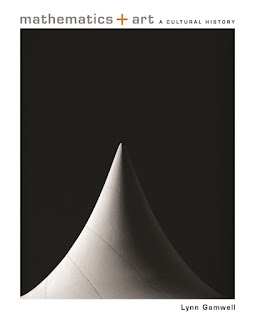
Book Review: ii Mathematics and Art: A Cultural History

Last time I suggested that philosophy is missing from the title. Architecture is another very welcome theme in the book, the significance of perspective to art being obvious, but not the only focus. As mentioned the preface is an invitation to dive in. The oldest star atlas (xi), Chinese, sets the scientific and global tone to follow. My interest in diagrams, was quickly awoken as there are many in this book. I recalled the lunar cycle depicted on cave walls and bone. The first diagrams from prehistory. The preface works brilliantly as an introduction, such that I couldn't wait for chapter 7: "Scientists describe such symmetries using the mathematics of group theory" (xv).

Mathematics + Art
Mathematics + Art
For young scholars the book plays the role of sign-posting schools and history of thoughts and ideas. [Paraphrasing..] Adorno and Horkheimer ... wrote the first in-depth analysis of the loss of confidence in enlightenment ideals, a condition that came to be called postmodernism (xviii). There's an observation of artists being inspired by mathematics, but not mathematicians drawing upon art - with some rare exceptions. When possible, Gamwell's approach to the personality and intellectual environment of mathematicians and artists is psychological (noting key traumas), at others the author adopts a more sociological and cultural stance. The prose throughout is clear and flows very well, even with some inevitable and necessary cross-referencing.

Chapter 1 Arithmetic and Geometry brings home the relationships and dependencies between maths, arts, belief and changes in our understanding of the Universe. When I learned in my teens of the destruction of the Library of Alexandria, which Ptolemy would have visited, (p.30) I was shocked and still am at this loss. Sadly a loss that is not just an ancient phenomenon.* Interested in astronomy, the loss of Hipparchus's globes and co-ordinate system is a further blow. A cross-cultural perspective is maintained throughout the book, with Islamic mathematics, South America and Asia. Do you know the difference between philosophy and mathematics? There is an opinion here. From the Greeks - Neoplatonism, early Christian and medieval thought and the 'liberal arts', I knew the modern book version of the 'Quad-rivium' on my shelf was of significance:
"In the late Roman and early Christian era, scholars continued to study the ancient texts based on a curriculum - arithmetic geometry, music, and astronomy (the quadrivium, Latin combination of quadri and via meaning "the place where four roads meet") - first described by the Pythagoreans and adopted by Plato for his Academy." (p.37)
An original purpose for Hodges' model, remains curriculum planning and development, the definition of the core disciplines of learning has always been a roll call of sorts. The book can serve all, but younger scholars especially, as it sets out the formulation of scholastic traditions which have a chapter each:
  1. logicism (chapter 5): Realism - St Augustine - Platonic realm
  2. intuitionism (chapter 6) - Conceptualism - Peter Abel - distinct objects only in the mind
  3. formalism - (chapter 4) Nominalism - William of Okham - mere signs or names (p.37)
Even today we must ponder on the status of the seven liberal arts, the quadrivium plus the trivium of grammar, rhetoric and logic. To classics scholars this will be introductory, but invaluable grounding for many learners - young and more senior.

There is an account of eastern and western cultures and the relative development of mathematics. The sciences and theology feature markedly as human reason made progress - increasing certainty only to suffer from doubt with new discoveries. The 'via negativa' (Latin for "negative way", p.47) reminded me of two books on ignorance I purchased in London. I arrived there March 12th and soon thought; "What on Earth (as a nurse too) am I doing here?" Especially, being in the basement for Jazz Live at Pizza Express, Soho. These are indeed uncertain and challenging times.

You may have noticed I have not mentioned the art thus far. Well there is plenty. By page 47 we are up to plate 1.52 'The Cloud of Unknowing' 1998 by Roman Verostko.

Post iii soon.

*In lockdown I followed a conversation on the destruction of libraries from the digital Hay Festival:

(This does require a subscription to Hay Player.)

Wednesday, January 02, 2013

Personalised care and gravitas (literally)

The Einstein Cross Gravitational Lens
Original Image Credit & Copyright: 
  J. Rhoads (Arizona State U.) et al.

Today's Astronomy Picture of the Day is described as follows:

Most galaxies have a single nucleus -- does this galaxy have four? The strange answer leads astronomers to conclude that the nucleus of the surrounding galaxy is not even visible in this image. The central cloverleaf is rather light emitted from a background quasar. The gravitational field of the visible foreground galaxy breaks light from this distant quasar into four distinct images. The quasar must be properly aligned behind the center of a massive galaxy for a mirage like this to be evident. The general effect is known as gravitational lensing, and this specific case is known as the Einstein Cross. ...

Health care problems can weigh very heavy on the individual affected by them and their loved ones. To deliver personalised care we first need to resolve the four care domains (five including the spiritual). If personalised care is to be realised (aligned and integrated) in practice and not just two words in policy (political lensing), then we need to remember personalised care can be an illusion in itself.

Additional post:
Person centred care, wormholes, pesterers, care domains (iii)

Wednesday, July 25, 2012

Olympic Torches, History and Nostalgia for the Light


I never got to see the Olympic torch procession,  although I crossed its path on a couple of occasions.

This for me has much significance    +

In Euxton, Lancashire and more recently I found myself ahead of the relay in Oxford.


I saw a torch at the Disability Awareness Day in Warrington.


A prized possession: a keepsake of a lifetime.


Image source: http://www.warringtonguardian.co.uk/news/9825966.Disability_Awareness_Day_marks_21st_event_with_Olympic_glow/


Over the weekend I went to see the film - Nostalgia for the Light. A documentary that is simultaneously challenging, troubling, poetic and beautiful. A journey through history in its multiple forms; astronomy, and archaeology - ancient and modern. The setting is the Atacama desert. The astronomers using various telescopes explore celestial bodies, taking advantage of the elevation and transparency of the sky. The extremely low humidity that also supports such observations also preserves human bodies. Not just those thousands of years old, but human bodies from more recent times. Those of Chile's "disappeared" those who have been found and those still lost to their families.

Skeletons abounded. Ancient mummies, more recent explorers and miners. I noticed how these skeletons can give up their secrets from belongings, clothing, identified by relatives.

How telescopes themselves are skeletized in their design to save weight, cost. Today the affluent can purchase a skeletized watch - to make a statement. Mechanism. To mark their personal history. History.

What legacy? What cost? 

Around the world : dictatorship.

The search of the few for the many against the sun and the turn of stars.
Light seeking light, seeking peace and a final release.

Monday, October 26, 2009

A pantological links palette

The table below displays the existing link categories for all four care (knowledge) domains of Hodges' model:

The categories included on the links pages are intended to be suggestive rather than definitive of Hodges' model. Advice regards broken links is much appreciated (I am aware that health promotion is listed twice).

Psychology I
Psychology II
Mental Health
Therapies
Anatomy & Physiology
Care Theory & Practice
Evidence Based Practice
Quant.
Research
Philosophy
Creativity Ideas
Communication Studies
Theology / Transdisc
Coding, Classification
Health Informatics
Info Sources
Diagrams
Health Promotion
Study Skills
Education
A.I. Knowledge Man.
Visualization I
Visualization II
MarkupLangs
Ajax & XML
Human-Computer Interface
Accessibility
Creativity
Graphics
Environment
Virtual Reality
Science
Astronomy
Rest & Rec
Maths, Logic
Engineering
Programming
[Toolset]
7 Ages
Health Promotion
Patients & Carers
Practitioners
Development
Poverty
Democracy
Justice
Economics
Policy
Studies
Computer Supported Collab Working
Sociology I
Sociology II
Qual Research
Activism
Citizenry
Employment
Human
Rights
Anthropology
History
Art, Tech &CultureI
Art, Tech & Culture II
Info. Gov
Assurance
Standards
Open Source
Community Informatics

News
Software
Hardware
Search
Organisations
Commercial I - IV

Definitions: pantology

Wednesday, June 03, 2009

Heroes wanted to slay monster (or just thinking aloud?)

The four links pages devoted to the knowledge domains of Hodges model are I am told quite a remarkable collection for all that to me they are a bit of a monster. Apparently the links demonstrate that there may still be a role for human web-hunter-gatherers. Wikis and social media rely on provision of tools for links. The Twitter community is built primarily on links. H2cm's links are checked regularly, tools make the task much lighter, but ...

Most urls have long lives - a slight tweak and all is well. Some are clearly '404', while a few get taken over and become a cul-de-sac for questionable advertising. I even found one or two being used for promoting candidates in the US election. It would be great to have someone else involved a caretaker just for a category in order to:

  • identify broken links
  • sites no longer maintained or representative of the category
  • any key resources missing (this might include a site you are involved with)
[I do mean 'key' resources]

You do not need to be a subject matter expert or a student, but it would help especially for the following domains and categories:

SCIENCES: anatomy & phys, nursing theory, research, astronomy, health informatics...
INTRA-INTERPERSONAL: psychology, mental health, therapies, philosophy...
SOCIOLOGY: sociology, arts and culture, patients and carers, collaborative computing...
POLITICAL: health policy, standards, democracy, activism, community informatics, citizenry, development ...

To repay your time there are a couple of options:
  • You effectively adopt a listing and I can feature a link with a small graphic to your site at the top of the listing category.
  • At least once a year I would post on the blog an acknowledgment of partners - be they companies or individuals.
OK the above is not hyperbole, but with the current website and hosting arrangements I would have to rely on e-mail to do this with me having to maintain the links.

Enter Drupal....

Considering the future site for Hodges' model I could readily drop the links, but I do feel there is potential here on several levels:
  • educational
  • community building
  • commercial
- and I need to consider the options.

The links would be one way to involve and grow a community. Using Drupal to leverage this there is also the possibility of:
  • voting on the existing categories
  • suggestions for new categories
  • use of mega-menus
  • monitor link usage and reduce the listings
  • use some of Drupal's link modules (or create a new one?)
  • introduce the site and links to the semantic web - RDF
  • start the collection from scratch and have the community submit them
  • - emphasizing basic nursing and social care
The existing pages would also be re-written to utilise CSS and jQuery (as already mentioned on w2tq) it would make a world of difference to have the categories being collapsed upon the page opening. We'll see...

Sunday, February 15, 2009

Good things come to those who wait...:

Being interested in astronomy I've used this theme in quite a few blog posts. Hodges' model cannot only act as a repository for a constellation of ideas - the model is up there in the constellations - in several forms including - The Southern Cross, Crux.

I thought about the Milky Way, but was disappointed about the scope for finding Hodges' model there on two counts:

  1. we (and more especially our children) can hardly see the Milky Way such is the light pollution;
  2. the Milky Way does not reflect Hodges' model - which axis would it be?
Then I realised:
One day, there will be two bands of star dust across the night sky (c/o APOD):
Milky Way Galaxy Doomed: Collision with Andromeda Pending
Illustration Credit: NASA, ESA, Z. Levay and R. van der Marel (STScI), and A. Mellinger
It just goes to show you... good things come to those who wait...
 
Image source: The Southern Cross  

Additional links: International Year of Astronomy Kepler Star Wheel

Saturday, April 26, 2008

Listening and Seeing: The Next Generation

On the latest Sky At Night Sir Patrick Moore brought the most welcome news that Jodrell Bank is not to close due to a recent science funding cock-up. This is a great relief as in addition to seeing - we need to listen too. The Hubble Space Telescope will have its final servicing mission in August.

This will prolong the life of Hubble a true wonder with the images it has sent home to Earth and a fitting last flight for Space Shuttle Atlantis.

As we look forward even further to the Next Generation Telescope now called the James Webb Space Telescope astronomy is not only cool but it's hot and heavy too. Here is a discipline that ensures it samples all the available data streams open to it in order to test, verify, learn and progress. Out on the leading edge of astronomical data windows such as gravity waves, it is a case of discovering just how to listen and see. Diagnostic medicine benefits enormously from existing and new ways to investigate anatomy, physiology and pathological processes.

Astronomers need dishes the size of Jodrell Bank and bigger - such as Arecibo and arrays. People come equipped with telescopes and dishes of their own. As multidisciplinary (multi-eared) research teams develop proposals to take advantage of major initiatives such as the Towards Next-Generation Healthcare programme, let's hope the young stars are able to listen to and connect with the older stars.

(Original links removed.)

Tuesday, October 30, 2007

Northern Skies: Comet Holmes in outburst

If you've dark skies (and even if you are under urban skies) look out for Comet Holmes, which has brightened suddenly:

http://antwrp.gsfc.nasa.gov/apod/ap071026.html

See also an animated Astronomy Picture of the Day

More to follow in 2008!

Sunday, September 16, 2007

SCIENCES links: Holistic Bliss or Tristram Shandy ... V

Finally: what of the content of the SCIENCES links page? Firstly, a little background -

Hodges' model has a key role to play in engagement. In health this means helping people to help themselves. Assist them to use the knowledge and experience they have of their illnesses. When necessary educate them - patients, carers and the general public. Use the latest research to further health promotion and preventive measures. These efforts, these messages though must compete with an awful cacophony of noise - political and cultural in the media - that is frequently itself awful dross.

Little wonder then that the science, educational and political communities are so concerned about the public switch-off, with citizens ill-equipped to critique and engage in debate on key SCIENCE issues - biotechnology, nanotech, astronautics - funding!

Engagement is not for everyone of course, but surely we can do better this?

Over on this right-hand MECHANISTIC side of h2cm what should political expectations (aspirations!) be regards the holistic bandwidth of a given citizenry? What does the 21st C. curriculum for the citizen look like? Is it as taught, the written, the learned, DIY, the 'take away', the media delivered or the hidden, ...?

Back to the task at hand: Like all the links pages SCIENCES also places health related subjects uppermost for ready access together with selected conferences. Not surprisingly ANATOMY & PHYS are first on the top row, followed by selected NURSING AND CARE THEORIES. If the h2cm website has any roots as a project it started here and spread.

The media in general and IT commentators in particular stress information overload. The relentless increase in the volume of information year-on-year has a prime contributor amongst the research community in medicine.

When we speak of General Practitioner (family physician) it seems increasingly difficult to determine what is general? There are so many branches of medicine even before specialised directions must be taken. The costs and risks associated with 21st C. medicine mean that filtering the research literature to find the treatment pearls is crucial to effective practice, outcomes, management and policy. So, EVIDENCE BASED PRACTICE (EBP) that utilises e-libraries and electronic databases is the tool of our times and with QUANTITATIVE RESEARCH completes the top row.

Before moving down a peg (if digression sensitive turn away now).

If you look at Hodges' model and its quadrants with a nurse's eye, you know for intramuscular injections the dorsogluteal - the upper-outer quadrant of the buttock - has been cited as a preferred site. How fitting then that the upper-right quadrant in h2cm is the SCIENCES. Problem is of course upper-outer translates as upper-right AND upper-left and sticking needles in people is a pretty invasive and mechanistic task. That upper-outer LEFT quadrant in h2cm translates to the humanistic [INTERPERSONAL] domain, so sticking needles there may be anatomically correct, but epistemologically speaking where are the talking therapies? (The model also at this point invites dialogue and debate on addiction.)

Recently, I've been researching a paper on socio-technical structures (which will also attempt to explain the hyphen), this project-making or -breaking conjunction of the social and technical for me begs the question of the locus of INFORMATICS. There are many schools of informatics in addition to HEALTH INFORMATICS I & II. If it is sensible to ask of these informatics fields, which h2cm domains would they claim as their primary home? [COMMUNITY INFORMATICS is listed in the political domain.] The great and ongoing efforts in CLINICAL CODING AND CLASSIFICATION within medicine are also listed here.

I've often wondered about how much duplication there is in the various electronic databases that are available? What metrics would you use? There's a major Phd study for someone there if not already completed or under way? We see rationalisation in other industries, business sectors until then (or the semantic web) the plethora of available resources in INFO SOURCES further extends EBP. In artificial intelligence pruning the search is an essential strategy. Is the internet tree still growing or shrinking? I understand it is actually shrinking - rationalisation has begun?

The next three categories represent a key personal interest of mine. IMHO graphics, diagrams and visualization can help conjoin health, informatics, h2cm and the wider world; hence DIAGRAMS and VISUALIZATION I & II. Is there a role for DIAGRAMmatic reasoning in health and social care?

It could be argued (and has been) that visual literacy is yet another educational milestone.

PROGRAMMING is great fun - if you are not concerned with hydraulic control systems, air traffic control software, or clinical systems. MARKUP LANGUAGES variations of XML have proved revolutionary. In reading about and my initial tinkering with Drupal, XML is in there (and so much more). In education and nursing theory much is written about the need to bridge the theory-practice gap. Perhaps the gap is necessary: a velodrome has to have a centre. XML is a software technology that can bridge gaps in transforming data, information and knowledge.

As in other domains I wondered where to place ENVIRONMENT & ECOLOGY? In the four introductions to the website, I've stressed the relationship (dependency) between green issues, health and our quality of life. ENVIRONMENT & ECOLOGY should ideally reside in each of the domains, or at the centre the 5th domain - the spiritual - made up of all four.

Our VIRTUAL creations and worlds are presented next. IF you want to conjoin data sources, users, and present information & engage users, THEN use the senses that are available. Health and social care records can benefit from visualization as tantalisingly glimpsed in early work on visualization in the social sciences. (I'll see if I can switch these around a bit.)

Next: ASTRONOMY: Orion - you started this journey from my bedroom window. Rising in Winter standing tall then giving way to Spring. We need to give the real stars back to the people:

Turn off the light,
take a deep breath and relax
[Engima - Mea Culpa]

SCIENCE could comprise so much more space permitting just one scratch of this surface - pharmacology, chemistry, physics the new disciplines all deserve listings of their own.

SCIENCE is most clearly evinced in MATHS & LOGIC that provide the basis for ENGINEERING. The final two categories return to programming. Compared with the others this final row is smaller. I have to contain this pantological journey. The H2CM links pages are big enough: I know my limits.

The final category RUBY [TOOLSET] is perhaps poetic justice since programming is oft described as SCIENCE and ART. One thing that Hodges' model is about -

folding time and space.

Thursday, August 16, 2007

Holistic Bliss or Tristram Shandy and the Web Hydra I

Building the h2cm website a decade ago the links pages -

INTERPERSONAL : SCIENCES
SOCIOLOGY : POLITICAL

- were planned as a feature from early on. They started as TWO pages but have become FOUR and far more general in nature than originally planned. I first envisaged a core h2cm nursing set into which students - life-long learners could all dive.

Perhaps there's a project there for students: Specify what you consider to be a core set of links resources and justify your answer in terms of either one of the following or a combination of - models of care, health-social care policy, self-care, multidisciplinary teams? .....

Like many potential h2cm developments (XML templates, ...) which I've shared with contacts over the years, the core h2cm links set never saw the light of an HTML page. The main target audience for the links pages remains as the health and social care community (although given h2cm's universal scope I'm jumping around on this (sadly) cold-tin-roof shouting: "Hey everyone - oveeerrrr here!").

If you look at the four links pages and the model's axes INDIVIDUAL-GROUP & HUMANISTIC-MECHANISTIC you might conclude that a re-organisation is needed. So as the other potential developments are still outstanding (Drupal, ...) maybe this deserves some explanation?

Why? Well, there is too much there and many visitors may be put off? I navigate these links spaces quite readily (which as author is not surprising I suppose), but being critical the pages do represent a management overhead, a distraction from other tasks. Seeking a positive side maybe this generic set of links have emerged out of a human attempt (most searches/links resources are of course now machine-based) to push the 'holistic frontiers' and our conception(s) of what it is to care?

You'll notice on several links pages that the first row of links acknowledges the intended audience. I do not want students to have to scroll for the health and social care related resources. So, these are placed near the 'top'.

Although a domain links page is presented as a single 4-column table, it is valuable to take the main headings and view the four care or knowledge domains links together. This is listed below, if the formatting holds! (Probably need a graphic for this...)

Over several posts we'll explore the links pages one by one. Already a few things stand out...

What's there. What isn't and whether there's a why: initial observations welcome....

P.S. Shame about the weather last w/e in NW England.

Psychology I II Mental Health Therapies Anat&Phys Care T&P Evidence BP Research
Philosophy ---- Ideas Communication Theology Health Inform. II Info Sources Diagrams
Health Promotion Study Skills Education DSS Visualiz. II MarkupLangs Ajax & XML
HCI Accessibility Creativity Graphics Environment Virtual Reality Science Astronomy
------------------Rest & Rec----------------- Maths, Logic Engineering Programming [Toolset]
7 Ages Health Prom Patients Practitioners Development Democracy Economics Policy
CSCW ------ Sociology I II Qual Research Activism Citizenry Employment Human Rights
Anthropology History Art & Culture I --- II Info. Gov Standards Open Source Comm. Inform.
--------------------------------------------------- News ------ Soft-Hardware --- Search -------- Org
--------------------------------------------------- ---------------------- Commercial ---------------