Hodges' Model: Welcome to the QUAD: Search results for climate change

Hodges' model is a conceptual framework to support reflection and critical thinking. Situated, the model can help integrate all disciplines (academic and professional). Amid news items, are posts that illustrate the scope and application of the model. A bibliography and A4 template are provided in the sidebar. Welcome to the QUAD ...

Showing posts sorted by relevance for query climate change. Sort by date Show all posts

Thursday, October 17, 2019

Review: iii "Climate Change and the People's Health"

So to the book proper ...

When a book's Forward has 19 references you are primed for many more. The Introduction reinforces this expectation and also defines concepts, specifically health inequality and health inequity. I'm also bound to be drawn-in by a text that:

"... calls for interdisciplinary responses that employ knowledge and analytical tools from across the sciences, social sciences, and even the humanities". p.xxii.
That 'even' is priceless, in terms of the relationship between social sciences and the humanities and the prospective role (that is already being applied?) they will play in solutions, vis-à-vis the communication of climate change and public (mental) health themes using the arts, media, creativity, history and communities.

The Introduction provides a brief primer on global action on the Social Determinants of Health [SDoH] and climate change. A critique of key policies, programmes and reports is provided leading to the arrival of the Sustainable Development Goals. The politics of the above is discussed, with shortcomings and avenues of progress noted. The three chapters to follow are described and as befits a 'small' book we are informed of what the book does not address. The book's focus is climate change. For a text on population growth and transition to alternate energy sources readers should look elsewhere.

Chapter 1. Climate Change, Global Justice, and Health Inequities

The book uses 'Boxes' asides to elaborate on certain points, e.g. Box 1.1 The Earth System. There are tables and figures too. Many make for troubled 'reading' and not for reasons of size or legibility. The text is dense in terms of the information delivered, but that is to be expected. This is serious stuff. "Climate Change - (really) Is a Global Justice Issue" p.16.

While in the open source and open access movements we celebrate the Commons, Friel points to the way that climate change has the characteristics of a "global commons" problem. p.16. Politics permeates the book as noted in post ii.

 individual
|
INTERPERSONAL : SCIENCES
humanistic ----------------------------------------------- MECHANISTIC
SOCIOLOGY : POLITICAL
|
group - population


"Together, the least-developed and developing economies contributed, since the mid-eighteenth century, less than 25% of global cumulative CO2 emissions (Lykkeboe and Johansen, 1975)". p.16.

The problem of having all states adopt the same transformative behaviour is described mechanistically.
There is presently no mechanism. 

Ethics is brought up as it must be in the years, decades to follow. (I was minded to think of Maslow's hierarchy applied to the whole of humanity: now that would be a great levelling. p.20.) Now, there is a new measure beyond the perverse capitalism debate. Why should people be able to live in luxury at the expense of even the basic needs of other peoples being met? Intergenerational inequity has a small section of its own (p.22). Those with the means will be able to move, to mitigate the impacts of climate change. Millions of others are effectively trapped by geography, health inequities and life chances. So many are without political and economic power to make for positive change.

As I was working on a paper on h2cm, SDoH and the SDGs the update on health inequity within and between countries was very welcome (p.24). On "food consumption gaps" I wondered about the plethora of 'gaps' that must exist and (sadly) operate in climate change and people's health (p.28). Globally foodborne disease is not uncommon, but to this degree (p.29)? With an estimated 3,037 deaths annually in the United States. Key health issues are discussed, malnutrition, non-communicable diseases, air pollution - ambient and indoor. A point about Bourdieu (1989) and an individual's life choices, is bound to remind me of 'life chances' within Hodges' model. This is what lies behind the idea of the "Health Career". This is not the professional's career, but the varying status of a person's health and wellbeing through their life (and even before birth and approaching end of life). Friel's discussion of Michael Marmot et al. (1991) and the "Whitehall studies demonstrated that, in addition to maternal security, a  range of psychosocial factors are important for health and are contributors to health inequities, including social support, social capital and social cohesion". p.33.

There are conceptual models for SDoH, the Eco-Social Model of Health, which obviously keeps me turning the pages (p.34).  Friel notes historically how environmental epidemiology has tended towards being reductive and mechanistic in approach, rarely taking onboard the influence of social, economics and political contexts. I scribbled the following as a review quote:
"Appreciation of this global scale and of the range of influences on human health required a significant conceptual as well as a methodological shift". p.35.
New epistemologies are needed: enter eco-epidemiology. Time is a factor in integrating our view of disease and disease prevention. I visualise this as a series of frames for an individual, the same for a community. Many of the figures are Creative Commons Attribution 4.0 license. I have not read the book "The Uninhabitable Earth - Life After Warming, By David Wallace-Wells, but a review declared a depressing quality in the scenarios rendered. I had this in mind noting the statistics and reporting that Friel provides. This is worrying too - future rates of mortality - the overall increase; those attributable to specific effects - diarrhea, childhood undernutrition, heat exposure and more... (p.38). There's a small Box on the Disability-Adjusted Life Year. The effect on sea level rise, food production, heat stress, the movement of disease vectors are the subject of the remainder of chapter 1. This is a sobering read, but necessary. Bizarrely - a contribution to global ecoliteracy: medicine for eco-anxiety?

To be continued ...

Chapter 2. It's a Consumptagenic World: Producing Climate Change, Exacerbating Health Inequities

Chapter 3. Challenges and Future Prospects


Friel, S. (2019) Climate Change and the People's Health, Oxford University Press, New York.

Saturday, October 19, 2019

Review: v "Climate Change and the People's Health"

Climate Change and the People's Health
At just over 30 pages chapter 3 the last is also the shortest, we all hope this does not reflect the length of the future?

Chapter 3. Challenges and Future Prospects

Before beginning to review Chapter 3 I need to revisit the closing sentences of the preceding chapter's conclusion - if you 'get' Hodges' model you will understand why:
"I [Friel] pick up on these ideas of complexity in chapter 3, arguing that how we understand and characterize these phenomena depends on our standpoint and also evolves as knowledge develops and available evidence accumulates. Given those complexities, responding to climate change and health inequity requires the development of policies that transcend doctrinal boundaries and draw on insights from a range of disciplines, including those in the sciences, social sciences, and humanities". p.112.
I hope you can see and will please excuse my reference to Hodges' model, but I've another.

Friel refers to how research is primarily based upon reductive pathologizing and needs to shift [ ;-) ] "towards research that is attentive to, and actively engaged with, policymaking processes". (p.114).

In Hodges' model, the Sciences and Politics are mechanistic, the sciences invariably (with some exceptions) reductive and the 4Ps I have attributed to the model as follows:
  1. SCIENCES -PROCESS
  2. POLITICAL - POLICY
  3. SOCIOLOGY - Practice
  4. INTRA- INTERPERSONAL - Purpose
(As in a previous part of this review I have been wondering how policy can (best) permeate the other care (knowledge) domains?)

Being where this review is posted I would be remiss not to state this, picking up on Friel's thought.

OK, let us get back on track. Taking the lead from chapter 2, in Chapter 3 Friel argues the need to take research, advocacy, and policy forward to address environmental degradation, social justice and health equity by breaking down the disciplinary, sectoral and various silos that exist in the many systems that are encountered. Systems research can increase our understanding and the evidence base. Interesting to note also then solutions can be crafted. (p.113). The evidence base on more equal societies is discussed. With the stress on systems research, systems and systems thinking are explained briefly and referenced. As will already be obvious I am all for the plurality of disciplinary approaches that is needed, but as Friel will conclude this, with systems science, and improved understanding of policy processes (hybridised: is this the Green Marshall Plan that is referred to?) to counter the resistance to change that is already being experienced now (p.115).

Perhaps above, I have fallen into Friel's trap. I have been caught out as a model monger (p.115)?

Scale is a concurrent consideration in Hodges' model, as with Friel's account of systems thinking. To macro- meso- and micro-levels let us add nano, there is much still unclear from the presence of plastics and other pollutants in the environment. The arrival of eco-epidemiology is to be applauded (p.116).

Any mention of 'systems' takes me to the Health System Redesign book I reviewed over a year ago on W2tQ. This is a very useful companion to "Climate Change ..." but is not referenced here. Box 3.1 'Systems Approach to Childhood Obesity Prevention' brought home the connection and the visual representation referred to (p.120). I could readily go off again with Friel's section on Politics, Policies, and Processes (p.122). Thank goodness for this - I feel better now - as Friel "shamelessly plugs" personal involvement with a research program at the CRE (p.124). The Centre for Research Excellence in the Social Determinants of Health Equity needs to be, not just on the 'map' (Sciences - located geographically) but affecting policies, practices and purposes (individual and organisational). Friel provides several references - very useful and timely. I will reference this, as I'll explain next time. Again the much needed call for a move from reductionist pathologizing.

Box 3.3 Policy Principles for the World We Want is simplistic (like Hodges' model), but if delivered would be very impactful in terms of the positive change (p.128) that would ensue. Against p.134 my note is "It's a small world!" I'm not sure if this a reference to the Disney song as a perverse consumptagenic global eco-anthem, or to Schumacher? What could be noted (p.134) is the potential role of blockchain in assuring land tenure and ownership. This technology is much vaunted in health, education and the obvious application of economics. In terms of developing nations protection of land rights is critical (even as I write and you read). The chapter closes on policy from "The first 1000 days of Life" to "Health in All Policies" which I reflected upon as "Policies in All the (#h2cm) Domains"? How do we do this? There are avenues as Friel writes of macroeconomics and progressive policy development. There is much on the Social Development Goals and how cities (despite the critique on urbanization) are working together internationally to mitigate climate change effects, even as some governments fail to meet set objectives and global agreements.

The print and layout is excellent, a content listing of sections complements the index (invaluable). The next book I've to review has no index.

Small book, big ideas - correct on both counts and a very informative if rightly troubling read.
One last plea. Do buy this book, but don't leave it on your shelf; read it. There is no excuse, it's small, but your ideas on climate change and the people's health will grow!

I would like to thank OUP

CHAD ZIMMERMAN │ Senior Editor, Medicine and Public Health
Oxford University Press │ 198 Madison Avenue │ New York, NY

and Prof. Nancy Krieger for the review copy and Prof. Sharon Friel for engagement on twitter and RTs.

While I appreciate I make the request to review and this places absolutely no obligation on others, it helps a lot when a publisher / author / conference organiser ... acknowledges the effort - even just a thank you. As ever, the thanks is in the learning gained, not the thanks lost. Many do - lift a hand, nod their head ... of course, making this even more worthwhile here. TY


Chapter 1. Climate Change, Global Justice, and Health Inequities

Chapter 2. It's a Consumptagenic World: Producing Climate Change, Exacerbating Health Inequities


Friel, S. (2019) Climate Change and the People's Health, Oxford University Press, New York

Thursday, October 15, 2009

Blog Action Day: Imagine a generation taking nothing for granted from the start

Blog Action Day 2009:

"Climate change" - these words spoken in so many different languages may be the first uttered by the World's infants over the next decade. It really could happen! If these words are the constant they need to be, on the lips of all parents, teachers, leaders and all who 'know'.

That would be no bad thing for the (near) future.

Just imagine:
a generation taking nothing for granted from the start.


People respond best to change they see. In particular change in their environment. We are hard-wired to react to change that represents a threat. We respond with flight or fight. On island Earth, this rock we share, the options are becoming ever more limited, limite, limit, limi. ...

In order to respond now, we must rely on several forms of vision. We must take into account not just ourselves, but as is often highlighted:

  • future generations, our legacy - their inheritance (SOCIOLOGY)
  • other individuals - our brothers and sisters - and their situation (INTERPERSONAL)
  • the evidence for climate change and solutions (SCIENCES)
  • those in power and their translation of the agenda for positive change (POLITICAL)
  • the effect of climate change on flora and flora (SCIENCE, SOCIOLOGY and POLITICAL)
  • the physical health impact (SCIENCES)
  • the emotional and mental health impact (INTERPERSONAL)
  • the changes needed in policy and political change succession (POLITICAL)
  • the ethical values that are shared and debated - consumerism (business at any price $1, £1, €1 .... stores), Deep Ecology (INTERPERSONAL & POLITICAL).

Things, especially human 'things' are never that straight forward. The impact of climate change is writ large in that last word - change. Perhaps in erecting the faces the lesson of Easter Island is environmental dominoes. For us of course this means that as the climate changes so does the environment. For some the change is quickly evident if you live by the ocean, tundra or mountainous glaciated regions.

Change happens on local, regional, national and international levels.

From the Earth observing satellites above, to survey vessels on the oceans, and the research stations in the Antarctic and Arctic vision is everything in hearts and minds paving the way for action in classrooms, homes and eco-prise. ...

Archived links page:

Hodges' model SCIENCES links 'Environment, Sustainability, Ecology & Eco-system Health'


Image source: Easter Island photo - Fractal enlightenment 2007

Wednesday, October 16, 2019

Review: ii "Climate Change and the People's Health"

Climate Change and the People's Health
You could read this excellent little book in a couple of hours, but me being me ...

Part of a Series of 'Small Books, Big Ideas' in population health this is an important and timely text of a type that sadly will need to be a constant stream. Constant, not only to keep the message and issue in people's consciousness, but to update the research of a still new interdisciplinary field. Not only that but some sense (measure) of the socio-economic-political state must be realised to identify change (progress). This small book argues for the big change in attitudes, behaviours and systems that must follow.

The book prompts me to imagine the day (whether or not in my future) when the media can report on the gradual reverse of climate change? We have heard of positive changes in the size and behaviour of the Antarctic ozone layer for example; only for progress to be challenged once again. It is not enough to hope for our children, their children ...  and the biosphere of Earth.

The book has just three chapters in 146 pages; 188 pages including the references and index. The 'small' quality relates not only to page number but a hardback size of 18 x 15 cms, such that my copy has been on tour (petrol car and alone) over the summer. A Forward by Nancy Krieger refers to the book series as a whole and points to the political dimensions and how inevitably practitioners must be part of this 'game'. Not just what we oppose but what people stand for. The dynamism in this field is apparent in the reference to expressed opposition alone given rise to despair. This book is very current (2019) but 'eco-anxiety' did not make the index, such is the pace of events (Greta Thunberg). This is not a criticism but speaks of the dynamism and hope that action can (and must) bring as Krieger writes. The fact of this being a political struggle is acknowledged by Friel in the conclusion.

This is not just important but critical. You should never generalise and many nurses (for example) are politically very literate and Active. They seek to protect, sustain and improve the values, the health and health care systems they hold dear. Many other nurses focus on the 'job' of caring. The thought follows that while politics starts in the staff-room and rota; the Politics begins in the ward office and the various meetings and committees. They conclude that they'll leave that to others. For all healthcare workers we can no longer take this stance. Population health demands a population response.

To be continued (of course you don't have to wait to obtain your copy - this is essential reading):

Chapter 1. Climate Change, Global Justice, and Health Inequities

Chapter 2. It's a Consumptagenic World: Producing Climate Change, Exacerbating Health Inequities

Chapter 3. Challenges and Future Prospects


Friel, S. (2019) Climate Change and the People's Health, Oxford University Press, New York

Friday, October 18, 2019

Review: iv "Climate Change and the People's Health"

Climate Change and the People's Health
Whatever your educational philosophy when a book offers new concepts that is welcome learning. Learning enhanced when the concept, as is often the case, is a hybrid of terms.

Chapter 2 It's a Consumptagenic World looks at the veritable production of climate change. Our dependence on fossil fuels not just for our transport, but the transport of food and agricultural products is explored. Perhaps there is a political irony in the former slogan of education, education, education amid relentless growth, growth, growth. At least now there is a constant message regards there being "No Planet 'B'".

If chapter 1 considered food security, this chapter attends to the industrial food system. Once again the themes are first introduced and related back. Very interesting here is the rise of urbanisation and the drivers for this. In chapter 1 I noticed the word shift. Nurses are one occupational group that recognise this word only too well. Here though it is the shifts in population that is very worrying. Especially so when many people may be putting themselves in harm's way as chapter 1 described. It is encouraging to see references going back to the 1940s. There is an evidence trail.

Current economic systems seems to reward monopolies and creates externalities (p.60). Unfortunately there is a lack of evidence in the production of pollution if remediation is to be sought. The emission of greenhouse gases where products are produced may be remote from where they are consumed. Friel argues for accountability at the origin of products not where they are consumed. Such externalities are 'out of the box' and need to be put back in the box and properly accounted for - (ecological governance). Often industrial concerns also follow the cheapest ('best value?') labour markets, relocating when needed.

Friel really annoyed me. Yes, in a positive way. Figure 2.2 compares a range of consumer goods and how their cost has changed over time; food, housing, health care, versus technology, media goods for example (p.68). The need for sustainable health care services is a constant topic it seems (Centres of research, journal special issues, conferences, twitter chats...), but when the essentials of living are so expensive does this not undermine and load - displace the disparity - the inequity no-less on to the health sector, its workforce and funding? It is as if the scientific-economic-industrial complex is saying to the health care (and social care) sector "Carry This!". There is no choice. It is a consequence of the society in which the bulk of us live. As Friel writes, processed foods lend themselves to concentrated control of supply chains which can introduce pricing volatility (p.78). The price of good quality nutritional food is a health inequality (p.76); figure 2.3  (p.77) illustrates the system.

While reading I thought of how amid the emotional, social and economic ravages of dementia we talk (well some of us ...) of organisational memory, while having forgotten what 'local' means. The rise of glocalism and the pursuit of growth - at any price it seems - in some quarters even prompts a re-evaluation of philanthropy in the 21st relative to the 19th and 20th? I found myself wondering how we would recognise a shift (the shift) in the market's thinking when watching the business TV channels CNBC, Bloomberg and similar ilk? The consumptagenic system has an effect on organisational memory, it is a behaviour known as perseveration; repetition of the word: profit. For all the thoughts provoked in me, this book is not a capitalism bashing exercise. Far from it, it deals objectively with what remains a sad and dangerous reality.

If it were not for the realist and critical perspectives that must also be present, the efforts of technologists, policy makers and researchers (urban informatics) and others to create Smart cities would seem to guarantee success. The discussion on cities (pp. 93-112), their sustainability, projected populations and the health inequities arising from them is very illuminating. In a teaching situation there is a lot to engage students, not just in the 'city' but in the text overall.


Chapter 1. Climate Change, Global Justice, and Health Inequities

Chapter 3. Challenges and Future Prospects


Friel, S. (2019) Climate Change and the People's Health, Oxford University Press, New York

Tuesday, December 15, 2009

The Communication Initiative Network and holistic bandwidth

In 2004 I attended a day at a community informatics conference in Brighton, UK (see the side bar for details). My interest in that event stems from recognising the different schools of informatics and the multidisciplinary potential for Hodges' model that extends beyond health and social care. The model provides a cognitive gymnasium for us to test and exercise our holistic bandwidth.

The notion of 'holistic bandwidth' really comes into its own within global development and communication. In 2004, or soon after I discovered The Communication Initiative Network. They kindly posted the Brighton position paper on their site and were very encouraging regards the model. Now they are developing a new Communication Initiative Social Networking Platform - http://groups.comminit.com/

There are many groups including:

  • The Future of ICTs and Development
  • Communication and Climate Change Adaptation
In the above group I learned of the following initiative :

There is an interesting initiative in Africa called AfricaAdapt. It is a network that works to facilitate the flow of climate change adaptation knowledge for sustainable livelihoods between researchers, policy makers, civil society organisations, and communities who are vulnerable to climate variability and change across Africa. There is a whole section on their website that allows for communities to upload their own information on how they are adapting to climate change. The initiative also offers an award for best community project which helps elicit contributions.
Africa: never far from the news. Lets hope this next week there is some +ve news from COP15 Copenhagen.
  • Students - Communication for Development
  • HIV/AIDS Strategy: Future Directions
  • Polio Communication Consultation Group
There are diseases lost to the developed nations and with diseases like polio and leprosy communication and education are central to those who are ill and their families. Even as a nurse there is a stark reminder in the need for an International Leprosy Day.
  • Gender, Education, and HIV/AIDS
On the teaching psychology list someone asked this past week about alternatives to structure a student's lifespan assignment. I suggested Hodges' model an approach that can also be adapted to educate people about disease ....

SCIENCES: aetiology, prevention, transmission, hygiene, diagnosis, prognosis, evidence, research, physical resources, drugs, nutrition, age, weight...
INTRAPERSONAL: attitudes, beliefs, education, literacy, personal responsibility, mood...
SOCIOLOGY: social networks, cultural beliefs, gender expectations, community, family, friends, trust...
POLITICAL: policy, leadership, funding, activism, infrastructure: housing heating..., access to services, media, employment, governance...
  • Ethics in Communication for Development
  • Gathering Theories and Models

This group only has 5 members and is of obvious interest to me. I can't recall whether I signed up: must check! Planning and development in this context covers topics and issues I know nothing of and yet I am sure that dressed in its socio-technical guise Hodges' model can contribute to the theoretical development here. It could be that there are other perspectives, models and conceptual frameworks to be found that can inform the global health agenda?

  • DRAFT: Technical Update on Social Change Communication and HIV/AIDS
  • Human Rights and Technology
  • Web Site Directors
So, do visit the Communication Initiative both the new groups above and the general website.

Wednesday, November 01, 2023

ERCIM News No. 135 Special Theme "Climate-Resilient Society"


Dear ERCIM News reader,

A new ERCIM News issue (135) is online with a special theme on Climate-Resilient Society! This special theme aims to put a spotlight on recent research, innovation and Implementation activities that could be taken up by the EU Mission on Adaptation to climate change, focusing on actionable knowledge, tools and solutions for planning, implementation, and progress monitoring. We encourage you to read the full issue to learn more about the latest advances in climate change adaptation research and practice. You can access the issue at the following link: https://ercim-news.ercim.eu/


This special theme was coordinated by our guest editors Athina Lykos (AIT Austrian Institute of Technology) and Sobah Abbas Peterson (NTNU).

Thank you for reading ERCIM News! Please share this issue with anyone who might find it interesting. You can also support us on Twitter (@ercim_news) and LinkedIn (https://www.linkedin.com/company/ercim). 
Let's keep the conversation going and share the latest updates together!

Next issue:
No. 136, January 2024
Special Theme: "Large Language Models". Submissions are welcome! See call for contributions.


Announcements in this issue:

Call for Proposals: Dagstuhl Seminars and Perspectives Workshops Schloss Dagstuhl – Leibniz-Zentrum für Informatik is accepting proposals for scientific seminars/workshops in all areas of computer science.

Social Robotics, Artificial Intelligence & Multimedia Winter School, Grenoble, France, 19-23 February 2024

ERCIM "Alain Bensoussan" Fellowship Programme - postdoctoral fellowships available at leading European research institutions. Simple application procedure. Next application deadline: 30 April 2024.

ERCIM News is published quarterly by ERCIM, the European Research Consortium for Informatics and Mathematics. With the printed and online edition, ERCIM News reaches more than 10000 readers.
All issues published to date are available online.


About ERCIM

ERCIM - the European Research Consortium for Informatics and Mathematics - aims to foster collaborative work within the European research community and to increase co-operation with European industry. Leading European research institutes are members of ERCIM. ERCIM is the European host of W3C.

Peter Kunz                      	
ERCIM Office
2004, Route des Lucioles
BP93
F-06902 Sophia Antipolis Cedex

Includes:
Clean air
20 Improving Urban Air Quality and Climate-resilience in Cities with Inclusive, Policy-relevant Citizen Science
by Pavel Kogut (21c Consultancy), Lieven Raes (Digital Flanders) and Susie McAleer (21c
Consultancy) 
Energy
21 LoCEL-H2 - Low-cost, Circular, Plug and Play, Off-grid Energy for Remote Locations including Hydrogen
by Athanasia-Maria Tompolidi (Consortium for Battery Innovation, CBI), Jonathan Wilson (Loughborough University) and Hassan A Khan (Lahore University of Management Sciences)
Transferable mitigation pathways
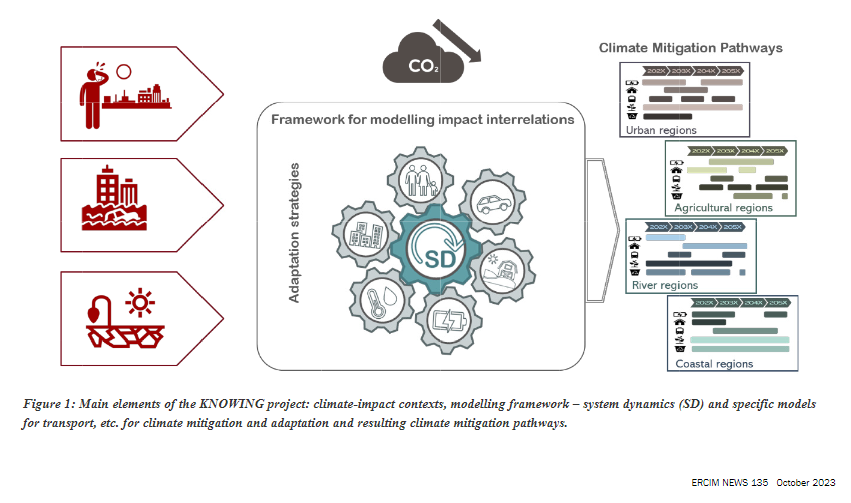
28 KNOWING How to Deal with Climate Change 
by Alexandra Millonig and Marianne Bügelmayer-Blaschek (AIT Austrian Institute of Technology) - with image:
Figure 1: Main elements of the KNOWING project: ... p.28.

Sunday, June 16, 2019

Book: "Climate Change and the People's Health" i

Climate Change and the People's Health


"Chapter 3 looks forward. It begins by calling for a wider conceptual and methodological toolkit among public health researchers - one that includes systems science as well as a focus on policymaking processes." p.xxxvi

Friel, S. (2019) Climate Change and the People's Health, Oxford University Press, New York.

Review to follow ...

Thursday, May 21, 2026

June 4-5 'Ecologies of Care' - London, UK

With more to follow from RCN Congress, this morning I received the agenda for next month's conference 'Ecologies of Care'. I am speaking, first session on the Thursday, which is a good to know and see the broad range of presentations. 

The focus on attention, is helpful for a possible further event in October. In the meantime, the Call for Papers began:

Chancellor’s Hall, Senate House London

June 4 & 5, 2026

Keynote lecture by Professor Yves Citton

How do increasing demands on our attention influence what we know, and how we act, in response to climate change? Despite a strong scientific consensus that climate change is ongoing and anthropogenic, political and legal action remains fragmented. Ecologies of Care asks to what extent the environmental crisis is a crisis of attention. Speaking to the dynamics of the attention economy, Yves Citton notes that “the new scarcity is no longer to be situated on the side of material goods to be produced, but on the attention necessary to consume them.” The word ‘attention’ is etymologically linked to the notion of care, or that which one attends to. This relationship (of subject and object) is fundamentally collective, insofar as collective attentional regimes influence what each one of us pays attention to on a daily basis, and how we navigate the barrage of informational flows from popular media.

Terms such as "the Anthropocene" and "planetary boundaries" function both as scientific descriptors and attempts to provoke action commensurate to the urgency that scientists believe their research demonstrates. The recent decision not to formalize the Anthropocene as an official geological unit, for example, highlights growing unease concerning intensifying media attention directed at scientific expertise. Under conditions of increasing disparity between what we know, and how we act, in response to climate change, the role of scientific expertise plays an increasingly normative, and not only informative, function. Scientific expertise attempts to direct what we attend to, and consequently, how (or if) we care. This is a collective practice of narrating and internalizing mythologies, whereby informational flows draw attention to some thing that needs to be cared for: Earth, the planetary, capital, or each other.

Continued ...

 c/o Law and the Environmental Humanities Network

n.b. With little time, I'm not going to transfer the pdf text, but may add here.

Friday, November 04, 2022

Editorial: "COP27 climate change conference: urgent action needed for Africa and the world" c/o HIFA

Dear HIFA colleagues,

Chris Zielinski and colleagues achieved a remarkable feat by publishing a climate emergency editorial simultaneously in more than 250 journals. What does this tell us about communicating health research to policymakers?

https://bjsm.bmj.com/content/early/2022/10/18/bjsports-2022-106442

The point was 'to demonstrate the united will of the medical profession, including all areas (nursing, mental health, veterinary medicine, etc.), to combat the health effects of climate change'.

The key message of the authors is to urge 'wealthy nations to finally step up', particularly to realise 'the promised target of providing US$100 billion of climate finance a year... ensuring these resources focus on increasing resilience to the existing and inevitable future impacts of the climate crisis, as well as on supporting vulnerable nations to reduce their greenhouse gas emissions'.

The message is supported by a well-worded case, and by a string of references to published research.

The piece is jointly authored by the editors of medical journals, which was presumably a deliberate decision to emphasise solidarity rather than including climate scientists and others.

In relation to 'communicating health research to policymakers' the exercise suggests more can be achieved when scientists work in solidarity and cooperatively than individually and in competition.

It will be interesting to see what happens at COP27. Will there be major steps forward along the lines that this editorial calls for? If so, what were the key contributing factors to the decisions made? One suspects the shared voices of 250-plus journals will play an important role. Moreover, their solidarity and cooperation is in place and ready to take on the next major advocacy challenge.

Best wishes, Neil

Joint Coordinator, HIFA Communicating health research https://www.hifa.org/projects/new-effective-communication-health-research-policymakers

Neil Pakenham-Walsh, Global Coordinator HIFA, www.hifa.org neil AT hifa.org Global Healthcare Information Network: Working in official relations with WHO

Tuesday, April 09, 2024

Historic Climate Ruling: States Must Step up Climate Action to Protect Human Rights

From: Center for International Environmental Law (CIEL) PRESS ROOM ...

STRASBOURG, FRANCE – Today, the European Court of Human Rights issued a groundbreaking ruling in the Verein Klimaseniorinnen Schweiz and Others v. Switzerland climate case. The Court found Switzerland in violation of the European Convention on Human Rights for failing to implement sufficient measures to combat climate change. 

Center for International Environmental Law (CIEL) Senior Attorney Joie Chowdhury issued the following statement in Strasbourg, France:

“We expect this ruling to influence climate action and climate litigation across Europe and far beyond. Today’s historic judgment in Verein Klimaseniorinnen Schweiz and Others v. Switzerland – the first ruling by an international human rights court on the inadequacy of States’ climate action – leaves no doubt: the climate crisis is a human rights crisis, and States have human rights obligations to act urgently and effectively and in line with the best available science to prevent further devastation and harm to people and the environment. The ruling reinforces the vital role of courts – both international and domestic – in holding governments to their legal obligations to protect human rights from environmental harm. It also affirms the power and courage of those who speak out and dare to demand a livable future for all.”

https://www.ciel.org/news/historic-climate-ruling-on-climate-justice/

Individual
|
      INTERPERSONAL    :     SCIENCES               
HUMANISTIC  --------------------------------------  MECHANISTIC      
 SOCIOLOGY  :    POLITICAL 
|
Group

Personal ethics

Envisioning of future lives

Anxiety in the here & now


Switzerland - Europe - The World

Yesterday - Now - Tomorrow

a LIFE TIME :: DEEP TIME


Public action

Vulnerable groups

Public activism


"In a landmark decision on one of three major climate cases, the first such rulings by an international court, the ECHR raised judicial pressure on governments to stop filling the atmosphere with gases that make extreme weather more violent.

The court’s top bench ruled that Switzerland had violated the rights of a group of older Swiss women to family life, but threw out a French mayor’s case against France and that of a group of young Portuguese people against 32 European countries." The Guardian


Friday, July 17, 2020

Ecovisionaries: The Royal Academy - Nov 23 - Feb 23 2020

Late autumn I received news of an exhibition that sounded right-up my street - down in London.

Eco-Visionaries at The Royal Academy.

Without wishing to sound grandiose, I see myself as an 'eco-visionary' in several respects:

  • yes, as a white, middle-class male and would-be environmental do-gooder;
  • yes, as this is the perspective that Hodges' model fosters;
  • yes, because now we all need to be eco-visionaries.

As this post's title shows, the exhibition had a short run. Probably a norm in London, but from the NW of England not straightforward but then there was great news and a golden opportunity.

The RA was organising a symposium:

Confronting a Planet in a State of Emergency: Eco-Visionaries Symposium

Sat 22 Feb, 10am-6pm
From futuristic visualisations of a world without humans, to innovative ways of measuring toxicity in cities, creative research into the climate crisis is proving essential for imagining solutions. Join us for a full day of presentations and discussions looking at how we can protect and understand our environment now and in the future. 

And! There was a call for abstracts. Just the thought of a symposium makes me go wobbly, so could I imagine this: actually being an eco-visionary and presenting at the RA! Goodness me.


On twitter I read of many people's efforts to present and publish. I've tried for the Planetary Health event and been unsuccessful but will try again. To those people who try, I say: If you've a message, a resource - keep trying.

Previously on W2tQ [ Waste not, want not ... ], I recycled an 'Item for discussion' that was not accepted last year for RCN Congress, so once again:

Abstract:

In healthcare we are and must be in permanent readiness for emergency situations. Education, continuing professional development, theory and practice are all predicated on lifelong learning and safety. Triage is applied in a practised, reflex manner. This paper will explain how we can better critique the climate emergency and debate solutions using a resource created in healthcare. Healthcare must not only respond to extreme levels of demand, but it is itself demanding. Practitioners and learners must provide safe, high quality care; which must be holistic to achieve a person-centred focus, a positive lived-experienced and integrated outcome. Health is a dedicated Social Development Goal (3), this paper reveals a map of all seventeen.

Despite the proclamations of technophiles, technology alone cannot deliver solutions, a socio-technical perspective is essential. Health and health care systems achieve this by being situated. The climate change emergency highlights not just the interdependency of people to the-ir environment, but the biosphere as a whole. We take health for granted until something goes 'wrong' and now the weather is 'wrong'. This paper addresses: “Creative approaches to conveying information on climate change, air pollution or other environmental issues” but can potentially represent all the symposium's themes. Does this matter? It does in terms of finding not only solutions, but reconciling socio-economic, political groups, global dependencies, issues and vested interests.

The environment needs nursing now.

Health professions will not take kindly to the 'system' placing the climate crisis at their feet and proclaiming “triage this!” Ironically, (bar mass-extinction events) since life emerged the 'system' that really matters is self-regulating. The first example of self-care is vested in Gaia. Eco-vision calls for vision of scale. This paper will share a care architecture worthy of eco-vision and the visionaries we must all aspire to be ...

Title:

A Unique Space: a Care Architecture for Person, Population and a Planet

I'm sure the above can be re-purposed, since alas, it was also unsuccessful. I knew the chances were slim. Hearing the speakers and panel discussions, this is clearly their forte and all very well qualified as Eco-Visionaries. The organisers were very gracious and encouraging, which helped to temper the disappointment. I was offered a complimentary place at the symposium and and was informed there would be Q&A, so I would have chance to highlight the model behind the abstract.

I arrived in London on the Thursday before and visited the exhibition Friday 21st - the last day. It was stimulating, challenging, thought-provoking and upsetting - a video of a giraffe being shot. If shock was the intention: it worked.

With a white rhino in the exhibition and an elephant in the lecture theatre called 'COVID' the symposium appeared full the day after.

I will defer to The Guardian's Oliver Wainwright's review of the exhibition:

Eco-Visionaries review – the salt flats will die and the jellyfish shall rise

I asked several questions / raised points at the symposium, but I suspect for many of us the weeks and months of disruption since disrupted the positive momentum that I at least left with - which is a pity.

I hope the RA Architecture team re-visit this theme. Not so much that I can try to submit again, but more to perfect the technique of framing Hodges' model within a question.

The exhibition and symposium were very good for learning and I really appreciate the opportunity to attend.

Wednesday, August 28, 2019

Environment, Social, Governance [ESG]

As Greeta Thunberg arrives in New York for the:

CLIMATE ACTION SUMMIT, 23 SEPTEMBER 2019

... it is interesting to consider not just where 'health' sits within business and commerce, but the themes and issues that it has reached. Now, we are more aware of the dependencies, for example air quality, physical and mental health, but we are still to finish the chapter titled: "The Damage Done".

'Capitalism' remains rapacious in terms of resource use (ironically if the market and prices are cyclical) and we must acknowledge all of economics, from stock exchanges, to cities, to villages in developing countries, but the challenge remains to transform the geometry of our economics to that of a sustainable circle. As per the climate debate, in some instances, we might close certain industries and leave some classes of minerals, elements, fossil fuels in the ground. We should accept that while some economies are more circular than others, sometimes you cannot circle a square?

Below is an investment hierarchy in which I have highlighted health. Education, literacy and environmental awareness are, if not issues (which they are, especially their respective economics) they are much needed individual actions to achieve progress.

The media notes that next month's summit will include 'world leaders'. I wonder how many business leaders will be present? This would be an indicator of corporate social responsibility, looking very positive in the annual report (even if the self-regulation has not yet achieved homeostatis). If you can advise with figures, or if I find the information later next month I will post here.

MSCI ESG Key Issue Hierarchy

3 Pillars 


10 Themes


37 ESG Key Issues

Environment    Climate change
Carbon emissions  Product carbon footprint 
Financing environmental impact
Climate change vulnerability
Natural resources 
Water stress  Biodiversity & land use 
Raw material sourcing
Pollution & waste 
Toxic emissions & waste   Electronic waste Packaging 
Material & Waste
Environmental opportunities
Clean tech 
Green building   Renewable energy
Social    Human capital
Labor management   Health & safety
Human capital development Supply chain labor standards
Product liability 
Product safety & quality  Chemical safety
Financial product safety  Privacy & data security 
Responsible investment  Health & demographic risk
Stakeholder opposition
Controversial Sourcing
Social opportunities 
Access to communications  Access to Health care
Access to finance   Nutrition & Health
Governance  Corporate governance*
Board* Pay* Ownership* Accounting*
Corporate behavior 
Business ethics Anti-competitive practices
Tax transparency Corruption & instability
Financial system instability
* Corporate Governance Theme carries weight in the ESG Rating model for all companies. In 2018, we introduce subscores for each of the four underlying issues: Board, Pay, Ownership, and Accounting. https://www.msci.com/documents/10199/123a2b2b-1395-4aa2-a121-ea14de6d708a


My source (MSCI ESG Key Issue Hierarchy p.27):
Norrington, J. (2019) Future Proof Investments, Investors Chronicle, 18-25 April. pp.24-28.

Monday, October 03, 2022

@LJMU @UniofGreenwich @UniNorthants et al. *

Re. new Climate Change degrees ...

What do your students and faculty need to know
to nurture that green knowledge domain,
and turn the other domains green?

INDIVIDUAL
|
 INTERPERSONAL    :     SCIENCES               
HUMANISTIC --------------------------------------  MECHANISTIC      
SOCIOLOGY  :   POLITICAL 
|
GROUP
MENTAL HEALTH
CONNECTION
ATTITUDE
BELIEFS - SPIRITUAL
ADVERTISING (mental pollution)?
[meta-] ETHICS
ECOCIDE
ACTIVISM
EDUCATION - LIFELONG LEARNING
LITERACY - INFORMATICS SKILLS
...

BIOSPHERE
POLLUTION
EXPOSURE - EXPOSOME
THERMAL REGULATION
WATER CYCLE ... AGRICULTURE
GEOPHYSICS, GEOGRAPHY
MEGA-ENGINEERING
PHYSICAL HEALTH
URBAN - RURAL
METRICS, MONITORING
...

SOCIAL HISTORY
SOCIAL MEMORY, ARTS
QUALITY OF LIFE
WAYS OF LIFE - Communities (Nations!)
SOCIAL DETERMINANTS OF HEALTH
SOCIAL JUSTICE
'home-land' -
DISPLACEMENT - RESETTLEMENT
SOCIAL COHERENCE
SUSTAINABLE DEVELOPMENT GOALS
...
POLICY, LAW
PROTECT FUTURE PEOPLES
COP X, UN, UNESCO ...
REGULATION
TRANSFORMATION OF ECONOMICS
- CIRCULAR ECONOMICS
SUSTAINABILITY
COMMERCIAL DETERMINANTS OF HEALTH
FORCED MIGRATION
POLITICAL CHANGE (LONG-TERM)
...

What do they need to believe,
envision and be able to do,
to help transform the World?

My source: Nicola Woolcock, Universities offer first climate change degrees, The Times, March 23, 2021,p.16.

*Hope it is going well, and while we really need it to - this is, of course, a responsibility for us all.

Thursday, July 23, 2026

Call for submissions for good practices c/o HIFA

Share your good practice and help strengthen the health system

The Health Systems Trust (HST) invites submissions of good practices for inclusion in the Good Practices Repository. Healthcare workers, programme managers, districts, facilities, academic institutions, non-governmental organisations (NGOs), private-sector partners, industry partners and community organisations are implementing effective solutions to address health system challenges and improve health outcomes. Many of these valuable experiences remain undocumented and are therefore not widely shared or adapted by others facing similar challenges. The Good Practices Repository has been established to identify, document, and share effective practices that can support learning, adaptation, and health system improvement across the country. Most importantly, the real value of sharing good practices lies in its potential to create an exponential effect across the health system. When successful approaches are documented and shared, they can be adapted and implemented in multiple settings thereby extending their impact far beyond the original site. In this way a single innovation or improvement can catalyse widespread change which can accelerate learning and drive improvements in the health space across the country.

What is a Good Practice?

A good practice describes an intervention, programme, service, innovation, policy or approach that has demonstrated effectiveness in addressing health challenges and improving outcomes. Good practices are typically evidence-informed, make use of available resources and has the potential to be adapted, scaled or replicated in other settings.

Submissions may relate to one or more of the following areas:

  • Health priorities
  • Maternal, newborn, child and adolescent health
  • HIV, TB and sexually transmitted infections
  • Non-communicable diseases
  • Mental health
  • Environmental health and climate change
  • One Health
  • Antimicrobial Resistance
  • Health system strengthening
  • Leadership and governance
  • Health financing
  • Digital health and health information systems
  • Human resources for health
  • Service delivery and quality improvement
  • Emergency and disaster preparedness
  • Environmental health and climate change
  • Antimicrobial resistance
  • Medicines, technologies and supply chain management
  • Community and implementation approaches
  • Community engagement and participation
  • Health promotion and disease prevention
  • Multisectoral collaboration and partnerships
  • Knowledge translation and evidence use
  • Equity-focused and people-centred approaches
  • Other Areas
  • Other initiatives that contribute to improved health system performance, health outcomes, or population wellbeing.

Who can submit?

Submissions are welcome from organisations, institutions, programmes, and partnerships involved in the planning, delivery, management, evaluation, or support of health services, including:

  • National, sub-national, regional, district, and local health authorities
  • Public sector programmes and units
  • Non-governmental, civil society and community-based organisations
  • Academic and research institutions
  • Professional bodies and associations
  • Private-sector organisations and industry partners contributing to health system strengthening, service delivery, innovation, or public health programmes
  • Multi-sectoral partnerships and collaborative initiatives
  • Development partners, multilateral agencies, and international organisations

Assessment criteria

  • Submissions will be assessed against an adapted World Health Organization (WHO) Good Practice criteria, including:Demonstrated effectiveness
  • Efficient use of resources
  • Relevance to a priority health system challenge
  • Sustainability
  • Ethical soundness
  • Potential for adaptation or replication
  • Innovation (optional but desirable)

Why submit?

  • Selected practices will:Be featured in the Good Practices Repository
  • Contribute to shared learning
  • Receive national visibility and recognition
  • Support evidence-informed policy and programme development
  • Provide opportunities for replication and scale-up
  • Showcase the achievements of health system implementers and partners
  • Contribute to sustained efforts at improving various tiers of the health system

Submission requirements

Complete submission template including the following information:

  • Executive summary
  • Background: Description of the challenge addressed
  • Intervention: Description of the intervention or practice
  • Approach: Implementation process
  • Key achievements: Results and outcomes achieved (describe outcome measures and metrics for success of the programme/intervention/tool)
  • Lessons learnt: Description of lessons learnt which can inform replication in other contexts
  • Sustainability considerations
  • Supporting materials, where available
  • Only complete submissions containing sufficient information for assessment will be reviewed.

Submissions are accepted on a rolling basis. Feel free to submit throughout the year.

How to submit: Submissions can be completed online through the Good Practices Repository submission portal:

https://www.goodpractices.hst.org.za/for-authors

[n.b. PJ - The link supplied does not appear to work, there is a submit option through the above page.]

For further information, please contact: GoodPractices AT hst.org.za

HIFA profile: Maryam Rumaney currently works as a freelance scientific and English language editor. In addition, she offers consulting services to the laboratory industry. mbrumaney AT gmail.com

HIFA - Healthcare Information For All

View this contribution on the web site

Friday, September 20, 2024

Book: [ii] 'The Systems View of Life - A Unifying Vision'

The introduction highlights the oscillation through history between reductivism, holistic and integrative perspectives; the relationship between theology and the claims for and crystallisation of knowledge and the sciences. The development of cybernetics and systems theory in the 1950s and 1960s does not have it all its own way: 

'The eclipse of systems thinking from pure science had become so complete that it was not considered a viable alternative. In fact, systems theory began to be seen as an intellectual failure in several critical essays. One reason for this harsh assessment was that Ludwig von Bertalanffy (1968) had announced in a rather grandiose manner that his goal was to develop general systems theory into "'a mathematical discipline, in itself purely formal but applicable to the various empirical sciences.'' He could never achieve this ambitious goal because in his time no mathematical techniques were available to deal with the enormous complexity of living systems.' p.11.

(With Zeeman's book on Catastrophe Theory on-loan at present the above is helpful.)

I've picked up a book of Arne Naess's, put it down again: or did I buy 'The Ecology of Wisdom'? I can't check at present (the books I've left are all boxed / created), but Naess sets the scene for the mechanistic worldview.

'Care flows naturally if the 'self" is widened and deepened so that protection of free Nature is felt and conceived as protection of ourselves. .. Just as we need no morals to make us breathe... [so] if your "self" in the wide sense embraces another being, you need no moral exhortation to show care.. . You care for yourself without feeling any moral pressure to do it. (quoted by Fox, 1990, p. 217)
'What this implies, according to the eco-philosopher Warwick Fox (1990), is that the connection between an ecological perception of the world and corresponding behavior is not a logical but a psychological connection. Logic does not lead us from the fact that we are an integral part of the web of life to certain norms of how we should live.' p.14.
Science fiction gives you an appreciate of 'deep', even if not initially the philosophical connotations. Deep space, A.C. Clarke's Deep Range, and more recently deep time brought me to consider deep care on the old website and here on W2tQ with Hodges' model a means of navigation. Naess refers to shallow and deep ecology. Now we also have deepfakes, although the climate change deniers may struggle to believe their deepfake - that is: reality.  Although the book was published pre-sustainable development goals, sustainable development is discussed in detail. For me, the climate change and the SDGs demand we consider ecology, ecosystems, life, and the Earth across the domains of Hodges' model and the spiritual explored in chapter 13.
 
individual
|
INTERPERSONAL : SCIENCES
humanistic ------------------------------- mechanistic
SOCIOLOGY : POLITICAL
|
group


shallow
|
DEEP


A table on page 13 contrasts several opposites across thinking and values:


As usual, I can't shift beyond the book's introduction, but these points for me underscore the value of the book and Hodges' model. Throughout the blog and papers various dichotomies, polarities, oppositions arise. The structure of Hodges' model lends itself to this, and consequently finding the middle. All the above can be reflected upon in relation to Hodges' model, and also searched.

Chapter 1 explains how the discoveries of Galileo, Descartes, Bacon, Newton and Darwin contributed to the world and life - in biology being viewed mechanistically. The focus of the book is 'Western' and the developed nations; as the main contributor to the current state of the planet. The Cartesian divide - mind & matter/body distinction (p.24) is implicit within Hodges' model:

individual
|
INTERPERSONAL : SCIENCES
humanistic ------------------------------- mechanistic
SOCIOLOGY : POLITICAL
|
group

res cogitans


res extensa


Newton's work is described and the limitations of Newtonian physics - the social sciences presented a challenge(!). Thermodynamics is introduced helpful for subsequent chapters.

For general science students the book provides a historical primer, and even an introduction to the philosophy of science. Chapter 2 is short but conjoins cells, molecules, genes (Mendel, Watson & Crick; Franklin & Wilkins, and others), and mechanistic medicine. 

'This will not change until medical science relates its study of the biological aspects of illness to the general physical and psychological condition of the human organism and its environment, The conceptual problem at the center of contemporary healthcare is the confusion between disease processes and disease origins. Instead of asking why an illness occurs and trying to remove the conditions that led to it, medical researchers try to understand the mechanisms through which the disease operates, so that they can then interfere with them. These mechanisms, rather than the true origins, are seen as the causes of disease in current medical thinking. In the process of reducing illness to disease, the attention of Physicians has moved away from the patient as a whole person.' p.43.

Thinking about this in basic instrumentalist terms the reliance on optics, the craft of telescopes and microscopes to discover the very large (our Milky Way as 'a' galaxy) and the invisible - germs, bacteria must have been a profound factor.

If you are selecting subjects for age 16 exams, do not underestimate the value of SOCIO-ECONOMIC history. It has helped me as a community mental health nurse. Especially in light of austerity (UK), the cost of living and energy crisis and the 'housing disaster' (book 2024 with) posts to follow. Chapter 3 uses b&w illustrations of key figures, such as, Locke, Adams, and Marx. I remember in the media, economics education being questioned. That is part 1: concise (p.59!) and yet still relevant today.

Many thanks again to CUP for the pb copy.

Fritjof Capra and Pier Luigi Luisi (2014) The Systems View of Life - A Unifying Vision. Cambridge: Cambridge University Press.

https://www.cambridge.org/gb/universitypress/subjects/life-sciences/genomics-bioinformatics-and-systems-biology/systems-view-life-unifying-vision?format=HB&isbn=9781107011366