Hodges' Model: Welcome to the QUAD: Search results for literacy

Hodges' model is a conceptual framework to support reflection and critical thinking. Situated, the model can help integrate all disciplines (academic and professional). Amid news items, are posts that illustrate the scope and application of the model. A bibliography and A4 template are provided in the sidebar. Welcome to the QUAD ...

Showing posts sorted by date for query literacy. Sort by relevance Show all posts

Sunday, September 06, 2026

Socialism & Adult Education - Historical perspectives for a revived lifelong learning

Call for Papers

How important has socialism been to adult education? For most of history, adult education – structured learning, involving organised study and usually teaching – was restricted largely to social and religious elites. During the nineteenth century, however, as the industrial revolution tore apart the bonds of ‘traditional’ economies and societies, propelled migrants to towns and foreign lands, and demanded mastery of new skills, new popular democratic movements arose – most profoundly, the socialist movement.

In Britain, prior to the Elementary Education Act 1870, few working-class people had any formal education; even after that opportunities were limited. In response, a diverse range of non-statutory voluntary adult education organisations emerged. These included the Mutual Improvement Societies, the Young Adult Schools, the Education Settlements, the Mechanics’ Institutes, the Working Men’s College, University Extension, Co-operative Education, the Workers’ Educational Association (WEA), and Independent Working Class Education and the Labour College Movement. Some were deeply linked with socialism – others more tenuously, if at all – but together they made adult education in literacy, technical skills and knowledge, the liberals arts and politics accessible to many adults.

Through the twentieth century, at least until the neo-liberal era, the influence of socialist ideas and movements on adult education was deep. In the 21st century, however, the forces of global capitalism have systematically sought to marginalise socialist (and democratic) thought. As jobs, and much work that rewards the human spirit, are threatened by the advance of Artificial Intelligence, adult education is more and more expected to meet the objectives of “the economy” and the labour market. Wider educational purpose is ignored.

How have we come to this? The marginalisation of socialist perspectives is by no means confined to adult education. Yet so central was adult education to the emergence and growth of socialism – and the reverse is also true – as to pose essential and urgent questions. In what ways did adult education contribute to the development of socialism? Why did socialist perspectives play so central a role in the practice of adult education – and did they enrich or constrain it? What can we learn from examining the part that socialism, and socialists, played in adult education’s rich history?

We aim to revisit the topic of adult education and socialism in Britain in the 21st century through a special issue of the journal Socialist History. It seeks to revive the field of study, and to explore the idea to meet the diverse needs of a multi-cultural society more – rather than less – adult education is needed – and that the adult education needed should be broad rather than narrowly job-related. This is especially relevant to consider in connection with the new Lifelong Learning Entitlement which has the potential to transform how post-18 students fund and approach their studies throughout the course of their lifetimes.

What new research perspectives can academics – and scholar-practitioners and activists – from all disciplines bring to the history of adult education, and to the understanding of socialist approaches to improving economic, social and cultural welfare?

We invite submission of abstracts of approx. 300 words. They may explore any aspect of the interlinked history of adult education and socialism. We welcome contributions relating not only to Britain, but to Europe (western, central and eastern) and other locations around the world. Topics may include (but are not limited to):

  • The experience of tutors and students of different forms of adult education
  • The politics of adult education
  • Organisations that provided adult education
  • The impact of adult education on socialist ideology and movements
  • Key figures in the adult education movement – tutors, students and organisers
  • Gendered perspectives of adult education
  • The buildings and spaces of adult education
  • The organisation and delivery of adult education
  • The content and curriculum of different forms of adult education
  • Biographical and autobiographical accounts of adult education
  • Local and regional case studies of adult education
  • The consuming of adult education
  • The role of socialism in colonial adult education
  • The financing of adult education initiatives
  • State support for adult education
  • Local government and adult education provision

Please email abstracts with your affiliation, a short biography and contact information to:
john.holford AT nottingham.ac.uk and p.kumbhat AT staff.newman.ac.uk. 

The deadline for submission of abstracts is Friday 30th October 2026.

We hope to convene a symposium on this theme on Wednesday 7th April 2027 at Birmingham Newman University, where contributors can discuss their draft papers and ideas. The symposium will provide an opportunity to share work in progress, receive feedback, and develop papers to be considered for publication in the Socialist History special issue in autumn 2027. The April symposium will be an in-person event, although authors based outside the UK will have the option of presenting remotely via Microsoft Teams.

My source: Bob Foster, Admin: https://www.raymondwilliamsfoundation.org.uk/

Thursday, August 20, 2026

"Hey Jonesy: Where's the book?"

This prompt from yesterday is far from new. There are outlines for papers on W2tQ.

Seriously though, what would a book outline look like - now?

The introduction is probably already written, it just needs to be pulled-together. But, in truth it (desperately) needs a new perspective. The question of how to update the explanation - short of running a workshop? The model's original purposes 1-4 are a statement of fact. The intro figures that invariably show how the axes 'create' the model's care, or knowledge domains? What if...? Could we also present the inverse? That would be a new slant. Does the model still 'work'? 

Details aside, here is a quick outline:

Part 1

Introduction and Background 

1.1 Brian E. Hodges and Post-Registration Nurse Education

1.2 Peter Jones - Primed to mind-map

1.3 Web presence: Initial website 1998-2015 - Blog 'Welcome to the QUAD' 2006 ...

1.4 Brian's original lecture notes

1.5 Looking back and forward: Models of care for the 21st Century

1.6 Confessions: So, where is the new site / platform? 

Part 2

 The Four (Five) Care Domains 

2.1 Science

2.2 Interpersonal (& Intrapersonal)

2.3 Sociology

2.4 Political

2.5 Spiritual

Part 3

Hodges' model in Practice - Applications

3.1 Self care

3.2 Clinical

3.3 Social Care - Community 

3.4 Management

3.5 Informatics

3.6 Policy 

3.7 Education

3.8 Workforce: Local - Global 

Part 4

The Legacies (still) in Our Midst

4.1 Person-centredness

4.2 Integrated Care

4.3 Holistic Care

4.4 Parity of Esteem

4.5 The Theory-Practice Gap

4.6 Change - Transformation: When? Disease to Prevention

Part 5

It's Tomorrow Now

5.1 Health Promotion

5.2 Public (Mental) Health & Protection

5.3 Citizenship

5.4 Global Health

5.5 Planetary Health

Part 6

Research

6.1 Hodges' model as a Research Tool

6.2 Climate change

6.3 Planetary Health

6.4 Beyond the Bio-Psycho-Social Model: The Political Domain

6.5 The Literacies 

6.6 InterDisciplinary, Multi- and Transdisciplinary

6.7 Hodges' model as a Mathematical Object?

Part 7

Philosophy
 
7.1 Revisiting the Original Purposes
 
7.2 AI - The Elephant in Mind
 
7.3 Value & Values  

...?

Much to add, revise ... 'Education as Part X'. Political and Literacy too - a specific part - and with AI (in every part!)?

STOP!!

OK. It's a minefield. Even a proposal is a 'non-trivial' task.

Who's writing this? Not me! Not all of it, and for me; not AI either.

It would be marvellous to be one of several editors: one day? 

Clearly, a great project for students and early career researchers and current practitioners. 

An inoculation to help new cohorts deal with the realities, ravages and rewards of 'care' in its entirety*. 

P.S. With the start of a title right there? PJ

Friday, July 24, 2026

WHO’s Self-Care Month (June 24th – July 24th) and International Self-Care Day July 24th


The Global Self-Care Federation (GSCF) is putting the spotlight on the benefits of self-care ahead of and beyond WHO’s Self-Care Month (June 24th – July 24th) and International Self-Care Day July 24th – two key annual advocacy milestones. 
 
GSCF’s 2022 International Self-Care Day campaign builds on the #SelfCarePromise theme, encouraging everyone to make and share their personal commitment to embrace a specific self-care action. This year, we are specifically focusing on the topic of resilience.  

Self-care is any action that an individual takes to look after their own health, based on the knowledge and information available to them. This practice can also occur in collaboration with healthcare professionals when needed. Actively managing your own health and well-being through self-care has numerous benefits, including better choice between healthcare options, better care for individual wellbeing and better value for governments and health systems worldwide.

Continued ...
 

individual
|
INTERPERSONAL
: SCIENCES             
humanistic ------------------------------- mechanistic
SOCIOLOGY : POLITICAL   
|
group

SELF-CARE
Mental health 
self-care & wellbeing
Individual Health literacy
(- and other literacies!)

Self Advocacy

Physical self-care
Personal resilience
Evidence-based interventions
Disease prevention
Diagnostics, Drugs, Devices, 
Integrated into Care


Health Promotion & Education
Community Empowerment
Community Resilience
Community Advocacy
Social cohesion
Rehabilitation, Recovery
& Reablement


Knowledge & Information Access
Learning opportunities
 
Universal Health Coverage
Approp. Policy frameworks
Improved care outcomes
Advocacy representation
WHO and agencies


See also:WHO - Self-care for health and well-being

Tuesday, July 14, 2026

Health Literacy UK (HLUK) Conference 4 March 2027 in Manchester

Communicating and delivering health
and care that people can understand and use

Manchester 2027 – Where Health Literacy Takes Centre Stage

Join Health Literacy UK on 4 March 2027 for an exciting national conference bringing together passionate voices from across healthcare, public health, academia, local government and the voluntary sector. Expect inspiring keynote speakers, practical learning, fresh ideas and powerful conversations focused on making health information and services accessible to all. Whether you’re new to health literacy or leading change in your organisation, this is an event you won’t want to miss.

Please see HLUK where additional details are provided and will follow:

https://healthliteracy.org.uk/hluk-conference-4th-march-2027/

n.b. I hope to see you there!

Tuesday, May 19, 2026

RCN Congress: Ebola, privacy and 'care bundles'

The first discussion at RCN Congress #RCN26 on Nursing as a STEM profession, or STEAM, with the arts added, became a resolution:

https://www.rcn.org.uk/congress/congress-events/nursing-as-a-stem-profession-2026

This was marvellous as it touched so many aspects that Hodges' model readily encompasses.

There is scope for the addition of emergency items:

https://www.rcn.org.uk/congress/Submit-an-emergency-agenda-item

Yesterday I wondered about the latest ebola outbreak, national and international aid^. Plus, privacy, having noticed a stream on twitter regards the NHS and a contract with Palantir. Yes, 'X' as a source is a problem, but concerns about access to confidential clinical information is found in the quality press. What does the Information Commissioner's Office say? Well, it seems there is a history:

https://icosearch.ico.org.uk/s/search.html?collection=ico%7Esp-search&query=PALANTIR&profile=_default

While searching for 'care bundles' I came across this:

 'The scope and force of medical privacy is further supported by a secondary layer of protections based in sectoral and other forms of regulation. Anti-discrimination laws, disability rights, and employment law, for example, all recognize and operate to preserve medical privacy by restrictions of use of medical information outside of the medical setting. 

 These intersecting normative strands of medical privacy, derived from different sources, together form a set of norms designed to protect a bundle of interests that is essential to the maintenance of an effective healthcare system that encourages and protects appropriate care-seeking and treatment. Whether and how technological changes in the collection, storage, and processing of data affect the construct of medical privacy is a pressing question. Just as a bell cannot be unrung, erosion of the sphere of medical privacy is unlikely to be restored.' p.330.

I realised over the past twenty years or so I've paid less attention to the fact that sections of a population, those often most in need of healthcare will not engage, be care-seeking - if they have no faith and trust in how their information is managed and protected. Minority groups, the digitally excluded (whether by choice, or literacy, economics) the influence of media are all vulnerable. Protection of data and the integrity of health services and systems is surely a matter of professional import both clinically and informaticians? As a registrant, I've always put it to student nurses that they should be aware of what happens to the data they as a registered nurse, enter in the electronic health record.

Pierce, R. (2018). Medical Privacy: Where Deontology and Consequentialism Meet. In B. van der Sloot & A. de Groot (Eds.), The Handbook of Privacy Studies: An Interdisciplinary Introduction (pp. 327–332). Amsterdam University Press. https://doi.org/10.2307/j.ctvcmxpmp.17
 
^What, only one sentence? Yes, but I'm still worried; geography - distance now matters little. While, on the other-hand: care-seeking...?
 
Previous posts: 'ebola' : #RCN26

Saturday, May 09, 2026

v WCCS26: World Conference on Complex Systems 20-22nd April

Day 2 Tuesday 21st April (Revisiting) Keynote Speaker: Abderrazak El Albani - 
Emergence of Intercellular Cooperation: At the Origins of Eukaryotic Complexity
Session Chair: Khawla Tadist

This keynote was fasacinating. As I begin this post on the 100th birthday of Sir David Attenborough, who would have us all see life in the broadest terms, value life and diverse habits, and Earth as our collective and shared home.

Abderrazak El Albani explained the search for LUCA the last universal common ancestor - 3.8 billion years ago. Many dates in the emergence story of humanity, have been progressively pushed back. The first fire, art, languages, our co-habitation and intimate relationships with Neanderthals.

In healthcare, as a practitioner you have to be aware of your scope of practice. At WCCS, scale (as in iv) was ever present across research in complexity, and complex systems. Not just physical size nano-to-mega but temporal too, as we journeyed billions of years. Several of the slides are presented here:

https://www.synchrotron-soleil.fr/en/news/discovery-oldest-macroscopic-planktonic-eukaryotes-contribution-nanoscopium-beamline (with a reference).

There is a video (French): https://www.youtube.com/watch?v=bh3t26cU7xc

I asked a question, which may have been psychological preparation for own presentation to follow. Listening, I could see how the work Abderrazak El Albani and his team are doing, could be readily translated to the search for life on Mars. There has been a 'routine' interchange of planetary material between Earth and Mars over the aeons. Fitting surely that the sedimentary rocks sought lie in  A key lesson, is that light helps us see, but not all lights are equal. Light sources brighter than the sun become incredible scientific instruments. The longevity of the dinosaurs was highlighted, at least 140 million years. There is no comparison with homo sapiens then, even as those dates have been pushed further back in time. Time defeated me as I tried to make the observation that even the dinosaurs did not make it to their first galactic birthday (c.250 million years - and what a carousel). I like the thought (slide) of 'Earth as Memory'. 

What really counted was the expressed concern about what is happening now: in the Anthropocene.

The second keynote:
Nigel Gilbert - Policy in a Complex World: Towards Complexity-Aware Policymaking
Session Chair: Ali Idri 

Was helpful to me, as the dated conundrum of benefits realisation from our technologies, and evidence-based policy still leaves a gap (for me) within the POLITICAL care/knowledge domain of Hodges' model. The illustration/graphic elements of Prof. Gilbert's slides were a brilliant complement to the content:

Prof. Nigel Gilbert - WCCS26 21st April

I wonder if within policy the constant in the equation is continuity and as a quantity it is an unknown? This seems to the case in health policy, across successive governments. You may (also) find this chart informative: https://www.cecan.ac.uk/news/the-visual-representation-of-complexity/

Perhaps, a key factor in complexity is the fact that nothing stays the same, so continuity is nuanced? Michael Quinn Patton's book Developmental Evaluation was noted re. learning while doing. Now I wish I'd held on to Qualitative Research & Evaluation Methods (4th ed.). The discussion of 'obesity system map' and 'whole systems analysis' was appreciated here.*

Since Marrakech and WCCS, I've noticed acknowledgement in the literature that 'research' is currently flooded with AI tools. I'm sure PRSM - Participatory System Mapper is a welcome addition, (as noted in iv) tools to facilitate participation are much needed:

Collaborative Creativity

The Participatory System Mapper (PRSM) is an app that makes it easy to draw networks (or 'maps') of systems, working together collaboratively.'

I will definitely check this resource out; and CECAN. After Prof. Gilbert, the next Track included my contribution, which I will return to. Rather distracted, I have a somewhat blurred slide, with: 'The global tensor of educational research is' then headed 'Learning poverty. Being unable to read and understand a simple text; with points 1-4.'. I'm not sure which presentation this was, but zeroed in on the literacy theme, and the word tensor. Another slide refers to '6. Topological substitution for Success'. I think it is (writing this is helping recall!):

Harvey Spencer Sánchez-Restrepo, Jorge Louçã, Martha Belén Carmona-Soto and Sofialeticia Morales-Garza
Topological Patterns of Academic Success: Insights from Complex Network Analysis

'Always Label Your Axes' - Zazzle.

Before that there was another model, as the next keynote speaker: Chris Bauch demonstrated during the conference wearing a t-shirt:

Critical Transitions in Coupled Human-and-Natural Systems and their Early Warning Signals
Session Chair: Mohamed Essaaidi  

Previously: 'nexus'


*Jones P, Wirnitzer K. Hodges’ model: the Sustainable Development Goals and public health – universal health coverage demands a universal framework. BMJ Nutrition, Prevention & Health 2022;5: doi:10.1136/bmjnph-2021-000254

Wirnitzer, KC. et al. (2025) Toward a roadmap for addressing today's health dilemma – The 101-statement consensus report. Frontiers in Nutrition. Volume 12.
https://frontiersin.org/journals/nutrition/articles/10.3389/fnut.2025.1676080 DOI:10.3389/fnut.2025.1676080

S. Bettiol, P. Jones, H. A. Onyedikachi, and W. G. Kernohan, (2026) Bridging Gaps in Oral Health Frameworks: Mapping With Hodges' Health Career - Care Domains - Model, Journal of Public Health Dentistry. 1–14, https://doi.org/10.1111/jphd.70034

Sunday, May 03, 2026

Global Experts call for Paradigm Shift in Medicine, Health and Education to Save Lives and Fight escalating Health Crisis

ACCESS NEWS WIRE – for PRESS RELEASE on Tuesday, 28. April 2026

A global consortium of 64 experts (72 entities, 5 continents) unveiled two coordinated consensus plus policy brief reports, outlining a science‑driven roadmap to confront escalating health crises and to tackle the growing burden of noncommunicable diseases (NCDs—including cardiovascular diseases, cancer, diabetes, etc.: 75% of global deaths; 82% in low-/middle income countries; 90% of all death in European region).

The centerpiece is HEAL—Healthy Eating & Active Living, ideally whole‑food plant‑predominant/vegetarian-vegan diets & daily exercise outdoors/active mobility—as the minimum, first‑line standard in health and care. The authors urge immediate action on Prevention-over-Treatment and reforming education and human‑relevant science (drug failure rate from animal studies is 90-95%, and as high as 99.6% for Alzheimer disease), with a rapid shift from disease‑centered reaction to person‑centered, lifestyle‑first cure and care.


Figure 1. HEAL means choosing a whole-food, plant-predominant (ideally vegan) diets coupled with daily exercise outdoors/in nature to kick-start better health. Credit: iStock/LightFieldStudios.


“Sustainable health is for free but cannot be downloaded or prescribed—it must be lived daily and earned across lifetime through informed lifestyle choices, with HEAL as starting point. As childhood-entrenched health literacy lasts a lifetime; embedding HEAL from primary to tertiary education is the policy priority of our generation.” —Lead author Katharina Wirnitzer | PHT, University of Innsbruck & CCCTIM


Foto 2. Katharina Wirnitzer/Keynote on Vegan Diet in Sports. Credit: ©Katharina Wirnitzer.

Why change is imperative.

  • The paradox: Despite rising health spending and scientific advances, public health gains lag while ever-growing NCDs. The expert panel offers 101 consensus statements and a 10‑step policy roadmap to act across the lifespan—from individual behavior to population‑level change.

  • Why HEAL, and why now: HEAL combines Healthy Eating (whole‑food, plant‑predominant; preferably vegetarian/vegan) with Active Living (regular, ideally daily, including outdoor activity and active mobility). Evidence shows synergistic benefits beyond either alone, reducing reliance on drugs and surgery while improving resilience and sustainability of health systems.

  • Prevention-First (3:1): The reports recommend prioritizing prevention, health maintenance, and health promotion over treatment by 3:1 (Figure 3), making healthy choices the easy, first‑line intervention and reserving medicalized treatment for specific indications.

  • Education and workforce: Embed HEAL from primary through tertiary education and continuously upskill healthcare and education professionals to deliver evidence‑based lifestyle counseling, routine assessment, and monitoring. Improve meal standards and support active mobility in schools and public spaces.

  • Human‑relevant science: Accelerate the transition to non‑animal, human‑relevant methods for basic and preclinical research and for efficacy, safety and toxicity testing through funding priorities, validation, and regulatory adoption.

  • Policy roadmap: Apply Health in All Policies (HiAP) to link individual choices with systemic supports (Figure 4); invest in supportive defaults (healthy public catering, active transport, public‑space design, community HEAL programs); embed HEAL in curricula; and track outcomes with robust evaluation to scale what works.


“Every dollar/euro invested in evidence-based prevention saves multiples in treatment. HEAL is the smartest first investment a health system can make.” —Bernd Haditsch | ÖGK – Austrian Health Insurance Fund, Prevention Unit
“Obesity is a disease with powerful drivers. HEAL gives every patient a proven, first-line foundation to reclaim their health.” —Fatima Cody Stanford | Harvard Medical School & MGH
“A doctor who cannot counsel patients on the Power of Lifestyle, especially on food and movement, is only half-equipped. Lifestyle education in medical school is the missing foundation of modern medicine. Helping our patients to eat a more plant-strong diet is the most powerful healing medicine we can prescribe.”
—Michael Klaper | Moving Medicine Forward
„Plant-forward diets provide a powerful opportunity to concurrently improve health and wellbeing for people, farmed animals and the environment.“ —Andrew Knight | Griffith University


Figure 3. Four areas-of-action, balanced 3:1, to achieve lifelong health. Credit: ©Katharina Wirnitzer.


“Given its cost-effectiveness, Traditional, Integrative, and Complementary Medicine will be the evidence-based mainstream of tomorrow’s global healthcare.” —Tomáš Pfeiffer | ITCIM & SANATOR
“Treatment alone will not sustain health systems. HEAL connects prevention, lifestyle medicine and integrative care to advance salutogenesis on a planetary scale. We must invest far more in creating health.” 
—Georg Seifert |
WHO CC & CCCTIM, Charité Universitätsmedizin Berlin

“The science clearly shows that, when it comes to human health, animal protection is a win-win.
Given human health’s complexity, and
since animal testing virtually fails to cure human diseases, human-relevant methods already outperform animal experimentation and must therefore be implemented with priority in science, with funds going to human-focused research.
Citizens in the EU and US have spoken clearly in favor of this transition.
HEAL can prevent many diseases, avoiding the need for animal studies altogether
.“
—Merel Ritskes-Hoitinga | Universities Aarhus & Utrecht; Doris Wilflingseder | Vetmed Uni Vienna, Aysha Akhtar | Center for Contemporary Sciences, Corina Gericke & Gaby Neumann | Doctors Against Animal Experiments


Figure 4. Systemic application of HEAL to reach target groups and improve personal and public health across micro (individuals/families), meso (communities), and macro (state/government/federal policy) levels, ensuring optimal vertical and horizontal permeability and integration. Credit: ©Katharina Wirnitzer.

Key Actions at a Glance.

  • Make HEAL the universal starting point and minimum, first‑line prevention standard.

  • Implement lifestyle‑first counseling before routine prescriptions.

  • Prioritize Prevention-over-Treatment with an 3:1 balance.

  • Mandate lifestyle education in schools; embed HEAL across tertiary programs.

  • Continuously upskill professionals for evidence‑based lifestyle counseling and monitoring.

  • Accelerate adoption of human‑relevant methods to end animal experiments in research, education and regulatory testing.


Figure 5. The Power of Lifestyle: Start with the dual HEAL approach across 6 interconnected areas to improve health and well-being. Credit: ©ACLM. Graphic modification: ©Katharina Wirnitzer (permission: 24.11.2021).


Contact for further information

Katharina C. Wirnitzer—Professor for Sports Public Health with a special focus on Child Public Health

Email: katharina@wirnitzer.at | Cell: +43 (650) 5901794

University College of Teacher Education Tyrol (PHT), Innsbruck, Austria

Friday, December 19, 2025

ii Learn your lines and the hyperplanes will follow

With these lines, partitions, axes and domains in mind, when a clinical practitioner is presented with a new person, whether as a patient, client, or carer ... they can, using Hodges' model (and other tools!) approach their assessment in an open and receptive manner.

This means that the information provided by the 'patient' can be readily fielded, captured whatever the context and situation.

As noted previously, my study of Hodges' model began in the late 1980s. Application in my work as a community mental health nurse, with an interest in informatics followed quite naturally(?). Primed as I was, for various reasons to carry this forward, I also carried a mathematical learning disability. At the risk of getting bogged down in my thought, use and approach to Hodges' model I need a challenge.

Mathematics is the challenge for me. It's fascinating how we have in-built 'calculators' that can help us catch a ball, and judge fairly well where to throw a ball for interception. There seems then to be an informal or naïve  mathematics, at work unconsciously. Does the same apply to Hodges' model? If so, how can I isolate, and identify it?

  • Is it represented somewhere, implicit in Hodges' model itself?
  • Is it (once again) to be found in the user of the model?
  • Is it (more likely, and obviously) a combination of these two?
  • Or, is it a product of the system, or a series of systems? 

I was reminded of what is a Sober toy, several years ago:

Is Hodges' model a selection machine?

All four original purposes of Hodges' model:

  1. Person-centred, integrated and holistic care;
  2. To bridge the theory - practice gap;
  3. To facilitate reflection and reflective practice;
  4. To support curriculum development;

- are concerned with conjunction and choice, selection. So is life itself through distinction, difference, and differentiation.

Hodges' model is a selection machine, that is both fhuman and machine driven.

A clinician may obtain the referral information through an email, a history of previous contacts can be retrieved from a clinical information system; the context and purpose supporting access to the information.   

A whole series of blog posts describe the role of Hodges' model to help assure parity of esteem across mental and physical health. What does this mean in practice?

For the practitioner, they take selected data from the referral, a history - if available, an initial telephone contact, a conversation with a colleague who remembers the person re-referred and starts to populate Hodges' model. What are the psychological concepts that arise? What are the physical?

If a referral in whatever form, or a database record can be viewed as a bag-of-words, then Hodges' model is a collection of care concepts. Four bags then. Sets or classes. An experienced user of Hodges' model may position care concepts that throws attention on the INDIVIDUAL↔GROUP axis. Lying between the INTRA- INTERPERSONAL and SCIENCES domains, this axis (like all the others) earns its keep. There is work to be done that is also of interest in machine learning:

'A support vector machine (SVM) is a supervised machine learning algorithm that classifies data by finding an optimal line or hyperplane that maximizes the distance between each class in an N-dimensional space.

SVMs were developed in the 1990s by Vladimir N. Vapnik and his colleagues, and they published this work in a paper titled "Support Vector Method for Function Approximation, Regression Estimation, and Signal Processing"1 in 1995.' 

https://www.ibm.com/think/topics/support-vector-machine

Strange to think that perhaps the VERTICAL axis and others in Hodges' model are not precisely S-N-E-W in their bearing? There may also be several vectors at work in fact?

Image: c/o https://www.ibm.com/think/topics/support-vector-machine

The word 'naïve' has been bubbling away for a good-many years. A close colleague Silvana Bettiol, Univ. of Tasmania kindly read my draft on Hodges' model as a mathematical object, and mentioned the introduction points to Bayes theorem even if informally. Even in those initial 'clinical' encounters (and social meetings, that attend to empathy, rapport and engagement...) complex judgements are being made, beliefs tested, from what is often partial and disparate sources of information.

Checking other leads led to Frequentist and Bayesian Approaches

'Statistical inference is a series of methods used to make decisions and draw conclusions based on available data. There are two primary approaches for inference: Frequentist and Bayesian. Each framework relies on a different philosophical perspective on probability and modeling, leading to different techniques and interpretations. Each has its own strengths and drawbacks, so understanding the distinctions between them is vital for researchers, data scientists, and statisticians who aim to choose the most suitable approach for their specific analysis.'
Source: https://www.statology.org

More reading required and threads to run.

Earlier this week I posted re. Cromer's book -

Cromer, A. (1997) Connected Knowledge: Science, Philosophy, and Education, Oxford: Oxford University Press

Before passing the book on, p.198, Chapter 8 notes, #4:

'"Understanding" is a commonly used English word which has no precise meaning. It's sometimes taken to mean the ability to apply knowledge to new situations. In this sense, it is a very high-level skill. Benchmarks for Science Literacy says, "Learning to solve problems in a variety of subject-matter contexts, if supplemented on occasion by explicit reflection on that experience, may result in the development of a generalized problem-solving ability that can be applied in new contexts' (American Association for the Advancement of Science, 1993)." The key word here is "may." 'We really don't know how to help students develop a generalized problem-solving ability, or whether there is such an ability apart from mere knowledge of many different problem-solving strategies. Whatever the case, since we do know how to teach students to solve specific, problems. this should be the primary focus of science education' p.198.

Ack. IBM.

Saturday, December 06, 2025

The critical pathway leads to ...?

I missed the most salient information on this book's cover - at least for me. My copy is secondhand, but I picked the copy up recalling Dr Walsh's many publications on models of nursing.

The critical pathway for me is plural. It would include, the CPN(Cert.) course when I first encountered Hodges' model in 1987-8. Plus the fact that the pathway is not unidirectional, with some backward steps and reviews, but is multifold. Running the axes of Hodges' model to - pre-op, surgery, post-op, rehab ... we can add the whole corpus of nursing, social, self, and global health care.

The cover is of course illustrative, intended to support the title and suggest an explicit critical pathway. Apart from possibly pointing to collaboration "Mr Jones ... Let us discuss your critical pathway!" what has changed? Since the book's publication in 1997, we need health care services and systems to be sustainable. We are bit late here. Mr Jones is already a 'patient', bedecked in dressing gown and slippers.


This critical pathway needs to be replaced by one informed and oriented towards Mr Jones as self-caring citizen. This is of course easier said than done in policy terms. While governments globally and institutions stress the need for health literacy, informed life style choices, self-care, health promotion and prevention how much progress is being made? Nutrition remains a profound issue.*

The environmental challenges of climate change, pollution and waste disposal are seemingly contested even as the effects and cost of non-action are increasingly obvious.

The policy of 'care in the community' even while incomplete in the community, has provided me with a stimulating, challenging and rewarding career 1985 ... In the 21st century though, we have to ask of the assessment of mobility to follow and effort of the up-hill walk to 'home' begs the critical pathway that is now Planetary Health.

<>

Several points from Walsh (1997):
'Introducing a model to a clinical area is not an easy task to be undertaken lightly, as it involves fundamental changes in the way staff think and work. Luker (1988) has suggested that each nurse carries around their own informal model of nursing which guides their practice. It is probable that a formal model will be significantly different, although these differences can be minimized by full consultation and involvement with staff to ensure that the model chosen reflects their views of nursing as far as possible.' p.36.
Hodges' model can be 'carried around'. In truth it not strictly a model of nursing. Its scope extends beyond nursing and yet the model can incorporate thought about the patient, nurse, environment and what health, illness, recovery and self-care entail. Hodges' model is meta-cognitive and meta-conceptual, and (very) capable of mapping the terrain (p.26) of nursing from these and other perspectives. A nurse's 'views of nursing' will be dictated by the situation presented to them. Hodges' model can be retrospective, prospective and operate in the here-and-now: situated.
'There is a further point, however, that follows on from Luker's observation for expert nurses have an internalized model of care which is unique to them, it is possible that they may have internalized some practices which are outdated, taken for granted or inappropriate (Paley, 1996) but which are never made explicit as their care is not based upon a commonly understood model of nursing. This notion of every nurse having their own model therefore can lead to the situation where outdated rituals can be propagated under the guise of expert practice. Having a series of explicit models whose aims and ideas are common knowledge, shared by all, opens up care to critical scrutiny in a way that is not possible if each nurse has their own private internal model.' p.37.

Hodges' model can be used with other models, conceptual frameworks and systems across disiplines. Hodges' model is not intended to be prescriptive or prospective. It can be utilised for learning and unlearning. As a registered General Nurse who studied in the 1980s this does not mean I would be competent and safe to practice now. Continuing professional development, mandatory training and revalidation of nursing registration are all geared to support professional practice that has currency, validity, and is safe.

If nursing ever needed a commonly understood model ...?

'It will be apparent from the previous sections that use of a model will lead nursing into some new and unfamiliar territory that will involve seeing the patient in a more holistic fashion'. p.63.

'The nurse may find that models start to identify environmental problems whose solutions lie beyond the boundaries of nursing at present. This is particularly true of the community nurse.' p.63.
Walsh's concern here is the immediate community, but we can recognise the prescience of environmental problems here. Plus the need for the POLITICAL domain in Hodges' model:
'On a larger scale still, perhaps some patient's problems have their origins in political decisions made by national govemment or perhaps it is the factory down the road producing unacceptable levels of pollution. If nursing models make us recognize the political and environmental causes of some patient problems, there should ee no logical reason why nursing should not go forward into theee arenas as a legitimate part of nursing intervention.' p.63.
'There are senior NHS managers and health academics in so-called 'policy thínk tanks' who simply do not recognize the value of nursing and see only a collection of simpie tasks which anybody with an NVQ level 2 can perform. Nursing therefore has to demonstrate its worth; it has to evaluate what it is doing for patients.
Here it is important to remember that the care given may be very different from what is written down. Consequently, how a nurse evaluates care mentally may be very different from how this care is recorded in nursing process documentation. ...' p.64.
Hodges' model can (imho) have a role in argumentation for the quality and scope of healthcare, for nursing as a profession, evaluating and assuring nursing's values in the constant that are the demands of complexity and change. The (several) determinants of health are the other constant.

Mike Walsh (1997) Models and Critical Pathways in Clinical Nursing. London: Bailliere Tindall.

Luker K. (1988) Do Models Work? Nursing Times, 84 (5), 27-29.

Paley, J. (1996), Intuition and expertise: comments on the Benner debate. Journal of Advanced Nursing, 23: 665-671. https://doi.org/10.1111/j.1365-2648.1996.tb00035.x

*Jones P, Wirnitzer K. Hodges’ model: the Sustainable Development Goals and public health – universal health coverage demands a universal framework. BMJ Nutrition, Prevention & Health 2022;5: doi:10.1136/bmjnph-2021-000254

Wirnitzer KC, Motevalli M, Tanous DR, Drenowatz C, Moser M, Cramer H, Rosemann T, Wagner K-H, Michalsen A, Knechtle B, Fras Z, Ritskes-Hoitinga M, Marques A, Mis NF, Stanford FC, Schubert C, Goswami N, Leitzmann C, Fredriksen PM, Ruedl G, Wilflingseder D, Lima RA, Kessler C, Jeitler M, Khan NA, Joulaei H, Fatemi M, Knight A, Kratky KW, Palmer KK, Haditsch B, Jakse B, Kofler W, Pfeiffer T, Cordova-Pozo K, Tortella P, Straub S, Lynch H, Schätzer M, Krishnan A, Fathima A. S, Gatterer L, Kriwan F, Abhishek M, Nandgaonkar H, Nandgaonkar S, Adedara AO, Haro JM, Gericke C, Neumann G, Akhtar A, Rashidlamir A, Thangavelu M, Ngoumou GB, Perpék É, Klaper M, Bhattacharya B, Kirschner W, Bessems KMHH, Jones P, Peoples G, Bescos R, Duftner C, Seifert G (2025). Toward a roadmap for addressing today's health dilemma–The 101-statement consensus report., 
Frontiers in Nutrition, Volume 12:1676080. doi: 10.3389/fnut.2025.1676080. https://doi.org/10.3389/fnut.2025.1676080

Friday, August 15, 2025

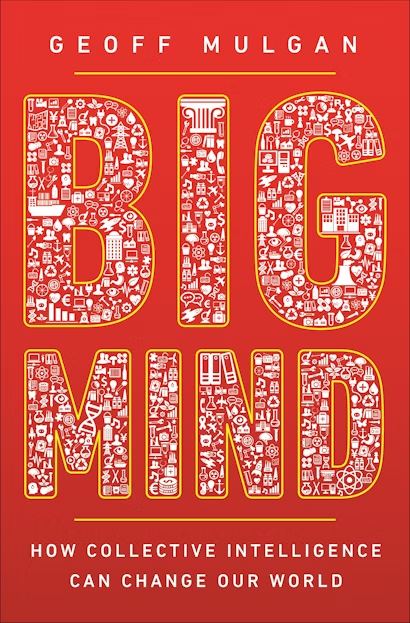
Big Mind: How Collective Intelligence Can Change Our World


It was COVID-19 that brought home to me the true significance of the 'collective' in the synonyms for group, population, polis, citizenry et al.. An integral part of Hodges' model, an individual, a person is clearly not an island.

Speech, gesture, behaviors, drawing, writing and other media all  provide a way of recording and representing information, and knowledge. Digital technologies are the latest tools to extend our memories, and ability to analyse, synthesise and abstract from and to our experiences.

How we see the individual and collective (society) is a subject of much debate across many disciplinary fields, spanning the sciences and humanities; economics, healthcare, sociology, ethics, and philosophy. Mulgan considers as infrastructure, the measures that have emerged to support collective intelligence:


'They have evolved from physical objects (such as steel production) through aggregate concepts (like GDP and GNP) to intangibles (such as innovation indexes or measures of the value of creative industries). They have evolved from single measures of things like population to indexes (like the UN Human Development Index), and from activities to outputs and then outcomes (such as QALYs - quality adjustied life years - and DALYs - disability adjusted life years in relation to health). In all these ways, both states and societies watch themselves and recognize well-calibrated observation as the precondition for thought.' (p.52)
Using Hodges' model the focus is primarily upon individuals and teams application. Mulgan's chapter 12 (pp.145-160) on 'Problem Solving' is subtitled 'How Cities and Governments Think'. An excellent question, that was asked of me in February. How can a national government be informed of Hodges' model and its potential utility? Cities have repeatedly had to solve problems created by changes in transport, work, housing, population density, the movement of people, goods, materials, and links to rural and agricultural centers. The logistics of access to routes, ports, airports, and where to place industries efficiently (and safely)? 'City planning' is a key example of our cities thinking?

Perhaps, we need to think of mobility in a cognitive sense, and not just AI-mediated. So as we walk, run, seek access - we should take care we don't get stuck!

Individual
|
      INTERPERSONAL    :     SCIENCES               
HUMANISTIC  --------------------------------------  MECHANISTIC      
 SOCIOLOGY  :    POLITICAL 
|
Group
subjectivity

models we use can be a trap (p.120)

emotional intelligence
quality
objectivity

SYSTEMS energy, food, transport..

physical media & 'memory'
quantity

'Society Thinking as a System?' Chap. 16.

Group - Collective

collective intelligence

Patient Reported Outcome Measures (PROMs)?

See also: 'literacy' : 'prevention' : 'service' : 'severe' : 'change'

Geoff Mulgan (2017) Big Mind: How Collective Intelligence Can Change Our World, Princeton University Press.

Image: Princeton University Press.

Friday, July 11, 2025

'Thinking outside the box ...' iii by Amber Javis

Third response to a blog post by Amber Jarvis on The Mental Elf:

Thinking outside the box: alternatives to standard inpatient mental health care

Amber's post considers a study by:

Griffiths, J. L., Baldwin, H., Vasikaran, J., Jarvis, R., Pillutla, R., Saunders, K. R., … & Johnson, S. (2025). Alternative approaches to standard inpatient mental health care: development of a typology of service models. International Journal of Mental Health Systems, 19(1), 1-13: https://pubmed.ncbi.nlm.nih.gov/40247283/

A Community Psychiatric Nurse since 1985, on first contact patients were often upset initially at the prospect of a visit. Not the fact it was a nurse, but a psychiatric, 'mental' nurse. If the patient was OK about it, their family may have had qualms. Discretion was always exercised, essential in terms of maintaining confidentialty. Not infrequently, as a team we had a conflict of interest. A colleague already had a client a few doors down; or they lived around the corner. Socio-politically, there was never an issue back then with shop fronts, but homelessness has a long history of course. I've worked in intermediate support, visiting someone 2-3 times in a day. That continuity helps, in contrast to the experience of older adults in social care. It could be that the potential stigma elicited by intensive home care is now attenuated by:
  • The public's increased awareness mental health & illness;
  • The fragmentation of neighbourliness means people really aren't interested?
In the conclusion on Griffith's et al's study Amber notes:

'The authors’ classification of alternative service models could help planners and commissioners understand ‘the whole range of options’ when deciding which improvements to prioritise and invest in.

However, future studies should investigate the implementation challenges surrounding these alternative models – that is, what might make certain models easier or more difficult to introduce? Research investigating their effectiveness in practice is also required – are there particular models that are better suited to certain individuals, at particular times? As the authors put it: “what works best for whom, when and how”!'

The government in England has launched a trial regards people who are sick, and their work status:

'GP surgeries in England can offer advice to patients on getting back to work, including career coaching or exercise classes, as part of a pilot project to reduce the number of people who are signed off work sick.

The aim is to help people return to the workplace more quickly to reduce the length of time they need fit notes - better known as sick notes.

These are issued by health professionals if a patient is unwell or cannot work for more than seven days.

A total of £1.5m is being made available to 15 regions in England, and will be shared between GP practices in these areas to hire coaches or occupational therapists to support patients in their return to work.'

Hugh Pym, Health editor: https://www.bbc.co.uk/news/articles/cwyx880d1w8o 

Individual
|
      INTERPERSONAL    :     SCIENCES               
HUMANISTIC  --------------------------------------  MECHANISTIC      
 SOCIOLOGY  :    POLITICAL 
|
Group
Career coaching
Exercise classes
Counselling
Reduce time spent 'ill - sick - off-work'
Motivation - Mindset

FIT - SICK:
physically only of course!
Seven days
What can't I do?
What can I do?


Social Prescribing
Occupational Therapists
Physiotherapist
Support workers
Horticultural groups
Local history


FIT NOTES - SICK NOTES
£1.5m across 15 regions
Policy
Welfare budget
Behavioural Economics
Integrated Care & Social Policy


Given the rise of mental health related provblems in the population, some might argue that increased awareness of, and education about mental illnesses is part of the problem. But this isn't literacy then?

With the standing of the mental health nursing curriculum called into question, policymakers have some serious decisions to make. Social prescribers and care navigators are not the only people preoccupied with signposting. Griffith et al. write:

'Inpatient care is also costly; even though only 3% of people in England accessing mental health care in 2018/19 received inpatient mental health care, National Health Service (NHS) trusts in England still invest more in inpatient than community services [].'
Hodges' model: Axes & Domains

You can appreciate just how far away prevention and a health literate population truly are. Budgets will have to be re-directed. Now that is 'care-ordination'.

Griffith et al. and Amber's response, calls care that is simultaneous person-centred and service-centred. 

In Hodges' model it is as if the vertical axis, is turned and the 'individual' aligned with the humanistic (person-centred) and group - the mechanistic (service-centred) axis. This gives us self-care, individualised healthcare, personalised medicine through to population health.


Griffith does not venture into literacy and education (not their study's purpose, of course); but using Hodges' model, we can see two critical related issues. In addition to reducing the time a person is physically, and mentally indisposed, unwell, ill, sick ...
  1. We need to improve the lot of children excluded from school;
  2. Seriously address the determinants of health socio-politically.